


saveasteading
-
Posts
11094 -
Joined
-
Last visited
-
Days Won
97
Everything posted by saveasteading
-

Show me your pond!
saveasteading replied to canalsiderenovation's topic in Landscaping, Decking & Patios
I built a pond once as SUDS, fir an office block, with all the roof and driveway water pipes ending up there for exceptional rain. Ie after natural drainage, rainwater harvester and French drains any surplus went in there. We had a 'nature' consultant who advised that we did no planting or species thinking at all, and let nature do it. Although he did say plant sone miniature willows to help drink the water. Nature took about 2 years, during which time the LA nature staff complained about the "typical builder, leaving a muddy hole behind" but were won over. Another time I would do the same if it was distant from the building but omit the willows as they took over and needed maintenance. If near to the house I might compromise and have some pretty planting, and a shallows, and a gravelly pretty feature. Nature did indeed move in. The advisor had said we would get newts or frogs or fish.....only one would prevail. It was common newts. The plants that moved in were attractive enough. Maintenance nil apart from the planted trees and sone other 'weed' trees. No sand liner! That seems pointless. The people who wrote these LA guidelines back then seemed to be tree huggers with little real knowledge. As to lining it. For SUDS you want to let it empty, and nature will deal with the seasonal changes, so no lining. For a garden feature everything is different. -
I was a professional estimator for many years. It took 10 minutes to have a feel for the cost, perhaps +/- 20%. An hour to be within 10% of OUR company estimate. Then a week for a commercial estimate. Other contractors were doing the same in competition. An online service can only do version 2 at best. Then your real life quotes vary according to their skills and efficiencies. But they are all pricing the same project you have shown them. Real value comes in discussing alternatives with the builder you like. Turn this round, miss that out, change the roof construction and so on. I'm not saying you can or should reduce the cost dramatically every time. What do you have at present? Architects' concept or detailed design? Maybe it's a costly design
-
A bit in our case. The trouble is whether you have the depth available for eps. If you have extra to excavate and to increase the perimeter wall, then there are these costs to add. Eps is easier to handle, to cut and to shape to any ducts. We have lots of ducts, water pipes and drains in the floor and they were a pain to cut around. I did the iddly ones where I was concerned with the quality and am happy that I did. There are some really quite grotty bits in the pir but everyone else is content that the screed will bridge it. I have commercial project expectations, and domestic is less onerous.
-
Eps is approximately half the price and half as good. So every individual building needs it's own logic. Our eps was also cling-wrapped. That may have been at the merchant's depot. It had the huge advantage of not blowing away, as one single sheet did.
-
Is this a principle similar to the self-extinction of vaccine deniers?
-
We had a layer of each. The pir was clingwrapped in sixes and had eps packing. It certainly kept the boards in good condition.
-
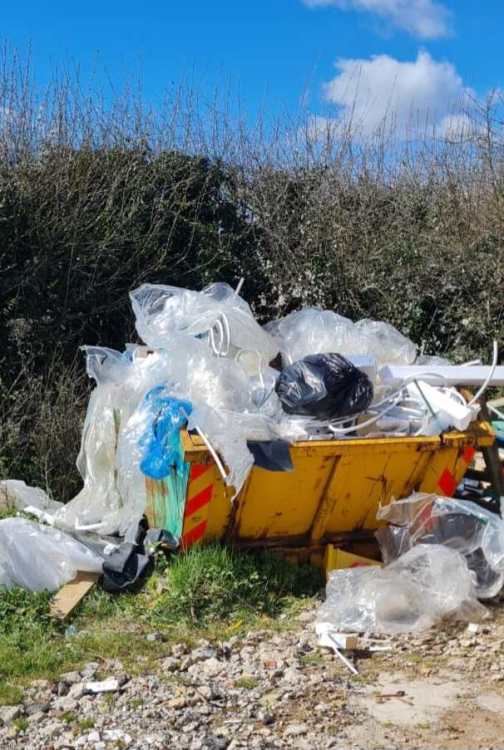
That's what I expected. But this was less technical. They broke a slat from a pallet and marked 40mm and 50mm on it.. min and max depth. That seemed to work as there was about 1/4 m3 waste. But as for waste. I was optimistic that there wouldn't be much insulation wastage and that was the case. I didn't deduct for stud wall areas, did add 2 sheets for mistakes or lack of care, and had 3 sheets surplus. It will ho in walls. BUT what cutting waste there is, is very bulky, perhaps 5 x by volume, maybe more. And the packaging waste is dreadful too, with cardboard snd cling wrap and eps spacers. Moral... allow a skip cost simply for the insulation and ufh. Being petty and mean... (cost conscious and efficient) I found that the cling wrapping compresses dramatically when rolled up and squeezed into bags. Ie I took it out of the skip and compressed it. Pipe offcuts take lots of space too. And the eps packing baulks look useful so are set aside. Saved £150 or more in an hour.... I care much more than they do. Stop press.... I'm told pir will rise in price by 10% then another 18%. So I guess eps and plastic pipes will do too.
-
Here's an update. The insulation was laid in 2 layers over 3 days, with pipes going in behind. Screed poured today, day 4, VID-20260326-WA0003.mp4 in 2 hours plus the same again in prep, waiting and washing up. The 4 days wasn't enough for the 350m2, and there was Russian swearing, we think, from the first gang under pressure. They suddenly didn't understand English when questioned about quality issues. For anyone who hasn't seen it here's a video. It is very runny indeed, and it only goes hard if you wish and believe enough.
-
I hadn't thought until now, but you are paying £150/m3 for water as well as weakening the concrete and losing the warranty.
-
And keeping up with the latest regulations and interpretations, and new products, in our own time.
-
In Spain you can buy this in Leroy Merlin, so like walking out of B and Q with a system. And this is an upmarket one for pretty houses. Below this an obv very simple one showing a panel and a plug. Plug and Play it says. 450W



-
Valid theory. It certainly reduces their risk for any future problem. In reality, a lot of builders ask for extra water because it suits them and they don't know/ care that too much water is wrong.
-
And yet... there is a premium for empty m3 in a big truck and the waste (and mess) or shortage can be costly. Let's play. 1 barrowload. Shovel mix 2 barrows to 1m3 site mixer. 1 to 3m3. Volumetric 3+ ready mix. A separate column for people unsure of quantities. Site conditions and pour method also change this. @markcwith 3 wagons of volumetric.. what was the reason?
-
Leave it. If it happened to be 20°C plus then you might put some polythene or hessian over it, or hose some water on it. But it will be OK.
-
I agree that I isn't so consistent. It hasn't gone round and round the barrell. I doubt it is ever used for structural concrete eg bridges and high rise
-
A pump mix is designed according to the local materials. Eg river gravel flows more readily than crushed rock. Then the stone and sand are mixed to a recipe provided by their lab. There is an additive too, basically a detergent. The water content is prescribed too and they even allow for how wet the sand is. That's naughty re theadded water. I've known operatives to sign thinking it was a delivery ticket, not about water. Maybe the driver thought he was being helpful, not understanding the issue. But they should be trained to know. It's a mass footing so should be ok. Adding water for any complex structure or for a slab is not acceptable, so instruct all your people and each delivery driver on arrival next time. Re the quantity. I've never known an issue so the likeliest reason is your estimate... sorry.
-
Water is only added if requested. A pump mix does not need extra water either. Unless it is a mix on site (volumetric) wagon, then you will only have what you ordered. If it is mixed on site then they will provide more until you say to stop.
-
I wouldn't worry about that. They want efficient use of their trucks too, so just talk to people. Their truck might have been held up by an earlier client. Did it all work out ok? Any concerns or all sorted? If this was to happen with the slab then it might need some skill so make sure to have a plan. we are here for you. Tell them clearly that you want truck one at one time and truck 2 at another. If that doesn't work for them then discuss. I'm a bit surprised they didn't ask you. otoh the 3 trucks siting waiting is almost bullying. Their choice and if they have nothing else to do, then fair enough.
-
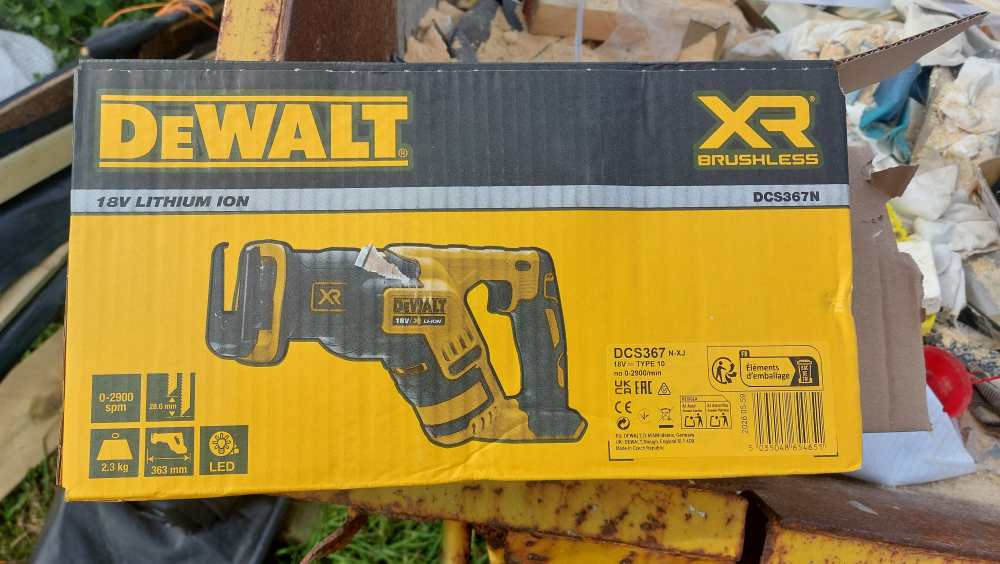
We've got professionals in today. 2 guys expect to do 300m2 of dpm and eps today, then tomorrow pir 2nd layer and dpm. Day 3 pipes. They started cutting the eps with a hand saw. I guess this suffices for a smaller house. But one has popped out and come back with one of these and a 150mm blade. Watching him use it he can do curves and angles that a hand saw can't, plus very much quicker. I was surprised he didn't have one already. There is no sign of a table saw, or circular saw, for long straight cuts. That's what I had expected. The cutting dust is hand- brushed into the gaps. More to follow.
-
I'm out of touch with the test costs. But another option would be an Epc assessor, who could simply feel the draught and write ' from my experience I expect a rating of...x of worse.
-
Is always going to be inefficient because of ground drag even without obstructions.
-
Ai says this. Best Use Cases: Bedec Barn Paint: Specifically for exterior barns, sheds, fences, cladding, and silos. It is designed to resist extreme weather, rot, and UV damage. Bedec MSP: Best for a versatile "paint-anything" approach. Ideal for PVC windows, doors, cladding, metal railings, and radiators, both inside and out.
-
A lot of conversions are done without planning or building regs on this assumption. That doesn't make it right or safe. If neighbours don't alert the planners then that won't be enforced. If it's still a garage spec but with people living in it then that is a safety risk as well as enforcement. The vendor could apply for retrospective approvals but hasn't. They want you to take the risks.
-
Depends where you start. The ferry from Mallaig is quick, or included in a very pleasant day out and round trip. I've been there by motor boat too, and landed, long before this story though. We didn't see any people. I perhaps should have been clearer. There are interesting articles on the BBC news pages. 2 x videos and an article. https://www.bbc.co.uk/programmes/p0b3dmdl https://www.bbc.co.uk/future/article/20170329-the-extraordinary-electricity-of-the-scottish-island-of-eigg https://www.bbc.co.uk/programmes/p04ch10y I particularly like that the community has to, and does, collaborate.
-
Nicely summarised.




