saveasteading
-
Posts
10895 -
Joined
-
Last visited
-
Days Won
93
Everything posted by saveasteading
-
Yes read that now, thanks. a belated heart from me.
-
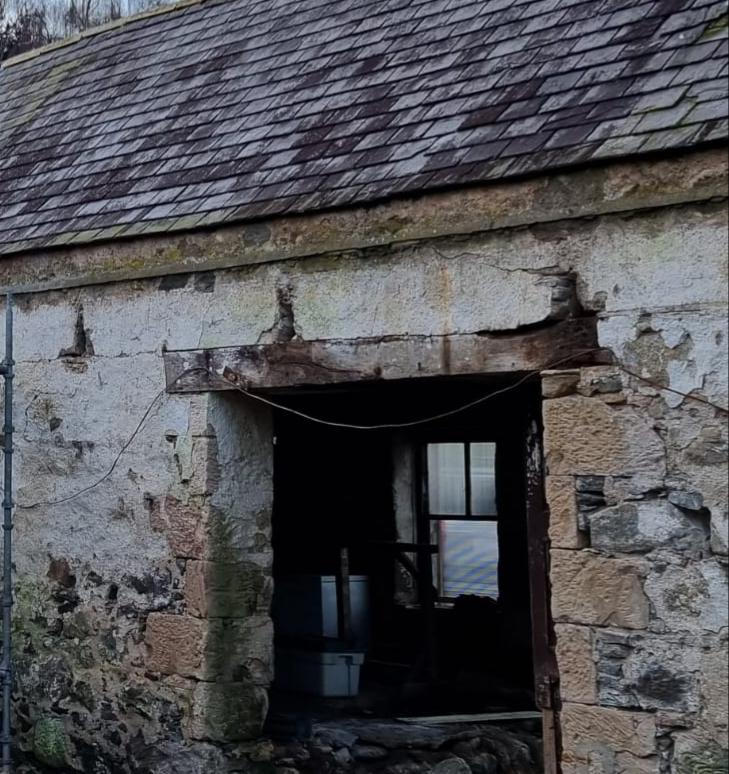
 We are finding that the removal of hard render is proving very slow and hard work. Most is lime, some of that is rather hard and may have some cement in it, and some is clearly cement and has to come off. Then we can repoint and repair as necessary. It is a job up on a scaffold and tiring with arms up. The breaking tools we have are very heavy and more appropriate to downwards work. Also they create a lot of judder and noise , whereas a better tool will put the power more efficiently into the scabbling/breaking job. A borrowed Hilti is performing better than the owned 'Wickes' one, as would be expected, but has to go back. But even that is quite heavy for prolonged periods. Any recommendations please? Ignore cost if necessary, if it is good enough to save many days of torture. Another query. We are well aware of the need to use lime in old masonry walls, and now also of the ' breathing' reason for this. However does the logic apply in any way to an internal face, which will be hidden behind an inner insulated and vapour barriered, stud panel. There are relatively small areas of patch repair in cement mortar, but still some hours of bashing and perhaps masonry repair afterwards. i.e, the outer granite wall gets wet and then breathes it back through the lime. It is unlikely to be wet past the first thickness of stone (200 or so, of 600). Even then, the evaporation should be outwards not inwards.
 -
The Scottish Standards appear to accept an air admittance valve at the end of the sewer run. This is so much tidier and easier than an open stack, that I would like to alter our design to suit. Currently a very visible pipe is intended either outside the last installation (up the wall, client says too ugly), or in the room and through the roof (I say even uglier, and why put a hole through a good roof)). I ask because the regulations appear to allow a Durgo (or eq), but I have seen comments suggesting the opposite. Second question. Is there an AAV that can be located outside, by extending the pipe run to a discrete position? I guess we could alternatively have the open stack in such a location. Air admittance valves are another method of ventilating a drainage system as they allow air to enter the drainage system, but not to escape, thus limiting pressure fluctuations within the system. Care should be taken when installing these valves that they are located where they will operate effectively. Air admittance valves should be installed: in accordance with the recommendations in BS EN 12380: 2002, or in compliance with the conditions of certification of a notified body.
-
One supplier is favourite. News once completed. We called the engineer to report that they were specifying special sections, and they reduced the size, saving us some cost of course. Which they shoud have done at design. The longest beam is having to by replaced by 2 beams side by side. More cost. What with the glulams and multiple hangers this will cost many £k more than the A framed option we asked for. The simpson hangers are listed at £22 each. Any suggestions fof z supplier at nearer £10, as there are 70 of them? Re the very awkward connections of valleys. I know we can't premake them accurately. Plan is to fix them temporarily, then make ply or tin plate templates for local manufacture. I note that the scarfe joints are rather simple, which will at least save a lot of joint overlap timber. Joiner favours full 12m lengths to allow measure/cut on site. Good thinking...i don't fancy cutting errors on this stuff. If only we could get an artic down thd track.
-
We (Highland) have a natural spring, and mdpe running on the ground and over a burn, for about 600m. It doesn't freeze as long as it is running. I must have been responsible for 50+ new water mains into new buildings, never put them deeper than -450 and no issues. That is mostly in SE, but it can can be horribly cold sometimes.
-
No I understand. My worry would be in getting the opinions of several Architects who are not in your employ. Will they love it or have their own opinions which you /your Architect may not like, for you to live in and pay for. But perhaps, as the LA are suggesting this process, it is all quite normal and sensible. As there is probably a large number of architects on the panel, you could get any combination of them. The busy ones will be too busy. I agree, as above suggested, that you must sell the scheme hard and have responses ready.
-
I wouldn't worry: it is not a structural wall and nobody should be throwing themselves at it. To make sure (as once specified this section, this way round for another reason). To check, I had our 16st site manager shouldercharge a single stud with a board on it while we filmed it. It deflected and returned without a problem.
-
Can you explain why you are submitting to them? Is it a planning requirement or does it perhaps help your application, or is it simply to get the opinion of some architects? The DRP I met, were a commercial setup of an architects'' panel, giving their opinions on what was good design. It was a bit of a closed shop (in my opinion).
-
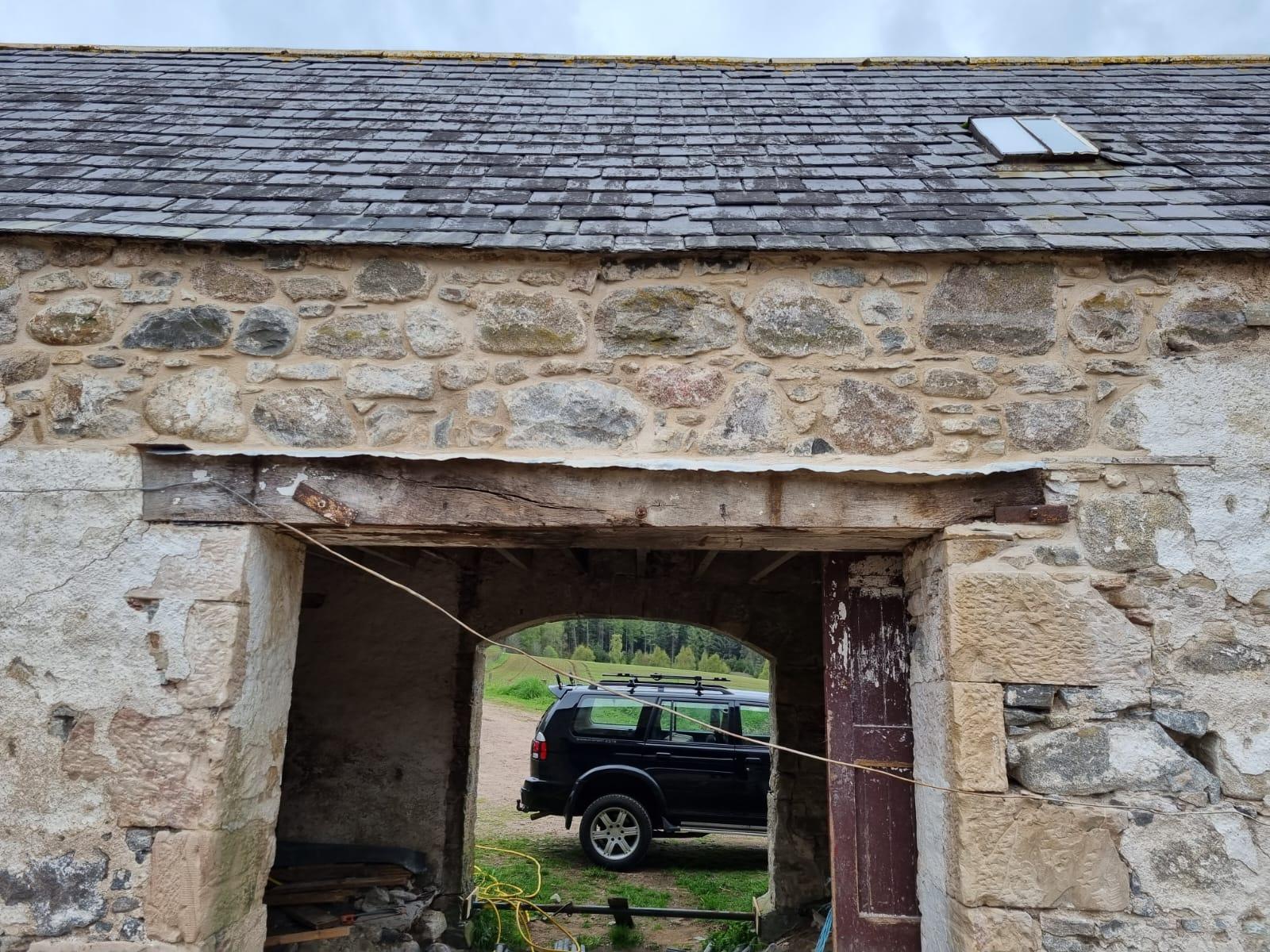
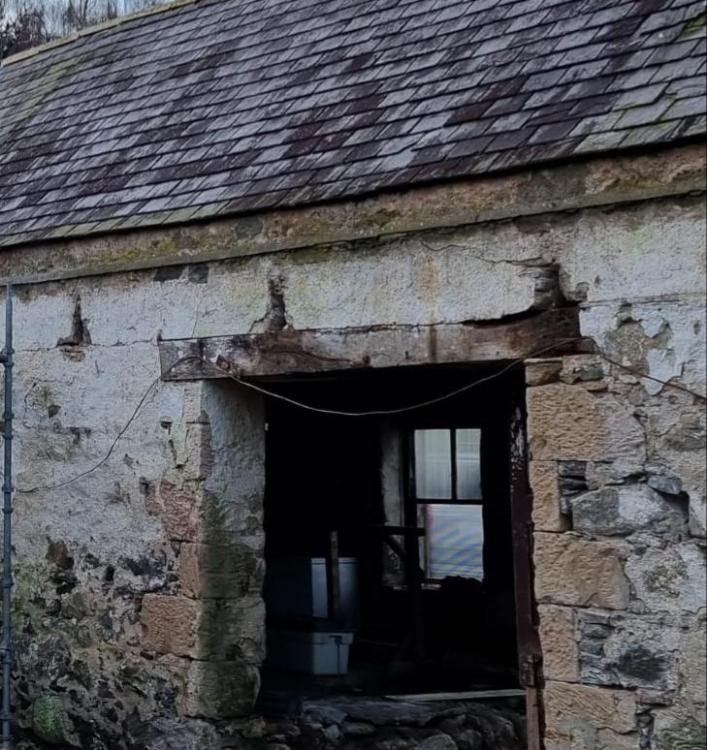
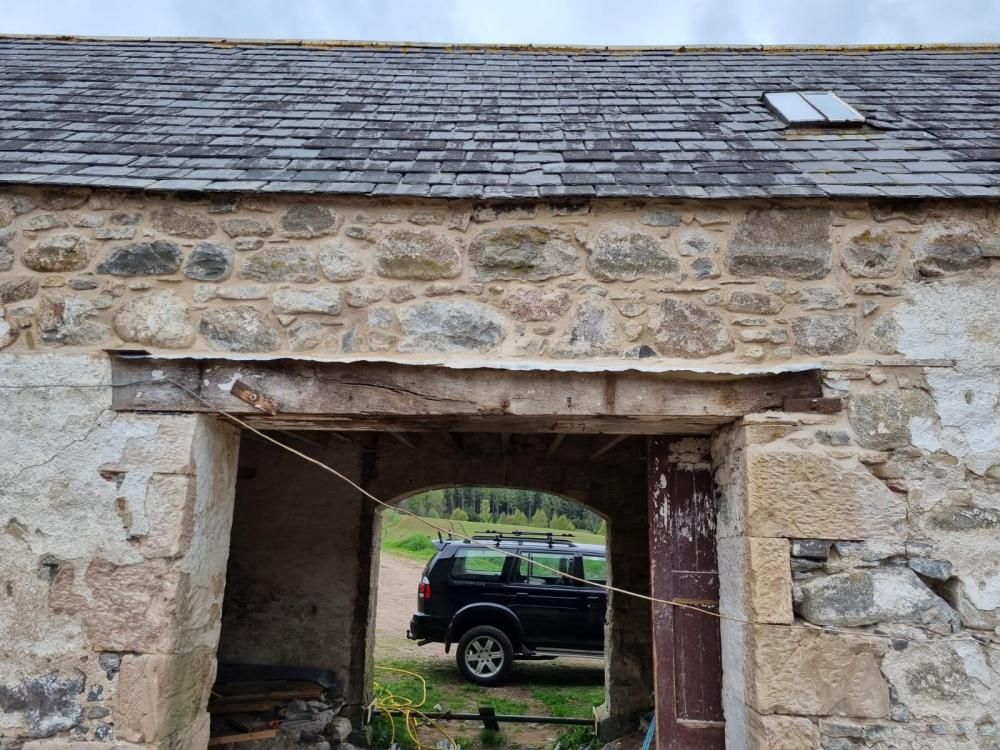
Before and after of pointing to an area of masonry. Done by son in law, after studying masons doing other areas, and then some practice on less prominent areas. I'm seriously impressed. He has years ahead of satisfying craftsmanship ahead. Warrant received. Work starts next week.
-
Apologies before I start as I will give an opinion with the benefit of ignorance, which is always easier. Hydraulics yes I know a bit , turbines no, I leave it to you. And there seem to be mill experts on BH. Might it be possible to dangle a turbine into the fastest flowing part, that flows reliable all year? Create a channel if necessary. Perhaps on a float so that it follows the water level. Then you could have multiples of that if wanted, and they can all be different using various salvaged motors. It would (or could) be fairly discrete and keep the charm of the burn.
-
Just make sure that the water pipe can never be damaged, and has no joints in case they leak. presumably the electric company are laying in your prepared trench and then go away, then you backfill with the water and electricity warning tapes in the trench.
-
How does your garden grow?
saveasteading replied to recoveringbuilder's topic in Landscaping, Decking & Patios
But have the beans shown signs of life yet? Pictures requires (time lapse preferred). -
How does your garden grow?
saveasteading replied to recoveringbuilder's topic in Landscaping, Decking & Patios
These usually cost extra, for the character and that they are so full of tar that they don't rot. But someone who thinks they are untidy is also happy now. A benefit of the big truck to hand. Half the time stuff is quoted as free on FB it is not free at all. Or someone who has overordered, or got off-cuts, thinks they can resell at the original price. -
The mountains are made of stone and the rest is made of sand and gravel ....and yet that is the price. The granite type 1 comes from a quarry 3 miles away but still costs £20/t. Does that spoil my theory? What is readymix costing? not £44/m3 surely.
-
Have been getting quotes in for next week and it occurred to me, therefore in BH spirit I pass it on.... For as long as I can remember, the cost of masonry blocks has been very similar to the cost of readymix, in £/m3. This makes sense as the ingredients are much the same. The readymix is handled once, at the factory. The blocks are handled at the factory and again by the merchant, but are risk-free. So if you know the price of concrete, just use the rule of thumb, or vice-versa. Currently £115 for C20 concrete here. 98p for 100mm blocks. £1.20 for 140mm That makes blocks at 10/m2 look slightly cheaper, but add the 5% area of mortar and it is close. Another reason this matters is, if you are replacing timber shutters with permanent blockwork, the blocks are effectively free as they replace readymix.....when appropriate.
-
Returning to something I said earlier. This stuff is in diameters from 3mm to 10mm and would fill the gap and stiffen it, and give you something against which the fire cement can bear.
-
I will report back on costs when we get the quotes back. I have gone to Pasquill and Buckland today. earlier to Glenalmond/Intelligent Solutions and to Glulam Solutions. They are agents but will get whole loads and we could collect. also to AJ Laminated Beams (the artic). FYI Pasquill gave me a stocklist and said they hate anything off this list, but Architects and Engineers like to design specials. Our Engineer specified beams that are not on this list. My hunch is that specifying glulam for the hips and rafters is convenient / habit / prettier whereas a big timber would be much cheaper and easier to cut and to fix to. I don't fancy cutting that angle on a £400 piece of glulam on 4 weeks delivery. Fancy hangers are shown for rafter to beam connections, but silent when the awkward cuts apply. I am guessing we use screws, but daren't ask the Engineer or they will all be special fabrications, as are the glulam to glulam junctions.
-
Any suggestions for economic supplier or glulam near Inverness please? Pasquill at the airport are being responsive and helpful, but someone on here suggested they may be expensive. No quote yet. The only other direct manufacturers are quoting £2,800 cost, but the same again for delivery....ie a whole artic for 2 days. (42m of beam). Other localish suppliers appear to be intermediaries and don't manufacture. It is all over budget already as we were wrongly advised that ridge beams were cheaper than using tied a frames, but building is starting and the programme is tight. Q2. Do we really need glulams for hips and valleys? The remaining old building works fine with ridge boards.
-
Membrane new lawn before seeding?
saveasteading replied to ashthekid's topic in Landscaping, Decking & Patios
The membrane would keep weeds from coming from below. But over time there would be lots of weeds from seeds anyway. And it is plastic which at some stage will break down within the ground which is a bad thing. So no membrane please. Cardboard works well, or simply turf or seed with good prep. No mow May is upon us. try to find a way of having insect-friendly areas. -
Corten is a form of stainless I believe. so welding may require some homework.
-
If you don't, whatever is behind will get wet. That is going to be quite heavy. I would worry that any adhesive might work but gradually allow creep. I like screws. Rather as rivets do, they show how the construction is done and they work. An Architect might call that 'honesty' if trying to justify it.
-
I am proposing concrete with fibre additive so it wont crack either.
-
Is it flat? how big, how thick? And fixing to what? Indoors? If multiple panels will you be able to seal the joints? More questions than answers. 6 : 0.
-
Because it is 'not normally done'. No other reason I can see. If the ground might heave (clay) the perhaps concrete is needed. That is very strong concrete: any reason? Did this have reinforcement?
-
How does your garden grow?
saveasteading replied to recoveringbuilder's topic in Landscaping, Decking & Patios
I suspect they will climb over a low sleeper, but not if it is treated with tanalith or creosote. 'My' slow worms were a sort of very milky coffee colour, (on the light side of that even) but with a metallic sheen. I may collect bits of loose sheep wool and put it round the bean area....it is supposedly impassable by slugs and snails due to hairy hooks on the fibres. Coffee grounds supposedly work too. Dry ash is obviously not handy for slime trails to stick to. 2 dead hedgehogs found together in the local graveyard apparently. People putting slug pellets on a grave is the current theory.