

saveasteading
-
Posts
10895 -
Joined
-
Last visited
-
Days Won
93
Everything posted by saveasteading
-
It will rot eventually, even treated, starting at the ends and rotting inwards. Before the rot, there will be damp ingress. It is not concrete so they have not completed the job. It was a silly (or inexpert) idea to cast them in, so let them learn to be less silly and more expert by removing them and infilling with concrete. It will be difficult to get the timbers out and the concrete will be damaged locally, but they can repair it. Complete the job before payment!
-

How does your garden grow?
saveasteading replied to recoveringbuilder's topic in Landscaping, Decking & Patios
That pile of sticks on the left looks very attractive for invertebrates. My beans and courgettes are still attracting night time nibbling. 1 slug found under an adjacent pot today. growth = munched area so far. Perhaps a torch-lit inspection is required. -
Excellent. Yes that will look good from widows above. The gravel is not 'a requirement' by any rules I know but is a good solution to potential issues that are not always dealt with. If plants die or trees sprout*/ birds die on the roof, have you got safe access? *Very likely with woods around). I would have thought that water from the green roof could be cleaner than direct runoff from the main roof and gutters. If you looked in a gutter you wouldn't drink the water, but the green roof is filtering any 'deposits'. Only guessing though.
-
You know that is the right solution really.
-
Are you sure that is all? Floor, and insulation likely to be 300 thick, and foundations 900mm/1m deep. Your neighbour has to organise all permissions. https://www.gov.uk/government/publications/preventing-and-resolving-disputes-in-relation-to-party-walls/the-party-wall-etc-act-1996-explanatory-booklet I found it amusing that this is published by the dept currently called 'Department for Levelling Up'. Not 'digging down and undermining my house'.
-
Planning permission for static caravan in garden
saveasteading replied to Guest28's topic in Planning Permission
BUT do not start the building works, even if certain of approval. In England there is nothing to stop you building without permission, except that you may be made to take it down again. And building reg's can be retrospective, albeit it could be awkward and require opening up. In Scotland there is a very big fine for starting works without a warrant (3 x the fee plus being made to stop), there is no such thing as a Building Notice, and conditional approval (details to follow) seems unusual. We had 50 queries (25 first time round , then change of inspector and another 25) and all had to be answered in full and put on the drawings. -
You'd better put some green stuff on it then. I am not against green roofs, but they cannot usually be justified on 'carbon' alone as they require the extra material in the roof, and sometimes walls and foundations too. plus the membranes. For attracting insects and birds ok, and better to look at than a felt roof. What I don't approve of is an automatic tick for being 'green' if it hasn't been thought through. Importing ready grown sedums in plastic trays and plonking them on a roof doesn't do much for the environment in my opinion. But I could be wrong. For an admittedly large building, I calculated the pros and cons of a green roof pre-planning. It added a lot to the structure and founds. On carbon it would never have paid back the input. Also it would have prevented light rain from reaching the rainwater harvester. That pic above is clever, in avoiding growth at the edges. Do keep us informed though. the choices, the logic and the practice.
-
Lathe+plaster holes are too big for pendant.
saveasteading replied to ash_scotland88's topic in Lighting
It can be done. There are downlighters that grip to the sides of the hole rather than over the top. Cutting the lath requires patience and strengh and a good cap to keep filth off your hair, and a very sharp core drill. Even then it will snatch and twist your wrist. -
Certainly not, you are taking best advice and doing a thorough job. Ahh I see.. yes put it everywhere you can. If it isn't protecting flammable materials it is keeping the chimney cosy and aiding extraction.
-
After checking the weight and the strength of the roof, and also putting down a specific root-proof membrane on the roof. Or don't. A suitable surface of earth will add about 40kg/m2 to the roof weight, and then it gets wet. Few roofs are designed for this weight.
-
How does your garden grow?
saveasteading replied to recoveringbuilder's topic in Landscaping, Decking & Patios
Right. No bean has ever untied a RT + 2 HH. The beans will wrap around the strings when higher, but often need some help when tiny, using little sticks, especially branchy ones. -
Assuming the electric company will connect to your temporary board, it has to be perfect or they won't. Then there is possibly the spare length of cable for when you transfer to permanent position. It is all rather technical, especially the earthing (to me a non-electrician). Much as I like to cut out the middle man I think leave this to the expert. Earthing used to mean banging a spike into the ground, but now they may take readings.
-
How does your garden grow?
saveasteading replied to recoveringbuilder's topic in Landscaping, Decking & Patios
I have 2 beans that are 100mm high and have planted them in the ground.....3 snails and 4 slugs were lurking but have gone away. Also a clump of sweet peas to attract insects. The adjacent courgette is growing leaves slightly faster than they are being eaten. I only have 2 more beans growing, very slowly. Most have rotted in the pots, either through being old stock or too much water. So I have also planted some more beans direct in the ground. If they grow that will look like clever succession planting for a longer season. Headline news. The shallots are bolting, which isn't perfect, as that is the biggest they will grow. -
If it says non-combustible then it is.... and it does. You should wrap / squeeze it in tight and make sure there are no gaps. For fun, try setting light to a small offcut. It should neither burn nor melt. Once the stove is working throw another small offcut onto the fully heated fire....and it will likely melt and revert to sand, but not burn, but that is a higher temperature than in the flue.
-
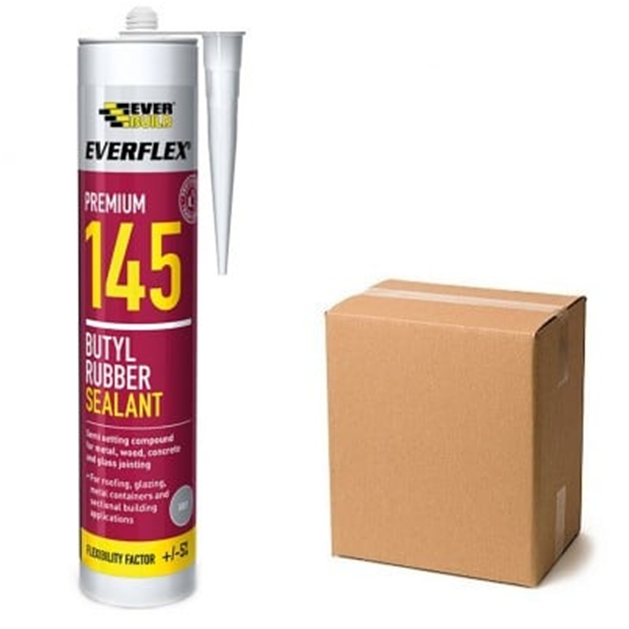
Judging by BH suggestions (for which thanks) when I asked, there doesn't seem to be a recognised solution. I want a seal that will stay sealed permanently, whereas most mastics become hard and brittle in fairly short time. Also there are inevitable variations in gap in placing a timber against blockwork. Draughts and spiders are to stay outside. I think I have decided to go for this product. It goes on thickly enough to fill gaps, then will squidge when the sole plate is fixed, and stays permanently flexible. I think a bead to each side, plus perhaps another in the middle or a squiggly line. I was surprised and pleased to see this is a Sika product. I asked the rep if it was appropriate or if there was another product more commonly used, but he didn't know. I suspect people mostly use expanding foam but I don't like it. Sika mentioned EB25 as an option....it seems to do everything, but is perhaps not the best at any of these purposes. 145 is costing £36 for 12 too....so not a big risk to try it. Comments welcome of course. Footings being dug, timber starts in 3 weeks!
-
- 1
-

-
This has happened before and been thought of I think. I got a standard one and fitted it to a sloping ceiling, at about half your slope, and it just worked somehow. It was not a solid circle but had a break in it, and then a nut and bolt connector. If there is any gap it is too small to see.
-
As above. I got good advice on here, and we chose not to upgrade from single to 3 phase. Our floor area will be about 400m2, and our immediate thought was to upgrade, which needed the transformer upgrade and about £10k When you do the sums it is surprisingly little power. LED lights, ASHP for heating, and nothing is running all the time. If it was, just imagine the electric bill. Car charging too, will be slow charging in a domestic situation. Just to avoid any confusion, I have seen several instances of people using ashp output as if that was an electric need. You would have about 15kVA output, but 4kVA input. The electric company (SSEN) were really helpful, esp on the phone once there was a contact, and we are now only diverting from overhead to underground to the new plant room (I think £1,200 in our trench.
-
Floor tile price
saveasteading replied to Russell griffiths's topic in General Self Build & DIY Discussion
Good tiles seem to cost 2 to 4 times as much here as in Spanish DIY centres. I was thinking of filling the car (limit E350 per person at uk customs). So there must be plenty of margin if you can contrive it. Topps seem to offer a better price on the phone than in person (computer asks the salesperson, is the customer in the store?) -
Warning. Never lay aluminium on an oak worktop. It goes black for a good mm into the wood Oil hasn't stopped this happening. Standing water is bad for it too. To get ours back to normal required scraping for 2 days by a proper joiner, and removal & refit of sink. Now there are round black circles from new damage.
-
Two Part Wooden Curtain Rail Joining Screw Loose
saveasteading replied to steveoelliott's topic in General Joinery
I would fill the hole with a paste of wood glue and sawdust. Then fix as originally. -
How does your garden grow?
saveasteading replied to recoveringbuilder's topic in Landscaping, Decking & Patios
They know which way is up and these pots are meant to disintegrate with roots through. But it should be OK. It was simply their time to emerge not due to the rain. But hoorah for you and your beans. Let them grow to 4 inches and harden them off before planting. The slugs will be lining up. -
Cold bridging at cavity reveals and floor slab detail
saveasteading replied to ruggers's topic in Brick & Block
Used in bridges and dams at the top end of the range. So dense that it needs a machine to compress it and takes hours to expand back. So don't choose that spec. It is addictive to compress offcuts and watch the thing expanding again. -
welcome. As an Estimator you have the analytical skills, and the ability to see past the obvious to the underlying work required, but also to look at the opportunities. As said above, get to know your own house, but read and ask to find out the structure and challenges. And we are here for what we can help with. Have you looked up old maps to find when it was built and any background? Is it a big enough and posh enough to have a maid's area at the back?
-
we have a 2hp compressor, so perhaps worth a try. Do the £50 tools from Draper or Erbauer do the job, or does it need something fancier? We don't have any concerns about damaging the granite masonry. Getting the cement mortar unstuck (10mm thick, and more in the joints is the issue.
-
Thanks both. we have started on the deWalt trail so should try to continue that for battery consistency, all other aspects being equal. 2.5kg seems the lightest and that is before battery. They also have one that looks smaller but must be very long as it is 3kg+......but I wonder if that could be supported on a shoulder strap. Air was my first thought some months ago but I have never used one. The kit is cheap and light and we have a cylinder already (can't think why). If they are that light then they will also be easier to use at an angle and get behind the render. I'm sure a 75mm chisel is plenty....perhaps a thinner one will be better for getting into the joint between stones, ie behind the face a bit.
