saveasteading
-
Posts
10074 -
Joined
-
Last visited
-
Days Won
82
Everything posted by saveasteading
-
Garage convertion /septic tank building regs
saveasteading replied to Gill's topic in Waste & Sewerage
The reason for the 5m rule is to avoid undermining the foundations. I think it is a hangover from the days of porous tanks. Ways can be found around this. If the garage is OK then it will still be OK when it becomes an office. -
Foundations for a small out building next to a plum tree
saveasteading replied to Adsibob's topic in Foundations
No you are right. Warning: Short essay follows. The concrete slab is made to be flat and hard. It sits on stone which is rougher and not bonded, but strong enough for the load. This sits on ground that also has to be strong enough...which it will be unless someone has put soft fill in. Also as these layers progress, the loading spreads out further. So a 1m2 slab is spreading its load over about 2m2. The barbecue could sit on stone as far as strength is concerned, but the concrete keeps it controllable, tidy and clean, plus it spreads the load more efficiently. If the clay shrinks in summer the barbecue will drop a few mm and nobody will notice as all the ground will have dropped. Then in winter it absorbs water and rises again. For a bigger structure like a house, the movement could be very different at various areas, due to the distance from the tree that absorbs the water, so could cause damage. So deep foundations take the structure below the drying and shrinking clay. But only the foundations go deeper to where the clay stays unaffected. Slabs are usually sat on stone just below the original ground level. Building inspectors are notorious for instructing another 30cm be taken out. Sometimes there is good reason, and sometimes it is their insurance against not having researched the rules. I say no, as can another SE....but usually a contractor will do as the bco says....esp as the client pays. It is perhaps an anomaly that we never allow for trees that might be grown in the future. In reality, it us unusual to plant big species in proximity to houses. -
Ambitious water feature - pumps etc
saveasteading replied to Adam2's topic in Landscaping, Decking & Patios
Commercial pumps have accurate graphs for distance and height. A little height equates to a lot of distance. For some reason, pond pumps are vaguer on these specifics. Perhaps because they are selling filters and sprinklers to go with them. -
That is for 1 sheet. Always a good guide. I've had a bm quote more per sheet for a whole pallet than wickes price for one.
-
Foundations for a small out building next to a plum tree
saveasteading replied to Adsibob's topic in Foundations
I can't answer your specific point but it is an easy assessment from a table. 2.4m would be for heavy clay with a potentially big tree, eg oak or ash, very close. Footings are for structure. Slab is just the floor. The warehouse example will have foundations for columns and for structural walls, down to 0.9m in low risk and 2.4m if clay near trees. The big supermarkets use thick slabs due to caution/ have money to spare. Commercial warehouses typically carry 20t /m2, sometimes on racking, and have forklifts trundling around, all on 200mm, sometimes less. The floor isn't going anywhere unless the ground is very soft indeed. It is also related to risk. If your barbecue settled 10mm it wouldn't matter, and you wouldn't know. If it fell down some winter night nobody would die. I really can't see why 300mm is even suggested. I suppose it is only costing you an extra £100 or so, so it is your choice. -
Foundations for a small out building next to a plum tree
saveasteading replied to Adsibob's topic in Foundations
100mm concrete base on decent hardcore, extended 100mm past the wall position. Warehouses holding 20t/m2 only need 20cm. Reinforcement optional, but perhaps wise with the tree there. Myself, I would compromise and use fibres. You don't need all those refractory bricks. I would build in normal bricks then line the fire base with refractory lining bricks/ tiles and also 1 x high to back and sides. For the concrete shelf I think i would build a base shutter of thin ply or estate agents sign, propped, and leave it in. Now that does need some mesh as it is suspended, but any will do it. I don't think commercial bbqs have any reinforcement except maybe chicken wire. Actually the concrete doesn't need fire proofing as the heat goes upwards and there should be ash protection. The charcoal burns best if on a mesh with air beneath it. It is worth building an extra shelf below, for hot pans. Are you plugging in a kit, or making your own cooking shelves? It will work better and save materials to bring the flue size down to about 30 x 30 internally. -
Any radon gas coming up through the ground will take the easist route. A standard house on a development is less likely to be an outlet than the drains around the estates, as they are lower, surrounded by gravel, and vent to air. So don't worry about radon, but put a barrier in the new area according to the rules.
-
We had an Architect and Engineer in family, but neither registered in Scotland. It wasn't worth the process and cost to get registered for one project. So we needed one registered party, and that was the Engineer.
-
Won't it wear off quickly on frequently used areas?
-
Yes , many have, including some who are giving you advice on here. Not what you want to hear, but it is complex thing, and you would have to learn a lot. The building inspector may then ask you to prove some aspects. In Scotland you even have to be on a register, so we couldn't do our own. Sorry. Get studying or find someone. But £700 is cheap already.
-
Recent stone patio not draining
saveasteading replied to amilio's topic in Landscaping, Decking & Patios
That is the beauty of the golf ball. -
Resilient (sic) bars do so indeed. I have observed them in action from the inside. When you see them first fixed it seems obvious that they are a wobbly, springy fit. The plasterboard flange is the wobbliest bit. Then plasterboard goes on and it seems to be a robust structure again. But it works as the other flange is now the wobbly one...it just twists very slightly under load, and presumably under a sound wave behaves erratically and kills it. If you bang on the junction of bar to stud, then there is a direct connection, but that will be unusual and minor.
-
I would reject these too. I once thought that all graded timber went through a grading test, so was surprised to find that warehouse managers do it by eye. Not always very well by the look of these. Trusses are designed to be very skinny, so there isn't a lot to play with.
-
Not necessarily accurate due to source, but from a quick Google And it is not as simple as this anyway Resilient bar Airborne Improvement:19 dB Impact Improvement:15 dB I just found in projects where noise between rooms was important, that resilient bars seemed to work well for airborne and impact sound, perhaps better than expected. I think it is the difference between a wall in a lab and in a real building. Whatever you do, the weakness is noise through the sole plate or floor, or through the side walls....even electric sockets. Either double board or RB will give a decent performance.
-
Recent stone patio not draining
saveasteading replied to amilio's topic in Landscaping, Decking & Patios
A Spirit level is great for simple slopes on planes, but not so easy on complex shapes. For the latter I recommend a golf ball, released from multiple positions. It will indicate the route of water, and often demonstrate a low point, or an area of concentrated flow. If the slope is very slight, then let the ball bounce at first. There it goes, one of my trade secrets released for the greater good. -
Have you tried googling radon barrier then images. Loads of examples on there. More to the point, your designer could do that.
-
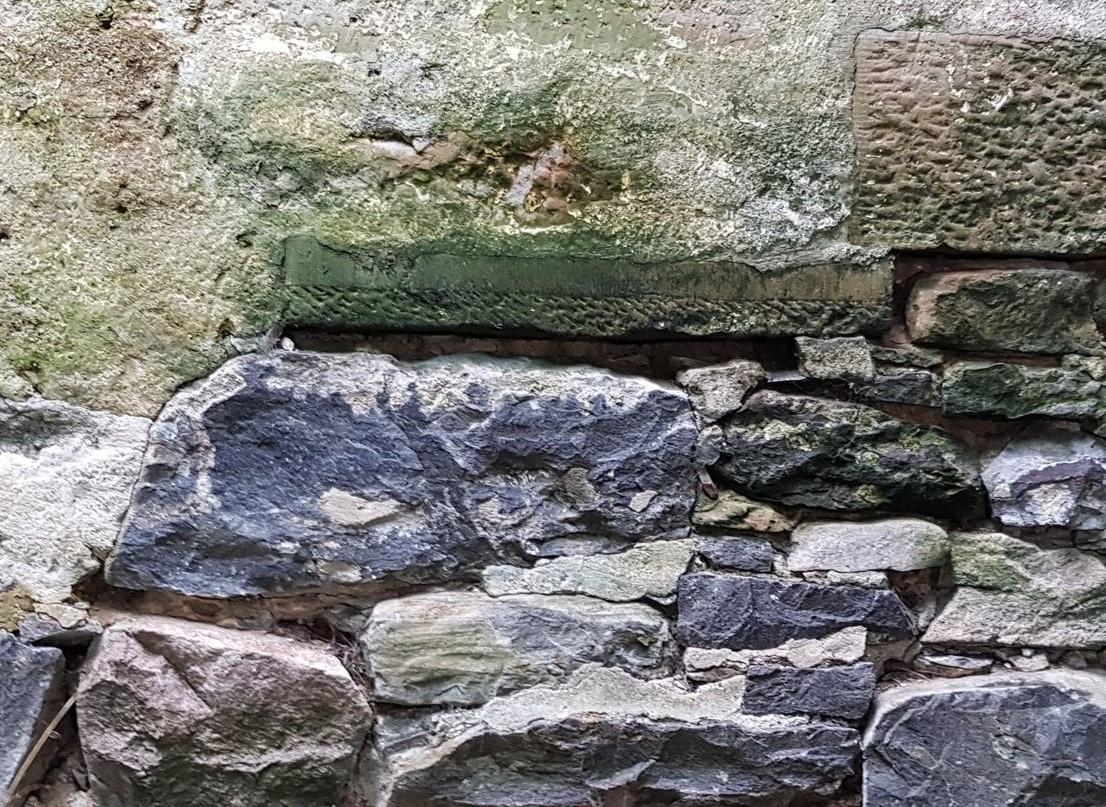
It should be just a push fit. Try wriggling and levering. It looks like it is connected to a bend, so maybe the next joint will be easier. Then another pic and we can all look again it. But your finished surface should not be too close to the dpc, which is visible in the photo.
-
I can't stop giggling at the picture. Good suggestion though.
-
All cement is good, but different shades of grey. You will need a trowel full.
-
Using the appropriate flange only. Good thinking re the diy. I think I would still be explaining the principles and watching them though. Explain it for the few seconds until the eyes glaze over. I'm not being rude..some people do theory and others don't.
-
Agreed. I think do this first then review. I've seen this so often, and it is usually that simple. Assuming you have a suspended timber floor, the air brick is allowing water under the floor and it may be sopping wet, and rotting the floor. The gravel is too high but also full of muck so not draining. But before filling in again either work out or use water to see if it runs away, downwards or sideways. If it doesn't then it needs more channeling. If you use gravel again it needs to be weeded but also removed, cleaned and replaced every couple of years.
-
These appear to be engineering bricks, so won't absorb much water. So in reality it will probably be OK, but it should not have occurred. The suggestions above are good. It is essential that the bco sees this before it goes further.
-
Resilient bars work differently to the second layer of pb. Lab results can be very different to real life. I think bars are better in real life because of breaking the continuity. But it is essential that they are fitted properly to maximise their flexibility. Don't assume that the fixer knows this, understand this or accepts this. "Just an extra screw" through the wrong part, and the function is compromised.
-
Agreed. Fancy epoxy stuff will look worse unless it is all overpainted. Even sand and cement will probably stand out as the concrete face is high in cement. Use that if you must with a primer and addition of unibond.
-
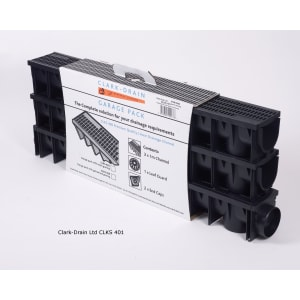
Then it looks to me, and I think @Onoff , that you could dispose of the hopper, install a grating drain along the wall , and connect it to the pipe. aco is thc best known name but cheaper types will do for your situation.