saveasteading
-
Posts
10075 -
Joined
-
Last visited
-
Days Won
82
Everything posted by saveasteading
-
House is Too Airtight
saveasteading replied to Newlands Ian's topic in General Self Build & DIY Discussion
The regs are more guidelines than rules, as stated at their introductions. The bco has to be happy with the solution, so we can sometimes persuade them, if we can show the logic. If that logic coincides with the principles of the actual regulations then so much the better. If that can be on paper then it can go in the file to close the subject. I was once told ( non sarcastically) that if I knew so much about it, then present it formally, with calculations and references, so that he was persuaded, and so would be his boss if he happened to look. -
In the same skip? With masks. You know you've packed it well and got good value when the lorry struggles to lift the skip.
-
House is Too Airtight
saveasteading replied to Newlands Ian's topic in General Self Build & DIY Discussion
Man with a fan is taught how to fit it and use it. Not his job to understand the bldg regs. -
Claim against architectural designer
saveasteading replied to Lofty718's topic in Surveyors & Architects
Nobody's perfect, and sometimes a very cheap quote is simply because they are good at it and it doesn't take long. But, especially on lesser forums I see that most people just look for the cheapest quote. -
Carefully avoiding jokes..any reason?
-
Red tap handle breaking down in UV
saveasteading replied to Super_Paulie's topic in General Plumbing
They used to. I had a pink Merc. B and Q once has red as their image but the cladding and window frames turned pink. Their orange is a bit better. Cladding is rated for colour stability and I still wouldn't choose red, but it's OK. But you are right that a respected manufacturer should have sourced non- fading grips. Ditto outdoor plastic that breaks in UV, swimming pool equipment that fails in chlorine, screws that are too soft to screw, measuring tapes that are wrong . I'll think of more. -
Banning f-gas and the move to r290
saveasteading replied to HughF's topic in Air Source Heat Pumps (ASHP)
Perhaps you have hit on it. "Supposed." If your car needs regassing, presumably some or all has escaped. -
Only that the forces and potential damage are scary up close. But wind through ventilation systems, no. The worst I've known has been flaps on cheap louvres breaking off. Brises soleils and canopies ok too, but they were designed as such...ie for strong uplift and rotation. I've seen a steel building rise and fall at the ridge by many inches in a gale, and cladding rip off its fixings. Too modest. You have a strong grasp of the principles. In particular that an airtight building shouldn't have much air flowing through it. When wind blows onto an obstruction it creates a negative pressure on the other side, so the loads can be huge, even on the lee. If you want to prepare for gales, pay attention at corners on the roof...eaves and ridge. Metal cladding needs extra fixings. Flashings too. Also anything on the roof such as pv panels (fix them down extra tight) and flues (stay cables if needed).
-
House is Too Airtight
saveasteading replied to Newlands Ian's topic in General Self Build & DIY Discussion
I get that. We had the same because it needed some more air to avoid fitting mvhr ( nice but technically difficult). No air test required but it will be very airtight. So we've added a vent to tick the box, and it can disappear later. I suggest just ask bco if that will suffice. Of course, if it turns out too stuffy we might open windows...or admit here that the vent was needed. I might have argued the point with bco but the onsite team tend to do as bco says, and technically he is right. -
House is Too Airtight
saveasteading replied to Newlands Ian's topic in General Self Build & DIY Discussion
Sure about that? Airtight fabric first, ventilation second. With lots of extractor ducts open to the world, a pressure test will force air through, gjving a poor result, so I think that taping up is correct....assuming you want to test the building for leaks, not the ducting. -
Self build funding - what would you do differently!
saveasteading replied to Harmony's topic in Self Build Mortgages
@Harmony. Can you give us feedback on the comments please, or there probably won't be any more? It's OK to disagree. -
Oh dear! Can the flue squeeze in here?
saveasteading replied to Jimbo37's topic in Stoves, Fires & Fireplaces
This was inconsistency within the bco system. The local LA had been chatting me up to give them a go again. 'They had changed'. So we did, and they delegated site visits to the LA where the project was. 2i inspectors with different opinions, and double the list of queries. It was clear that one of them wasn't used to being challenged. We went back to private inspectors. -
Oh dear! Can the flue squeeze in here?
saveasteading replied to Jimbo37's topic in Stoves, Fires & Fireplaces
Do you mean fire board, or fibre board? @Mr Punter says fire board, but your message says fibre. I suggest you make sure the bco is ok with the fire board method before committing....maybe you have already. I say this having once had a right barney with the bco, who wouldn't accept that timber was non flammable when protected by cement board. (His argument was that timber is a flammable material....end of argument) He did eventually and very reluctantly give way (4 storeys of timber stairs didn't have to be replaced). Best agreed early. -
Demolition of single storey extension and concrete floor removal?
saveasteading replied to flanagaj's topic in Demolition
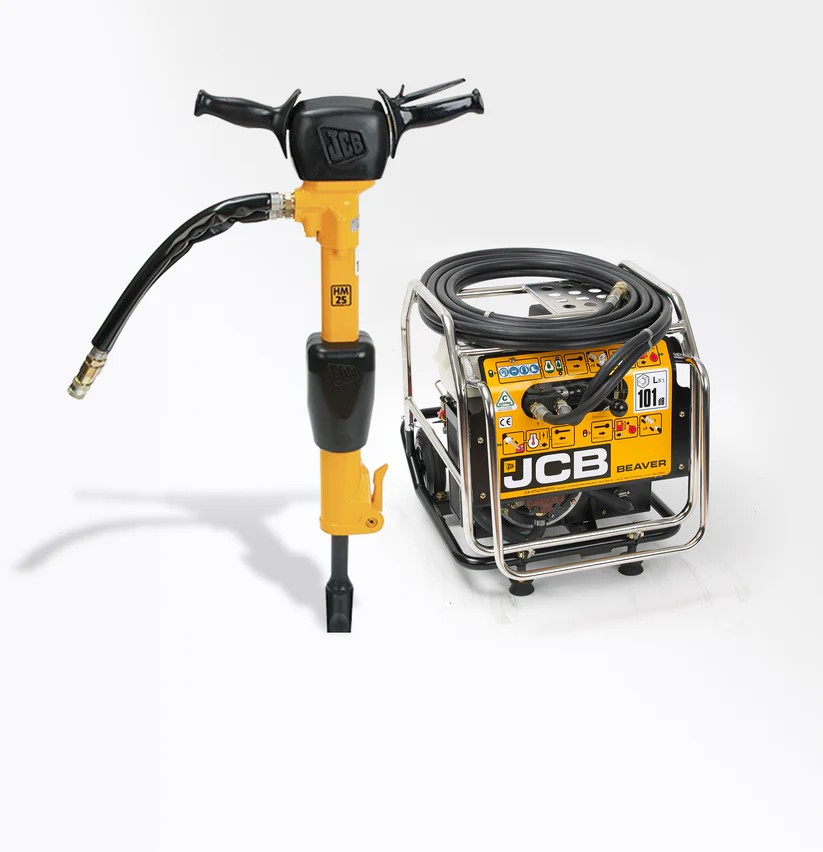
Ah yes. Dumped in a stream bed including wood and plasterboard, for cash, for the next generation to deal with. You are correct that this is common. A proper waste company can supply a big skip for clean brick and concrete thar will go for crushing and be used as hardcore. Mix in wood and felt though and the cost will rise. I advise use of a good breaker. Jcb or Stanley. These are powerful and efficient. First form a line of holes parallel to the house to reduce risk.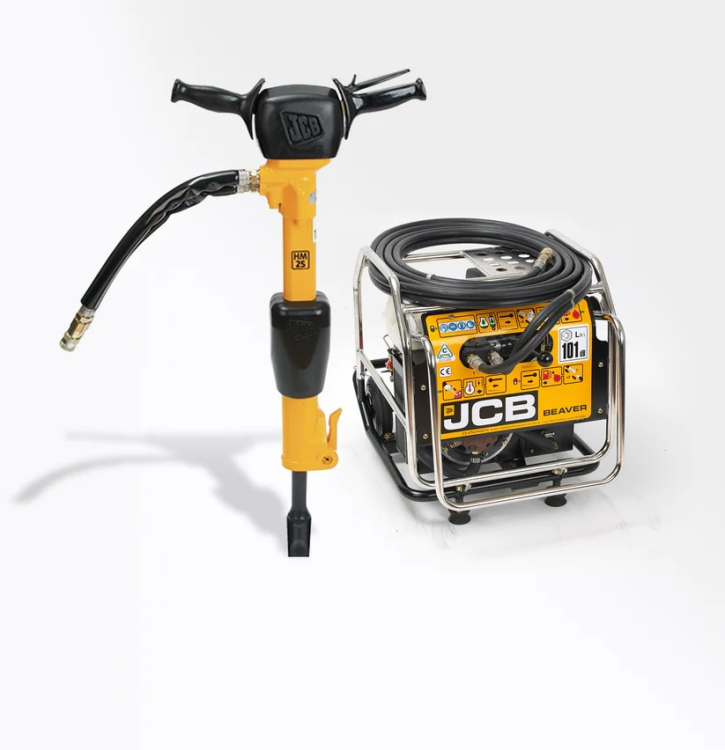
-
Hose and watering can will quickly prevent any dust from scattering, which is the main / only risk. Well, apart from falling while doing it. Have a look at the guidelines on the HSE website. Practical and simple, and very handy to show to concerned neighbours.
-
Can we improve the ashp insulation?
saveasteading replied to saveasteading's topic in Underfloor Heating
Isoflow ! Got there eventually. -
Can we improve the ashp insulation?
saveasteading replied to saveasteading's topic in Underfloor Heating
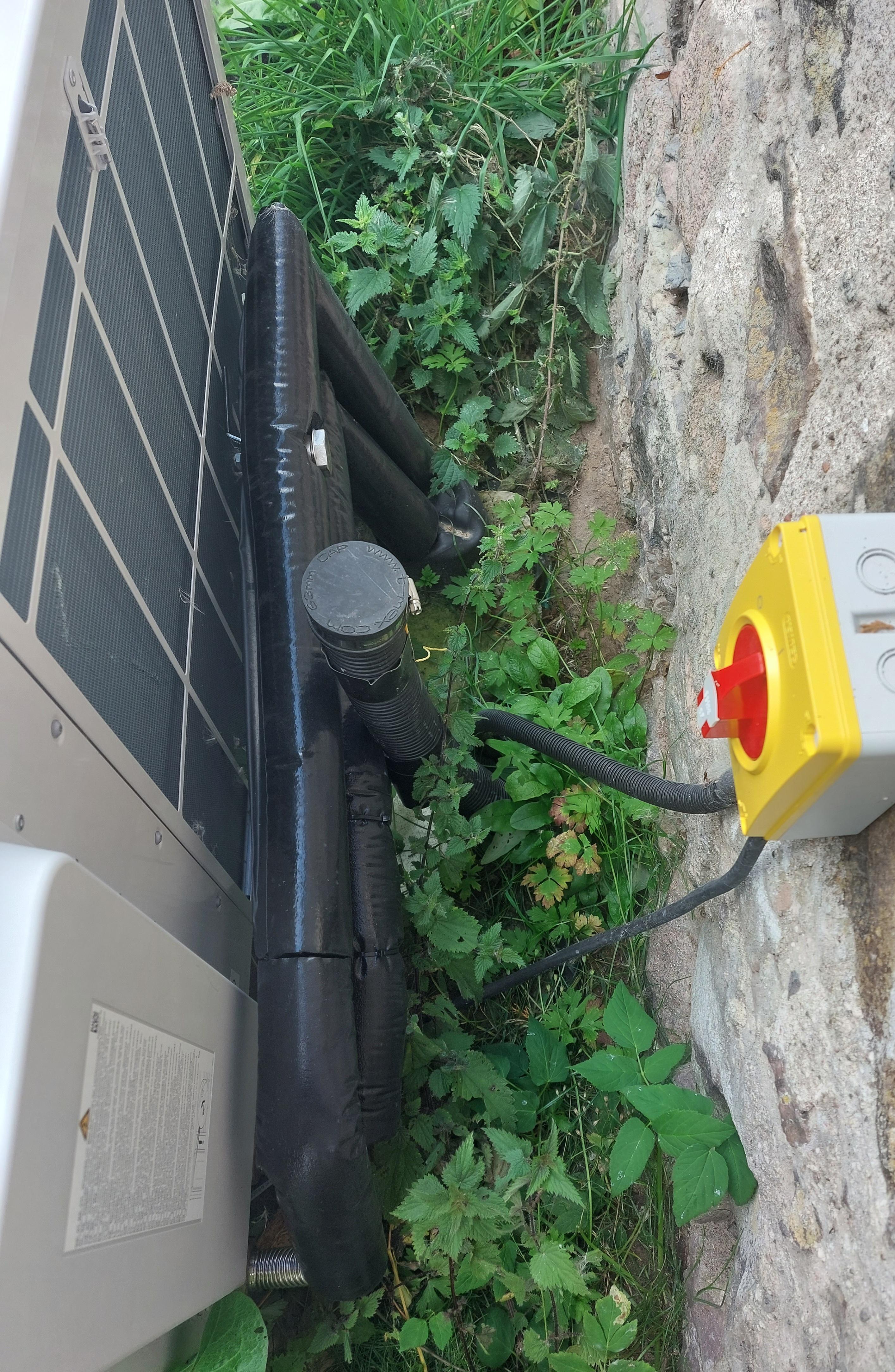
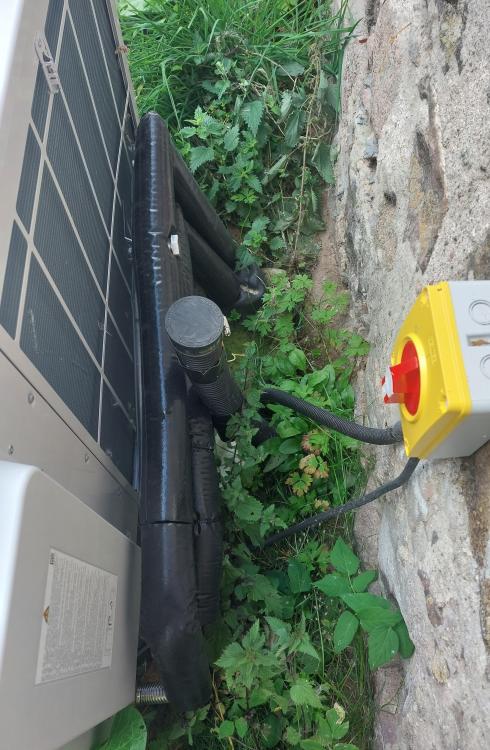
yes.,a little bit once the empty duct is cut back. That will free the passage of air for fan and radiator efficiency , and also reduce the flow of ambient air over the heated pipes. It feels though as if we should be able to wrap the pipes another time, with something that wont ping off. It will need to be retained as it sits naturally where it is now. A bit of stick will do it. I can't see that the velocity affects overall heat loss.It allows that module of water to escape with reduced heat loss, but it will be back again soon. Thinking about it, any loss of heat from the passage of air will pass immediately into the heat exchanger and be captured again, and again...and again..... -
The ashp works fine, albeit not in the winter yet. I'm just thinking that this setup is going to leak a lot of heat from the feed and return pipes. There is a nice insulated surround to each copper pipe, with velcro closer. But I'm thinking this is handling the entire energy and so is the most critical area for attention. The stopcocks stick out too, providing a heat sink. On the other hand, this assembly is already impeding air flow and we shouldn't add much to that. The copper pipes connect at ground level to the proprietary red and blue pipes in insulated duct thingy ( which has a name) which goes under the footings. The other duct seen here vertically is a spare, and can be removed. We know it needs weeding but internal construction of phase 2 takes precedence.
-
HVO 90% less CO2 than Kerosene?
saveasteading replied to ProDave's topic in General Alternative Energy Issues
@JohnMo that's good info. I've met lots of people giving lectures on green fuel, and lots extolling their "green" buildings. I can't recall any having the faintest clue about the realities, or anything varying from the script. Sadly, many of these worked for quangos influencing policy. -
Screening design for heat pump - comments invited
saveasteading replied to JamesPa's topic in Air Source Heat Pumps (ASHP)
And then you can write the definitive book on the subject. I don't think this fence is down to mass, just blocking and breaking up the sound waves. If it looks good and purposeful, the neighbour won't be seeking problems. -
Self build funding - what would you do differently!
saveasteading replied to Harmony's topic in Self Build Mortgages
I normally say to a potential client at first contact that they can be in the building in a year. That sometimes includes planning if they allow full design to commence. The reaction was 50/50 seems a long time / that's good. What to add to that? Time lost through client changes or stipulations. Can it be done quicker? A little quicker for a large extra cost, because you are giving us risk. Realistically say minimum 18 months construction period unless you are a very experienced construction manager or accept a standard kit building on a perfect site. @Harmony we are all sounding negative, but in your interest. We now need your response to confirm you are listening. -
HVO 90% less CO2 than Kerosene?
saveasteading replied to ProDave's topic in General Alternative Energy Issues
Is there a rogue decimal point in there,ie both close to 0.3 or 0.03? -
HVO 90% less CO2 than Kerosene?
saveasteading replied to ProDave's topic in General Alternative Energy Issues
The reason I was involved, was a LA thinking of running their buses on their own diesel from cooking oil. However they, probably rightly, decided it wasn't so obviously green as first thought*, and to drop the idea. As discussed above, it's easy to alter the parameters to prove non- sustainability or Green-wash * I and others involved probably talked ourselves out of a nice project, but for the greater good. Interesting though... and if you want to know how to build around an explosive operation (the roof mustn't land in a suburb) , let me know. -
HVO 90% less CO2 than Kerosene?
saveasteading replied to ProDave's topic in General Alternative Energy Issues
You are right. Collecting and converting old cooking oil to diesel is good. Better than dumping it. However the diesel itself is then a small part of the supply and no greener. I beleve it can be sold at a premium to businesses who want to shout about how they use this stuff. Or 'our buses run on chip fat"....an excuse for not going electric or hydrogen. I've also seen the argument used in planning applications, as if a tanker of chip fat diesel is any better for the streets of london than one from saudi oil. The carbon is still burnt. Of course its better than dumping the old oil. But is it better than incinrating it for electric power.....i dont know. It's an expensive conversion process with explosion risks, and results in some nasty by-products too. -
Screening design for heat pump - comments invited
saveasteading replied to JamesPa's topic in Air Source Heat Pumps (ASHP)
Can i return to basics? Your design is good. Planks hit and miss on opposite sides is good practice....look at motorway sound barriers. Do it and see how it works.