


Modernista
-
Posts
62 -
Joined
-
Last visited
Everything posted by Modernista
-
outer hebrides it seemed like a good idea at the time…
Modernista replied to Chris HB's topic in Introduce Yourself
Good Luck Chris (from a fellow Hastonian) - I hope the planners are on board as I've heard of other similar acquisitions on Lewis where development never happened..... -
Probably a silly question but seeing how good-natured you folks are I will ask anyway - I've just single-glazed a small internal borrowed light with beads and linseed oil back putty - am I ok leaving the final clean off of putty at the edges until after the back putty has hardened? When I try and do it now I keep catching the exposed edge of putty - but just worried if I leave it until the putty is hard I will struggle to remove the smear round the edge and I don't want to resort to scraping/scratching (or live with a smeary edge!). Maybe just white spirit or something later?
-
Does our house wall look structurally sound?
Modernista replied to Spetznaaz's topic in Bricklaying, Blockwork & Mortar
Once you've done the general overhaul, a simple coat of black paint and some contrasting cladding can make a difference. I know it's a semi but increasingly I'm seeing funked-up houses one side of a pair or at the end of a terrace. Cheap and easy fix....though not sure if the white upvc is new / being retained (can also be painted as other recent post).thumb.jpeg.af9b3836a0b9d56941d141d5f2448aca.jpeg)
.thumb.jpeg.4ec082a55321303b23bf1d331aa48b15.jpeg)
-
I hope your Scottish local authority gives better service and query turnaround than ours - our building warrant (for renovations) took 6 months to secure even with an SER certificate in place.
-
My wife just painted a brown UPVC porch frame black to match our Rationel windows, using Zinsser AllCoat (available in white also) - absolutely brilliant job and looks like frames were originally black. A bit tricky to paint in some hard to get to places, but the effect when closed is great. She used brushes only (round ones alongside the glass, and no masking tape either) (I am not trusted with a paint brush)
-
I agree regarding the idea of a large utility room - especially if you plan to keep your kitchen / diner / lounge uncluttered as a bit of a feature. Our large utility room houses all of the crap and means no appliances on worktops in the kitchen (not even the kettle). With that layout you could connect the utility directly rather than a separate entrance - it would be much more use. On the architects front what was agreed in terms of RIBA level / fee scale? That (partly) determines how much intellectual input you'll get..... On a personal front I'd question the need for all that en suite space that will end up being damp and smelly. Depends on the occupants of course but a jack and jill might work somehow in that upstairs layout in order to cut a bathroom out.
-
There's a tricky balance (which I'm not sure we got right) if you plan to live in a property during major renovations. It's very easy to get drawn into work and expenditure to make short to medium term life comfortable that you may have to partly or wholly unpick later when you understand how the house works or see other opportunities. This starts from the beginning and includes any use of of architects and engineers where you think you know what you want and in reality you don't - so even the fee spending emphasis can go in the wrong direction. Perhaps there's never a perfect answer to this, but if I were to say one thing it would be to avoid burning boats in making parts of the house habitable for the short term.
-
I would try and lose those top two risers by making it 13 risers with 4 winders at the turn. It will increase the required going per tread to stay at 42 deg but if as you say headroom isn't a problem then you could push round a bit towards bottom flight. A good stair builder will be able to minimise the going along the 3m long wall by setting out those 4 winders carefully so they were partly housed into the string of the lower flight rather than just at newel. You haven't said if there are any restrictions at the top landing if you exited straight ahead without the turn in the way I'm describing? (i.e I'm not sure if you are just trying to avoid breaching the ply web beams/joists or have to have a turn at the top because of wall configuration)?
-
Recession + building trade = ?
Modernista replied to DazRave's topic in General Self Build & DIY Discussion
I don't see massive reductions in raw materials on the horizon beyond a few odd deals on over-stocks. Energy, interest rates, food and supply chain problems will keep the upward pressure on prices and those will translate into some overtime reductions and job losses in manufacturing as demand slows, rather than price reductions. There will definitely be a drop in consumer demand overall affecting refurbishment and appliances but there are still plenty of sought-after locations in the UK where property demand outstrips supply and the buyers are those less impacted by immediate inflation, so I think that will keep the engine going and keep many trades busy. Larger spec housebuilding on peripheral sites might slow - but there's probably scope in the margins there for some house price reductions and deals, and because of the shortage of housing the demand will begin to increase again. So I reckon it will be patchy. -
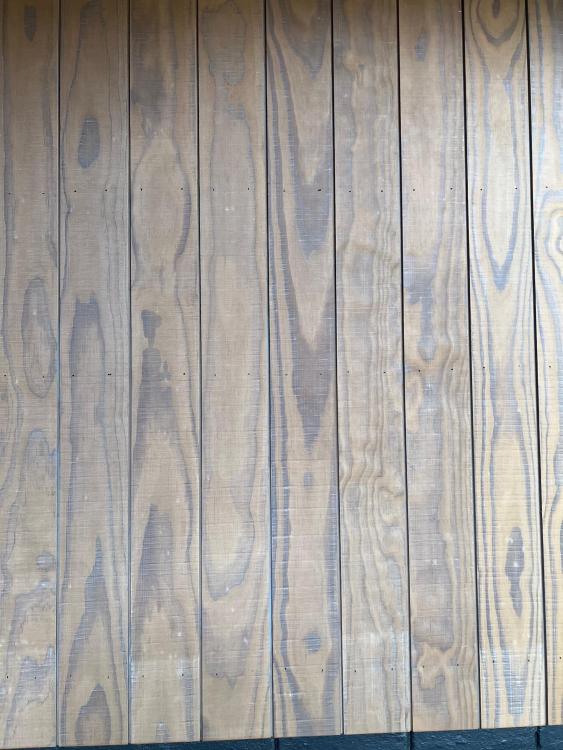
Just for comparison we've just face-fixed our vertical Adobo (Radiata Pine) cladding with stainless steel nails and nail gun. There are six nail holes showing per board in this pic if you zoom in. A nice quick way to fix - and it has a fine sawn face rather than planed so nailing fine plus sits recessed under deep soffit so quite sheltered.
-
You could consider a (within regs) step down from the house to the balcony level so that the level that the 1100mm was measured from was at least a bit lower than the internal FFL. I've been looking at tensioned steel wire solutions where I have a similar situation as I think it will be less obtrusive than a forest of balustrades and not need constant cleaning like glass.
-
I'm sure you've thought of it but won't it affect the view when you are sitting or in bed in that upstairs room? Especially if you have vertical balusters like that? the balustrade height in the drawing you posted just now looks low in proportion to the doors (and compared to the one you have been eyeing up).
-
Rationel Windows, recommended way to couple?
Modernista replied to DukeOfTarp's topic in Windows & Glazing
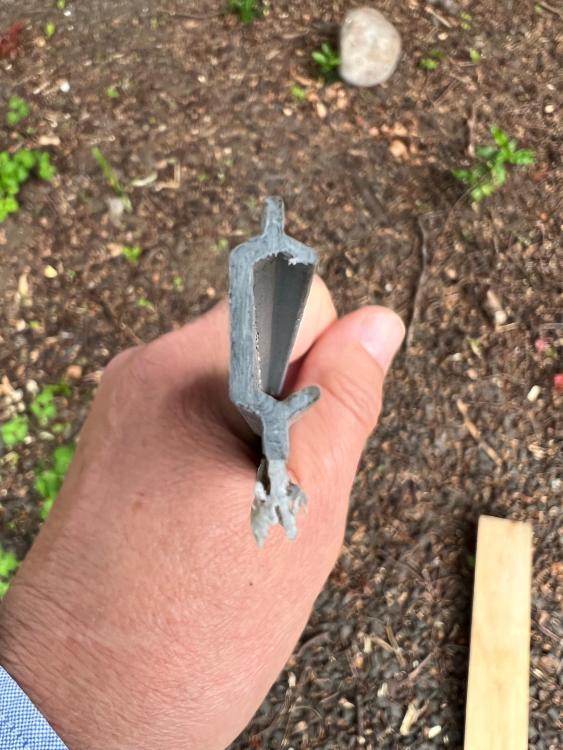
I wonder if it may be different for door frame sections (we used the casement 'windows' as doors to have slender sections so they were effectively big windows but just to say as an aside that Rationel will make them 2.4 high without a transome so very good from that perspective). The standard detail still includes the caps and screws as others have noted but obviously this can be hidden in a rebate where you have opening lights. But the joining strips give a very neat airtight joint without anything showing.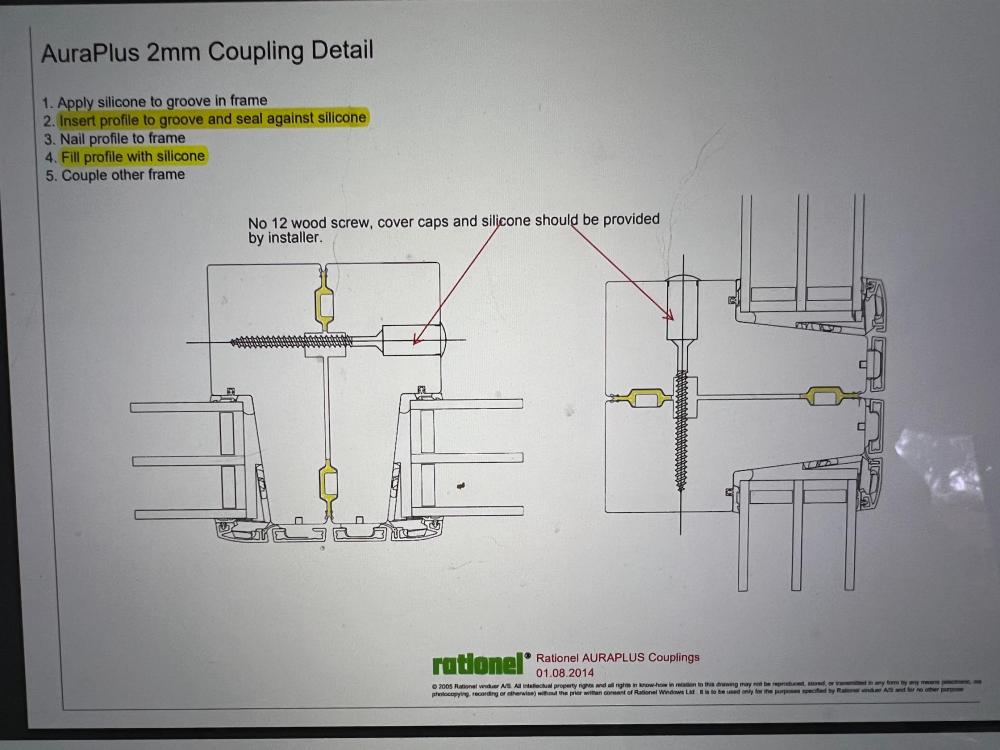
-
Rationel Windows, recommended way to couple?
Modernista replied to DukeOfTarp's topic in Windows & Glazing
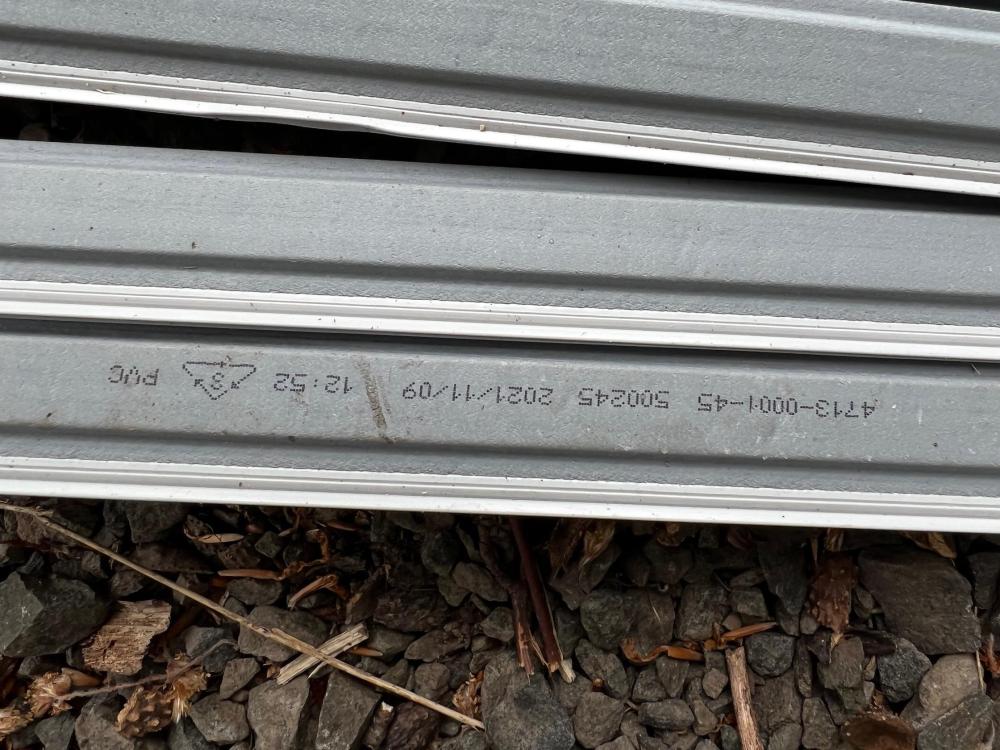
We've been using the Rationel jointing strips and the joiners have coupled as per Rationel instructions and all fine.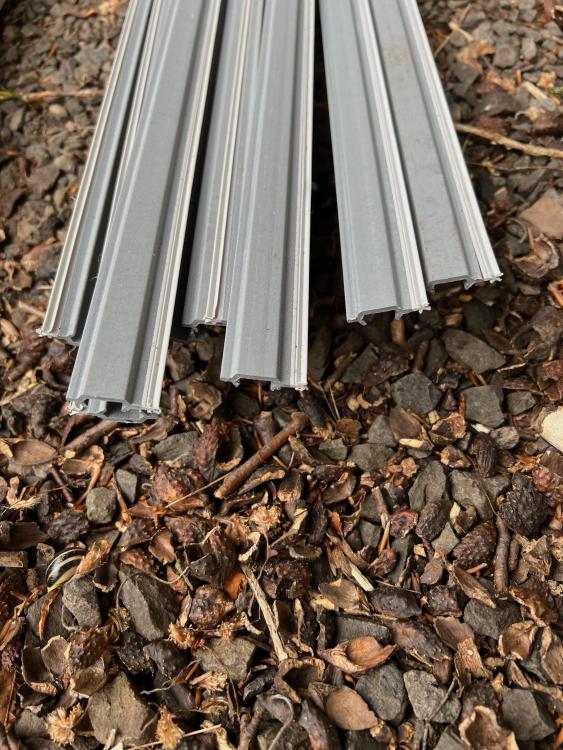
-
Fixing timber firring pieces to steel joists
Modernista replied to Modernista's topic in Garages & Workshops
Thanks both, I'll do that -
Fixing timber firring pieces to steel joists
Modernista replied to Modernista's topic in Garages & Workshops
Thanks, they sounds ideal. Will give that a go. I seem to be behind the curve with fastener technology - I only discovered the brick screws you can get nowadays last year and given that our house renovation is entirely brick walls they've been brilliant too! These look like the equivalent for metal. Thanks all, much appreciated. I think I will fix a consistent depth 47mm packing piece with these screws so I only need one length and then fix the variable depth firrings timber to timber on top. -
Fixing timber firring pieces to steel joists
Modernista replied to Modernista's topic in Garages & Workshops
Thanks both, will look into both those options. I guess I was trying to avoid all that drilling.... -
I'm using some existing steel rsj beams (already in position) to support a new roof deck to an existing garage comprising sawn parallel pieces / firrings of varying thickness to give a fall for a ply deck and I'm wondering how to fix the sawn timber to the steel? Perhaps some kind of metal strapping or cable ties wrapped tightly right round the steels? The whole roof deck will also have a good number of L shaped metal holding down straps at the perimeter fixed to the brick walls (so less worried about the deck staying down). The ply will also be screwed to the firrings but I'll need some way of them staying in place before the ply deck is laid. What about adhesive instead? The appearance underside isn't too important. Any suggestions welcome. Thanks. Doc 03 Jun 2022, 3.41.pdf
-
Really impressive transformation! Clearly an unusual building to begin with in terms of the battlements etc! Nice choice of finishes. Be interesting to hear how the present valuation stacks up against acquisition and build costs.
-
Siberian larch vs sweet chestnut cladding
Modernista replied to PeachyBeechy's topic in General Construction Issues
After going round in circles on wood cladding choices and getting very close to ordering Siberian Larch we've just settled on heat-treated radiata pine (Abodo). It's from NZ so can't beat home grown on wood-miles -and may be on the dark side colour-wise for some tastes but we've been worried about wetting and splashing in our house-with-no-gutters. We're having it stained a straw colour and it's to contrast with black-painted brickwork, so fingers crossed. Will post a pic when it's up. -
Any hints and tips regarding new sedum roof for garage
Modernista replied to Modernista's topic in Garages & Workshops
Thanks - yes I was thinking of doing that on the engineering front. Interestingly, the previous owner clearly had a living roof idea in the 70s as there was a 200mm layer of earth on top of the concrete (with no membrane under!!) and I think that must have contributed to the demise of the concrete over many years, even though he later covered it (earth and all) with a pitched roof and added the steels under with ply panels to catch the fist sized concrete chunks that started to fall from the underside of the roof! As it is just a garage we think we will DIY the sedum roof on a pro-built roof deck and membrane. Looks like an amazing project that you have! Presumably OSB is ok as the decking if you have a sealed membrane on top? I was thinking we'd have to use plywood of at least class 2. Are the drains to your living roof integral? -
Any hints and tips regarding new sedum roof for garage
Modernista replied to Modernista's topic in Garages & Workshops
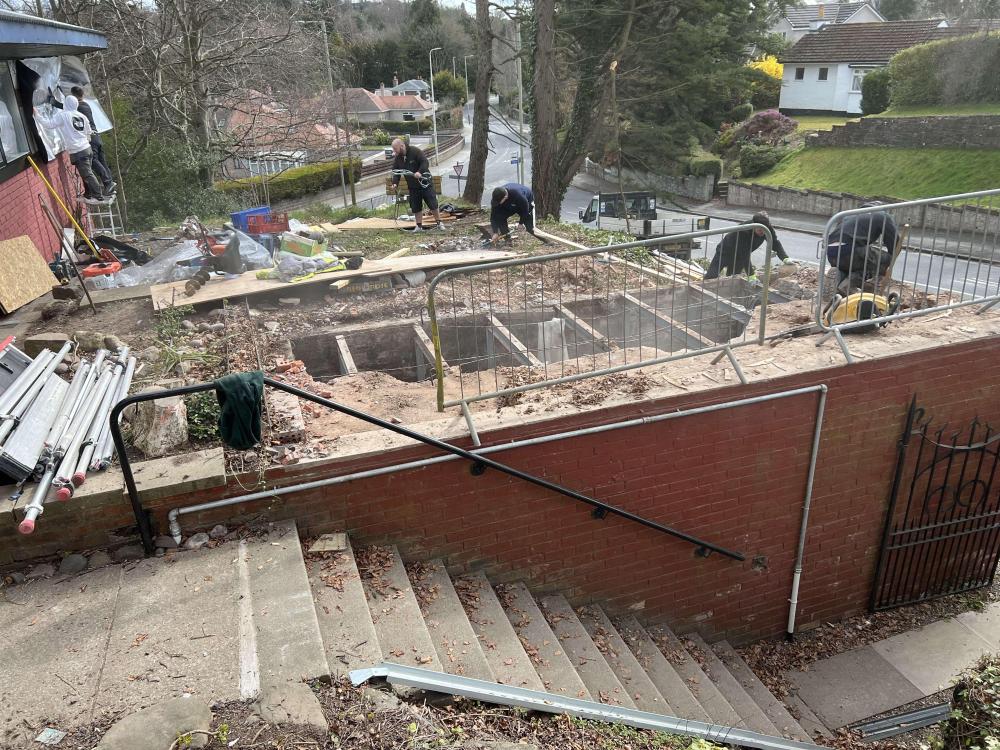
Thanks for the interest - here's a couple of pics. The steel you can see inside the garage will be going (it had been put there for safety by a previous owner because of instability of the concrete roof). In terms of using as part of a garden probably not, we don't need extra garden and would have to guard it too - so we will stick with standard sedum species mix for vegetation.
-
We've just demolished the (unsafe) reinforced concrete roof on a 60s garage which is recessed into a bank (so the roof is easily accessible from the adjacent garden). Approx size 3m x 6.5m. We plan to replace with a lightweight, pebble-edged sedum room on a fairly standard timber roof (44x170 C16/ 400cc, 18mm EN636:2 ply deck and EPDM base membrane). Be interested on any hints / tips / trusted supplier suggestions (we are in Scotland). Also any experience of creating a drainage fall across the width - do we need more of a slope than a standard flat roof? Any suggestions for best way to have water run-off points at the pebble edges? The previous roof had been covered over with a pitched roof to slow the concrete decay and that discharged straight to the ground without any problems so we can do that again - or we can add a gutter if necessary - or even an integral drain point as there is a garage floor gully and we will only be using the garage for electric bike storage and charging, not a car.
-
Thanks. I'll post again on this when I find out more.
-
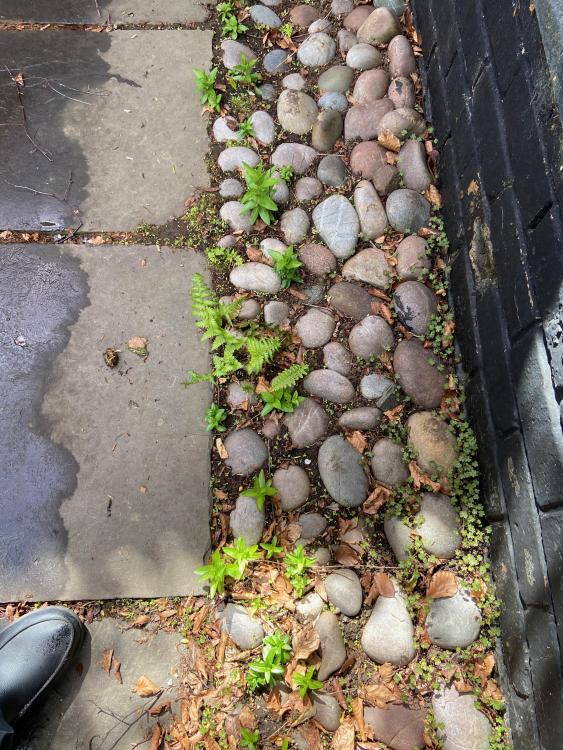
Just by way of a postscript here is a pic of the possible french drain. I can't dig it out to inspect the layers underneath until I own the place next month but it does look like the stones aren't set in any mortar or grout - so it looks as if you are right about the decades of muck - thank you! The alignment isn't directly under the roof run off (see the wet line in the pic) but presumably that reduces the chance of any gravel infill etc being eroded by falling water. Looks like a maintenance job required - but I'll also need to find out where it goes as the foul drains are choked with tree roots and any drain runs from these french drains to any soakaway will be no different probably..... These are only present where there is paving. Elsewhere the run off is direct to ground (although again it may be that any original french drains are just covered with layers of general leaf and soil debris.)
.jpeg.a35fe6a42726bde468ca48db5155d598.jpeg)
.jpeg.a2d9f04887268837077083ea1f878f82.jpeg)



