markocosic
-
Posts
979 -
Joined
-
Last visited
-
Days Won
1
Everything posted by markocosic
-
Mad idea for DHW retrofit based on Mixergy?
markocosic replied to JamesPa's topic in Air Source Heat Pumps (ASHP)
Name of the firm, for reference? If you can show they double counted that's ground for not paying a penny for the garbage. - Use the MCS worksheet directly. - Split it out by fabric vs ventilation - Make the ventilation more reaslistic - Subtract your incidental gains (not just hotel load electricity which all equals heat but also your incidental gains from cooking / laundry etc much of which end up as internal gains The rest may be be due to it not being as cold as you think during cold snaps (AVERAGE of -2C for example; not just -2C overnight) and your comfort criteria being relaxed in cold snaps (ok ok 18C is ok rather than 20C) The heat loss spreadsheet provided by Jeremy via this forum is as good as any for a baseline. MCS worksheet is only useful for seeing the approximate distribution internally / sanity checking radiator sizes. Their ventilation assumptions are insanity though. -
Mad idea for DHW retrofit based on Mixergy?
markocosic replied to JamesPa's topic in Air Source Heat Pumps (ASHP)
They're offering what they offer today. Most won't know what might be coming or care to build up projects for the future if they're not interested today. Many won't have a clue how to size up what they're fitting today either. (if your measured heat loss is 7.5 kW there's something very amiss if it comes out at 14 kW) Tesco won't let you know what's on offer next week either. In a market where demand outstrips supply if it ain't interesting that's perfectly ok you're welcome to jog on. Not what the consumer is used to of course; or what they'd like; but it's probably the reality for the next few years and entirely reasonable where there's loads of work and time spent quoting the non committed is wasted time. At least material prices are back down to not entirely insane lead times and prices. That includes the heat pumps themselves. My experience was the opposite fwiw. Initially utterly full of excrement when challenged as to why a property running at 55/47C on a gas boiler couldn't be heated at 55/47C by a heat pump - and only reluctantly admitted "we're just not touching anything with microbore right now" when called out on it. Or people without his and hers EVs and large houses that are good buyers in an electricity market where the marginal rates charged exceed actual coats but the overheads charged are below actual costs. -
Mad idea for DHW retrofit based on Mixergy?
markocosic replied to JamesPa's topic in Air Source Heat Pumps (ASHP)
Smallest heat pump; biggest radiators. You can change the default MCS assumptions on heat loss and ventilation rates and room temperatures and still qualify as an MCS installation/for your £5k. An assumed room temperature of 18C at design condition.is perfectly acceptable too. If that's the expectation Else insulate or add supplementary heating if you find that you were too optimistic. An air oto air unit that kicks in 2.5 kw of heat or cool works wonders for avoiding radiator changes etc. -
Mad idea for DHW retrofit based on Mixergy?
markocosic replied to JamesPa's topic in Air Source Heat Pumps (ASHP)
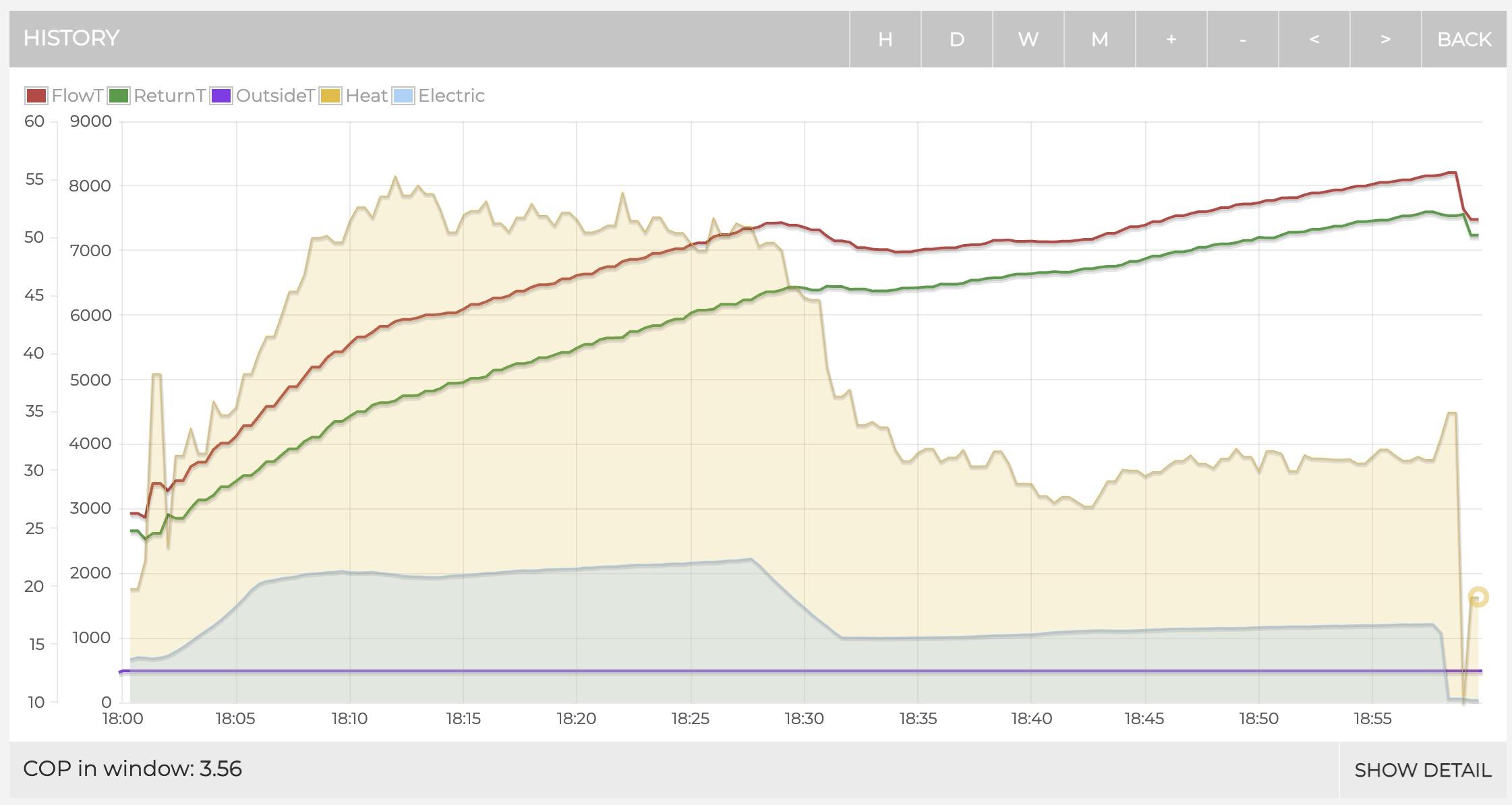
Absolutely spot on. On the flipside of this: - You'll find that most of the installations where the end client took advice, installed a proven packaged solution, and kept it simple by following a known recipe or a known heat pump with a known space heating delivery/control strategy and a known hot water provision and control strategy. - You'll find that most of the installations "that decided to do it their way" wind up with unexpected headaches and / or are overly complex and overly fragile. The grand designs type customers can be the absolute worst. The industry needs...to get good at walking before it tries to run...to deliver turnkey off the peg suits before it goes custom designed saville row etc. I think entertaining vented cylinders will be a headache not worth the risk given: - Vented is lousy from a user experience perspective anyway/half the value of the heat pump upgrade is decent potable water delivery - Vented is likely to be too small for "modern life" anyway and even moreso at the lower storage temperatures useful to heat pumps - Vented is an increased biological risk at the lower storage temperatures useful to heat pumps (header tanks are disgusting lukewarm buckets of rat piss; cylinder full of scale from being heated at high temperatures are never heated all the way down to the bottom because it's impossible; hence trying to pasteurise them within the hour by use of 60C+) - Buying and then plumbing and warrantying a plate, pump, and controls to legacy pipework and cylinders (time = money; individual tasks on site = risk; something that tinkerers usually neglect) is not attractive vs bolting in a new factory made piece of kit - You're probably tearing up the house for other reasons too I just don't see this ever being worthwhile. I buy the argument for "making it work" with an existing cylinder: If you have a modest property with a modest space heat load (particularly if it's had insulated attic / blown cavities / double glaze retrofitted since the heating circuit was designed) then your heat pump perhaps stands a chance of turning down low enough to work with a low-area coil as found in most unvented cylinders. You're probably talking 6 kW or smaller here. It's possible that you're going to have a headache configuring your heat pump to work with a heat transfer area smaller than is intended. It's probable that you take a lifetime performance hit. It's also probably that you make the heat pump work harder than it otherwise ought to. Ye olde control? I have a fixie ground source unit here. Control strategy? If hot water cylinder drops below 40C (measured 1/3rd of way up cylinder) start the compressor at the only speed it runs at. When refrigerant pressure hits 28 bar stop the compressor. With the OEM cylinder that'll correspond to a tank temperature of the order 50-60C depending on what the brine temperature is at the time/what the temperature profile in the cylinder was at the time. Plus a couple of safety trips if the compressor hot gas outlet exceeds 130C or the pressure exceeds 30 bar. It doesn't care what you hook it up to though. It runs until it can do no more and the temperature will be what the temperature will be. A Vaillant Arotherm? - Normal mode allows 120 revs/sec on compressor ( - ECO mode allows 40 or 50 revs/sec on compressor (unless very old outside) - Balanced mode runs at full output when the return from cylinder is <45C (i.e. there's no "usable" hot water") then drops back off for final heating (where trimming back the compressor frequency and flow temperature matters most for efficiency and longevity) It'll again start a reheat cycle when the cylinder temperature 1/3rd of the way up drops below setpoint X; then it aims for a flow temperature of Y degC above the measured cylinder temperature; stopping when the stat 1/3rd of the way up hits Z degC. Here's an example of the "balanced" mode in operation paired with an OEM cylinder (and coil area) From: https://heatpumpmonitor.org/ https://emoncms.org/app/view?name=MyHeatpump2&readkey=0c28f25dea9e38f983d9c83a6dd455c0 (the "Telford" property with "5 kW" nameplate unit in a pre-1900, but insulated, 140 m2 property - definitely not one calculated with standard MCS assumptions on ventilation rates and net heat losses!) DHW is set to "49C constant" for that unit so it's just reheating the cylinder as soon as the target temperature drop has been reached. The bottom is properly cold by that point hence starting with returns in the mid 20s. It's not turning down below ~3.5 kW. With, say, a 2.4 m2 coil the coil deltaT is 3 degC flow:return (55/52) and 4.5degC meancoil:tanktemp (53.5:49). With an 0.8 m2 coil tat might be 9degC flow:return on the coil and 13-15 degC meancoil:tank temp. It could be made to work (the unit will achieve 70C flow temp; so you won't even be limited to 45C tank contents) but you'll have a poorer COP, you'll be wearing it harder (higher temps = higher pressures), and you'll be making more of a racket outside in the process. Doable with a *small* heat pump. Much above a nominal 6 kW though and it'll be unable to turn down far enough / start bouncing off high limit stats and safeties if you can't dump enough heat into the piddly little coil in the standard unvented cylinder. You could stretch that with a de-stratificaiton pump; but now as soon as the hot water reheat starts you have zero usable hot water; or you could go with an external plate and pump and control assembly to load it again with zero usable hot water once that kicks in) Or you could...just...put a ruddy cylinder in that has a large coil from top to bottom that offers a good compromise between reheating efficiently/quickly from the heat pump vs operational/maintenance complexity (pretty hard to break a cylinder that just has a coil inside) vs hot water availability (having a bit of stratification at the top of the cylinder doesn't in fact hurt you) vs install hassle/risk/cost. It doesn't' cost much to try it with the existing initially. I wouldn't try it with a sizeable heat pump though. And I wouldn't spend more than five minutes fiddling with it if it didn't work out ok. At that point you might as well just swap the cylinder IMO. (though you pay 20% VAT if doing upgrades after the fact now) Potential interesting aside: Another tweak that I think you'll see when propane splits become more common is de-superheating. Heat pumps can produce two grades of heat simultaneously. A little bit of high grade heat (high temperature heat) and a lot of low grade (low temperature) heat. https://www.swep.net/refrigerant-handbook/10.-systems/asdf7/ In air source monoblocs these all get mixed together. It would be a pain to run three pipes through the wall. In packaged ground source units desuperheating is viable. All the time that space heat is running (at say 35C supply temp) you also get a little bit of very high temperature heat going into the hot water (up to 95C before they cut the desuperheat to avoid boiling the tank); but without any penalty on COP (which is the same as if you were running at 35C) Works best for properties that need a lot of space heat vs ht water. (i.e. cold climate/old build) The same trick is vaguely practical (not quite as easy / you need to be careful not to cook the lines running from outside to inside / you will lose more of that superheat en route) on air source splits where you're brining the refrigerant into a combined unit indoors. Perhaps we'll see it on those too.
-
Mad idea for DHW retrofit based on Mixergy?
markocosic replied to JamesPa's topic in Air Source Heat Pumps (ASHP)
If the system has enough flow/radiators for 8kW at say 45/40C, it'll also do 4kW at say 35/30C, and then it'll cycle below this. Running at say 50% of the time to achieve a 2 kW average output is the right thing to do here. Running at poor efficiency 100% of the time is the wrong thing to do here. Why would you ever need the option to reduce at reduced output? You wouldn't IMO. Unless you'd oversized the heat pump and was unable to run above minimum output. In which case you'll be bouncing along in that low efficiency zone the entire time. Avoids support calls for "heat pump won't run" though. -
Good hoover for cleaning a building site
markocosic replied to JohnBishop's topic in General Self Build & DIY Discussion
Sorry must have sent wrong link above. https://www.amazon.co.uk/Trend-D2-AIR-PRO-Airshield/dp/B096M7LSM9 They can be had for sub £200 Inc the VAT when on offer - try a camel camel camel alert on Amazon. Full face mask, ear defenders, and air fed via filter. Honestly life changing vs mask and glasses or mask.and goggles - you can see what the chuff you're doing even if breathing heavily into an otherwise cold mask after eating garlic for breakfast and even your hair stays free of wood chip etc. It's now something I pickup even if "it's only a little dust" as convenient vs the face nappy style mask; as pleasant rather than unpleasant. Try one if you ever have the chance. You'll not be disappointed!
-
Mad idea for DHW retrofit based on Mixergy?
markocosic replied to JamesPa's topic in Air Source Heat Pumps (ASHP)
Fair. Too strong a word. They're real issues to optimise around not imaginary ones though. Real limits to turndown at practical price points and ones that are not actually worth solving to boot. Yep. I agree 6 kW is achievable on 22 and that's indeed the example I used. Going beyond 6 kW will want 28 mm primaries. But if you're fitting a 12 kW heat pump (for space heat) and have 22 mm primaries then you'll be making a ruddy mess of the house anyway to get your 28 mm primaries in. What disruption have you really saved by plate-loading a janky old cylinder that'll likely be undersized anyway and moreso at modest storage temperatures? For the smaller heat pumps it's easier to recycle the primary pipework. Then it's briefly worth thinking about retaining the cylinder to minimise disruption. But you probably still swap it out for one of a more appropriate size and heat loss; at which point you can fit one that has an appropriately sized coil in it and be unvented-ready when the time comes that you're prepared to migrate your potable pipework/fixtures over. -
I'm scheming the kitchen. Is it daft to consider a non-quooker tap for a quooker? We are on a borehole with water that has plenty of iron in it. Whole house water will definitely get a de-ironing filter. (inject air, oxidise iron to brown gunge, filter out the iron) These tanks will be insulated somewhat to reduce condensation. (borehole water is at a chilly 5C pretty much year round) For drinking water there will likely be an additional filter set under the sink. These have a piddly flowrate (of the order 10L/hour into an expansion vessel) There will also be a Quooker because I fancied one in place of a kettle. This could be filled from the drinking water unit. Taps options are therefore: Mixer with: - de-ironed cold water from a fat pipe (for pot washing flowrate) - de-ironed hot water from a skinny pipe from the cylinder (for response time) Quooker tap with: - de-ironed boiling water picked up off that cold pipe above or the drinking tap ouput Drinking tap with: - de-ironed and filtered cold water picked up from a skinny pipe from de-ironing tank (for response time/coolth) Or: Tap 1 (regular mixer) for regular hot/cold water Tap 2 (2* 1/4-turn handle mixer) for drinkable boiling/cold water Safety of there being no interlock on the boiling tap aside; would regular cartridges survive the boiling water? Pressure on the older style Quooker tanks is of the order 8 bar. Temperature 108C until released. As an aside their new tanks apparently don't need the inlet combination any more - the tank has a built in bellows to handle the expansion which is neat. Unclear what the operating pressure on those is. https://www.all-salts.co.uk/post/quooker-pro3b-boiler-tank-update
-
Good hoover for cleaning a building site
markocosic replied to JohnBishop's topic in General Self Build & DIY Discussion
A Class L unit to tolerate the dust AND not spread it into the air like cheapo vacs do. Something like this: https://www.tooled-up.com/makita-vc3011l-l-class-dust-extractor/prod/211939/ Get the cloth bags with the plastic entry rather than the cardboard one. Slide the bottoms off, empty them, turn them inside out, then chuck in the washing machine. Fold the end over and use a binding comb to seal it again to re-use it. You won't baulk at the cost of the bags this way / can use it for sucking up epic volumes of dust. The hose is small. It won't pick up lumps big enough to use a shovel on. That's probably ok. The shovel is faster! Pair with darth-vader style powered full faec respirator mask for personal protection fro the dust: https://www.amazon.co.uk/Trend-AIR-PRO-AIRPRO-Shield/dp/B081TWHB2X/ref=sr_1_1?crid=18P15ZAXSQC18&keywords=trend+airpro&qid=1681058151&s=diy&sprefix=trend+airpro%2Cdiy%2C184&sr=1-1 (better to buy that and a class L than a class M vacuum IMO) -
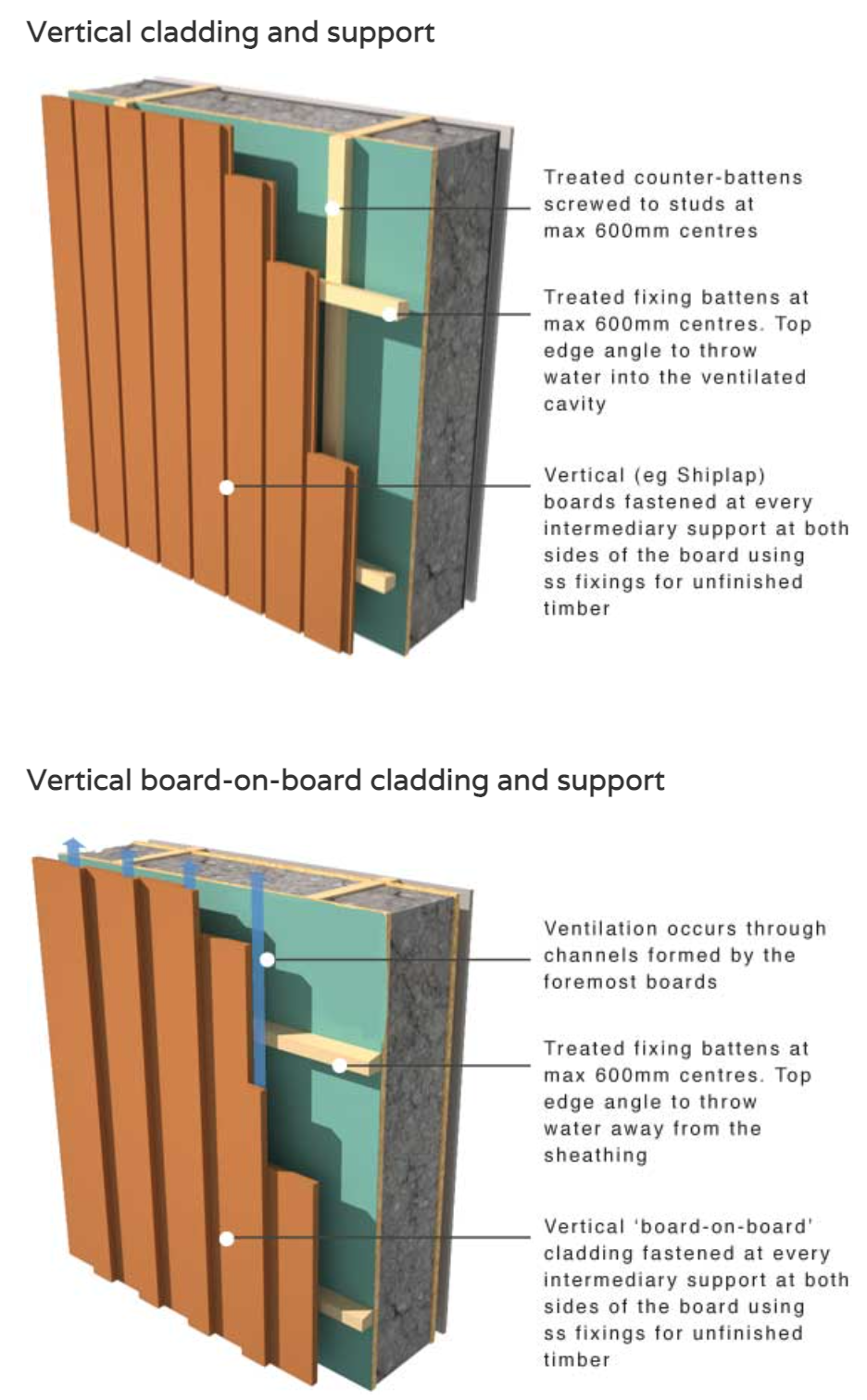
Is is mad to consider pulling intake air from BEHIND cladding? We have a board on board finish. 25x50 battens vertically every 600 mm. 25x75 battens horizontally every 600 mm. 150 x 25 board-on-board cladding on top of this; so a decent free area available for airflow: It would be nice to pull from BEHIND this so as not to have any visible intake vent for the MVHR. Is this daft? Is there any scenario where we're going to deliver too much into the cladding by doing so? (first thing in morning when ambient air is warmer than the wall that's cooled overnight?) Else any ideas for neat vents for black board on board cladding? The exhaust I had planned go drop through the floor into the 1 metre high / open all sides space underneath it (it's on groundscrews/piers) again to avoid a visible vent.
-
Mad idea for DHW retrofit based on Mixergy?
markocosic replied to JamesPa's topic in Air Source Heat Pumps (ASHP)
Heat pump efficiency is fundamentally / intrinsically linked to the supply temperature from the heat pump. You minimise the flow temperature needed (for heating a space, or for heating hot water) by reducing the "deltaT" between supply and return that is going to the heating system or heat exchanger for hot water. 5C is common. 3C yields improved efficiency in most scenarios. 8C is a tolerable compromise. 10C is about the upper limit and only tolerated by some heat pumps. Go do the math on pipe velocities and pressure drops. You'll find that you need 28 mm or even 35 mm primary pipework when operating at > 6 kW or so. You can't run 22 mm primaries on anything but the smallest heat pumps. You'll therefore need to replace the primaries running to the cylinders if you're wanting to heat the cylinder at any respectable power level. There is absolutely a fundamental / intrinsic problem with turndown. Compressors are available in various flavours. Rotaries and scrolls are the most common in resi sized units. 1) Compressors leak. If you run them at their rated outputs / rated speeds the gases don't have time to leak before they are compressed and shoved on their way. If you run them too slow then too much gas leaks past the internals of the compressor during compression. 2) Compressors need to last. If you run them at their rated outputs then the bearing loads will be balanced/neutral. If you run them below their rated outputs/speeds then the bearing loads (due to gas pressure, centripetal forces, etc) change and you'll increase load on bearings / shorten life 3) Motors are not efficient throughout their entire operating range. Nor can they cool themselves when running at low speeds etc. So in the real world you're limited to say 30 revs/sec to 120 revs/sec on a compressor before either the efficiency falls off too far for it to be worthwhile running at those speeds OR the bearing loads all go to heck and you destroy the compressor. So whilst you can turn down the units, even with today's tech, you'd be daft to do so. Nope. You won't find it written down because it stinks. DuPont have patents on the environmentally nasty gases. DuPont support the compressor vendors designing their compressors to use the nasty gases. DuPont lobby the regulators to make using noddy basic hydrocarbons difficult. So do the unions. (the F-Gas registration bodies etc) in much the same way as the natural gas lobby. Greenpeace had great success with fridges in the 90s; banishing F-Gas in favour of butane by doing some great demonstrators. DuPont didn't care because fridges were cheap junk. Is R290 a problem? Not in the grand scheme of things. The EU is about to allow 0.9 kg of R290 in split systems in the coming years. At that point expect to see a bunch of R290 splits not just the (low capacity) air to air units of today. For now it's just monoblocs (R290 outdoors is fine) and low-charge water to water units indoors (where volume of R290 is already below the limit where room size matters) The refrigerant cycle doesn't respond as quickly as dialling a flame up and down so cannot load follow. You also need to consider defrosting in cooler weather. A 25 kW+ unit wouldn't be able to turn down far enough to run a small basin tap. And efficiency would be pants if running at high delivery temperatures all the time Not viable. You run with a tank. CO2 is a very different beast. CO2 needs a high temperature drop (e.g. 60/30C) to work effectively; where a typical heat pump would be running 47.5/42.5 to deliver the same heat output from a radiator. It has potential for DHW heating. It has potential in district heating schemes too small to be worth the hassle of ammonia. Propane kicks it to the kerb in domestic applications. It is probably difficult to understand because it's such a dumb thing to do. Normal heat pump Step 1: compress gas Step 2: take off some heat (condense) Step 3: expand to a lower pressure (and temperature) Step 4: take some heat from outside (evaporate) Step 5: go back to Step 1 Samsung: Step 1a: compress all the gas Step 1b: "throw away" all the work that you put into compressing some of the gas by skipping to step 3 Step 2: take off some heat from the gas that is left (condense) Step 3: expand to a lower pressure (and temperature) Step 4: take some heat from outside (evaporate) Step 5: go back to Step 1 Say your compressor runs at COP 4 to produce 4-8 kW for arguments take; using 1-2 kW of electricity Samsung still put 1 kW into the compressor, but then waste that work by skipping the condense stage using hot gas bypass, so that they can give less than 4 kW output It's a dumb thing to be doing. They used to do this on old, fixed speed, compressors when they needed to do precise control of air temperature regardless of energy efficiency. Samsung have implemented in their new heat pumps so that idiots can plumb them into heating systems with a flowrate that's too low for the heat pump without tripping the unit out. Before "you're being bumd; increase the flowrate else I refuse to operate" and Now "sure I'll operate with a terrible COP at below the minimum compressor output if you want me to" Samsung do not provide modulation information OR part load performance information for their heat pumps. There's a reason that they don't want you to know. Misti provide some information. Also Vaillant. (example for 7 kW attached - and you can see the compressor led dropoff in COP at lower frequencies in spite of the oversized evaporator/condenser at lower outputs) A 2:1 ratio between "max output at minimum ambient" and "min output at max ambient" is par for the course / what to plan for. I think the 8 kW Samsung starts to do hot gas bypass at ~3.5 kW. Just below the minimum output is that the EU efficiency test uses to calculate the unit's performance. 😉 Defrost pretty much kills that proposal. You need 100+ litres to stand a chance of supplying hot water through a defrost cycle. The good ways to do this are: - Replumb and new cylinder (folks to stop being sissies about replastering/redecoration it really isn't that hard) - Split system and new cylinder (easier once the EU changes rules and we have almost 1 kg of propane to play with and reduces need to lift floors) - Separates (one heat pump for space heat, plus A N Other solution for hot water including a standalone cylinder with it's own heat pump pulling heat from cold roof etc plus option for solar diversion) - You can get A2W and W2W separates (the latter use a low grade input from your space heating circuit aka the existing primaries) easily - e.g. https://www.electricpoint.com/dimplex-edel-hot-water-cylinder-heat-pump-270l-edl270uk-630rf.html - There are also combined heat pump / cylinder / mvhr assemblies from Europe if you've got a wall spare and a low energy build: - Indoor phase change (sunamp etc) to avoid many of the installation constraints surrounding unvented cylinders and eat the reduced efficiency caused by running at max temperature all the time - Barge pole not touch would not I etc though on that. Clagging a plate heat exchanger onto an existing cylinder to avoid some paint/plastering; given that you're then still ripping up all your floorboards etc to run dirty great primaries to serve it and indeed the heating system; does not appear to achieve anything whatsoever sorry. HeatPumpPerformanceData.pdf -
Mad idea for DHW retrofit based on Mixergy?
markocosic replied to JamesPa's topic in Air Source Heat Pumps (ASHP)
The cylinder swap is easy The primary pipework swap is difficult Using plate to existing cylinder; instead of replacing cylinder; doesn't fix the issue of your primaries. Fix these with (a) new primaries that use refrigerant not water; (b) a solution that uses lower flow rate on primaries (easy if.ypur property only needs 5 kW space heating); (c) a solution that uses higher deltaT on primaries (easier if you have a dedicated CO2 monobloc for hot water; or (d) a separate solution for hot water (such as a standalone heat pump cylinder) Otherwise all this idea for using a phe is it wonderful but you're still f**ked trying to get enough water to/from it on the primary side to work. In Europe meanwhile... https://www.svarienergija.lt/produktas/silumos-siurbliai/cooper-hunter-hm3/ Etc Split system. Outdoor block with compressor and evaporator. Indoor "fridge" with hot water tank and space heat pump. Teeny little refrigerant lines in-between. Change from £10k fitted. When the new rules comes into play allowing 900 grams of propane R290 in split systems these group to propane; support high temperatures like the monoblocs; and you'll just sling the refrigerant lines up the wall, over the attic, and into a new fridge in the cylinder cupboard. No bespoke nonsense. No custom made this that other. Just whack it in and move on. -
Mad idea for DHW retrofit based on Mixergy?
markocosic replied to JamesPa's topic in Air Source Heat Pumps (ASHP)
This isn't the issue. (many new units can do this) Handling the minimum output is the tricky part. Compressors in heat pumps can't turn down that far. Samsung, to use an example that you've given, are very much amoral a-holes. They use hot gas bypass in their heat pumps to operate at heat outputs below the minimum that the compressor can turn down to. How? Feed the output of the compressor back into the input once you're down at minimum output. This uses much the same power as running at minimum output; but puts out even less heat. Like driving a car with the brakes on. Crappy COP? No worries! It isn't captured on the official performance tests because let's face it who would be stupid enough to run a heat pump that way. 😉 Heating houses with flow temperatures of 55C isn't a big deal. Replacing cylinders isn't a big deal. The tricky bits are installing cylinders where there are none today; and running 28 mm primaries to the cylinder location. Former is hard. You can solve the latter with split units (run teeny tiny refrigerant lines to the "cylinder" instead); but this is currently hamstrung by Dupont's regulations that were written against use of usable amounts of propane (R290) indoors or separate units (dedicated unit for hot water/fancy heat pump cylinder for hot water just as they do in the USA. The government grants insisting that heat pumps deliver both space heat and hot water are also an issue. We'd be better without them and a prohibition on gas in newbuild instead. Samsung's "Volkswagen emissions test mode" heat pumps are not the answer. Dunno about Daikin. Have they released anything new in the last two decades? -
Mad idea for DHW retrofit based on Mixergy?
markocosic replied to JamesPa's topic in Air Source Heat Pumps (ASHP)
See also: stupid and stubborn client. 😉 -
Mad idea for DHW retrofit based on Mixergy?
markocosic replied to JamesPa's topic in Air Source Heat Pumps (ASHP)
Plate loaded cylinders work fine And it isn't worth the hassle in domestic Either for a new cylinder or retrofitting an old one Just fit a new, invented, and properly insulated cylinder with a dirty great big coil designed for heat pump use The only place it does make sense IMO is ultra fast reheat from a gas boiler - pump the cylinder contents through the potable water side of an interface boiler to heat it at 30 kW odd whilst retaining full condensing etc. But that's passed. No sense in new gas installations now unless you're supplying a particularly stupid and stubborn client. -
They're a muppet. They're all rated differently. Some rate at air +7/water 35 Others rate at air -7/water 55 And the output from the same unit at air -2 will be very different if your heating system runs at 35 Vs 45 Vs 55C (e.g. a "7kW vaillant unit running a 45C flow temperature at -2C air actually provides 9 kW output) Oversizing results in a cluster fudge in operation. You need one that'll meet your design heat load at your design flow temperature. Given the "chuck in 16 because it might be rated at 7C" shows such a lack of understanding or at least attention to detail that I wouldn't trust a word they say on heat pump selection OR indeed the heat loss calculation/heating system design to suit the heat pump sorry. Better to ask a professional rather than somebody out of their depth before they make some expensive bad commitments on your behalf.
-
The enphase unit Damon has is a precision tool designed to match import/export precisely. It's also small. Like using a teaspoon to stick Calpol into a child's face. The hulking great batteries many have are not precision tools. Like trying pour a spoonful of Calpol from a bucket into a child's face?
-
Why mixers at all?
-
I missed that entirely because it wasn't in this thread / considered relevant to the previous queries as to why pipes need to be the size they are. And if you have a 3/4 pipe buffer, which means two pumps, then you don't need an auto bypass either. (modern pumps of the sort you would use on a secondary circuit will happily turndown or indeed deadhead) They have no place in variable flow system design any more. Not since electronic pumps became a thing. The place I see them all the damn time is people fitting heat pumps wrong and thinking that tricking the flow switch into there being sufficient demand (flow) to justify firing up the compressor is a good thing. Some less ethical distributors even suggest it. My brain isn't good with words. It reads that as "one rad on a heat pump" because that's what it is expecting to see in context - unless someone else points out the typo or I reread some hours after initially writing it. This is not an uncommon condition. Looks like you're having a bit of a huff at the moment generally though. I'll leave you to your own 42 mm pipes and other fudge ups in that case.. If on reflection my time spent reading your musings and offering advice has any value you might try to appear less ungrateful about it.
-
You're correct. Return temperatures to condense great out of the flue gas matter. Hence wider dT on the water side for condensing boilers (usually 29C rather than 20F/11C) even though this increases radiator size for a given for temperature etc.
-
Nope. It doesn't work like that. The minimum flow rate is for the minimum turndown (minimum power) of the compressor. It really needs that flow rate AND a dT of 5C to function. You'll also find a minimum circulating water volume (10-15 litres per kW output) is needed to avoid short cycling. I would start reading up on how these things work before making too many detailed plans. Or pay a pro £300 to do the calcs for you... The only way that you heat you get one read on a heat punk is with a large 4-pipe buffer between the two. 30 litres per kW of minimum compressor output is about right to keep cycling acceptable. In reality you just don't do this
-
https://www.waermepumpen-verbrauchsdatenbank.de/index.php?button=verbrauch
-
They don't have load compensation. Fairly useless for radiator setups. Less of a biggie for domestic hot water. They also don't have sensible control strategies for heating hot water cylinders (they just run balls out against a hysteresis stat) or for coming up from setback (again runs balls out until target flow temp achieved which isn't useful). You can mitigate by bolting on a 3rd party control such as Homely but this would mean being beholden to a startup company and internet connectivity and subscription fees. The second line was supposed so say "all FGas units" but got spelling autocorrected without me noticing. FGas is the high global warming potential legacy rubbish that lazy manufacturers use to delay investment in environmentally friendly refrigerants. Samsung are launching their R290 unit in a bit of a catch up rush late this year. Give it another year or so to iron out the crinkles and it'll be ready to use. I wouldn't touch it until then myself but I'm keen to avoid being guinea pig with cars etc too for the same reason. You might not care. R32 works. It's just crappy of them to be putting more of it on the market in this day and age.
-
Good reason. Heat pump efficiency is HEAVILY influenced by flow temperature. Running 45/40C supply/return is significantly more efficient than say 47.5/37.5C or 52.5/32.5C. The benefits diminish must past a dT of 5C. Some systems run down to a dT of 3C (which even accounting for circulator energy can still result in a net performance improvement) but most settle on 5ish as a practical compromise. Some will go up to 8C or even 10C at peak load, but that's for overcoming lousy distribution systems not for efficiency. CO2 is a different animal. That needs 60/30C to work. You won't be fitting one of those in a house though. You'll be fitting R290 (propane) or some legacy F-Gas stuff. They want a 5C dT.
-
Heat pumps want dT 5C between supply and return. Boilers are happy with dT 5-25C. You need to move more water. It may be fine if pipes are oversized anyway. You may hit noise / pressure drop limits. Valves are also problematic. Most resi sized trvs and lock shields are at their limits on larger rads. Will be noisy. Attached was for a "7kW" unit. See how wide open all those TRVs need to be set for the larger rads there. Knoll Pipe Calcs.xlsx