garrymartin
-
Posts
553 -
Joined
-
Last visited
-
Days Won
7
Everything posted by garrymartin
-
Welcome Dee! It would be worthwhile changing the title to "Advice on floorboards after initial poor job" or something similar to get the attention of the right people.
-
+1 for the decoupling mat - exactly the situation they're intended for.
-
Normally just a machine bolt with a penny washer through a hole in the wood you'll use across the diagonal. Is the leg threaded?
-
Normally just a block of wood across that diagonal that you can see is already cut, and then bolts through that block and into the leg.
-
I have to start most of my responses by saying "I'm not an expert in this area..." but my understanding was the opposite, i.e. that the anhydrous element (calcium sulphate) *replaced* the cement as a binder. Here you go - this should be useful; https://www.homebuilding.co.uk/advice/a-screed-masterclass
-
 Whilst more expensive, they are considerably more functional. We currently have two banks of 800mm wide 3 pan drawers with all our cutlery, utensils, knives, plates, bowls, cutting boards, bags, gloves, tea towels, baking trays, roasting dishes, and loads more in them. On the other side of the room are pull-out drawers behind doors for all of our foodstuffs, with the ovens and warming drawer above them. Wouldn't change a thing, and one of the key "requirements" in any new kitchen is to have as many drawers as possible. To the OP, even if you don't have the skills or can't get someone to do something like the u shaped vanity drawer for you, you could always "false" fix the top drawer front without a drawer behind it.
 -
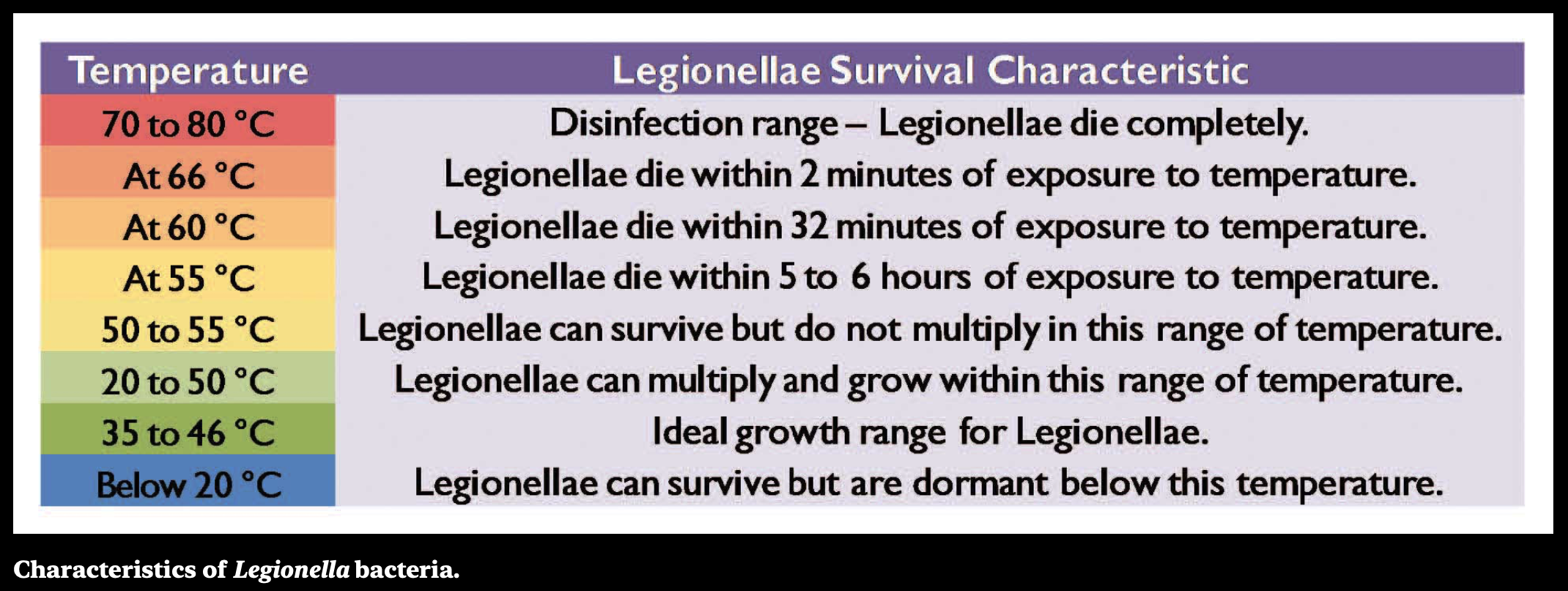
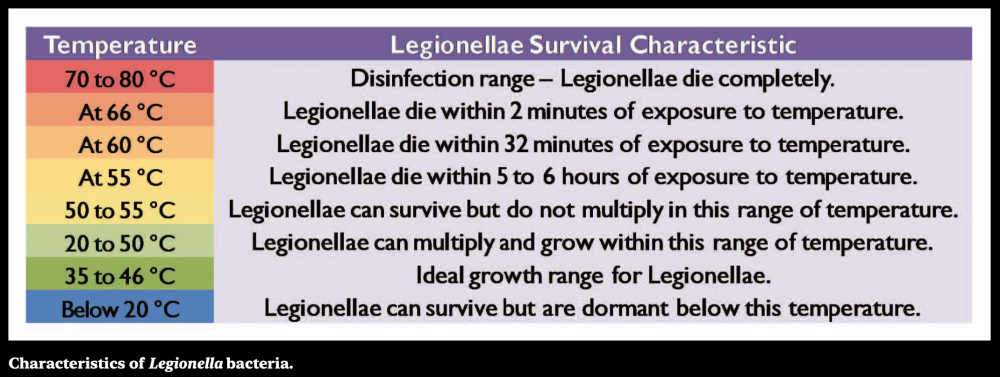
If it helps people in making the decision about whether to run an anti-legionella cycle or not, the following is from the excellent Heat Pumps for the Home book by John Cantor.
-
Garage Conversion > Garage Door to window
garrymartin replied to Ryan Turner's topic in Planning Permission
I think @ProDave is referring to the fact that it's currently a semi-detached with an attached garage. The door at the front on the left-hand side is one property, and the door on the side for the right-hand side is another property - the OP's. As the next door neighbour has already converted their garage to living accommodation, when the OP does the same, they effectively become "terraced". -
Garage Conversion > Garage Door to window
garrymartin replied to Ryan Turner's topic in Planning Permission
You don't specify, so just be aware that most *integral* garage conversions are permitted development provided your house isn't listed or in a conservation area, AONB or similar, but most *detached* garage conversions will require planning permission or approved change of use. -
I'm by no means an expert in this area, but that's my understanding. Section 73 application to have the condition removed due to the development being exempt. But I'd say speak to the LPA, point them to the guidance on exempt developments, and see what they advise as the most appropriate course of action to remove the condition.
-
My understanding is as yours - self-builders meeting appropriate criteria are exempt. I'd point your LPA to this guidance; https://www.gov.uk/guidance/biodiversity-net-gain-exempt-developments Self-build and custom build applications An exemption applies to this type of development when it meets all the following conditions: consists of no more than 9 dwellings on a site that has an area no larger than 0.5 hectares consists exclusively of dwellings that are self-build or custom housebuilding as defined in section 1(A1) of the Self-build and Custom Housebuilding Act 2015
-
Help designing our home network
garrymartin replied to MechanicalBuilder's topic in Networks, AV, Security & Automation
Not strictly true. Although Openreach runs the largest FTTP network, there are other providers that are laying their own cables in various areas. My FTTP has been with Vodafone and TalkTalk over the years, both using the CityFibre network here in Worcester despite Openreach being available too. -
Extract from my research notes that might be helpful; Recirculating cooker hood with grease (typically steel/aluminium mesh) and charcoal/carbon filters with a MVHR extract vent nearby but not directly coupled. Boost the MVHR rate while cooking if you want to (current sensor on induction hob cable for automation??) Grease filters need cleaning regularly; every 1-3 months Charcoal/carbon filters have a lifetime (usually 3-12 months; check manufacturer specifications) and should be replaced Try to get a model with grease filters that can go (and fit) in the dishwasher and that will not tarnish, or that can be replaced (should you wish to) SMEG, for example, has a Universal Charcoal filter Stainless Steel AISI 304. The filter can be washed in the dishwasher at 50°C (water and suitable detergent) and to dry, put in the oven 180°C for 25 minutes
-
It's often a bit more nuanced. Sometimes, permission is only granted *because* they are self-build, especially if the tilted balance in planning can be invoked due to the LA not meeting their targets for Custom and Self-Build housing, or the balance or weighting towards granting permission is tipped because it is self-build. I know of local plots that have been successful with both self-build and live-to-work permissions but the same sites have been refused planning for open-market housing.
-
Not an answer to your question, but just want to check - do you have planning permission for market housing or is the planning permission for self-build housing? You can't have permission granted for custom or self-build and then develop them and sell them as market housing.
-
Most of the battery ones are rechargeable by plugging in a USB charger rather than changing the batteries...
-
In my research notes, I have electric (wired) blinds mostly favouring left-hand side cabling, and for pre-cabling to cover most bases, to run 1.5mm2 Twin and Earth and a CAT6 cable.
-
Whilst it depends on whether the gap between the window boards and the substrate is sufficient, another option is to sink screws into the bottom of the board so they get enclosed by the adhesive to give it some more strength. As an added plus, they can be screwed in and out at various positions to give you a very solid, level surface; in essence, the screws get used as levellers too.
-
I don't have any skills to comment on the install, but I can help out with the datasheet. https://eshop.wurth.co.uk/is-bin/INTERSHOP.enfinity/WFS/3108-B1-Site/en_GB/-/GBP/ViewOfferDetail-GetDocument/08921521__ZTD02.PDF?DocumentId=Y12022052402000005507051e27743ae&ProductRefID=08921521%403108-B1&MimeType=application%2Fpdf 08921521__ZTD02.pdf
-
It is strange, given our reliance on power for all sorts of things. I'd want to keep at least the Loxone MiniServer up and functional, especially if using it for alarm/security too, but I'd be happy with less/dimmed lighting in that sort of emergency. I'd also want something for powering some of the 230V essentials outside of the Loxone system though, like the CCTV system so that cameras were still recording in the event of a "deliberate" power cut... It needs 36V, so three 12V in series usually.
-
🤣 Most online "ready-to-go" kits for the Loxone Power Supply & Backup seem to be 12Ah with a couple of 24Ah. I'd note that the 24Ah one weighs 26.5kg, so your potential 145Ah solution is not only going to be expensive, it's going to be bloody heavy too! I'd get the lights in first, then see what the actual draw is when in normal use, and what would be an acceptable dimmed position in the event of a power cut and then go from there.
-
I have three trains of thought here. Firstly, what's controlling the lighting on Loxone (you mentioned Relay and Dimmer for the mains voltage, what does the 24V?) and what options does that give you to change the characteristics of the lighting in the event of a power cut to reduce the demand? Secondly, as @SteamyTea mentioned above, can you incorporate some emergency lighting components instead? Thirdly, how often do you have a power cut? Would a few portable battery lights not be sufficient if nothing else in the house is powered? The couple of times over the many years that we've lost power for any extended period, we've just used battery work lights and torches as necessary.
-
3 phase connection question asked by SSE
garrymartin replied to BigBuilder's topic in Electrics - Other
It will depend on what the breakdown of the quote is. Can you provide that? Also, what did you ask for? -
Easy mistake. It needs power for the internal switch. At least you have a spare now... 😉
-
How are you providing the USB-C power?