Thedreamer
-
Posts
1485 -
Joined
-
Last visited
-
Days Won
9
Everything posted by Thedreamer
-
Our treatment tank discharges into a small ditch which has running water most of the year.
-
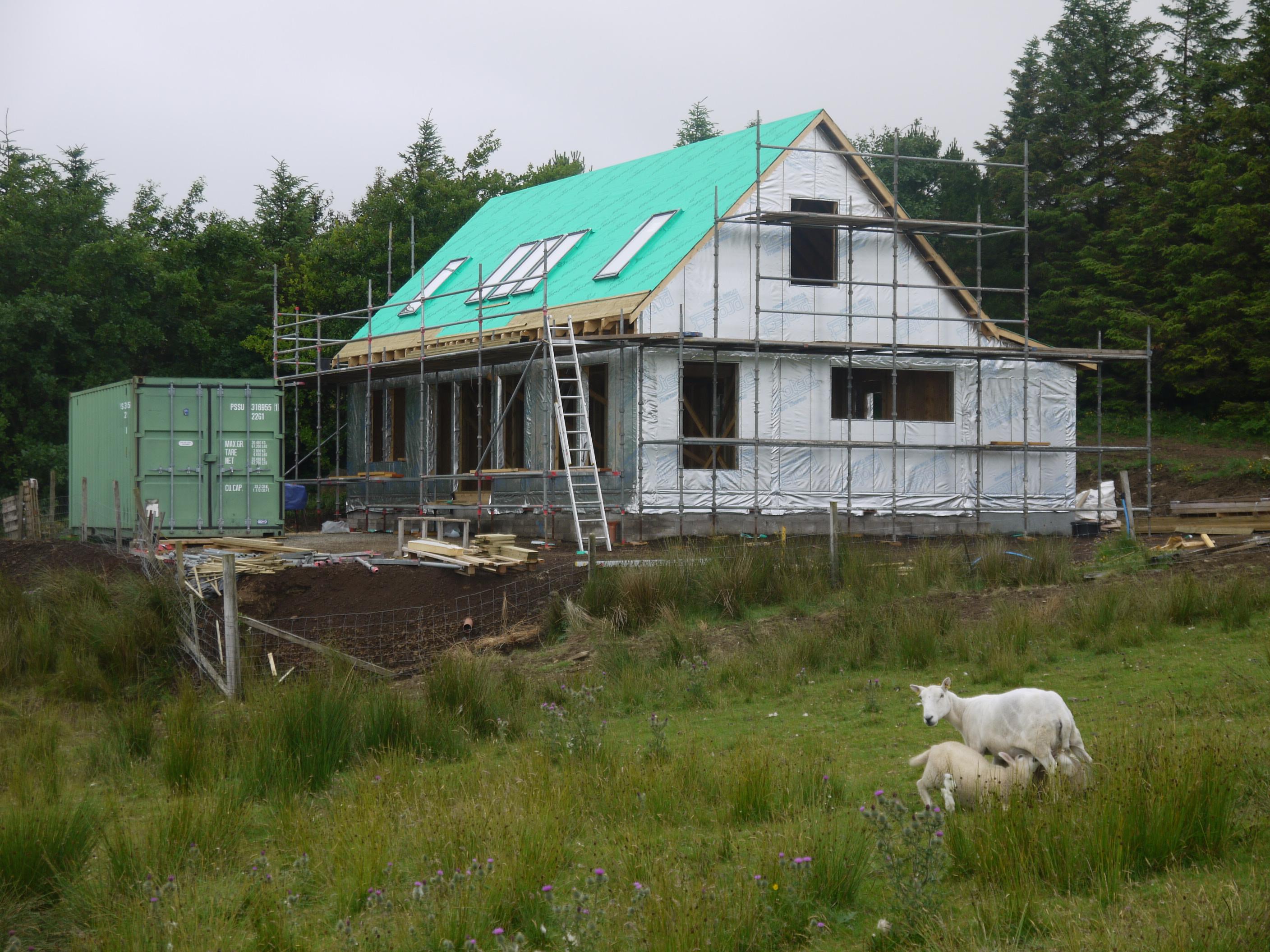
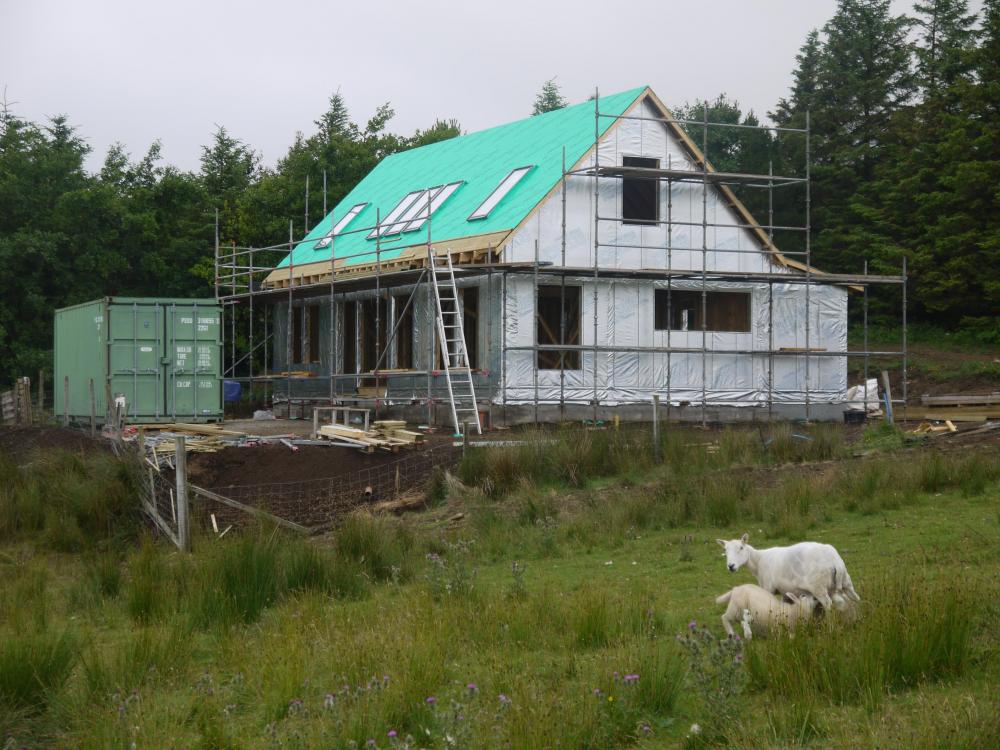
The big cost saving would be to stick build the house. I decided to go for a stick build kit for our self build, a few years ago (2018-19), prices have of course risen since then and our house is smaller at 138m2, then the design in the link. It cost £13k for the materials to build the kit. Included within that is £5k for engineered attic trusses from Pasquill. Labour was £9k, for making the kit, erecting it and also a suspended ground floor. Other expensive items were a steel beam for the vaulted ceiling and three Kerto beams for the middle ridge part. I also had to hire a telehandler with a truss jib for two weeks that cost around £750. By the end of that we looked like this (excluding the velux windows).
-
Where is the kWh price heading in 2022?
Thedreamer replied to epsilonGreedy's topic in General Self Build & DIY Discussion
I was with Bulb but thankfully switched last summer onto a two year fixed with Octopus. Hopefully they can continue in the business, they seem to be one of the larger suppliers. -
Where is the kWh price heading in 2022?
Thedreamer replied to epsilonGreedy's topic in General Self Build & DIY Discussion
I'm on fixed deal with Octopus at 18.63p kWh which runs to August 2023. Are there any circumstances when this fixed deal could be cancelled? Energy that I purchased is fairly limited at 10-11 kWh a day. -
Your welcome. I would add that this forum consists of many, what I would call 'expert' self builder, those that gone through the process and are here to contribute and help others with the journey. They might not reflect the majority of self builders in the UK. But certaintly a good place to start. For my bit as a self builder. I did not use an architect, but a combo of house designer/structural engineer. I wanted to keep my design costs low and was happy with a design that I had seen elsewhere. I have a good plot, good views etc, but my aim with the build was to forget about the total build costs but concentrate on what it would cost for me to live in the house (Mortgage, council tax, heat/light) All in, my bills are £500 a month which at 35 now means that I'm not carrying a chain around my neck for the next thirty years. Just so happens that property prices have increased significantly in my area since starting, so my LTV is now 20%. Architects in my local area mostly consist of design services in producing house kits or bespoke community based projects. If I was architect this would be the area I would look at, lots of opportunities in the third sector and working with trustees/committees mean you are more likely to have a greater input in the design process.
-
Your comments apply to pretty much any area where an individual is seeking professional services. We all want what is best for our clients and they have engaged you as the 'expert' to provide professional services. It's easier in some professions where you have a long term relationship with a client to become a 'trusted advisor'. If you have not worked with a client for long, building up trust as quickly as possible is what you need to do. This book has some tips to do this. I often adopt the Columbo approach with clients. https://www.waterstones.com/book/the-trusted-advisor/david-h-maister/robert-galford/9780743207768
-
I would recommend a shoe on a grill so most of larger stuff sits there to be collected.
-
I would like to see some areas where confiers have been planted changed to a system of coppicing. It would be a different direction to what has been norm since the end of the second world war, but much of the UK's woodland management heritage was established around this practise. I am the sure the numbers probably don't stack up on this approach for commerical forestry. An established root system would help the trees when freak gales occur such as the photos earlier in the topic. We will need to gradually remove our spruce trees on the croft as they become prone to being blown over. These homegrown trees are used for firewood and replace with usually alder, birch or oak. I have recieved 20 hazels nuts this week which will start their coppicing journey this weekend.
-
I did a double take aswell, thought he had a model train track in the garden.
-
Can you quantify all of this cost, time and effort/hassle? And a bit extra for your troubles?
-
You mentioned that the time to negotiate was at a prior point, are you not in a stronger position now? Let it lie for a few days for you to think it over.
-
That big oak looks like it would be a good for a variety of purposes. It was windy here on Friday and Sunday night but nothing too bad. We have a good amount of shelter from trees and bedrock. We had one small birch come down (planted on the edge of a ditch) and a small alder came down in the neightbours garden, both should regenerate. I usually expect the east coast winters to be cold and the west to be windy and mild, however it seems to be all the worst the storms have hit the east this year.
-
Living with MHVR
Thedreamer replied to Si3's topic in Mechanical Ventilation with Heat Recovery (MVHR)
That's good guidance thanks. -
Living with MHVR
Thedreamer replied to Si3's topic in Mechanical Ventilation with Heat Recovery (MVHR)
Ooops. I see it there in the last bullet point. -
Living with MHVR
Thedreamer replied to Si3's topic in Mechanical Ventilation with Heat Recovery (MVHR)
That is surprising as I could no reference to it being required under Scottish Building Regulations, just an example of a system that could be used? 3.14.11 Mechanical ventilation and systems The design, installation and commissioning of a mechanical ventilation system should mean that it is capable of performing in a way that is not detrimental to the health of the occupants of the building and when necessary, is easily accessible for regular maintenance. Very few dwellings are air-conditioned but the use of continuously operated balanced supply and extract mechanical ventilation systems and of heat recovery units are becoming more popular as a result of the need to conserve energy and reduce greenhouse gas emissions. As building are constructed to lower infiltration rates, mechanical ventilation may be necessary to deliver the effective ventilation needed to provide a healthy living environment. Simpler and more efficient systems are steadily being introduced that augment, complement and/or improve the natural ventilation of dwellings.Where infiltration rates of less than 5m3/h/m2@ 50 Pa are intended, such a system should be used. The following are examples of mechanical systems that will aid ventilation in a dwelling: continuously operating balanced supply and extract mechanical ventilation systems. When combined with heat recovery these installations are known as Mechanical Ventilation and Heat Recovery (MVHR) systems. Installations should be in accordance with the guidance in BRE Digest 398. In hot weather windows can be opened to cool the dwelling while the system is not operating. Openable windows may also be needed for fire escape purposes centralised mechanical extract ventilation (MEV) installed in accordance with the guidance in BRE Digest 398 where the infiltration rate is not less than 3m3/hr/m2 @ 50 Pa, decentralised mechanical extract ventilation units (dMEV), in rooms where there is likely to be high humidity such as kitchens, bathrooms and shower rooms. A dMEV should be designed, installed and commissioned to provide minimum continuous extraction rates in accordance with the following table: -
Living with MHVR
Thedreamer replied to Si3's topic in Mechanical Ventilation with Heat Recovery (MVHR)
Not even MEV? -
Living with MHVR
Thedreamer replied to Si3's topic in Mechanical Ventilation with Heat Recovery (MVHR)
Is that correct? I believe its just to have mechanical ventliation. -
Designer/draftman & structural engineer combo. Then managed on a subcontractor basis. Two joiners made the kits from the materials I ordered. I had never order any building materials before I started. You are here asking questions, just a lot to learn. We all did at some point! Home builder bible is a worthwhile investment for a tenner, provides a good breakdown of what is required to build a house. My approach was to get the site serviced (utility, water, access) and have a clear idea of what foundations would be required. I then knew that unexpected major costs were eliminated. See above on the book. I've kept a blog here. I kept mine going from the start to end and have tried to be open and honest with costs. But lots of others here if you are planning on other building styles.
-
If budget is tight I would avoid going with a big company like Scotframe. Much cheaper to have a kit cut on site by joiners. I considered Scotframe and a few others, but the problem is, you end of paying all their overheads and profit margin. What are you expected costs for foundations and utilities?
-
£13,000 was the total materials, including the trusses. £9,000 in labour (two joiners). £750 for telehandler. This was the Summer of 2018, cheap timber prices then. This project is too bespoke to mark up. But adopting this approach, managing on a contractor basis, being careful with prices and applying for any grants along the way has resulted in a lot of equity.
-
I decided to go for a stick build kit for our self build, a few years ago. I found the large timber frame companies to be very expensive. It cost £13k for the materials to build the kit. Included within that is £5k for engineered attic trusses from Pasquill. Labour was £9k, for making the kit, erecting it and also a suspended ground floor. Other expensive items were a steel beam for the vaulted ceiling and three Kerto beams for the middle ridge part. I also had to hire a telehandler with a truss jib for two weeks that cost around £750. By the end of that we looked like this (excluding the velux windows).
-
Where is the kWh price heading in 2022?
Thedreamer replied to epsilonGreedy's topic in General Self Build & DIY Discussion
In properties insulated to a good standard is there any scope to heat a house to higher temperature during off peak times and let the temperature slowly drop before re-heating again. Is this an efficient strategy with an air source heat pump and UFH. Can people live in variance of say 23c to 18c? I adopt this approach with my stove, which is my cheap heat input and my electric heating bill this winter is a few pence. This rare electric heating boost from a cheap oil electric radiator was only needed due to 1c temperature over a few overcast days. I know people on here have better insulation, airtightness and ventilation than me, therefore would expect this to be achievable. -
Smart meters in Shetland?
Thedreamer replied to cmorewood's topic in Networks, AV, Security & Automation
Octopus fitted a smart meter on Skye for my parents in law a couple of months ago. -
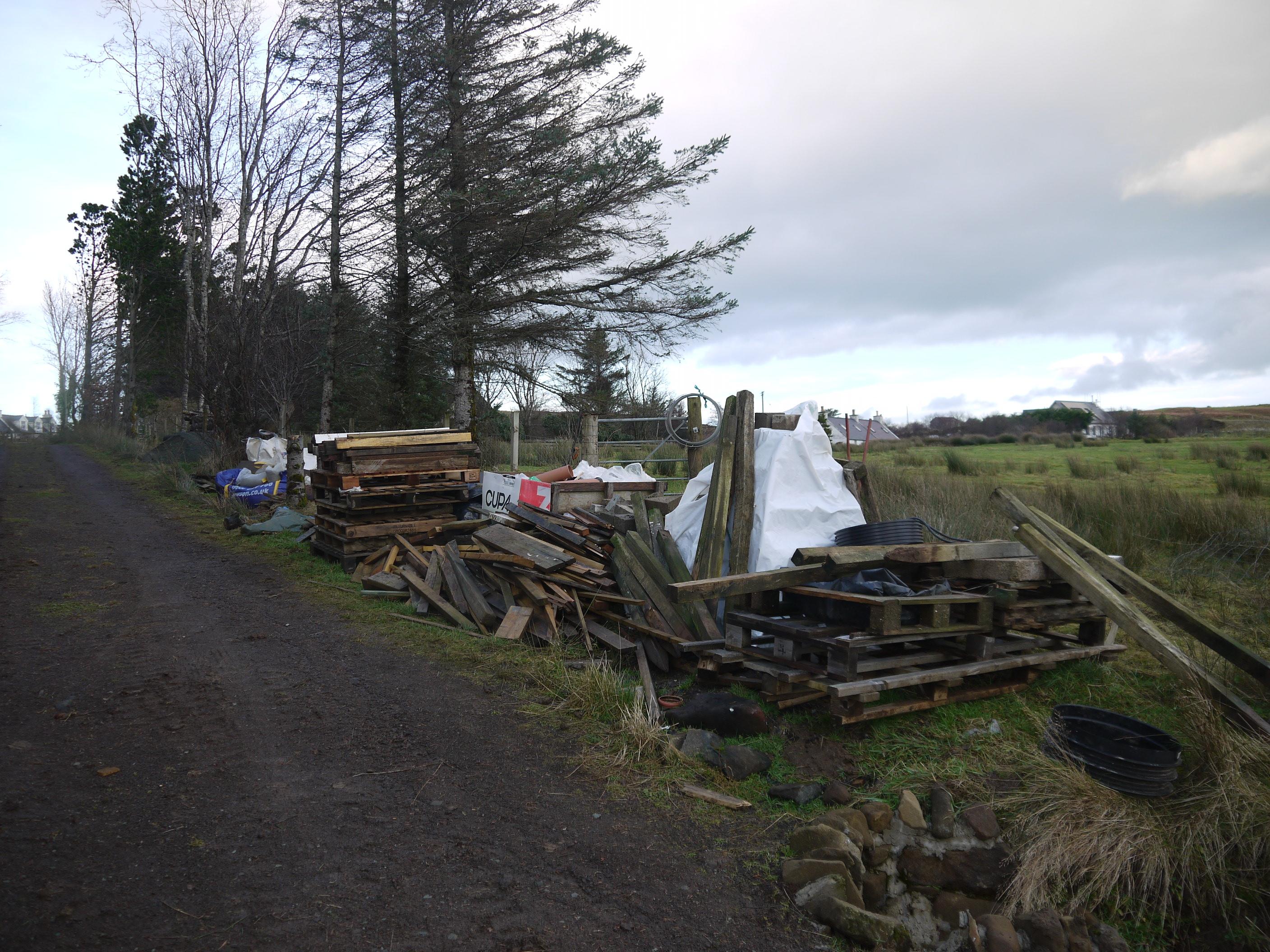
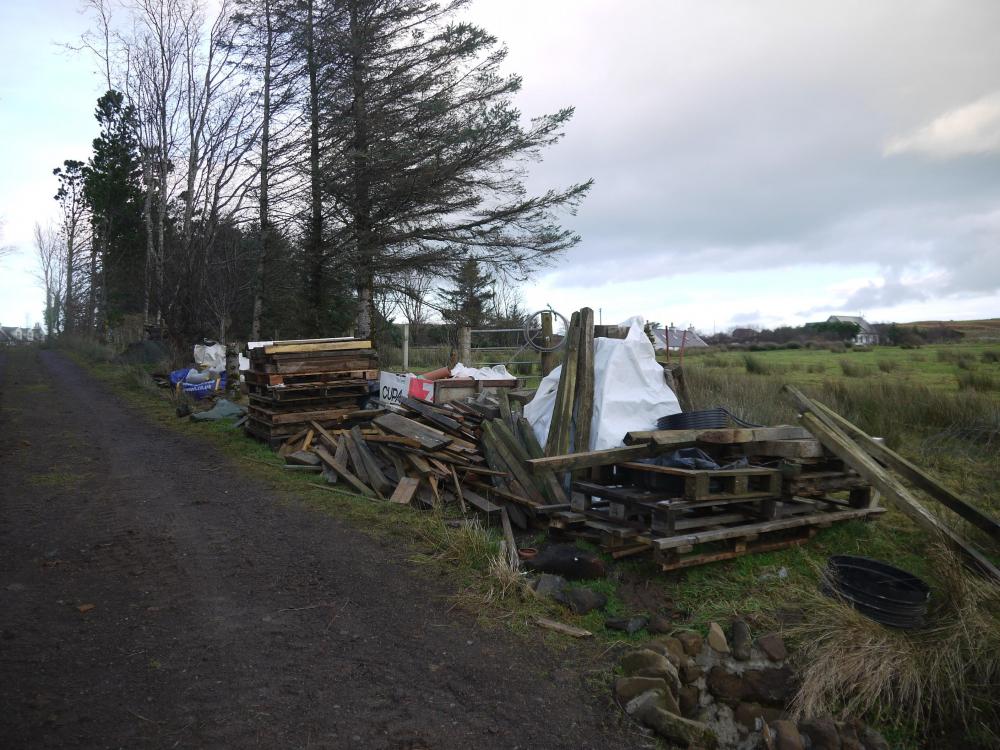
All the stuff is now moved to other locations, but my recycling centre during the build.
-
Just the shed build! Unless it's my next self build in 2045.