


George
-
Posts
699 -
Joined
-
Last visited
-
Days Won
1
Everything posted by George
-
ASHP installed together with existing heating system
George replied to Bruno's topic in Air Source Heat Pumps (ASHP)
If it's mainly for the DHW I'd be tempted to undersize it - when it's really cold you've still got the wood burner to fall back on. Seems like a good idea, though. Similar to me except I've got wood burners purely for space heating (and to save electricity - the wood is free!) as I found the connection to a HWC too difficult without using a thermal store, which I didn't really have space for (just have a 300l HWC). So the heat pump heating/hot water just chug along merrily and if I can be bothered I light the fire. It's night and day compared to what I used to do... get home and shiver while lighting the fire. -
Bricks missing & loose in loft party wall
George replied to IndustrialWizarding's topic in General Structural Issues
Lack of a fire barrier would be more of a concern. -
Sounds good to me. Top of timber joist wants to be 10mm proud of the steel beam to allow for shrinkage.
-
If you've got an architect handy you could ask them to write a short letter to the BC about the pointlessness of a breather membrane on a cavity wall.
-
You come across this fairly often with farmland - there's a lot of unregistered land and when a bit gets sold, you need to sort out the bit you want to register from all the neighbouring unregistered land. The original paper deeds are the best record as at leas the digitising hasn't altered them.
-
Heating oil is ~40p/litre in the buying group I used to use. About ~20% cheaper. It's hard to make a comparison but used to spend £700/year just on heating from oil, electricity for hot water. ASHP now does hot water and heating the whole house for about £5/day at the moment (although still in the first year and last few weeks have been cold). It's not a direct comparison as we didn't have CH before, didn't used to get hot water and had to use the log burner more. But oil prices aren't that much lower and, of course, capital cost of ASHP is covered by RHI. Not to mention the carbon reduction and no oil tank in the garden.
-
No I meant to the isolation switch for the board - as that ultimately is what powers the immersion so must be adequately rated.
-
The immersion on mine is cabled through the ASHP controls, because that is what controls the disinfection cycle. I don't see why you couldn't temporarily wire the immersion straight to the wall, but I'd personally ask the installer or an electrician first.
-
RHI takes 7 years to pay back... it may work out with the GHG but you'll need to move fast and find an installer who would install using that grant. Best thing you could do in the short term is a new condensing oil boiler and new rads sized to operate at 45 degrees (where condensing boilers can actually reach the 90% efficiency rating); get the loft insulated; get air tightness improved and install whole house positive input ventilation + single room MVHR units. Do that straight away and you'll have a nice, warm house with good air quality. @Jilly Beware survivorship bias! Old oil boilers clunk on, but the effieicny drops and pollution increases. Best off being replaced when they reach end of design life.
-
Structural Engineer Not Providing Connection Detail
George replied to SteveMack's topic in General Structural Issues
No rules, just courtesy to tell them. The new Engineer might wish to contact them as well. You'll have to ask BC but they may charge. To them it's just a design change, they don't really 'check' calculations.... they just check that you have had them done! -
Basic rule of thumb is 10% for fees, but if it's a straightforward project it does sound a bit steep. Even with Passivhaus the details are standard now. As always, three quotes and I'd get them to give an option only to planning stage, as if you haven;t decided on a build system you may go with a timber frame contractor and not need the Building Regs drawings.
-
Advice for sealing/dry lining a potentially damp basement?
George replied to freddiejhill's topic in Damp & DPCs
+1 on the Type C. It's the only footproof method of retrofitting a cellar into a habitable space. -
Damp at the base of wall is often interstitial condensation due to the wall being a few degrees colder - it is in contact with the ground between 9-11 degrees. A concrete floor will tend to chill it a further. Once condensation arises, this will conduct more heat away creating a feedback loop. Lowering the relative humidity and raising the internal temperature to warm more of the wall is the most straightforward solution. Lime plasters are also needed as they are resistant to water damage and will allow the wall to dry out once it is warm and humidity is lower. Other solutions such as removing DPMs/concrete and replaced with limecrete or earth floors certainly help, but I personally don't subscribe to the view that water is 'forced up' into the walls because of dpm/concrete floors. I think they help because limecrete/earth floors don't chill of the base of the wall and they also buffer humidity. But this is from my own observations/experience not testing!
-
My advice is don't do it, at least, not all the way round. Make the door threshold level, use a vertical and secondary DPC/DPM to bring things up to FFL and then slope the ground level down after the threshold. If you must have ground level equal to FFL, installed a gravel trench / french drain 200mm wide at the brickwork, You'll have a digger to sort the foundations so a few metres of rough landscaping at that stage is easy. I'm not saying it can't be done... but I've seen a lot of attempts and they are always messy. They might work, but I've also seen too many old buildings with spalled brickwork and penetrating damp! Level threshold and slope away is invariably the most straightforward solution.
-
Supporting stone above opening (parapet)
George replied to SuperPav's topic in General Construction Issues
It'd span as part of a floor system with joists at 400/600mm centres, but you showed it acting as an edge beam carrying the roof joists spanning left to right. The deflection of the edge beam would be excessive. Your Engineer should be able to advise on these issues. It's common to see pozi-joists supported on steels. -
Supporting stone above opening (parapet)
George replied to SuperPav's topic in General Construction Issues
It's a bit wasteful as the outer steel isn't doing much. A larger RHS + plates could do the job of both. If it's a cold bridge you're concerned about, you can insert structural thermal breaks (Farrat packs or similar). Also steel on the outside will need corrosion protection.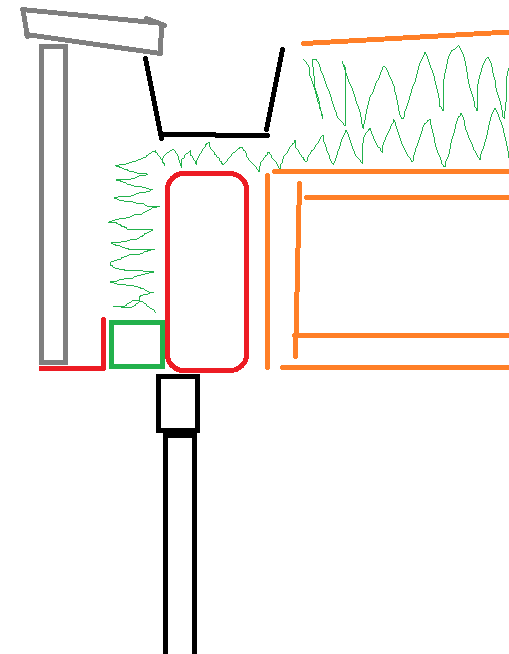
-
Steel shims below the beam. Ask for a range between 20mm to 3mm in 100x100mm.
-
Supporting stone above opening (parapet)
George replied to SuperPav's topic in General Construction Issues
I don't think you will get a pozi-joist spanning 7000mm carrying the flat roof. The bi-fold needs something solid above the frame to attach into. You're best off with an RHS steel beam instead of the pozi-joist with a plat or angle welded on to carry the outer leaf/cladding. I wouldn't use actual lump of stone - use stone slips. -
An invertor driven one can, yes. The pump runs as hard (and draws as much energy) as is needed.
-
I'm at the tail end of extending and renovating a 1880s cottage. In brief: - internal wood fibre insulation (9" lime mortar brick wall). his has made an enormous difference - about 50 replaced bricks and limited repointing (I'm in the school of thought that only repoint what you must - else you risk doing more damage than good) - ASHP with properly sized radiators, the extension had UFH. There was no CH before. I have the domestic RHI grant - New kitchen, bathroom and shower room - MVHR system installed, yet to be commissioned - opened an old fireplace and reinstated the log burner - uncovered old terracotta floors... still trialling how to restore them - replaced most of the non-original internal doors - removal of gypsum plaster and replaced with lime plaster. Some reskimming over the old plaster - new lead work valley between the pitched roofs (this unfortunately was mucked up for various reasons but probably has a life span of 10 years before needing attention) - windows were replaced with upvc a while back before my time, have kept them but resealed as part of the IWI Pandemic has made it quite a challenge but the end is in sight. I had no luck with the green home grant but as above, the RHI is fine.
-
It's within the footprint but outside the moisture (DPM) and thermal (insulation) envelope. And if the IDB's pumps break you might be thankful for the extra clearance...!
-
Did a Civil Engineer have any input into the level design? Doesn't normally for domestic but if it's a flood risk they may have in this instance. What is the surface water strategy? Ideally you'd drain to a soakaway/swale/watercourse, or with permission to a surface water sewer or combined sewer. Although things get a bit weird in Inland Drainage Board areas. You're not allowed to connect into a highway drain and raising the oversite levels may cause issues with neighbouring properties, so I'd be careful about either of those options. As for the water, if it's due to the high water table you'll not be able to shift it anyway. It shouldn't affect the foundation but you could fill any gaps that are accumulating water with type 3 stone to protect the soil from erosion.
-
Oh of course. Indeed, it's been in the rules for many years but the new regulations made it enforced when a house was being sold and now apply to everyone with no grandfather rights. All my point was people seem to have jumped to the conclusion 'septic tank bad' which isn't the case when combined with drainage fields.
-
One of the best systems is still a septic tank with a drainage field. Less to go wrong and compliant with the regulations (in most places - these are restricted in some areas). You do, however, need enough space and suitable ground for a drainage field to be viable, plus maintenance of the drainage field (no tractors or cows allowed). But I'd rather a system which works 99% of the time with minimal maintenance to keep water clean, rather than that only works for 12 months. The major problem with septic tanks is people disregarding the drainage field and discharging the effluent straight to watercourses.
-
Decisions decisions: 254*146 UB or 203*203 UC
George replied to Olf's topic in RSJs, Lintels & Steelwork
Easier to conceal will be a time saving. The 10mm is to allow for the shrinkage in the timber. If you install flush, when the joists shrink to adjust to the RH of the house, you may be left with a bump in the floor over the steel beam. Less of a problem with kiln dried but still good practice.- 1 reply
-
- 1
-

