SuperPav
-
Posts
224 -
Joined
-
Last visited
Everything posted by SuperPav
-
So I've seen conflicting views on this on here. We are ripping up old suspended timber floors, as well as breaking out the loose-hardcore/screed solid floors in the old kitchen, which will leave us with an oversite approx 300-350mm below finished floor level. It's pretty firm/level-ish, so the plan originally was to just blind with sand to create smooth surface, then dump 200-250mm of EPS and/or PIR down, and then put 80-100mm of liquid screed with UFH in it. A few threads suggest that as we're just putting insulation on "ground" rather than on a slab or floor structure, then the top layer needs to be more structural (e.g. concrete or meshed concrete?) I can't imagine there's much cost difference between a liquid screed or powerfloated concrete (at 100mm thickness), so what are the pros/cons of each?
-
Victorian Terrace - 45 Degree rule queries
SuperPav replied to Brett's topic in House Extensions & Conservatories
The implementation of any 45 deg rule will be down to the local authority - they do differ, although the "standard" application would mean you cannot come out the full length on the upper storey. The ground floor return should be less of an issue but again depends on the local guidelines. If you want to extend the first floor, I would suggest that your best bet is to do it together with #10 next door, these applications tend to be viewed more favourably in my experience. Alternatively if anyone has recently got permission for a "one-sided" upper floor extension on or around your terrace recently, you can always ask the council about recreating a similar scheme - it looks like the house cropped to the very left of the photo has a modest (bathroom?) 1st floor extension, but it doens't go the full length. -
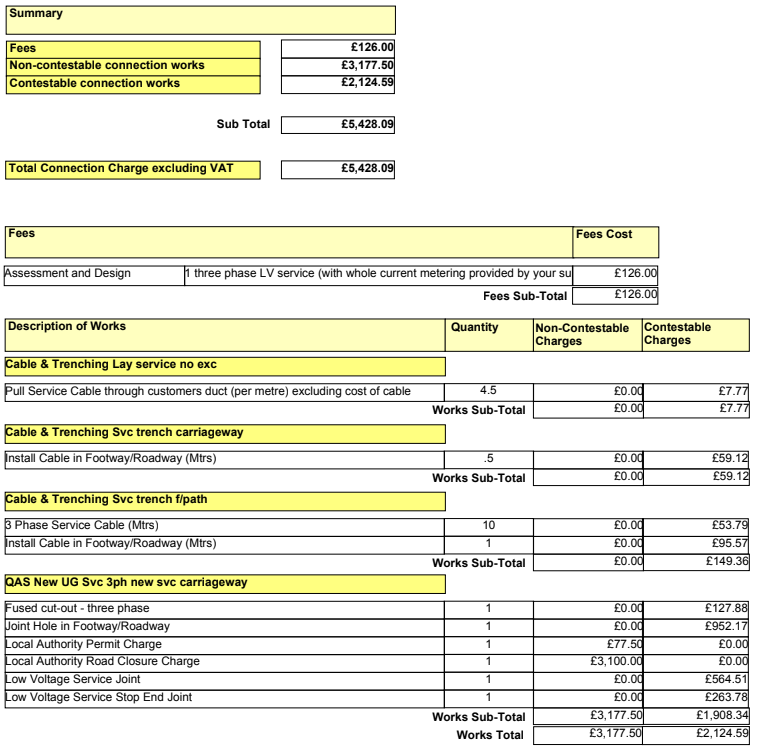
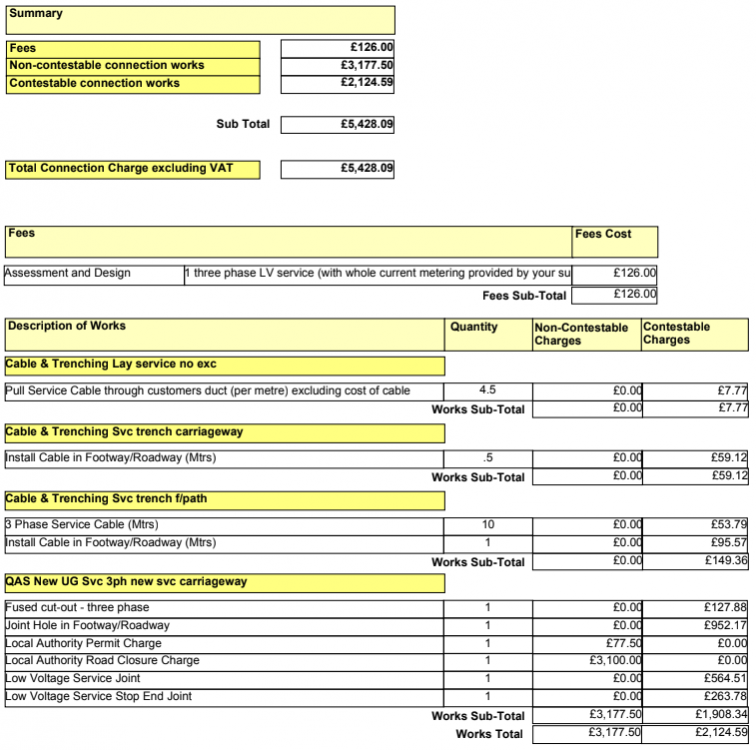
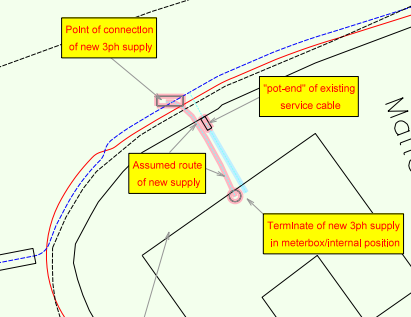
Just in case people are searching for this, attached is the quote to upgrade our current supply to 3ph (but essentially they treat it as a new connection) If it wasn't for the road closure, it's pretty reasonable.... Unfortunately no real way around the road closure. The most annoying thing is that the road was closed for 2 weeks in 2020 for drainage works, if we'd known/thought to do it back then, would've been a bargain.
-
Coming to the realisation that we will most likely never open the veluxes planned for upstairs (bathrooms and hall), wondering if there's any recommendations for fixed glazing alternatives (TG), which would result in a sleeker internal detail (i.e. no visible frame/sash), with plaster right up to the glazing to maximise light and reduce frame thermal transmission)? Only concern with these would be that fitting a bling solution would be near impossible whereas with Velux easily integrated... Used Velux in the past and in terms of installation/integrity/quality they've been great so happy to use them again. Roof is pitched stone (42 deg) and pitched zinc standing seam (43 deg)
-
@JohnMo running it in copper through the posi's is an option. Because of the bends in the copper though, I suspect that it'll be *at least* 35mm pipe to maintain the pressure drop within regs, which starts becoming quite expensive in pipe and fittings. All the joists are exposed so labour might be cheap enough if it's something he can do in a day... When running pipe through posi's does there need to be any venting? Obviously trying to avoid venting the void between ceiling and upstairs floor for sound transmission and insulation...
-
Joe, did you just end up running it in gas plastic then, rather than trac pipe if through the garden? Is there a document that shows what the restrictions are in terms of how close to structures/other services/drains/trees it can go? I recall seeing something about trench depths but not the other constraints, as we only have a small strip of a garden all around the house...
-
Well I won't post on a public forum (where she's a member) about her cooking abilities but it was a must-have, and as much as I like induction I do also prefer gas for cooking so it's a done deal (and the cooker has been purchased already). The cooker itself is not that much of an issue though, as it can easily run off LPG if needed.
-
3 bathrooms. 3 showers unlikely to be used all simultaneously, but 2 certainly. Had a vaillant 938 in a previous house and that was decent enough, price difference vs a smaller was insignificant. Obviously if I go for option 2 and get a UVC instead of a combi, I'm assuming that the boiler can be downrated somewhat! To be clear, the 12.7kW is the max the cooker can draw (so presumably that's what needs to go into the sizing of the pipework) it's rated at 7kW nominal, and frankly I think the whole house would cook if all 8 burners were on full whack! The cooker can't be replaced by induction, that was one of the must-haves for the kitchen for the missus. We've had both in the past, the cooker stays How easy is it to run a 32-35mm tracpipe? never handled the stuff myself. Obviously it would be laid by the gas man, but I'd be doing all the trenching/prep, so just trying to work out the best route, whether through the house in the floor insulation, through the house via the ceiling joists, or outside the house in the garden, trying to avoid drains and other mains....
-
Thanks all, all thoughts along similar lines to ours. The downstairs walls which are remaining will be solid, but with 40mm-50mm insulated PB on the inside. It's Cotswold stone exterior in a very sensitive area, so no chance of EWI! Porch + Bays are new, as is the garage (which will be insulated timber frame), so it's not the full perimeter that is solid wall. Upstairs will have 125mm full fill of Icynene or equivalent in the walls, vaulted ceilings with 200mm wool between rafters + 40mm insulated PB under. All windows are rationel triple glazed. The few skylights we'll have are velux TG. Flat roof will be 150mm PIR warm roof. Existing boiler has long since been converted to tins of tuna or baked beans. Small PV will go on south facing slope of garage, but depending on budget this may not happen right now. I guess our biggest headache is to whether just take the plunge to ASHP now, not bother at all (combi), or get it ready for ASHP/PV (gas system+UVC) so it's an easy swap over in the future. We're leaning towards gas, but I'm still not sure how easy it will be to route a 35mm tracpipe through the fabric of the house!
-
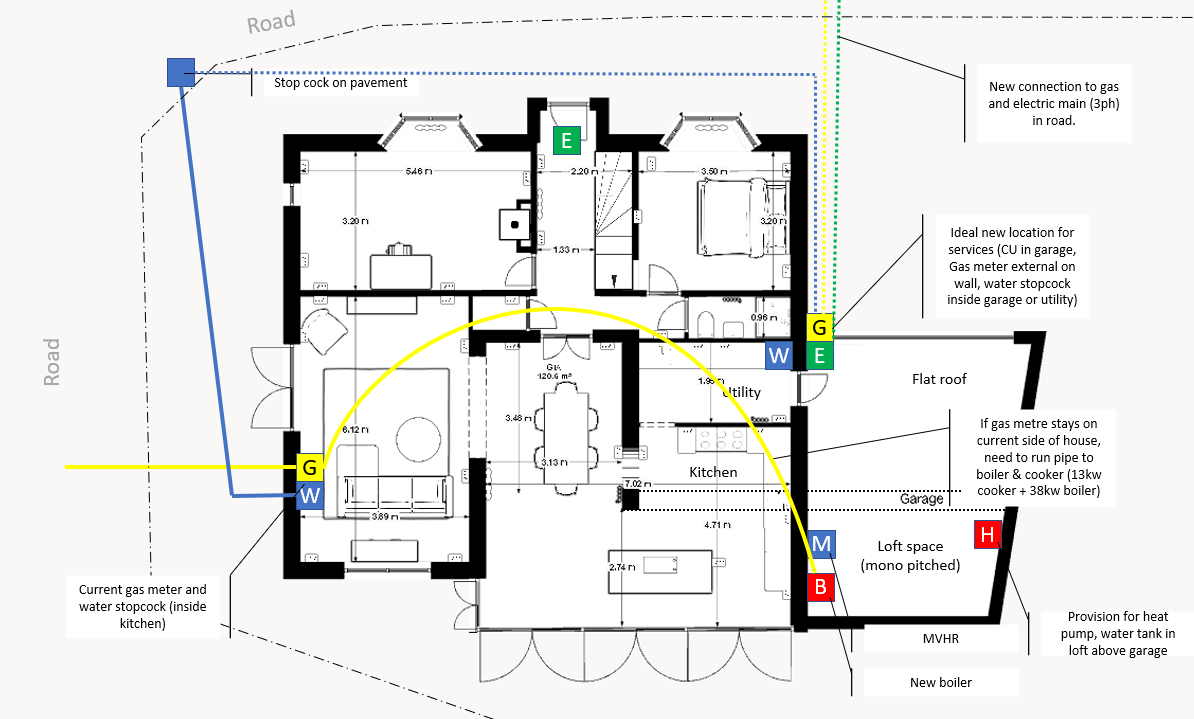
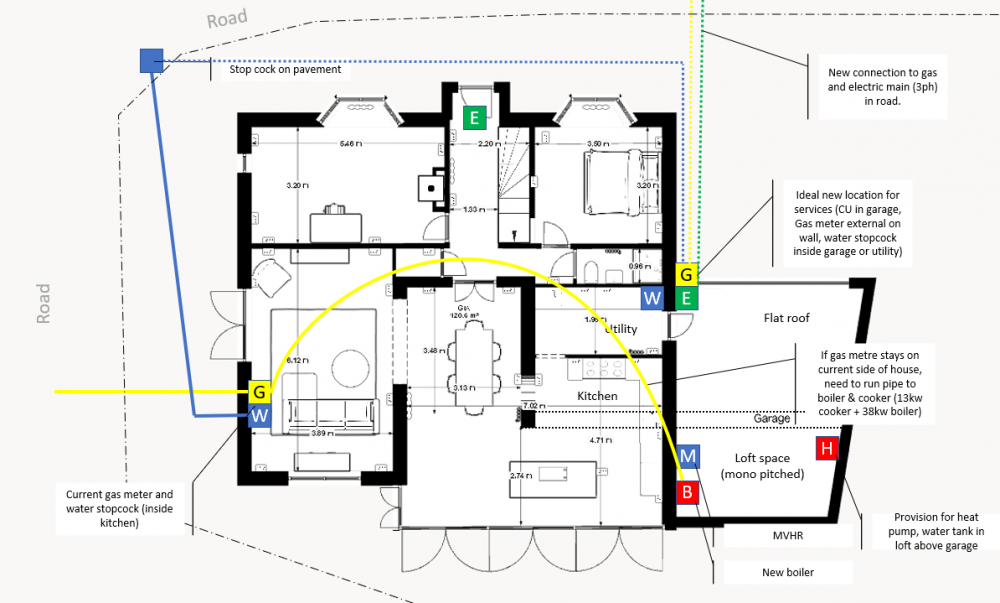
Right, the other half and I are going round and round in circles on this to the point where any sanity has left the building... The builders are about to start the roof on the bungalow second storey, as soon as they've sheathed it, we're in digging up the old floors for insulation/screed/UFH and running 1st fix. One thing we still haven't decided on is what to do with the bl**dy heating! The property has gas, currently a meter inside on a wall that will be in the living room, so the meter has to go. The other complication is that we've bought a gas range cooker, and that is a non-negotiable with the boss, so need some form of gas for cooking. It's a 50's solid wall bungalow, new second storey will have insulated cavity walls. All floors (suspended timber and loosefill screed) dug up and UFH in liquid screed laid over ~200mm of EPS/PIR build up. The layout means the new boiler/cylinder/cooker is on the other side of the house from where the current connection is. Option 1: Keep gas for both heating and cooking - move meter to the outside of the current wall (WW Utilities will charge £750 for the privilege), run trac pipe either under the floor, or around the garden, or through the posijoists to the new boiler and cooker (which is easier??). With a 40kW combi boiler + 12.7kW cooker connection I imagine means a fairly hefty tracpipe (35mm?) as it'll be about 15-20m long. Option 2: Keep mains gas, but install 300l UVC with system boiler, to allow future switching over to ASHP. Otherwise same as above, what's the most painless way to run the gas from one side of the house to the other? Option 3: Keep gas for cooking only, install 8kW-12kW ASHP and a 300l cylinder (£7k). If we're doing this, the pipe can be much smaller, but still needs the meter relocating and trac pipe running through the house. Option 4: Cap gas off completely, install ASHP + Cylinder (£7k?), + find location on other side of house for a LPG tank, and pipe that to the cooker. Literally depending on the day of the week, we're undecided on any of the above options. I'd prefer an ASHP from a "green-ness" point of view, and we'll be upgrading the supply to 3-phase, but at the same time it seems like it'll be a significant expense + we still need to keep some form of gas for cooking. What are your thoughts? Diagram showing layout and gas run conundrum attached..
-
Software and any templates?
SuperPav replied to LaCurandera's topic in New House & Self Build Design
For floor plans/interior layouts etc, floorplanner.com is about as user friendly as we've found. For actual planning drawings/sections etc. then sketchup has worked well for me. The other half can't get on with it, but I find it pretty useful for drawing. -
We've also installed a 1800x1400 glass screen directly onto a shower tray/tiles without a channel, with just clear silicone (not even CT1!) and always been fine. In my experience it's actually the channels and little return fillets that end up causing most problems whereas glass straight onto tile or a shower tray gives a very good fit. Don't think I'd be brave enough as the pic above to not have a top screen bracket arm to stabilise it though! Having said that, the OP's channel (the sunken in one) is the neatest solution I've seen if you want to separate the two tiled areas, but seems like a lot of effort when you could just omit it completely.
-
I've read a number of posts on here and other forums, and maybe its sleep deprivation, but I'm more confused than ever so apologies for raising this topic again. We will be installing a Harvey twintec on our house, to soften incoming water for ALL outlets except the kitchen and utility sink cold water feeds. So far so easy. What is the general consensus of what needs to go to a boiling water tap. We will most likely go for a Quooker 3-way tap. Should we: 1) Feed the softened water to the boiler with or without an intermediate cartridge filter (like you'd get on the supply to a fridge water dispenser) 2) Feed unsoftened cold water to the boiler (will it not clog up with scale after a few years?) with or without an intermediate cartridge filter 3) Feed unsoftened cold water to the boiler via the Quooker "scale control" filter - what does this do vs the Harvey + a cartridge? Thanks
-
Thanks @nod When you say dab the insulated PB with pink foam only - do you mean adhesive foam (Soudal or similar) as opposed to the pictured d'n'd adhesive? Do the thermal blocks need any prep for d'n'd? In the past we've used the blue gritty prep coat before plastering on poor/old surfaces and that stuff was pretty impressive. Also, I'm interested in the comment about marmox board - they specifically state that it can be plastered, and we've done that in the past on window reveals to continue insulation into the existing openings (with 12mm Marmox) and it took a skim absolutely fine. I've never used it in larger sections, and wouldn't use it on walls as I have a (perhaps unfounded) concern that the impact resistance would be quite poor. For a sloped ceiling that would never get touched by anything, I would've thought it'd be perfect?
-
Happy new year everyone. As we keep our fingers crossed that this never ending nightmare of a build will actually progress this year (builders showing up), starting to think about what plaster finish to put on various parts of the house. It's probably best to tackle bit by bit: 1) Downstairs - existing external walls (solid stone/brick, no cavity) We plan on stripping this back to the brickwork everywhere, and then ideally the plan is to put a 25mm +12mm insulated plasterboard. There are some areas where we can get away with a slightly thicker layer of insulation, but running stuff through the calculator, it's diminishing returns after 30mm. + trying to avoid too much risk of condensation. My question is around sticking this stuff to the wall. The last house we had done with dot and dabbed PB (on a cavity wall granted) made a mockery of any cavity insulation, as it was literally blowing a gale from any opening in the PB + some boards became slightly loose as I don't think they were stuck on properly. Would a slurry coat on everything first solve all of this problem? Or attaching with squirty foam with full perimeter cover on every board so there's no cross flow? Something like marmox board (which incidentally can be rendered/plastered directly but don't think anyone uses it as insulated PB for some reason?) recommend using basically tile adhesive to attach the board to the wall, instead of Dot and Dab. I can see how this would reduce the air leaks if it's total coverage, but how practical is it? Maybe I'm overthinking it a bit, and having a wall which has no open cavity will naturally reduce air leaks, but I really don't want to end up with the same quality of PB as in the previous house. 2) Downstairs existing internal masonry walls I don't have a particular preference on these to be honest - would probably prefer wet plaster, but have no rational explanation as to why. 3) Upstairs - new walls (inner leaf is 7.2N Celcon blocks thin joint) I would really prefer a wet finish here, but have heard horror stories of plaster not sticking to celcon aerated blocks very well. Has anyone had any experience of this? The alternative would again be PB, but the same concerns as in the first point apply, although the joints are much smaller and the cavity will be full fill pumped Icynene so should seal most of the air leaks? Unfortunately speaking with the current builders who have a fairly lax attitude towards airtight detailing/thermal bridges/moisture control hasn't given me much confidence so it's not just a case of asking them "what do you normally do"? The bathroom upstairs would be marmox insulated cement boards directly fixed with adhesive to the blocks, and then tiled onto. Internal stud walls will be drylined and skimmed. Lastly, has anybody used marmox boards for ceiling instead of PB where fire resistance is not required (i.e. the roof)? The upstairs bedrooms are vaulted ceilings, with 200mm wool between rafters. I would either put 25mm PIR + 12mm PB on this, or the alternative would be to just whack on 30-40mm marmox boards, which will kill two birds with one stone + be much lighter than the PB saving my back a lot of pain All dry boarding will be done by us to save money, but we'll be getting a plasterer in for all wet work/skimming.
-
Any "D4" adhesive will do the job. This sort of thing: https://amzn.to/3e3I9Vf If you can be bothered, I'd glue the boards to the joists as well, this will result in a much stiffer structure.
-
No, not living in it, but were before the works! it's only habitable for rats at the moment! Depending on your circumstances, the things that really bothered us with it all was: 1) We couldn't move *everything* offsite, so there was still stuff we had to leave on site (in storage boxes or wrapped up etc). No matter how much you try, it will get damaged and ruined 2) Literally nowhere to store stuff away from the elements when ordering in advance or if materials end up lying around longer than anticipated. 3) Egger board went down on first floor joists, even if laid 100% as per manufacturer spec with zero gaps in the glue etc and all edges sealed (which I suspect no paid labour will ever pay as much detail to as you would yourself), this ended up being exposed for months and months, way longer than the "design allowance" as we still haven't got a roof 4) Just the lack of an area where you can work in the dry (to cut timber/sheets) is annoying As per my previous post, these are all not insurmountable, and may not apply to your situation and on a smaller budget/build it may certainly not be worth spending extra on it, but if it were me doing it again, I would 100% want a cover, as I won't rely on builders/trades sticking to a schedule, and taking care of the building, materials and my stuff the same way that I would.
-
Notification of Statutory Undertakers?
SuperPav replied to Tracey Gardner's topic in Party Wall & Property Legal Issues
This is not a planning issue, and therefore neither planning permission nor permitted development has any relevance to this. This is to do with actual building work. The situation is not really any different to you digging down in your garden and finding an unexploded nuclear bomb or buried asbestos that nobody knew was there. The ultimate responsibility lies with the owner, and the cost of rectifying the situation sits with the owner. This is why before digging, you can run a simple search (through the aptly named Line Search Before U Build https://lsbud.co.uk/), which utilities respond to. It's free, and encouraged. To not have done it suggests at best a lack of care on the builder's part. The maps are not 100% correct, and old mains/lines aren't always well mapped, but this should have been done at a minimum. In a hypothetical situation where the owner instructed a builder, you'd have one potential option: depending on how the contract with the builder was worded, the owner might have a case against the builder for costs, but in this instance it doesn't help as the builder and owner is one and the same. To answer what I think you're indirectly asking: neither the council, nor any of their usual statutory planning consultees are in any way responsible or liable for this. The only theoretical chance you've got is that if the building inspector has been out to inspect the footings, and could be *PROVEN* to have known about the main and not mentioned it, you'd have the chance of seeking redress from building control and their insurance. However, it is highly unlikely you'd be able to prove that that the inspector knew it was there, and most likely they genuinely didn't. Your sister's neighbour builder would have as much chance as anyone else knowing it's there. -
Being in the middle of enduring 6 months of a bungalow with the roof removed *without* a roof covering, I'd have happily spent another £10k just to have the place covered as the works have taken 3 times as long as planned, and the impact of not even having a dry area in the house has been very demoralising. If everything is going to run to time, and you don't mind the inside being literally ruined and soaked through, then maybe go with out it - it's not *needed* in the sense of all the external works can happen with or with out it. But if it's going to be months exposed, I would not want to go through what we're dealing with currently - it is the most depressing thing ever. Every time I drive past the two other houses in town getting work done with a roof cover, I am filled with envy. It also obviously depends on how big the overall project/spend is. If it's £17k out of £50k, that's very different to £17k out of £100k! Not sure I've helped here...
-
No eaves/gutter with standing seam zinc?
SuperPav replied to SuperPav's topic in Roofing, Tiling & Slating
That looks amazing. In an ideal world, we'd want a "seamless" run from wall to roof. So just testing the boundaries of physics to see how close we can get to that. Even if we had to revert to external gutters, it wouldn't be the end of the world, but that's the fallback! -
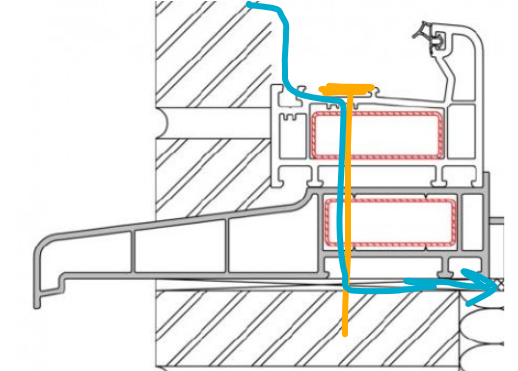
I'm confused by that image - that looks like a massive gap between the frame and cill - surely the sill gets mounted to the frame first so you shouldn't have that in the first place? And the gap in the sealant looks on top of what is a substantial thickness of sealant, + protected by a UPVC overhang - I'm amazed that much water can enter at that angle! If you're saying that the leak is coming in from the middle, rather than the edges (more usual) then it's likely leaking through a poorly sealed fixing (screwhole in the sill)? Otherwise I'm not sure how it would track to the middle without getting to the edges. If that's the case then just sealing the bottom of the frame to the sill might not help, since the water might be coming in from around the sash (is it an opening window? flush casement or storm proof?) , and trickling down the frame. Terrible drawing attached.
-
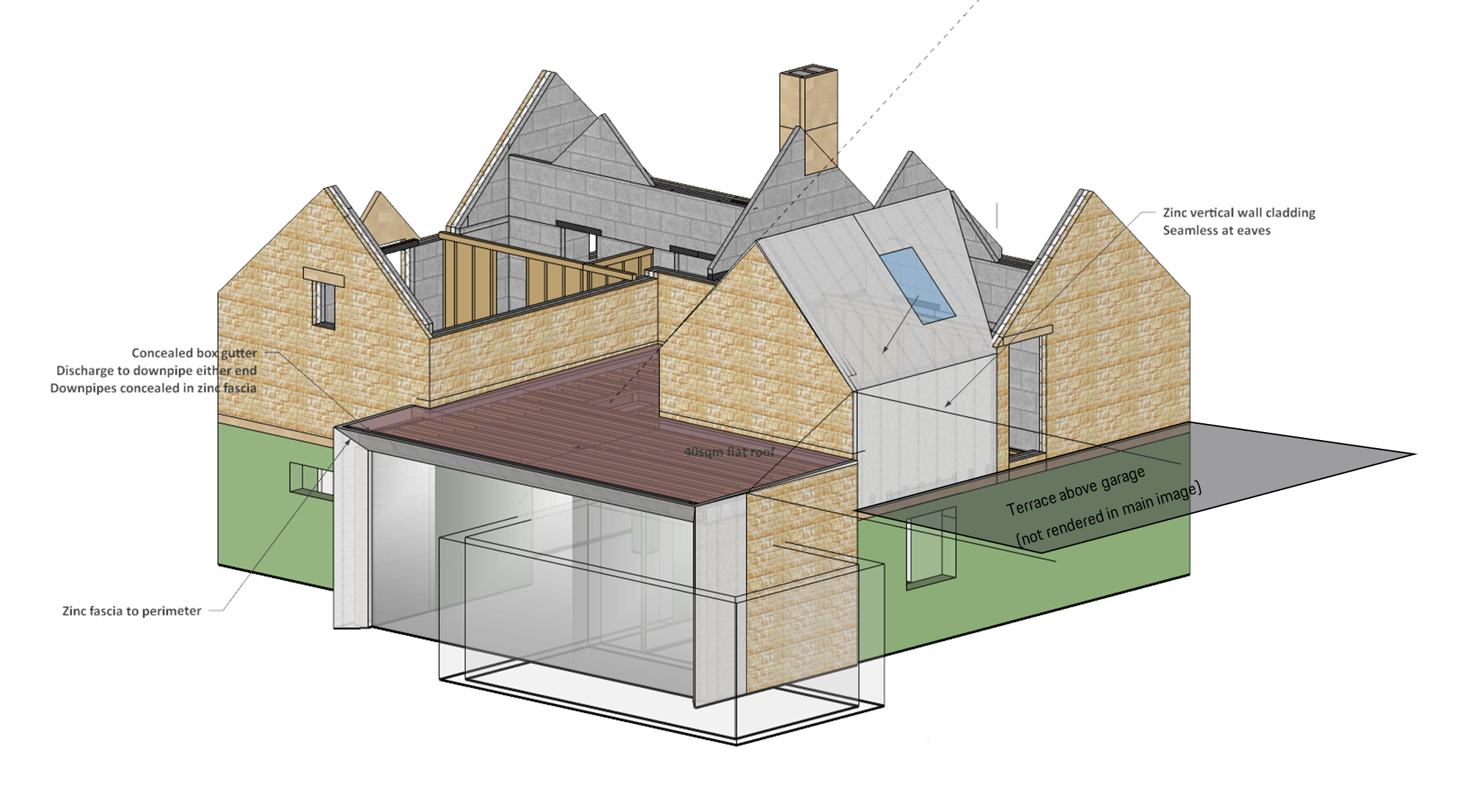
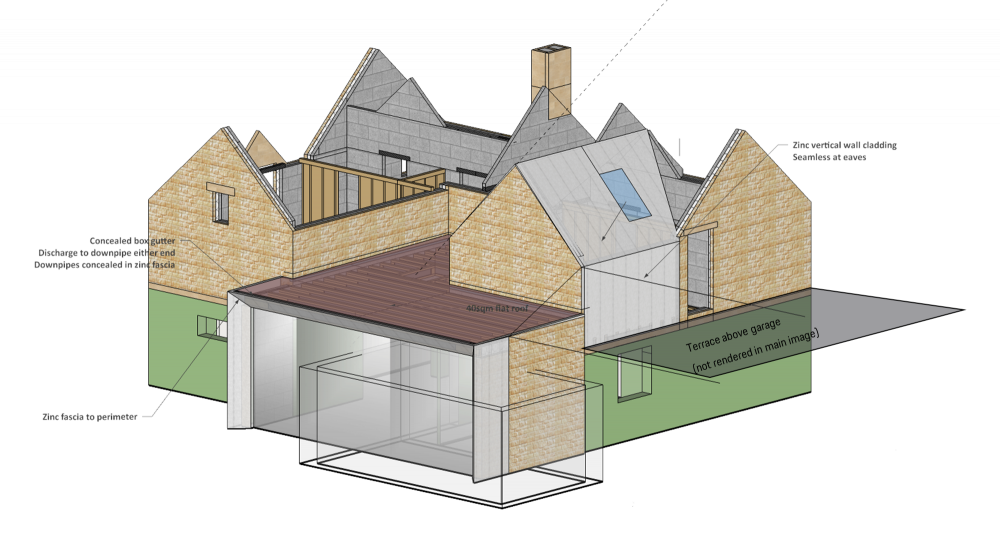
Collective thoughts here please... One of the wings of our U shaped bungalow upstairs is going to be clad in vertical standing seam zinc, roof + walls. These walls are blockwork with 120mm cavity, and will be fully filled with Icynene (or alternative). Roof is vaulted ceiling with 200mm rafters on glulam ridge. Only the sides of this section are clad in zinc. The end gable is exposed stone outer leaf. Below this on the 3 sides is a flat roof. The question is... to get the cleanest look possible, could we do away with any form of gutter, since the run-off would end up on the flat roof anyway? The flat roof will have ballast or sedum trays on one side, and on the other side is above the garage, so I'm (perhaps naively) not expecting noise of run-off to be a particular concern. The alternative will be a concealed box gutter on both eaves coming out through the gable wall with two downpipes down to the flat roof. As the roof structure is going to be going on soon, I want to get the details of this nailed down. Hopefully the attached image shows what I'm talking about
-
I reckon that would work, just poke it out the top and let the brush sit on the pot with the rods weighing it down from below - as long as it's dense enough that a bird won't go through the bristles you'll be alright!
-
That is the important question! I am open to suggestions... on another flat roof I had done, we had 120mm PIR over firrings, fixed with 200mm long screws, and that is not something I'd like to repeat - the roofer's hit rate of aiming the screws into the firrings through that build up was somewhat less than 100%. Which then starts to make a bit of a mockery of the VCL, before even mentioning thermal bridging. I'd consider using the sunken "top hat" screw fixings so that a much shorter screw can be used. It doesn't massively help with aim, but fitting onto 75mm posijoists without firrings should be easier as they can be marked out quite accurately before driving the screws. I'd prefer an adhesive of some kind.. I guess something like TT47 can be bonded to most things? The roof will most likely end up having sedum trays, or smooth round cobles on the top for aesthetics anyway, so I don't think it'll be going anywhere! Ref other comments on why use liquid roof over a deck - simply I've not been happy with EPDM on two roofs, especially one that is under a pitched roof, where a blown tile landed and punctured the EPDM, resulting in rain water seeping in through the crack and making a right mess. And the patch didn't look too hot either! So I don't think I'd ever consider a roof with EPDM laid directly over PIR if there was ANY chance of anything standing or landing on it.
-
Well that's a poke in the eye with a pointed stick
SuperPav commented on LSB's blog entry in Little Stud Barn
I recommend you speak to someone about remedial screw piles - these should be fairly simple, quick, and "relatively" cheap to install on the necessary walls if you've got decent access for the rig. We looked into this when we thought we'd need to underpin our bungalow foundations before building up, but the SE did ground bearing analysis on 3 trial pits and lots of calcs for Building Control to convince them that the existing footings are adequate, so we didn't go down that route. But that would have been our preference over underpinning footings to 2.0m with concrete, 1m at a time.