NandM
-
Posts
142 -
Joined
-
Last visited
Everything posted by NandM
-
Beefy ridge beam check and plan to reduce size
NandM replied to NandM's topic in RSJs, Lintels & Steelwork
I assumed thermal bridge would be reduced somewhat with it being under the rafters, but I'll look into glulam and ask the question. -
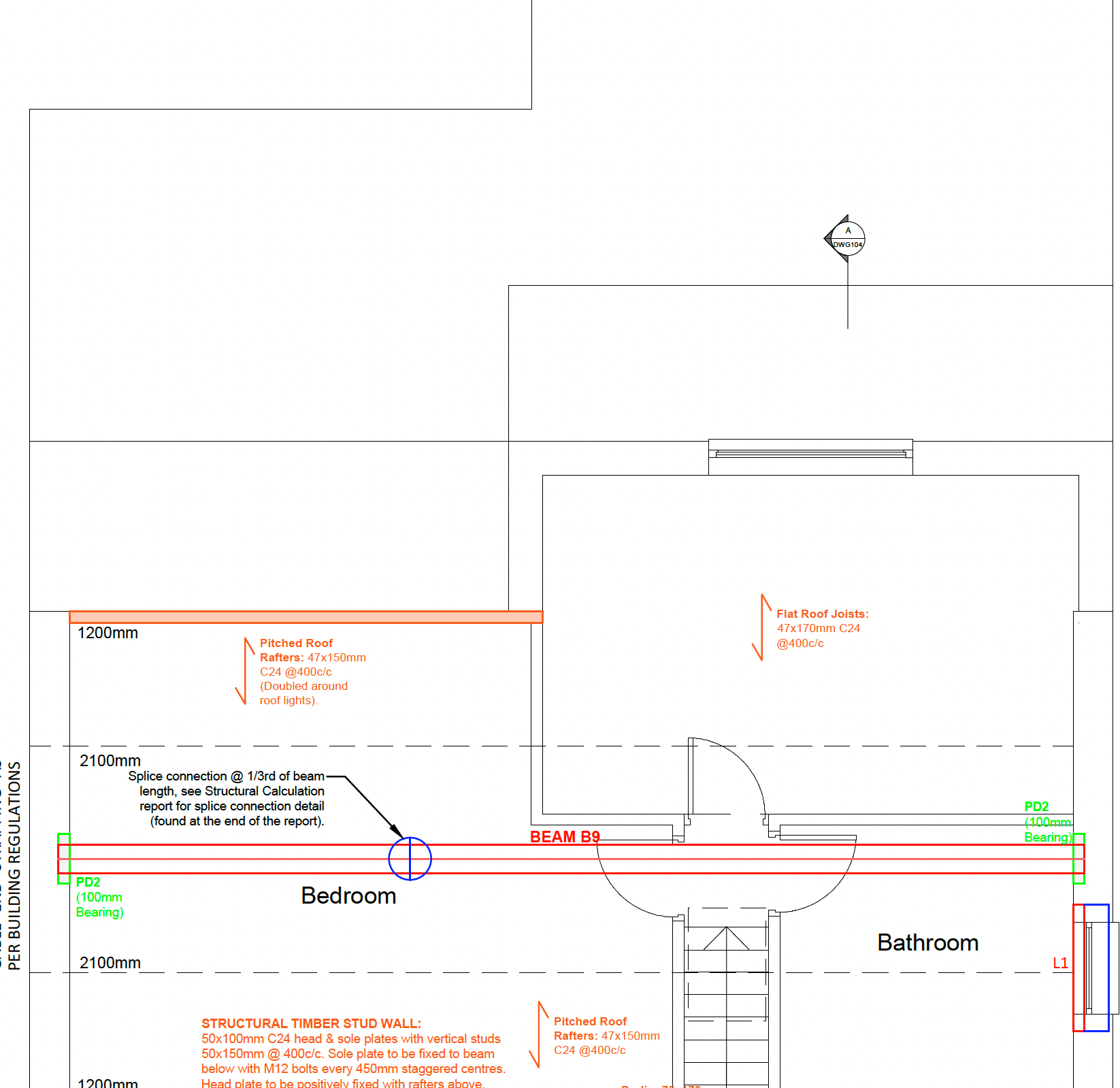
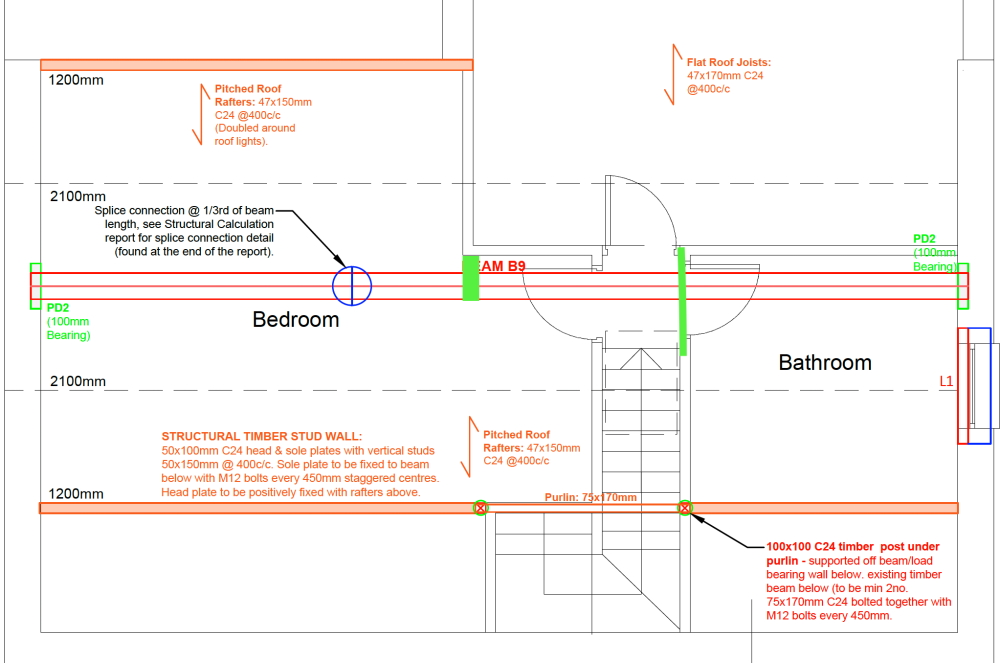
My SE has spec'd a fairly hefty ridge beam for a 9.6m span @ 254x254x89UC. This will be supporting either 9x2 or 10x2 rafters with clay roof tiles and in-roof solar. A couple of builders I've had over were surprised by the size of the beam and the challenge of getting it up. I could hire a crane, but I'm wondering if it has been over spec'd and/or whether I can build in some additional support to take some load and reduce the beam size.. I've emailed the SE with my query, but it would be great to get your thoughts as well. I proposed a load bearing wall in the bathroom and, if it helps a lot, a column or pier in the bedroom. Both would be on top of existing load bearing walls.
-
@Gus Potter - can I get your final thoughts on this - or do you agree with George that it appears to be OK.
-
These look great - I've ordered a sample...plus I would save almost £3K based on list price.
-
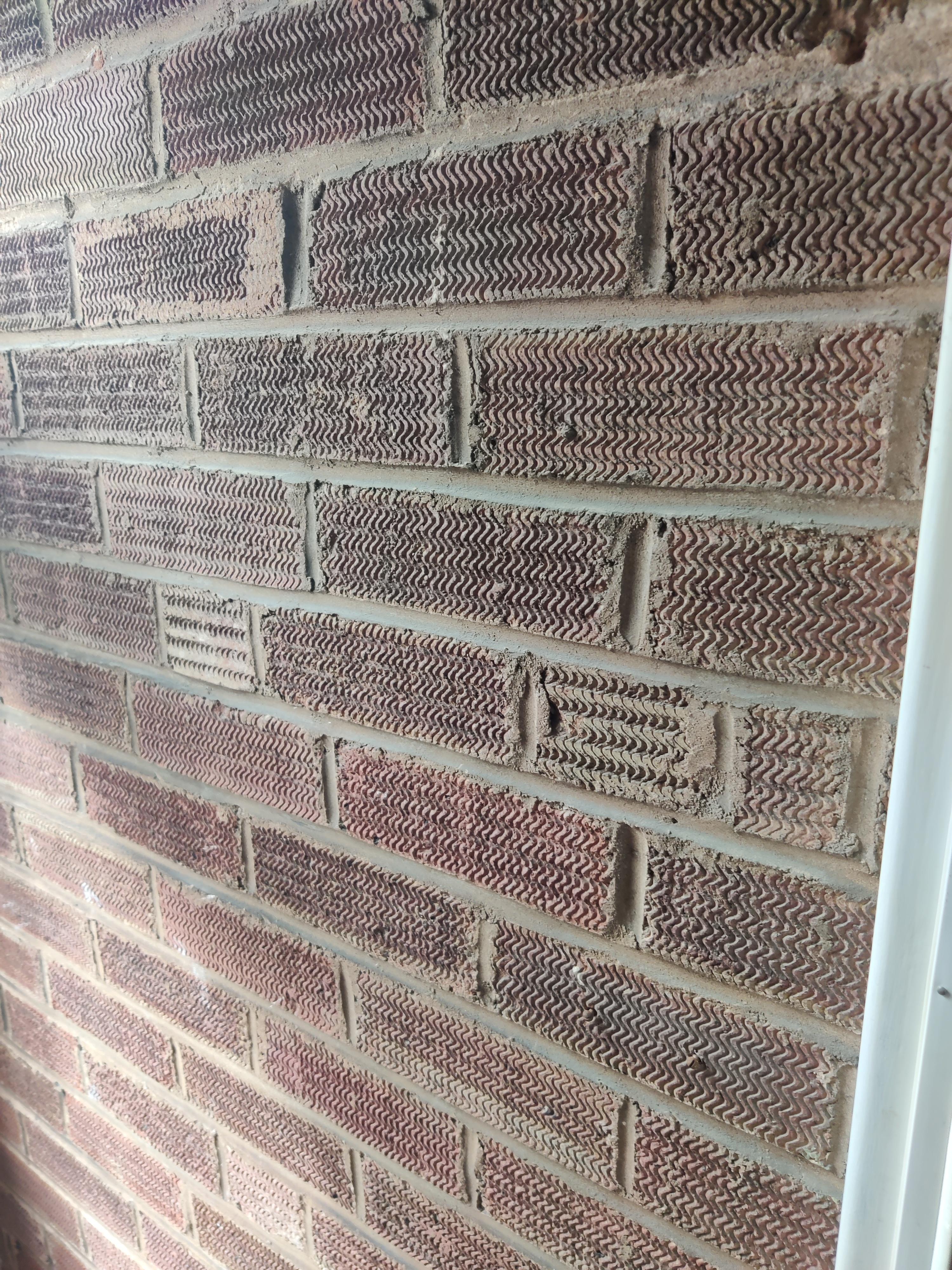
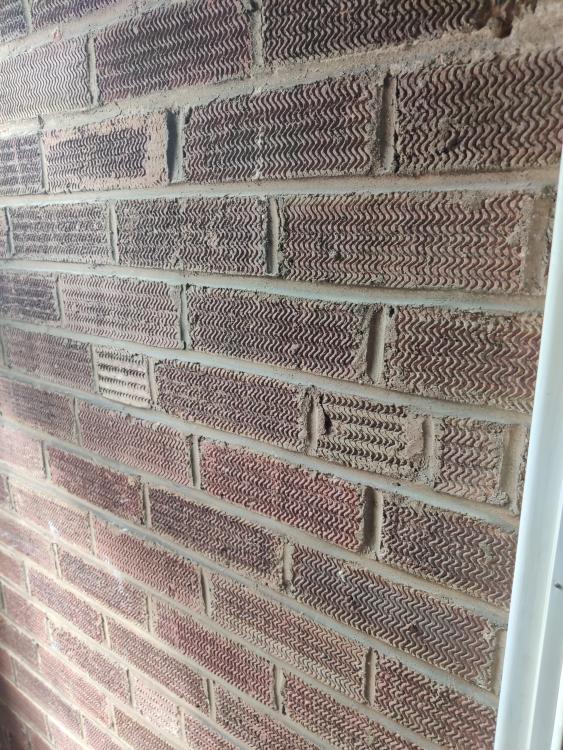
Is this a problem with LBC across the board? The only matching brick I could find for my extension is the antique rustic, which seems be a LBC only brick.
-
@JohnMo - do you mean you'd pick low temp rads over UFH? Is that because of the times you're at home, or something else?
-
I didn't know there was such a service....thank you!
-
Thanks Canski - I'll see if I can find slips to match, otherwise it'll have to be timber with clay tiles.
-
Move steel column to be flush with wall?
NandM replied to Dabooj80's topic in RSJs, Lintels & Steelwork
I just had a look at my kitchen planner: if I keep the current length, then there will be a drawer unit there. If I reduce by 1m (cost saving), then it will be a free standing fridge. I could bring the column in to the thermal envelope and either reduce the drawer size by x cm or bring the fridge out by the same. I think this would probably be the better solution.?? -
Move steel column to be flush with wall?
NandM replied to Dabooj80's topic in RSJs, Lintels & Steelwork
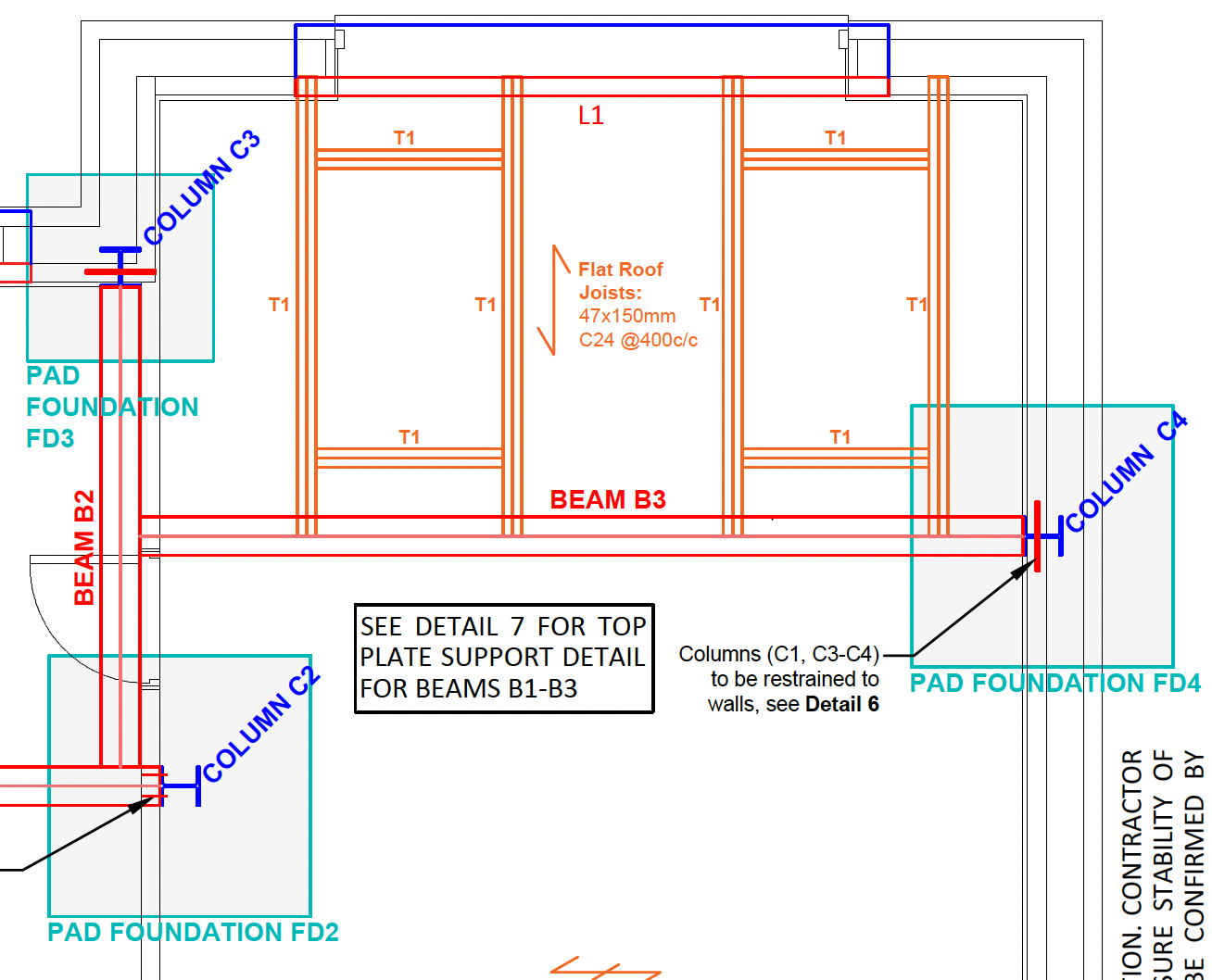
With regard to the thermal bridging, I have one column (C2) that sits 100mm into a 200mm cavity, which will have blown-in cellulose. I'm assuming/hoping this would reduce the effect of a thermal bridge somewhat? The kitchen floor units run down this wall and at that space there will either be a floor unit or a pull-out larder. (Would air tightness also become an issue? If so, would using air tightness paint and wet plaster help remedy that?)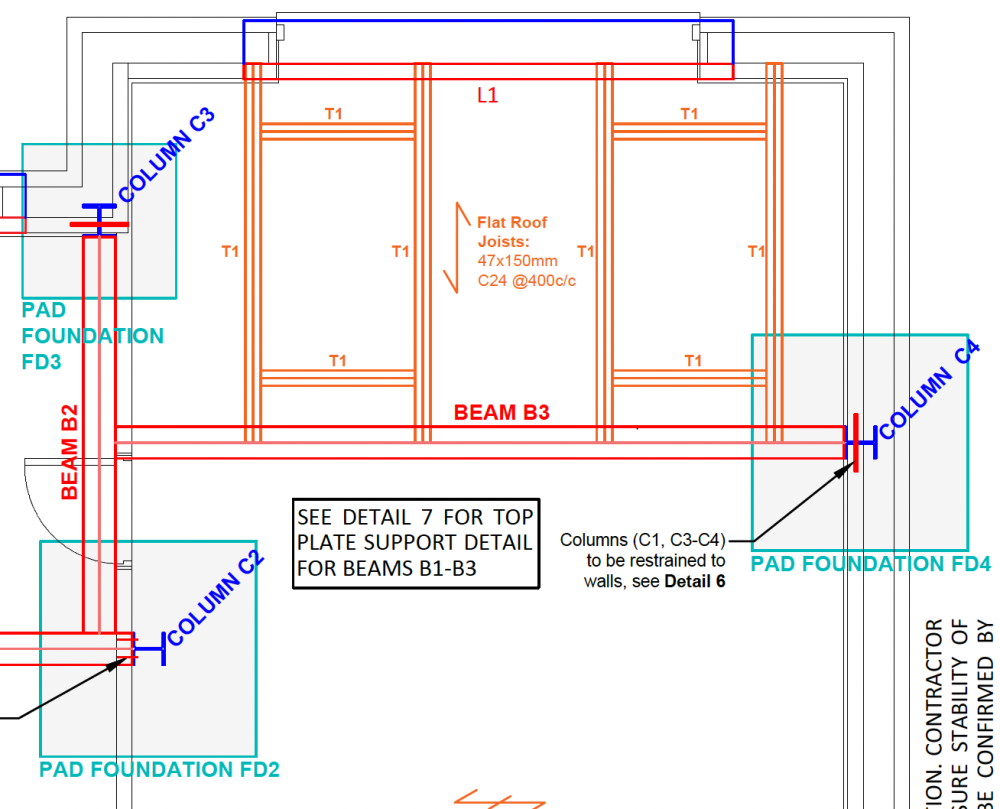
-
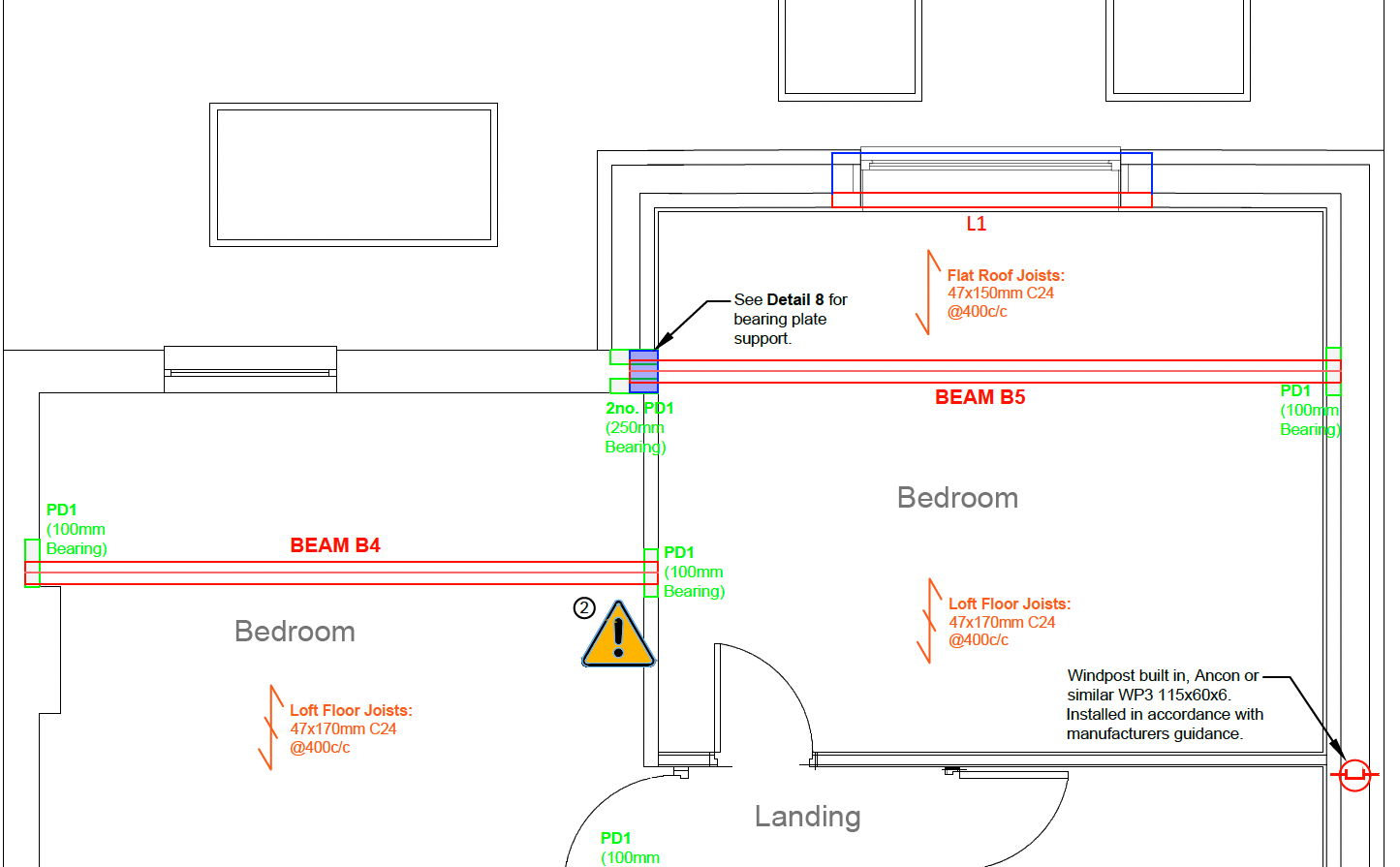
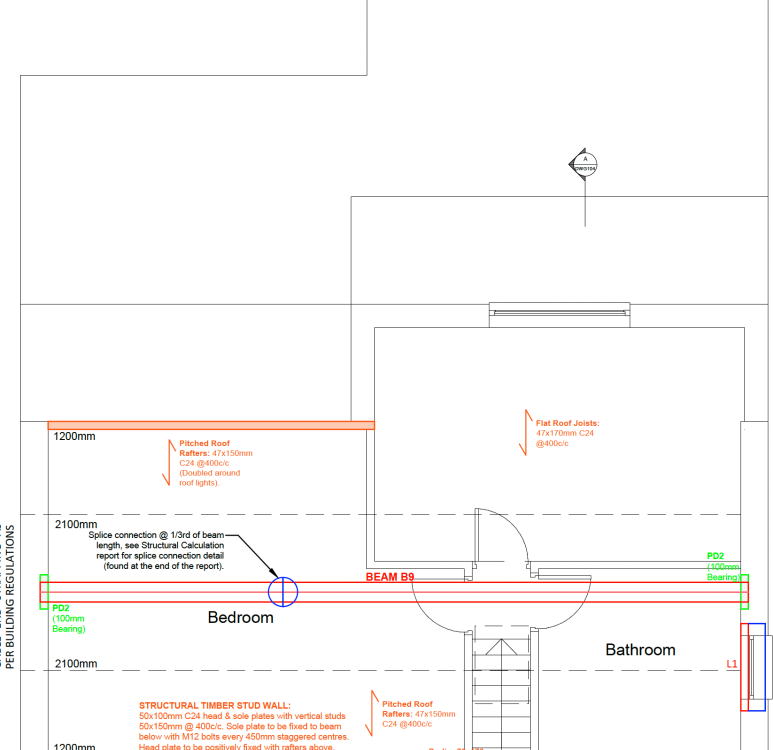
I'd really like to have a fully brick/block dormer. The right hand side will be part of the gable wall, so that's easy. The front could be built off the beam, so should be straight forward...but I'm at a loss as to how the left hand side a) could be supported (400mm wide) and b) built at an incline. The load baring wall on the first floor could be used, and maybe some cross beam between Beam 5 and 4. It sounds like it could be a cold-bridging nightmare and safer/easier (and a little cheaper) to go with timber & clay tiles....unless I'm missing something obvious.
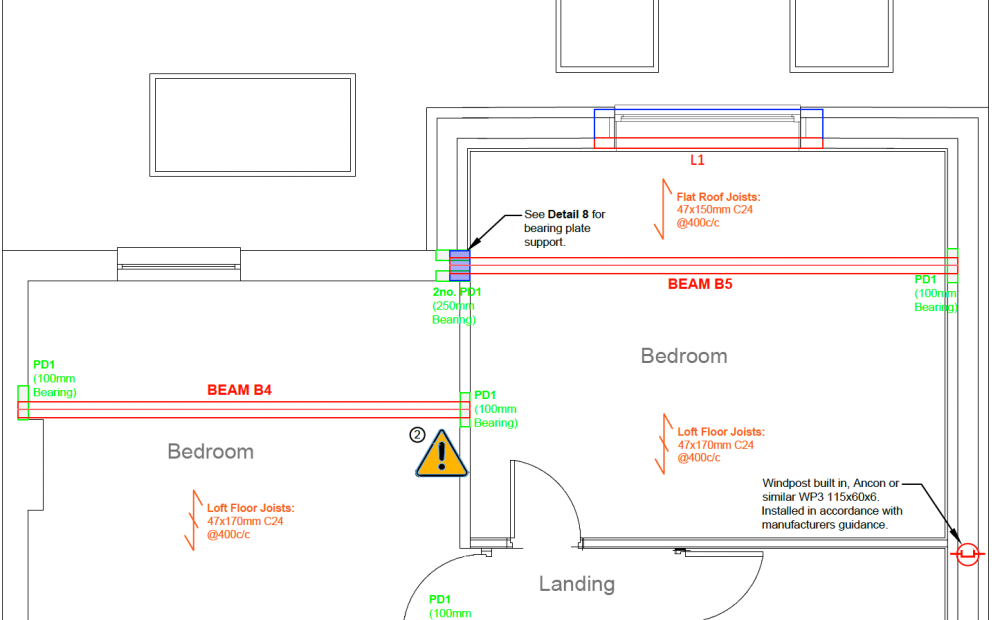
-
What holes do I need through the walls?
NandM replied to CalvinHobbes's topic in General Self Build & DIY Discussion
For the larger MVHR holes, what's the best approach: put the pipes in as brickies are building (will they hate this/me) or cut through afterwards? I will have 200mm cavities. -
Compressive Strength - insulation behind ledger board
NandM replied to jayc89's topic in General Structural Issues
Is there any reason not to use a ledger board for the both sides? With my project, I'm thinking about following my getting my brickies to build all the walls and then for (hopefully) me to follow but using ledger boards for the floor joists. (Would this approach cause any problems??) -
Just thinking about the almost teapot like hipped roof some more. As only half of the rear and a third of one side of the supporting walls will be demolished, could I keep most of the roof structure in place (with additional cross-bracing etc.) until the new one is built?
-
For our extension, we'll be having the entire rear cavity wall removed: half single storey and half double storey. In addition, around a third of the side will also have the double storey removed...as well as the roof structure I'm reasonably OK at breaking things and as I'm managing the project, fancy saving some pennies and doing the demo work (mostly) myself. I could hire some manual labourers and there will be space for machinery as the garage will also be demolished. How would you go about doing this? This is our home and half-finished, but we will move out for the works. I'm currently leaning towards not having a tin hat for the roof as the pricing is crazy. Should I wait until the new roof has been built before taking the walls down. But by that time, the new walls and slab will be in place, so perhaps more of a headache?
-
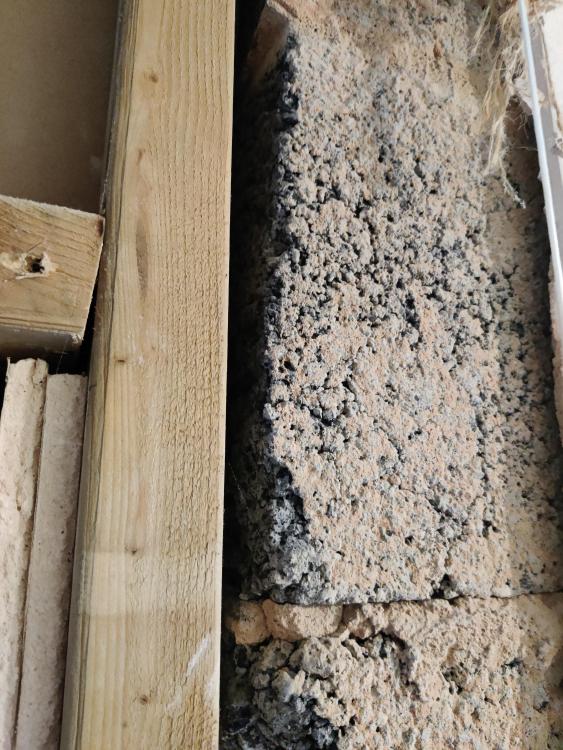
-
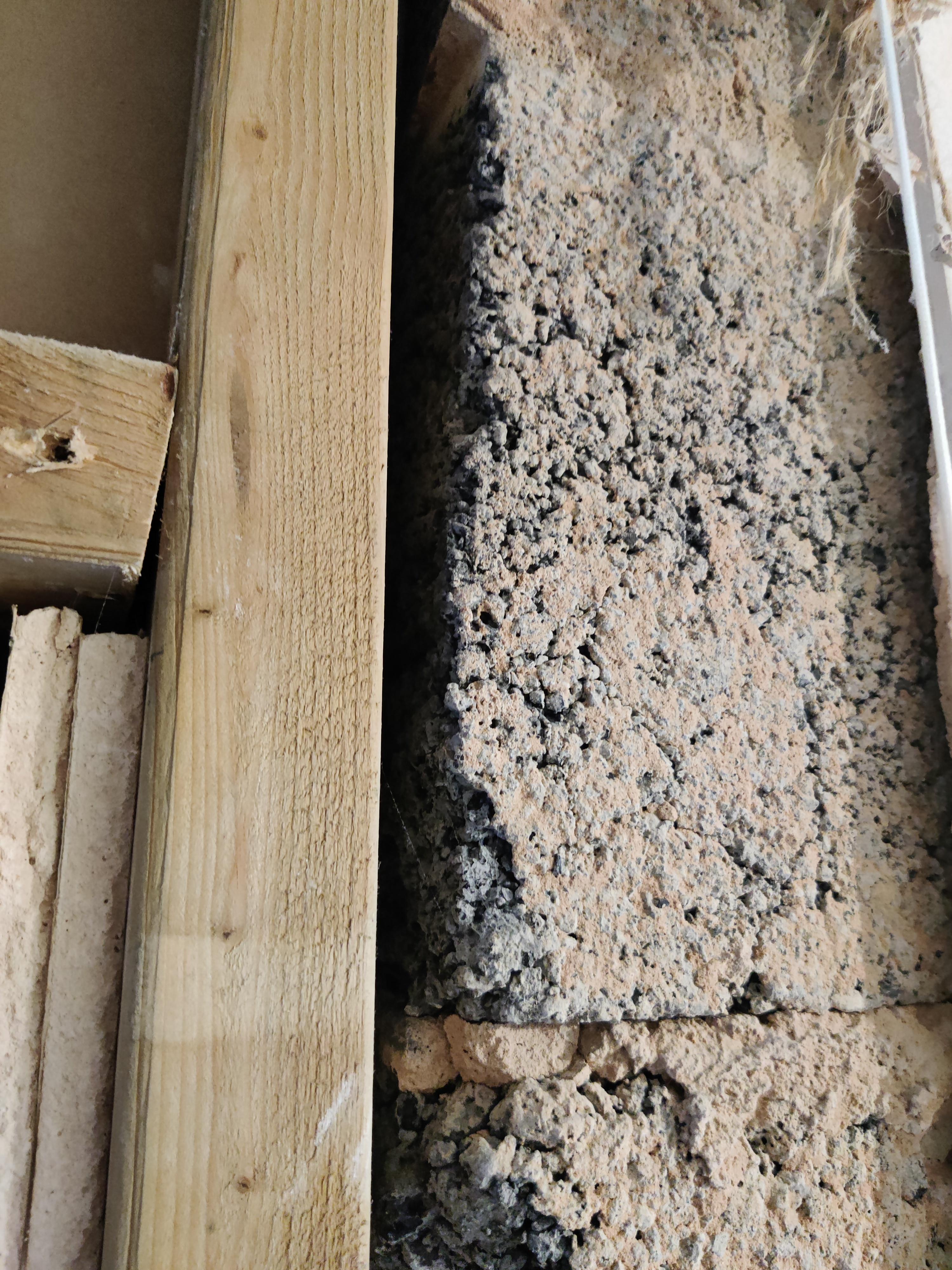
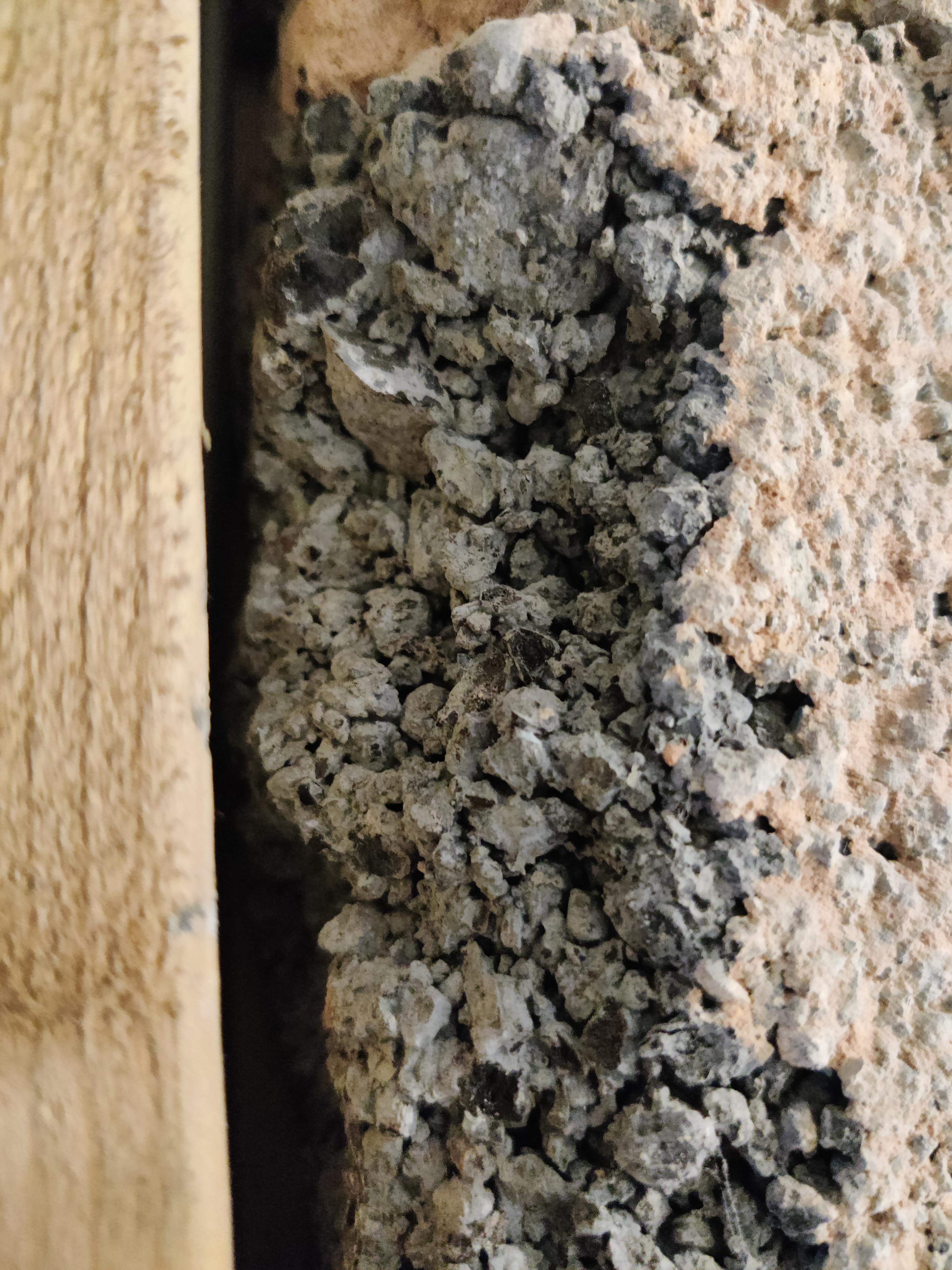
One of the beams that we require need to rest on a bedroom wall - with the bedroom fully finished. I've just noticed in the SE notes that if the blocks are not dense concrete then the wall will need to be rebuilt...which would be a bummer! I've had a look on Google images and these look like concrete blocks - but your opinions would be greatly 👍
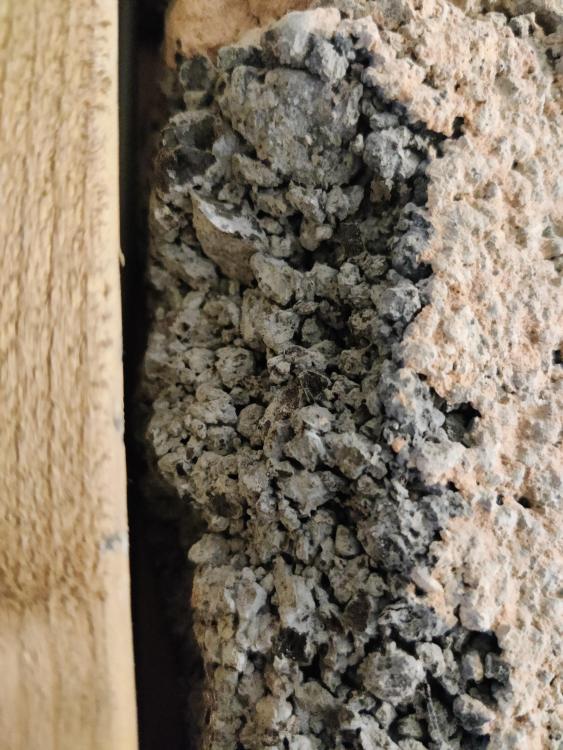
-
When is a cold bridge a cold bridge?
NandM replied to SimonD's topic in Energy Efficient & Sustainable Design Concepts
@SimonD - what do you mean when you say you moved the wall outside? Was this beam meant to have supported a wall directly above, but you re-engineered it work differently? I have three such beams (supporting external walls) and am looking at options to remove the cold bridge. -
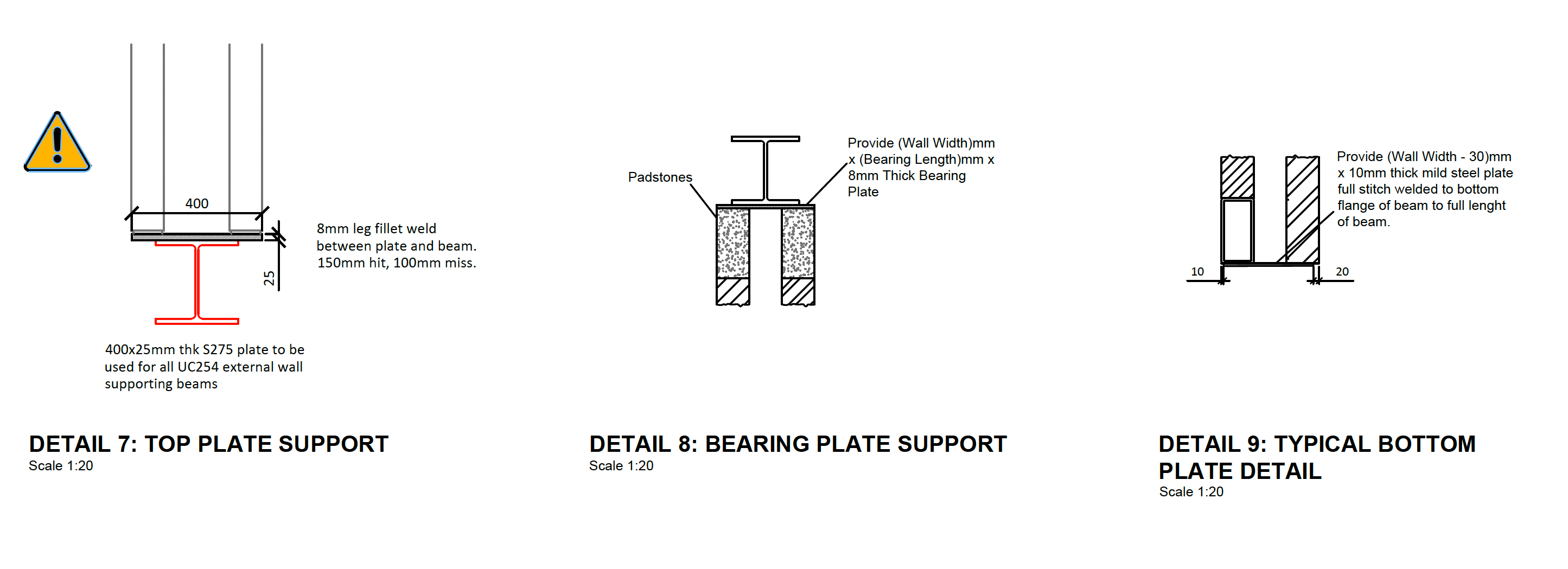
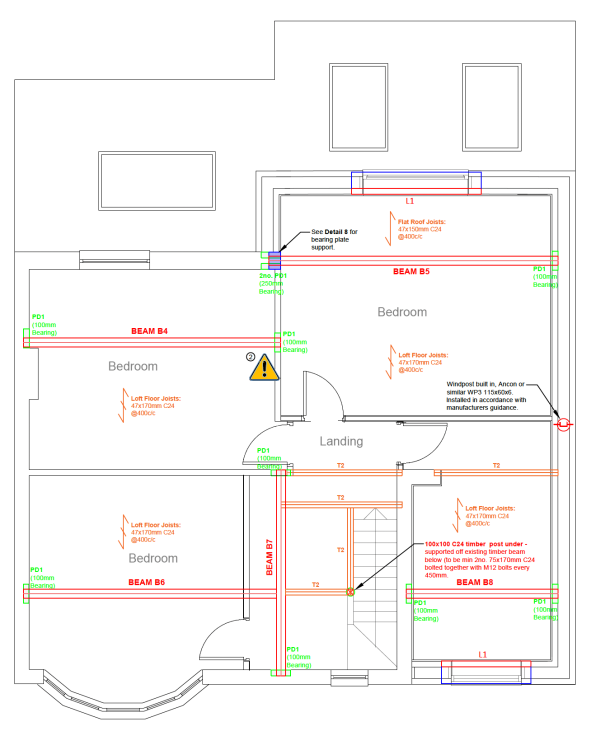
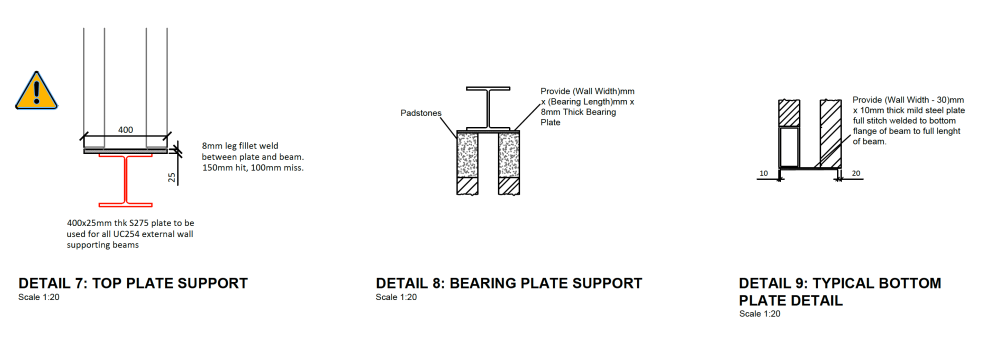
My SE has specified using steels plates to give the RSJs the width they need to support the 400mm external facing cavity walls. Would the external-facing leaf of bricks cause a cold bridge via the top plate? As the RSJ's are within the thermal envelope - except for the support above, I'm wondering what can be done to minimise it....if it is an issue. (Beams 1, 3 & potentially 5)
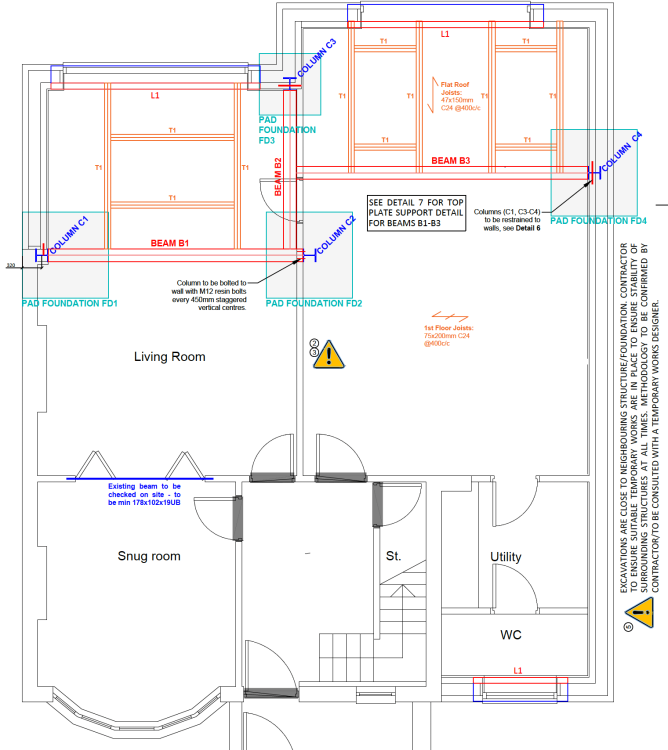
-
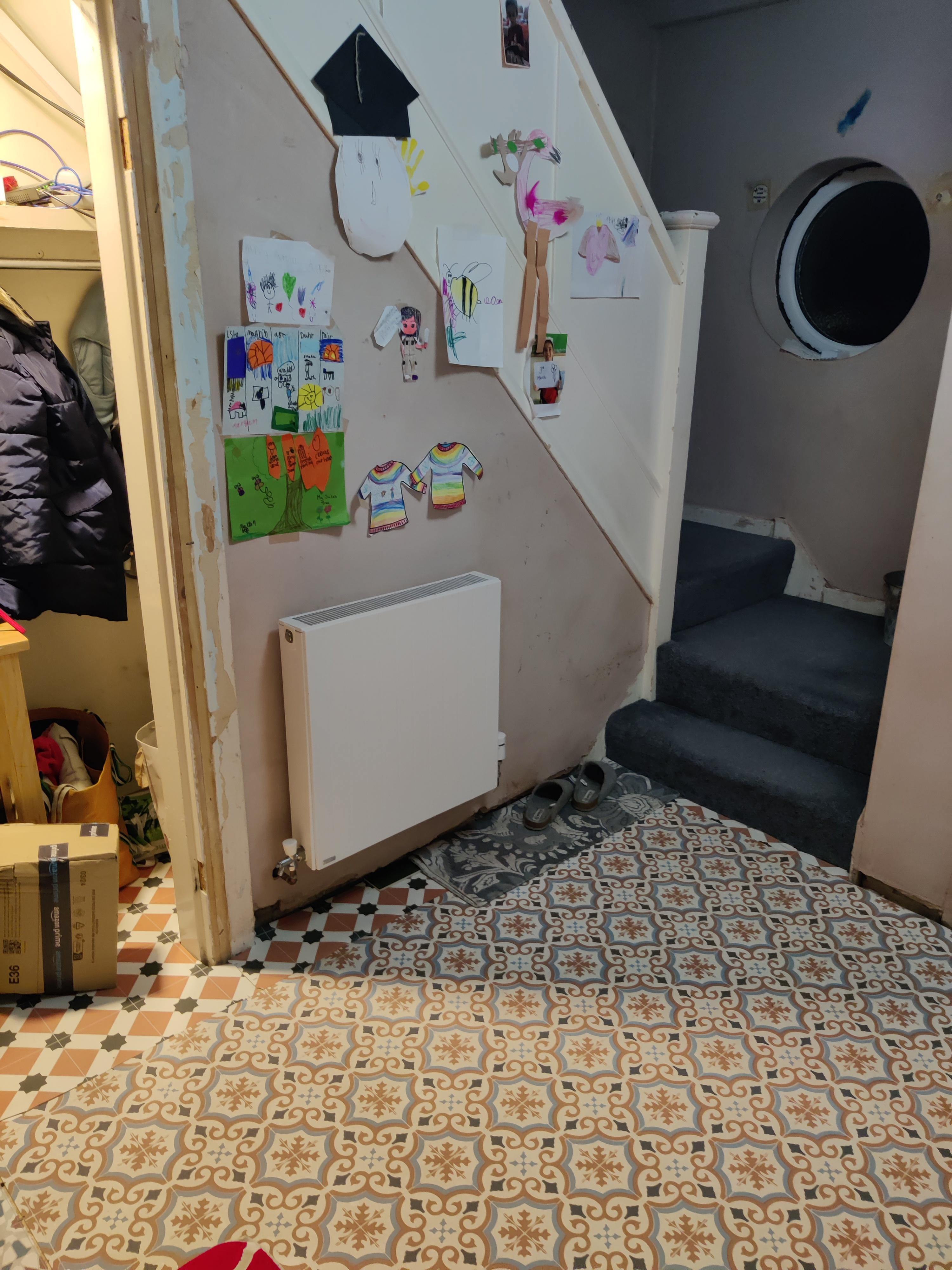
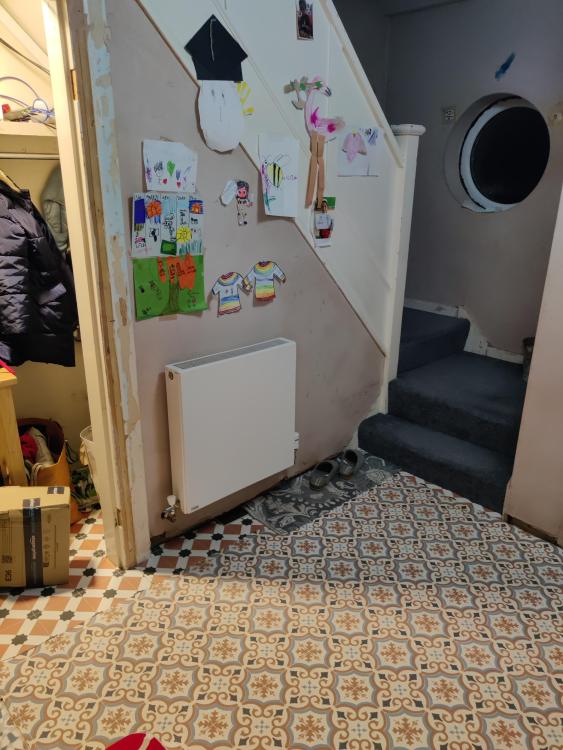
I would like to dig up the hallway floor to lay a new insulated concrete floor, with underfloor heating. The original floor is comprised 70mm screed and unknown depth 1950s concrete slab. Most of the screed has been removed, with the exception of under the stairs and I've chucked down 75mm of our, with osb and lino offcuts to finish off. The gas and electric mains also go under the stairs, with the meters in a under stair store room. If I was to only dig out the area I know has no mains pipes, and then build up a new subfloor: 1) would I get a cold bridge where the old concrete meets the new, probably around 1.5sqm max. 2) if so, how could I insulate between the two? Some sort of upstand and then screed over that?
-
The SE has come back with the following, which is at odds with what I've read so far. I thought the beam needs to be encased, but here the SE is saying we need to create a new foundation. "A box frame might be feasible, however the bottom member will require a mass fill trench foundation approximately 700-800mm wide dependant on the loads, which will be casted central to the bottom transfer beam resulting in excavation on the existing property."
-
Thanks @George - I'll get back to the SE and see what he comes back with.
-
Hmmmm....not sure what you mean by separating the living room off. The new living room extension won't be open plan in to the kitchen, it'll just be en extension for the living room. But I've gone back to the SE to get an actual number for how big these piers would be. *Edit: the pier sizing is in the diagram and would just be too big*
-
This is a cool site to help with brick/block and sand/cement calls: https://www.awbsltd.com/brick-and-block-calculator
-
My estimators online report is a little hit and miss. I'm finding some elements have been over quantified so I'm going through and double checking everything. So far have reduced number of rafters for flat and pitched roofs, and the OSB sheets. I also found the blocks in the founds were much than what I've calculated: 585 blocks vs 135 blocks....although the bricks were slightly under.