SimonD
-
Posts
1941 -
Joined
-
Last visited
-
Days Won
10
Everything posted by SimonD
-
Getting frustrated with heating suppliers.
SimonD replied to MikeSharp01's topic in Other Heating Systems
So just to confirm, this is what you pay them? And if you employ a plumber to do the install, you would have to pay for that separately and in addition to this price? -
Mixing wood fibre sarking with PIR in pitched warm roof
SimonD replied to DonnaP123's topic in Roofing, Tiling & Slating
The proposed build up using wood fibre is a standard and acceptable way to install wood fibre, but it isn't well understood here in the UK - trust me, I had to submit loads of technical documents so my BCO and team could learn about these systems! For the OP, I would personally avoid using mixed layers of insulation that behaves differently and look at other ways to make it work. One way to do this is to use counter battens below the rafter and put in a layer of the wood fibre there. One of the behaviours of wood fibre and other natural materials that often gets overlooked is the ability of the insulation to buffer the moisture.In the modelling for my house, the roof showed a small amount on condensation risk at the outer layers, but as the system was analysed by the manufacturer's technical team, it was assured that this small amount, possible in Jan/Feb would be satisfactorily buffered. But this is obviously looking at a buildup that uses the same materials throughout. -
The Hep20 guidelines: https://blog.wavin.com/en-gb/push-fit-hep2o-your-plumbing-faqs-answered
-
Not that I'm aware for domestic installations. The 300Pa/m is just a guideline that along with the flow velocity being below 1m/s is a good ballpark for a system that works well.
-
Yes, like I said before, knowing the resistance of the pipework is essential as in some cases it may mean resistance of the whole system is too much. So, like @John Carroll says, you get the press drop across the boiler HEX and then add your pressure loss across the index circuit to make sure it's all okay. Like above where your mass flow rate allows for a 10mm pipe, it's not going to take a long section to make it unsuitable for an efficient system. The index circuit is the circuit from boiler to radiator that has the highest resistance, including boiler, pipe, fittings, valves and radiators. This figure is used to size the circulator, but obviously you have your pump in the boiler so you need to know the boiler pump and HEX figures.
-
Just as a tip, don't wrap the thread with ptfe, you don't need it and it might make you think you've tightened the compression fitting enough when you haven't. You only need to wrap the olive. Personally I hardly ever use PTFE tape any more preferring to use a jointing compound.
-
Getting frustrated with heating suppliers.
SimonD replied to MikeSharp01's topic in Other Heating Systems
No, they don't. Trades course are often sold to those who've failed their GCSE as an alternative option - i.e. all is not lost, you still have a future! I know several in the trade who have done apprenticeships and have no school quals and they also say the college part of their apprenticeship was rubbish and they learned everything on the job. A lot of the training providers ar private so it's in their interests to pass all their students. This isn't to say anyone with GCSEs is in any way superior. Way back when I was part of annual graduate recruitment for a well known multi-national, we had to implement a maths and English test because a lot of graduates, even those from top unis didn't have basic maths and English skills. -
I think I'm now getting tempted to say that as soon as I see a mention of 'Heat Geek said this' I'm going to scoll on by! I don't understand how you're arriving at 22mm for bedrooms 1 & 2 for example. 1.1kW at dT 5 requires a flow rate of 0.19m3/h which multiplied by 0.28 becomes 0.05kg/s. This gives us a pipe diameter of 15mm with a velocity of under 0.5m/s and a pressure loss of 0.015 meters head/m copper. My calc suggests you could get away with a 10mm pipe for shorter runs at just under 1m/s for these rads. Personally, I'd delete all the bookmarks to blog posts about pipe sizing rules of thumb and just go buy a copy of the CIBSE Domestic Heating Design Guide, which has all the info you need to correctly design your system. The problem with the blog posts is that they're invariably incomplete, come with lots of caveats, and what they're really trying to do is get people to come tothem for their business! My biggest bugbear is that if a post makes claims, I want to have references so I can check out those claims - they're not given that often.
-
Hmmm, those figures are a long way out if you're working on a dT of 20 in your heating system. Assuming full load is equivalent to your boiler at 30kW output, you're looking at a mass flow rate of approx 0.36kg/s. On this basis, using a 22mm copper pipe you'll get over 1m/s velocity, lets say 1.25m/s. This is a bit fast, but not completely out of the question. Best look at 28mm primary pipework as this will give you around 0.8m/s which is almost ideal. Pressure loss for the 28mm pipe will be 0.021 meter head/m of pipe length. At 22mm it would be 0.070 meter head/m. At 35mm pipework, flow rate would be so low, it wouldn't be advisable on dT 20 but you'd need to look at the values for heatpump dT This is about right as some boiler manufacturers suggest using 28mm primary pipework above 26kW boiler output. As you can see, the choice of pipe size is a bit more involved. When I designed my own system I ran the calcs on the basis of dT20, dT5 & dT7 to make sure my pipework would be fine with gas boiler or heatpump, or even a hybrid system. Obviously there will be pretty different figures if you range rate to 16kW
-
I don't work in BTUs I'm afraid, I mostly grew up and went to school in Europe and by the time I got back here, we'd moved to metric too. 😉 Your pipe sizing is going to be based on the flow velocity through the pipes and resultant pressure loss, not a rule of thumb about how much a pipe can carry. At dT 20 this is going to be based on a flow rate of approx. 11.5 lpm. Presuming you can range rate/modulate your 30kW boiler? If not, then as said, at 30kW it's approx. 21.5 lpm. Now what you need to do is draw up your pipework with lengths and calculate the flow through each section according to what heat load that section is going to carry and then look at the flow velocity according to a pipe sizing chart. Then you can size your pipework for an appropriate size to carry the heating load at a reasonable velocity. Preferrably choose a velocity just below 1m/s. Once you have this figure, you can then look at your pressure loss in the pipework and decide on the pipe diameter. I think that with your UFH, you should ideally go with some form of hydraulic separation in your system.
-
You need to use the actual calculated heat output of the radiator/s for each branch and circuit. I'm assuming that your correction factor is the catalogue radiator output given at dt50?
-
Getting frustrated with heating suppliers.
SimonD replied to MikeSharp01's topic in Other Heating Systems
There's certainly a lot of debate about it. Here is a video that I think takes a reasonable approach to it: -
I had a similar problem with a bench grinder that had a safety cutout so if you lost power while using the tool, it would switch itself off. I found that the electromagnet part of the mechanism had failed somehow and that it would only work when holding it. It started suddenly, then intermittently and gradually got worse until I had to bin the switch and find a replacement.
-
You've done your research well to dig out the older threads relevant to this question. I don't have a UVC but a Thermal store in my house - for multiple reasons it was the pragmatic choice at the time and still is as a dump for future excess of solar. So my feeds to the manifolds are not balance through a control group but simply balanced at a manifold that splits the supply to cylinder coil/cold manifold - pressure is reduced as needed at the rising main. On a UVC installation, I would just ensure, like others have said that all mixed outlets are supplied by the balanced supply through control group. In some retrofit installs it's just the only practical solution to feed everything through the control group due to existing plumbing.
-
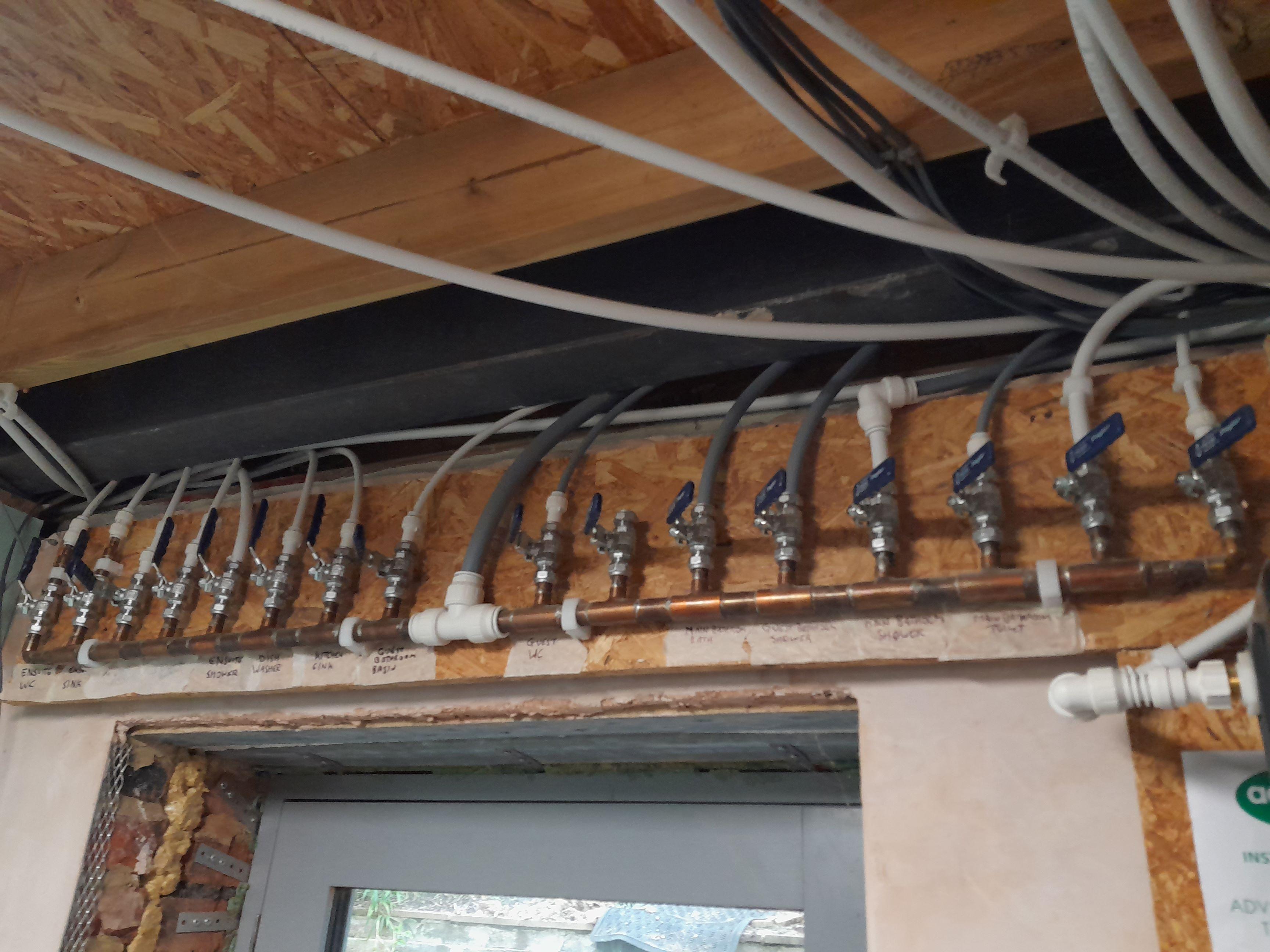
I think you'll struggle to find a plumber who knows and understands manifold systems. You might just have to burn out your phone trying! What you're proposing however is not impossible but the manifold manufacturers for cold and hot water distribution manifolds tend to suggest a limit to the number of ports. In some cases this is as low as 7 and in some it goes up to about 10. In my build, I needed 16 cold water ports and 11 hot water, so I built my own and feed the cold water manifold from the centre rather than the end - no problem so far with flow and pressure any where. Heating manifold wise I have one with 9 posts and 1 with 6 ports and all were a dream to balance. I've yet to install a manifold system for a customer so @Nickfromwales is the man for long term experience in a variety of projects. Here are mine (although a bit messy at the time as the water distribution manifolds were in experimental mode to see if they worked ok with the number of ports!).
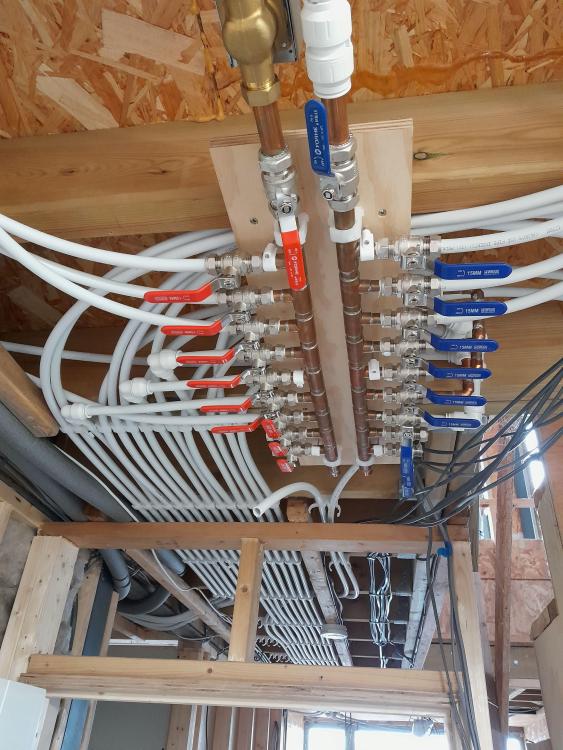
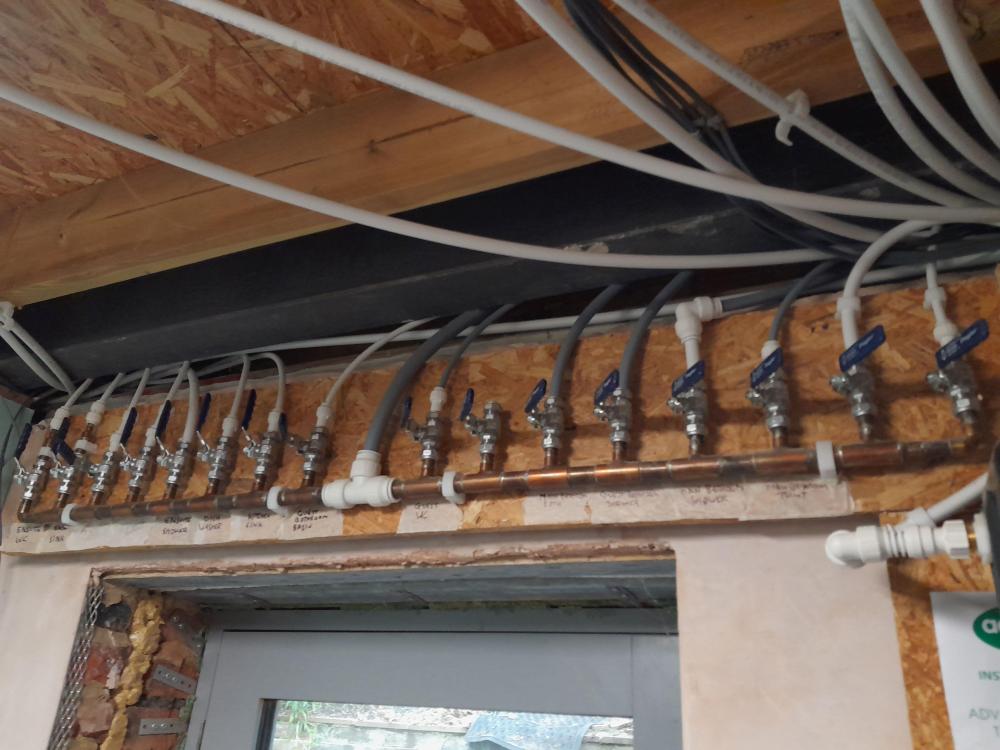
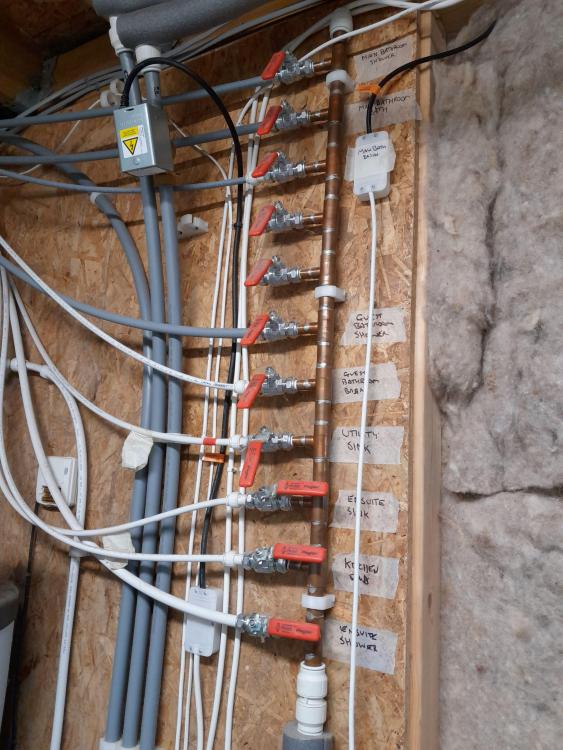
-
If you're a doing a large scale renovation then I presume you're upgrading the fabric of the building so that it becomes more energy efficient? I also presume that you're replacing the existing radiators? Your builder and their heating expert should have told you that your boiler needs to be specified on the basis of a room by room heat loss calculation and if it is going to be a combi, which should really be your last option, it is sized based upon DHW demand and required flow rates. Then they should have told you that the new system (i.e. new radiators) should now be designed for a maximum flow temperature of 55C Your DHW cylinder should also be sized according to usage and the figures you've given so far indicate that a cylinder of about 180l is all you would need, maybe 210 max. These are now part of of new Building Regulations and an industry requirement. For me all the warning bells are ringing. Try phoning around for another heating engineer and with the first question, ask them how they go about selecting the right boiler and radiators.
-
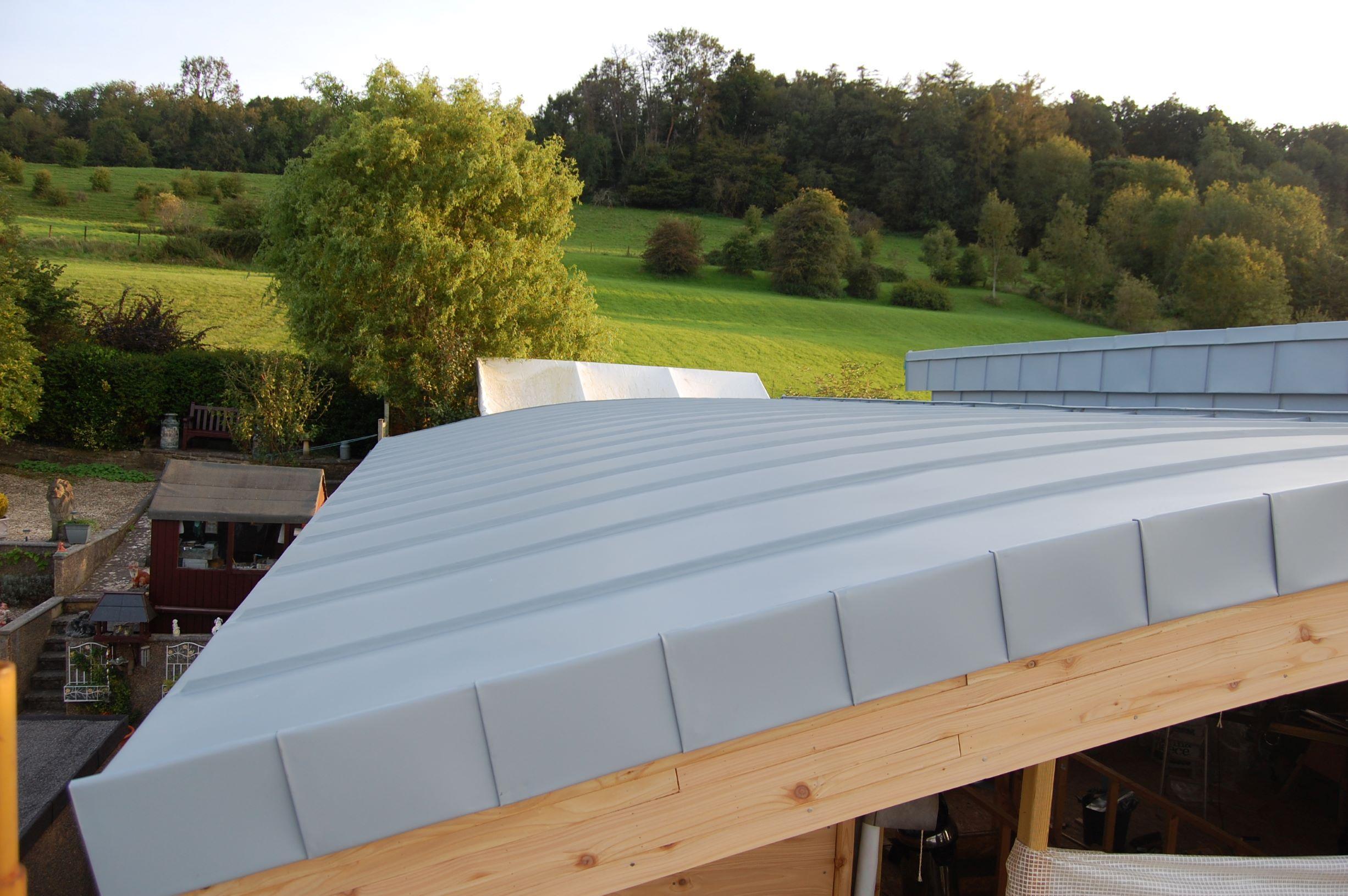
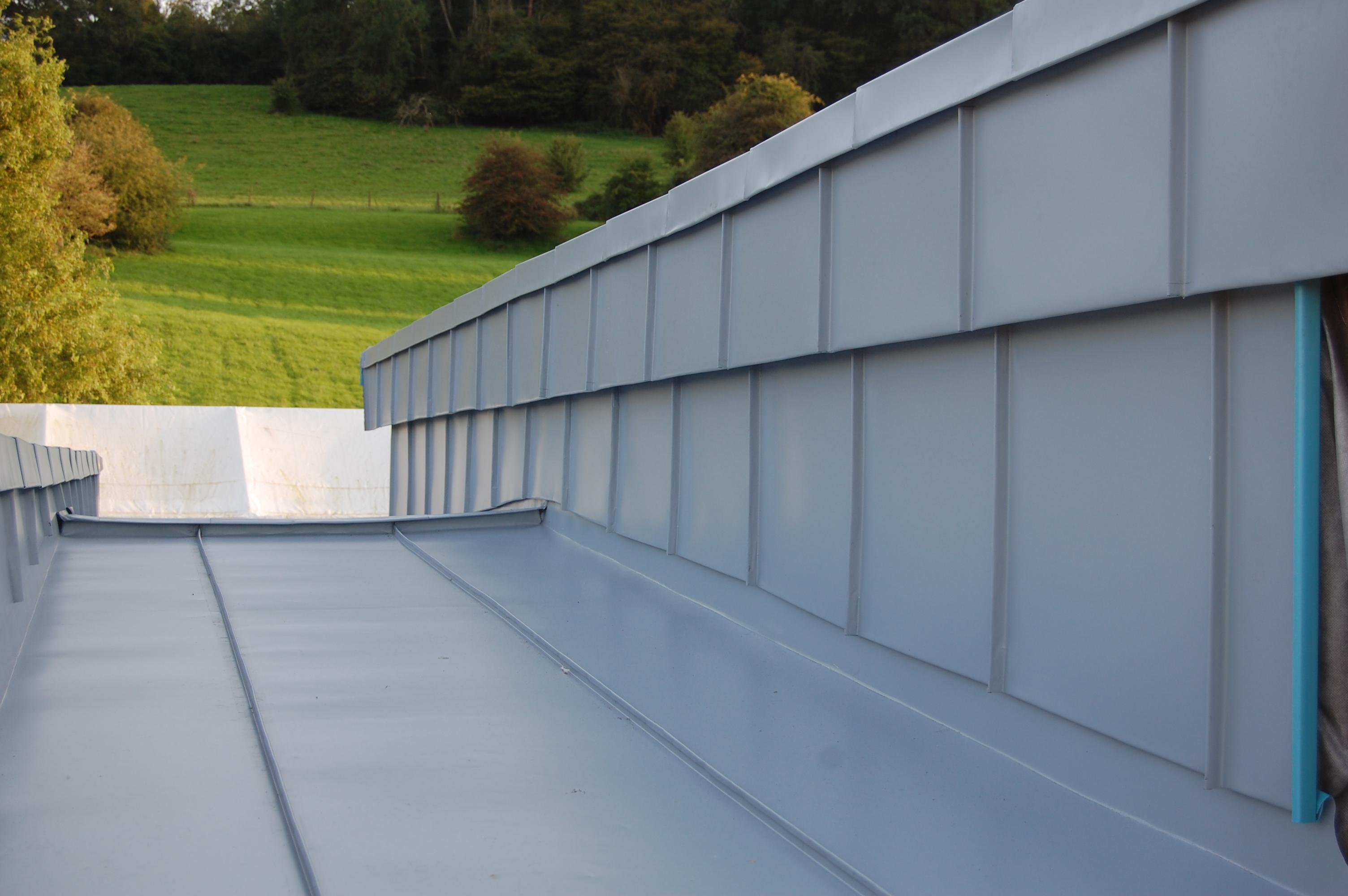
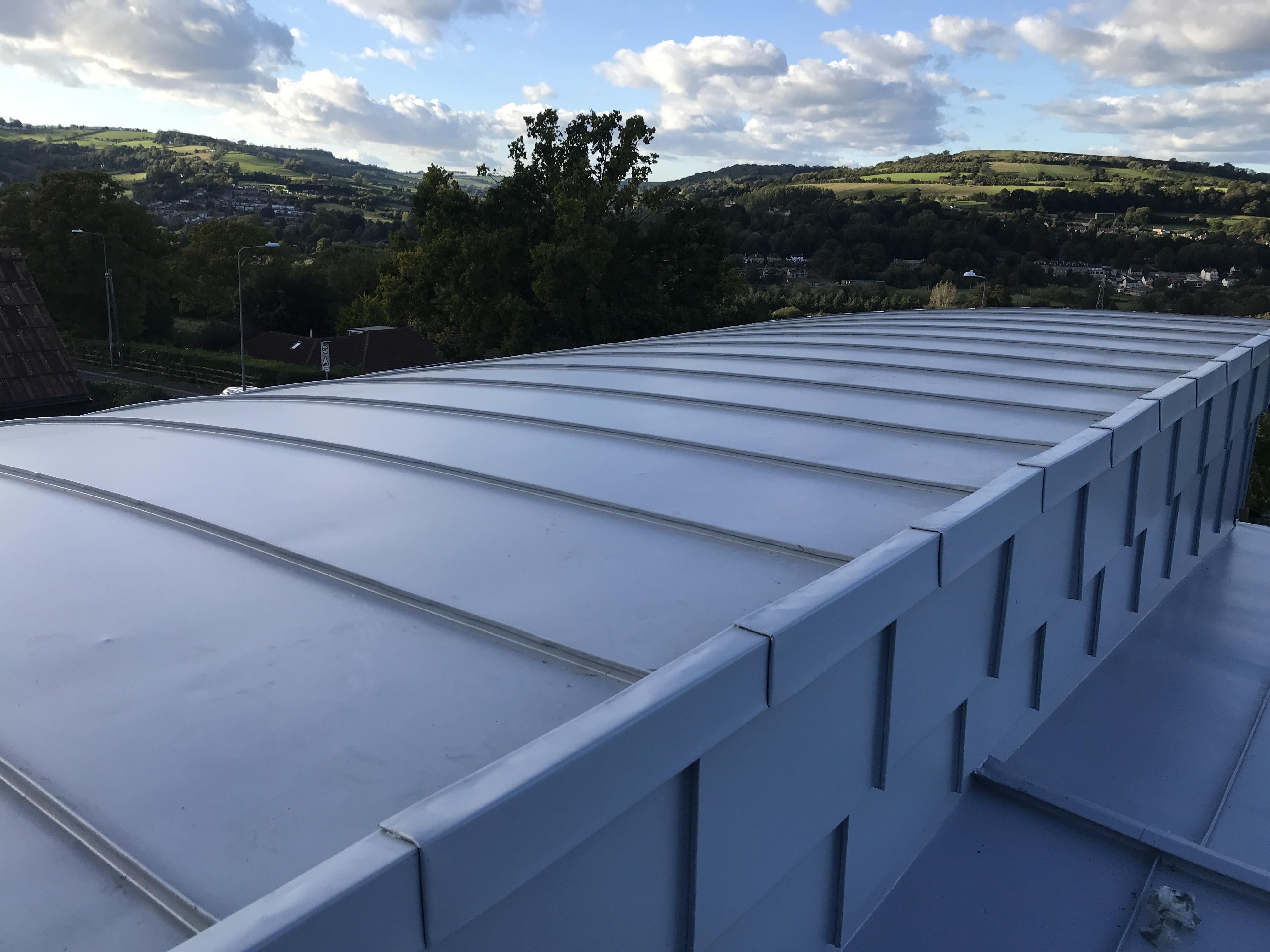
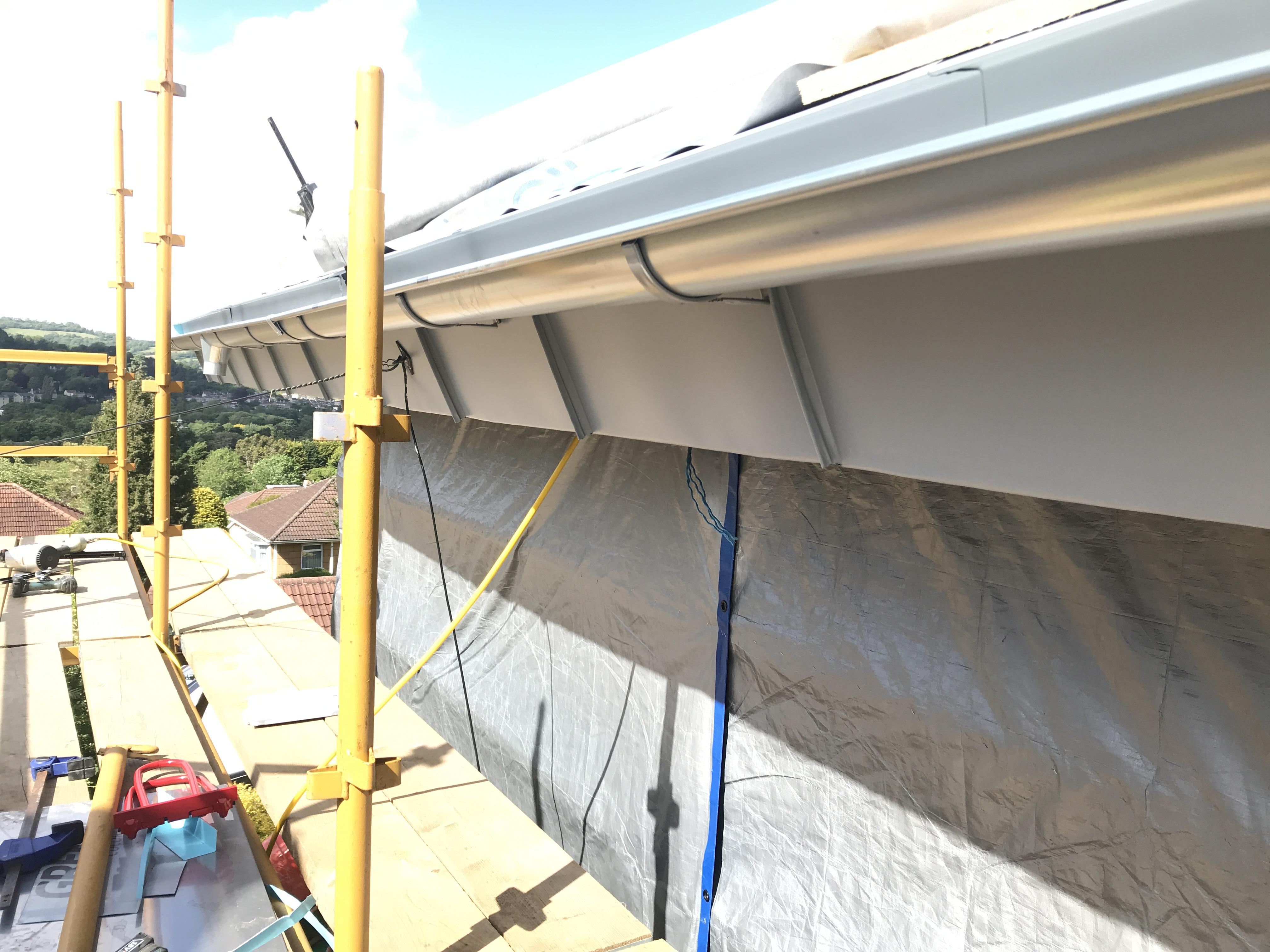
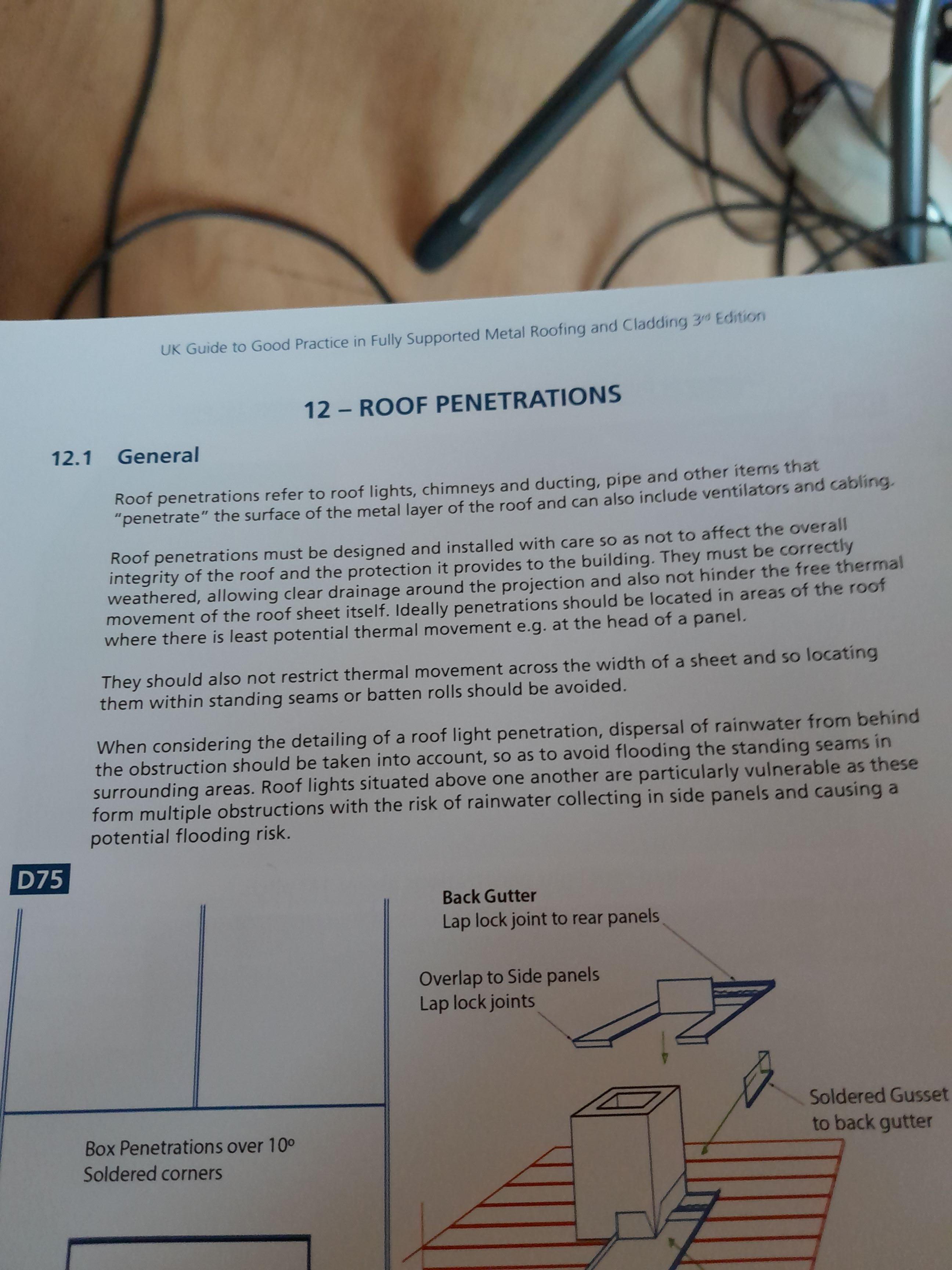
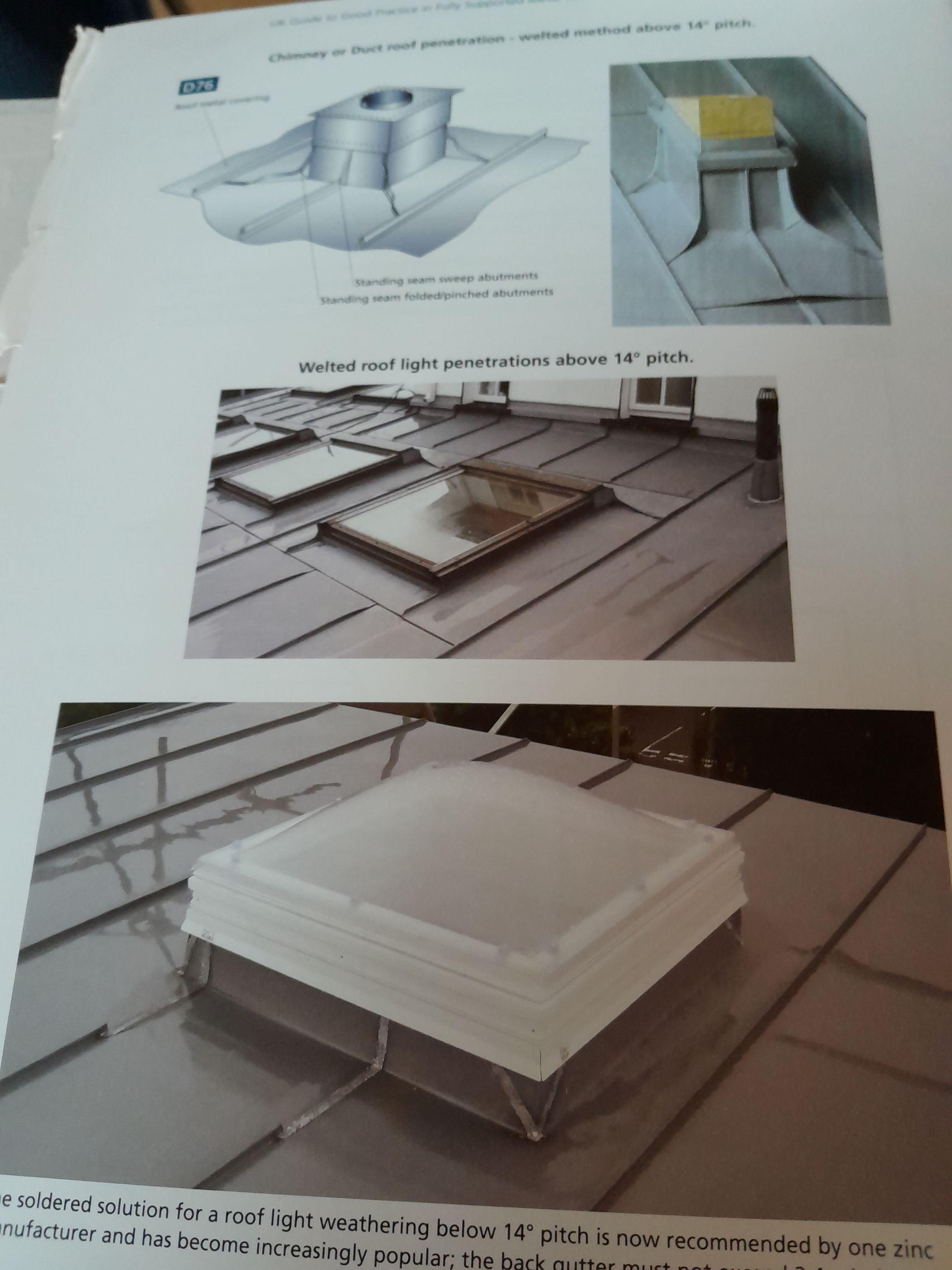
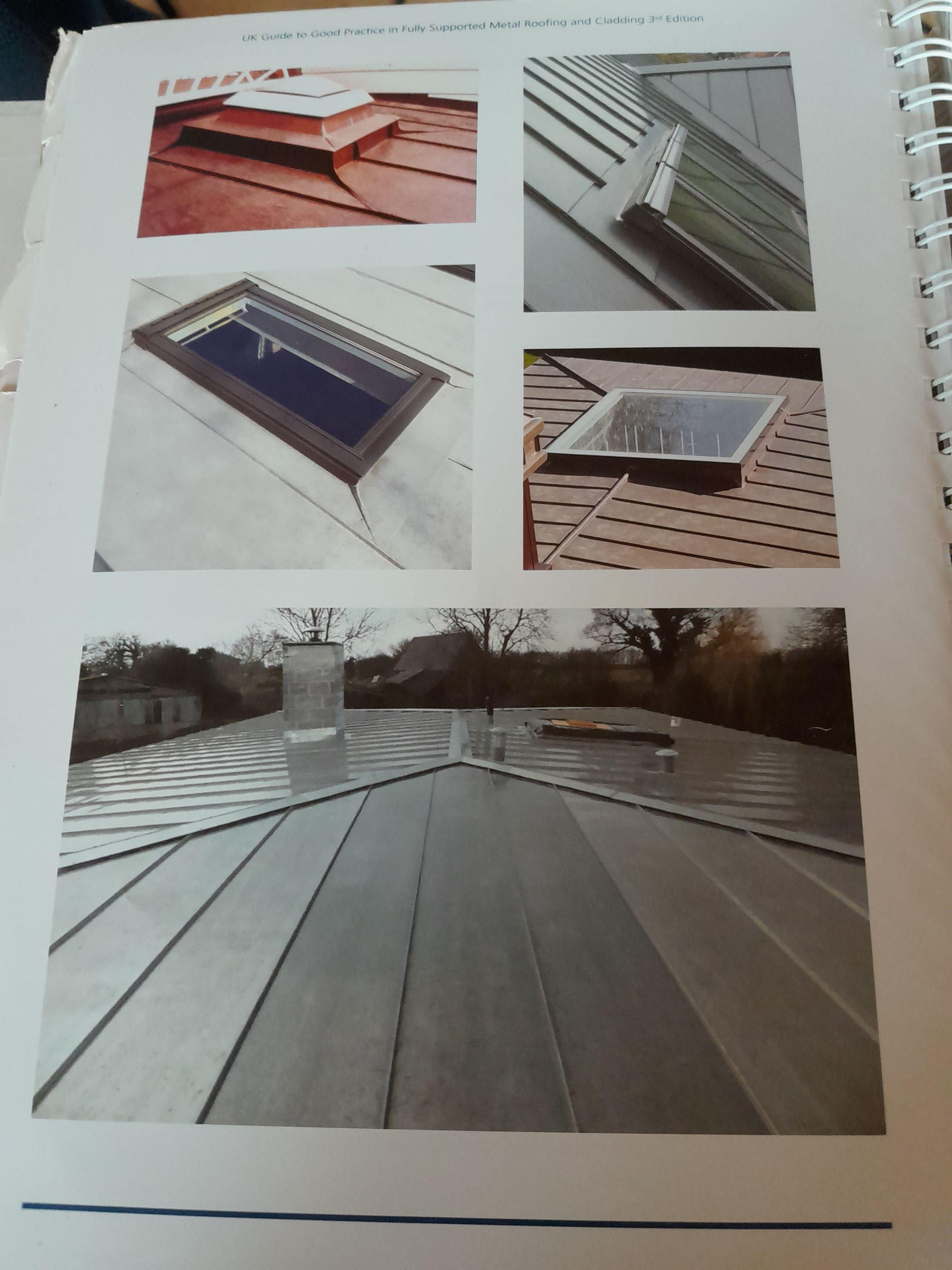
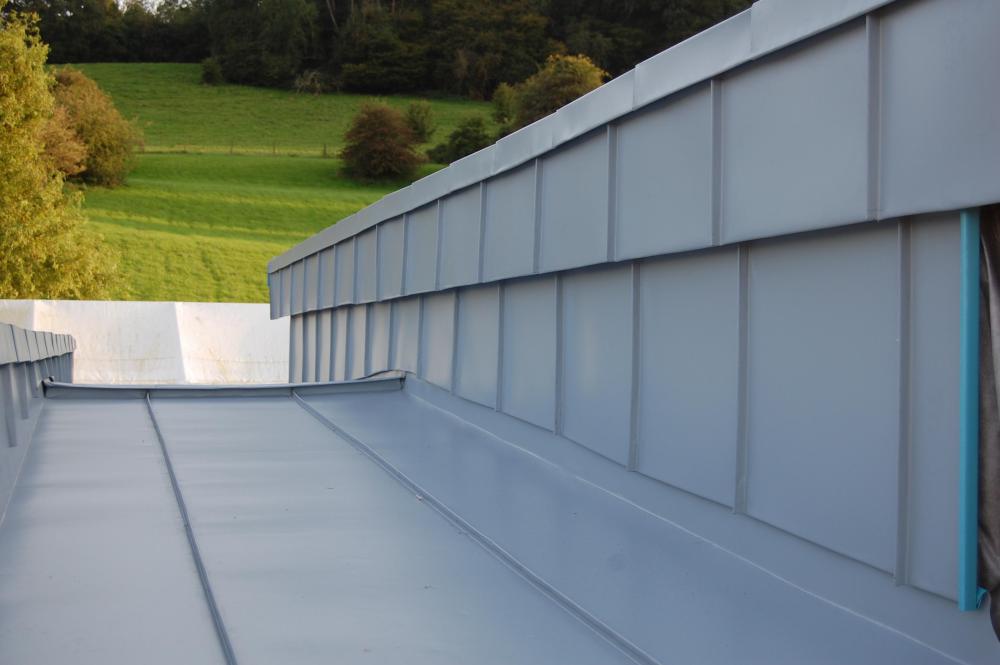
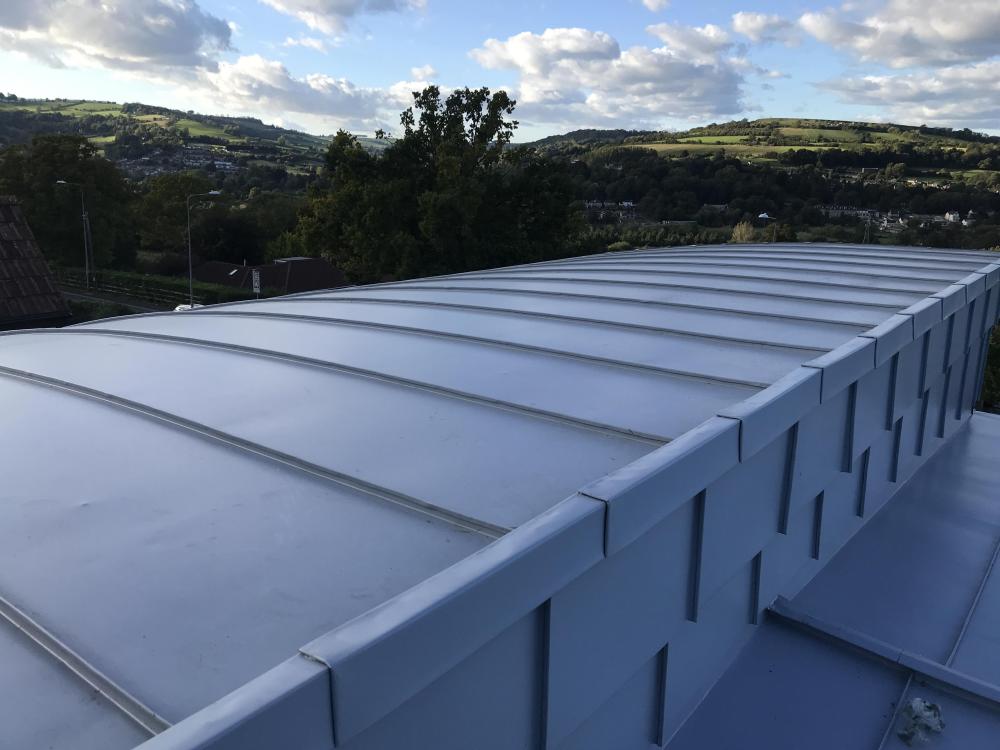
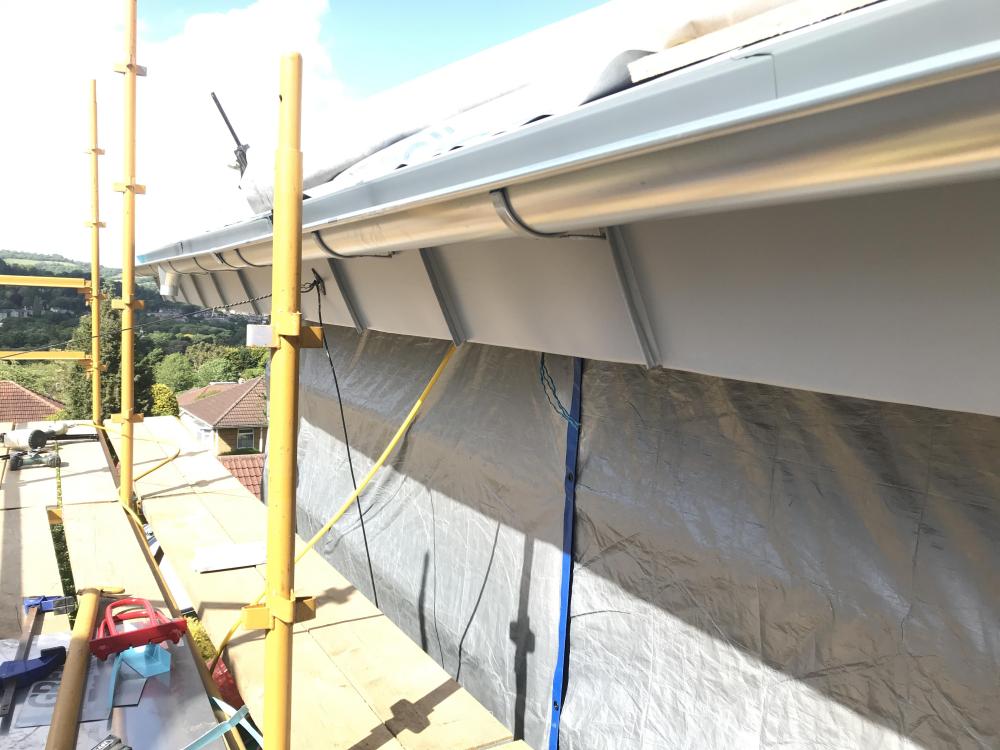
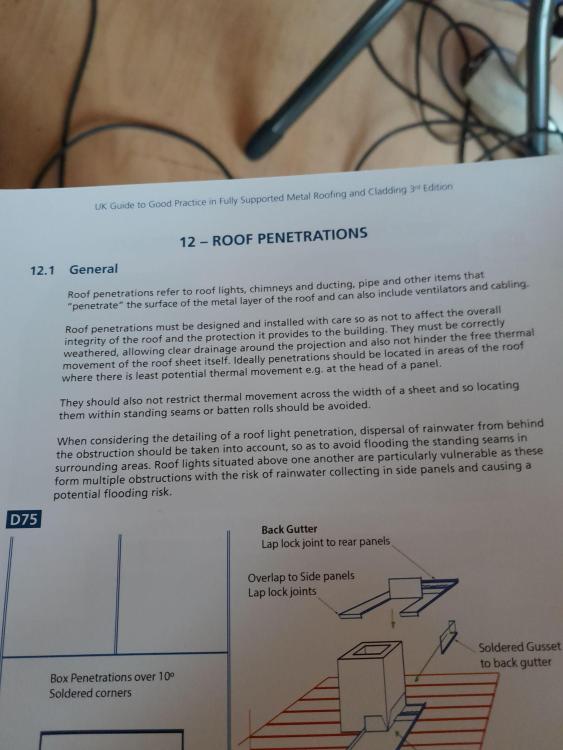
I can highly recommend https://themetalroofcompany.co.uk/ They tend not to sell direct, but will put you in touch with a local installer. I bought all mine from them but actually did the installation myself in the end due to the compexities of the install. However, they did put me in touch with a local one man band who priced the main roof without any penetrations and simply verge details at about £65/sqm with me supplying the scaffolding and doing some manual labour - this was at the height of Covid. However, once I decided wanted single welted verge detail to follow the curve of my roof and didn't want long flat panels along our deep eaves (due to total roof thickness), I ended up on my own. Your price will be higher due to the complexities of detailing around your roof penetrations, hips and valleys, as they can impact the whole layout of your trays and their machined widths. So what might appear to be a simple roof might not be that simple for standing seam installation. I've attached examples from the Federation of Traditional Metal Roofing Contractors guide below. This is part of my roof which was over 140sqm of steel in the end.
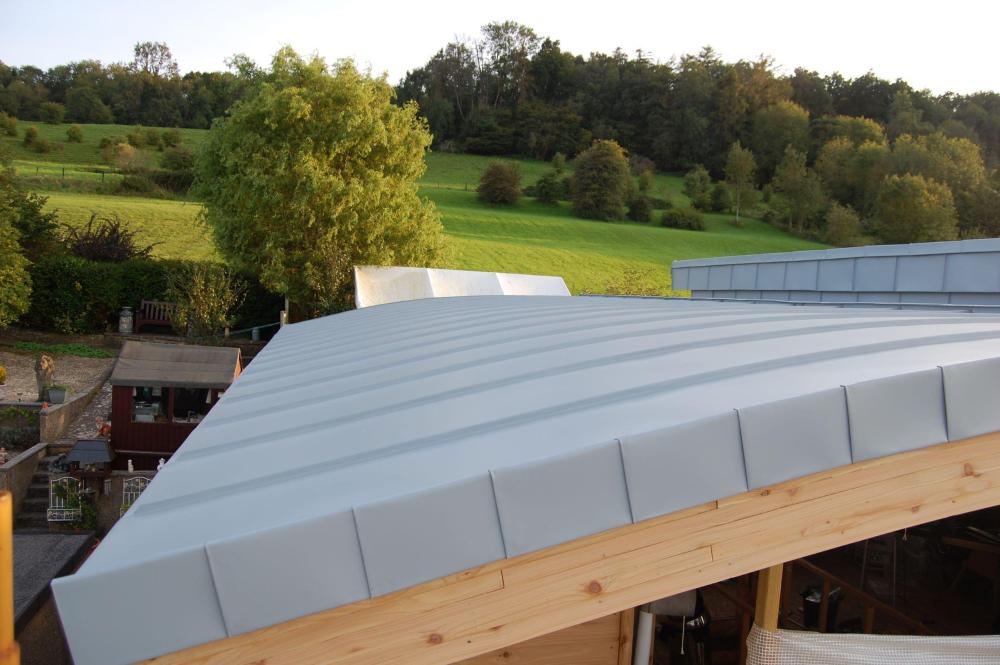
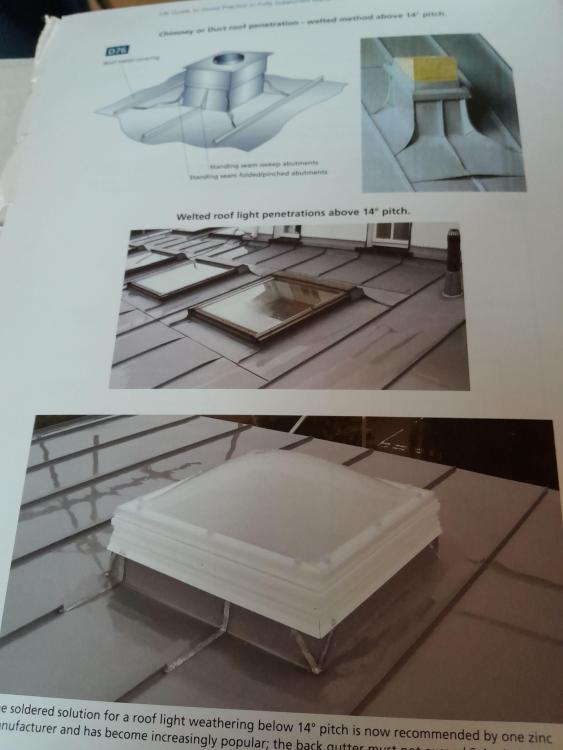
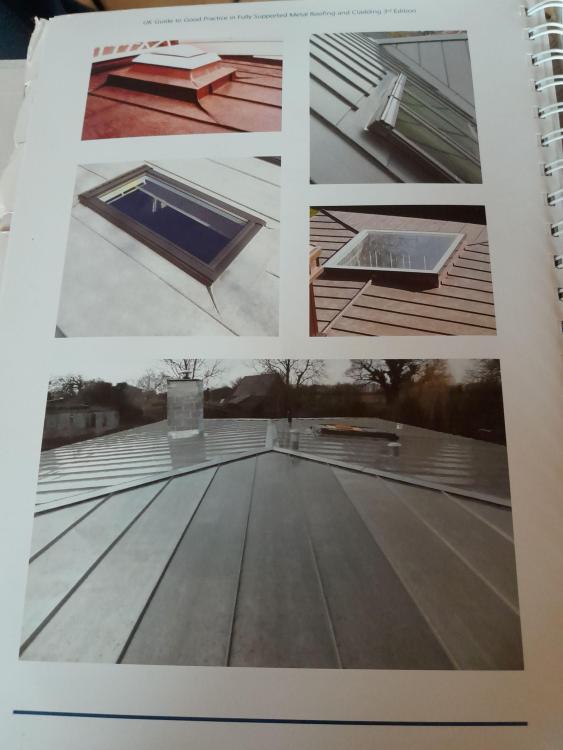
-
Getting frustrated with heating suppliers.
SimonD replied to MikeSharp01's topic in Other Heating Systems
All seems pretty worrying really. I guess you've asked the 2nd quote whether they've actually sent you the right quote and not got it mixed up with something else? As a slight aside, if the company you refer to is the one I think it is, I always find myself watching the content with caution and won't rely on it without further due diligence. I tend to be even more cautious when such a private organisation that depends on hits/likes/views etc. starts promoting a de facto expert scheme. -
Maybe we should start another debate about which fittings? 😉 I'm personally not a fan of Hep20 - my first ever one I used on an installation leaked on the mains to UVC. I've since had another leak with one too! And then I hate the demount tool with a vengeance especially when some (expletive deleted) has previously installed them in a tight space with poor access (never me of course). My preference is Polypipe followed by the most despised brand on Buildhub which is Speedfit 😁
-
Yup, we've trodden a similar path and this is one reason I now do what I do. I couldn't find anyone locally I trusted to actually design my new system for my build, so I decided to take it on myself. While I was doing so, a friend who has a heating business but a long way from me suggested I do the training and get my tickets, so I did. I only do it part time because I'm still building. It's a steep learning curve and much research needed in some cases but I prefer working on complex problems over chucking in replacement boilers as I find it more stimulating and satisfying.
-
It depends on the manifold. Off the shelf manifolds come with adapters for various types of pipe and mostly of the plastic types and MLCP, for example. But there's nothing to say that you can't use copper, more a question of why would you use copper when you can buy plastic pipe cheaply and run very long runs without any joints. By the time you've plumbed a house using short lengths of copper and any of the required fittings it'll cost a fortune more than the plastic version and have more risks of leaks. Like so many others, I'm now a fan of plastic pipes and manfolds, although unlike most on here, I made the manifolds myself in copper. I would be very wary of a plumber who comes in an throws away a design and then insists on a type of installation without consulting you first. Actually, I'd show them the door.
-
I'm not referring to my boiler, just talking about general principles of system design as I design and install systems myself (although I'm fairly new to this business). But it seems I'm recently in more demand to fix existing installations that don't work properly, especially newish builds with stupidly large boilers installed with no modulation and a random mix of poorly design UFH and rads, and nobody else wants to touch them.
-
This does highlight a big issue in that design approaches often don't cover the role that HEX dP and bypass arrangements within the boiler play in selecting for hydraulic separation or not, and that it's more than just down to flow rate differential between heating circuits. I had exactly this problem in a heating system I had to rectify a couple of months back where they'd had a good half dozen plumbers round to try and fix it without joy. I suspected that a major problem was HEX dP. I tried to get the pressure loss data from the boiler manufacturer's technical department who said they'd email it to me and eventually received a pump chart for a system boiler and not the HEX data for the boiler I was dealing with! No HEX data could be extracted from them. In the end I was proven to be correct and got the system working properly for the first time ever. But as I suggested earlier, it is also a warning that we should not assume that we can merrily design and commission gas boiler systems to run at less than 1/2 specified boiler dT 20. I always use my own measuring equipment in parallel to the boiler's to get a proper picture of what is going on. Atags are interesting things.I first came across a behemoth of one a while back which is a model sold by the 'other' Atag company in the UK which is more focussed on the commercial boilers. It was an amazing piece of machinery which did some pretty clever things with its built in modulation and that on start up it modulates from minimum output and ramps up from there as the system warms up. At some point I might get trained on their boilers to understand them better, particularly since they now provide an 18 year warranty.
-
Yes, I know the formulas to calculate the mass flow rates etc, but maybe my question and empirical experience wasn't clear enough. This is really the crux of it. There is the assumption that the boiler only cycles when, as you say, minimum output is greater than the load. However, my empirical observations suggest that something else goes on depending on boiler manufacturer implementation boiler modulation and controls. And this means that at low flow temperatures, the boiler sees a return temperature it thinks is too high relative to the also low flow temperature and therefore short cycles, even when the load is greater than the minimum boiler output. This is pretty much what I have observed and I don't quite know why yet. At the end of the day we're talking about a dynamic system that rarely works steady state, so return temp often fluctuates. Therefore, if the return temp is so close to flow temperature, there is less margin for fluctuations. Again I've seen this happen fairly often in the real world where a gas boiler is cycling and the internal return temperature sensor thinks it is close or equal to flow temperature. However, if I connect my sensors I can see a good 10C differential - this obviously happens when we get close to output/load limits or flow rates are too high through the system. So my essential question is whether it is appropriate to design for a dT that is less than 1/2 that recommended by most boiler manufacturers and CIBSE for example and does this actually work reliably and efficiently in practise?
-
It's interesting you're arriving at a boiler dT of 9.53 using a flow temp of 48C. Now, my experience playing with boilers is making me want to avoid running any boiler below a 55C flow temp. (unless it's modulating correctly through suitable controls - usually manufacturer ones). I ran a rather unscientific test on this the other day while I was sitting around waiting for a parts delivery all day long so was twiddling my thumbs. It's a system I have fully designed and installed using radiators and manifold distribution system. I tried to get the system running at 55, 50, 45, and 40C. It was a cold day so the full heat load was required for the most part. This system is modulated using Opentherm with weather and load compensation. During my test I found that as soon as I took the flow temperature below about 50, the boiler would start short-cycling. At a flow temp of 40C, I was getting cycles below 10 seconds, and 45C they were barely any better at about 15-20 seconds. When I finally brought the system back to 55C I got a consistent and constant run time of over 2 hours with a nicely consistent return temp oscillating between about 37 and 43C. Each time it got to 43C, pump/boiler would modulate to bring it back to 37C. At the lower flow temps, the boiler seemed to want a return temp of no less than about 35, which was what caused the short cycling and boiler temper tantrums. But also one question - how do you achieve the 24lpm boiler flow rate if the boiler pump flow rate is max 20lpm? Surely then you need hydraulic separation to run higher boiler flow/return temps and then higher flow rates for the low temp rads/ufh?