


S2D2
-
Posts
437 -
Joined
Everything posted by S2D2
-
It may help to think that the BUS budget is a tiny fraction of the windfall tax on oil and gas companies? Provided it can get the cost down to the same as a combi swap buy-in will accelerate. Of course plenty of companies make up a number they think people will pay, that's why I've been shopping around for the last year. I reckon it would cost me £6k to DIY. I had a quote just to supply + replace radiators at £4k. Finally got a quote with the BUS grant for the whole lot for £2.2k, but that frankly just involved a heavy dose of lucky timing.
-
-20% but still, sounds like my quote a year ago. Keep rolling the dice on the random number generators...
-
I didn't get as far as getting them out for survey but sent my local heat geek elite the spec and the ballpark cost was £7k after the grant. Instead I made use of some Octopus promotional discounts and locked in a price of £2k. When I got a quote from Octopus a year ago it was £5.5k. Heat geek website has told me anywhere between £4k and £12k(!) after grant over time, it's essentially a random number generator. Worth checking Octopus with their current 20% off before the end of the month, comes out similar to what I ended up signing up to. Like you I wanted the perfect system but it would never make back that £5k.
-
Cosy has rapidly accelerated the payback period on my battery, three full cycles a day so saved the purchase of two additional modules. Sure, it's harder on the batteries, but you're getting the same savings just in a condensed time period. ~12p/kWh into a heat pump with a SCoP of around 4, just with a cheapish 2.8kWh battery. Definitely cheaper than the gas boiler.
-
Yes, it's definitely R290.
-
I've had mine nearly two years, copes absolutely fine in cold weather. A segment on the display went and appliances direct were very awkward about the "labour" component of the warranty as technically it needs servicing annually by an fgas engineer (despite not being fgas). They still sent out the part though.
-
I have 5.2kWp on a 3.68kW hybrid inverter because it can still divert PV to the battery even when capped at 3.68kW AC output. It does take some intelligent prediction to hold back the right amount of battery to make this work but there's no clipping as a result. All that said, I would have fitted a larger inverter if it wasn't so much hassle/cost with the DNO, the actual material cost difference is negligible.
-
I don't seem to be able to get lifestyle frustratingly, smets2 properties on the street are eligible but I've got a smets1 firmware upgraded to smets2 and it just doesn't show as available. Cosy is working well though, 12p/kWh average for me. Tomato would probably be cheaper.
-
Anybody using Eon NextDrive Tariff ?
S2D2 replied to mk1_man's topic in Air Source Heat Pumps (ASHP)
Thanks for the explanation, unfortunately my solax battery is 102V. It's a very good price but I assume my inverter wouldn't be compatible which is a shame, solax batteries are twice the price! The tomato tariff looks interesting but the website errors out when I ask for a quote... -
Anybody using Eon NextDrive Tariff ?
S2D2 replied to mk1_man's topic in Air Source Heat Pumps (ASHP)
Which inverter are you using with those batteries? I'm on cosy with a small battery and can't make the sums add up to expand the battery storage with the official batteries. -
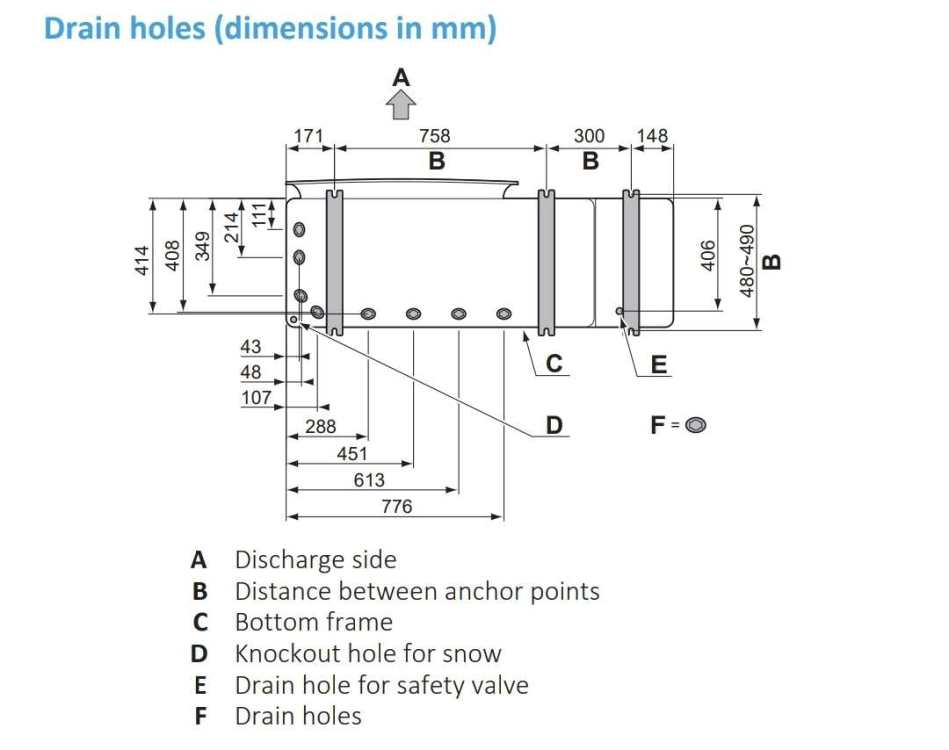
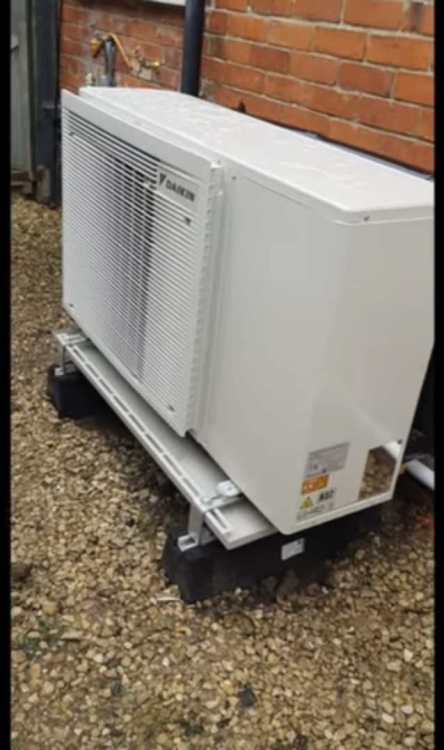
I spotted it in this video as I'm about to have a Daikin installed myself: You're right that there are extra brackets to sit it in between the feet and the heatpump so it would be a pain if you don't have a flex connection that would accommodate the change. I'd be tempted by the gutter idea, quick and easy and it might just be enough. I really don't understand the design process of the drainage holes, I have a suitable drain nearby for a condensate pipe but there just doesn't appear to be a way to do this with the Daikins, unlike all other manufacturers, even my cheap A2A unit.
-
Is that a Daikin Altherma? For some reason they use a series of drainage holes compared to other manufacturers who channel it all to one hole: If its not on a gravel soakaway the only real option is the condensate tray, which looks something like this:
-
How to predict heat pump size from your EPC
S2D2 replied to sharpener's topic in Air Source Heat Pumps (ASHP)
The heat geek website has a similar tool, it will also bring up the epc rating and floor area so you can sanity check it has the right epc. Sit down before you read the price though. I've been through the mill on getting an MCS install over the last year and hit all the issues mentioned here, the epc that came with the house and all of our quotes were based off was out on heat demand by about 50%, mostly due to the previous owner having an electric radiator in the conservatory which meant it was flagged as a habitable room. I'd suggest using the heat punk design tool (not shrunk punk, the full heat loss design) because it allows you to have multiple radiator/flow temp profiles for the same property. Do one with absolutely strict MCS air changes/temps etc. and a flow temp of 50, which octopus install to. This is your absolute best case scenario for getting the BUS grant, I found no reasonably priced MCS installer would go below it. This took me a while to accept because for me MCS gives a heat loss of 5.8kW, whereas in reality we sit at around 3.5-4kW based on gas usage data. Our MCS surveys varied between 6.2-6.8kW, down to 5.8kW after going through the detail with one surveyor. They will accept photographic proof of any fabric improvements. You can then copy the MCS profile with more realistic ACH/temps and see how low you can get the flow temp. Second time round with Octopus they agreed to oversize the radiators (don't ask to reduce the flow temp, they won't) by around 50% which means the system will actually run at 42C flow temp no issues. I've accepted an 8kW Daikin R32 unit after ruling it out a year ago. It's the 4-8kW unit so apparently able to modulate well down to about 300W electrical input. I would not accept the 9kW unit. I did have a promising quote with eon for the arotherm plus 7kW but they were obsessed with adding in second radiators and in the end £3k more expensive than Octopus, so 10-20% efficiency difference is irrelevant at that point. I was fixed on the Vaillant 5kW but the final nail in that coffin is they removed the 250L tank from the compatibility table, so the combination is no longer possible under MCS. -
This may be useful, figures are outdated but the methodology would be the same.
-
I paid £2k extra for a 3kWh battery MCS install at the same time as solar. It was the only battery option with less than a 10 year payback at the time. I have a thread on sizing it based on smart meter data that may be useful. Since they added the third cheap cosy period that tariff has been the winner with 5 hours overnight to charge the EV and never more than 6 hours between cheap periods which works pretty perfectly with the 3kWh battery.
-
Okay, I lied, Cex will give you a quid for the cpu: https://uk.webuy.com/product-detail?id=SCPUINTI54460A
-
10 year old tech, nothing unfortunately.
-
EDF came back £1800 more than my Octopus quote, though my property seems to be a random number generator due to errors on the EPC.
-
Indeed, the highest is more than twice that of the cheapest quote (after BUS, not a new build). Finally seeing some competition to weed out the made up "we're busy anyway" quotes.
-
From my limited experience prices are starting to come down, but only really for smaller houses. Octopus fixed quote is now coming back £1.7k cheaper than last year and Eon are just getting in to the game, their provisional quote is £1k cheaper than octopus, but they don't lock it in the same way so that is subject to change before I get the final quote. Get some more quotes, the spread on mine was £4000.
-
Quasar 2 has been "coming soon" for years. The batteries are perfect for it, the main blocker is the cost of the bidirectional charger due to the lack of demand/competition. Once they come down to hybrid inverter prices it will be viable. DNO view the bidirectional charger the same as any other generating inverter I think.
-
There's a lot of variables, so YMMV but I've seen thermal clipping of discharge rate and mine is in an integrated garage. The installer groups are full of customers asking why they're importing from the grid when the battery has charge and usually the answer is the battery is too cold. If you have enough headroom in discharge rate then you'll never even notice - you'll probably never notice if the heater is keeping the battery warm either. It's just an inefficiency you can skip if you have space inside, but it's not the end of the world if outside is your only choice.
-
Don't put it outside, charge/discharge rates will be crippled in cold weather or it'll use a resistance heater to avoid that issue, a waste of the stored energy.
-
That's the one, the data is the same (daily average temperature) but that website lets you choose where to clip the area (at the "no heating required" point) which in this case represents HDD.
-
Yes, lower heat loss so the base load of 1kW in the example holds the house at a higher temperature, meaning fewer HDD as they're calculated against the "no heating required" baseline.




