
JohnMo
-
Posts
12468 -
Joined
-
Last visited
-
Days Won
179
Everything posted by JohnMo
-
Looks a bit thin at 13mm, and you have to buy loads. But as you say price look ok.
-

SS Dowels instead of Mortise and Tenon joint
JohnMo replied to Wayne88's topic in General Self Build & DIY Discussion
I would do that, if SS was good to use people would. But not sure they do. -
SS Dowels instead of Mortise and Tenon joint
JohnMo replied to Wayne88's topic in General Self Build & DIY Discussion
Generally SS isn't used structurally as it's yield and shear strength is pretty low. No near as good as carbon steel. But I think you get corrosion issues with carbon steel and oak. Me also. -
Self install, wise or otherwise ?
JohnMo replied to Post and beam's topic in Air Source Heat Pumps (ASHP)
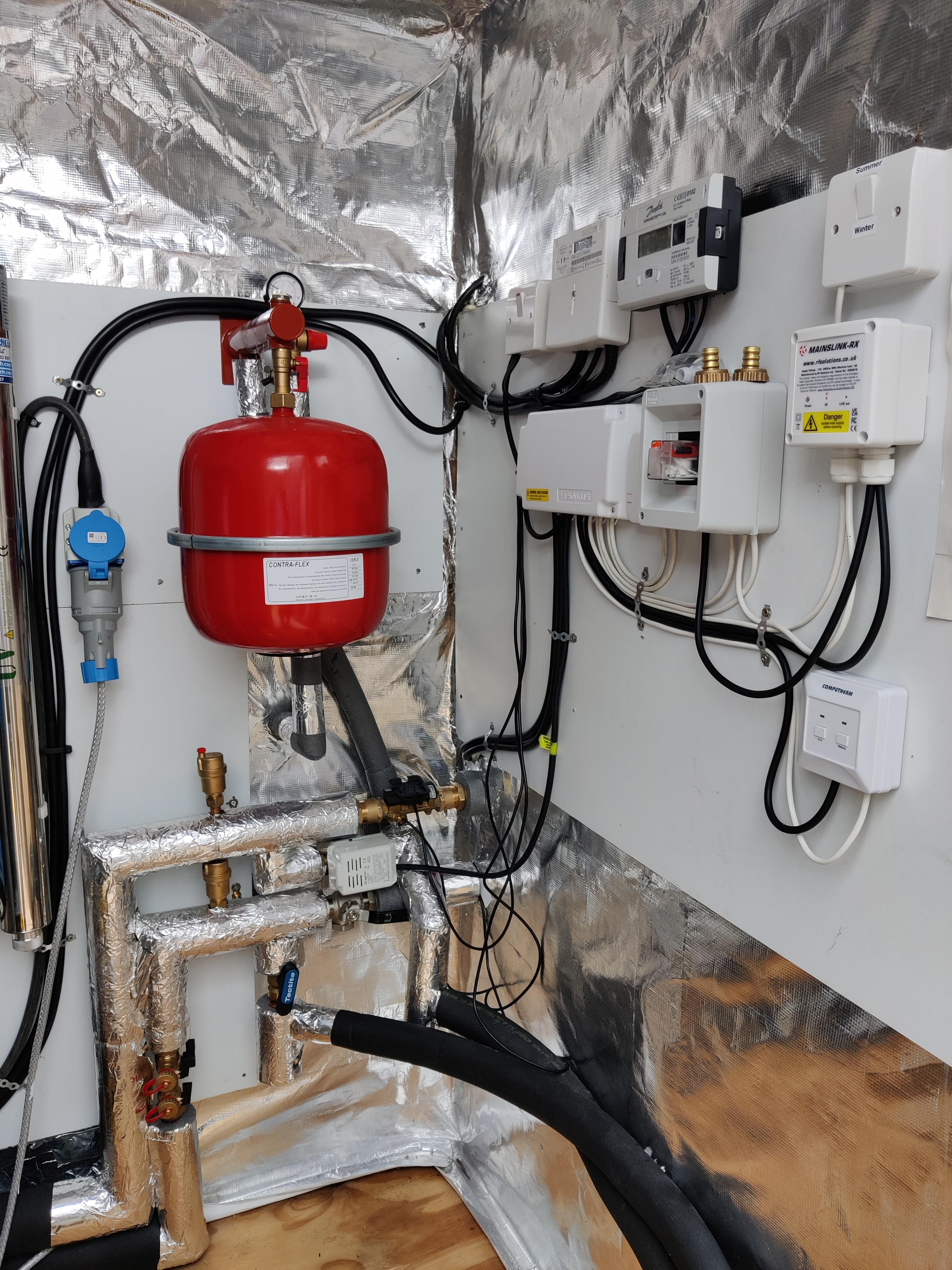
Inside water shed, expansion tank, 2 port actuator valve to summer house. Closed on a DHW heating demand and via a thermostat. The pipes also go to the house, underground, with 25mm insulation within 110mm double wall flex duct (one per pipe). The rest of the electrical stuff is 1. House wireless thermostat (x1) receiver, it switches the heat pump off if heating satisfied. 2. RF switch from from cylinder thermostat feeding 3. 3. DHW control relay, controls summer house 2 port valve and sends signal to heat pump for DHW heating 4. Summer house thermostat, opens and closes 2 port valve, if DHW is not calling for heat 5. Wiring centre 6. Electric meter for ASHP 7. Heat meter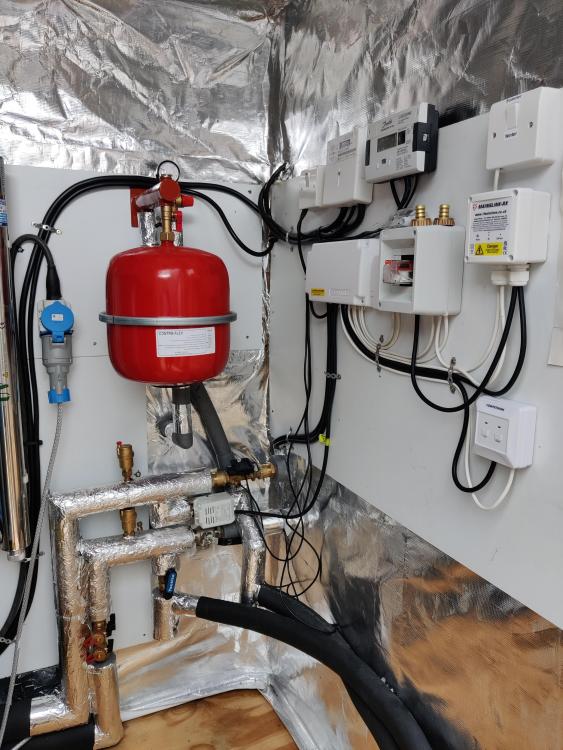
-
Self install, wise or otherwise ?
JohnMo replied to Post and beam's topic in Air Source Heat Pumps (ASHP)
Some photos Heat pump, with electrical isolation, heat pump in front of a log shed, feed and return pipes and electrical cables go towards back of shed, and turn 90 degs into my water shed (insulated pallet shed where my water treatment is for the well.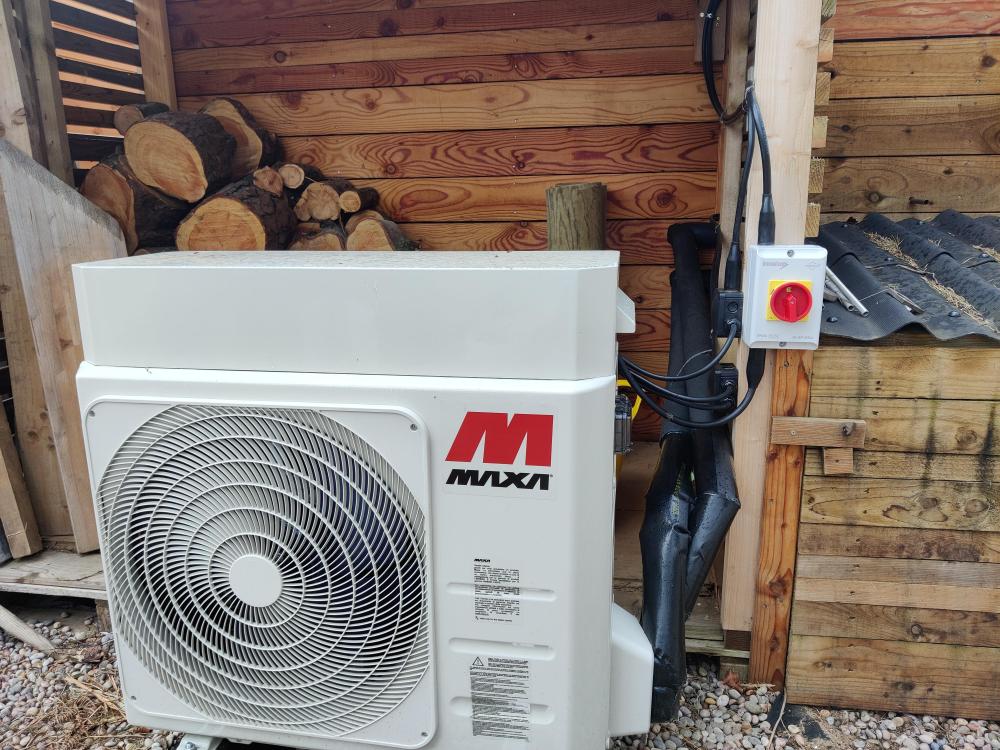
-
Solic 200 like Blackpool Lights - Help Needed
JohnMo replied to canalsiderenovation's topic in Air Source Heat Pumps (ASHP)
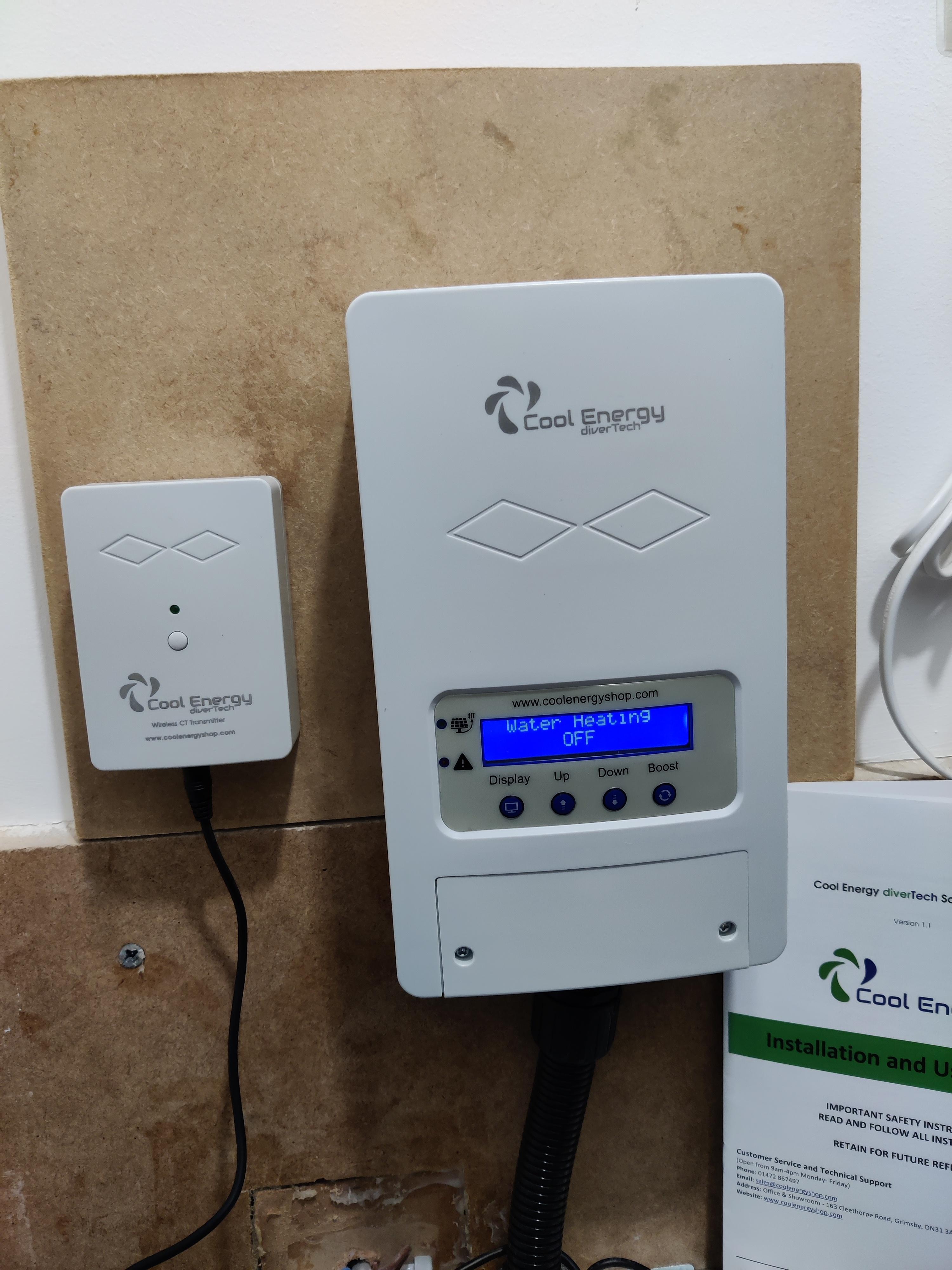
Sorry no vid, not much sun here for the last few days, so diverter isn't having to work very hard. Once you go over a couple kW the fan kicks in Photo attached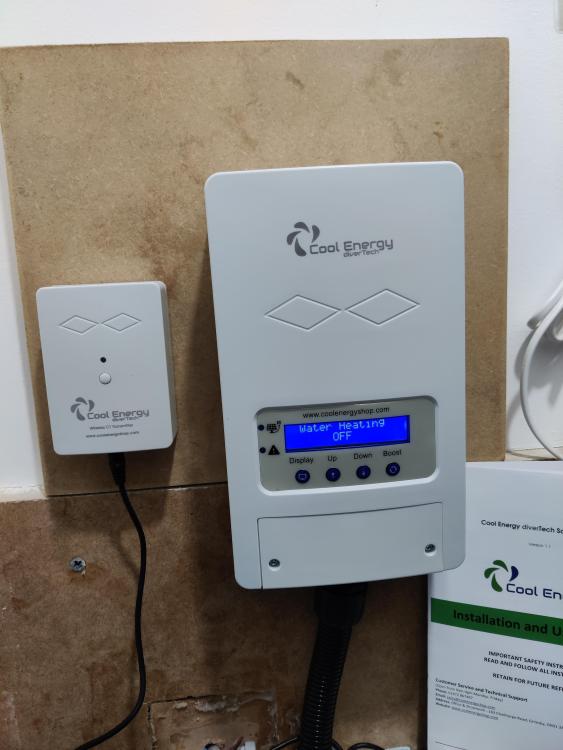
-
You should get a credit and debit for the MVHR on an EPC. It should take the manufacturer declared efficiency, specific fan power, duct type etc all into account. You then get a revised down ventilation heat loss and a revised uplift in electric usage based on the specific fan power.
-
Advice needed regarding weather comp for Vaillant 637
JohnMo replied to V1ks's topic in Boilers & Hot Water Tanks
Running weather comp will not help if you leave your system full of thermostats , the zone size is what is causing the issue, as you describe yourself, kitchen only, an issue, kitchen and living room on together no issue etc. You may be better merging the UFH so it acts as one zone, i.e. drive the loops from a single thermostat. The same with the radiators. So you have only a couple of zones. You will need to balance the system flows afterwards, to get an even output from the loops and radiators. By the way your plumber is speaking nonsense. If you are plumbed as an S or Y plan, you will not be able to run weather compensation, as it will reduce the cylinder reheat temperature also. -
Heat battery for just underfloor heating?
JohnMo replied to Tilbert's topic in Energy Efficient & Sustainable Design Concepts
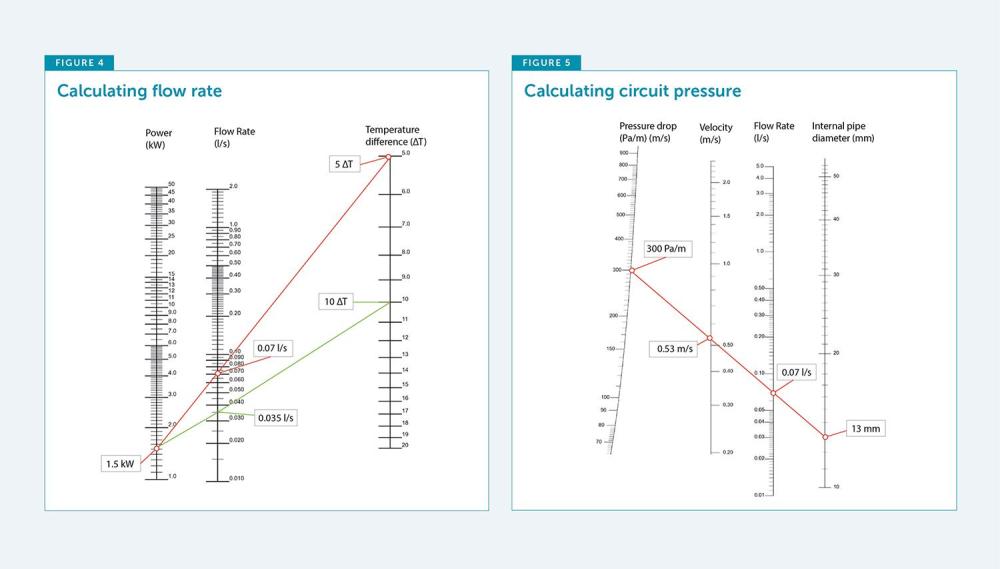
.thumb.jpg.e6f5b10749b0a8b28a782f83356b9791.jpg)
-
Softening the feel of a concrete slab floor
JohnMo replied to Sparrowhawk's topic in Floor Structures
Not sure on the dip cause. Without battens 2x3/4 would be better. -
Maxa i-32V5 or Viessmann Vitocal 100-A, installer password
JohnMo replied to JohnMo's topic in Air Source Heat Pumps (ASHP)
Asked the manufacturer and the installer password is 195 -
Softening the feel of a concrete slab floor
JohnMo replied to Sparrowhawk's topic in Floor Structures
Neither really deflects under foot, so generally. Not had the UFH heating on for long enough to an idea of feel of the floor from that perspective. -
Softening the feel of a concrete slab floor
JohnMo replied to Sparrowhawk's topic in Floor Structures
Some feedback as we now have the finished floor finish in place. Reminder of floor build-up Council concrete paving slabs (3' x2') bedded on 50 to 70mm concrete 50mm EPS70 DPM 100mm EPS70 in two layer with staggered joints 50mm EPS UFH profile boards, with 50mm battens at 400mm centres in between and a perimeter batten in 50mm. 2x 9mm OSB (staggered joints and fully glued) screwed to battens Due to the floor not being perfectly level (low spot in middle of floor), the floor was topped in a fibre reinforced self levelling screed, with a max depth of 10mm down to nothing. Thin foam underlay and 10mm laminate click and lock flooring added. Floor feels solid with a little give. But is a little softer in feel underfoot to our 100mm concrete on 200mm PIR, with a 20mm wooden floor bonded to it, in the main house -
So if you do lots of frying Don't let airborne grease anywhere near your MVHR, as ducts will get coated and dust will stick etc. They will get clogged. Your kitchen extract needs a grease filter in it and it needs to be cleaned often. Your cooker hood can be either extract or recirculated - your choice. You need to read specs, grease filter performance varies hugely from about 20 to 80% efficiency. Recirculating you need a carbon filter to capture smells, get regeneration ones, wash frequently. Good cooker hoods are expensive, you also need to read the instructions for install as they have very specific height requirements, most fitters install way too high, distance from hob is critical to hood performance, too far away they are all rubbish.
-
What would you do differently if you could do your PV install fresh?
JohnMo replied to Gill's topic in Photovoltaics (PV)
That's great if your in an area where the smart meter works. We have a normal smart meter it has never worked and cannot communicate, as no signal available to communicate through. Back to the topic PV? -
Heat battery for just underfloor heating?
JohnMo replied to Tilbert's topic in Energy Efficient & Sustainable Design Concepts
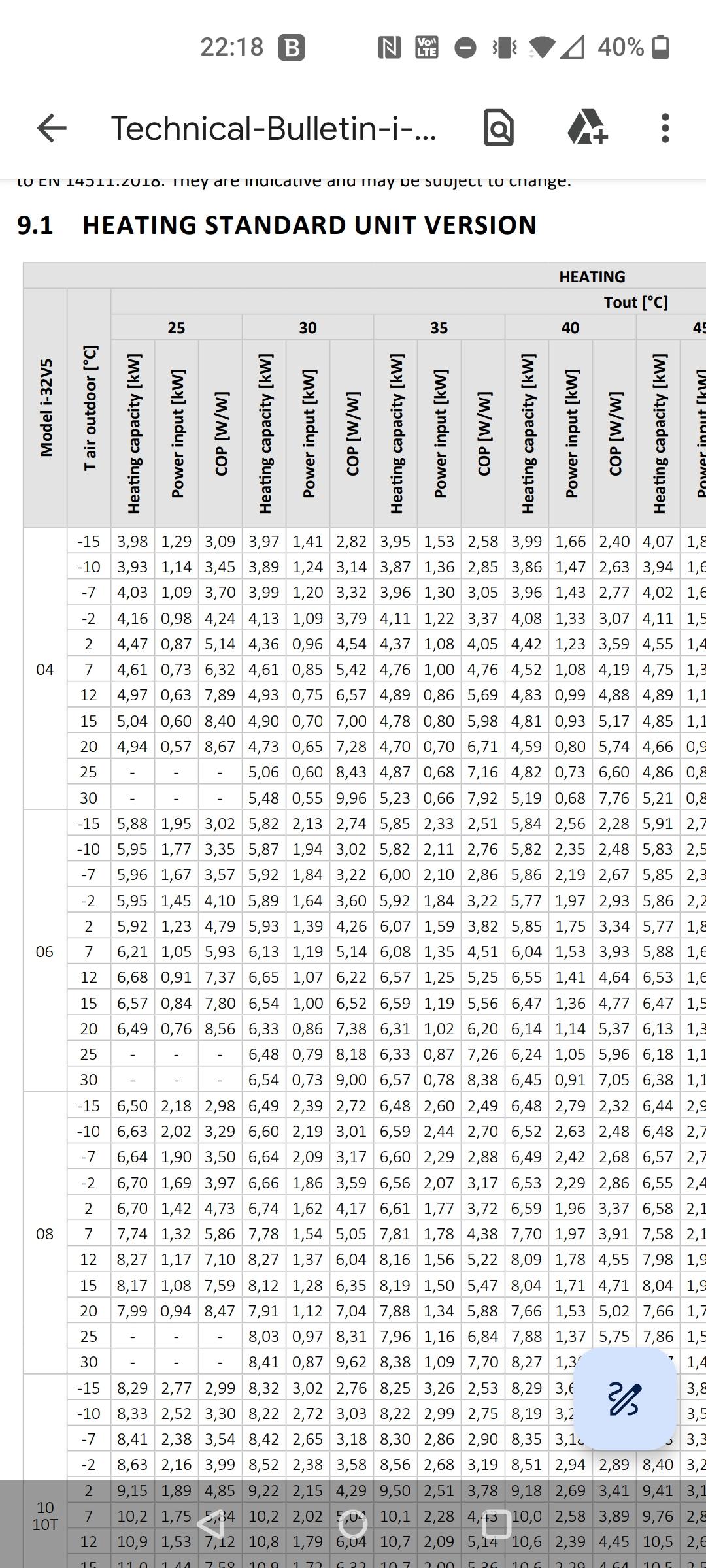
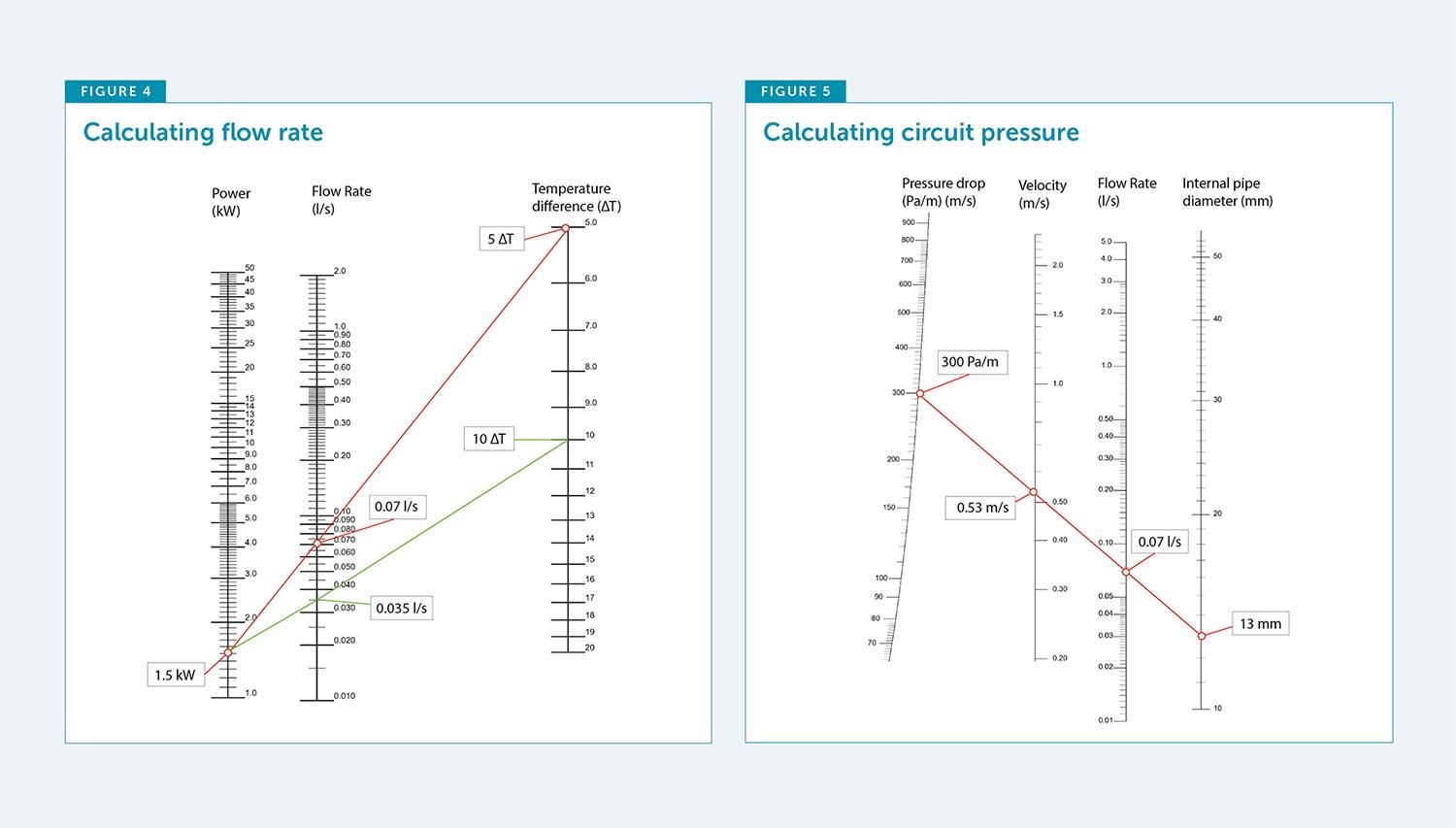
Running UFH from an ASHP shouldn't be expensive in fact it's possibly one of the cheapest forms of heating when coupled to UFH. Low flow temperature leads to very good CoP. Attached is section out of our technical manual which gives, flow temperature, heating power and CoP, for reference. By the way you should be adding way more insulation, I doubt you even meet building regs minimum requirement, with 100mm. For UFH you ideally need around 150mm or more.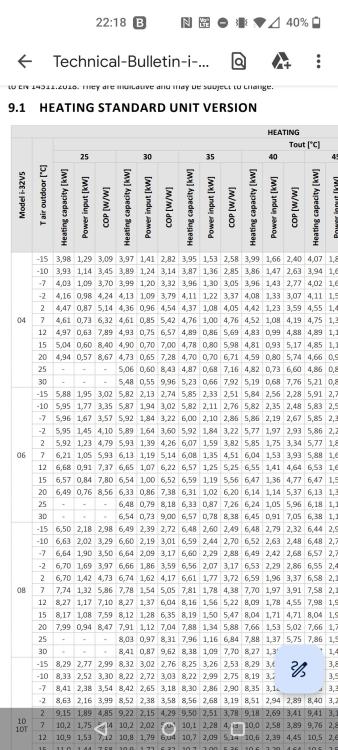
-
What would you do differently if you could do your PV install fresh?
JohnMo replied to Gill's topic in Photovoltaics (PV)
Install 3x more than you think you need, may waste some energy in summer or looking another way give your local community some free green energy. But will have some to use in the winter. Lots of solar and ASHP, maybe an electric vehicle it not convinced yet. -
Solic 200 like Blackpool Lights - Help Needed
JohnMo replied to canalsiderenovation's topic in Air Source Heat Pumps (ASHP)
Had a similar issue with mine sometimes working, other time lights flashing randomly or going into heat protection mode at 8am, when next to nothing being generated by PV. So just bought and installed a Cool Energy PV diverter. It actually tells you what's going, how much energy is going to immersion at that point in time and over the day etc. You can also set immersion boost times if you need to. It also has an internal fan to keep it cool. Only downside is it has a fan and it a little noisy. -
Still not cheap and only a 150l cylinder, so not the best for a heat pump
-
Heat battery for just underfloor heating?
JohnMo replied to Tilbert's topic in Energy Efficient & Sustainable Design Concepts
Plus you can pick up a heat pump for the same or less money than a heat battery. Why not connect to the oil system, you already have? -
And why would anyone pay £6500 for a cylinder. Unless as @Dave Jones says. If you really have to go pre plumbed go on eBay and pick one up for £800. I have just done a 6kW ASHP install for £2500 (less the cylinder) as I didn't need one.
-
Cost of installing all in one heat pump water heaters and VAT
JohnMo replied to JtG's topic in Air Source Heat Pumps (ASHP)
Section 2.20 says they are in included a heat pump heating water, it is a fixed unit. So should qualify. But has to be purchased and installed as a single transaction. So if the plumber isn't providing the cylinder you need to pay Vat on their bill. -
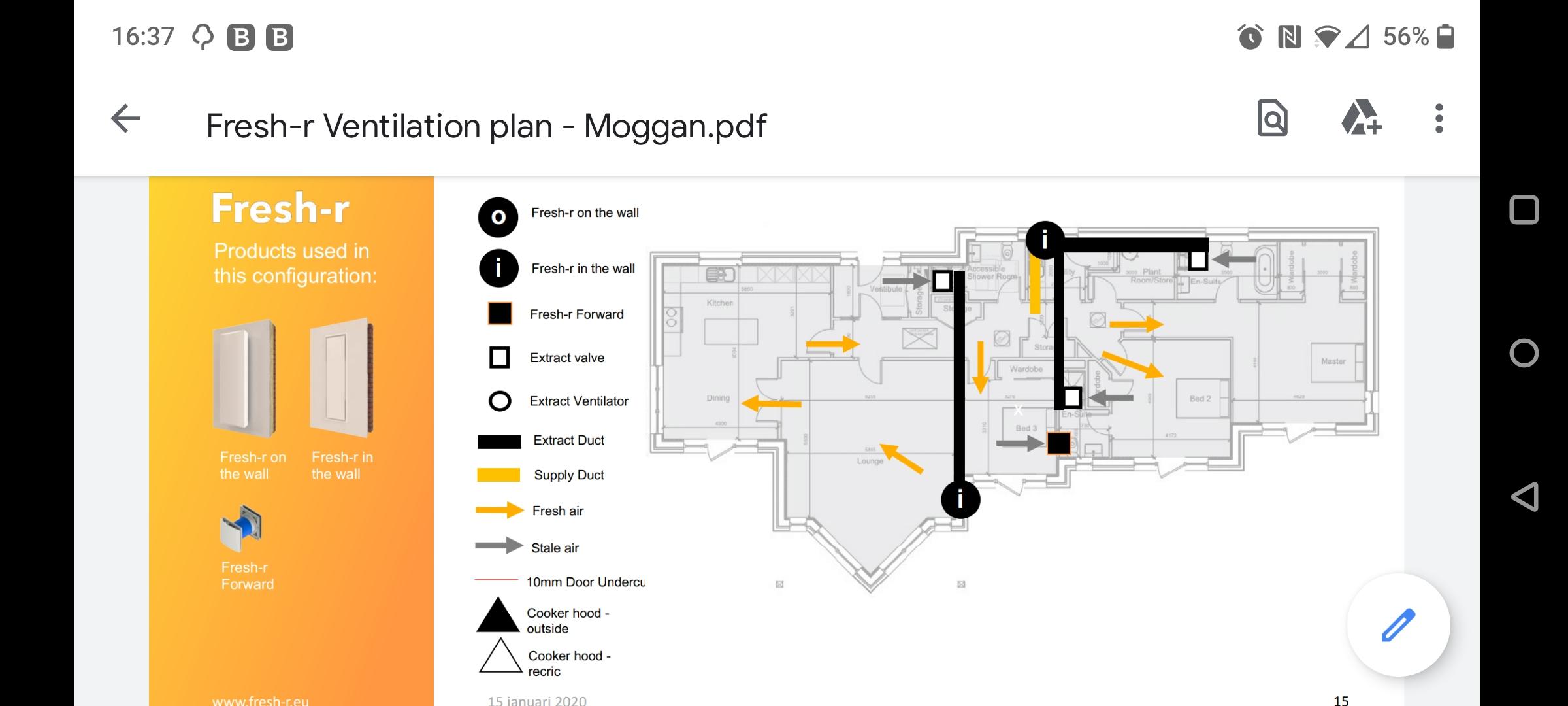
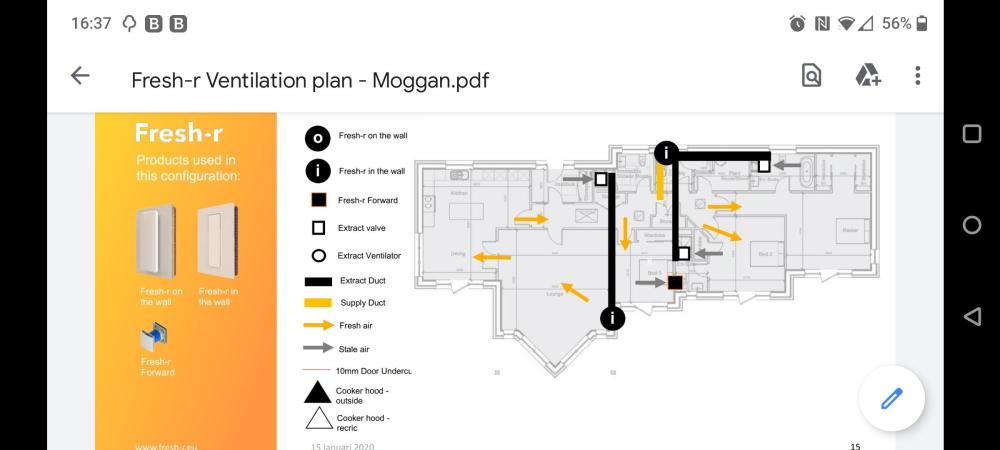
Interesting I did get a quote for a Dutch system, that had limited inlets, but you have to be clever to ensure you get flow through the dry rooms. For interest I have attached the layout for our house. I didn't go this route in the end but used coanda effect supply nozzles, which does limit the duct lengths considerably.
-
That'll be right, you hold it she tells you what you are watching, you fiddle with the controller.
-
Cost of ASHP installation
JohnMo replied to kandgmitchell's topic in Ground Source Heat Pumps (GSHP)
£10k is with the grant. I have just completed a DIY install 6kW ASHP, didn't need the cylinder, everything else was around £2500. There are cylinders suitable for a heat pump for £800 (250l) on eBay, so a grand total of £3300 with some shopping about.


.jpg.87d6d75adaec59a22c40fcf0ea8d2464.jpg)