


JohnMo
-
Posts
13306 -
Joined
-
Last visited
-
Days Won
200
Everything posted by JohnMo
-
Should be able too, as there are no breaks in the system.
-
Have you thought about using solar PV panels. Move so you have one side of roof facing east the other west. 2m2 of PV is about £50 to £60
-

Most efficient dMVHR
JohnMo replied to sonicboom's topic in Mechanical Ventilation with Heat Recovery (MVHR)
why not use something like this - other makes are available https://www.ventilationland.co.uk/en_GB/p/brink-indoor-mixfan-co2-controlled-up-to-70-m3-h/17927/ You use the MVHR to dump air in to the hallway instead of the room directly. This fan is installed above the doorway or in wall and sucks air from room based on humidity and/or CO2 levels. Air is drawn into room via door undercut. -
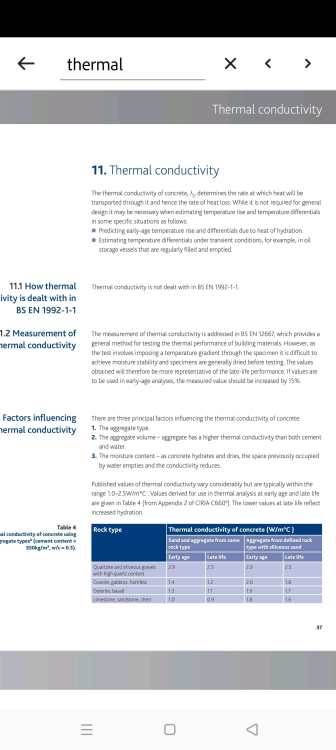
First is depth of screed. Then choose a screed. Look at product datasheets Here is a bunch of different materials, some useful most not so. https://help.iesve.com/ve2021/table_6_thermal_conductivity__specific_heat_capacity_and_density.htm
-
Our is caberboard with carpet off cuts. If you have any plumbing in there, anything not damaged by some water being split is fine. If your plant room is off the utility, just do it in the same as the utility It's a plant room
-
Who really cares about fast warm ups, prefer a steady and stable temperature, which dips a little at night. Dumped radiators to get away from swings in temperature. If you need fast warm up stay with radiator or install fan coils which are faster again.
-
Don't really like either. So looking at both layouts, you have loads of pipes transiting through hall all bunched up. Delete the dedicated loops and spread those pipes out. The transiting pipes will heat the hall for you. You could also do the same in the utility by using A7, 8 and 9 in the utility. That removed three dedicated loops, making everything a little more simple
- 8 replies
-
- 1
-

-
- underfloor heating
- limecrete
- (and 6 more)
-
Ecodan - room temp auto adaptation and multiple zones
JohnMo replied to BEJB's topic in Air Source Heat Pumps (ASHP)
Above sounds about right. Depending on thickness of screed you would need to fiddle with thermostat hysterisis. So get one that can go as low as 0.1 degs hysterisis. Then if your overshooting, undershooting, you can correct with hysterisis. Trying to run two systems with very differing inertia isn't easy. You either accept one is always wrong or put a controller to limit it.- 23 replies
-
- 1
-

-
- ecodan
- auto adaptation
- (and 3 more)
-
Just do it on paper, if a point supplies 47 - lounge, where is likely to go, always the shortest routes first. So basically to the 67 extract from kitchen. Now where is the other 20 coming from? So what areas do you miss?
-
Your MVHR will not move heat easily. That is why you need map where the air is likely to go. It will go the shortest route possible, but you need to manipulate flow paths to make it go a long way. If you a coanda extract in the kitchen the air is actually taken from many meters away not near the extract, same with supply https://www.zehnder.co.uk/en/indoor-ventilation/solutions/air-distribution/zehnder-comfovalve-luna-e125
-
You need to do a proper heat loss calculation, this plus this, plus this with no numbers is rubbish. The flow rates quoted will not support the flow needed to keep an 8kW heat pump happy. Check your dT and run higher flow rates. You will upwards of 14l/min as a minimum. Min flow temp from a heat pump is 25. But most run rubbish at temperature with a lot of cycling. Not helped by trying to set it to run 4 zones and one of those is way to small to allow heat pump to run. 100mm centres no issue, except do you need to have them that tight. Work out room by room heat loss, then look at W/m2 output and fine tune.
- 8 replies
-
- 1
-
-
- underfloor heating
- limecrete
- (and 6 more)
-
Ecodan - room temp auto adaptation and multiple zones
JohnMo replied to BEJB's topic in Air Source Heat Pumps (ASHP)
You are aware that auto adaptation isn't for use with UFH? Only works with radiator systems. Think the issue with UFH is the inertia is to large and throws the auto learning out. UFH is very slow, so would really benefit being the lead. -
Any ideas what is happening with my PV array
JohnMo replied to Omnibuswoman's topic in Photovoltaics (PV)
Multi meter? -
Thin screed of almost any type is fast warm-up. It also cools quicker as there is less heat capacity. You going to have to explain the less heat loss below bit? Not sure that makes much sense.
-
Read product websites with caution. Sand cement screed, isn't the same as concrete, the thermal conductivity changes dramatically with material make up. Same as some screeds are insulation. Big range of thermal conductivity in most material. Various grades of concrete for example.
-
There are 6 sets of doors inside/outside in kitchen alone. Ditch at least one door to hall. From outside to utility 2x doors, ditch the internal one and the wall and make utility bigger. Same with front door. If you are airtight (MVHR would suggest you are) you don't need double doors.
-
Not saying it doesn't work, but travel path can be quite short and it's better to wash through general areas also - gym is under ventilated anyway
-
I have never seen a good reason to have a supply in an extract area - kitchen. I would supply more to the gym instead. You need to calculate the most onerous run, not all of them. You need to calculate from MVHR to and including the terminal. Nothing wrong with F7, although I have never had any issues with just G4. Map where the air travels to and from, do you have the whole area covered, with flow going through hallway and stairs.
-
No way are you pressurised that high. In the 10s of Pascal's, maybe. 10kPa - no. Are you sure you don't mean 0.1psi maybe, not sure I would want to open a door against that.
-
A sketch of your proposal would make it clearer what you propose. An idea of distance also would be good.
-
Do you close the cap at the top to close the AVV off? Post a pic of what you have and where the issue is.
-
Any ideas what is happening with my PV array
JohnMo replied to Omnibuswoman's topic in Photovoltaics (PV)
It would be worth checking the voltage at both CUs they should be about the same. Check them at different times of the day to see the difference. -
Any ideas what is happening with my PV array
JohnMo replied to Omnibuswoman's topic in Photovoltaics (PV)
How far is the inverter from the consumer unit? If a long distance you could have a big enough voltage drop, that the inverter is producing enough volts that it goes off because it's hitting max voltage point for trip. -
If the system is running mostly from excess PV, no point doing anything that will cost anything. Trimming back flow temp on heat pump will give the best CoP. Make sure the heat pump return is a low in the TS as possible. All a bit of a balancing act really. Don't run the ASHP when it's likely to go through lots of defrosting unless the electric is free. CoP takes a hit during defrost.
-
Not sure why you want it pressurised? But you would normally equalise flow and extract, this equalises pressure. If it is pressurised you would struggle to open an inward opening outside door. So I doubt you are actually pressurised, you would also need an airtight house. Any ventilation system will bring your humidity levels down to 35 to 40% in a period of sustained cold outside.

