tanneja
-
Posts
294 -
Joined
-
Last visited
Everything posted by tanneja
-
Thanks @Triassic, this wouldn't only be for boiling water, but warm water for bathrooms. Would you think a boiling tap appropriate? Are you perhaps thinking it being used in a mixer tap format.
-
@MikeGrahamT21, can I ask where you got this well insulated composite door at that price please? I doubt my opening is a standard size unfortunately which may end up costing me custom prices.
-

Tight space squeeze too ambitious?
tanneja replied to tanneja's topic in Mechanical Ventilation with Heat Recovery (MVHR)
I was considering whether venting internally was viable, perhaps direct into an MVHR exhaust, thereby retaining some of the heat via the heat exchanger, dealing with the excess moisture, and achieving the dry times of the vented machines. The rush is we tend not to iron, so wait for the load to dry, then take out and immediately fold. If left in the tumble and allowed to cool, the clothes crease. A shorter dry time allows you to keep your focus and remember when the dryer will be ready, and just prevents washing and drying taking all day. -
Tight space squeeze too ambitious?
tanneja replied to tanneja's topic in Mechanical Ventilation with Heat Recovery (MVHR)
Thanks @Russdl @joe90, so give the air from the clothes drying a chance to dissipate it's heat and moisture to the wider building. Thank you for the advice. Are there any views on having a vented tumble dryer venting internally and the MVHR extracting excess moisture somehow? My sense is that the speed of drying for a vented vs other dryer types is far quicker for a vented. Speed is quite useful to us. -
@mvincentd would your instinct be that the Q350 would be sufficient given my provided property details? No problem if you would rather not remark. P.S. nice joists
-
Green Home Grant application - have you had a response?
tanneja replied to joth's topic in Environmental Building Politics
I managed to mistakenly think my voucher expiry was 2022 when I got the email saying the scheme had been extended. I thought recently just to look again and saw the 2021 date. I called the GHG scheme and they said only in very exceptional circumstances would they consider an extension to the voucher, which in my case seemed very unlikely. -
Tight space squeeze too ambitious?
tanneja replied to tanneja's topic in Mechanical Ventilation with Heat Recovery (MVHR)
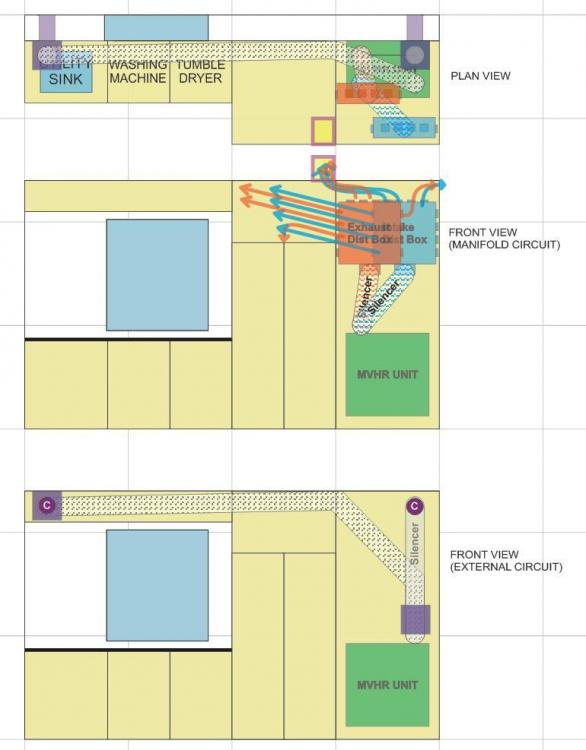
Thank you @Ferdinand @tonyshouse @Russdl We have 24 ducts at the moment, split equally between fresh air and extract. However, after comments here i think an extract for the airing cupboard would be valuable, and could balance it with a supply in a hallway, to guard the sung from kitchen and bathroom smells, so perhaps 26. An attempt at placing the ductwork is here. Obviously placement will never turn out as your hope, but felt relatively realistic: Here the main intake from external duct runs up inside the planned void above the window. It was there solely to house the 11 or 12 x 75mm ducts, but if I imagine for a moment that these ducts would cooperate with perfect relatively placement, it seems they could coexist with the main intake: This would space the external vents by just over 3m, at the same height as each other. I would need to think about access from underneath for a prefilter near where the intake punctures the external wall, no going to be as convenient as @Russdl. It would likely mean a custom box. Similar access issues with the filter on the exhaust leg where it would be buried behind the manifolds. An orientation that just occurred is to have the distribution boxes back to back, and use 75mm elbows attached to the distribution box where necessary to set the runs on their way from just two sides of the box, i.e. the top, and the side facing the external wall. I would have 16 ports on each manifold to use, so enough. And would be able to get into the guts of each distribution box from the outside presumably making balancing possible. All a bit tight, and still questionable access to the extract filter box once the 75mm ducts in in place. Still very interested in any other workarounds thank you all for your patience and assistance.
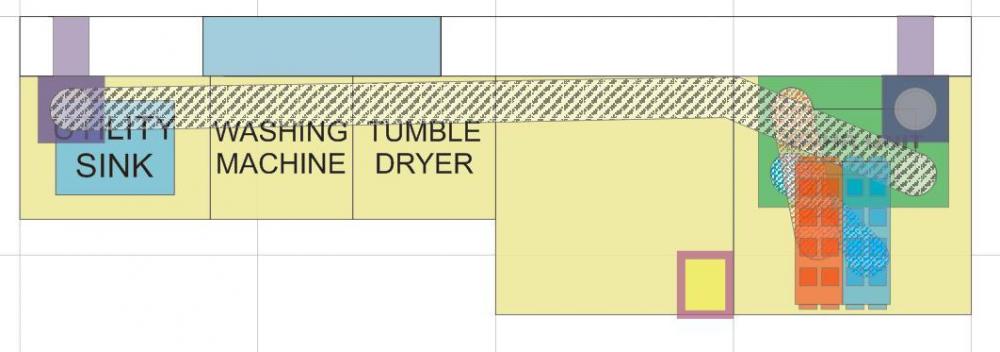
-
Similar to @mvincentd, our house is around 200m2 (500m3). UK Building Regs seem to say (whether applying the whole house 0.3 l/s/m2, or constant extract rates) we need 55l/s or 200m3/hr or 0.4 ACH. I arrive at approximately the same 200m3/hr number when applying an ACH approach on the room volumes through using 0.5 ACH for bedrooms and habitable downstairs rooms, 2 for the bathrooms, 0.7 for the kitchen and utility areas, so that number feels robust. I haven't got into duct lengths and pressure calcs, it seems beyond me. I am hopeful for a sufficient sized unit to swallow any issues derived from that (for colour, our average semi rigid 75mm duct length is 8m, the longest 12m, shortest just 1.5m, with the majority between 6 and 10m, never more than 2 turns, excluding the plenum turn, 24 ducts in total). When looking at the Q350, which has max 350m3/hr (equating to 0.7 ACH of my 500m3 property on full boost), achieving that 200m3/hr would seemingly mean the unit working at around 60% of it max performance. That feels like it would be a noisy experience. Would anyone feel confident to chime in as to whether the unit would be undersized for my needs? Both BPC and another firm haven't hesitate to promote it based on my house dimensions. I have read much on the site of Building regs over estimating the requirement and running their unit at some fraction of that target, keeping an eye on humidity levels to ensure the air is healthy. If I need a bigger sized unit, alternatives to the Q350 would perhaps be obviously the Q450 (although the cost is really punchy), or perhaps the Brink 400, or Vent Axia Sentinel Plus B, however those later two would miss some features I like about the Q350 (or get them but for extra cost in the case of the Brink). I have particular fondness for the enthalpy exchanger of the Q range, as my children suffer from mild skin conditions aggravated by low humidity. @mvincentd, what is your take on the noise from the unit (either the ducts or the unit it self) if you are using it at around 50%? That feels relatively high, and based on regs, I would be demanding even more from it.
-
This is an interesting post. We have a Worcester Bosch combi boiler, and rue the 30-60secs it can take for a basin to provide hot water. We would have 5 basins, all relatively local to each other (but a bit removed from the boiler (part of the issue probably)), where my partner might think I was the best thing since sliced bread if I managed to deliver immediate hot water from any one of them on demand, as hand washing with cold water really grinds their gears. After looking at the options, I can't see which is the most elegant solution. I am space constrained, part of the reason for having a combi boiler in the first place. Some time has passed since the last post in this subject, with the devices available today, is there a clear winning tech for my issue?
-
Green Home Grant application - have you had a response?
tanneja replied to joth's topic in Environmental Building Politics
Probably not very useful, but just to contribute, I applied for EWI about 5 days after the scheme opened, and got my voucher approval email on 1st Dec. Due to install next month (expiry date of my voucher is end of March 2021). Am shocked if the approval numbers are as low as one post in this chain suggests. -
What material reasons are there to choose a Brink unit over a Vent Axia? If they were equivalent size, it seems the Vent Axia units have integrated humidity sensor included which some users state is the simplest function that appropriately manages your air quality. I can't see mention of either having enthalpy exchangers (are there any reasonably priced brands that provide this, my children have very sensitive skin). Is it sue to PH certification? If one were doing a retrofit, is price the determining factor?
-
@Russdl, would you please confirm (as seems to be the case based on your picture above), have you used the same foam ducting for duct length that punctures the building wall? Is there any fall / gradient on that length?
-
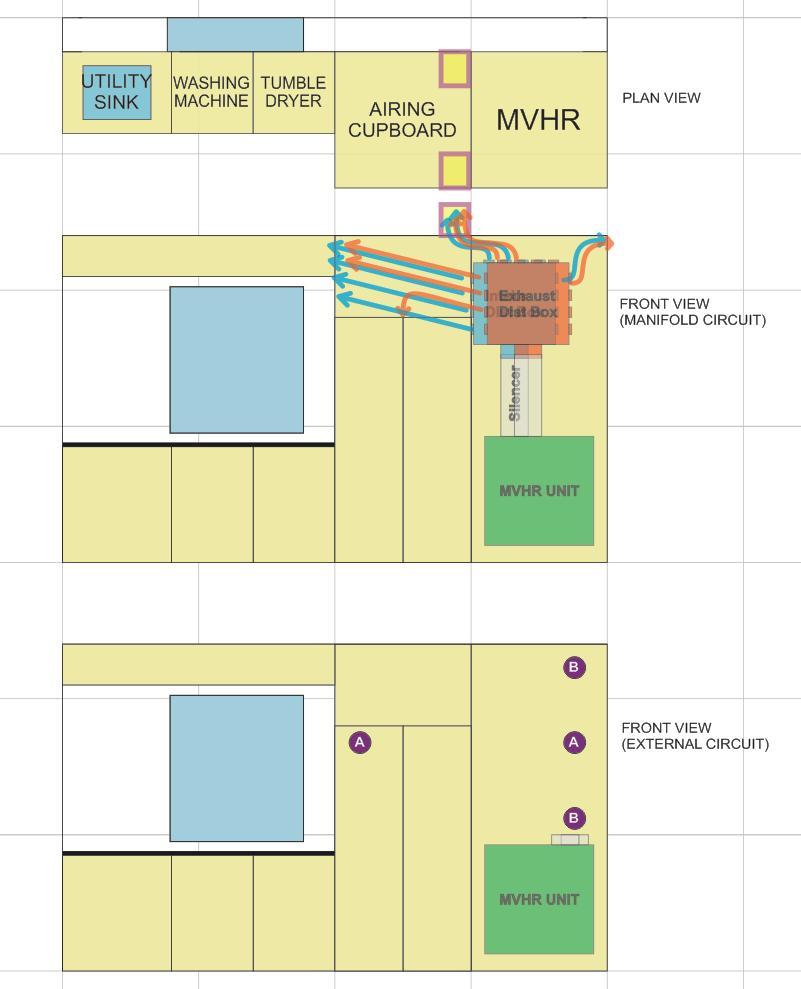
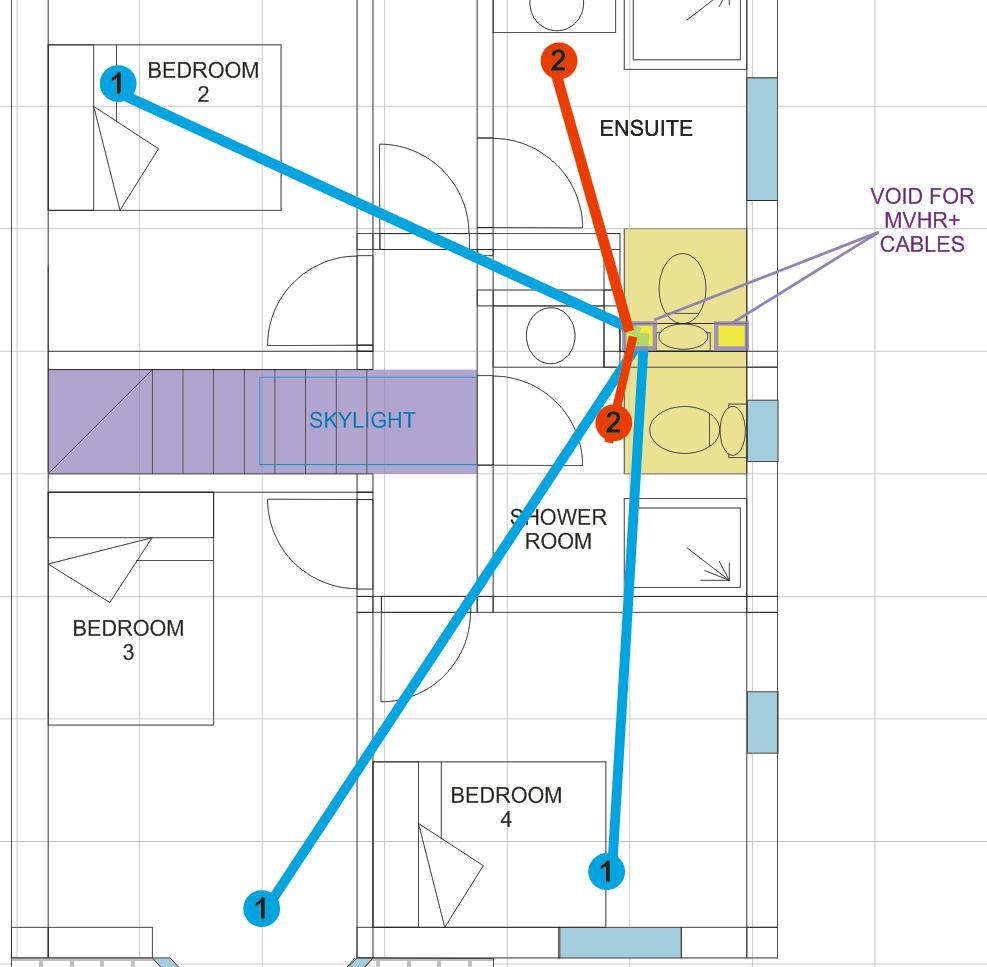
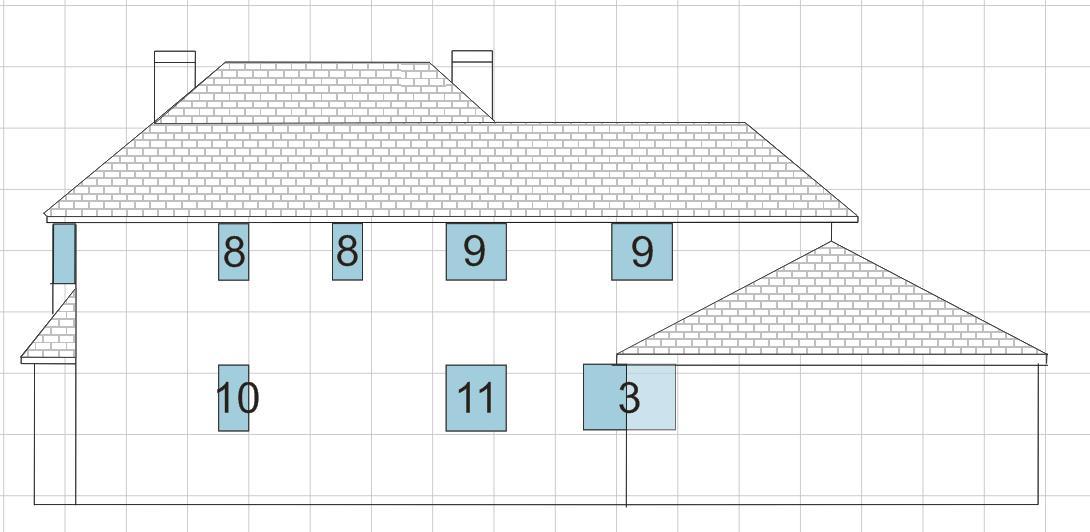
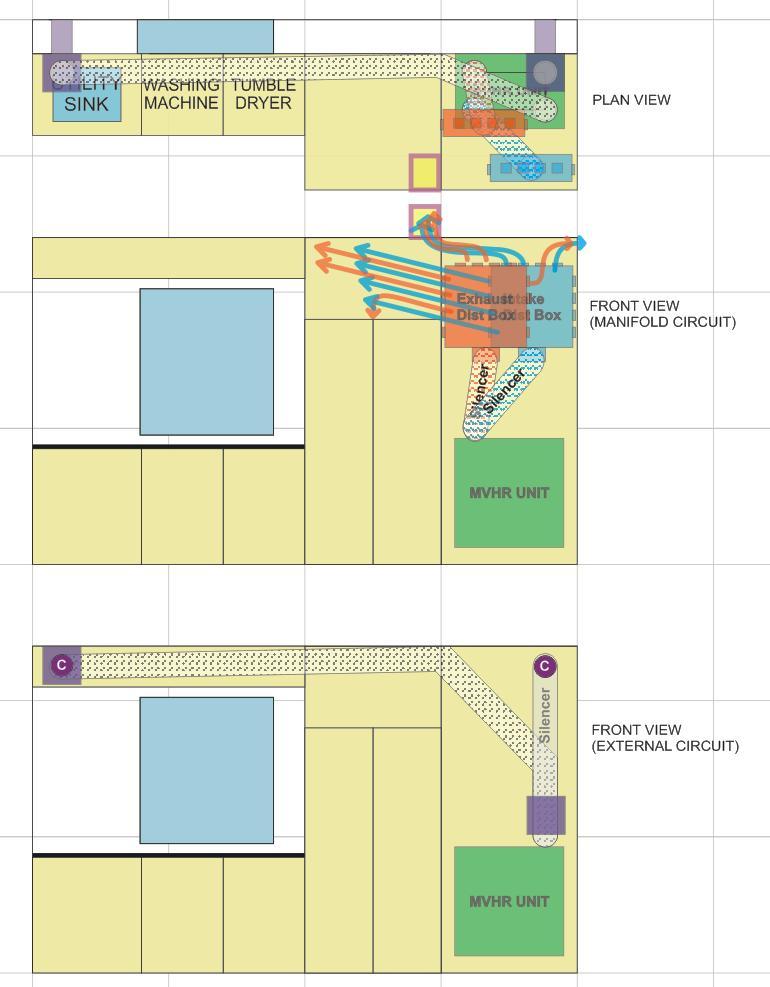
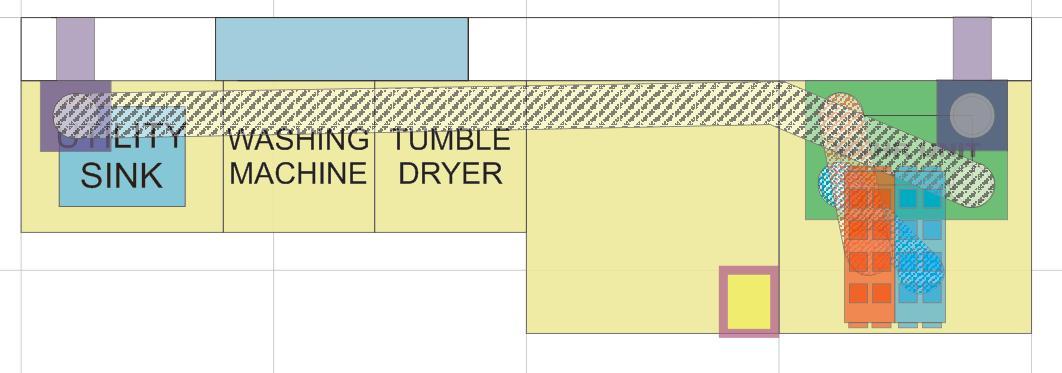
Some may recall I have asked questions on MVHR before, it is now at the stage of ordering, and while I had thought I was in a good position, having read historic posts I have doubt as to whether I have provisioned enough space for every element. Below (MVHR ducting plan (ground floor).jpg) is the planned layout of the utility section. We have a generous airing cupboard for non-tumble clothes items with an MVHR cupboard next to it. The grey grid on the pics is 1m2. The airing cupboard doesn't need to be a full 1000mm deep but would be nice to replicate the kind of drying volume you get with an Xframe clothes horse. The plan was to have a full height (2.4m) by 1m wide cupboard where the MVHR unit was placed near the ground (concrete floor, and the wall there is masonry, high enough off the ground for unit drainage, hoped for around 150mm to be sufficient). Then I found the Ubbink 24 duct manifolds which seemed like it would give be the option of runs to the left and right and upwards, with a mains duct connection to the MVHR unit coming from below. This felt like I could mount them still within that space, connected to the MVHR unit via 500mm long flexible silencers. I hadn't given lots of thought to the position of the external intake and exhaust vents, nor how this arrangement of distribution boxes would mean no access to the one behind (the Ubbink has distribution box based restrictor rings that can be used to balance the system, but given the lack of access, I presume we would need to go with valve based balancing on whichever unit is behind, unless they are sympathetically overlapped somehow). To make life more interesting, after reading various posts, I would ideally like to pre-filter the intake with a modest wall mounted filter box between the external intake vent and the MVHR, and likewise for the external vent, as we have copious numbers of flys, wasps and bugs that roost in any opening they are given (+10 wasp nests discovered during the renovation). Now seeing that most of the unit options have the external intake / exhaust on one side of the unit (I had assumed there were models where they would be the back two ports on the unit), and knowing that meeting the typically advised space between external vents will be challenging, I'm wondering out aloud what my best option is. Below (MVHR Cupboard.jpg) is the front view of the utility run. To this layman, the two lowest space sacrifice options for external vents seemingly are pairs "A" or "B", distanced 1.5m and 1m between themselves respectively, with "A" requiring sacrificing some depth to the airing cupboard. Obviously there are all kinds of alternatives we could explore, like pulling the full utility bank (washer, dryer, sink) off the wall to make space for one of the external ducts to run behind it, or taking one of the external vents up to the first floor. I have shown here what is currently on the first floor for your guide (MVHR options on the first floor.jpg), with the MVHR / airing cupboards ghosted on to have a feel for their relative position. I am guessing we would be taking about a boxed section in the most southerly shower room near the slim window. I also include the side elevation to for clarity (Side Elevation.jpg), the window by the utility area is "11". This is all in addition to not knowing what unit we should go for. I believe I know what control method we want (ideally be able to plug in a Cat5/6 cable and bring back to the home hub for future tinkering), and we have approximated the required size given our property volume (500m3) with assistance from BPC, but the unit choice seems irrelevant if we can't fit all external and radial ducting in. Perhaps an MVHR unit with interchangeable top and side duct entry points (such as the VentAxia Kinetic PlusB) makes this ludicrously tight fit somehow possible, if coupled with the collective brainwaves of some experienced MVHR self installers After reading what feels like hundreds of personal accounts and discussions, I do have more questions regarding: the unit choice, the vent types, the possibility / benefit of hooking other appliances (toilet / tumble) to extracts, the relative effectiveness of different silencers (rigid vs flexible), ...but I am probably pushing my luck already with hoping anyone can solve my space issues in an elegant way. Could anyone offer any advice as to what will likely be achievable in the real world? It will be the first ever install for me and my enthusiastic main builder.
.thumb.JPG.c543a3d7b57a5707517292a2309a6f8f.JPG)
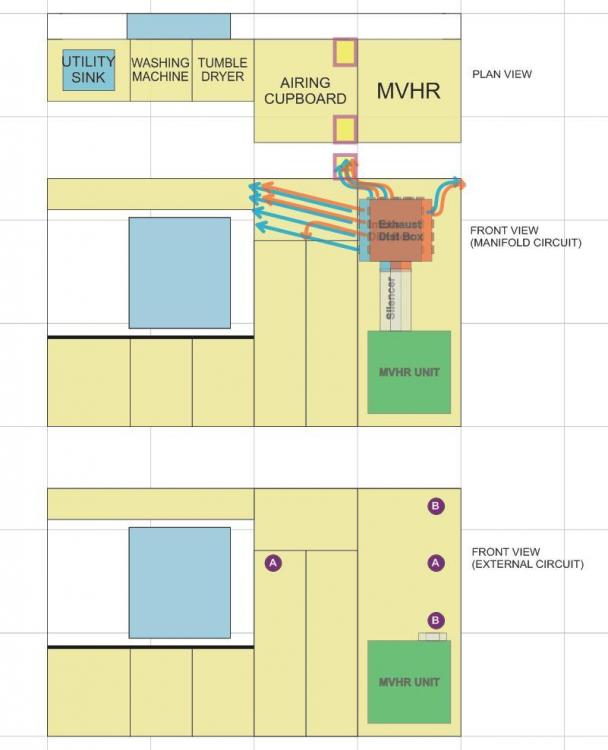
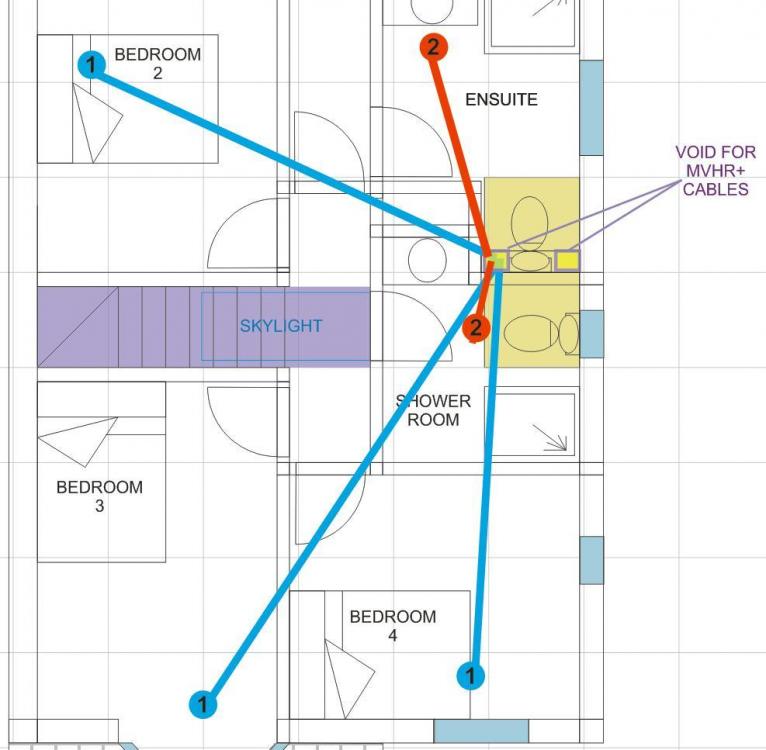
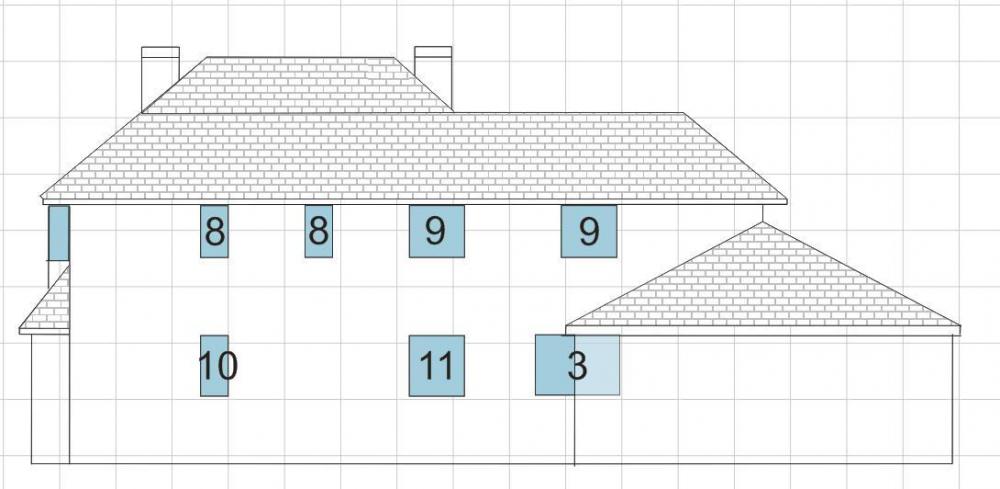
-
@djcdan yes, can you share this please?
-
This is inspirational @Russdl, can I ask, with the distribution boxes, did you use the restrictor rings for balancing? Presumably these required cutting as appropriate for each run to achieve your balancing? Do you expect to need access to the internals of the distribution boxes in future as they seem to be behind your home made silencers?
-
For what it is worth I went with Lazenby in the end, due to happen in 3 weeks.
-
I'm in the position of having to decide this morning, as they will need the appropriate materials tomorrow to get decorating. My builder is concerned by the weight of one layer of HDP, let alone 2, on the ceiling especially. And understandably my partner can't quantify what noise level will keep them from sleeping. They haven't been in a timber/PIR + vaulted room before (existing house is masonary). The foxes screaming is never enjoyable, but they are likely too loud for us to eliminate. I feel the two options I have in my arsenal, given the very small space tolerances we have (very close to building reg hallway widths already), our budget, and the concerns with weight on the structure elements, are: - somehow apply a single layer of 15mm HDP to the walls and ceilings, the details: one wall needs fire board so that could probably go over the top of this The ceiling needs a further 50mm of PIR under the joists, this was planned with insulated plasterboard but could perhaps be done with PIR sheet with HDP over the top (with some lengthy mechanical fixings...is this safe? Or do we HDP with acoustic plasterboard on top?). Presumably I would ask them to use acoustic sealant in places, such as to fill plasterboard to floor gaps. Do I let them but walls and ceilings together or have a hap that is filled with sealant to reduce flanking across surfaces if we want to address noise further in the future? And for sockets and switches, can I use the putty pads effectively on the inside of the back boxes, as we can't see how we will get a good seal otherwise. - instead pay more for 2.5 / 5mm of Tecsound around the room, and then could either regular board or 12.5mm HDP over the top perhaps. I woudl guess this would go behind any additional PIR that is needed proud of the stud walls. Based on Tecsound and HDP seemingly having equivalent density, if went the 2.5mm Tecsound route then would end up the same mass as 15mm HDP, but for more material cost and It would have its own installation challenges I am sure. Would we get a noticeable step change in sound improvement via incorporating the Tecsound? Some kind of decoupling effect from either the sound of the elements or neighbourhood? Thanks in advance with your patience on this, and any further help anyone can be to us.
-
@Moonshine the Rw 33dB it says. Glass buildup 4b/18Ar/4/18Ar/b4 Partner is a light sleeper. Traffic should be ok as this is the back of the house. They are more kept awake by the noise from heavy rain or very strong gusts (a bit focused atm with the extra noise we get when the gusts hit the scaffolding tarp). We also have ground floor ceiling skylights near this bedroom, so rain onto those could generate a lot of sound. I am a bit concerned with double HDP a ceiling, a lot of weight above our heads for the next 20 years. However we could get it on one of the walls and the ceiling. from a space perspective. We have had a fabric first mentality throughout, or at least we think we have, but don't want to pay unnecessarily for the wrong kind / amount of sound insulation.
-
Thanks @PeterW glazing with be 3G Internorm so the best sound insulation I could afford.
-
My wording is so poor sometimes. To simplify, does anyone have a view as to whether it would be impactful to implement a MVL layer (like Tecsound), underneath a single layer of 15mm high density plasterboard (HDP) where it is a timber frame room? Room has three external walls and vaulted ceiling, all of which which filled and capped with celotex to regs. Would Tecsound just add mass, or are the sound benefits more diverse? If it just adds mass, its a very expensive way to add some incremental mass to the greater mass HDP. Is there a small decoupling effect to be had through the MVL use, but is that relevant for external walls of a 1st floor room? Wanting to keep weather and street noises out.
-
I have wondered about this. I have read that the combination of different types of mass can have a better impact for the various range of noise frequencies that one might encounter, however I have read this on websites where they sell the products, so they may have a bias. We are very space restrained throughout our upstairs. Key is our new master which is a timber frame vaulted ceiling extension (walls are 150mm thick studs, filled cellotex, cement board on outside with thin coat render... ceilings are 150mm thick joists, again cellotex filled, will be PIR on the underside too to get to regs, and is clay tiles). 3 of the walls are external. We planned a single layer 15mm high density plasterboard inside (walls and ceiling) as it is small, so coming further off the wall is undesirable. Could double board the ceiling, have read double boarding is greatly diminishing returns. I am weighing up 5mm of Tecsound between the pasterboard and studwork (walls and ceiling), having read the different type of mass from it will compliment the HDP beyond the less impressive density addition (as pointed out by @Moonshine). Its a big expense so looking for some reassurance that this isnt a waste of time. Wife is a very light sleeper, have 3G windows ordered, but with 3 of the walls being external, and the vaulted ceiling, wondering if paying for Tecsound is worthwhile. If anyone can confirm either way whether the Tecsound / MVL layer will add material value to us, it would be appreciated. And if a good idea, is Tecsound the brand to buy, or could save myself a lot with something else? Have other problem walls (most masonary) in the house that are on another thread. Many thanks in advance.
-
Unsure what those cheap ones are. I have seen Eco+ mentioned which may not have vents, but my opening's wouldn't fit them (I have 1340X980mm landscape), don't really want to make mine smaller. I know Joth had Roof-maker but, while not OTT cost, they are equivalent to paying the extra for Fakro unvented, and then a little more, and a 3 month wait. If the vent closure is good, and there is potential for putting in some mineral wool into the vent area (?), then Velux wins as is either £300 cheaper per window (i.e. £500), or, for the same cost as unvented manual Fakro (£800), could get an electric Velux (note that the Uw of the Farko is 0.8 vs 1.1/1.0 for the Velux, both 3G). Keylite do a fixed pitched roof skylight, 2G, no vents, U=1.1 for around same price of manual 3G Velux (£500), although that price is from their HR team, need to find one on a builder merchant site to get actual cost to me. Unsure which way to go. FYI have MVHR and went Internorm 3G for windows throughout.
-
@Nick1c this is precisely my choice to make atm. In hindsight, do you think you would make the same choice again to pay for unvented? In my circumstance we need 2 of the skylights, so an extra £600.
-
Passivhaus certified roof lights with electric opening
tanneja replied to joth's topic in Skylights & Roof Windows
That you @joth. Just called them and they are quoting 90 days lead time at the moment...not sure we can stretch to that long, but understandable given the current environment. Weighing up them vs. Velux / Farko but then would need to block up the trickle vents. Were there any other options you came across for the pitched rooflights during your research that I should consider? Thank you pandemic -
Passivhaus certified roof lights with electric opening
tanneja replied to joth's topic in Skylights & Roof Windows
@joth i am taking a serious look at their fixed pitch rooflights, and they seem to have a low solar gain glazing option (yet to get the addon price for that). For a house with MVHR, where i dont want opening nor trickle vents, they seem to be priced well (whereas their flat roofs are less competitive). Wondering if yoi got any further?

.JPG.1c6ccd79d0241b453740564a14333c76.JPG)