Tony L
-
Posts
397 -
Joined
-
Last visited
Everything posted by Tony L
-

Cost to Discharge Condition
Tony L replied to Rosslyn's topic in General Self Build & DIY Discussion
£43 when I submitted a revised external materials schedule recently (different roof material, cladding & other minor changes from what had already been approved). -
Gross Internal Area. Even I know that one, & I know nothing.
-
Community Infrastructure Levy (CIL) HELP PLEASE
Tony L replied to Caroline's topic in General Self Build & DIY Discussion
If I were you, I'd be asking the council for clarification on this, rather than Build Hub, but it looks to me as though this is just a standard letter they send out for the more usual circumstance of a new build replacing a dwellinghouse, rather than a barn. Did you complete a CIL exemption form? I expect different LAs may have different rules, but in my case, if I live in my new build for two years following completion, there's no CIL to pay, so whatever floorspace derived calculation has been made becomes irrelevant. -
Are you sure? I've just had a quick look & other than second hand, they're all more than £300.
-
What will they think of next?
-
Assuming the ties are coming into the bricks at height intervals that are compatible with the Drytherm, can't you just cut slices in the Drytherm so the last 100mm or so goes around either side of each tie?
-
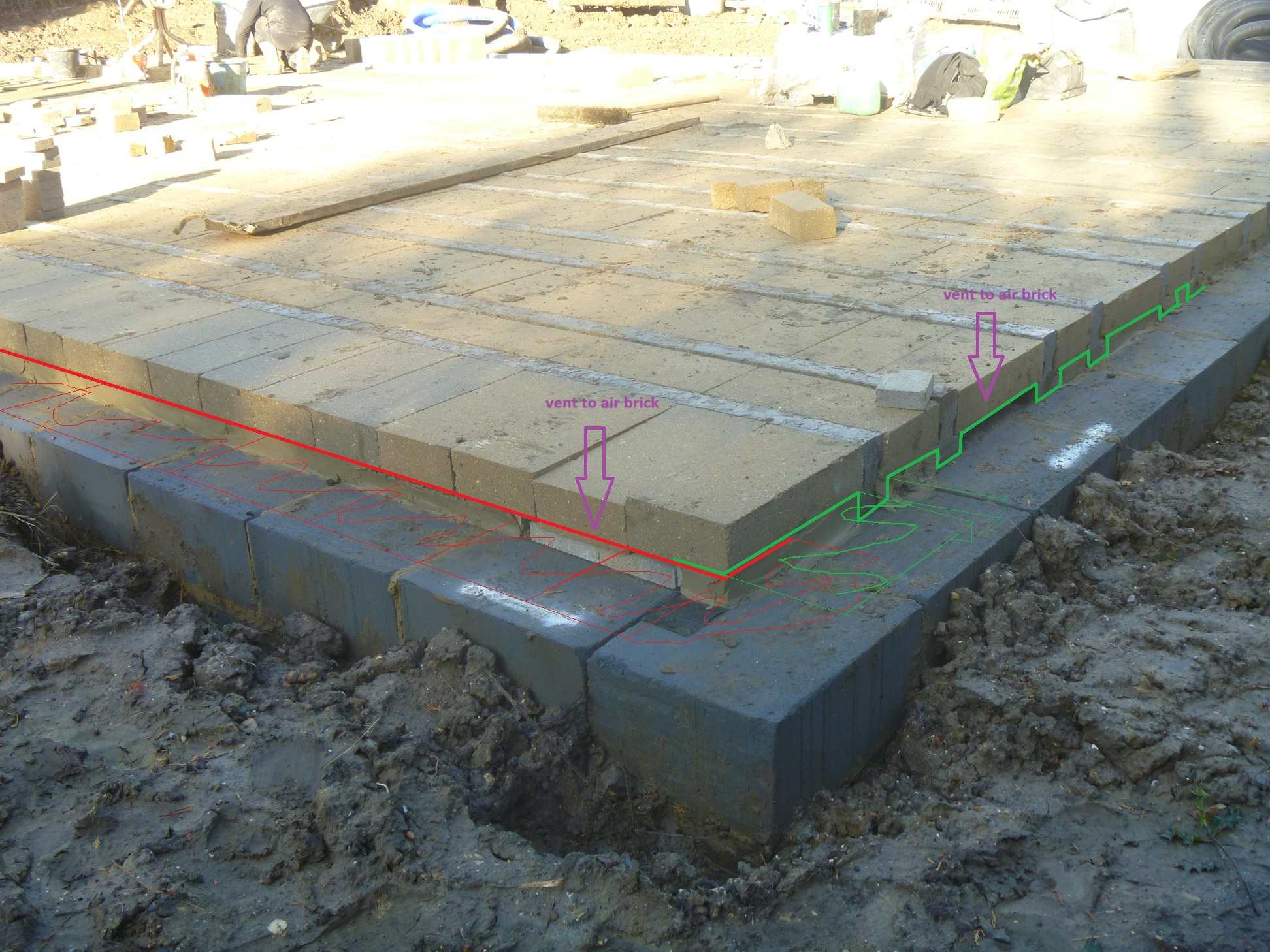
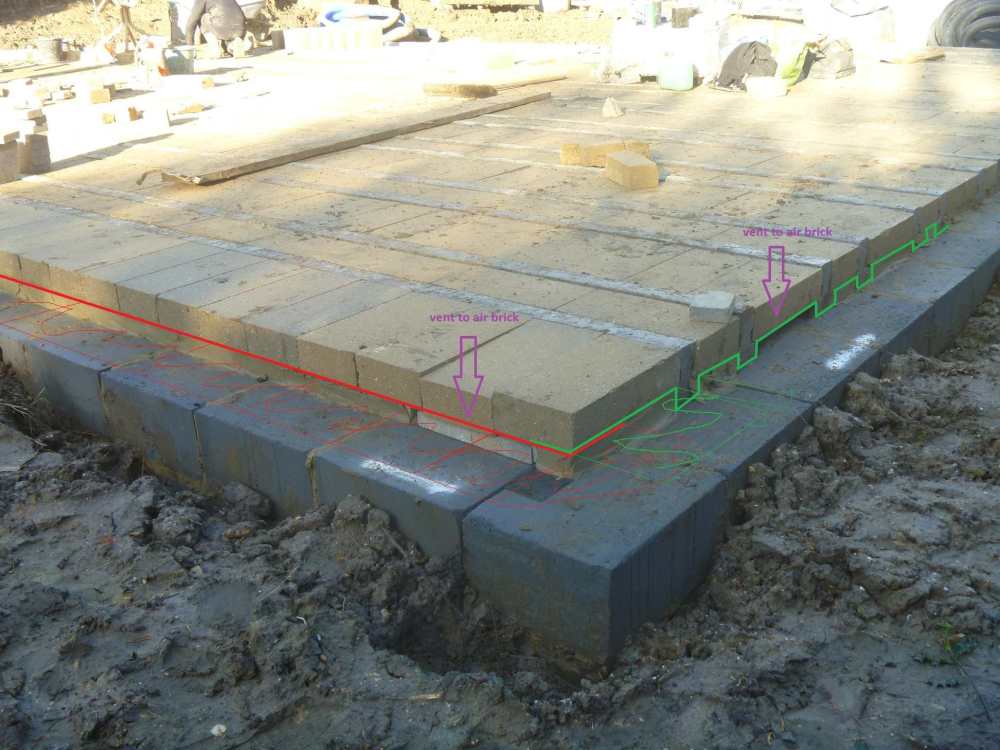
Here’s the diagram I promised you, @crispy_wafer. Just to re-cap, my builder built this B&B floor off trench blocks instead of a cavity. There’s DPC along the inner edge of the trench blocks, but it’s not doing much, because it’s been bridged with mortar. I’m thinking I should take the blocks out & lift the beam ends one at a time, to run 450mm wide DPC along the routes shown in green & red. This will leave sufficient DPC protruding to lap over the top of the edge blocks, to be held in place by the first course of the inner leaf, when this goes on (is this how it’s done?). I’ll leave the cowboy builder’s DPC in place. In the image, below, the thick red line shows where my new wider DPC will protrude from the structure when it’s all been put back together. The DPC shown in red should be easy to install. The DPC along the two walls where the beam ends are needs to go under the beams, of course. I’m thinking I can weave this so it goes over the air brick periscope ends, & I think it might be easier to go over the top of the infills under the other blocks too. This is shown in green. I built a model & used paper in place of DPC, to see how the folds work, & everything looked good. DPC doesn’t fold as easily as paper, of course, so I may end up having to make some cuts, but whatever I end up with has to be a lot better than what I’ve got at the moment. All comments will be gratefully received – thanks.
-
Thanks, @crispy_wafer. I have been thinking along the same lines. I've removed two blocks from the edges just by levering them out with a spade, so I think almost all the blocks could be re-used, apart from those close to where the 110mm pipes, etc, that penetrate the floor, have been grouted in with mortar. I'm thinking a 450mm wide DPC could go in then be lapped up over the top of the blocks. My current plan is: remove all the blocks, lift the ends of the beams, put the new DPC in & weave this below the beams (on top of the cowboy builder's 100mm DPC) over the tops of the mortared in brick slips that go between most of the blocks, back under the next beam, over the tops of the ends of the periscope vents for the air bricks, under the next beam end, & so on. This way, my floor will be isolated from the damp trench blocks & I won't have to make any cuts for the air brick periscope ends. Also, I don't have to hack away at the mortar between the beams & risk damaging the trench blocks. If my description has not given rise to a wonderfully clear picture in your mind, don't think about it too hard - when I have time (tomorrow, if all goes well) I'll post a diagram. I'm thinking a trolley jack will be better than a digger, especially if I want to lift the beam ends from the sleeper walls in the middle, rather than restrict these works to the perimeter. I have decades of trolley jack experience & zero digger experience. & you're right - removing all the builders' packed lunch leftovers is sure to give added job satisfaction.
-
You're right, you're right, although I thought they were still constituents, even if they're below voting age, but I'm probably wrong on that too. Hartlepool, where my family is from, is definitely more insular than the SE, & in a good way: most people have a far greater understanding of local issues there than they do down here in Surrey. The question was: Can you help me build my house, please? My nasty Southern builder has done me over & I'm struggling to decide on the extent of remedial works (see my recent posts).
-
That'll teach me. I'm supposed to be working, so I can afford to build a house. The source was my head - just a vague notion I'd formed having watched so many Scottish MPs speaking in the House of Commons (watching them on telly, that is - I've never been there) & looking at those constituency maps that are in newspapers around election time. So, if Google is to be believed (& very often, it isn't). mid 2023 England pop = 57,690,300, Scotland = 5,490,100. From 650 constituencies, 543 are in England & 57 are in Scotland. That gives 106,243 constituents per English constituency & only 96,317 constituents per Scottish constituency. So your average MP representing a constituency in England is looking after more than 10% additional constituents when compared to the average MP in Scotland. & I wouldn't dare suggest that there may be more than 10 times as many Scottish born MPs representing English constituencies than there are English born MPs up in Scotland, because I might have to spend the rest of the day Googling to support that claim. Now, I must concede., although this bias in Scotland's favour is significant, it's not quite as bad as I thought & probably less than the skew in wind turbines. If you or @ProDave want to tell me I've got my facts wrong, I'll agree with you, in the hope that this will encourage you to continue to help me build my house. It's got off to a bad start, & I need all the help I can get.
-
I'll agree with you @ProDave. While we're levelling up, let's also deal with the problem of Scotland having far more than its fair share of MPs. Each Scottish MP represents far fewer constituents, on average than, their English counterpart.
-
Thanks, @crispy_wafer. Yes, that would be a lot easier, but almost all the damp in the beams is going to be coming up from the trench blocks & the mortar, so sealing the ends of the beams will still leave me with around 95% of the problem unsolved.
-
Sorry, @Andehh, I forgot to respond to this. I've thought about trying to get rid of some of the mortar that's bridging the DPC with an angle grinder, but I'm conscious that if I accidentally cut a small channel into the trench blocks right at the edge of the beams, this will be a point from which a stress fracture could start, & I really don't want that. Chiselling might also give rise to stress fractures. Even if care had been taken with the installation of the 100mm wide DPC, & there were no mortar bridges, I would still not be happy that the DPC would provide maybe 1mm separation between the beams & the damp trench blocks. The k-Kaps look a lot more chunky. Any input on my idea of jacking up the beam ends & putting K-Kaps on them would be most welcome. Or, if there's a better affordable solution, I'm keen to hear about it, please.
-
-
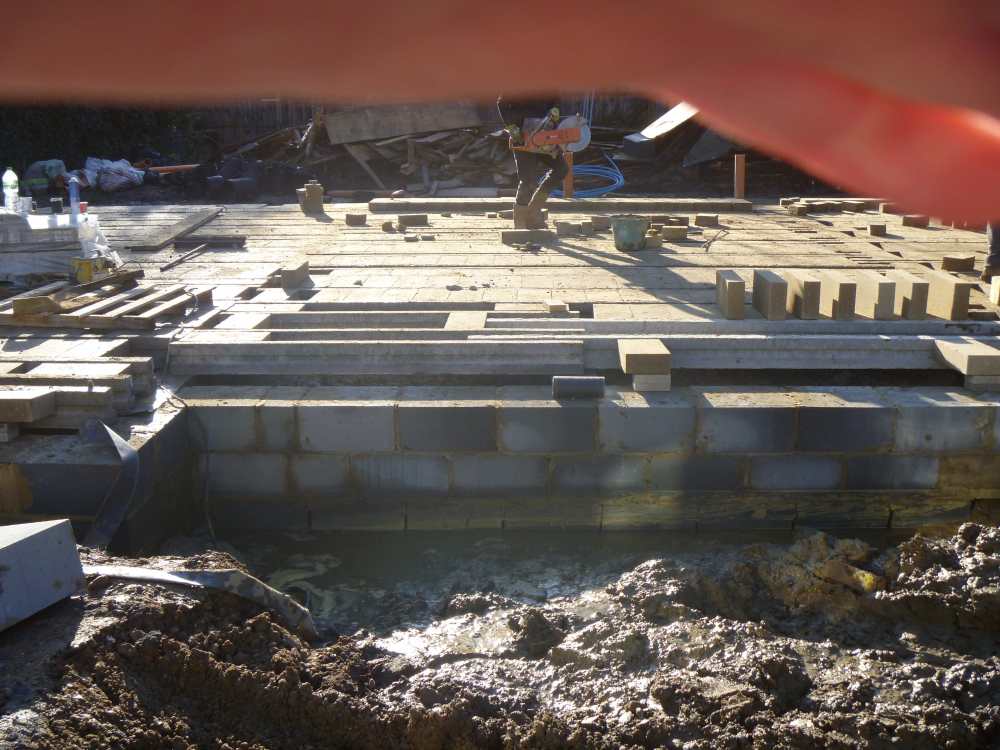
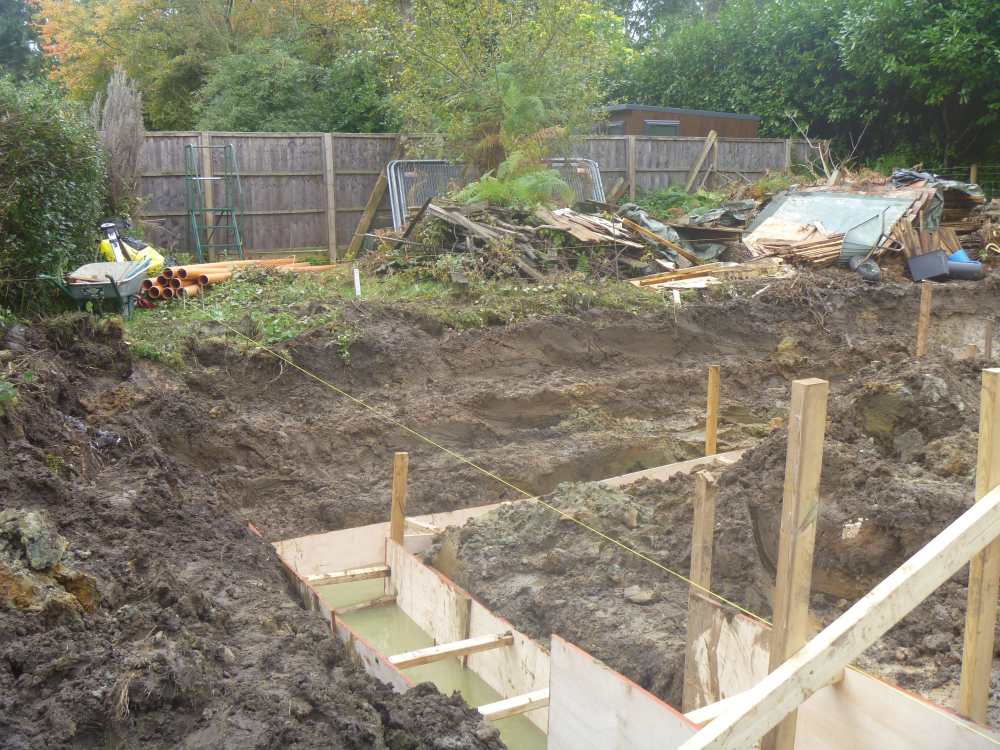
Thanks @Mr Punter. According to the builder, the building inspector has seen everything & says it’s all good. The builder has written to me to confirm this. You’ve got me thinking now, I should explain to BCO, it has become clear the builder has been lying to me. I should ask BCO: could he please confirm everything that’s been built so far is building regulations compliant? I’m going to be overseeing remedial works to improve the ventilation to the void beneath the B&B. I don’t care what BCO says – I want to build to a good standard, rather than the low standard at which BCO will say things are acceptable to them. Regarding the ground level: the planners were very awkward with regard to the ridge height, so we’re stuck with the floor so close to ground level. It’s not a compromise I’m happy with, but I didn’t want to spend a ton of money just to end up with a bungalow or a house with horribly low ceilings. The first trenches (1m) deep were dug neatly & were shuttered. When BCO came & said he now wanted to see 2m trenches, we ended up with wide V shaped trenches, due to the wet ground & cave in risk. A lot of backfilling was done after the trench blocks were laid, so the this may account for the high ground level. Also, there’s 150-200mm of crushed concrete surrounding the building (1.5m wide apron) for the scaffolding to go on, so perhaps this can be scraped back at some future date.
-
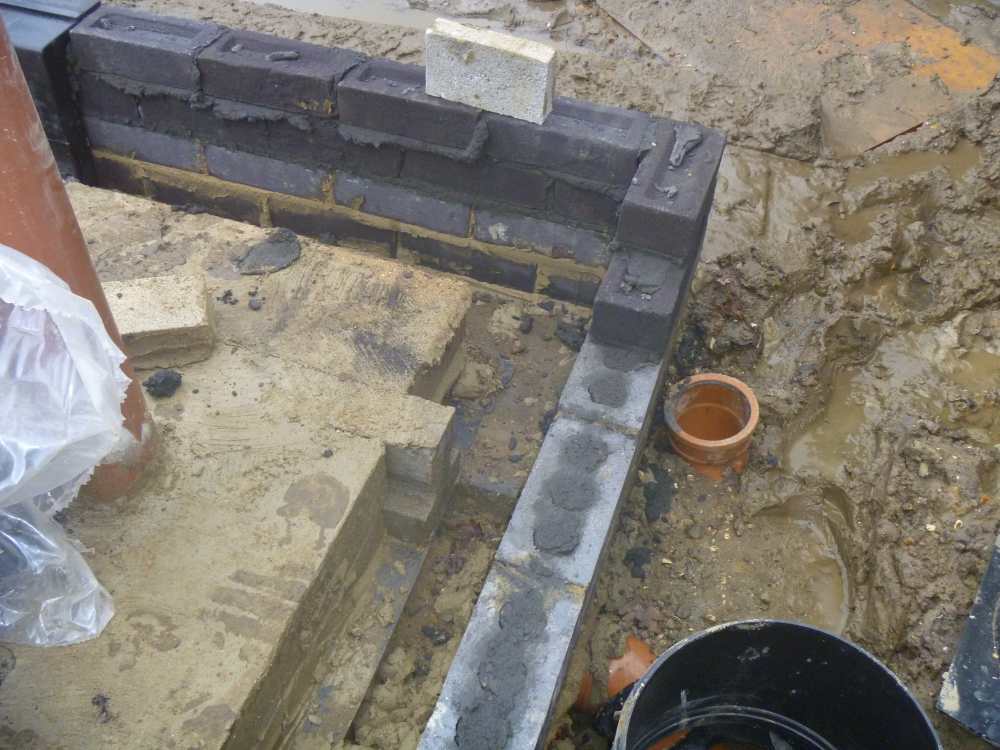
Actually, this doesn't show how it look now. This is before the last three or four courses were added.
-
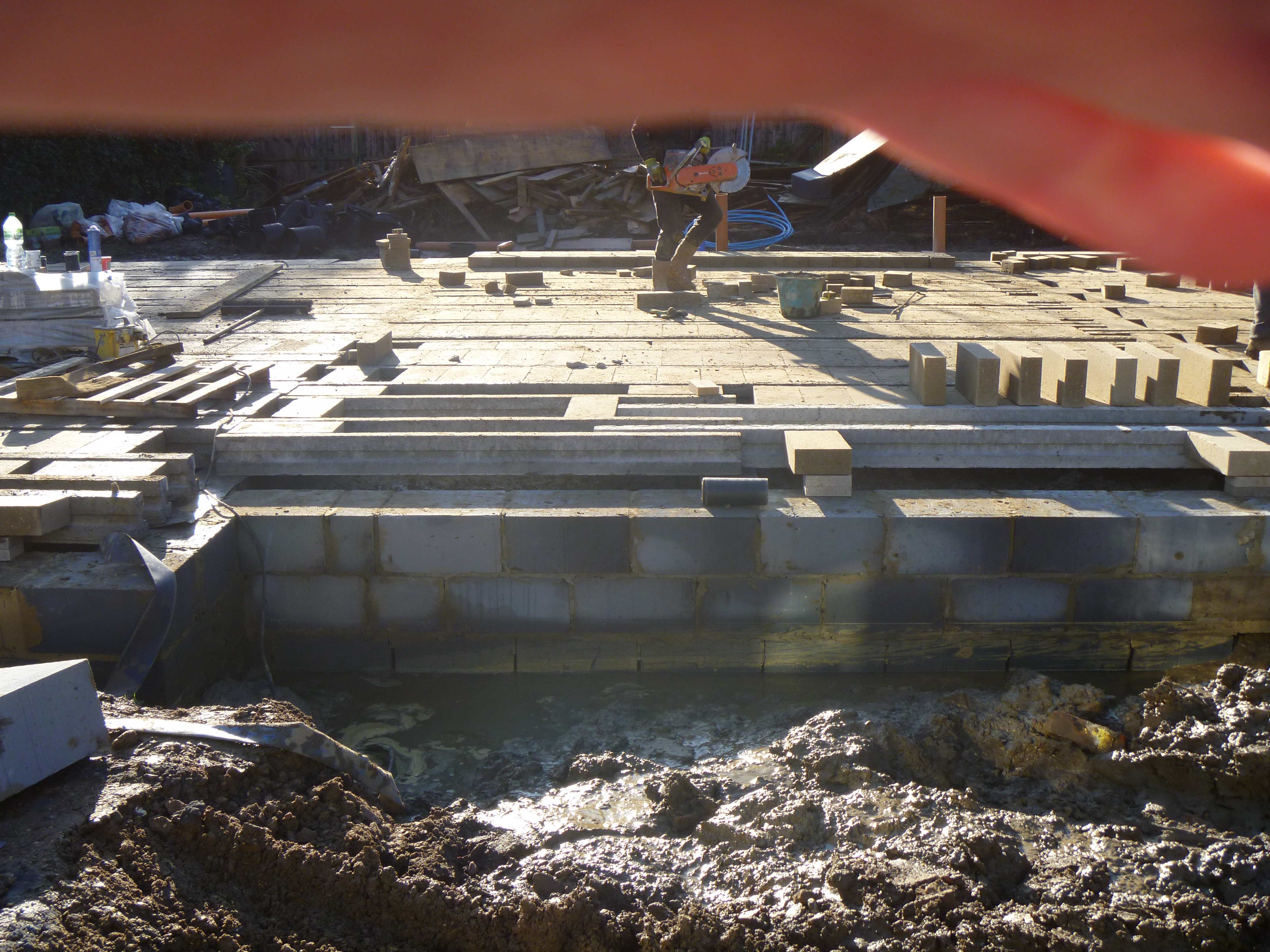
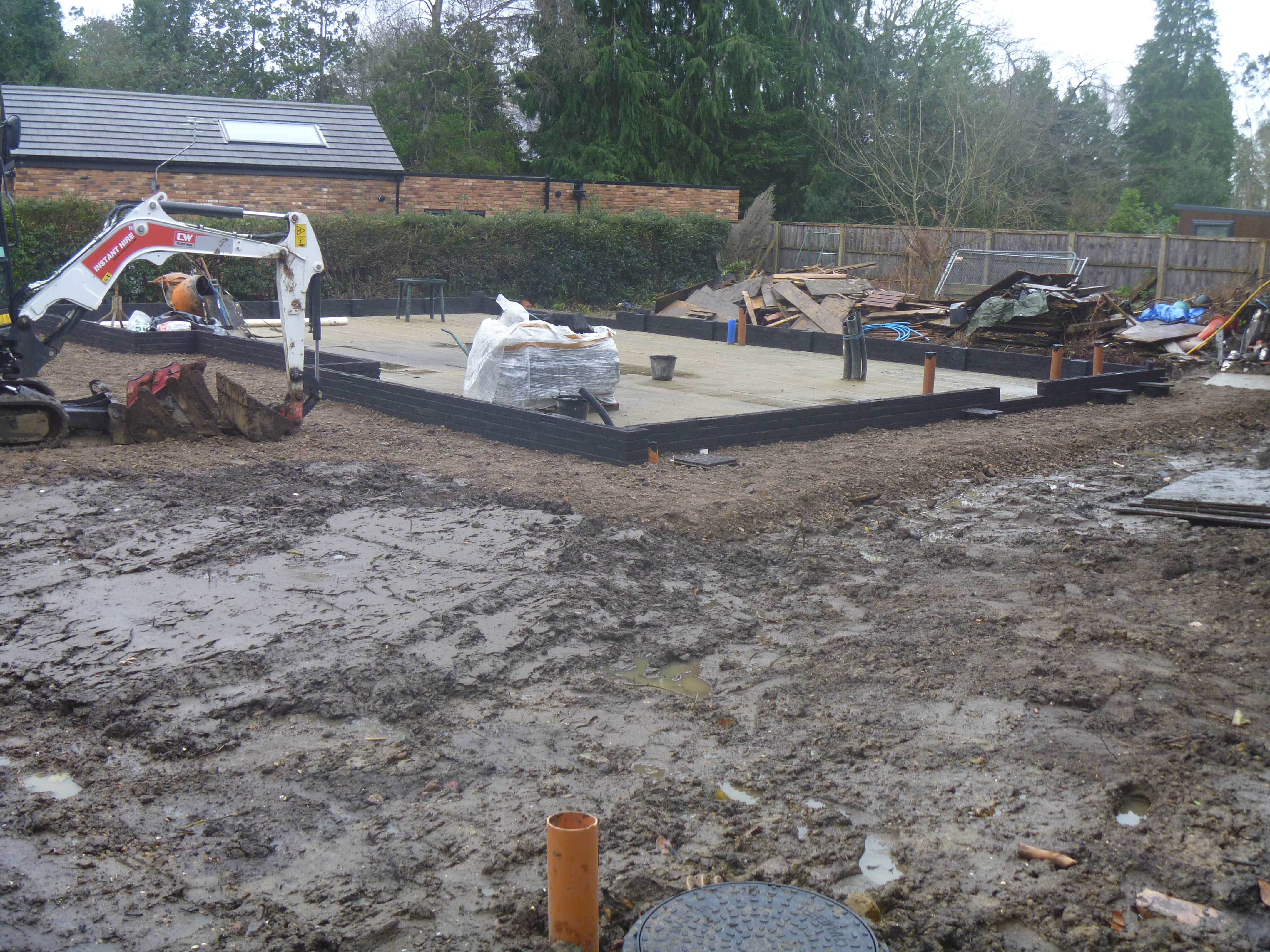
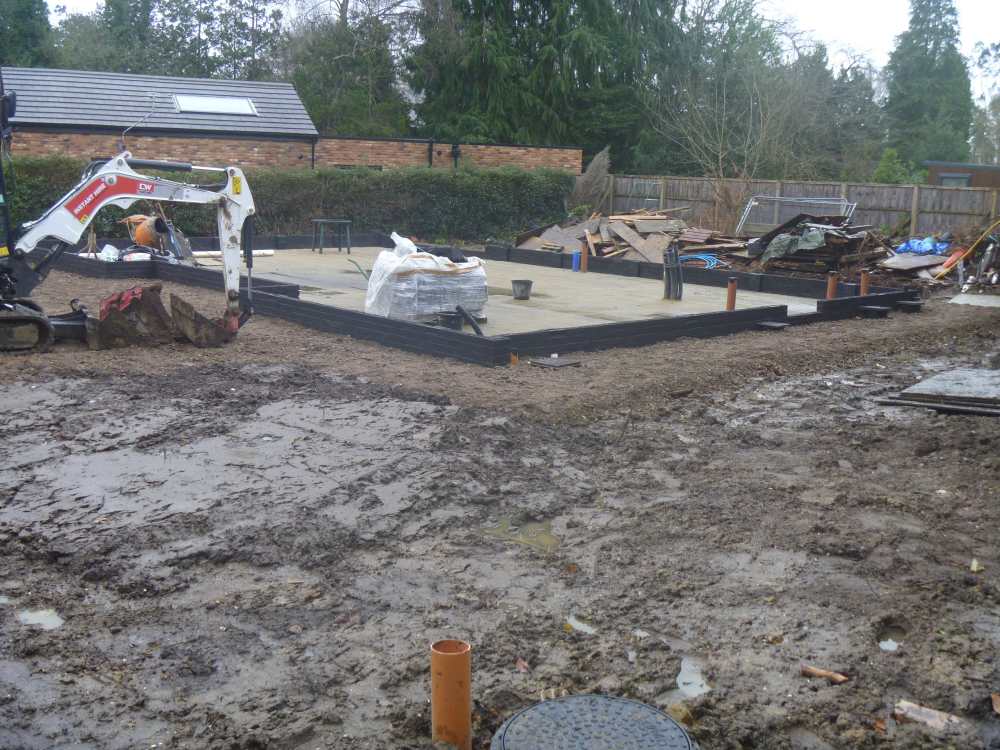
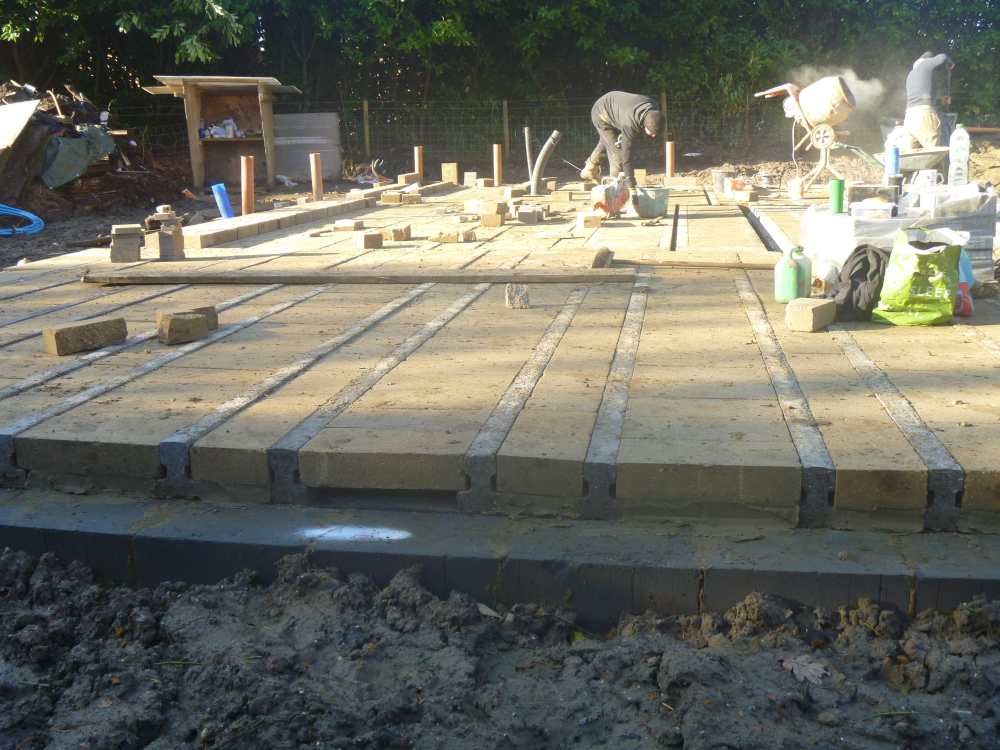
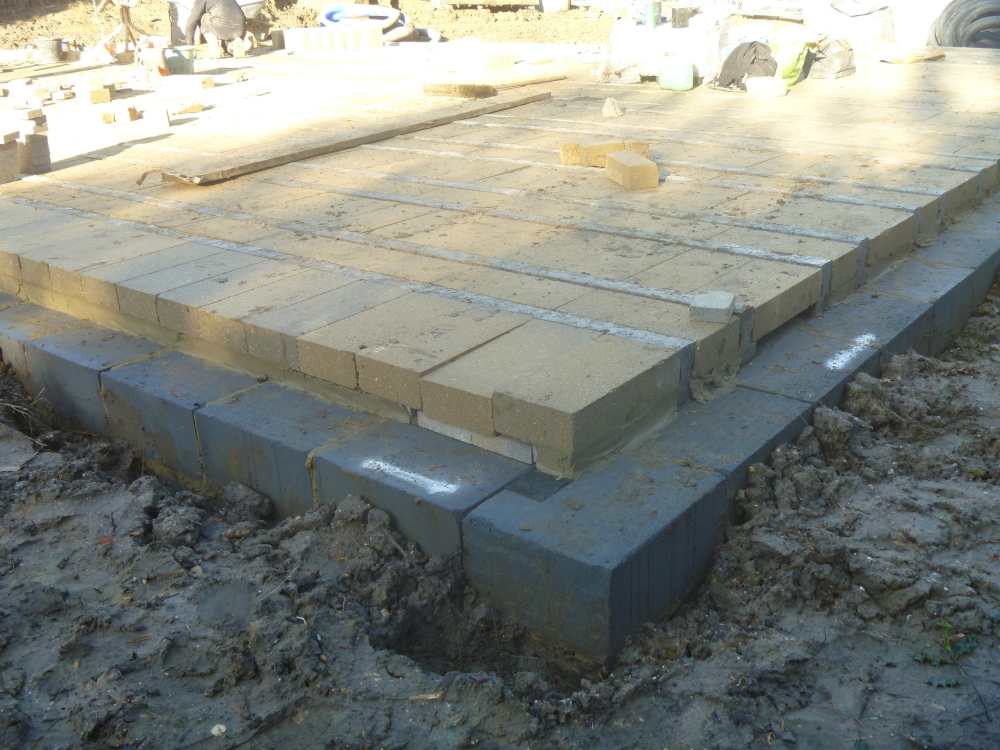
Yes, the cowboy builder started building up the outer leaf. It's very bad (see thread linked above, if you're interested). I may end up knocking the outer leaf down & starting again, or I may just take out the air bricks, or I may re-do the air bricks & the whole of the start of the outer leaf across the facade, because the black bricks are already looking terrible, due to efflorescence. Those black bricks were quite expensive & the mortar is quite strong, so it would be a job to clean them up & re-use them. These pictures show how things look on site right now.
-
No - there are unpaid invoices totalling £10,800. Let's focus on construction advice on this thread, please, & I'll update my other thread when I have more to report on the dispute/litigation. This one...
-
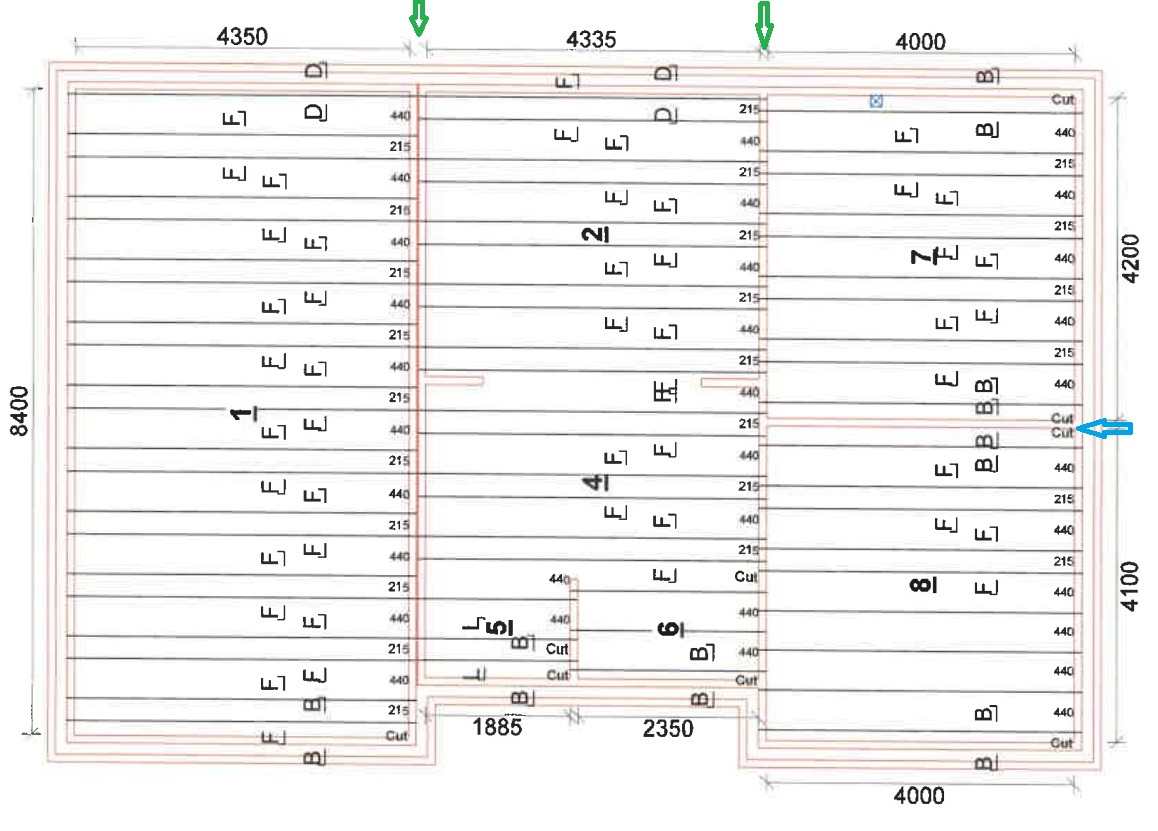
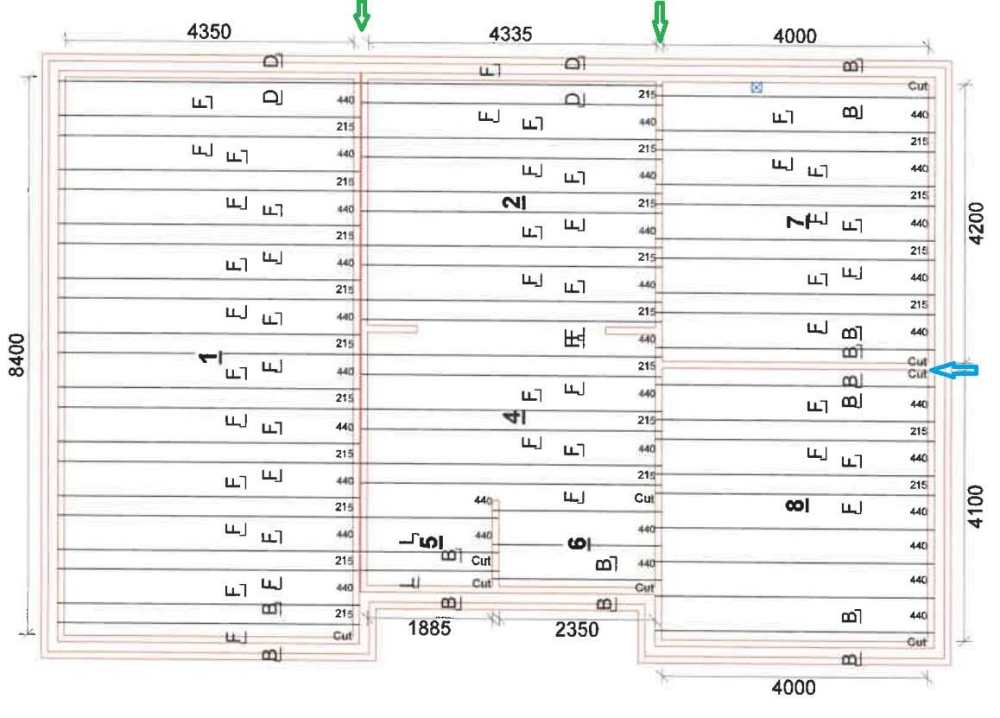
Thank you, @Big Jimbo. Here's the beam plan, in case that's any help. There are sleeper walls under the B&B. The two longest of these are indicated by the green arrows. The sleeper wall indicated by the blue arrow wasn't built. There's a double beam here instead. I asked (paid) a proper builder to come on site to inspect & report on the work. His opinion was that we could build off what was there, but we'd have to take the airbricks out & re-fit them properly. Of course, if we build off what's there, we're going to have to accept the B&B floor will be a lot more damp than it should be (higher U value) & our only protection from the excessive damp will be the membrane that goes on top.
-
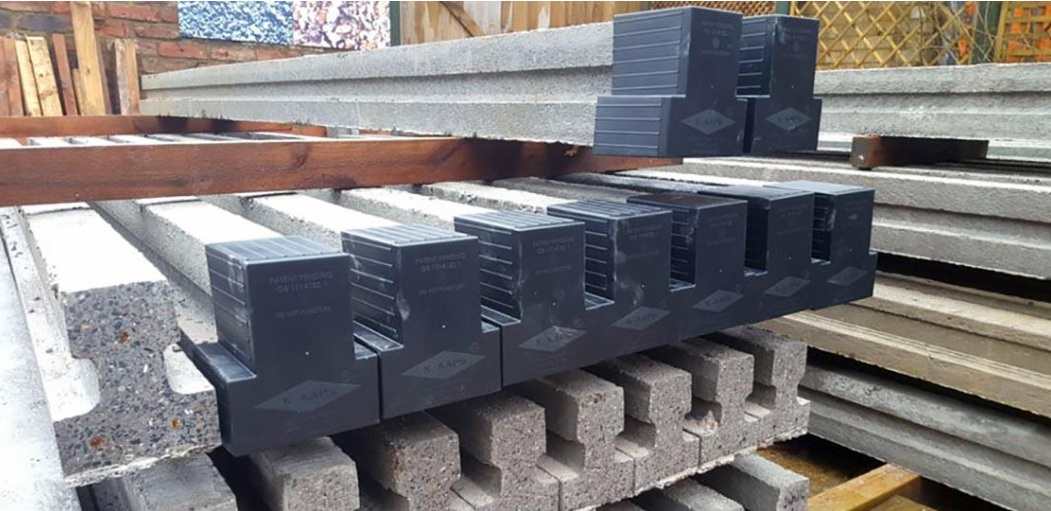
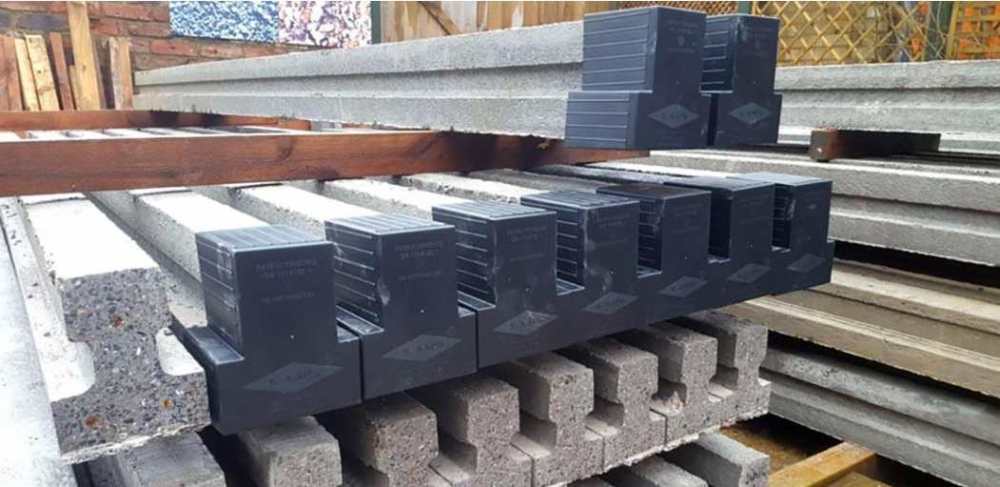
& these are the K-Kaps. You can see the rebar at the ends of these beams. My beams have no visible rebar. I hope you don't mind me jumping in on your thread, @Glee. I think @Canski has told you everything you need to know, anyway. Should I get my trolley jack out?
-
Ripped DPC in the red circle & DPC doesn't reach the inside edge of the blocks.

-
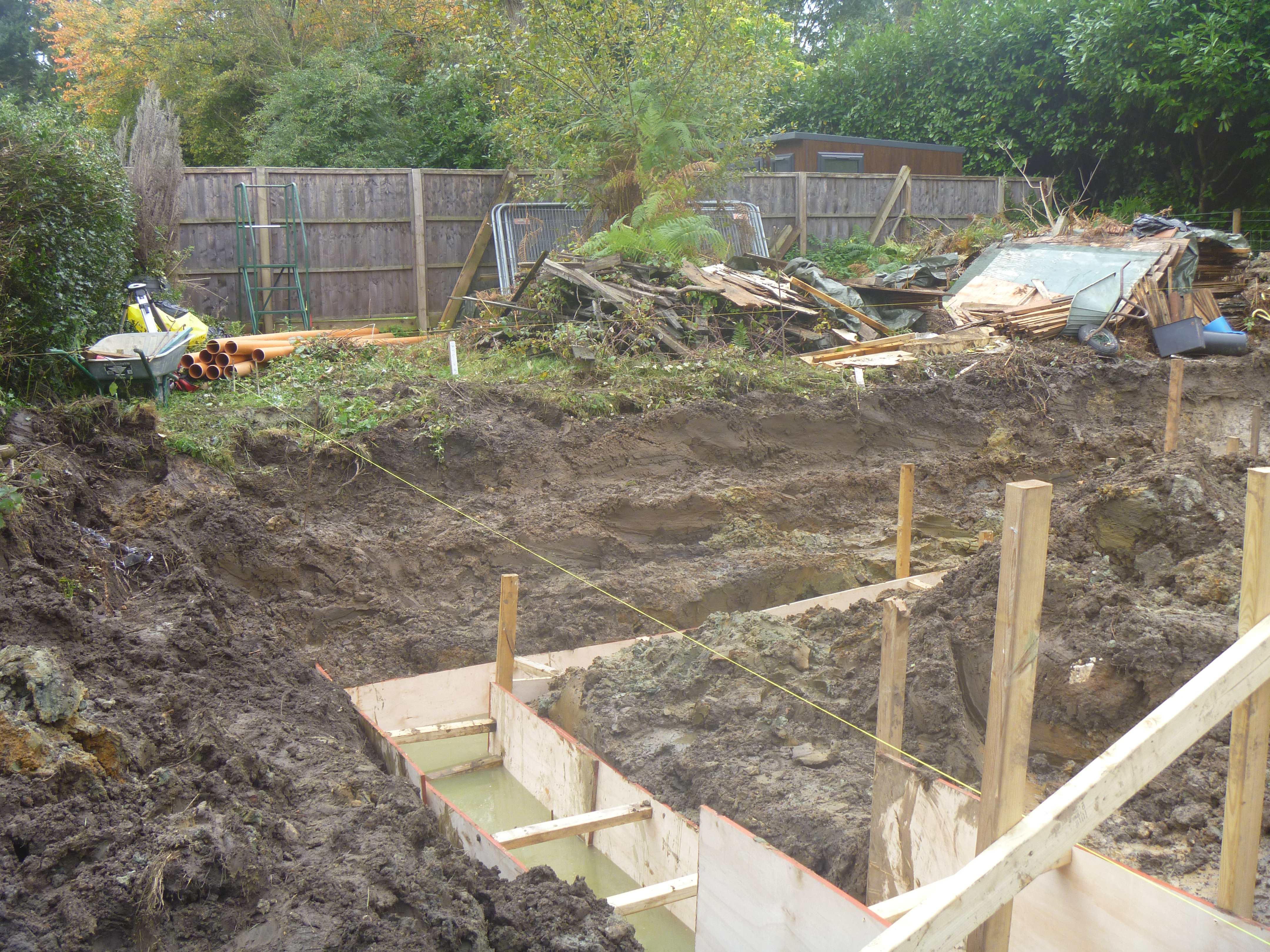
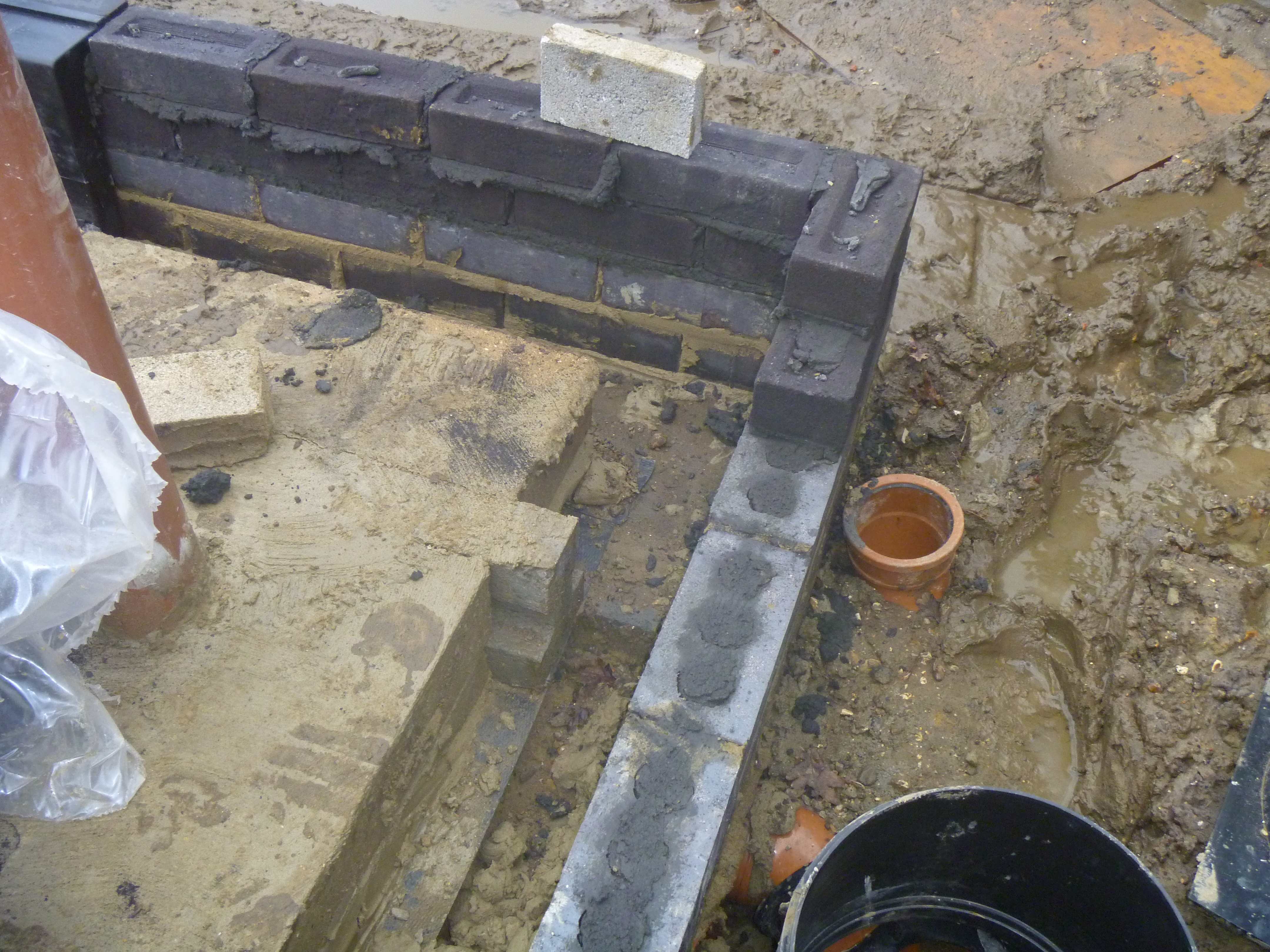
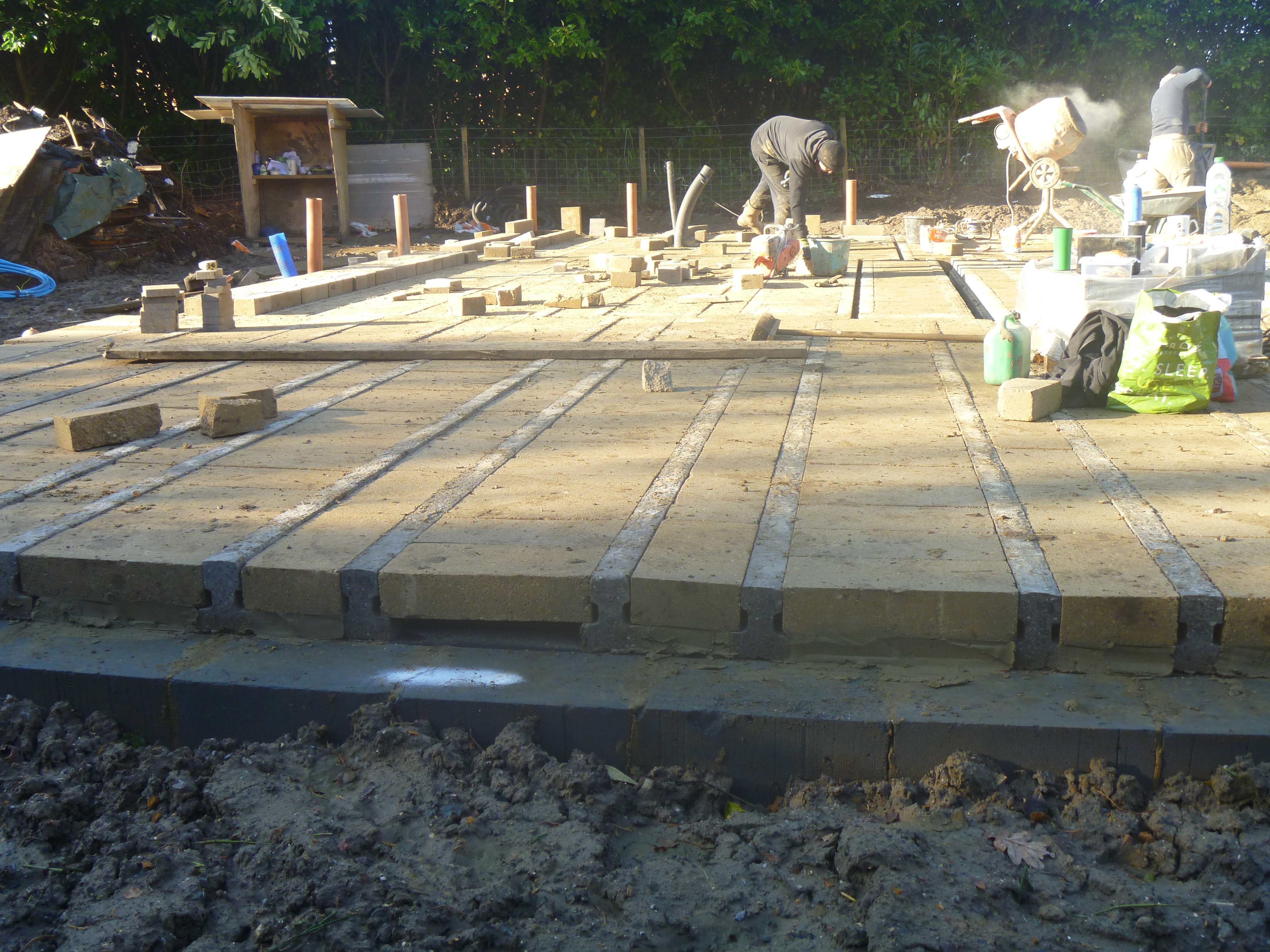
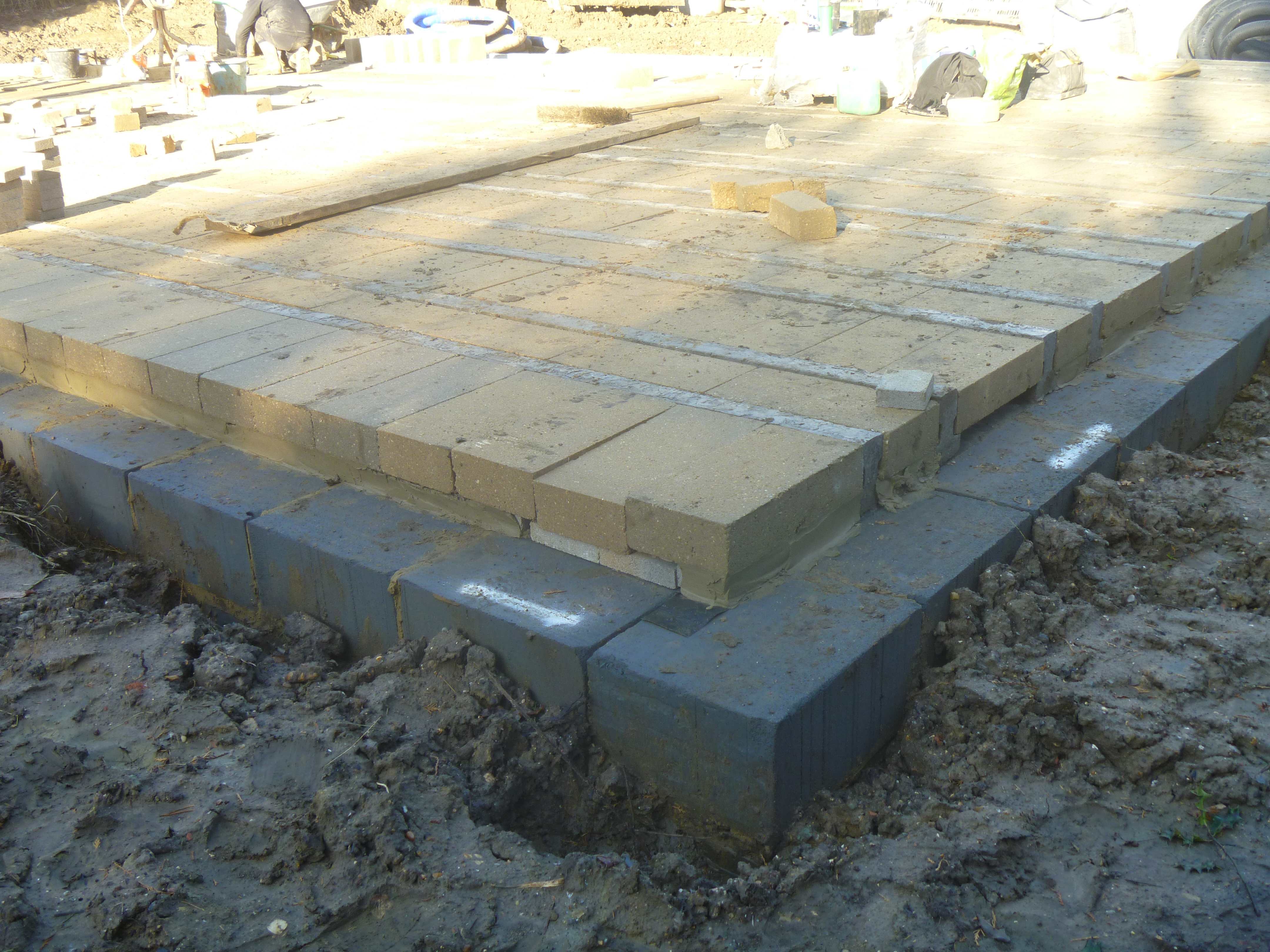
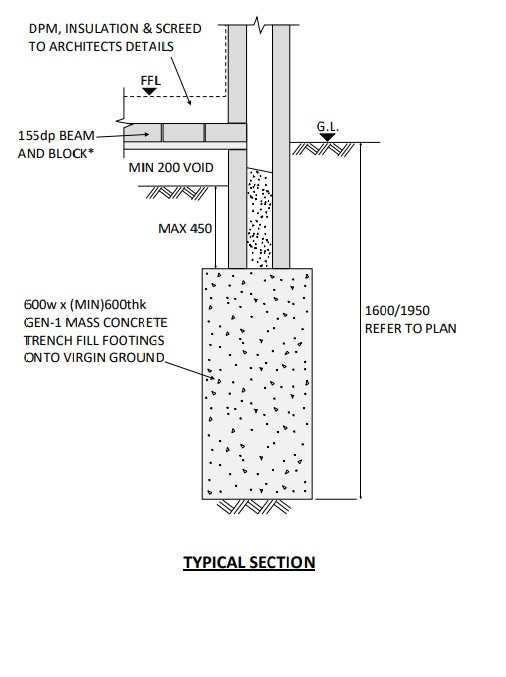
I only had a quick look at the reg.s, but they don’t seem clear. I think what you say is true for beams with exposed rebar at the ends, but not all beams have this. What do you think? This mess, below was built by my cowboy builder, before I got rid of him. He was supposed to build according to my drawings (2nd picture), but what I’ve ended up with is trench blocks going up above ground level. The beams rest on the trench blocks. There’s DPM beneath the beams, but it’s not really doing much, because it only goes (almost) as far as the end of the beams (& doesn’t go right to the inside of the trench blocks either). Also, the builder has bridged from the trench blocks to the beams with big dollops of mortar. This might not be such a cause for concern on most plots, but I have a very high water table, so water is going to be rising up through these blocks into my beams. I’d decided to build off the top of this mess, but lately I’ve been considering removing all the blocks, jacking the ends of the beams up with a trolley jack, putting some wider DPC in there & capping the beam ends with K-Kaps (picture below). Is this idea worth further consideration? It would be good to hear some opinions from those in the know, please.
-
Yes, I think you're right. The gap will be bigger than shown in the black diagram above, because the tray would go on top of the lintel on the outer leaf, but if this were a wide first floor window, with few courses above, I wouldn't expect beads to flow all the way across. So if you're doing it yourself (rather than relying on your brickie) you could cut some solid insulation, & get a good tight fit, or perhaps you could get the bead installer to pump in from the inside, directly behind the tray - probably a bad idea - I'm full of them.
-
I still think that. + a tray costs next to nothing, so why wouldn't you?
-
I'm just guessing, but I should think people use the other Catnic lintels - the kind with a thermal bridge, because they're cheaper.