MortarThePoint
-
Posts
2294 -
Joined
-
Last visited
Everything posted by MortarThePoint
-
@Nickfromwales and others have kindly pointed out on thread(s) the minimum size requirements for AAV on 110mm stacks, which to summarise I understand as 1no. 3" vent or 2no. 2" vents. However, what about the pipe size leading to the AAV? Can you have a 50mm pipe which steps up to 82mm where the AAV is? The area of a 50mm pipe is about 2,000mm2 and an 82mm valve would have to have a stroke of 7.6mm to open up an equal size area [1]. How big is the stroke on these AAVs? If less, should be OK to use 50mm pipe. In theory 😃. Am I on to something? [1] That area would in the form of a slot be more restrictive than a round opening by a good amount, but let's ignore that as the pipe has length.
-
AAV location (Durgo, Air Admittance Valve)
MortarThePoint replied to MortarThePoint's topic in Waste & Sewerage
It's worth noting that the 32mm, 56mm and 82mm Durgo brand AAVs are A1 but the 110mm one isn't: https://www.hunterplastics.co.uk/media/1791/bba-durgo-certificate-06-4325.pdf -
AAV location (Durgo, Air Admittance Valve)
MortarThePoint replied to MortarThePoint's topic in Waste & Sewerage
I can >=200mm above where they join the stack but not so easily>=200mm above the basin overflow which is a fair bit higher -
AAV location (Durgo, Air Admittance Valve)
MortarThePoint replied to MortarThePoint's topic in Waste & Sewerage
It's occurred to me that the shower wouldn't be an overflow point as its trap will probably have a non-return valve. I think I'd want the AAV to be higher than the bath's plug hole [1] and probably higher than the toilet pan's rim [2]. [1] The basin joins the same branch as the bath that then joins the stack below the toilets branch. I think that means the basin can't overflow the AAV without already starting to fill the bath. [2] A blockage between where the basin branch joins the stack and the toilets branch joining the stack would overflow the toilet pan before reaching the level of the AAV. -
AAV location (Durgo, Air Admittance Valve)
MortarThePoint replied to MortarThePoint's topic in Waste & Sewerage
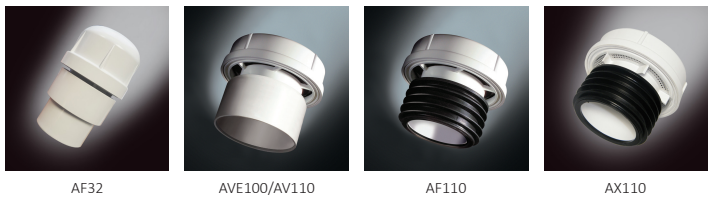
Thanks @Marvin That is guidance for Polyvalve which may not be a A1 rated which apparently does allow installation below the spill-over level. See below from Floplast. Annoyingly, their picture doesn't actually show it lower than the basin, but the Minimum 200mm and text makes it reasonably clear. Even if it is an OK approach, I would still have to convince the BCO though. "11.5 FloPlast AVE100, AV110, AF110 and AX110 valves must be fitted in a vertical position 200 mm above the highest branch connection (see Figure 3). As FloPlast valves are A1 designated to BS EN 12380-1: 2002 it is possible to locate them below the lowest reservoir being vented." "1.8 FloPlast AAV’s are designated A1 in accordance with BS EN 12380: 2002 and can be fitted below the flood level of connected appliances, in air temperatures between -20°C and 60°C." https://www.floplast.co.uk/uploads/related-documents/BUsohExhe3Mqhq6jYrAqs9kLySHpgjrtGe5hGvjo.pdf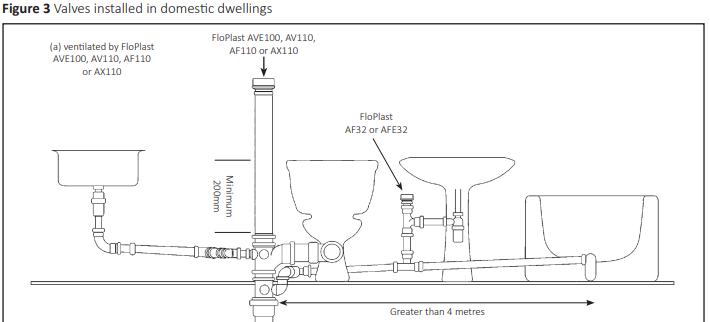
-
I have a soil stack in a bathroom which is taking waste from a bath, shower, two toilets (one coming through the wall) and a basin. I know that AAVs are supposed to be mounted >=200mm higher than the highest entry to the stack which I can do where I want to put it in a boxout next to the toilet. However, does it need to be 200mm above the highest entry point to the waste system that feeds the stack? That is the basin which is higher than where I want to fit the AAV. In terms of the system filling up, it would overflow into the shower and bath before hitting the level of the AAV so does that mean it's OK to have the AAV where I am proposing?
-
Squeaking Joist / Noggin / don't know what
MortarThePoint replied to MortarThePoint's topic in General Construction Issues
Following further investigation, I am pretty sure it is the deflection head. The metal deep track rubbing on the OSB I think. Below is a video. You can hear the squeak as I pull and push on the screw through the deep track. For extra detail, the screw is from attaching a piece of batten that clamps the acoustic partition roll so no way that itself is the source of the noise. I can also push directly on the track having pulled it up using the screw and get the squeak. The amount of movement is tiny as I can't see it by eye. As viewed, the wall has a single skin of 15mm plasterboard at the top of screen and 11mm SterlingOSB + 15mm plasterboard on the other side (bottom of screen). The room on the bottom of screen is a bathroom, hence the OSB as well as the green VCL. I don't think I can do anything about this unfortunately. The wall downstairs is now plastered. I don't have access from above all the way along the deflection head and it's not like I could glue that anyway as it would stop it from doing its job. Rats! I guess I'm stuck with it. I'll get the wife to wobble around on top of it and listen in the rooms below to see if I can hear it. At least the OSB is on the bathroom side and so that's less annoying than the bedroom side. but that's on the hope that the APR and plasterboard deadens the sound. VID-20240611-WA0000.mp4 -
Squeaking Joist / Noggin / don't know what
MortarThePoint replied to MortarThePoint's topic in General Construction Issues
Do you think yours was the joists rubbing together or the joist rubbing on the hanger/nail? I'm not sure I could do that as I think the nails will have opened up holes in the timber too large for the screws to grip properly I wondered about dribbling PVA glue into the area a few times and see if that binds everything up -
Squeaking Joist / Noggin / don't know what
MortarThePoint replied to MortarThePoint's topic in General Construction Issues
It's prior to boarding that area so definitely something to do with joists, noggins or wall. The two plies of the 2-ply joist are nailed together. Can't feel any relative movement between the plies. I guess it's easy to add some screws as well so I'll try that, but I'd be surprised if it works. -
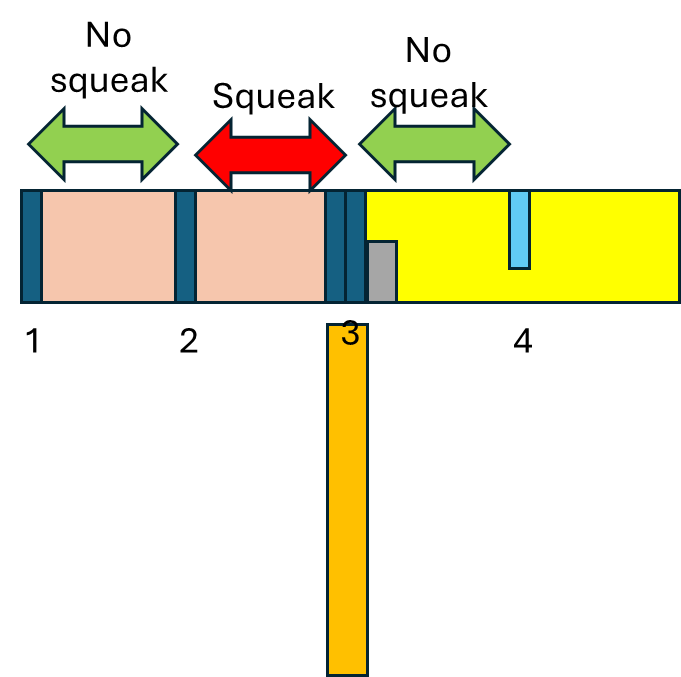
I am boarding out our loft space which is to be one large room. There is one annoying joist pair (actually bottom chord or RIR truss). If I move my weight from one to the other there is a squeak sound. If I move my weight from a neighbouring joists on the other side onto each there isn't a squeak. There is a wall (C-studs, one side with just plasterboard and one side with OSB and plasterboard) under this area. I think it is under the 2-ply joist that forms half of the squeaking pair. The wall has a 10mm deflection head. Below is a diagram with the joists in blue (one is a 2-ply), noggins in pink, perpendicular joist in yellow attached with a hanger (grey) and wall in orange. I am struggling to work out where the squeak is coming from and would like to address it before boarding over. Once the boards are down in this area I figure there'll be nothing I can do to stop the squeak. I wondered if it was the deflection head, but if it is that then I would expect there to be a squeak rocking my weight between 'joists' 3 and 4 as well. Actually, thinking about it again, 'joist' 4 is actually noggins off the yellow joists which run off joist 3 so maintain a load on 3. The noggins between joists 2 and 3 look sturdy. The hangers are extensively nailed (yellow joists pre nailed to 2-ply joist before hangers fitted). Any suggestions as to how I should hunt down the source of the squeak. I have had someone listen quite closely whilst I rock back and forwards but we haven't worked out where it's coming from. Section view: Here's a plan view:
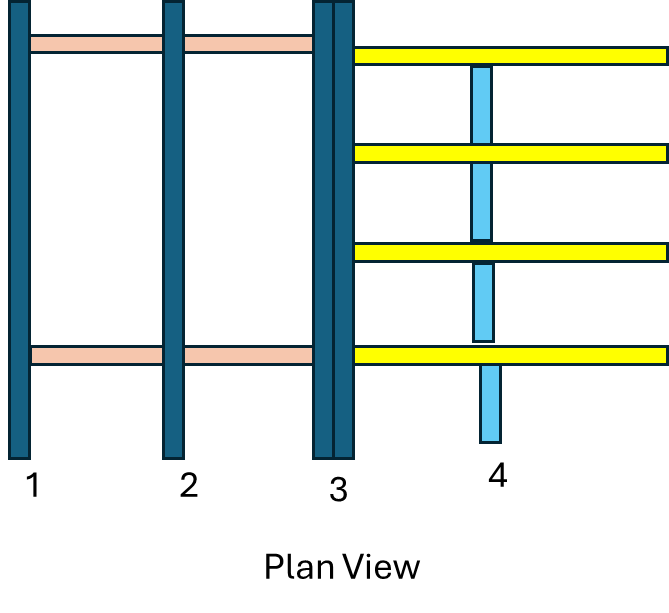
-
Thinnest and strongest blocks for partition walls?
MortarThePoint replied to MariaD's topic in Brick & Block
Key factors for sure and any lateral force needs to first overcome the compressive force to start putting joints into tension. But not just mass and gravity. The narrower the footprint the easier it is to push over. Edge and top restraints would be key. Another aspect is the allowed deviation of 8mm is 16% of a 50mm block width. 50mm Thermalite block looks to only weight 3kg so that's just 72kg plus mortar per m of wall which is comparable to my weight. -
Thinnest and strongest blocks for partition walls?
MortarThePoint replied to MariaD's topic in Brick & Block
Use 100mm blocks. Lots of suppliers selling 75mm blocks for more than 100mm blocks. Higher strength blocks are more expensive so that's a factor. The 'stiffness' of any membrane goes with the cube of its thickness so a 75mm wall is massively weaker against lateral forces. Cost - 100mm better Sound - 100mm better Strength - 100mm better Giving back 25mm of room - 75mm better I'm not sure I'd want to lean against a wall made of 50mm blocks. -
What to do with Excess/Cheap Power?
MortarThePoint replied to puntloos's topic in General Alternative Energy Issues
I really like the idea of hydrogen generation (hydrolysing water) and storing that for winter heating. I looked into it a few years ago but the tech just isn't there yet. -
@Mr Punter did you use noggins with your 18mm T&G OSB?
-
+1, the t@g supports the edges, you only need noggins if square edged sheets That's not what the Sterling osb installation guide says though. Might be right for chipboard
-
Thank you! A bit too far out of my area but very kind of you to offer it
-
I'm going to lay T&G OSB and with its long edge perpendicular to joists, any short edges need to land on a joist or I have to add noggins. Same with chipboard I think. If it wasn't for the T&G, I think I'd just take the wastage and cut the sheets to fit the joists rather than adding noggins. What's the best way to do this. I can think of three options in decreasing robustness order: H shape with two noggins between joists and under board's long edges, then a noggin between those where the board's short edge is Just the two noggins between joists and under board's long edges A single noggin under the board's centre line parallel to the board's long edges
-
Really in the cost of the whole build? and it does a good job ? I've recently come across Stixseal which is a cheaper hybrid adhesive. No idea if any good and like so often it's tempting to stick with something you know
-
Of course you're right, but when you compare it to the non-flexible construction adhesives it is more expensive but worth it
-
Did you glue between the joists and boards?
-
It's a story any married man has had to read many times
-
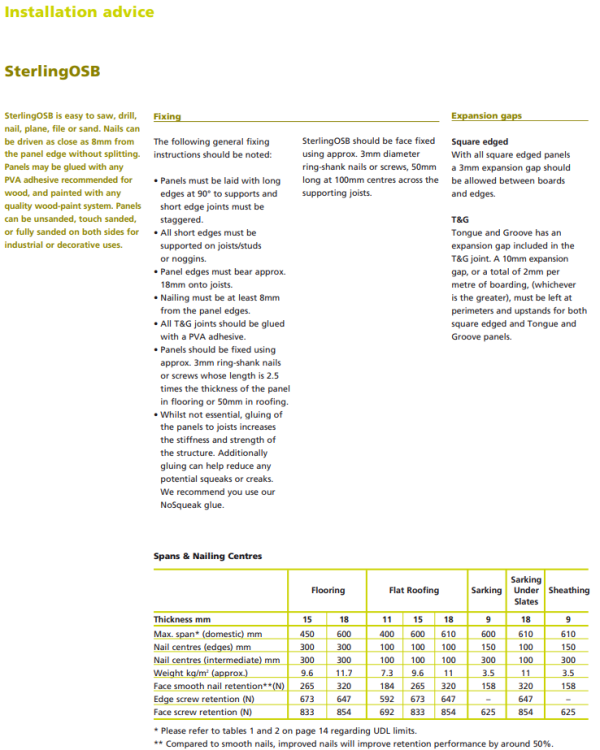
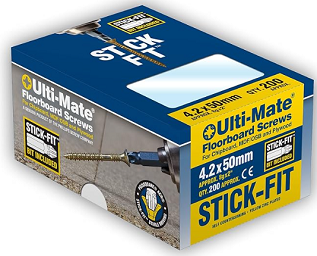
This is an old thread, but a useful one and it doesn't feel right to start a new thread asking a similar question given the good advice here from the likes of @Nickfromwales, @joe90, @PeterW and others. I'm trying to avoid PU (polyurethane) adhesives which is a long story, but all of the expanding adhesives look to be that. I don't want squeaks and I can see that the PU glues would work a treat at that. It's expensive, but I am wondering about using CT1 instead as it is important to have something that stays flexible. How does that sound? Can anyone think of a better choice? Like @Dudda I am using T&G OSB, not chipboard [SterlingOSB so zero added formaldehyde]. Their OSB installation advice is to use PVA glue in the T&G joints. It also says "We recommend you use our NoSqueak glue" which I see is a PU glue (link). Other glues they have include Caberfix D4 (PU) and Caberfix Joist&Joint (PU). For the T&G joint I can happily use a PVA like Everbuild D4 or 502 Wood Adhesive. I've used quite a bit of those and they're good although the bottles are awful. I can appreciate the benefits of an explaining glue, but it's the PU aspect. I'll use loads of screws (100mm c/c) along the joists. I like the look of the Ulti-Mate or Floor-Tite ones. If I lay the label's famous 6mm bead of CT1 it goes 9.25m. That would need about 20 tubes of CT1. It may turn out it squeezes out too much at that width in which case it may go further. https://www.falconpp.co.uk/media/1060/osb-sterling-brochure.pdf
-
2 days for the walls of one room, or 2 days do do the walls of all three rooms? If the latter, that's about 2+1+1=4days total to do all three bathrooms.
-
Thanks @nod ! So it's sounding like the 3 bathrooms should take the tiler 12 days total (3 days per room for walls and then 3 days for all floors)? Or was it 9 days total including prep and grouting? I've been quoted £52/m2 for bathrooms to include adhesive and grout and then £12/m on top of that for laying decoupling mat (inc adhesive but ex mat itself). That's a lot more than I had expected and so I was wondering if I was underestimating the time it would take. The rooms aren't complex (i.e. no alcoves). Looks fantastic. 25 - 30m2 per day at £22/m2 is really good money ~£600/day, but I guess that doesn't include the prep work. I see yellow decoupling mat. Is that Durabase or Nassboard?
-
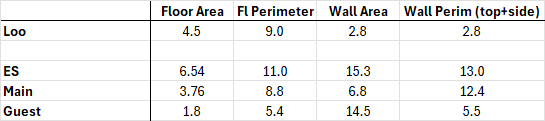
@nod and others, I was hoping to sanity check how many days of effort I should expect a single tiler to take tiling three bathrooms and a toilet. Shower areas are pre tanked with Aquaseal and shower trays are fitted. Walls are tiled up to about 1200mm and that's just into the bottom of one window per room with a tiled cill. Bog standard 6" x 6" tiles. There's a bit of boxing out which is ready to be tiled. The floors have underfloor heating, so decoupling mats to be fitted too by the tiler. all measurements m2 or m. A rough idea of how long this will take would be really helpful