Onoff
-
Posts
21060 -
Joined
-
Last visited
-
Days Won
206
Everything posted by Onoff
-

Help with kitchen renovation/ 1st house.
Onoff replied to zoothorn's topic in Bathrooms, Ensuites & Wetrooms
Splashback.....wasn't that a track by Imagination? -
Help with kitchen renovation/ 1st house.
Onoff replied to zoothorn's topic in Bathrooms, Ensuites & Wetrooms
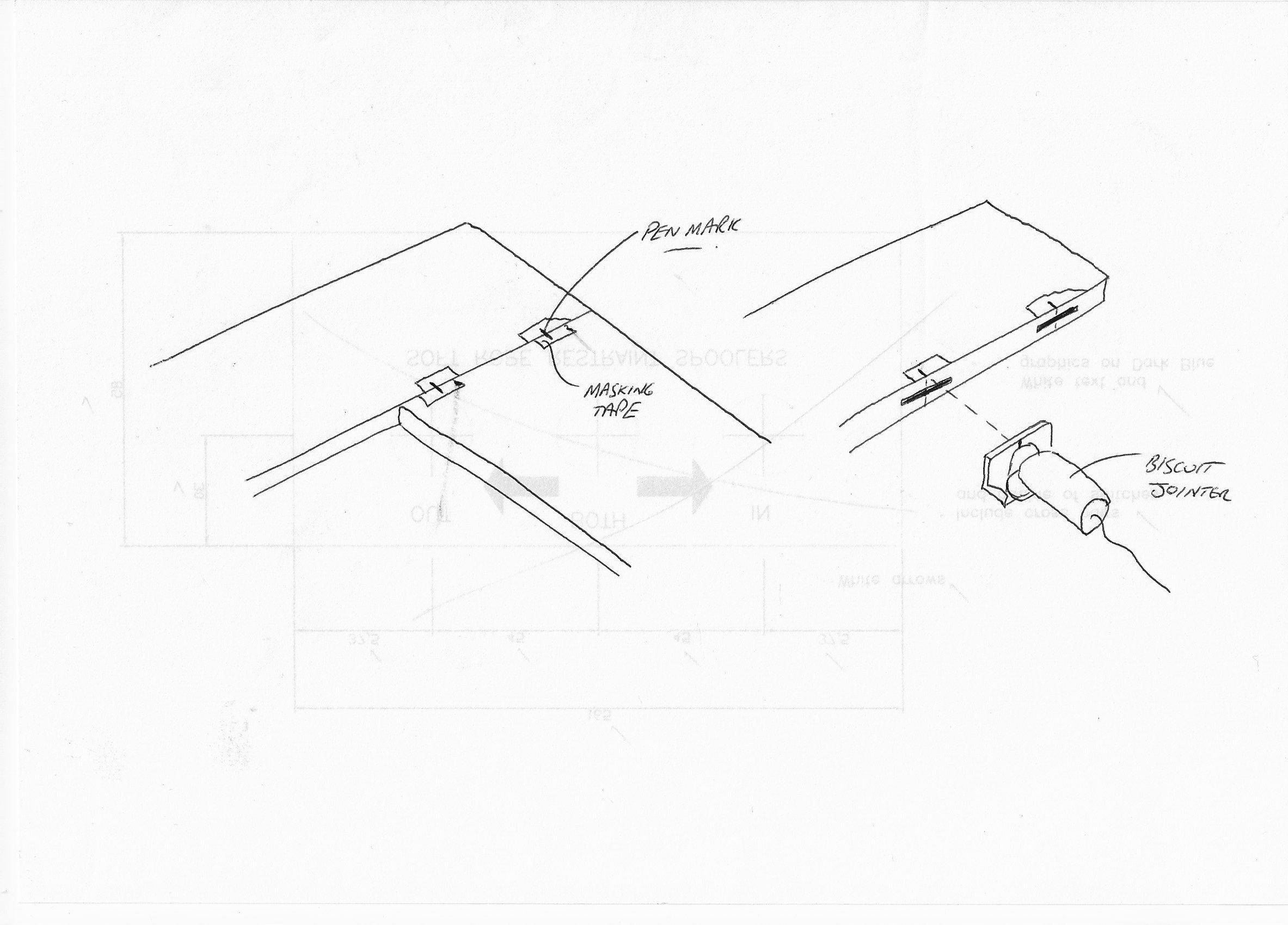
Biscuits joints... I butt the two boards together the use bits of thin masking tape either side of the join. A pen marks across the join onto both bits of tape. Do for however many biscuits you're having. Separate the worktops and draw a line down the face. Centre your biscuit joiner on the line. When they go back together it's all bang on:
-
Help with kitchen renovation/ 1st house.
Onoff replied to zoothorn's topic in Bathrooms, Ensuites & Wetrooms
Fair point. Maybe it's PROPER Planning Prevent P**s Poor Performance? -
Help with kitchen renovation/ 1st house.
Onoff replied to zoothorn's topic in Bathrooms, Ensuites & Wetrooms
I always thought it was Pi$$ Poor Planning Prevents Poor Performance? I mean, Prior Preparation is all well and good but if it's Pi$$ Poor..... -
Help with kitchen renovation/ 1st house.
Onoff replied to zoothorn's topic in Bathrooms, Ensuites & Wetrooms
You could camouflage that tap to make it stand out less:
-
Help with kitchen renovation/ 1st house.
Onoff replied to zoothorn's topic in Bathrooms, Ensuites & Wetrooms
Looks a good job that. The tall tap will be ideal for home brewing & rinsing demijohns! Where does Peter say not to oil? He means just get rid of any oil on worktop surfaces you want to glue together! Thought it had been decided upon ages ago NOT to jig and bolt these worktops as so "thin"? You are going to have to think very careful as to how to protect that little upstand of plasterboard behind the sink. It's not moisture resistant pb and even then that's only "resistant". Maybe some exterior grade/waterproof PVA whilst you decide? My first thought is maybe tile the upstand and maybe the whole sill? Wiser people will chip in with advice shortly I'm sure. -
Feel sick with worry about escalating build costs
Onoff replied to Jude1234's topic in Costing & Estimating
Gumtree and Preloved are two sites I've had some cracking bargains off of. There's a small fee to pay on Preloved but well worth it. -
My 7.3KW induction is wired in 4mm butyl (from TLC). https://www.tlc-direct.co.uk/Products/CA4TQ3slash50.html It's on the original hob supply that's 6mm2 up to the ccu. The hob instrictions said to wire in "3x2.5" which I wasn't happy with guess they were applying diversity. The 4mm was a pig to get in though, Actually fed from a 30A C50. A 32 would have been belt and braces but hey, it's a C50 - they never trip anyway!
-
Help with kitchen renovation/ 1st house.
Onoff replied to zoothorn's topic in Bathrooms, Ensuites & Wetrooms
I only really work now on niche industrial 3P and the associated control stuff tbh. Hate domestic. My own place is like a mechanic's car! Not totally true, the bits I've done are well planned, tested and recorded. Been in the loft today tracing the original downstairs ring on the back of putting in a dedicated hot tub socket close to it. Been telling SWMBO of late not to overload a spur on the downstairs ring (actually in the kitchen) with the dw, wm and now the F**CKING HOT TUB! Keep catching her doing it and the response is "I keep checking if the socket's hot!" Parts of the ring are under the dormer, under felt covered roofs left in situ when the place was re-roofed in the 80's. JB's everywhere! The usual loft "tat" atop the flat roofs. The more accessible runs are under glued T&G floors with carpet and furniture on! I suspect vermin damage somewhere. SWMBO + youngest out tomorrow so I'll get some testing done in peace hopefully. Hate domestic...did I mention that? -
Nah, possible problem with my ring at the mo. Looking into it now.
-
As @newhome says. MTFU!
-
Total energy consumption per m2 per annum
Onoff replied to NSS's topic in Energy Efficient & Sustainable Design Concepts
Off thread I know but just saw this in the CPC flyer that dropped on the mat: https://cpc.farnell.com/swissvoice/eth-pstn/invoxia-voice-bridge/dp/TE08194? Aside from the cost can't decide whether it would help in your situation... -
Help with kitchen renovation/ 1st house.
Onoff replied to zoothorn's topic in Bathrooms, Ensuites & Wetrooms
August 21st, p26 of this thread, it was you you suggested it was "35mm or s'thing". Measure with a cheap vernier caliper, or look at the internal diameter of the rubber washer that came with it etc. -
Help with kitchen renovation/ 1st house.
Onoff replied to zoothorn's topic in Bathrooms, Ensuites & Wetrooms
Though they don't advertise it I think NAPIT still do their "Just 8" scheme whereby you can annually verify just 8 notifiable jobs. Designed for retirees and say college lecturers who just want to keep their hand in / be on a par with their students and do the odd job for family and friends. Worth a look. -
Help with kitchen renovation/ 1st house.
Onoff replied to zoothorn's topic in Bathrooms, Ensuites & Wetrooms
Not getting angry at all. Been there, done that! It's very difficult advising somebody. For a start it's trying to condense someones's learned knowledge, gleaned over years, into just the bits the DIY'er wants to know. They then don't have the benefit of an "old hand" looking over their shoulder as in the electrician/electrician's mate to tell them "Well done!" or "That's crap, do it again!". Then there's the whole dexterity thing that can only be learnt. It's OK saying "stick all three wires into the L terminal" but the trick is to know how much to strip, how not to nick the copper, when and how to fold a solid core back on itself so as to "double up" etc. Luckily I err on the side of thinking it's better to maybe advise someone the "right" way to do it in the hope the end result if they do have a bash will be at least "safer" than if they had gone in blind. You then get into having the proper, often expensive tools and test kit and so on as well as knowledge of Building Regs & 7671. -
Help with kitchen renovation/ 1st house.
Onoff replied to zoothorn's topic in Bathrooms, Ensuites & Wetrooms
Can't find the 8th edition cheaper but this is good imo: https://www.ebay.co.uk/itm/17th-Edition-IET-Wiring-Regulations-Inspection-Testing-and-Certification/151787557359? As is this: https://www.wiringregulations.net/pub/Electricians-Guide-to-the-Building-Regulations-5th-Edition-9781785614682.aspx? -
Help with kitchen renovation/ 1st house.
Onoff replied to zoothorn's topic in Bathrooms, Ensuites & Wetrooms
Ideally a gutsy cordless. Depends what's the walls are made of. If it's lightweight, aerated concrete blocks like "Celcon" then your cordless MAY do it., but if not... Isolate the circuit that that socket's on. MAKE SURE IT'S DEAD!. Plug extension lead into another socket on a different circuit....does the cooker switch (hopefully on a separate circuit) have a socket? Tape / clip the existing wires out of the way Prise/knock out one of the 20mm knockouts in the back of the existing back box. Drill through at a shallow angle. As to whether it's a ring, the proper way is by inspection and testing: Very roughly; isolate and test for dead. Prove your tester thereafter on a known source of supply; proving unit etc. Using a low reading ohmmeter, check for continuity of the ring final conductors i.e. P1/P2, N1,N2 then CPC1/CPC2. Cross connect the ends of the ring at the cu and test at each socket on the ring. Reading should be nominally the same at each socket on the ring. High readings should show up loose connections or spurs. Open circuits may indicate reverse polarity etc. Too much to teach you tbh. Go to college? Buy a book? Brian Scadden's stuff (imo) is a good, simple and informative read, the IET guide to the Building Regs book is good, Guidance Note 3 and so on. But.....at a push this: A ring main socket has generally two bits of 2.5mm2 T&E cable going to it, If you disconnected those two wires from the face plate they would both still be "live" as each "leg" goes back to likely a 32A breaker at the consumer unit. In rough terms then at each ring main socket the load is shared between each leg. So you isolate your power and disconnect the socket. Make safe the L,N & E of one leg (connector blocks, tape etc) and connect the remaining leg back to the socket. Power back on, does the socket work via that 32A breaker? If so that says it's likely going back to the cu. Disconnect and make safe the leg you know is "live". Do the same with the other leg. If both are showing as "live" it's likely it's a ring. If one leg is dead then it could be a spur or there's a break further down the line. None of this is certain and as you appear not to have even the most basic knowledge of domestic electrics there's great scope to kill yourself. Sorry, but that's the way it is, I'm not being rude. -
Discount Offers of the Week
Onoff replied to Ferdinand's topic in General Self Build & DIY Discussion
FREE delivery too! -
Discount Offers of the Week
Onoff replied to Ferdinand's topic in General Self Build & DIY Discussion
2 free tickets to the Home Building & Renovating Show via TLC: https://mailchi.mp/tlc-direct.co.uk/get-your-free-tickets-to-the-home-building-renovating-show-at-excel-london?e=a60125d76b -
Help with kitchen renovation/ 1st house.
Onoff replied to zoothorn's topic in Bathrooms, Ensuites & Wetrooms
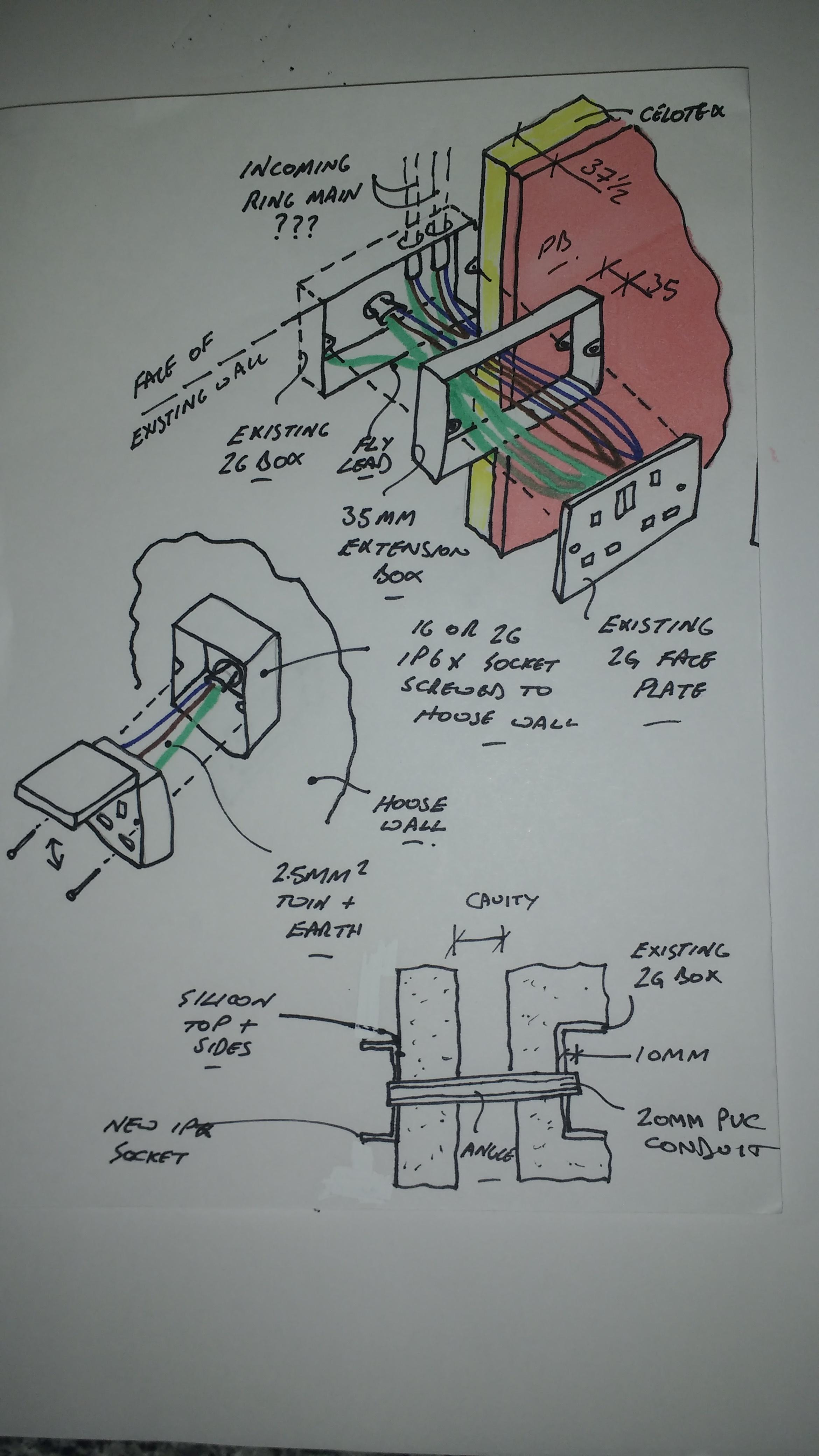
The existing socket stays where it is and in use. A short, new length of 2.5mm twin and earth connects it to the new outside socket which can be one or two gang. Something like this: I'm making assumptions that your ring main is RCD protected and that it is in fact a ring main. Your electrician would be able to advise better.
-
You must get off on waiting then!
-
Help with kitchen renovation/ 1st house.
Onoff replied to zoothorn's topic in Bathrooms, Ensuites & Wetrooms
Dunno, I'd prime and paint with a washable paint.... Rollered on neat PVA maybe? Anyone? -
Help with kitchen renovation/ 1st house.
Onoff replied to zoothorn's topic in Bathrooms, Ensuites & Wetrooms
If you do leave it without pb under there it's up to you but at least try and foam all those "2mm" gaps. Of course pb will provide: - another layer against draughts remember why you started this! - another line of defence against the Mickey Mouse Club Not forgetting we''ll know! -
Help with kitchen renovation/ 1st house.
Onoff replied to zoothorn's topic in Bathrooms, Ensuites & Wetrooms
Catch Blue Mountain State on Netflix if you can. (Well if your sense of humour is at about the level of the American Pie films, or slightly below...like mine). -
Help with kitchen renovation/ 1st house.
Onoff replied to zoothorn's topic in Bathrooms, Ensuites & Wetrooms
Showing that even somebody who vagazzles their nails can do it! NO WIRES NEED REMOVING!