


ToughButterCup
-
Posts
11830 -
Joined
-
Last visited
-
Days Won
101
Everything posted by ToughButterCup
-
Read the instructions yet? Y / N ? Y Re-read them carefully. Do what you're told to do. Success? Y / N ? Y Send a donation to BuildHub N RTFM Send a donation to BuildHub Still SNAFU? Y Need access to the pipe for maintenance? Y / N ? Y Put a rubber band round the cover (to form a weak seal) where it slides into the pipe. Test. Adapt. Retest N Araldite Still SNAFU ? Y Leave the bloody door open. Send a donation to BuildHub
-
Vous n'avez que de lire. Et de la patience.
-

So we are going to committee..
ToughButterCup replied to deancatherine09's topic in Planning Permission
I had that technique for a while. And then - because one of them grows beautiful roses - I started complimenting him on his care for the rose thats outside his front door. One day I got a grunt in return. Then a wave. Later that year, he really needed my digger: but couldn't bring himself to ask for me to tow his bogged-down car out of his water-logged (human faeces-filled) 'garden' - the rain had made his open cesspit overflow. The car was parked on a 45 degree slope. His wheeled back-hoe couldn't manage the job. He buys and sells cars .... I drove the digger round to his gate and waited ... couple of minutes later he was there. 3 years later, he came and apologised. -
So we are going to committee..
ToughButterCup replied to deancatherine09's topic in Planning Permission
@flanagaj, it's a rite of passage. It's a hardening (cintering?) process. On hearing of our application - and subsequent success, our immediate neighbours Were gratuitously rude - in person - in public made ridiculous Trump-like baseless claims about our intention to build told lies about our intentions to anyone who would listen made false representation to the Planning Process at an open public meeting nailed a communal gate shut, denying us access to a communal pathway across his property ( photo here on BH somewhere) trolled me here on Buildhub Eight years later they have forgotten their behaviour. Speak civilly, wave occasionally, chat now and then. One neighbour came to apologise, and ask for help. That took guts, and I admire him for it ( posted here on BH about that discussion) They embarrassed themselves, and want to forget. To me behaviour such as theirs is a simple symptom of their lack of emotional intelligence. And thus need to be forgiven. But not forgotten. -
Rough tiles are no problem: a glug of bleach, a brief scrub, wait a minute, rinse. Done.
-
So we are going to committee..
ToughButterCup replied to deancatherine09's topic in Planning Permission
Unless you have mis-read the objections submitted, they are likely to be Immaterial to the Application. The Planner is highly unlikely to Refuse the Application citing Immaterial objections because if he (she) were to do that, (on those grounds alone) success at Appeal is a foregone conclusion - costs awarded to the Applicant. Planners are used to unpleasant people. -
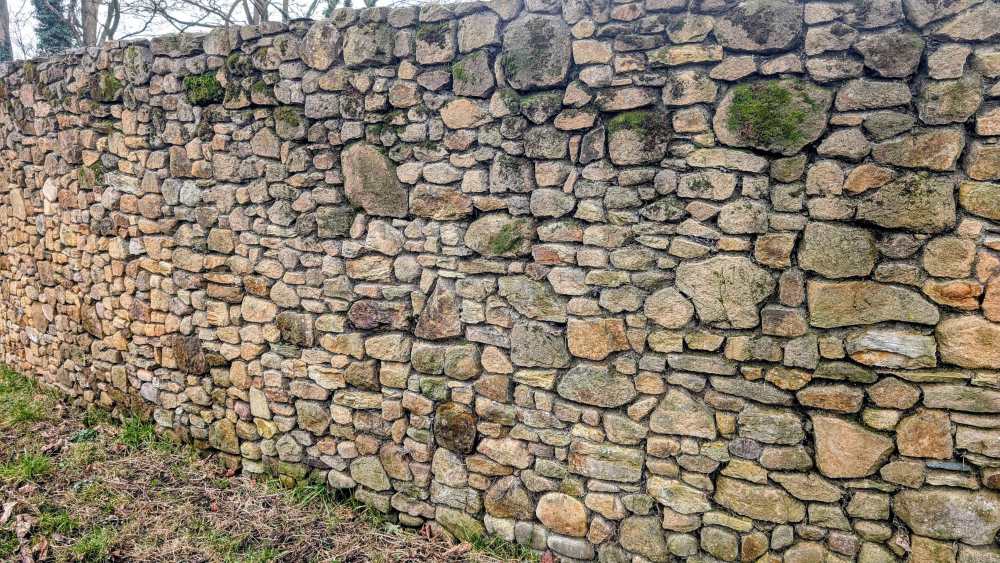
Here it is. Just looking at this makes me feel tired. On the other hand those small cobble are everywhere: some are mere sandstone ..... . The owner says it all needs pointing. Unlike your setup @saveasteading, everything is _on edge_ rather than flat. And so some of it will delaminate over time as frost gets to work on those bits of stone where the layers are set on edge. I've never seen this style of wall build before. Has anyone else seen something similar?
-
Cobble sorting. Patience. Focus. Time. Well done. Takes guts that - I lost that level of focus in the maelstrom of what I now know is normal for housebuilding. Our neighbour has taken that idea one step further down the evolutionionary path (we've built on glacial till) and built a wall with what I call sub-cobbles. It really does take effort. I'll post a photo of it
-
Rats are worthy enemies For our troop, we now have - employ - 3 tomcats: two real hunters and one um, well , nice boy. A decent German air rifle, some night vision equipment and night sights. They are currently keeping their heads down. I'm getting the local rat pack to pay us a visit this coming autumn. Where we are, we'll never be far from them. It's just a question of constant vigilance especially in late summer and early autumn. Good luck @Big Jimbo
-
My sympathies. Ask any organisation to do more with less, and this is what you get.
-
Welcome. First nudges - tip - hint- pearl of wisdom - truism .... Work out who's involved in your build networks. Talk to them. @Pocster is tame despite what you might hear on the rumour mill
-
First toilet flush of the day making strange noise
ToughButterCup replied to Adsibob's topic in Waste & Sewerage
Well, hmmmmm . Just pop up on the couch would you please - knees to your chest @Adsibob, it gets us all in the end mate..... -
Potential Self Builders in Lincolnshire
ToughButterCup replied to TyroBuilders's topic in Introduce Yourself
Hold my beer. First off, here's a photo of my pet GCN - the grandchildren have called her Petula Just kidding ( it's an offence) Summary. Newts can be a problem, but need not be. It's how we humans deal with the issue that makes the difference to them - and us. Here's most of the stuff I have written about the humble GCN. Deal with the matter through a RAMS Method Statement You will hear the refrain offered above (shoot first : ask later ) in every country pub anywhere in the UK. Of course, since they aren't rare - not even slightly rare - it doesn't matter. Kill them if you must - or rather try to kill them if you can. Because ( to use the technology suggested above) you'll be spending a massive amount of money on Sodium Hypochlorite. There aren't enough days in the year, nor is there enough bleach in the world to kill your local population. I have found GCNs deep underground, under shed foundations, in walls, in our coal hopper, on our kitchen floor, in our tool shed, under our heavy vehicle ground protection mats. If they are there, you won't see them. They are photophobic, and black-coloured ( except the belly) . Have you ever tried to find you black mobile phone thats been dropped on the black car floor carpet? Looking for black objects on a black background ain't easy. And if you can see them, you are over-run with the little blighters. If they are in your locality, check the road surfaces after heavy rain on a warm late Spring night and morning. They'll be road-kill: round our place we find a good few on the mornings when they are moving from their hibernacular to the local ponds. March is a good time. I made a massive mistake with our children. They were brought up to love newts ( Ever seen a baby newt ? - Its like having a live chip of translucent jade walking on your hand) . Off they went T shirts and shorts, bucket, net , knobbly knees, snotty nosed to all the other ponds around, fished some out and brought them back to our pond . 25 years later, I'm trying - without success - recoup their pocket money. Why? Because it cost a good few thousand to deal with our local population of GCNs. BEFORE we could start. In our house, the word Ecologist is always followed by throat clearing and a hefty attempt at reaching the spitoon from across the kitchen. Hah! and thats not the worst of it! The next door neighbour made a Planning Application a year after we did. I still feel the hackles rising on my neck when I tell this story, so rather than re-tell it, here's a link to it Conclusion. Choose your Ecologist with great care . If GCNs are present, INSIST on a simple RAMS statement, and don't employ an ecologist who disagrees with that type of Method Statement. Cost? zero Delay, Zero. Sorry @SteamyTea, @nod - you're wrong. Apologies for my rudeness. Welcome @TyroBuilders . At a guess - aviation sector yes? - Some very similar MOs in this sector : like - leave the ground and you are going to have to land. Start a build and you're going to have to finish. Sunk costs and all that.
-
@WalterB, I'm not an expert . Merely fairly acquainted with local prices. At a guess without VAT
-
If anyone is going onto a roof ridge, you might as well get everything done: inspect, re-bed. Price too high? Lets assume good H&S practice: Ancillary works £200 ( 2 * half days, set up , pack away) Materials £100 Scaffolding £600 ish Day rate £200 per person ( *2) =£400 Profit element 10% £130 Its a little over the top for re-bedding, and probably overpriced for re-pointing... It's easier and might be cheaper to dry-vent the ridge
-
Contesting final invoice - please help!
ToughButterCup replied to Tom's topic in General Self Build & DIY Discussion
Talk first. Listen. Pay based on the listening exercise. Its not easy to hold that kind of conversation, which is why most people try to avoid it. (And why many contractors and customers don't answer their phones) Not talking makes the problem worse. If you don't talk first - the whole thing risks escalating out of all proportion. If (say) this issue gets worse still and lawyers get involved the first question they will ask is - did you talk to the contractor first? By the time things get to paper, nobody should be surprised. When things go wrong its ALWAYS a first class opportunity to show some character. Or guts if you like..... Here's a framework to help you think it through for yourself. Its a ten minute read. -
Hello, hoping to find a place to off grid
ToughButterCup replied to Ollie B's topic in Introduce Yourself
Hello. Welcome Hold on to your dream. No matter how long it takes. The world isn't ideal for anyone . You might have to compromise. -
Describe the research you have done for yourself .... please
-
Architects, ballooning fees and estimates
ToughButterCup replied to Drellingore's topic in Costing & Estimating
Have you tried talking to your architect about the problem yet? I mean really talking? -
First timers attempting an ICF and Oak Frame house in Devon
ToughButterCup replied to MCoops's topic in Introduce Yourself
'... The dried out walls .... Took a lot of additional painting to deal with the enormous amount of locked in water ...' Woodcrete ( as in 'Durisol' ) drains itself ... Not one block outline is visible anywhere on the inside ( and parts of the outside) of our house. But in our piggery - even though its been rendered, you can see every single block. Because its not plastered or clad. (yet) -
First timers attempting an ICF and Oak Frame house in Devon
ToughButterCup replied to MCoops's topic in Introduce Yourself
Exactly right. It's one of the many compromises made when choosing any build system. -
First timers attempting an ICF and Oak Frame house in Devon
ToughButterCup replied to MCoops's topic in Introduce Yourself
Think about airtightness too @MCoops. Durisol is 80% ish air. So on my own, I rendered outside and in first ( and had the shoulder muscles to prove it ) Battened and boarded the wet room (+ tanking membrane (3) and tiles). Elsewhere plastered straight to the pre-rendered wall . BTW we found a plasterer who was a magician - needed to , the walls were all over the place(ish) -
First timers attempting an ICF and Oak Frame house in Devon
ToughButterCup replied to MCoops's topic in Introduce Yourself
Just for the record... We have a few bits of Durisol left lying around uncovered and outside ( for at least 4 years). It's drizzling now, so the few blocks I have are wet. Tomorrow will be fine, so by lunchtime the face facing the sunshine will be dry. I'm considering using them to build the base of a static workbench. (Because the blocks will be filled with concrete and thus immovable). We have a piggery next to the house. 8 years after it's construction the piggery is still unclad. Exposed to the elements. It looks horrible. But it's bone dry. Durisol is hydrophobic. The 'weave' of the fibers means that it's mostly made of air. Durisol is just like a Landrover: water flows out of it as fast as it flows in. -
Site worker accommodation "pod"; costs?
ToughButterCup replied to YodhrinForge's topic in Project & Site Management
£1000 quids worth of pure joy sorted it for us. A small TEU ( container). Sales rooms for internal furniture £100, made other stuff from scrap wood. And stored my cement in there too. Simples! Cheepls! -
Architects, ballooning fees and estimates
ToughButterCup replied to Drellingore's topic in Costing & Estimating
I think the issue you raise in this thread is a fairly common one. At its heart, its really simple. There's a problem. Both systems and people show themselves for what they really are when things go wrong. Not for when its all OK - or just jogging along So this gives you a first class opportunity to engage carefully with the architect, and turn the whole matter on its head. Pitch it as a joint issue that needs to be worked through together. Success here often forges much deeper, more meaningful understanding. What's the architect's point of view? Put the horse in front of the cart - what's (was so far) missing from the dialogue? Does the architect know what you think? People are allowed to make mistakes. They are normal. And so are yours. If you are to work together plan for mistakes together Listen deeply. If you must part, then do so respectfully and on good terms. Its a really small world. Have a quick look at this. Its meant kindly, and I apologise in advance if you're already aware of it. Other readers may not be. Good luck Ian



