
dnb
-
Posts
581 -
Joined
-
Last visited
-
Days Won
10
Everything posted by dnb
-
I have a problem with sourcing floor screed due to a few (covid related) delays. It seems that the liquid screeder I was planning to use is spending less time working in my area probably due to high ferry costs and significant cancellation risks so doesn't appear to want the work any more. (I can understand why anyone would not want to operate under these circumstances, especially over the summer when tourists are the priority for the ferries.) It looks like there are no other options here for getting a liquid screed. I therefore looked at other options - I can get any amount of locally made cement based screed delivered to site with ease. But I can't find anyone to lay it who isn't snowed under with work until at least the end of September. It's the usual self builder issue of it being too big for the people that do extensions and too small for those that do whole estates. So I am reluctantly looking at option no. 3. Getting a cement screed and laying it myself. I have some labour I can call upon but I'm concerned it's a job that I won't be able to do well. The house is roughly 3 areas each of 40m2 with a depth of 65 to 70mm. Is DIY screeding a possibility. Does anyone have sage advice?
-
Given the amount of time at work this week I have spent in SHE related refresher courses instead of being out in the sun doing "dangerous" things on my building site, I'm going with "No". And I share the OP's pain with non-linear ADCs. Dropping the sample rate (if Nyquist will let you) can help sometimes. But mostly not
-
The point I was trying to get across is that I have a policy already and am 2/3rds through my build yet they appear to be trying to change the rules.
-
Has anyone else with an LABC Warranty had a communication essentially asking for a premium increase? As far as I can see they have changed their internal workings and are now trying to claw more premium out of existing customers who are not yet complete.
-
You haven't met the wife. Or been subject to her threat of dire consequence if the hot water should ever stop her having a bath. ? They are quoting 65 deg C for charging with heat pump and 75 deg C for boilers, so guessing "not really" for that.
-
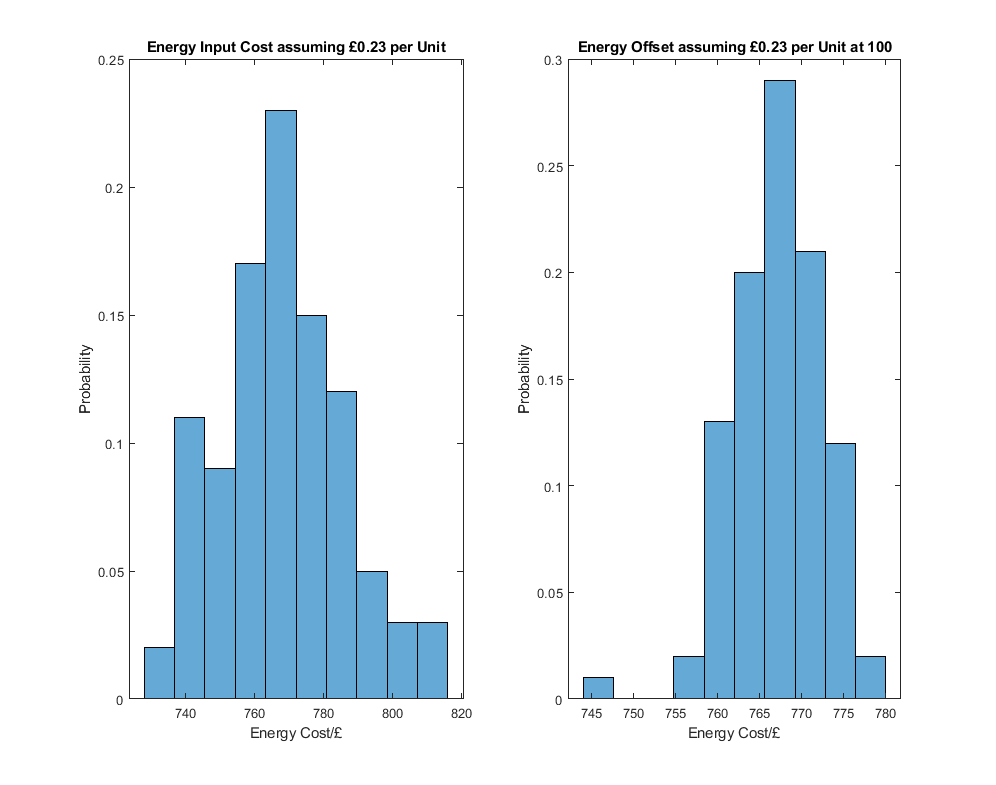
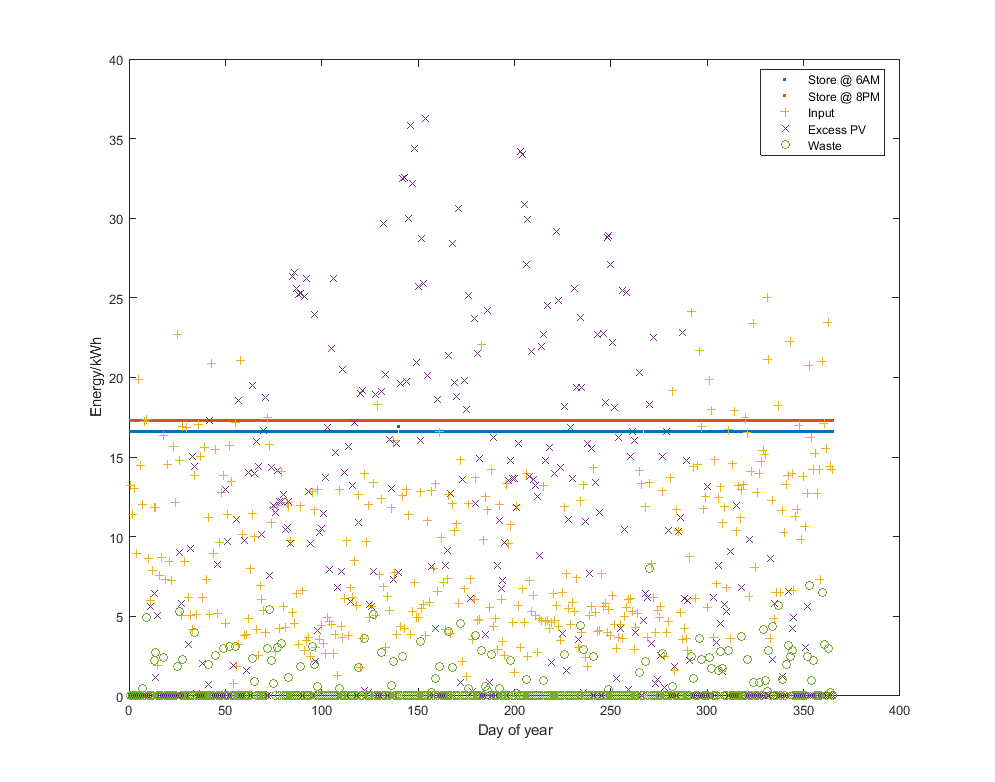
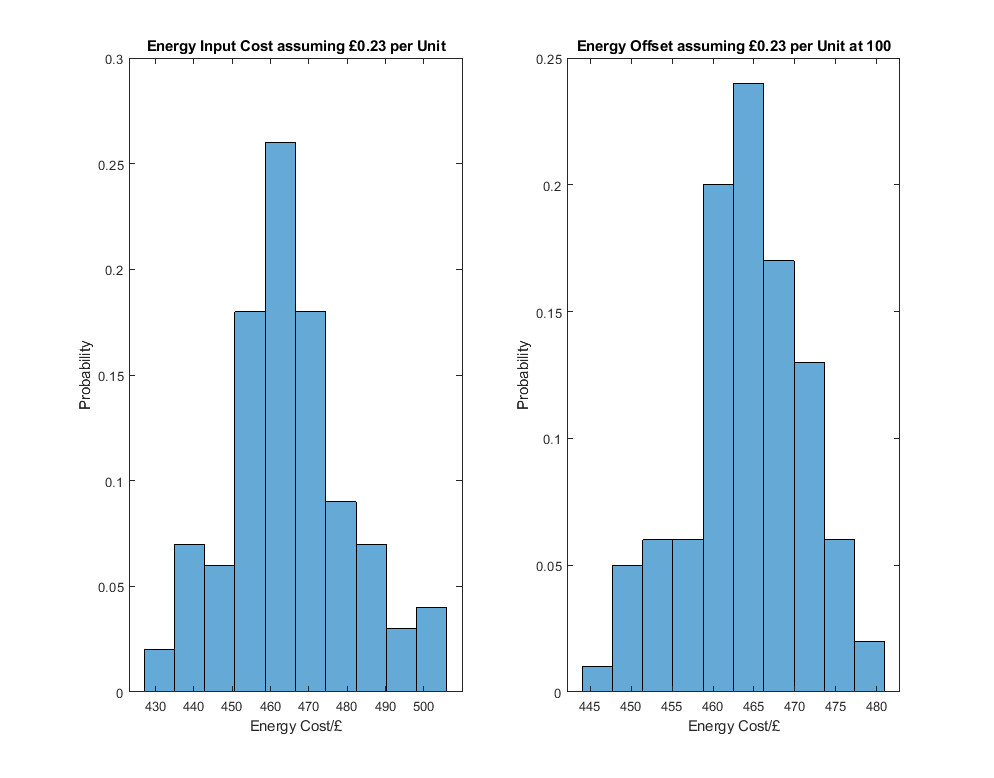
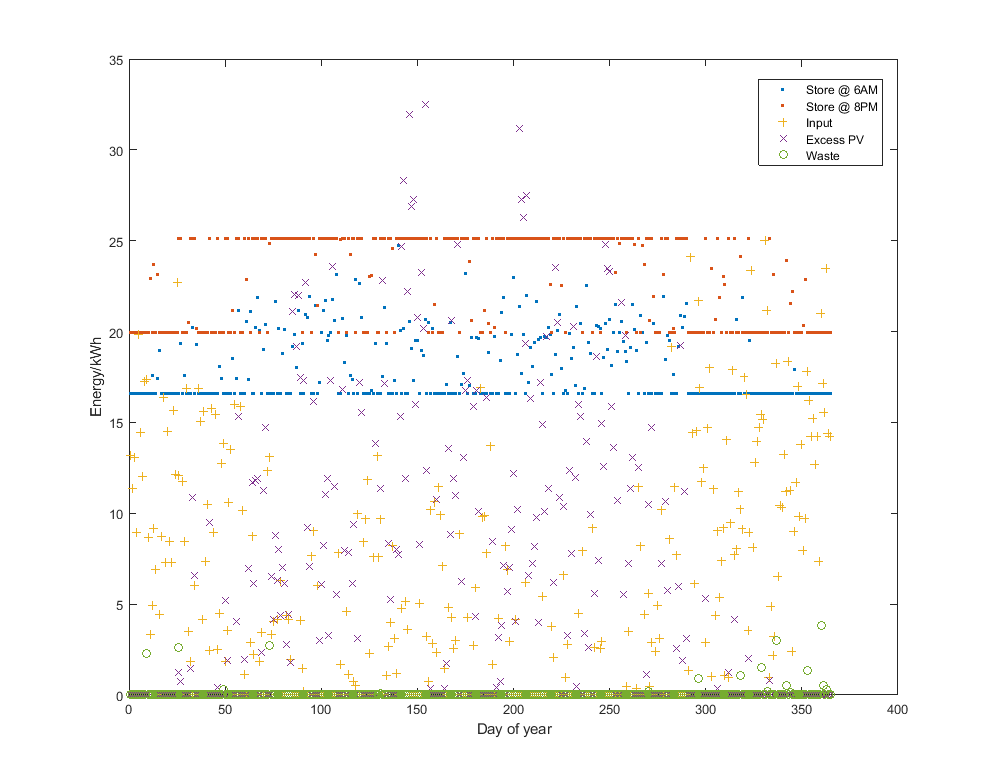
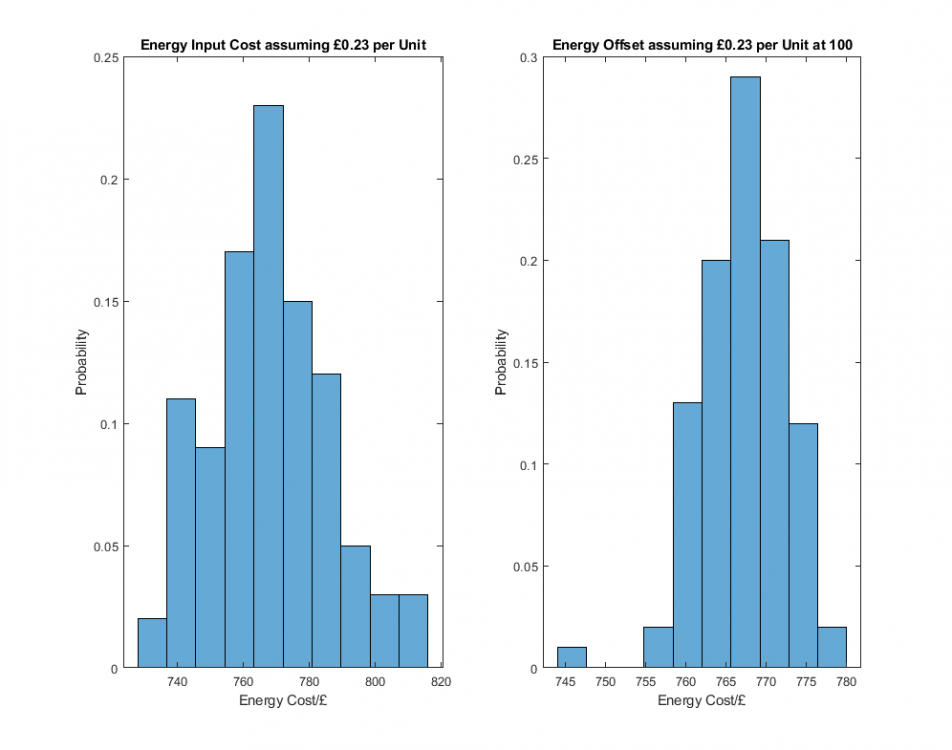
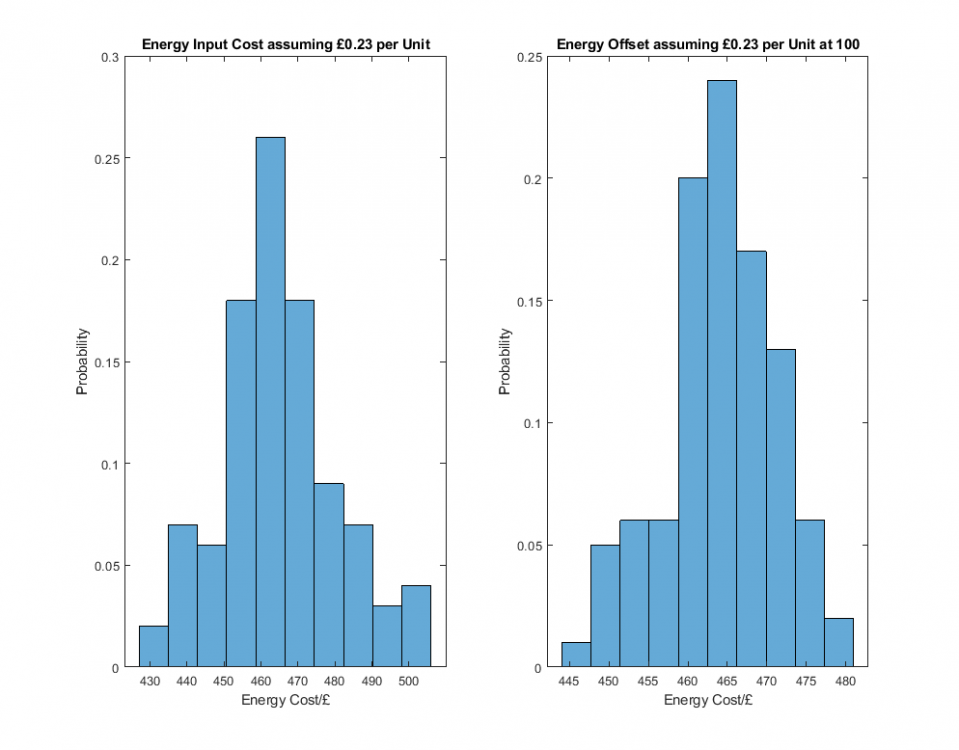
There is nothing like making a plan and sticking to it, is there? And it's a bit of fun for a quiet Saturday after long week of software testing, 1st fix wiring and plasterboarding. I originally planned to fit a large water based thermal store but since the 4th gen Sumamps appeared and the control system "gremlins" appear to be resolved maybe it is time to reconsider the plan. Nothing in the house has got to the stage of preventing such a plan change. I know the new Sunamps have only been around for a few months, but does anyone have one (any size) that's currently in use? The choices of new Sunamp are a little odd. Why so many different options for very similar prices? e.g. what does the "ePV" do that the "e" doesn't given that you need an external PV diverter? I suspect the answer is that there is no difference in hardware other than volume of PCM but the controller has some different parameters. I've developed a Matlab model of hot water use based on a Monte Carlo simulation of 100 years of random usage of hot water given some parameters e.g. occupancy and sizes of bath etc. This indicates we will on average need 18kWh of hot water energy per day, with a fairly tight standard deviation. I suspect the mean is an over estimate but it does align fairly well with the gas usage for the past few summers (i.e. when the bill is DHW only). I have used the model to find the ideal number of solar PV panels based on payback time for the roof (although I didn't forecast energy prices rising quite as quickly) so I have a 6.5kW system that should yeild 7000kWh per year. At face value the usage model indicates that the house should have 2x 9kWh Sunamps. This gives the right amount of hotness per day on average based on one "charge" per day and sufficient immersion heater wattage to use most of the solar power but two sunamps is an expensive option, and there are actually two "charge" opportunities most days - over night and during the day. So perhaps we could just have one of the 12kWh versions? I put a bit more effort into the model and made it generate annual costs for a 12kWh store and an 18kWh store (assuming low standing losses - way better than the thermal store case) and get the following charts: For the 12wKh case, average running costs are £770 per year for importing electricity from the chart on the left using the random usage model and the random solar irradiance model. The chart on the right is the amount of solar PV not used for DHW so is in theory available for other house uses should they happen to line up in time. (No surprise that the numbers are similar when the PV provides 7000kWh over a year and the DHW requirement seems to be around 6500kWh.). This run of the model assumes we implement a scheme to put heat into the Sunamp via the solar PV driving an immersion heater external to it - e.g. something like subverting a Willis heater driving an UFH heating loop I like this idea since it is very simple, especially if the Sunamp internal heaters are difficult to drive - they only appear to work with the Eddi controller that doesn't appear to work properly with my PV array since it's too big. Does anyone know details of this? The next chart shows one year from the simulation illustrating key performance measures. Waste is where the system uses grid electricity when it was sunny the next day and the store wouldn't have been emptied by the days usage. Excess PV is obvious. Input shows grid electicity use. The store values show the contents of the store at 6AM and 8PM for each day. The fact that they sit at a constant level indicates that the store might be a bit small. This is the 18kWh case. Yearly running costs are down by £300/year. So the second Sunamp will break even after around 6 years at current usage unless the excess PV was actually being used extremely efficiently. A year from the 18kWh store case. The parameters are the same as before, but now note that there is an excess of storage so the PV use can be more easily managed - waste is considerably reduced. Increasing the amount of storage beyond 18kWh results in dimishing returns as is no doubt fairly obvious. A 24kWh test shows imported electricity cost drops to £320 per year, but given the cost of a Sunamp doesn't seem particularly linear it might be a good option. That's tonight's analysis job. All in all a Sunamp solution compares well with the 500 litre thermal store - standing losses are much easier to manage and I can make considerable savings in not implementing an extremely well insulated cupboard for it. But this doesn't quite get me to the point where a Sunamp is only a small capital cost increase. More research is needed to create a viable solution - has anyone got two running in parallel? Did it present difficulties?


-
Bean to Cup Espresso machine recomendations please
dnb replied to dnb's topic in Kitchen & Household Appliances
Yes. We have one too. While it makes excellent hot chocolate I find it a bit hit and miss for the frothy milk. And ours is getting old now so it takes its time... Agreed coffee is the priority. I do like a morning cappuccino. -
I have a work award payment of £500 I need to spend fairly swiftly. Taking it as cash isn't an option. I could do something practical with it - like buy the Cordek for the garage foundations or another pallet of plasterboard - but I think I would like to have something I wouldn't normally think about buying. My Aeropress is good at work and my 25 year old stove top pot still works... but I would like a decent milk steamer and I never usually have time to make coffee at home on a work/school run morning so I would like something that can do most of the work for me, maybe apart from steaming the milk - I don't mind doing this because it won't be a feature used every day. (Instant is not an option. Ever. Just NO.) Any suggestions or recomendations as to which machines are worth having? I don't think the boss at home will allow much budget creep, so please avoid £1000+ machines... I would like to live long enough to see the house finished! Thanks
-
Hi @BrettW Happy to bore you half to death with talk of self builds! Need to do a couple of updates on the blog for the internal fit and the latest window issues... I'm an import - can't call myself an "Islander" according to the local rules. ? Keep looking. It took us a couple of years to get a plot. Try to get as much done in advance as you can so that you can move quickly on any plots. Scour the property websites as often as possible and be prepared to move disturbingly quickly if it feels right. We offered on ours the day it appeared on right move.
-
The surveys can easily get out of hand. Good luck with it @nod I did similar to @joe90 with rewriting sections of my survey as the tree protection plan. I ran it past the tree surgeon that did the survey (paid him a token amount in addition to a tree removal job I didn't have the skills and equipment to do myself) because the trees in question were of significant value to me - all oak and some significant in size. It is certainly possible to do it yourself to a good enough standard. As previously mentioned, proped Heras fencing covers most ills. But make sure in the document you mention the tree root protection zone signage for the fencing (and give an example as an appendix). In short, we had all the required information in the survey and other planning documents, but it was not presented as a document in its own right - I think that is one of the issues with certainly my planning department - they distribute the information thinly so the tree chap doesn't have to read about highways etc. But the problem is that then the tree document then may have to contain the bits of the highways document in order to make sense. I got caught out by this when I kept getting asked questions that I had already answered by referencing other submitted documents.
-
Practical experience of ceiling acoustic performance sought
dnb replied to dnb's topic in Plastering & Rendering
I will notice! And as far as it goes, that is enough. What, practically, is the performance difference between 1 and 2 sheets of board with resilient bar? 1dB or 3dB or more? And from what point? 1dB more attenuation from 30dB is worth having. But 1dB extra from say 55 or 60dB hardly seems worth it in a house. (BTW I do understand dBs.) -
Practical experience of ceiling acoustic performance sought
dnb replied to dnb's topic in Plastering & Rendering
Ceiling height is a minor concern - some rooms will start to look letterboxy, and the other is loading on the joists. My preference is bar and single board if it will work. Neither are significant i admit I saw the silent floor in the book but can't do it since the floor is already bonded to the joists as part of the sips kit build. I can however use an acoustic underlay of some description over the floor, appreciating that it will not be as good. -
Thanks all. I think @SteamyTea and @dpmiller have it cornered. True isolation of supply isn't required since I think I can use a switched fcu for that - it won't be in an inappropriate zone itself. It just doesn't need wifi. No need to congest the spectrum more than necessary. We have enough wifi devices already.
-
I am trying to understand what to do for my ceilings. I have consulted the white book and have two options that seem practical. Double board with 12.5mm or single 12.5 board on to resilient bar. Both will be going on to steico joists and have 100mm (unless i can get away with 50mm) acoustic insulation. I would like to know how either scheme works in real life because so often lab tests aren't totally representative.
-
Are there any similar devices to the Shelly Plus 1 that don't have wifi? I have a very simple problem to solve that won't be enhanced by wifi. I need a small relay device that can sit in a metal 1 gang back box behind a fused connection unit to control a 240v 300W load based on a 24v DC signal (could make 12v work too). Obviously the Shelly device will do this quite well for a reasonable price, but surely there's something simpler out there that doesn't need me to get my soldering iron out... Found loads of DIN rail relay units but these don't suit the location.
-
Ecology and Planning: Environment Act 2021
dnb replied to ToughButterCup's topic in General Self Build & DIY Discussion
No. Not a better answer. Putting someone like me in charge of anything usually results in some kind of disaster... We do, however, need a process to combat such organizations when it becomes clear to all outside that it now mostly exists to forward the organisation itself and not the thing it was originally created to achieve. This is usually frowned upon because it usually costs jobs. Regarding the original point of dealing with this legislation by removing the wildlife before putting in planning - it's already happening with the scheme we have. I know I looked at my land very carefully before submitting planning. I didn't do anything other than removing lelandii trees that were far too big and a diseased oak stump though. I am fairly sure that I definitely have not aided bidiversity. I couldn't even stop my woodpeckers from destroying the bat boxes I put up to satisfy a planning condition. -
Ecology and Planning: Environment Act 2021
dnb replied to ToughButterCup's topic in General Self Build & DIY Discussion
You haven't seen the project management department at work! -
Ecology and Planning: Environment Act 2021
dnb replied to ToughButterCup's topic in General Self Build & DIY Discussion
Proof as ever that bureaucracy becomes self sustaining disturbingly quickly. -
Yes. It is a protected staircase. Can't have an escape window on the top floor so I have gone with the multiple exit option and agreed it with my BCO. Thanks for confirming the 30 minute minimum - it makes life a bit easier elsewhere.
-
Am I correct in thinking that a 3 storey single occupancy detached house requires 30 minutes fire protection for the escape route? There is only one way out of the top floor, but then multiple means of egress on the 1st and ground floors. My current plan should give 60 minutes for the walls but this is influenced by other requirements like sound insulation.
-
Roofing best practice, does anyone follow it?
dnb replied to epsilonGreedy's topic in Roofing, Tiling & Slating
The Paslode nails I used had a certificate to say they complied with the BS because they had at least equal pullout resistance. -
Swimming in treacle, flying drones and generating electricity
dnb commented on dnb's blog entry in Building in a woodland on the Isle of Wight
The willow trees to the south do currently shade the panels in winter. But they are being topped as part of the landscaping plan. We just can't get to them right now and there always seem to be more important things on the to do list!! SSEN asked to send a representative to oversee comissioning the solar installation. It was either because I am not a member of the right installer club or I wanted to install well over the usual amount of panels. I forget their reasons. -
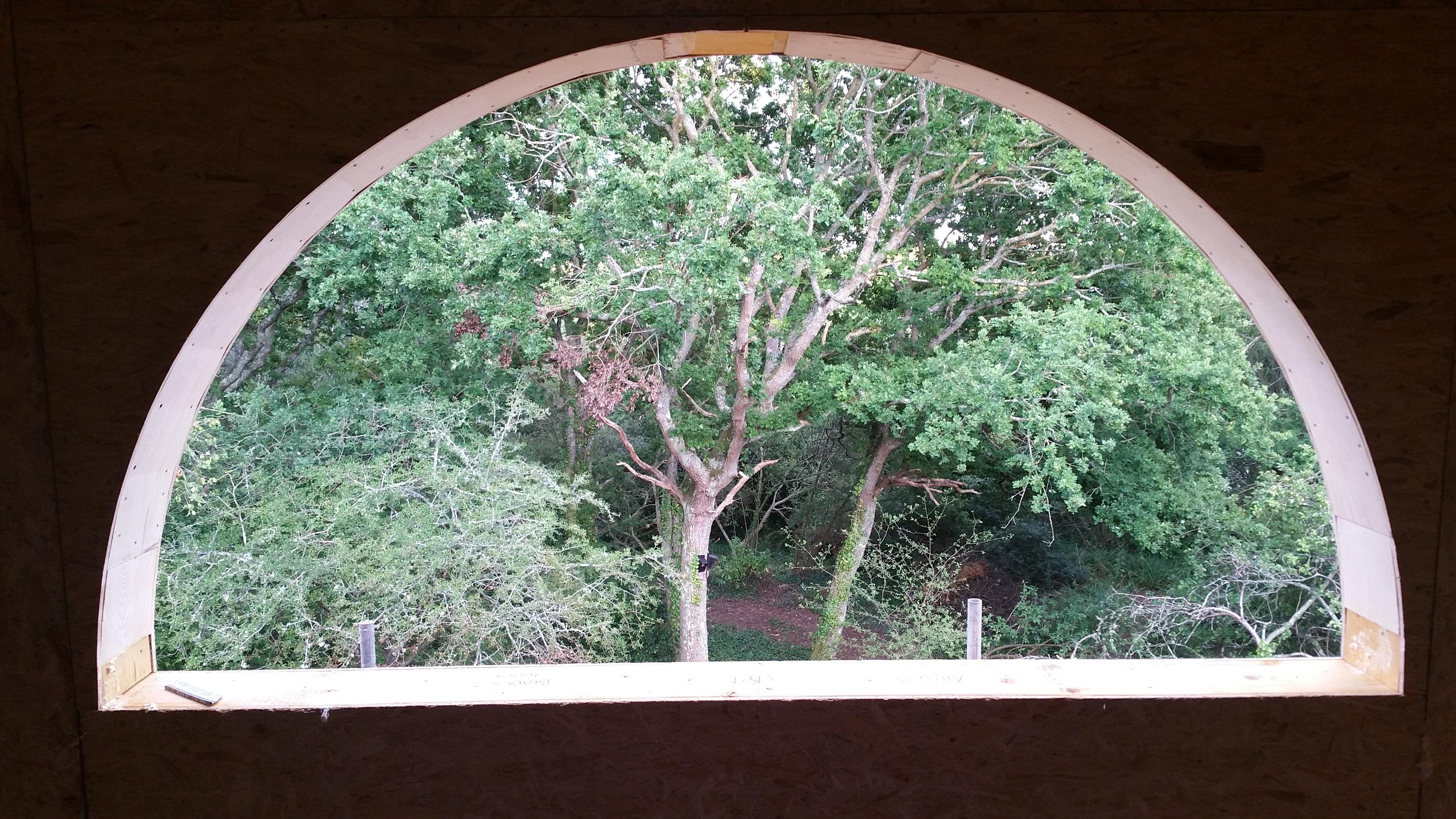
As usual it feels like progress has been glacial. It probably hasn't but most of the jobs this month aren't exactly visible. The first job was to construct a cabinet for the switch fuses and electric meter since the old back-to-back meter boxes had degraded to the point of uselessness. This of course displaced the drainage installation activity for a while. I did make some progress here too but we are nothing like finished yet as another tonne of gravel disappears into the ground... Casting a small reinforced concrete ring beam. The ducts for house and garage SWA in the centre. It turns out that making "model" buildings is a bit of fun. Construction of the timber frame for the meter cupboard, now known as the Woodlands Folly. All materials were offcuts from the house. Meter cabinet installed and beginning to fix the cladding. Again, everything is from house offcuts including the slate roof.The meter will be accessile from near the road - covid safe meters might catch on! Almost finished folly. UPVC soffit and fascia were found in a pile in the woodland during the summer chainsawing work! The inside is lined with floorboards since even I am finding it difficult to burn them. Switch fuse units have been fitted to test sizing ready for connection. One for the house to be connected immediately and one for the garage that can wait for the time being. In the fullness of time a consumer unit will be fitted to the back wall so there is accessible power in the folly for lights and car charging. Nothing like test fitting a consumer unit in a wall that isn't really there... It's a recessed BG unit fed with SWA from the folly. The "wall" can't be installed properly as yet because screeding the floor is one of those little covid/brexit (delete as appropriate) difficulties in the supply chain along with blue facing bricks. But at least I get to have something to look at even if it doesn't do a great deal. I installed two 2.4m earth rods since there's no PME supply to site and it isn't likely either. The earth test gave 2.7 ohms impedance so well within requirements. At least the PIR is all fitted, even around all the tricky areas with ducts through the floor. I am considering decomissioning the death saw although it seems a friend would like it to make insulation strips for his roof trusses. Meanwhile, the same friend wanted somewhere to practice drone flying. This was something I was happy to assist with! These are a couple of stills from a flight showing my extremely untidy site. One day I will have the drains covered up and the treatment plant located in the ground! And maybe further in the future I can have a garage too! But the roof still looks good. Now we get on to some very good news. After nearly 9 months of waiting, the arch windows have arrived! First the frames. They even fit in the holes! And then a week later the glass. I now have a little problem of getting some large 50kg glass semi-circles into the attic without a pair of staircases or scaffolding. This is going to be interesting and may involve heavy plant. What could go wrong??? Finally this month it became urgent to get the solar panels doing something more useful than just keeping the rain out. (My connection offer was due to expire!) So I fitted the inverter in the attic on the first piece of house to be boarded. The DC wires still need clips and some bits are decidedly temporary solutions but all of it passed witness testing so it is good to start generating. Another 6kW of solar on the grid just in time for winter.
-
Yes. 3dB is a doubling of whatever you are measuring in decibels.
-
MVHR intake and exhaust separation
dnb replied to dnb's topic in Mechanical Ventilation with Heat Recovery (MVHR)
Thanks. The external terminal examples do help a bit. Not sure I have an actual issue. It's more about what solutions other people have employed and me thinking about an optimal solution - does vertical separation help with anything or does it make no difference, and figuring out if there's a sensible maximum for horizontal separation. I'm not short of space. The ventilation guide looks useful.