
puntloos
-
Posts
1575 -
Joined
-
Last visited
-
Days Won
1
Everything posted by puntloos
-

Fear of heights, reasonable or not..
puntloos replied to puntloos's topic in New House & Self Build Design
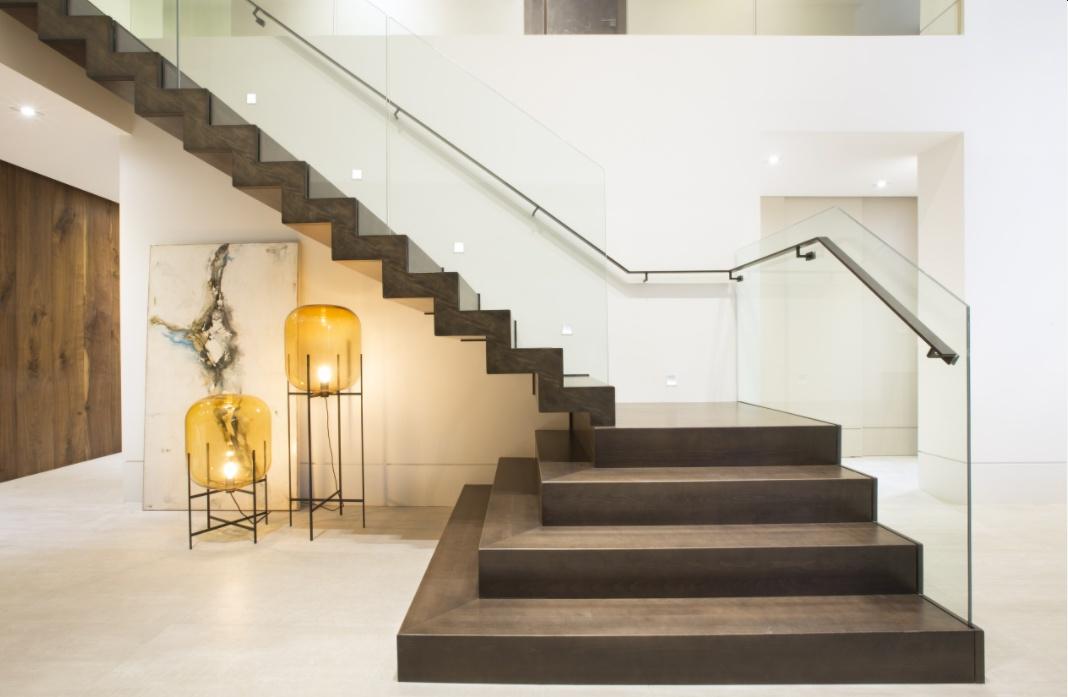
I'm pretty sure I don't have irrational fear of heights, only a healthy respect. My wife is slighty more towards the "fear" side. But I do remember that as a tall person (I'm 1m92) my waist is at 100cm so if I "lean against" a 90cm ballustrade I would worry I could easily slip over. Does anyone know if glass is much worse than "wood"? Perhaps something like might help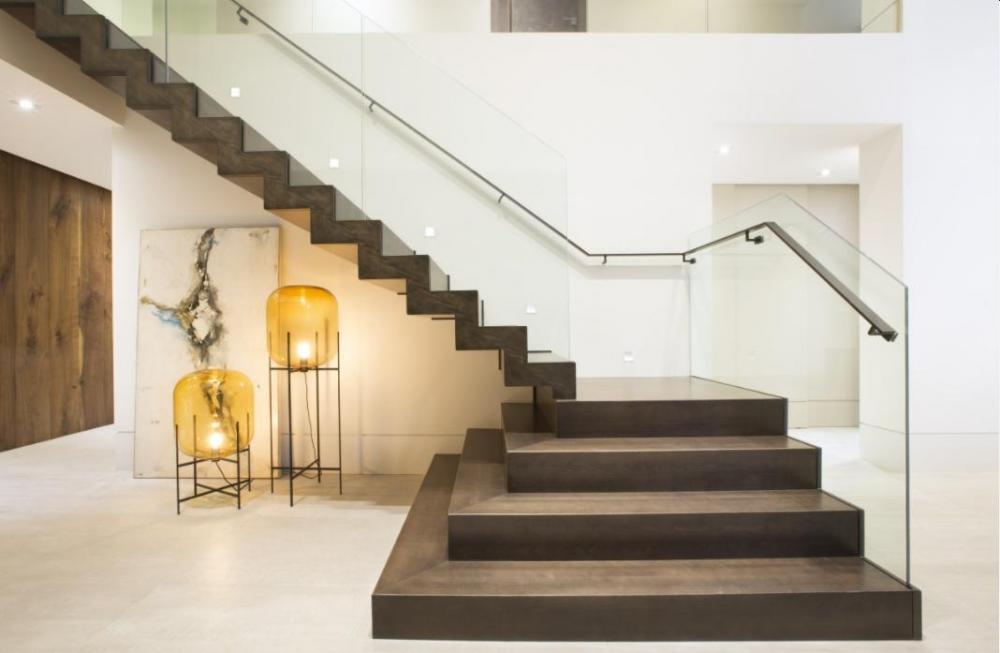
-
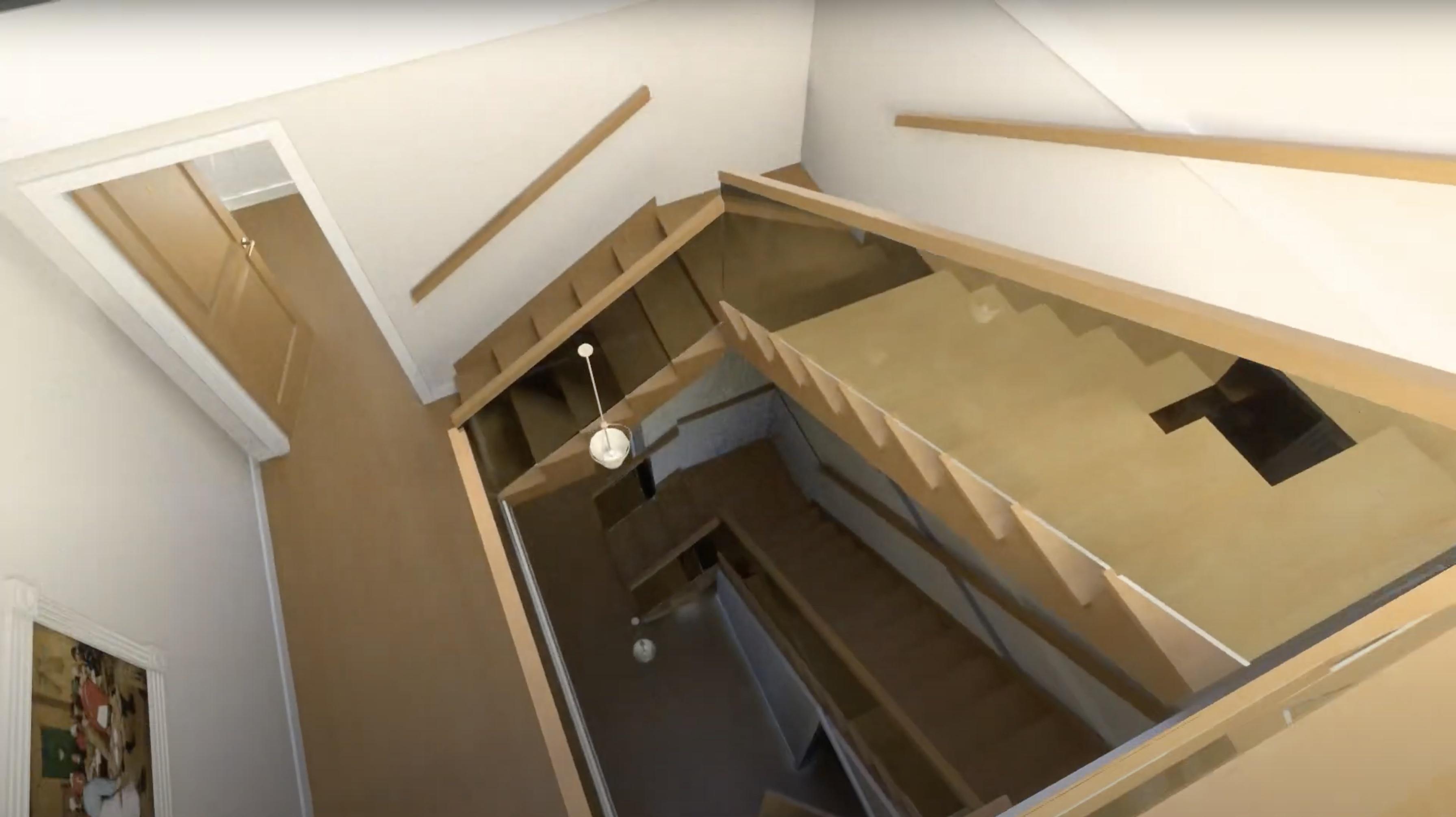
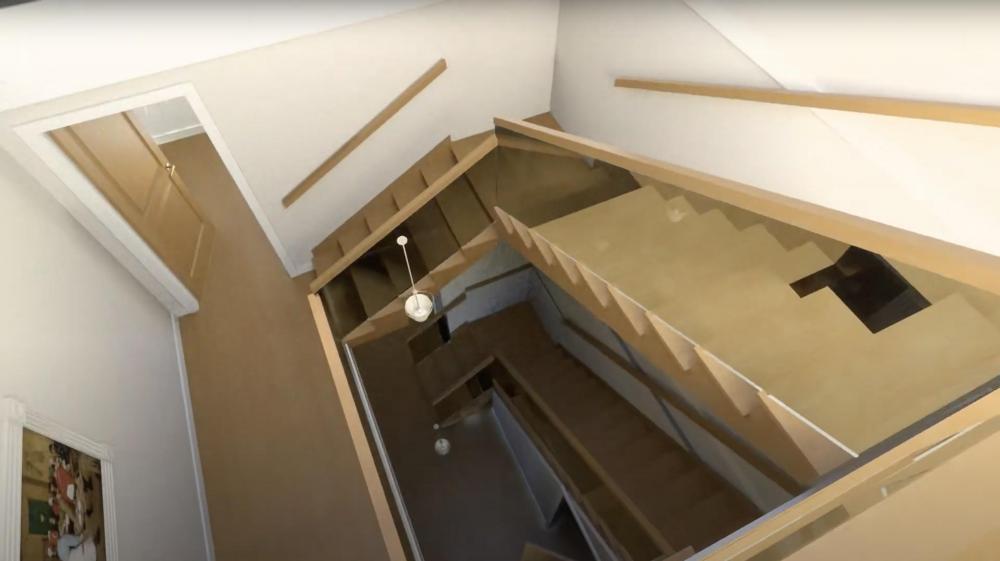
So my house design has a full height hallway, so the skylight is 8.5m above the ground floor. I'm wondering if people with a fear of heights will enjoy standing on the loft walkway or not since it indeed is 6m straight down. And if we're thinking about safety, accidentally flying over the rails.. any thoughts on that one?
-
Efficiency of the blinds built into the windows (outside-glass-blinds-glass-vacuum/gas-glass-inside) On 3 aspects: 1/ Heat (U-value) of window with integral blinds down vs "just a wall" when directly in the sun - 2/ Visibility of the inside during nighttime? (are they sufficient for bathroom privacy or can you easily see showering silhouettes) 3/ Brightness of direct sun - will a bedroom be pitch dark even with direct sun? Any good videos maybe - basically trying to figure out how much of a compromise this 'awesome new technology' is vs the traditionals
-
Agreed, I can only imagine the amount of force that plays on these few hinges and rollers that such a huge door is suspended on. And it's not a stable load either, when folding suddenly the weight starts to pull forward rather than just down..
-
Solarlux, Uvalue of 1.5 - not horrid, and air perm class 4 Strange how Centor is better at U (1.1) and worse at air ..
-
Air permeability Class 3 Water tightness Class 7A Resistance to wind load Class A3 Class 3 has been known to pass the Passivhaus airtightness test, but it is advisable to go for Class 4 as I understand it, so .. doable?
-
3 big holes, how to fill them =)
puntloos replied to puntloos's topic in New House & Self Build Design
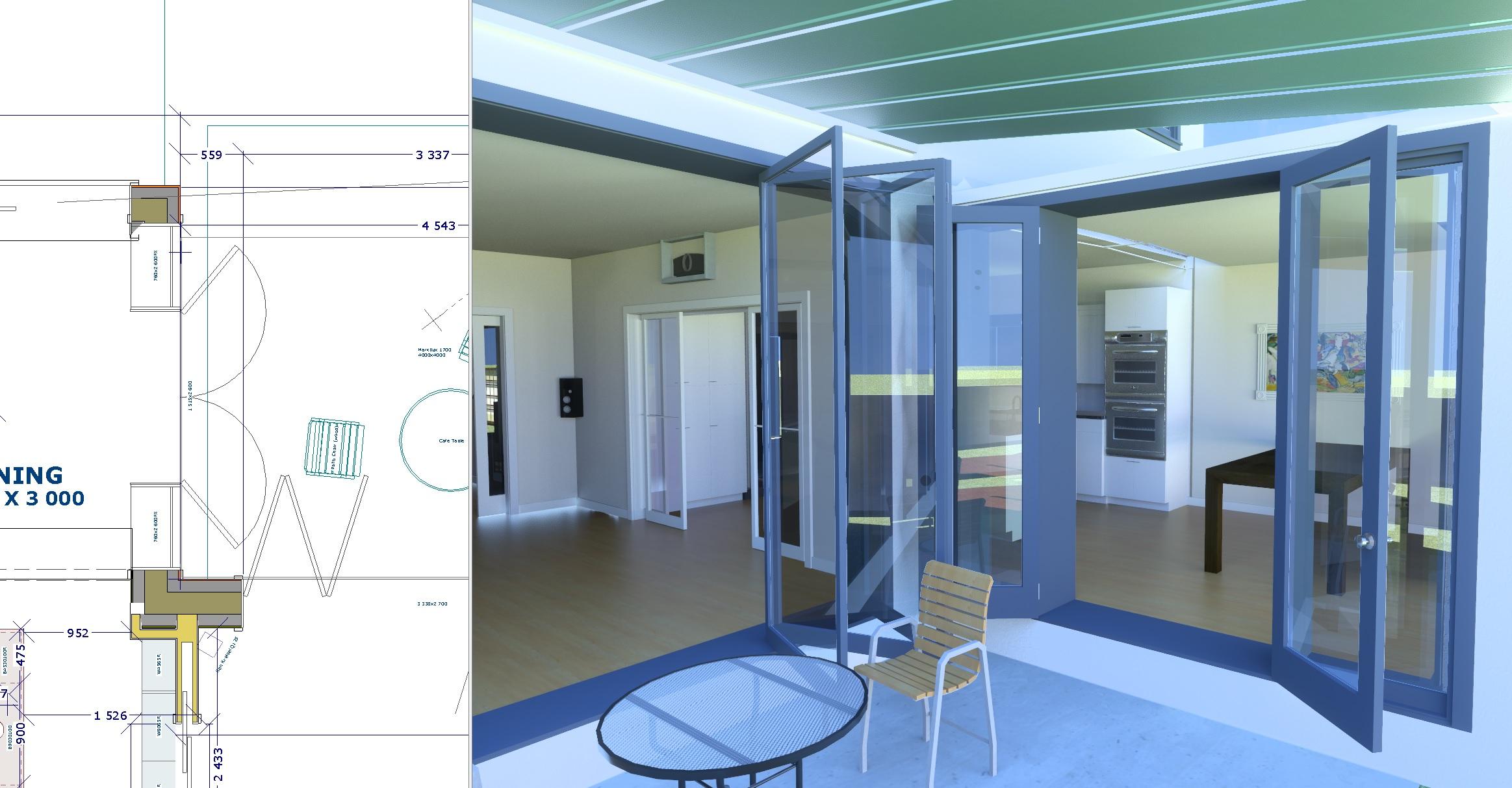
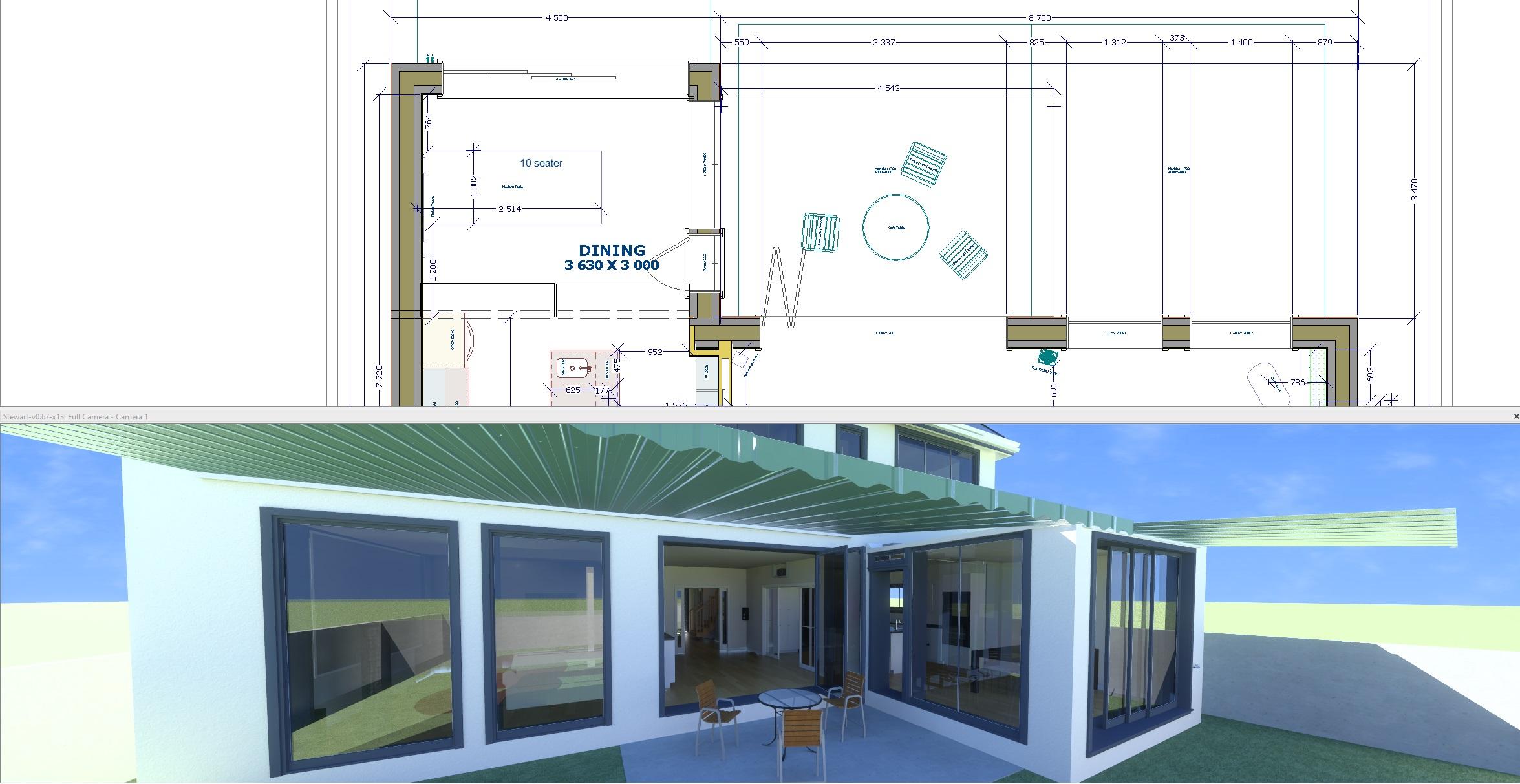
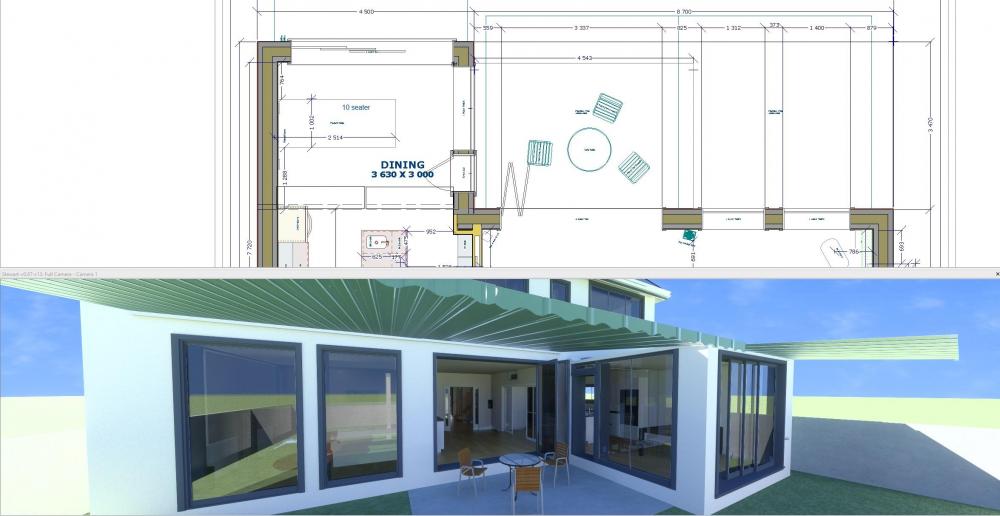
Update: we think maybe this might be an improvement: Given that the door gap as currently depicted (of course my version is less precise than the real design TBC) is 2090 and the average door is 765mm- 765*4=3060 I might have to make the right window slightly smaller than the right door. The improvement here being that the door doesn't clash with the folded bifold. Not perfect, they can hit each other, but in the final positions they tuck neatly against each other.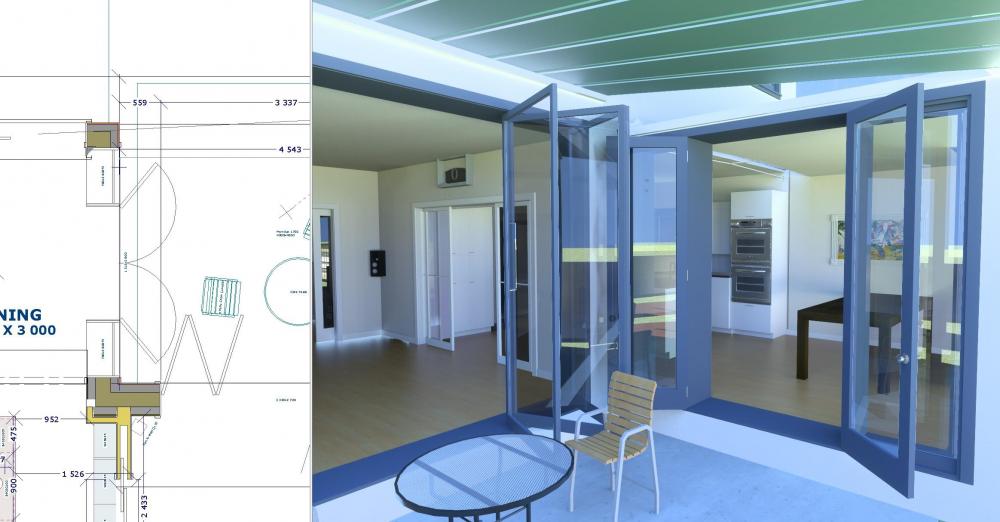
-
Not sure what you mean? Are they wrong that they are best on market (not shocking perhaps, which brand is better?) Or just that 'the best is not good enough'?
-
I suppose that makes sense but *in theory* the centor 405s, when triple-glazed - are 1.0w/m2k (if the shades are drawn). Not terrible..
-
My ground floor is 2.7m ceiling height. And, having full height doors and windows is a bit of a statement But: 1/ Should I worry about U-values? I'm certainly aiming for passivhaus (but not super concerned to miss it somewhat). Will a 2m high bifold ....be dramatically better than 2.7m? (note I'm not too worried about solar gain since I have awnings everywhere..) 2/ What about price? I know that the brand I was/am thinking of - Centor 405's does have even 2.8m tall ones. But do they typically have standard sizes or are they made to measure and you're mostly paying by m2 3/ What about ease of opening/closing? 2.7m means 35% more weight of the doors presumably.. will this make the bifolds meaningfully difficult to open/close? Any other challenges I should worry about? 4/ What about 2m with a 'top window' above it? Probably quite pricey.. not sure if it's a big benefit? Will it be even doable with very deep (465mm) window depth due to insulation?
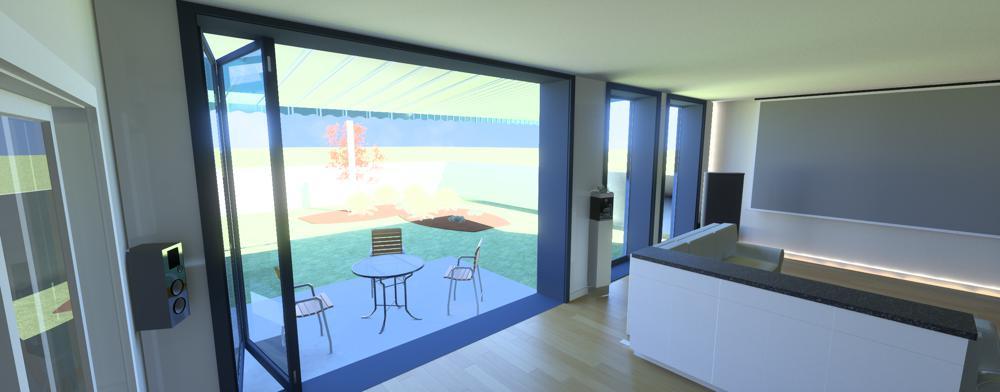
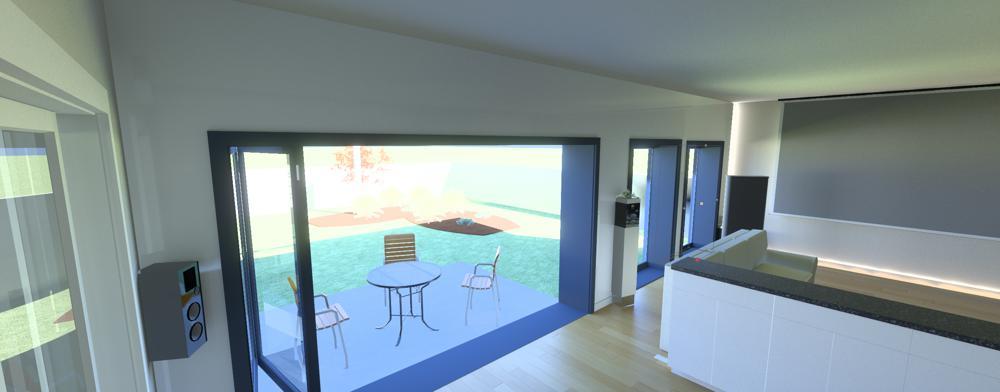
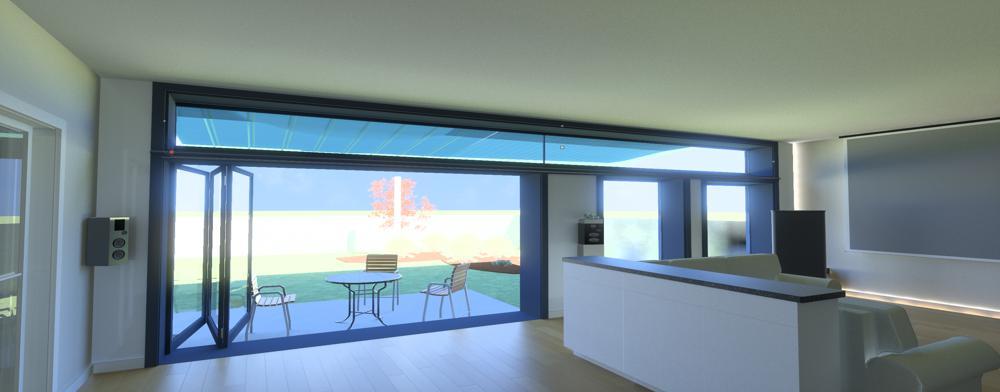
-
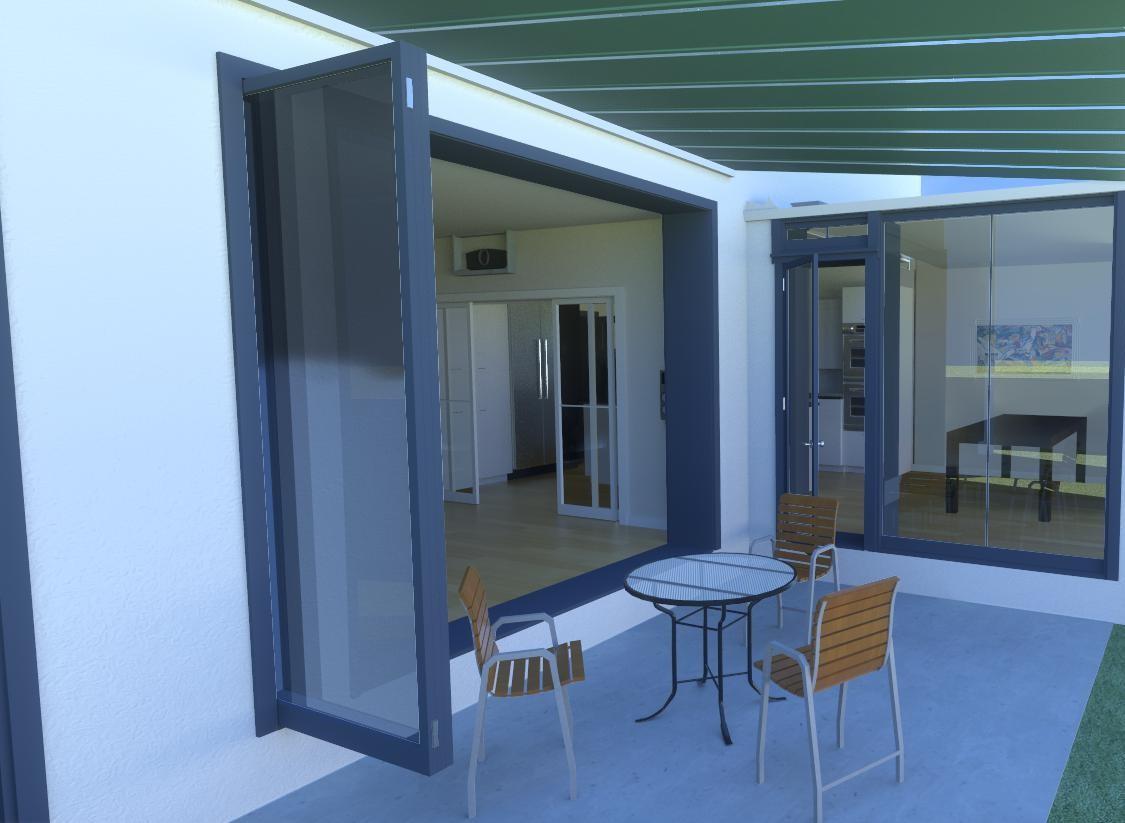
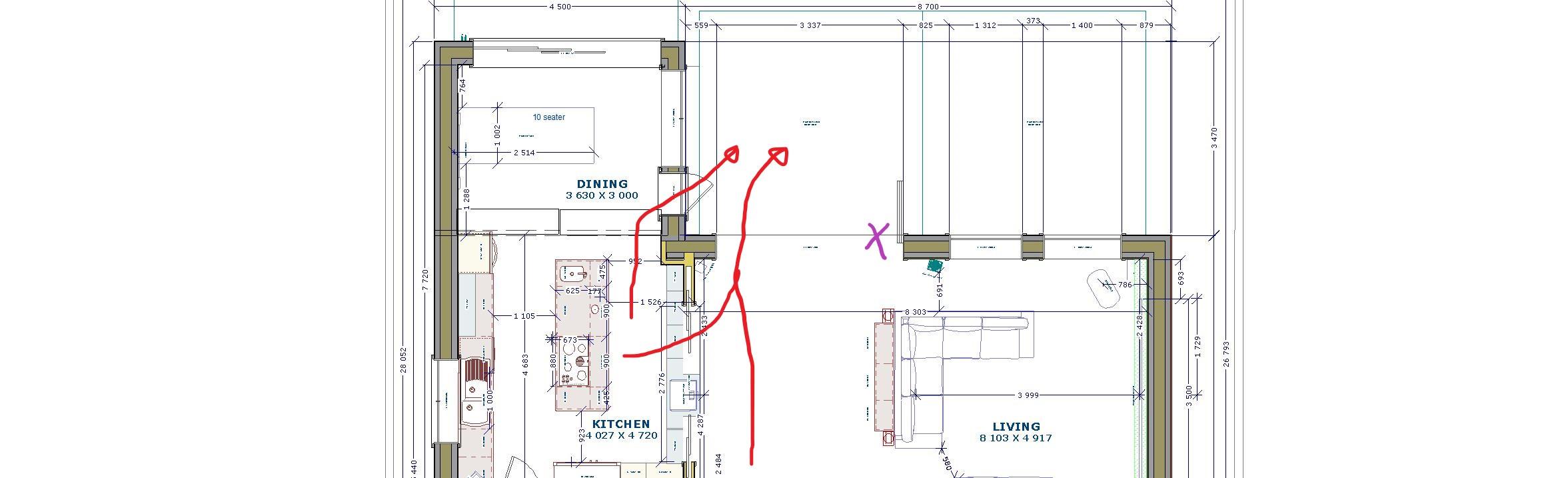
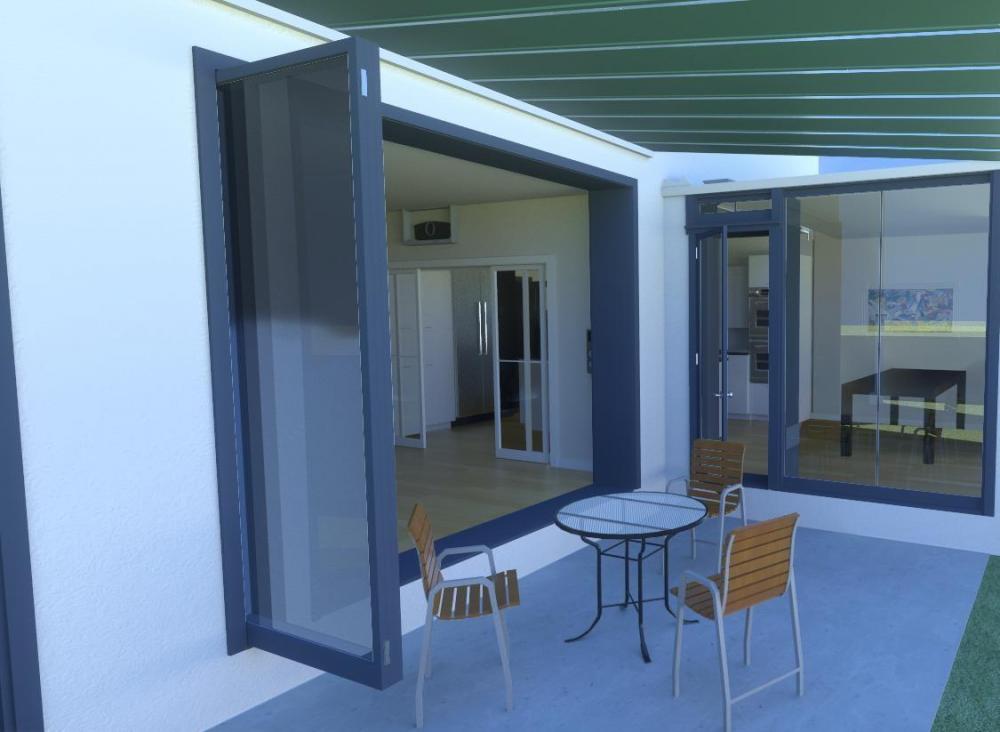
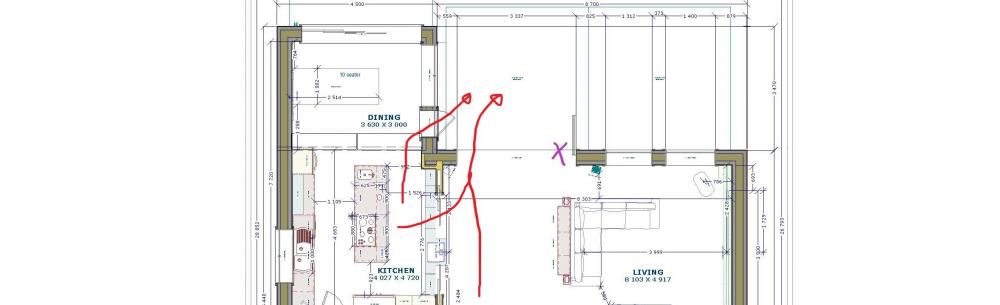
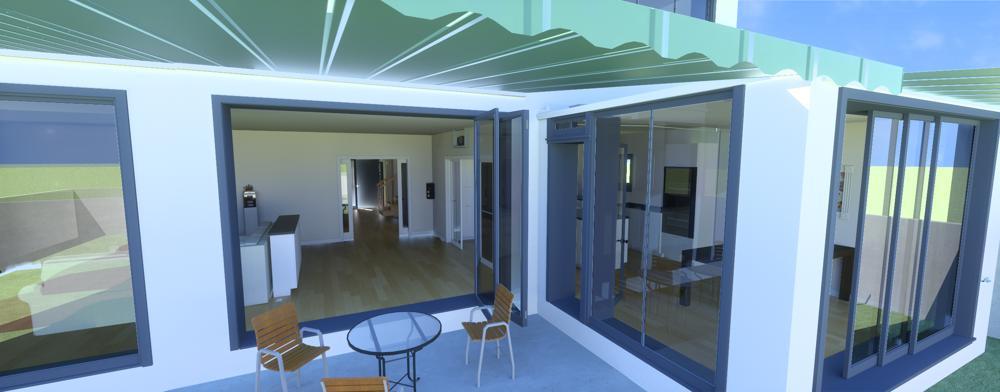
Take a look if you would at my current rear design. See if my thinking makes sense The things I'm balancing: 1/ I want a quick walking path to enter/exit into the garden, which means a 'standard door' (not a slider, but the end of a bifold is fine) needs to be in the corner - close to the kitchen. The purple 'x' kinda feels too far out of the way, especially if you're coming from the kitchen 2/ Putting a bifold with the 'single door' either in the dining room or in the living room gap, will hinder the terrace when they are open 3/ Instead, folding at least one bifold into the corner feels more elegant, so I guess the other gap needs a door: -> Will that work? Is my 3D program rendering this OK or (especially since the walls are passivhaus thickness!) is there too much clunkiness here? 4/ We don't care too much if the rightmost door should be a slider or a bifold, but a slider seems somewhat better, although the bifold could fold into the corner as well.
-
Correct, split means there's a meaningful part indoors. I'm not 100% clear if there's a compressor indoors, but it's not silent. As far as I can tell from the specs the indoor part is more silent than ext though.
-
Interesting part for me is that most Daikins are split units, so you'd care at least as much about indoor noise too.
-
Would it be acceptable to have the GSHP "device" sit in a loft? Since with that technology you're bringing even more noise into your house and all..
-
@Marvin the discussion started around here: Obviously I take care not to take one-random-internet-dude (m/f)'s opinion as canon, which I also apply to you, of course. But in general: - I only have a smallish garden (unless I can put slinky/pipes under my foundation?) - effectively about 10x15m. - Boreholes, I'd be fine with them, but the ground I have is dense clay, so as I understand it, the heat/cold needs to be drawn from the local area and can't travel/radiate away. It seems that the calculations have to be done carefully, as with everything.. my sense just is that with ASHPs you can always add more, or more powerful devices, where with GSHP once you've designed your setup and it runs into trouble you're basically up a certain creek with a certain lack of paddles. @saveasteading Any comments on this thread so far? ?
-
Absolutely but a topic in this area have more or less brought me down from GSHP saying that in short the ground in UK does not conduct heat fast enough so you run into freezing the ground all the time. But - my M&E team was planning to give me quotes for both...
-
OK, will have to keep it in mind. I'd love to see the pro/con in this setup: A/ monobloc, costs AAA quid per day extra, noise is far away, near-irrelevant B/ split, costs BBB quid per day extra, a XYZ db device in my understair cupboard makes ZZZdB noise at 1m Not sure if I want to heat&cool, of course it's helpful to be able to heat more hot water, even in a hot day where the primary climate function is cooling. Is such a scenario common? My family's needs are fairly modest but don't want to be 'sad in retrospect'
-
Does it matter if we dig a 1m deep trench or a 50cm one? Good rule of thumb. Will certainly have a decent PV array, 16x 420wP panels. Probably a battery too. My current plan is the Daikin Altherma 3, which I think indeed is a split device https://www.daikin.co.uk/content/dam/dauk/document-library/Brochures/Heating/Heating Installer brochures/Daikin Altherma 3 H HT_767.pdf So my DHW location as indicated might be a good idea? How much space does the UFH buffer and manifolds etc need? Well, we want a meaningful cooling setup.. hot buffers help preventing spin up/down/up somewhat and I imagine cold does the same.. would you not want those?
-
For some extra clarity, here are my "4 options" - A is the furthest away from everybody's houses. - B is near neighbours and our terrace - C is much better but we might run into various planning issues and it will impede the view from the bottom right room (and noise?) - D is perhaps a comprimise, it shortens the direct run from 18 to 13m, but suddenly we're bothering perhaps ourselves but mostly our neighbours? I strongly prefer A but if someone can tell me how many kwh I have to buy or generate per year to pay for it, I'd love to have an idea!
-
Somewhat counterintuitive for me that the U-values go up with bigger pipes, but I guess more radiation surface = more loss rather than that the thickness of the actual insulation makes things better.. *I summon the power of my highschool physics!@#* OK maybe not. But. The thing I'm missing is - you say 44W extra usage, but presumably an ASHP isn't running all day, and it isn't 8C every day either, so I assume you're not saying this is effectively having a permanent 24/7 44W load on my electrical bill, but in that case: Could you put this into money(or kwh) terms? Option A costs X per year, and option B (10m extra outside) costs X+... per year? Obviously I intend to also have PV to run most of this.. but you know.. In my actual current design I have about a 8m run from the ASHP location to the house (perhaps the foundations start a little earlier), a further 10m through foundation into the service shaft, and then perhaps 8m up into the loft where most of the plant is. Obviously 25m is quite the run, so I am wondering which of the components would make a major difference to put on the ground floor. For example, I could put the UFH manifold and the DHW cylinder (with ASHP coils) on the ground floor, but I doubt I could fit the hot and/or cold buffers there, and definitely not the chiller coils and MVHR
-
@Moonshine and @IanR - can you explain why this is a big problem? Clearly, having a warmish water flow in a pipe that needs to cross 10m of garden in the middle of winter is less ideal than something stapled to your heat envelope. But insulation is surprisingly good, and wrapping say 10m outside pipe in say 200mm worth of insulation.. surely that would only drop temp "a bit"? Can someone perhaps compare the 2 situations Tony listed, e.g ,simplifying for calculation purposes, and assuming the ASHP runs for an hour in both cases B/ ASHP is stapled to the wall, so let's assume "0m" of piping, hot water entering house is 35C C/ ASHP center garden, needs 10m external piping buried 500 mil deep, with say 200mm insulation -> the question is - how warm will the water in C be for various cases, (-10? 0? +10)
-
What do I need to decide+order when? Timing Schedule?
puntloos replied to puntloos's topic in Project & Site Management
Thanks @Carrerahill - you are probably right, especially when delivery time estimates turn into unhappy reality I found this one - https://spreadsheetpage.com/gantt-chart/house-construction/ - it seems to be pretty optimistic, but at least it provides me with the order of things! -
Given all these supply issues, I wonder if someone has drawn up a detailed list of 'what happens when' and then combine it with lead times to get a 'order deadline times' list. Surely at least the timing steps list exists? "If lead time on <item X> is <Y weeks> and I need them on <date> then my deadline to decide and put the order in is <date-Y=deadlinedate> So indeed something like: (completely made up, plz don't critique too much ) Jan 1: setup Jan 7: digger arrives Jan 14: big hole dug Jan 21: Concrete needed March 1: Tiling of the roof starts (so.. I need to decide and order tiles..) May 1: Electrical stuff comes in Sep 1: Bathroom tiling.. Which would mean I can put together a list like: Nov 1: order concrete (for Jan 21) Jan 1: order tiles Mar 1: order electrics Jul 1: Order bathroom
-
Well that's the point, I could do all of this inside since I have a pretty meaningful hallway ? Windows are not really outsize but on the large side certainly. But the loft windows are unreachable (pitched) hence internal.
-
The only point I could put a hoist hook (easily) will have a rope dangling down be only about 85cm from the baluster of the stairs. Will that be sufficient for it to be useful in lifting things like sofas upward? Of course even a small sofa is probably more than (2x85) 1.70w so there's no way it will cleanly be lifted, but (as someone who never really used a hoist) I imagine you can gently push it off-center while navigating obstacles? Or?