


puntloos
-
Posts
1575 -
Joined
-
Last visited
-
Days Won
1
Everything posted by puntloos
-
 Yeah i have the impression MVHR will prevent any weirdness from happening. I suppose that 'bad airplane' colds (so yeah not motion sickness) are perhaps just the airplane pulling air-filled-with-farts-and-bugs into your face. Some MVHRs even have anti-scary-bug-filters, no?
 -
My wife especially often complains about air conditioning in her office and often gets sick on airplanes, and my setup contains, well 'air conditioning'. - MVHR (haven't looked at brands yet, Zehnder?) - A2W ASHP - likely Mitsubishi Ecodan for hot water and UFH - A2A multi-split ASHP - Mitsubishi MXZ-F range with mostly/all compact ducted FCUs in many rooms Is airplane 'sickness' attributable to air conditioning? Is it 'any' AC or is a properly designed system fine? Is there stuff I can do 'now' to avoid problems? Of course a stream of constant cold dry air in your face is probably worse than a gentle stream in a highly insulated house.. but still?
-
Yes this is one of my main questions, does all the noise come out of the 'diffuser' (as you pointed out below) anyway, or is the entire thing the noise-box and having it on the other side of a wall will be a big benefit? Yeah I've seen this. Surprisingly elegant way to hide things. But I'm not sure I even need it with my fairly generous void. Ha, not anytime soon I'm afraid! But indeed if it's 'recirculating' then of course again drawing one room vacuum doesn't seem optimal It seems more logical to indeed have the fresh air come from there. Yeah these look great, something like that sounds very good. Thanks for the tips.
-
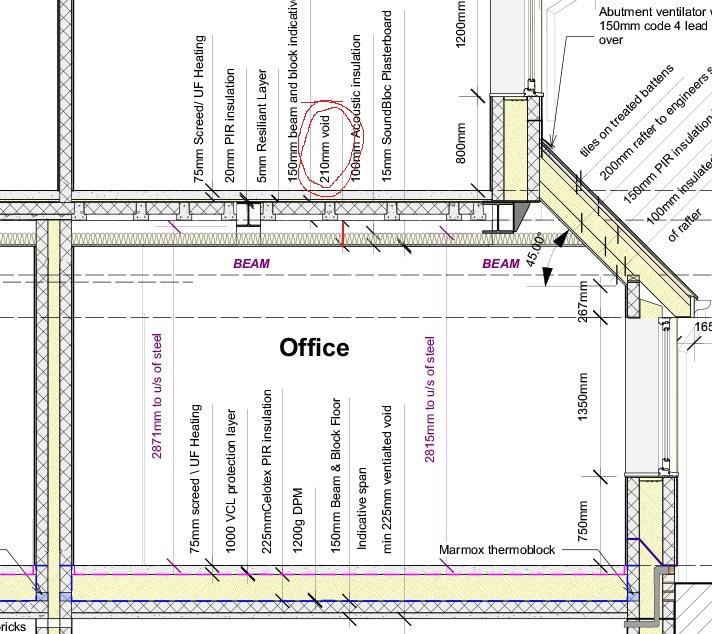
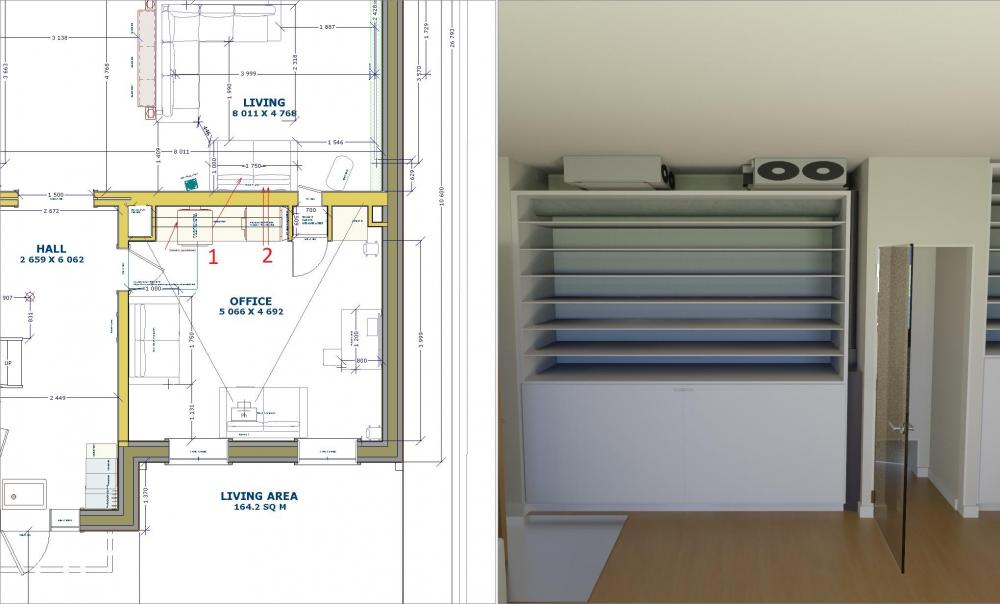
My current forerunner is the M25DA R32 Coolant FCU from Mitsubishi -spec attached (link). They have multi. models but I've put in blue the sizes pertaining to this one. The specs say "WxDxH - 790x700x200" Height: I don't care *too* much about the width and depth but am I correct that this device will fit in a ceiling void of 210mm? Or will for example pipes coming out of the thing need more space above, to the side, below? I don't see any of this, but I can certainly imagine pipe runs will need to be planned somewhat carefully. Overall size: I have a ceiling void of 210mm: (ignore the cold bridge, that's another matter) But more specifically, I want: One FCU to service my livingroom (adjacent) to limit noise generated -> Can I put the livingroom FCU in the office, or will that not matter - since the 'output' still is a direct opening -> Should the FCU air output "point" at the livingroom (#2) ? Or input and output parallel to livingroom(#1)? One FCU to serve the office - Can put it anywhere in principle, but where would you actually put it? Note the shaft to the ASHP etc is in the top left corner. The networking closet air extract Needs to go from the closet to the shaft. Under the FCUs (eating into cupboard)? Or should we pipe around it? Through it, perhaps? Air that goes *into* the FCU Where does this air come from? I imagine i have to supply the air from the loft (from shaft) or can we use the office air? (Underpressure doesn't seem good?) Perhaps take a look at the attached image: (I'm drawing them below the actual ceiling so you can see what's going on) SEZ-M-R32-annotated.pdf
-
As a small aside, everybody in this thread seems to have 200L cylinders, are you all small families? I'm told for a 5BR house 200 is smallish? Also, how long is your coolant run (with split it's coolant, not water)
-
My 'SAP guy' said that while he doesn't do it, a TM59 assessment is the most appropriate since it's in particular the whole overheating thing. Perhaps ALL OF THEM? Heatflux sounds reasonably priced (depending on how often you iterate..) - thanks for that tip!
-
An update to my thinking: Water FCUs are pretty lossy- you'd have to convert air to coolant to water to air. Also, because the temperature of the water going through a water FCU is low, the unit is less effective. Coolant (R32) FCUs can be more effective and therefore probably quieter. As such, I think I would currently pick two separate devices A2A Multi-Split ASHP with ideally one FCU per major room. Small A2W Split ASHP, probably from the same brand so the same team can install them. Drives hot water and UFH I know it's doubling up on the devices but ha, some high capacity ASHPs have two fans anyway, so having two 1-fan devices almost doesn't make a difference, same trench for dual coolant lines etc etc. Hopefully this will not be *too* bad an additional cost in the greater scheme of things. My big question: if a concealed ceiling FCU is "200mm", would it fit in a 240mm ceiling? You'd think, but for example this brochure: https://www.daikin.co.uk/en_gb/products/fdxm-f9.html - says the device is 200mm high, but also "Compact dimensions, can easily be mounted in a ceiling void of only 240mm" What gives? How much void do I need? (my current design is 210mm)
-
Oh! I completely forgot that you had updated a few designs, sorry @ETC . The lift location is a good suggestion. Your exact location doesn't work because of the loft (it would hit the ceiling) but if I provision the elevator where the ground floor office door is, that would work. We'd have to move the office door down towards the front when installing the elevator but that's not a huge deal! The circulation space, I think I prefer the recessed aesthetic (pictures above) over the slight extra space for the bedroom I think. Thank you for all your ideas, these have certainly helped sharpen our thinking further!
-
UVC? A google search says Ultraviolet - to clean air, desinfect? This one is heating only though. Did you intend that? FWIW because my "bloc" needs to be pretty far away from the house I probably need a split. My current plan is a split reversible one, something like https://www.daikin.eu/en_us/products/eabx-d6v.html (not 100% settled on a brand/type/size yet) but I've been told that water-based FCUs are a bit ancient technology compared to proper multi-split.
-
That sounds.. decidedly like cheap Chinese stuff. But yes, looks like in theory it could work then. The reverse is more common, I believe, a A2W heat pump with water (not coolant) driven FCUs.. Am I correct that coolant-based FCUs are better, or is there no major downside to feed cold water - perhaps somewhat higher speed - through a FCU? (I realise the device design will be somewhat different, can't just feed anything through any device, but the principle seems similar)
-
Strange how I looked into exactly this, this weekend. A heating guy (also called Peter.. ) I am working with suggested the multi-split too - A2A, and I'm certainly wondering if there is no useful way to just use 1-2 of the gas lines into a 'water heater'. Not sure about the flow rate but surely that wouldn't at least cost money, it'd just heat the water somewhat slower? I would imagine from the same brand, as long as they have split A2W and split A2A devices these hoses should somewhat connect seamlessly? Frankly I'm debating both, a smallish A2W ASHP next to a smallish A2A ASHP with 3-4 FCUs in strategic locations. But it feels overkill to do so..
-
Loft conversion - minimum height 2.2m - why?
puntloos replied to puntloos's topic in Lofts, Dormers & Loft Conversions
I *think* this depends on where you are (england, scotland) - scottish building regs seem to be a lot tighter. Also it's sometimes possible to get exceptions. It's worth investigating. -
The only snag is that at the loft, there's empty space there (no landing). It'll be a few meters straight down Fair. I'll reconsider and play around. Our initial thought is to perhaps still use th pocket doors, but not connecting the closing mechanism, and then for the night being able to only open one section. Was also considering a bifold byt probably overkill, possibly just curtains.. As you probably have gathered a lot of these designs have gone through many versions.. sadly with space at a premium indeed there's always tradeoffs.
-
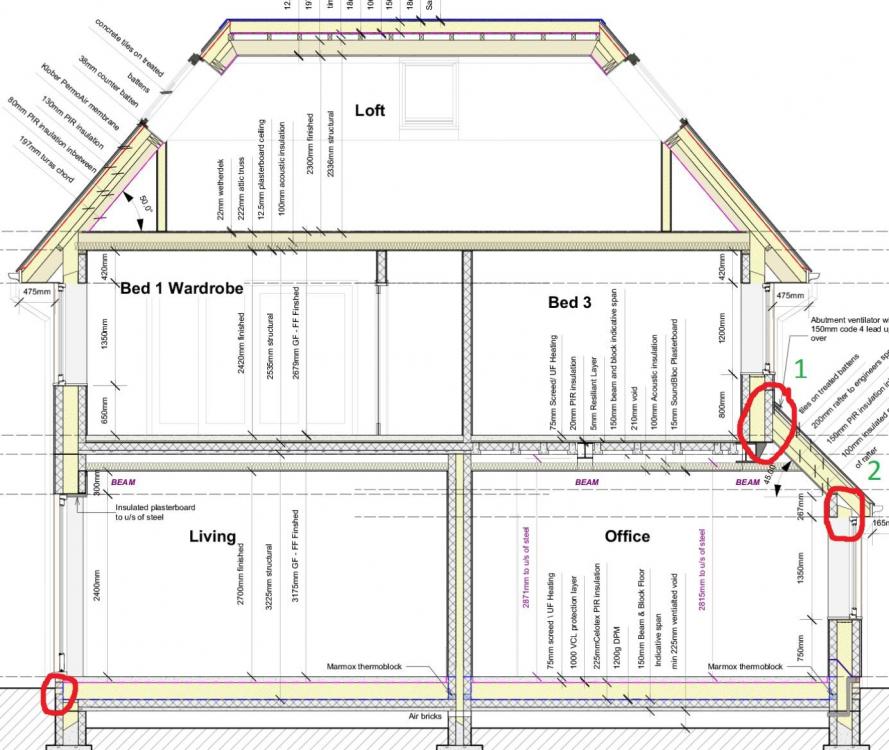
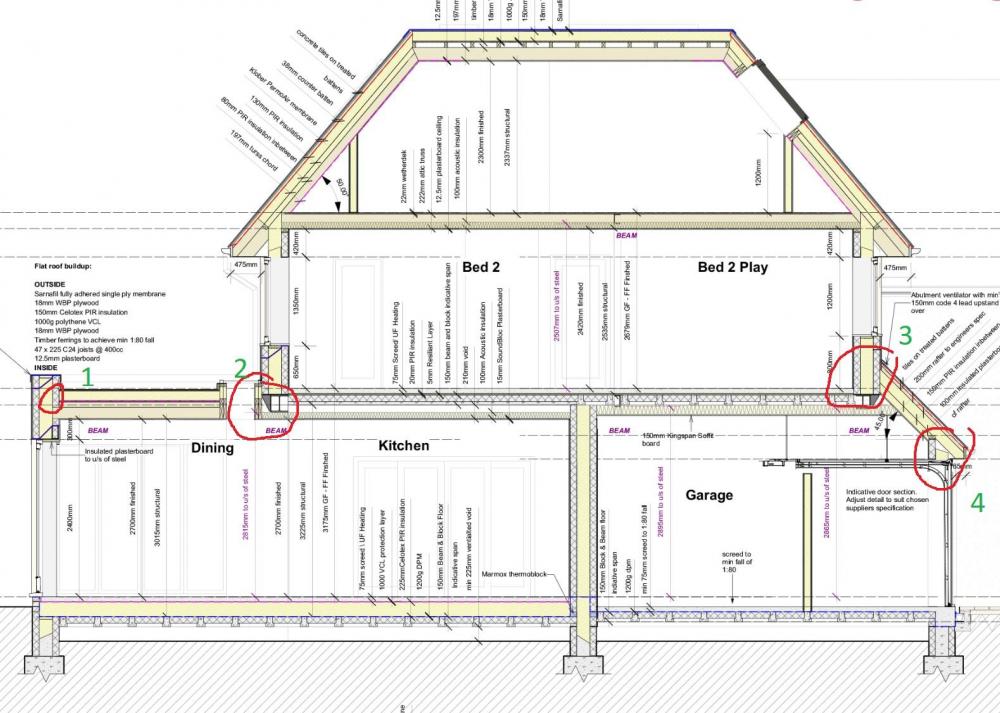
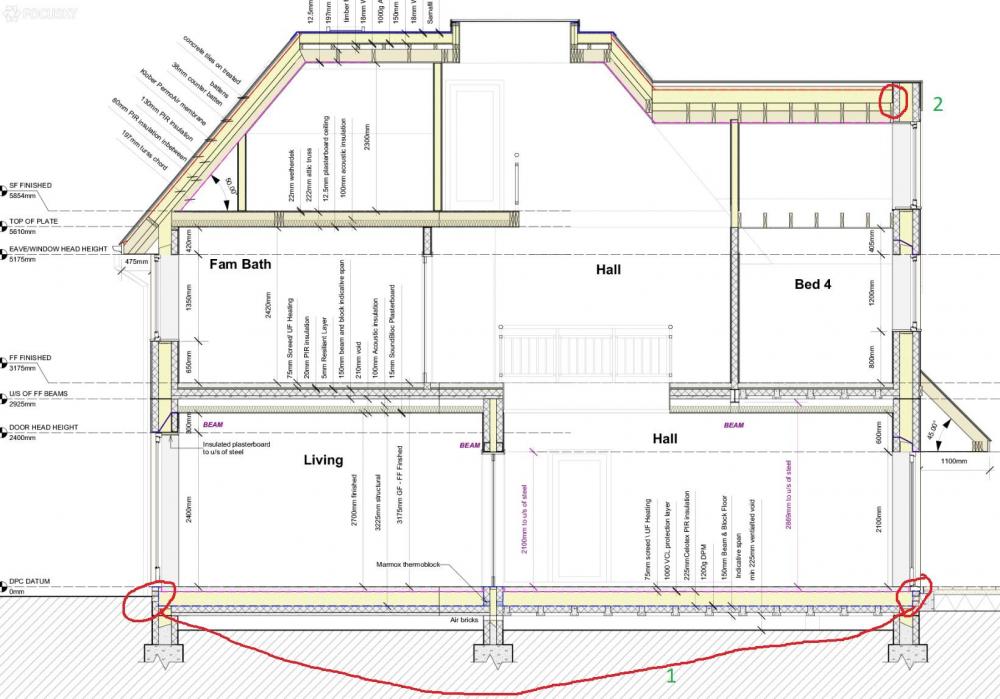
Hm, well in my experience they block noise nicely, but indeed opening/closing them might itself be noisy as mike said Reordered your post slightly for flow Makes a lot of sense but what's a little cold bridge between friends. Seriously though, given that we have PP and completed (draft) designs I suspect doing this would cost me 4-6 months. Do you think it's really that serious/ Good example.. I don't know if I personally should try to do the non-rocketsciencey homework.. but in general, how does one go about resolving these? A thermal expert architect? A builder who knows how to fix this? I do have some passivhaus builder who's helping me with this stuff (for a fee) so I suppose I could ask them.. A few general questions: the "looking for the continuous yellow" exercise of cold bridge finding turned up nothing on the floorplans (except 'all windows').. but I assume that's somehow fine?.. or? The sections, as you point out, are much more messy: Below: 1 - probably just add a thermoblock 2- thermoblock? Below: 1 - Thermoblock 2 - Unknown, not sure why this is done this way? 3 - thermoblock, or at least make the wall not go there? 4 - Is the 'air gap' a problem? In general I hope someone is able to fix this as well as possible rather than redo Sounds like you're not a fan of PIR - Why only in the roof then? Why not use blown cellulose everywhere? I think my architect was under the impression that blown cellulose is only done for retrofits since you can't just 'insert pir' in existing walls?
-
Just resurfacing this to see if anything has changed. My sense is that eclisse is still somewhat 'meh' but has the best marks. Also I suspect having 'as light as possible' door material might help with the system running smoothly and staying running smoothly? Or anyone have any other brands worth looking at?
-
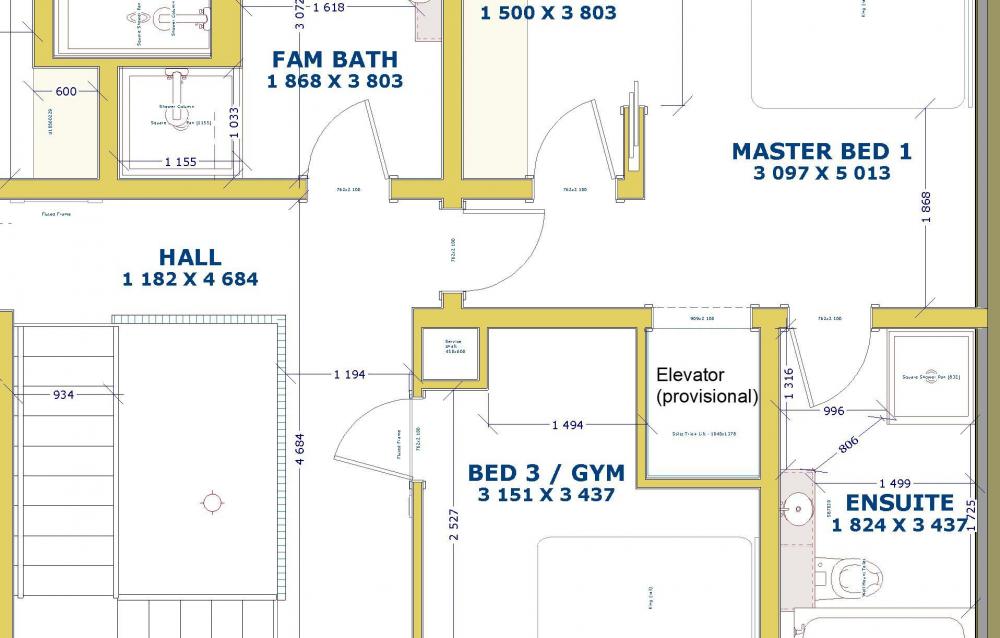
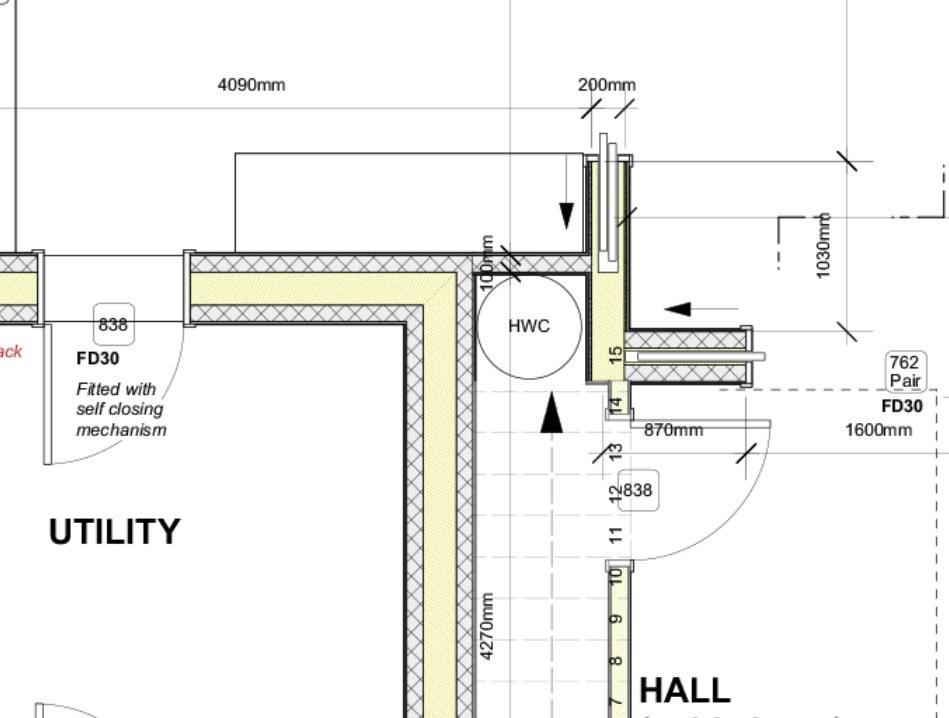
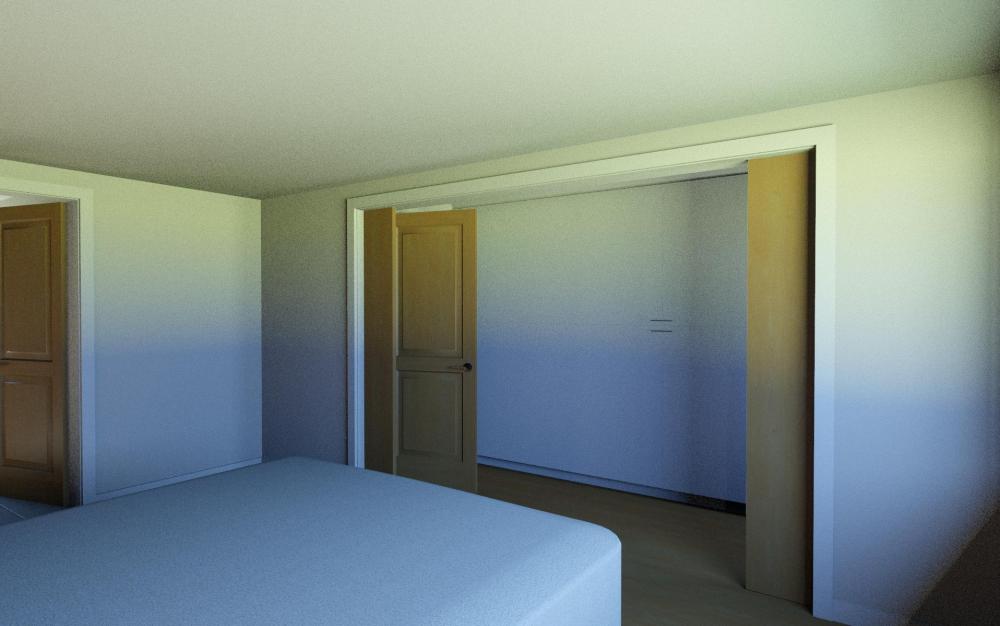
For what it's worth, this is how the "elevator situation" would look like. While indeed there is a certain extra amount of walkway, I'm not too certain if the elevator can be anywhere else. Perhaps the onlyl thing I could imagine is swapping the service shaft with the elevator but the shaft needs to be as central as possible. Also moving the elevator down would clash with ground and loft layouts.. Good point, to be clear - as above you'd have to get out of master bed. But yes, master and bath should have slightly larger doors I'm not sure what you mean? I assume you mean the side wall- elevator, service shaft, network cabinet/ My current plan is somewhat 'organically grown' - for example the network cabinet needs a small door that ends up in front of the speaker so it can't be all the way in the corner.. Elevator shaft is located into master bed as well as into loft etc.? Why not? I mean, a "walk through" wardrobe is a very common idea, do you not like it? As mentioned part of the reason is the two partners going to bed typically at different times so it's designed so dressing/undressing can be done without disturbing the other.. This is the difference (while standing on the through-walkway on the ground floor) If Bed2 were cramped I'd agree but it's not, and this costs 1m2.. not huge? Ha, we had this. Didn't manage to get through planning permission - but the bed1 has provisions so we can still do it when we try for planning again later Yes that's supposed to be a closet! Well, assuming you mean here: then yes that will actually exactly fit the HWC we have in mind! Checked with manufacturer and everything. But, to keep plant together we still are likely going to move it to the loft plant room anyway yeah I'll do some mowork on this, especially the master pocket door is crucial. But this is why: :re Well the garage space (utility+bike) is the right garage size, 5x3m - tight but acceptable. But no, planners are ok with just sufficient outside spots. Thank you for your thoughtful points. Stuff to think about!
-
Thank you @ETC, for taking the time to think about this stuff, much appreciated. A few interesting ideas. In general sometimes I see why you did it, sometimes I don't.. added comments into the pics!


-
Yes, absolutely a worry in the bedroom, never seen or 'felt' telescopic ones - done the standard 2-piece-connected ones and they are fine but not 'amazing'. It's just that in principle having a large-ish master is important *and* the shielded walk-in is important (but both were fairly hard to achieve without even more painful sacrifices such as giving up on bed 3. All the other pocket doors (downstairs) I'm not worried about because they are very much intended to stay open most times, so no need to be annoyed while pushing them around What happens if we hit 9? Why 8? Yes, well, you might have seen the SE drawings - https://focusky.com/uqqn/obaq - do you think they would not do? I've heard this said before but I think the architect was dismissive of this idea, beam block being faster and cheaper than multideck? Why do you recon it's better?
-
Absolutely, I have a SAP model done already, and PHPP whenever the guy has time (he's booked until Dec ) Or do you mean something else than PHPP?
-
Ha, down where? Should I be worried? At the end of the day, I'm sure I'll have a few days where it's both sweltering and windy, but I have designed my center hallway as a "heat chimney" and am certainly planning somewhat overdimensioned cooling. Or do you think this will get me into consistent trouble?
-
Nope, at 65K for 250sqft, with a huge unused loft it didn't make enough sense. It's elegant to stuff all plant in there, but eh.. can't have it all To make sure, let me indicate where the 'wet rooms' above ground are: The master has a downpipe near, the family+ensuite too. I do plan to have fittings for upstairs washingmachine (if one ever wants to convert utility to proper garage). The most concerning foul run to my layman's eyes is from the washing machine above office to either the service shaft (top left of office) or master ensuite foul run (top right of office). If anything, maybe move washing machine near the service shaft. What's boxing out? No, I've been going back and forth on that one. On the one hand my wife wants to first decide if we go ahead and build at all (if tendering doesn't give us a terrible surprise) but on the other hand indeed having to redo the SE is also not great... I might ask an M&E guy for a very rough draft... but I'm sure it'll still cost..

-
Chief Architect can certainly show the solar angles if that's what you mean - but it doesn't have any cleverness around overheating. All I know is that the floor of my livingroom and garden room will never see direct sunlight as long as the awnings are out. As for the skylight, all I can do is have it be electrically tinted, smartglass with also a solar coating.. (I forgot the actual terms, but you probably know what I mean). Who would do such physics models? True, but windy+hot is pretty rare around these parts. I certainly intend to ensure the wall that holds the awnings is prepared for major wind force. (plus as mentioned I was planning to use the ASHP for cooling as well, maybe UFH, but to avoid condensation, more likely chiller coils I have no idea whatsoever! - how can I tell? (did you check the SE designs?) This is one of my major struggles, I've tried to hunt for cold bridges myself, but I'm an amateur and don't really know what to look for when things get too detailed. My architect is good at his job creating a "pretty" house, but I'm not super confident they are great at all the thermal details. How does one mitigate that? Tx for taking a look!
-
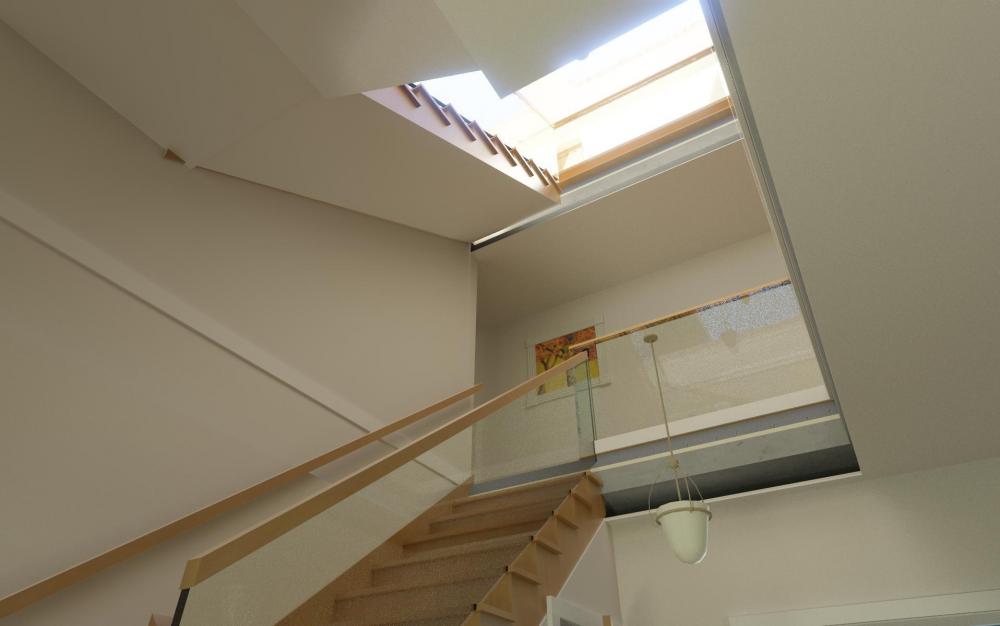
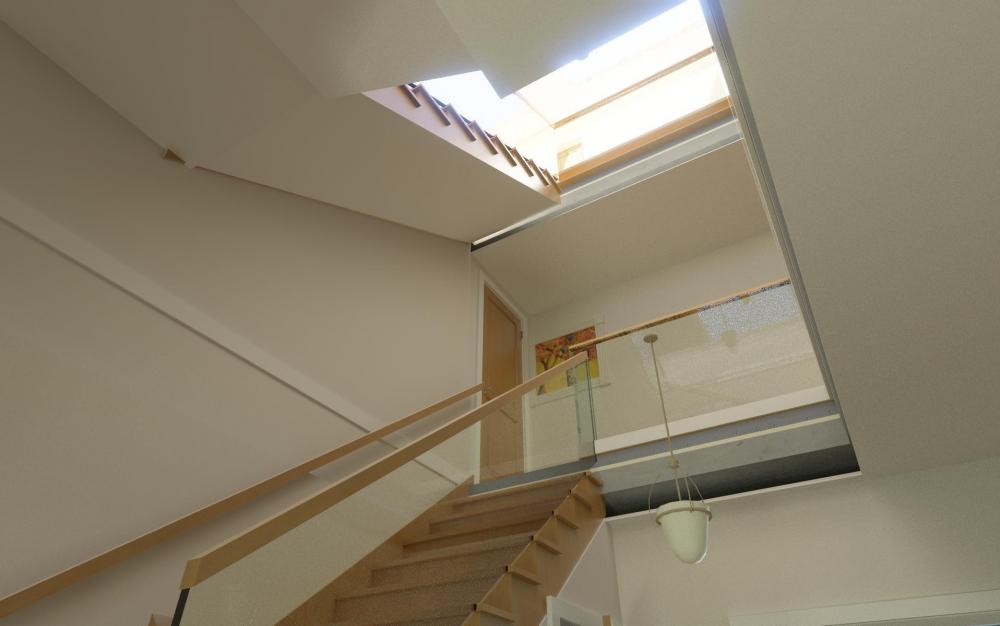
Ha - well in Jan 2021 my QS figured more like 720K - at this point I'm expecting 800. This is in a Hertfordshire commuter town with a very good train link, so everybody asks a premium. I do plan to look for some builders more up north to tender. We are provisioning a shower in the bike/utility room actually, but that's more to hose down the kid or scrub the gimp - you know. But at some point it could be converted in either a garage or an extra room. Absolutely, solar PV covering the sunfacing. Ha, people less romantic than me say that older couples would just want 2 bedrooms and one.. 'shared' one. - not sure how 2 dressing rooms help with the waking times though, core point is that you need privacy, light, and some noise isolation while you undress. Someone else here pointed out some bridging problems - but would love to hear details on your concerns if you have the time... did you look at the SE drawings? (mind you, I don't think the SE was actively thinking about thermal.) Yes, it is the concern. As perhaps noted elsewhere I am "somewhat less" concerned about hitting true passivhaus, so I wouldn't mind overdimensioning my ASHP somewhat and I was planning to insert chiller coils such as this one Carrier Idrofan 42EP in the living room void. Runing off PV during those hot days might strike a suitable balance without running up bills... This is Chief Architect software - and the pictures are raytraced (it supports GPU raytracing so it only takes 20-30 secs per picture). VR mode is also quite interesting I'm... somewhat.. proficient at this point with the program but many of the details don't reflect reality, for example I convinced it to build the crown roof by inserting a fake floor.. sounds good in theory but in practice many roof planes are now really weird and had to be manually pushed back etc - so for a quick impression it's great, just any smallish details (e.g. look at the glass balustrades) are bound to be messy and not to be depended on.
-
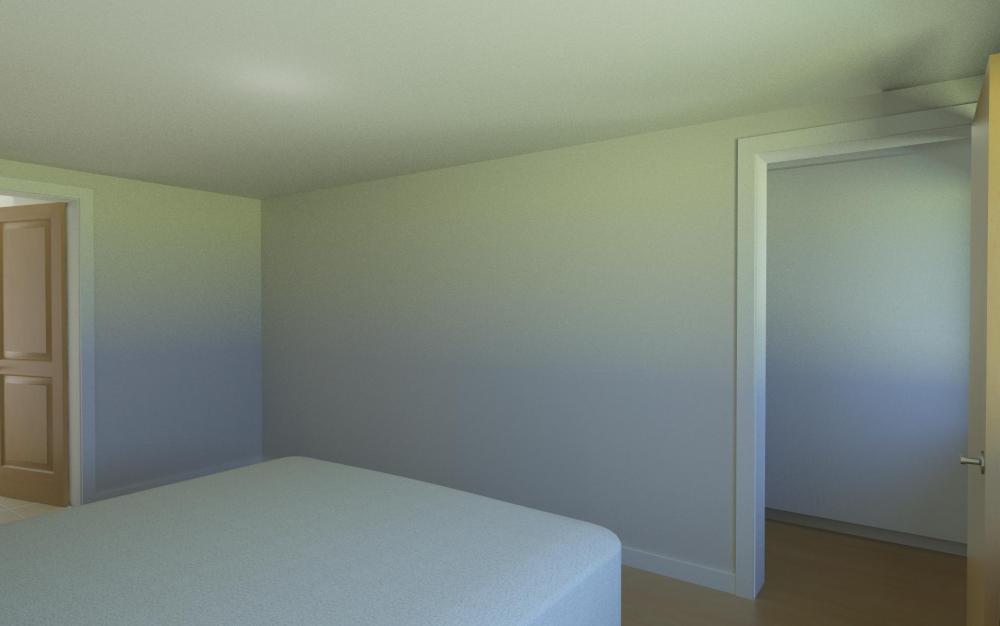
Hey all, I've been with Buildhub for a little over 2 years now - time flies - and it's been quite a ride so far... and I'm finally very close to the final design. Would love some discussion on if we've missed anything ;) Here are the mostly professional designs (amateur renders at the bottom) A few basic design principles: - Pretty much Passivhaus, intending to run full PHPP, but don't care about certification. - Full awnings on sun-facing side (SE facing garden), triple glazed with built-in shutters everywhere - NE loft section will be a plant room - that's where the 600x450 service shaft ends up. - Split ASHP in the garden. More details, including SE drawings here Ground Floor (2700mm ceiling) - the stair nook with the cylinder will likely (...) be used for UFH manifolds, moving the cylinder and ASHP endpoint to the loft. - Utility+Bike could be turned into a garage. - Office with full house service shaft, elevator provisions and a fully ventilated networking cupboard (in current floorplan it is too small, real size 605x700x2700) First Floor (2410 ceiling) - Bed 2 and 2-play can be split into 2 rooms - Master bed design fairly specific to us, different schedules so while a large space is nicer, telescopic pocket doors approximate the size feeling (see pic below), while allowing us to close them and quietly get changed while not disturbing the partner. Loft (2300 ceiling) - Intended to not be built up (cost saving) but fully ready to be occupied, so rooflights present, will adhere to fire regs etc. - Bottom right (W17) section sits next to the service shaft, intended as plant room - Gable actually contains a small seating area - call it a flourish. "Loft stairs" from Bed 4. Good idea? Bad? (we wanted light from the front gable window to come through the area anyway, why not put a beanbag or 2 there.. Amateur renders (based on my amateur implementation of pro design.. be gentle..)


-
High Capacity heat recovery?
puntloos replied to puntloos's topic in Mechanical Ventilation with Heat Recovery (MVHR)
@joth seemed to think a MVHR would not be able to handle such things, perhaps because of the air flow rate needed. Can MVHRs take high-speed air? And presumably, after the MVHR pulls out some heat, you still have pretty warm air, what to do with that?


