
puntloos
-
Posts
1575 -
Joined
-
Last visited
-
Days Won
1
Everything posted by puntloos
-
 OK an updated design, then: - LXN5 - with the 200wide, 100deep cable trunk on its left side. - CU on the other wall. - Units arranged to avoid the trunk. Is this serviceable?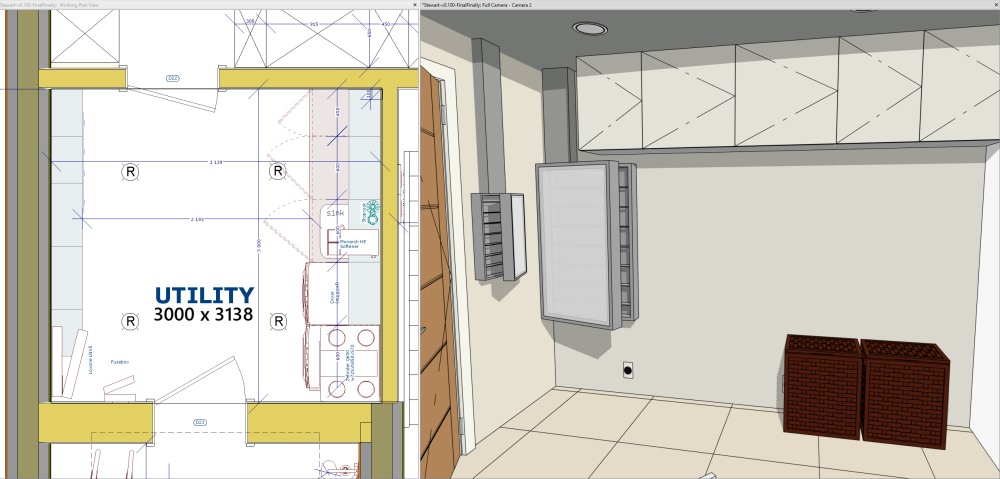
-
Also my house's thermal mass is pretty huge (it's block and beam ground and first floor) so while modulating can be a bit of an issue, I would imagine the cycles are not too frequent so a few "on and off" is not the end of the world?
-
I'm not sure I get your point, the highest SCOP of the list from that site is ecodan based, and indeed, the ecodan had the highest (claimed...) SCOP of any device I looked at, and the features I wanted: - High SCOP - R32 or better coolant - Low operating noise Well, 99% of modern domestic ASHPs are R32, I didn't accept R410 so that knocked a few contender out, but for example R744 aka CO2 is theoretically the 'nicer' (and safer) gas however it isn't as efficient - so the carbon cost to running a device based on it could well outweigh the carbon and climate upsides of the 'nicer' gas. It's too esotheric for me to work out in detail but it's certainly not clear to me as an amateur. It's worth a check but frankly I'm pretty far down this path with Mitsubishi and you're literally the first person I've ever heard bring mitsubishi up as a negative
-
Yep, Joth listed most arguments I heard myself from my installer, indeed I have a large DWH(400L), the house is about 290sqm (but with high ceilings, 2760mm, so more volume to heat). The total calculated heat loss for the house is 3000W. I think the 6kw device was considered but was seen as a little anemic. Not to mention that price differences between heat pumps isn't huge, as long as the device can throttle down enough without short cycling.
-
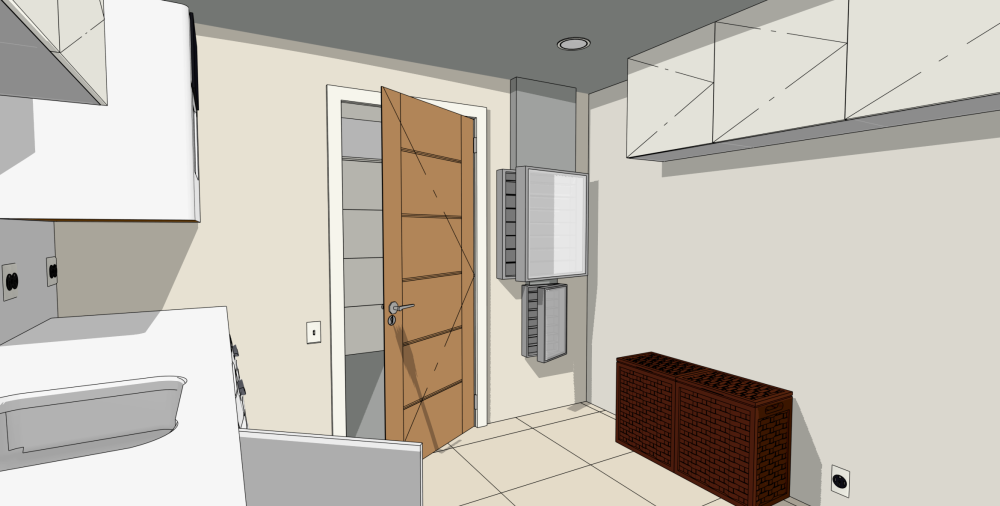
This idea - LXN3 above consumer unit. The alternative is to have the loxone box on the other wall, but I'm hoping I can route the 240V up and either through or around the loxone box. Would that work? (I don't think I'm allowed to reverse them, consumer unit has to be between 450 and 1200 mm above ground?)
-
Thanks for the note, always good to doublecheck but my eng team assures me that this value rolled out of the PHPP cals and they've done this often enough so I assume it's correct.
-
Interesting point.. I didn't realise but it makes sense these devices are 'on/off', not necessarily cleverly regulating the ramp.. Still, turning off the moment you hit what, 22C might be doable if you time it right or (gasp) have a sensor in the floor..
-
I have an 8.5kW EcoDan ashp planned, and of course can do underfloor heating anywhere I like. The interesting part is bathrooms. So many weird pro/cons: - Amount of heat needed to heat a few tiles in summer is miniscule, the ASHP will surely short cycle unless it's already running for other duties - Heating electric off grid is somewhat costly. (I suspect it'll cost me about 40/year for all bathrooms, based on a friend's usage stats) - If I install both ashp and electric my entire first floor probably needs lifting by 10mm, non-zero cost and some minor annoyances and hey, sliiightly reduced head height on an entire floor.. - Electric responds much faster to turning it on, as long as I cleverly turn it off when not in the room, if I use eg 240W mat (the highest I could find.. or will that melt my porcelain tiles/glue etc?) - Doing both - ASHP when it's running and electric when ashp is not running seems elegant... My sense is end of the day just going electric mats is probably the most straightforward?
-
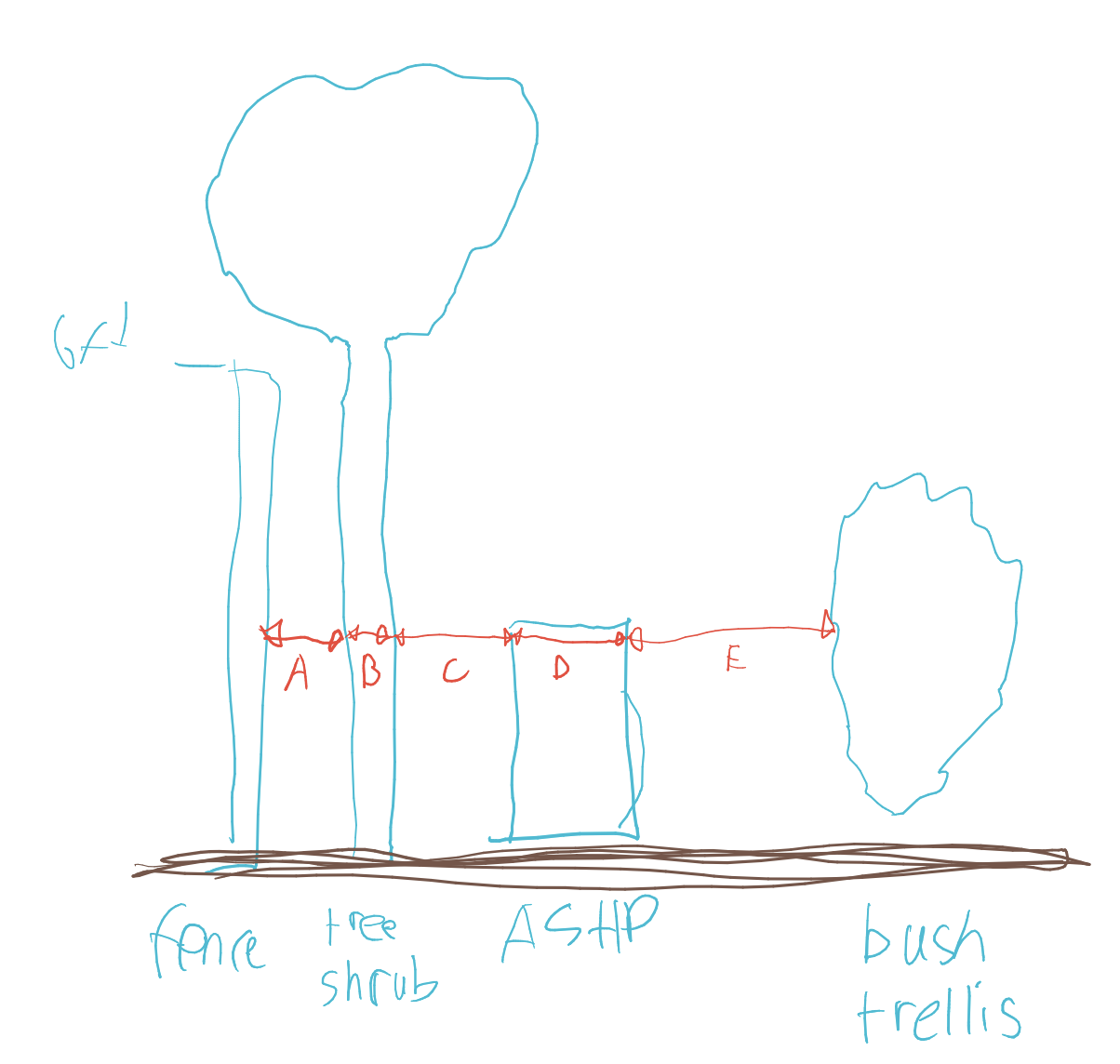
So placing an AC or ASHP outdoor unit has a few sensitivities I'm aware of: 1/ Permitted development. In many cases for ASHP you have to place it 1M away from the edge. -> my understanding is that this requirement can be waived, if we prove the device is quiet enough - below ambient outdoor noise - anyone know more detail? -> For Air Conditioning there are no requirements that I'm aware of. Anyone know differently? 2/ Device needs room to breathe from the back - 300mm is sufficient (but what about 'tree trunks'?) -> Putting plants closeish behind is fine, but what about the roots disturbing the concrete? 3/ Device needs room to breathe from the front - Mitsu's latest model specifies 600mm minimum I think (plus with passivhaus I don't need it running on 'max') Just visually this is what I had in mind A=100mm B=100mm C=100mm D=480 (Mitsubishi Ecodan 8.5) E=600mm
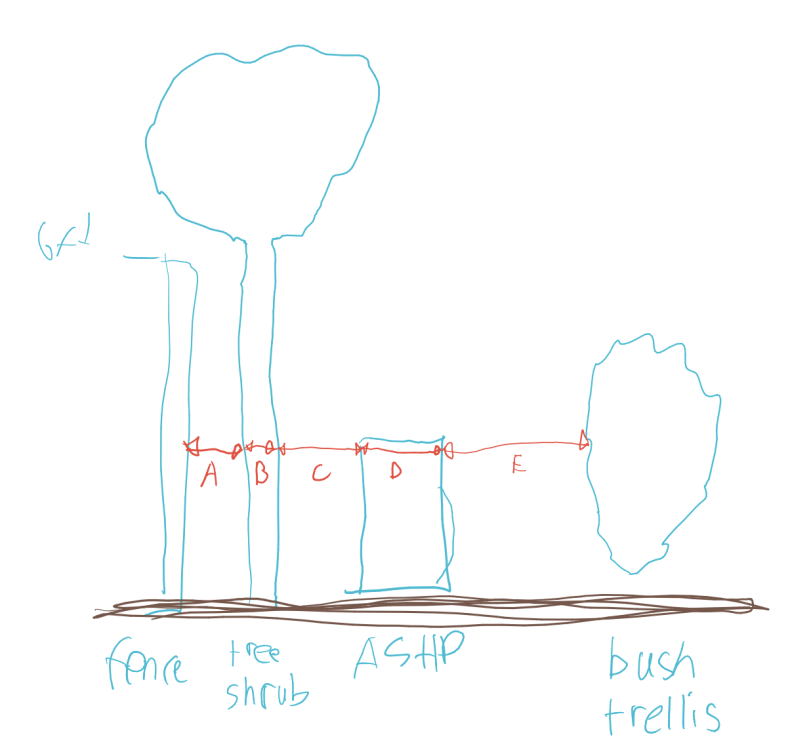
-
Yeah currently I have no idea how hard or easy this all is. If you just punch holes in a pipe, does that mean the first holes get 80% of the water out, and the end of the pipe might drip once per year? Or are there pipes that indeed sprinkle each section evenly?
-
Any chance you can provide me with a spec of what you bought? Which components (some drip system for plant beds and sprinklers for lawn?) did you choose, how long were your pipes etc?
-
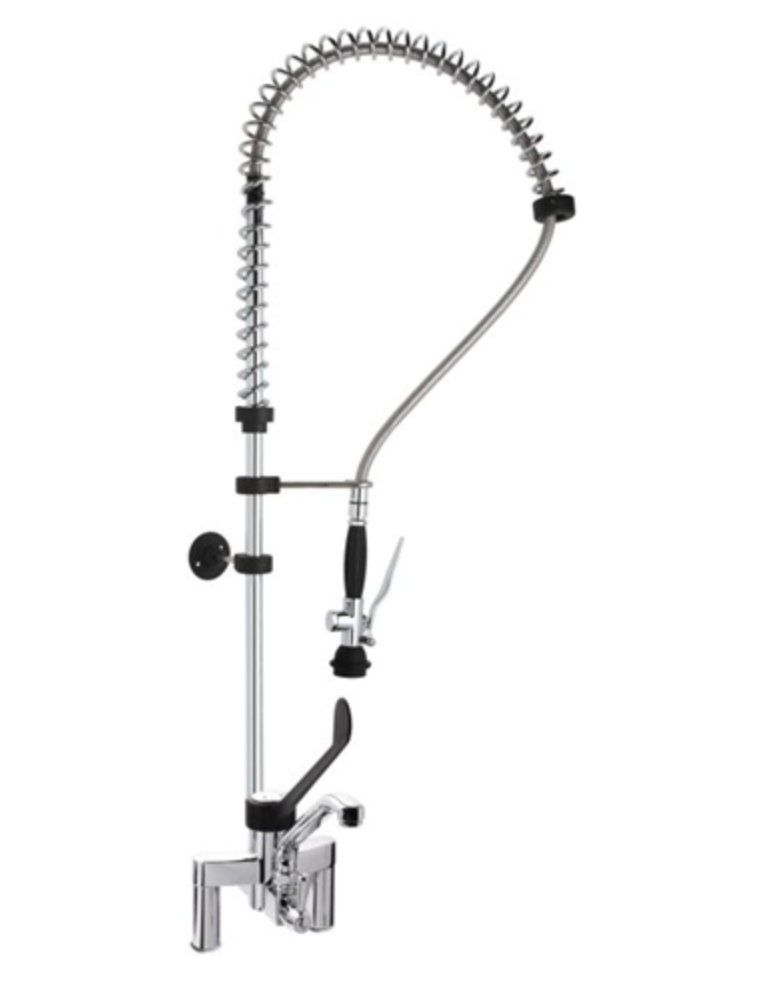
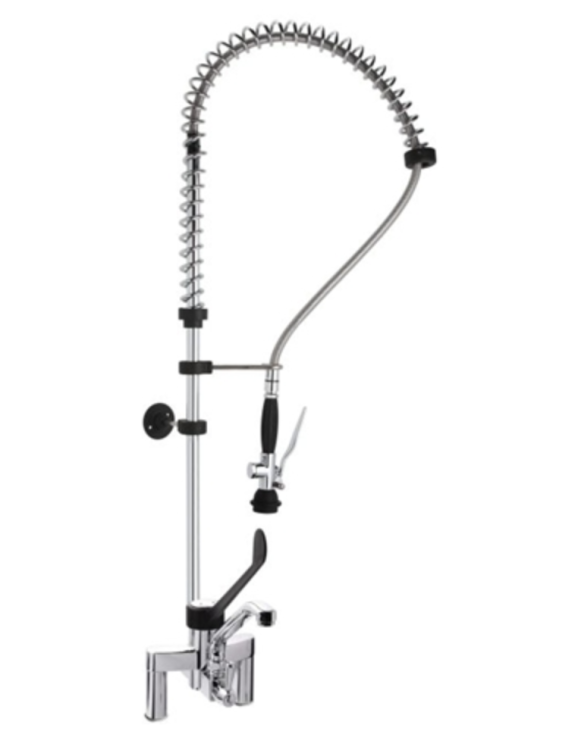
Surprisingly (?) this brand was my default go-to and they do not have pull out nozzle that has an on/off switch! Basically you just turn on the tap with the main control and then water will come out. What I really want is a button 'spray/pause' to control the water flow garden-hose style.
-
This stuff is hard to find online (search terms too generic). Does anyone have some suggestions around a simple irrigation system for a (front, and back) garden? - Both front and back basically rectangle garden - grass in middle, shrubs around the borders, both about 15x10m - One "island" planned in the rear lawn that might contain a tree or two - Rainwater tap available (I have a collection tank) Basically I'd like to install a simple system, perhaps draw a leaky hose around the perimeter? - Is a leaky hose a good idea or are there better systems? - How does one update a leaky hose after it's installed (thinking of drawing a line to the "island") - How are these things turned on/off? Or are they permanently-on? Any tips welcome!
-
Update: https://www.amazon.co.uk/Grohe-Zedra-32294002-Single-Lever-Chrome/dp/B07V47HC22 - grohe brand seems reliable.
-
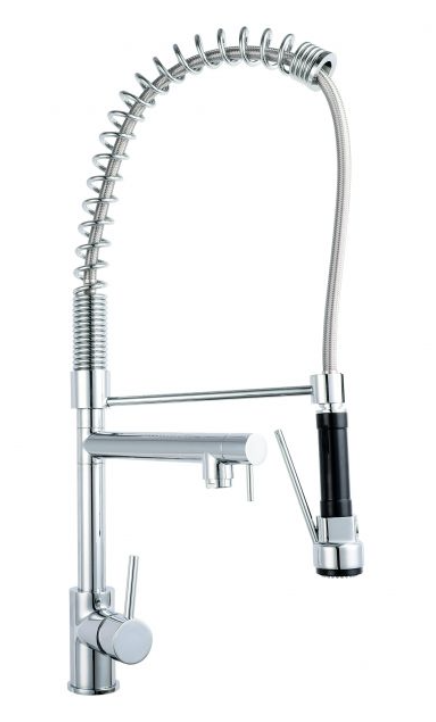
Kitchen taps are harder than I thought. I just wanted a tap that: 1/ Has a long, flexible hose to reach all corners of a large sink 2/ Has a "go" button (so single hand operation. Many taps just run, and you can maybe modify the stream type) 3/ Mixer (hot&cold, obv) 4/ Ideally also a pot filler but this is optional This is the tap for me... https://www.limekitchenandbathroom.co.uk/monolith-hygiene-lever-pre-rinse-tap Or perhaps even better: https://www.reginox.co.uk/ariege-ch Has a pot-filler and has a single-hole, yet it is a mixer tap.. Except: 1/ Is this brand any good? How do I know? Should I just hope? 2/ Will this fit (mounting holes? Water pressure?) Halp?
-
Interesting stuff. The key issue is that there's quite a few stories in this forum with 'hard to fix' issues should something unexpected happen. Trying the safe side with things, so e.g. putting in unused stuff (eg UFH loops but not connect them) is an idea, but in many cases I found that once the 'hard' part is done the easy part is too easy not to do outright anyway. And yea @SteamyTea pipe diameter point, downstairs I have very few options to enlarge.. upstairs, well, if I want to sacrifice ceiling or wall space... hmm. So yes, about a GBP 3000 saving with extra peace of mind, of buy myself a nice family holiday.. hmm
-
I'm not sure I fully follow - the mental model I have in my head is that if we assume the first floor is colder than expected, that means heat will drain out of the (presumably at target) concrete floor into that room. This means that immediately, the concrete is also ever so slightly below target. I imagine that you're right there will be an average "target temp" in the house, so this is not necessarily an issue of adding heat to the house but redistributing it properly, and with no heat source on first, the concrete will be somewhat of a heat sink for the ground floor, no? This is true, and our plan is to pull heat from the devices into the MVHR as much as possible, and FCU as backup. But I agree no direct "device-to-1stfloor" link exists.. Then again I like academies But yeah, as many people here found out, whether or not specific rooms in your house are either too hot or too cold is sometimes harder to predict than it seems, and for a decent amount of change I can be (more) sure that it will not trip me up and run up huge costs later.. but.. also don't want to be truly wasting my energy if it's never going to be a problem..
-
My team brought up a few points: 1/ Additional cost for one more UFH floor is only about 4000GBP extra.. ok nothing to sneeze at but to retrofit it after the fact is a huge pain. 2/ With no UFH on 1st, the downstairs UFH will have to heat more, in particular also the concrete floor (the ceiling of ground floor) 3/ thick(ish) carpet will not really stop heat, it will just slow it 4/ For small houses, it's easier to maintain a good 'de-stratification' (horizontal and vertical) but my house is 250sqm, arguably on the larger side, so indeed it'll take longer for a MVHR to move stuff around. 5/ I have one completely unheated room which might be a bit of a problem if it's cold out End of the day. I think my #1 point is the thing that's swaying me, futureproofing and just a more homogeneous air distribution.
-
House build progressing nicely, now thinking about flooring. We currently have designed UFH on both floors, but on the 1st floor we have mostly carpet, tog is a problem. (currently arriving at 2.3 total incl underlay). As a reminder, we also have fan coil units in the primary bedrooms that can heat. My question: does it make sense to just save some money and remove UFH from the first floor? When things are cold I can certainly heat the room surgically with my R32 Fan Coil Unit (the target heat load in my bedroom is 300W, two bodies generate 160.. I need 140 more..) , but my architect is concerned that a 'cold' first floor, requires the ground floor to 'overheat', hoping that the MVHR will slowly move heat around. Effectively a stratification issue, and just heating the first floor when needed (even with high-ish tog) would be a more reliable approach. Thoughts?
-
Update: Ergh, so far I can't find a single carpet retailer that allows me to filter by tog rating. Best I found so far: 1.2 tog, 12mm high. https://www.flooringhut.co.uk/cormar-carpets/cormar-primo-choice-elite/cormar-carpet-co-primo-choice-elite-zinc
-
So reviving this topic somewhat. My plan: - Passivhaus + ASHP - Downstairs tile + UFH. - Upstairs twist carpet. Tog of carpet (1.7) and underlay (0.8) so exactly 2.5 (below this: concrete block and beam) Will this be ok for a bedroom assuming outside is not less than -5C ? (in cold emergencies there are other ways to heat) Some thoughts: - ASHP doesn't produce super hot water for UFH so it might somewhat struggle - But "trapping" heat typically doesn't mean it's wasted, just slower to percolate into the room? - Or will I only heat my concrete 1st floor flooring? - I heard (citation needed) that many passivhaus places don't even have any heating on 1st floor so wouldn't I be fine either way? Thoughts? What's the lowest-tog twist ("long-ish, luxury foot feel") carpet you've found?
-
According to Filtered water from Quooker some (all?) quooker taps can provide both softened and direct water. Does anyone know details? Just a matter of connecting both sources, or are there snags, gotchas etc? Even if it's _possible_, next question is should you do it? I'm tempted to just do softened since it's a fragile device and limescale kills
-
How to hide manhole covers in garden
puntloos replied to puntloos's topic in Landscaping, Decking & Patios
Hmm, I'll need to step up my boozing plans. -
How to hide manhole covers in garden
puntloos replied to puntloos's topic in Landscaping, Decking & Patios
Does lawn grow properly over it though? I'm told you need a good amount of soil for grass to take? -
How to hide manhole covers in garden
puntloos replied to puntloos's topic in Landscaping, Decking & Patios
Hm this could work. The classic Boris Johnson approach of Deadcatting but with less smell. Nobody noticed the manhole anymore!