


Dan F
-
Posts
1431 -
Joined
-
Last visited
-
Days Won
2
Everything posted by Dan F
-
Internet switch - recommendations
Dan F replied to Moonshine's topic in Networks, AV, Security & Automation
To be more specific, the best approach is a "mesh" (if that's what you want to call it) where each AP (configured with the same SSID), is connected back to the switch/router (also called ethernet backhaul). The thing with the term "mesh" is that is can also be used to describe a network where only 1 AP is hard-wired and other AP's use wireless uplink/downlink betwen them. This approach should be avoided if possible. Unifi actualy only use the "mesh" term when referring to wireless uplink/downlink between AP's. The use of mutliple AP all sharing the same SSID and each wired back to the router is just a nomal network. -
Internet switch - recommendations
Dan F replied to Moonshine's topic in Networks, AV, Security & Automation
If you might have a VOIP phone at any of these locations PoE can be a good idea. Also, if any of you network cables go to (future) camera location, a lot of security cameras use PoE. Do you not have any WiFi acess point though, these are often PoE powered or does your router have built-in wifi with sufficient coverage? Basic 8-port switch you can get for £20-25, PoE version £50-75. To futue-proof though, or if you might add PoE AP's, a 12-16 port PoE switch might be a better option. -
Internal stud / partition wall sound insulation - such choice !
Dan F replied to IanMcP's topic in Sound Insulation
Typically don't pack full. Our studs were 89mm and i think we used 50mm mineral wool. Consider using i) double soundbloc and ii) resilient bars (on one side at least) for best results. -
Agree that fair amount what Homely does has less value is a poorly insulated house. I guess they are assuming that their target market will gradually grow though. Homely does use TOU rates and try to optimize to use these, don't know the details though.
-
Not HeatGeek raising aspiration, this was an interview with founder of Homely explaining how the product come about. See: https://www.youtube.com/watch?v=RjOCzbvSaws Yes, you can do your own DIY "advanced WC", but a product that has come out of research and have already worked out how to tweak things (based on forcast, sun etc.) and tested this is going to do a better job for the majority of people. The big caveat is that Homely only works with a subset of heat pumps.
-
WC that considers more than just outide temperature to determine flow temperature. e.g. - Temperature in coming days and not just current temperature. - Amount of sun and impled solar gain. At least this is what homely guy talked about in the discussion with heatgeek.
-
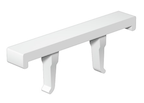
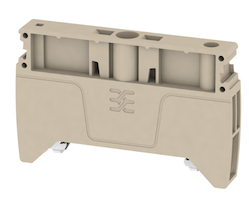
No, because the Weidmuller depth includes the 7mm of rail. So it's actually 83.9mm vs. 81mm and Weidmuller wins by 2.9mm. 🙂. Oops, now I sound like a Weidmuller fan-boy! In terms of labelling, do the blocks not support small clip in lables like these? I used this kind of thing, along with a lablel-holder per-block of terminals that clips into the top of the (shallower) end brackets to write "Blinds" or "5A lighting" etc. Will be bit harder to get blocks on/off any rails that are screwed directly to the back of the panel, but I assume still workable.

-
Yes, same series as the ones you are using for CAT cables, but 4-level. Right, but if you manage to make things more compect by using these, could you potentially squeeze this onto top rail? You can do whaever you need with the DIN rails. In fact, you coul have 30% of the second rail setback fo terminal blocks, and the other 60% set-forward. I did this on my bottom rail, where I wanted RCBO's raised, but my power distirbution blocks set-back.
-
Unsure if it's still the case, but a couple of years ago you could sign-up to a AutoCAD course online, and then get a 1yr free education license. I also found https://viewer.autodesk.com/ useful as, while you can't edit dwg, it allows you to annotate and share drawings. Also good for quickly measuring things from drawings. Also, while it may not be an issue in practice, you need to be careful you aren't breaking any legal terms with your architect, especially if your edited drawings continues to include your architects names and logo etc.
-
If your installation wiring is < = 1.5mm2 and you are short of space, why not use the the signall marshelling blocks for LED's. One 4-level block for each RGBW strip (or two CCT strips) and the interconnected blocks for common anode. Like this can do up to 7 RGBW strips with 8 blocks, or 15 RGBW strips with 17 blocks (and twice as many CCT). You could also use 8-level ones, if you wanted things even tighter. The 4-level ones are 55mm, so might just about work on the second rail, you'd have to check.
-
Looks like the Weidmuller depths include the DIN rail though, whereas the Wago specs exclude it. They aren't triple decks, rather these L+N+PE blocks (that use cabinet earth): https://shop.loxone.com/enuk/installation-terminal-block-aitb.html Do you need those label holders, don't the blocks support any smaller numbered labelleing on the blocks themselves?
-
The ones I used are only 50mm for L+N+PE blocks Wondering what you are using these 6-way ones for?
-
I was thinking about routing primairly and had forgotton about depth. Assuming only the top rail is set-back (by removing feet), the "blind" terminal blocks on the second rail simply won't work depth-wise untless you set-back the second rail too, which isn't ideal. 2-way 24v terminal blocks might work on second rail if not very deep (albeit with a bit of routing hassle), but you'd need to check
-
You need an MCB/isolator and busbar too. Our electirican used the contactum range inside Loxone panel with a double-pole isolator. Electician should be able to tell you what current rating and curve you need for RCBO's based on loads (also need to consider your cable sizes). Just looked and we have https://www.contactum.co.uk/product/cpd100 isolator. I didn't use any Whitewing kit or SSR's, stuck to Loxone Relays and DALI for lighting, so not comments on all of that. The one thing that I don't think is ideal (but may have already been discussed) is not having all "installation" (i.e. to the house) terminal blocks on the top rail. Even if the 24v blocks don't fit, can you put the blind terminal blocks on the top rail? It's just it'll be a bit of a pain routing (potentially non-flexible solid-core?) installation cabling within the panel to get to the top of the second rail.
-
Each relay (outputs on relay extension) are independant, so you use RCBO's however they need to be used for your loads, you don't need to take into account the extensions. As an example I have: - 5 towel-rails on a single RCBO using 5 outputs of one relay extension - 24 blind/curtain relays on a seperate RCBO, spanning multiple relay extensions.
-
Relay #4 makes a come-back 🙂. That's the only bad thing about these simple 230v lights, lots of relays. Using SMI/KNX adds complexity and costs elsewhere though, and Loxone blind actuators are more expensive then two relays AFAIR.
-
Interesting. What approach have you taken for: - power and network to the pico's. - wiring from pico to sensors/actuators (e.g. are pic behind a motion center in the ceiling or something)
-
Passivhaus - safe with power outages?
Dan F replied to puntloos's topic in Environmental Materials & Construction Methods
Dedicated UPS for loxone/network + batteries with Solar PV, or just UPS? I skipped loxone/network UPS given Victron has <20ms switchover which appears to be sufficient for everything I have. What I haven't though about is if/how I could have house running off-grid for 8hrs, but loxone/network running for 24hrs+. I'd need to turn off some circuits in CU when battery reaches a certain threshold, or another approach would be to have a dedicated inverter for loxone/network (this would avoid 20ms switchover time, but would rely on battery never being empty) Didn't go for Loxone Touch Pure with CO2? You using Loxone+KNX in the end? -
Passivhaus - safe with power outages?
Dan F replied to puntloos's topic in Environmental Materials & Construction Methods
This is very interesting: https://protonsforbreakfast.wordpress.com/2021/06/06/estimating-rates-of-air-change-in-homes/ He measures increase in OC2 during the night (for 2 people) from 450-1950pp with (calculated) 0.3 ACH.. -
Passivhaus - safe with power outages?
Dan F replied to puntloos's topic in Environmental Materials & Construction Methods
What is your plan (if any) for backup power and maintaining power to MVHR and/or home automation? You could have Loxone alert you to open a window if CO2>threshold or after X number of hours (or if you have a motorized skylight or something open this), but if Loxone also has no power then that limits you to simpler solutions. We don't have a dedicated UPS for Loxone/Network, and are relying on Victron battery system for this. This has got me thinking though, that it would be wise to implement load-shedding in some way so that in a period of extended power-outage the battery isn't dead in 8hrs, but instead allows for mutliple days of usage with keeping minimal lighting, MVHR network and home automation running. Not really thought about this much as not really as power hardly goes out and I'm not a 'prepper", but interesting.. I wonder though, how many days would you need to be without MVHR for CO2 levels to reach 5,000 ppm? Anyone know how to calculate this? -
Yeah. That's what I'd do. What batteries are you looking at? Is your PV ac-coupled, or do you have a hybrid inverter?
-
Yet another option is to put loxone audio in your rack. I have a tall Middle Atlantic 20" deep network rack. There isn't much in this rack currently but I have - Bottom half set up as shelving. - Unifi router/switch/patch panel. - Loxone audio at the top (mounted on one of these https://www.network-cabs.co.uk/product/ad-tek-products-1u-19-inch-rack-mount-din-rail-panel-bracket-with-cover-406) Works quite well, and saved adding an additional "box/panel/cabinet"
-
Batteries/inverter not elsewhere wherever you have electrical meter and any PV?
-
I used two panels, one in the loft (LXN-4) and one in the ground-floor pant room (LXN-5). All termination fits nicely on top rail in both cases, and room for expansion.. Consider the deeper version if you are planning to put any large PSU lighting drivers in there. Looks like there might be a LXN6-D also. I'd try to get all termination (including 24v) on top rail if possible.
-
No. Thicker solid-core cable just push-in, if thinner though it can be helpful to push down the release "button" (with a small screwdriver) at the same time as pushing cable in. This way you avoid the thin AWG23 core bending as you try to push it in. Looks like the the Wago's have a recessed release "button". but you'll still be fine with a small flat-head screwdriver unless you want to get the Wago "operating tool" https://www.wago.com/gb/tools/operating-tool/p/2009-309 Is everything solid core? If you have stranded cables it's best practice to terminate these with bootlace ferrules first, even though the terminal blocks do support stranded. Note that with standard cables and ferrules the maxumum core size is 2.5mm2 instead of 4mm2 for the Wago, but that should be plently. This info, along with strip lengths in the datasheet.


