Dan F
-
Posts
1431 -
Joined
-
Last visited
-
Days Won
2
Everything posted by Dan F
-
I should add that in my case they worked off of my planning documents only. Maybe they'd do a better job with full drawings and specifications. Looking at it again my costing had no: - Kitchen - Flooring - Cabinetry of any sort. - Anything at all beyond the basics e.g. screedboard upstairs, MVHR etc. The under-priced items are mostly: - Plastic guttering - Only single-layer of standard plasterboard everything. - Sanitary ware and taps etc. - Electrical (sockets, switched and lighting etc) Dan
-
I also got a costing from them a couple of weeks ago. They took my timber frame quote, reviewed what was included/exlcuded and based the costing on this. You do have to tell them everything you want included/excluded (i.e. no radiators) up front ideally. They take into account your post code to give localized labor rates which I thought was interesting. My concern with this costing though, is that all materials are very basic so I'm unsure how useful this costing is if you know we are going to upgrade most material above the basics. We don't want to use a quote that is around £100/ft2 for a mortage application if we think we are going to spend 50% more, else we're are going to be short of money. I think we're going to find and use a QS (will likely be a fair bit more than £150) who will be able to use more realisitc estimates for things based on the level of material/quality we're looking for. Dan
-
FYI, I'm currently looking into this and came across these which look like just what we need: https://www.klein-europe.com/en/sliding-doors/extendo
-
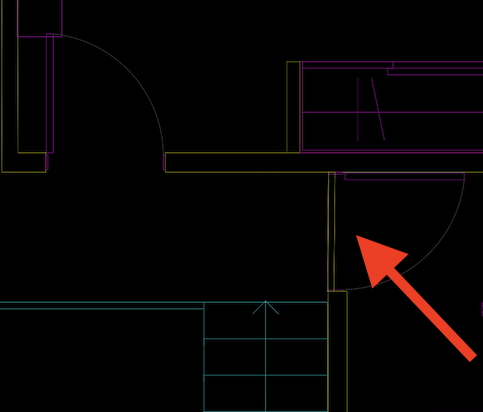
Hi, I'm was sure this must have been covered elsewhere, but I can't find anything searching the forum.. so hear goes: We are currently looking at a couple of tweaks to our planning drawings prior to ordering the timber-frame and our interior architect has come up with a variation on our scheme that creates a lovely central gallery. One of out concerns with this changes though, is with the location of a bathroom door which has ended up at the top of the stairs. I have read Part K in detail, but can't seem to work out if/how it applies to this scenario given the door doesn't open out onto the landing. Regs seem to only talk about i) Landing as deep and as wide as stair width 1.2.0 (which we have here) ii) Doors not swinging across a landing at the bottom of a flight of stairs 1.2.4 (which we don't have here at bottom or top of stairs) (This is England Building Regs) Anyone know for certain how this is treated by building control? Will we need 400mm between stair and door, regardless of it if opens into bathroom or if it is a pocket door? Thanks!
-
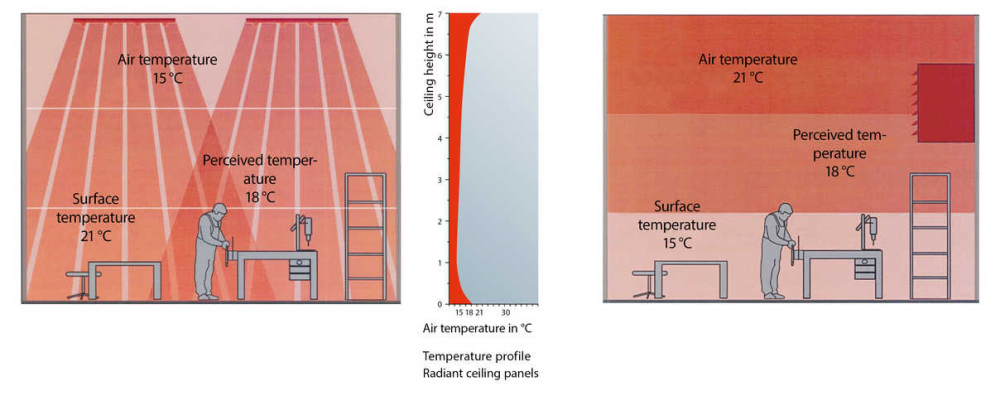
This is the Zehnder explanation. https://www.zehnder.co.uk/products-and-systems/heating-and-cooling-ceiling-systems/benefits/system-comparison
-
Saw then working, but really hard to tell how effective they are without having them installed at home. The theory is interesting, about how you save on heating because you don't need to heat the air temperature so much! That said we weren't keen on the need for expansion gaps at the edge of cieling.
-
Hi and Welcome, We've just made this decision a couple of weeks ago. Rather than tell you who we decided to use, it's worth first mentioning what considerations/questions we asked oursevles as part of the decision making process I think: 1) Do you want supply and erection, or are you happy to use someone else locally for erection? 2) Do you want timber-frame supplier to design and lay the foundations as well as the timber-frame? 3) What level of insulation do you want? Are you looking for passive house levels of insulation? Might you be interested in certification? 4) When do you need to build? (some more competitive options may have a longer lead time) 5) Do you want the timber-frame only, or would you prefer (at a cost) to use a firm that can supply closed panels with windows pre-fitted etc.? If you can answer some of these questions, I think that will narrow down the options... Dan
-
@Nick1c Went to visit Zehnder this morning, and they showed me this system working and suggested considering it. Please update this thread with any further information, especially if you end up using them. Thanks!
-
Not our experience, but maybe ours is configured to take it down to 0ppm (it was consuming 2 blocks every 3 weeks almost!) so we were getting the side-effects of artifically softened water too. Here is an explanation of what I think our problem was: https://www.thoughtco.com/difficulty-rinsing-soap-with-soft-water-607879 Anyway, at 100ppm we are much happier with washing results and we're not consuming salt like crazy either,. Also, 100ppm is low enough to not make cleaning bathrooms too much of an issue. For our new build, we'll probably want to try to find a water softener that has a configurable output hardness..if they exist, lot of other things to decide on before water softeneers though...
-
Do you use softened water for the washing machine? We have a harvey water softener at our current rental propery and it's a nightmare for washing cloths. You have to be very careful with dosing (use a lot lot less) and even then, artificially softened water is known to be bad for rinsing so wash result not great. After trying different detergents (including the Harvey one) I ended using some test strips to mix the softened/normal water to around 100ppm, as I couldn't work out how to adjust the unit itself. Now laundry is coming out much better..
-
PV Self-Comsumption Model for sizing system + battery.
Dan F replied to Dan F's topic in Photovoltaics (PV)
No, just have PHPP estimated values. A fairly small system would cover all usage in summer, and a large system isn't going to be big enough to cover all winter usage, so it's about finding the middle ground, where we save as much as possible on import, but don't spend too much on large system that we aren't going to use fully use when export only pays 5.5Kwh. The methodology in the "self-consumption" report I shared does this analysis and comes up with optimum system and battery side, just a shame there is nothing like available publically and that I can't find the "Darke and Taylor’s excel worksheet" that this report references anyway. -
Fan Coil Units for use with a (cooling) ASHP
Dan F replied to ProDave's topic in Air Source Heat Pumps (ASHP)
Planning on some active cooling yes. UFH cooling like @JSHarris @jack and others. Just not sure I need to be planning for more than blinds and UFH cooling and so I'm not currenlty plannign for any additional fan coils or anything like @joth. -
Fan Coil Units for use with a (cooling) ASHP
Dan F replied to ProDave's topic in Air Source Heat Pumps (ASHP)
I read it as, with 350m3/h and an exterior temperature of 32C, temperature at room valves should be 18C. Wasn't sure what the corresponding 2,65KWh was. But yes, seems very usable. -
Fan Coil Units for use with a (cooling) ASHP
Dan F replied to ProDave's topic in Air Source Heat Pumps (ASHP)
We are planning for external blinds almost everywhere, so don't think we'll need any really serious active cooling like you are planning. Instead we plan to use PV to run HP in reverse and cool the ground floor slab in the summer, as I think others on this forum do. What I was thinking though, was that if we could also use something to run cold water through HRV and not just UFH it would help with upstairs better (and be cheaper than any kind of brine ground loop) -
Fan Coil Units for use with a (cooling) ASHP
Dan F replied to ProDave's topic in Air Source Heat Pumps (ASHP)
Looks like a cheaper/generic version of the "ComfoPost". This datasheet might give an idea of how well something like this might perform: http://www.alternativeadvancedenergy.eu/AAEnergy06/it/dwn.asp?ID=243 -
Fan Coil Units for use with a (cooling) ASHP
Dan F replied to ProDave's topic in Air Source Heat Pumps (ASHP)
I don't know what MVHR system everyone has, but Zehnder have a document on there website about overheating (https://www.zehnder.co.uk/overheating-in-homes) that mentions a product called "ComfoPost": ---- Chilled water coil ComfoPost De-humidification of filtered supply air via MVHR, during peak conditions (water at 7°C) Complete control and setting of temperature and humidity to improve the indoor climate Good thermal and acoustic solution, no draughts or nuisance noise ------ I can't find any further informtion on this anywhere on the internet though!! Anyone heard of it, or used it? (asking as we'll likely be using a Zehnder unit) -
Think I'm going to insist our PHPP/M&E consultant plugs in a climate change numbers into PHPP and models overheating on this basis, comparing options for: - external blinds - brine ground loop for MVHR - active cooling (from PV) via UFH and/or MVHR. I'm thinking I'll probably make sense to use 2 of the above 3, rather than rely on one, but we'll see.
-
PV Self-Comsumption Model for sizing system + battery.
Dan F replied to Dan F's topic in Photovoltaics (PV)
It's more than a trial, it's open to anyone that i) first becomes an Octupus customer ii) has or can get a "SecureTM smart meter". Over providers will do the same under the SEG scheme. Octupus are actually also offering agile tarriffs where the price changes every 30min, this is from import only currently but I can see this moving to being used for export too. Soon you may even be able to use batteris to buy electricity when it's cheap and sell it when there is demand. -
PV Self-Comsumption Model for sizing system + battery.
Dan F replied to Dan F's topic in Photovoltaics (PV)
That's what I thought, but out TF sales person, suggested looking into this and confirming. I have the PHPP model which has the montly PV output, so I can probably extend this and play with different system sizes and compare the amount exported/imported per month. BUT, this would be very approimate as it would be monthly and not take into account any peaks/troughs in demand at all. Battery sizing is a bit more complex though, as you need to consider hourly demand also and potentially variance in PV output based on cloud cover also if you want to smooth out over days and not just over 24hrs. -
Hi, I'm starting to look at PV options, given this will effect the weight of the roof and need to be taken into account for our frame design. I've spoken to a couple of suppliers and heard two opposing schools of though: 1) Plaster your roof with as much PV as possible, if you don't use it all you'll use more when you get an EV and even then what you don't use you can export at around 5.5p/KWh 2) Put a 4kWH system and be done, anything else is a pain with DNO and probably not justified. I know the export rates aren't great so oversizing a system too much probably isn't a great idea, but the larger the system the more it's going to cover spring/autum months, when you save you 13/15p/KWh. I can also clearly see how a battery would help even out the supply/demand and reduce the need to import from the grid for evening usage in the months where there is sun. Given the above, it looks to me like some modelling is called for to find the optimum system and battery size. I'm unsure though if any PV suplliers carry out this modelling, or if it's just all guesswork and trying to sell you as many expensive batteries and you'll buy from them. I came across this study, which is exactly the sort of thing that would be helpful: https://www.bere.co.uk/assets/NEW-r-and-d-attachments/Lark-Rise-Self-consumption-study-by-Energelio-160429.pdf It references a "methods developed in the Darke and Taylor’s excel worksheet.", but I have been able to find anything further on this online. Has anyone else used any modelling to decide on PV/battery sizes to optimize self-consumption and reduce annual costs, or have suppliers/consultants done it for you? Daniel
-
+1 here too, picked one up half-price on ebay a couple of years ago (i'd previsouly returned a cheaper De Longhi to currys at it just didn't heat enough). I obvisuly didn't maintain mine as well as @Bitpipe though because either it's jammed or the elements gone and it's currently in it's box in the garage since we moved into rented accomodation ? Out of interest, are any of the built-in options any good (just in case this can't be repaired) for the new kitchen once it's built, miele/siemnes etc?
-
Great advice. Although I guess there are also risks with all of the routes I mentioned, rather than that route being riskier? Or would you disagree with that, and think a private PM managing individual trades is riskier? We were leaning towards e) as you did, but wondering if b) or c) might actually be best *if* we like the main contractor and can think to trust them with PH-level TF and to finish to the quality level we'd expect after seeing some of their work. b) is potentially interested as it's closest to us doing it ourselves. Wokingham, Berkshire. Our planning application is here: http://publicaccess.wokingham.gov.uk/AniteIM.WebSearch/ExternalEntryPoint.aspx?SEARCH_TYPE=1&DOC_CLASS_CODE=PL&FOLDER1_REF=191468 . Any thoughts/questions/feedback is more than welcome..
-
Thanks, @jack, that all very very useful! I'll report back via this thread if/when Enersign Germany get back to me with a quote. I have requested quotes for Rational/Gaulhofer/Internorm/Schuco also in the meantime.
-
We are currently waiting on our planning application and therefore starting to think about how we are actually going to manage the build when the time comes. We have started talking to different project managers and quickly released that there are lots of ways of doing this, and it's a bit of a maze trying to work out what might make the most sense for our circumstances! Given this, I'm wondering what "build-hubber's" that have gone down this path before would recommend. Out context is as followings: - We will likely be using MBC slab+frame package. - We are renting a 10min drive from our site. - We ideally need things to go as smoothly/quickly as possible. (every month that goes past is more rent and council tax) - We are interested in ensuring we achieve high-quality work. - We are keen, especially if we are investing in a PH system and triple-glazing, to try to only work with contractors that understand/care about maintaining airtightness and avoiding thermal bridges, etc. - Cost saving would be great, but the speed/efficiency is a higher priority. - We don't have any construction experience personally. - We want to be fairly involved in decision making and may be keen to get specialist contractors in for MHVR/heating/PV etc. It seems we have two decisions: 1) How we organize or split-up the work a) Go through a single tender process and engage of a single main contractor for the whole project. b) Split the project into three packages i) groundworks ii) MBC iii) roofing/cladding/fit-out and do the tender and contract for each of these. c) Use individual trades 2) Who we engage to help us We've also had discussions with different people, whose roles I'd categorize as follows: a) Main contractor direct (without engaging a separate project manager). b) A project manager that isn't a construction specialist but works with QS and main contractor(s) and acts as a customer advocate, plans/manages overall schedule as well as helps choose/source materials. Would visit the site weekly. The main contractor is responsible for site/H&S, etc. c) A project manager that is a construction specialist and manages an overall schedule and works with QS and main contractor(s) to oversee the whole project. Visits the site weekly, The main contractor is responsible for site/H&S, etc. d) A project management company that provides someone (potentially a bit more junior) to do c). e) A hands-on project manager that is on-site 2-3 days a week managing individual trades and also fulfilling site management and H&S roles too. (obviously some combinations of 1) and 2) don't make that much sense..) Thoughts? Thanks!! Daniel
-
Remember what product you used @jack? The cheapest ones seem to be the non-branded vertical ones, but these are less flexible in terms of fitting them in the void I assume? Megaflow have a few horizontal ones, and then at the other end of the scale are these: https://joulia.com/en/products/ Maybe WWHRS deserves it's on topic, seems it's not something that's really been discussed too much before if I go by search results.