Dan F
-
Posts
1431 -
Joined
-
Last visited
-
Days Won
2
Everything posted by Dan F
-
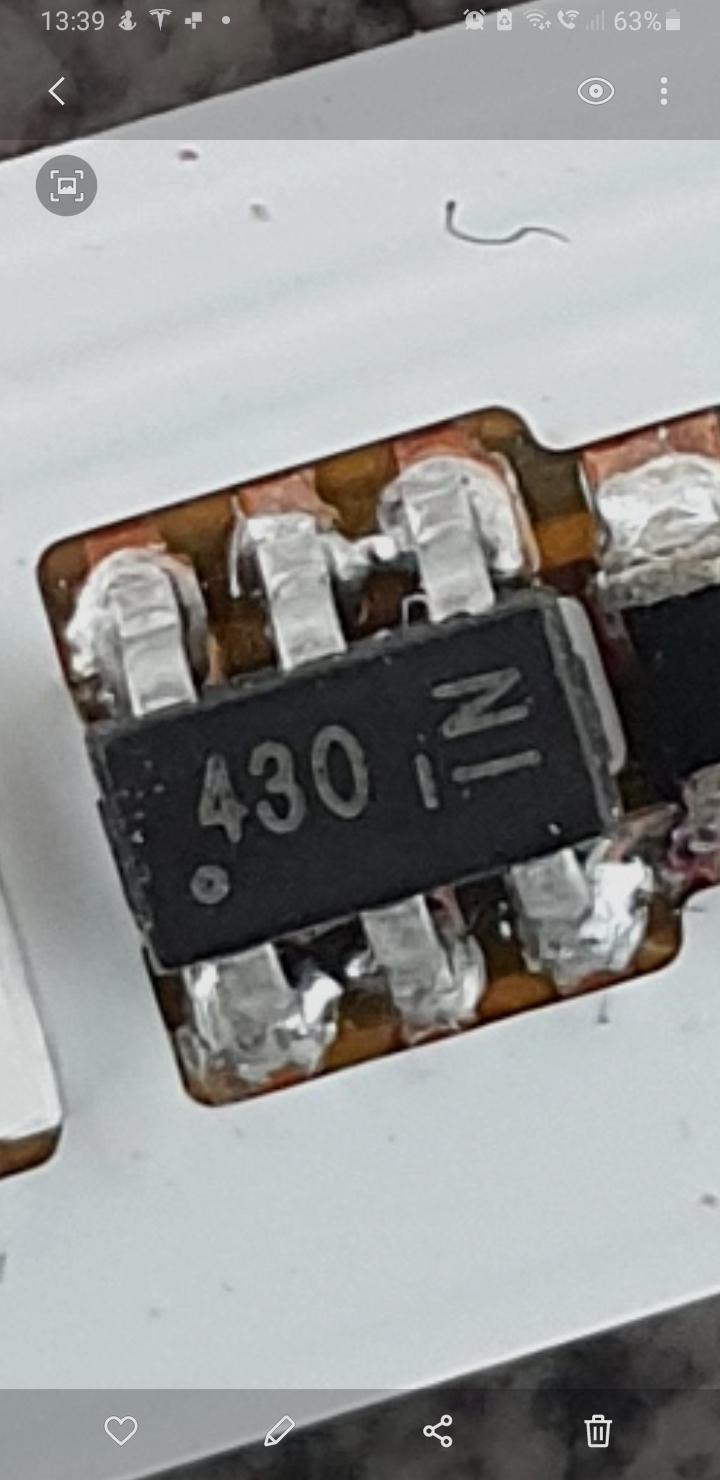
Yeah, good find. Although given the "IN" marking (Nov 21) and it's location, I think it may be the Diodes Inc version: https://www.diodes.com/assets/Datasheets/BCR430UW6.pdf.
-
No, it's not adjustable. The weird thing is with a Meanwell PWM driver dimming is perfectly consistent (if I hook up just one colour LED), the issue is only with the EldoLED driver! The reason I'm using these EldoLED drivers is because: i) the tape is tunable white and there are a limited number of drivers available with a DALI DT8 interface, ii) EldoLED are supposed to be good. I think both Meanwell driver is 2.5kHz PWM, I think the EldoLED is similar but they don't have it in their datasheet.
-
My LED tape isn't dimming properly and below 45% becomes patchy. It's not an installation or voltage drop issue and so I'm suspecting it's something to do with some kind of incompatibility between the waveform produced by the EldoLED LinearDrivee constant-voltage driver and the on-tape "current stabilization". But I can't work out what the on-tape IC is to find a datasheet. Any ideas? This is the tape: https://www.holectron.com/products/flexible-led-strips/tunable-white-flexible-led-strips-nichia/tw-70-d4/ This is the driver: LINEARdrive 200D-D2Z2C
-
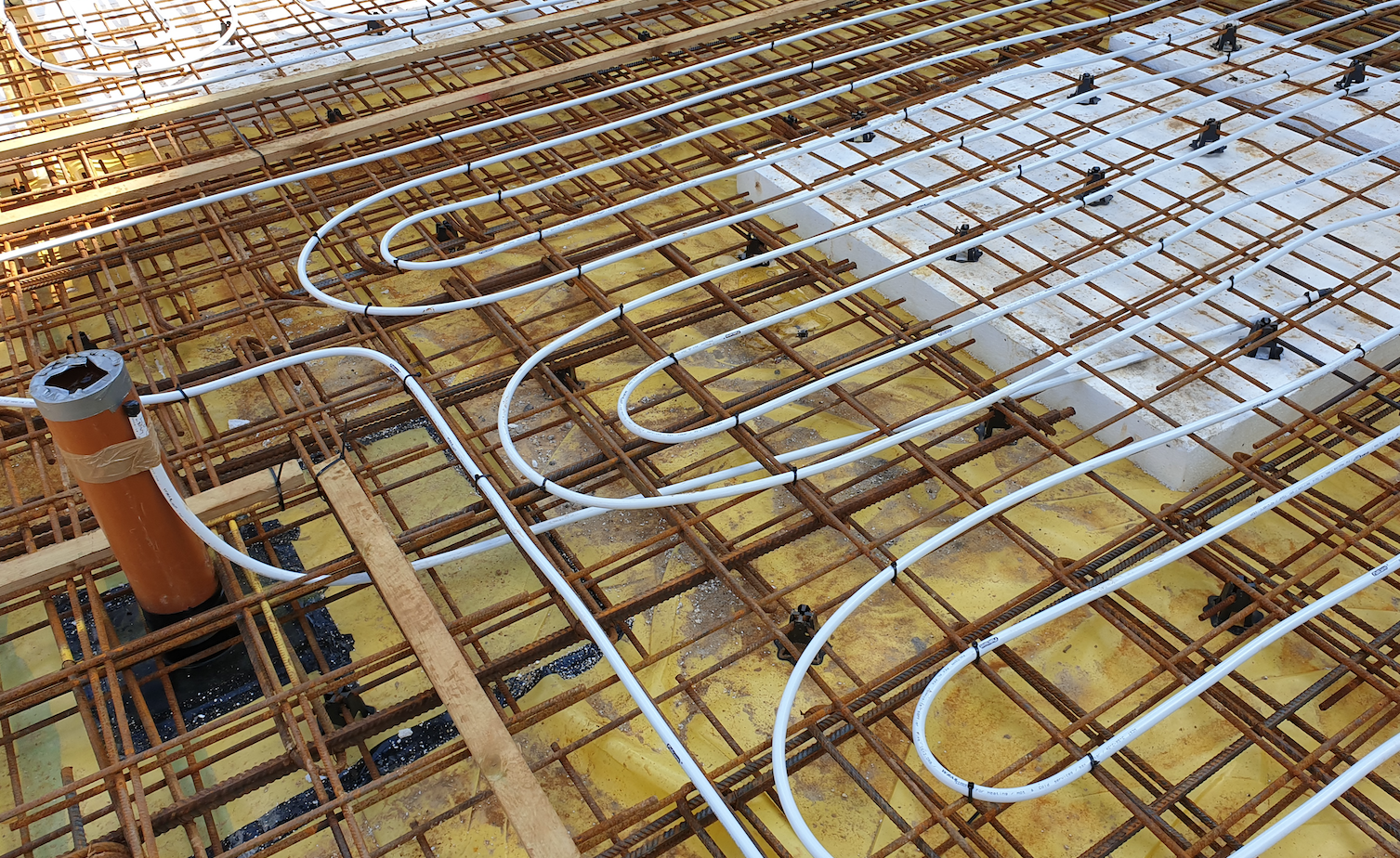
This is directly related to the min bend radius of the product you are using. Rauthermex Duo is 0.6m, which means that if you want the pipe to be vertical up through the concrete slab you need to go 0.6m below this.
-
I'm pretty sure c-rate is related to coulomb somehow, but when a battery quotes a c-rate, it's the rate of charge/discharge relative to capacity.
-
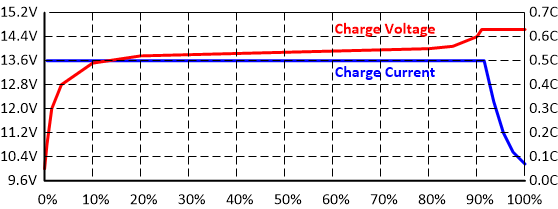
This matches my understanding; constant current and marginally increasing power during charge (given an increase in voltage). At least up to 90%.
-
I don't understand battery chemistry, but based on this graph charge current maintains stable up to 90% SoC, while voltage increases. So, between 10-90% SoC power transfer actually increases slightly over time, doesn't it? Of course, once you get to 90% current drops off, but most people keep their batteries between 10 and 90%.
-
Yeah, depends if you use Pylontech (which only has 15 cells apparently) or something with 16 cells. 16 prismatic cells in series are 51.2v nominal. In practice though, the charge voltage for LiFePO4 would be 55v on average, so it'd actually be slightly higher I think: 90A x 55v = 4.95kW. The Victron setup I'm planning has 3x70A, so about 33kWh in a 3-hour off-peak period, drawing 16A on each phase. I hadn't calculated this before, but this will work well with the 2x14.3kWh batteries on order.
-
@Rob99 Another consideration (primarily in winter) is the max charger current of the inverter/charger. This is separate from the inverter power and will define how much you can your battery during your off-peak. Octopus Flux, for example, only has a 3hr cheap window (2-5 am). For example, a SunSynk 3.6kW inverter has a 90A max charge rate, so approx 4.6kW, meaning in 3hrs you can fill 13.8kWh worth of batteries in 3 hours. Some of the Solis hybrid inverters are closer to 60A though I think.
-
As long as you are not using an AC-coupled PV inverter, that is correct. Only if the actual inverter rating (on the data plate) is <3.68kW can you use G98. If the data plate is >3.68kW but you will limit output to 3.68kW then you need G99 fast-track SGI-1 instead. Based on the amount of PV you have and how quickly (kW) you want to be able to charge/discharge. If the inverter is only 3kW, but you typically use 6kW cooking in the evening, then you would be importing half of your consumption from the grid (at the most expensive time if you are on an agile/flux tariff) even if you have a 100kWh battery that is full. If the inverter has this restriction in place, but PV is reducing more, then the MPPT(s) will throttle back. Might depend on the inverter. With Victron at least, my understanding is that the limit applies to the excess after usage (the feed-in). So if you are generating 6.68kW and using 3kW, then you'd not actually losing any potential generation. This assumes your house is on AC-out-1 and not AC-in (so, the other side of the inverter). If the house was hooked up to AC-in, then my guess would be that the max discharge from the battery (assuming not PV) would be 3.68kW including usage. Assuming your inverter is >3.68kW, I've seen people recommend starting with a G99 SGI-1 application (with the limit in place). Then once you have that in the bag, apply for g99 SGI-3 fast-track (7.36kW limit), or a full G99 application (up to 50kW).
-
My M&E guy told me to use 25mm duo (plastic) which has roughly the same ID as 22mm copper. Vaillant's view was it "wouldn't" work with 22mm, but the reality is it's fine, it achieves target flow rate, and the fact the run isn't that long and I'm not using Glycol of course helps. That said if we'd installed the 10kW model (with a significantly higher primary flow rate) this would have been a big issue. 7k is plenty though.
-
So no house insurance, nothing? 🙂 We have the anti-freeze valves installed, the installer preferred them to glycol, and the manufacturer (Vaillant) was happy with it, so that's what we have. Actually given our primaries are somewhat undersized at 22mm, I'm glad we don't have glycol else 22mm would have been even more borderline
-
And if there is power-cut in freezing weather? Do you know how much the repair would be vs. what you save for valves/glycol? Typically, if you don't take out an insurance policy, it's good to know what the costs would be that you'd have to cover in a worst-case scenario.
-
About to do one. G98 is still quite limited, but there are now three flavours of G99 fast-track which I think will cover most domestic installs. https://connections.nationalgrid.co.uk/get-connected/solar-and-wind/fast-track-g99/ SGI-2 and SGI-3 are both before-install applications, but in theory, it's a 10-day response time.
-
You still need G99 SG-1 for that, not G98. AFAIU.
-
7kw. The rotary piston may technically be better, but the minimum output on the 10kw unit is a significantly higher and wouldn't have been suitable.
-
Worktop overhanging on flush handless kitchen
Dan F replied to revelation's topic in Kitchen Units & Worktops
No/minimal overhang (for fingers to get in and able to pull doors) is more important with handleless than with j-pull -
Worktop overhanging on flush handless kitchen
Dan F replied to revelation's topic in Kitchen Units & Worktops
Ours is also only a couple of mm at most, very similar to @Russdl. Any more than this with a handleless kitchen and finger access becomes a problem IMO. So, unless 20mm was explicitly discussed and/or drawn and signed off I'd be going back to them. Aesthetically I agree with others it's only a minor detail in the grand scheme of things, but if using the kitchen is going to be a pain for years to come, or if you are going to need to add handles to a handleless kitchen to make it usable.. that is a significant issue. -
Internal stud / partition wall sound insulation - such choice !
Dan F replied to IanMcP's topic in Sound Insulation
Two layers of acoustic PB is what is often recommended. resilient bars too if you want the best result. Have a look at the British Gypsum "White Book" for real build-ups with dB ratings. https://www.gyproc.ie/sites/default/files/Non-loadbearing timber stud.pdf -
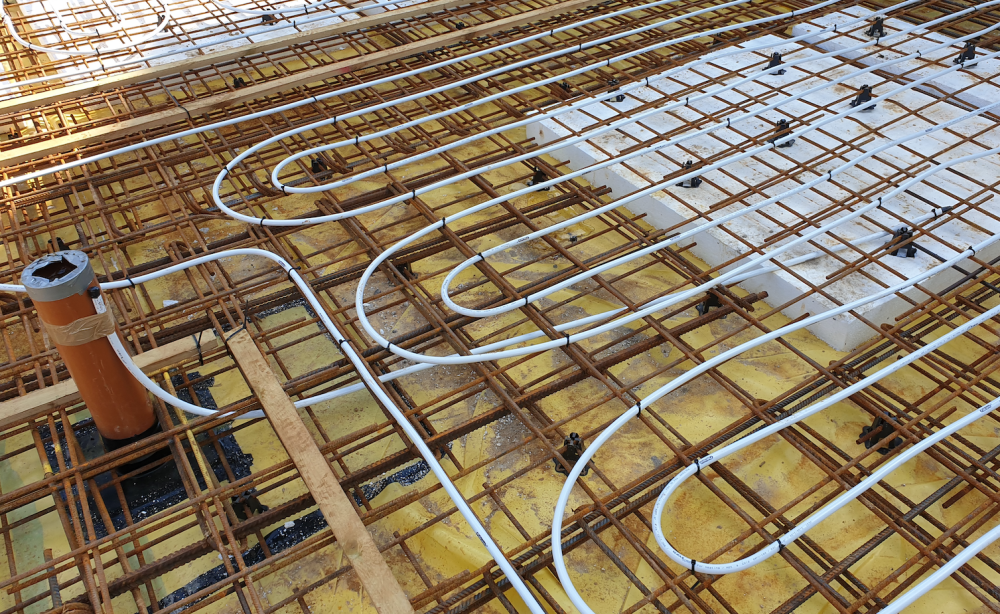
I used UFH pipe off-cuts and formed them into L shapes with a fairly shallow bed. One else I squashed to close and the other end I left open and then I taped both ends. I then attached the horizontal section to mesh with cable ties and the vertical portions I had sticking up clear of the final slab level. Where possible I brought these up next to SVP pipes which was quite convenient, but otherwise, they come up in locations which I knew would be within stud walls.
-
I bought some overpriced Loxone ones with 2.5m lead. There are packs on amazon with 5-star reviews and 3m leads. In terms of buying the real deal, I guess the best you could do is buy from somewhere like RS instead of Amazon. Putting them in UFH pipe is easy and then you can just push sensors into the pipes once the concrete is down and you don't risk the sensor lead ending up in the concrete or the sensor getting squashed or stepped on. I can't easily change my sensors as they all come up, and are connected, inside stud work and behind plasterboard, but I guess if I needed to I could get to them vs. them being concreted in.
-
Condensation on the surface of the slab, not in the slab. How much condensation you get here depends on the relative humidity in the room and the floor surface temperature. The Vaillant calc will be quite conservative and assume your floor surface will be same as flow temperature, which in practice might not be the case. No, to humidity sensors in the slab. Yes to temp sensors in the slab, even if they may not be used to control heating.
-
The Vaillant controller has a humidity sensor and can be configured to limit flow temperature to avoid condensation based on current relative humidity. Vaillant controls aside, it's still a good idea to put some temperature sensors in the slab (inside some UFH pipe off-cuts) in different locations. Do you plan any type of home automation system that you could hook up these sensors to? Assuming you can use 1-wire sensors, get a pack of DS18B20 sensors. Buy ones with long leads so you can place the sensors where required and then connect them up within an internal stud wall.
-
Any truth to ASHP problems based on location?
Dan F replied to Shaun McD's topic in Air Source Heat Pumps (ASHP)
removed -
I'm in a similar situation. I switched to Octopus Intelligent and they haven't moved me off Agile Outgoing. Flux is potentially interesting as, while agile export rates were very good last year, they may not be as good in 2023. The main issue with switching from Intelligent-> Flux is that I'd loose the 10p night-time rate for car-charging. Paying twice as much to power car, which is one of our main uses of electricity, it's very attractive. On a side note, quite happy I didn't get Powerwall in the end, now that TEP has gone and Powerwall owners are wondering if/how they'll be able to make their Powerwalls export between 4-7pm.