joth
-
Posts
2918 -
Joined
-
Last visited
-
Days Won
5
Everything posted by joth
-

Keep gas boiler or install heat pump?
joth replied to Walshie's topic in Central Heating (Radiators)
^ this probably said it better than I have Nit picking: more heat than the emitters can dissipate. If the boiler is producing more than the house can dissipate it means its summer and time to turn the heating off 🙃 -
Architects, ballooning fees and estimates
joth replied to Drellingore's topic in Costing & Estimating
Absolutely; when we set out selecting an architect we didn't really know the scope of the project (from a modest "passive house inspired" remodel right up to knock down and rebuild) But by the time we'd completed planning application (in a conservation area), detailed design, BR sign off, and ready to issue tender pack, 99% of the variables you mention had been fixed, so to mind this was the right time to fix pricing. (There was an additional bargaining point, that this was the architect's first certified PH so a portfolio project, and one contractor wanted to whisk us off into a D&B contract, so there was incentive for the architect in having us stick with them. But even without those factors I think it'd still be a good time to fix pricing if it's not been done before then) -
Architects, ballooning fees and estimates
joth replied to Drellingore's topic in Costing & Estimating
We were on a % of build cost (for a deep renovation) but prior to the tender being issued to contractors we agreed to "freeze" the architect fee at a fixed price based on this % of the target budget we were aiming for. This felt a good compromise as it meant during the tendering negotiations we knew they were onside with no additional motive to let the price balloon. I much preferred the architects that gave fixed price quote from the outset, but we compromised on this criteria because we wanted a passivhaus certified designer and there weren't many to choose from in 2018. -
Keep gas boiler or install heat pump?
joth replied to Walshie's topic in Central Heating (Radiators)
I assume you're on mains gas. Some random thoughts to add to what others have said. Do you use gas for anything else (hob? Fireplace?). Going to ASHP makes more sense if boiler is the only gas user hence allows you to disconnect gas Will you be moving the boiler or meter as part of the renovation? If so then you can save on some of that work by making the transition now, but if not then maybe less incentive to mess with it. Are you more concerned about financial or environmental savings? Either way increasing insulation and airtightness as part of the build will help, but in particular if you can get your heating demand very low you can do all the heating in overnight cheap rate electric which makes ASHP cheaper to run than gas boiler. With a leaky drafty house you can't avoid running the heating source all day (when building occupied) which makes ASHP more expensive, at least until energy taxation policy is rebalanced away from favouring gas. -
Seems a bit passe to me DOOM on a lighting to hdmi adapter is where the bar is at
-
(ASHP-based) Hot water tank gets cold surprisingly quick
joth replied to puntloos's topic in Boilers & Hot Water Tanks
How many temperature probe pockets does your tank have? IIRC it's 3 or more. Perhaps worth loading up a probe in each one to get a more complete picture of the stratification. My tank just has the one pocket in the middle and I have similar annoyance at the fairly binary nature of the data it gives me... -
Smart meter external aerial last ditch attempt?
joth replied to SuperJohnG's topic in Consumer Units, RCDs, MCBOs
How long did you leave it? Dunno about the Northern DCC by my experience on the southern network is it takes days for anything to actually register and start using the smart meter data once it finally connects. -
Thoughts on electricQ air-to-air?
joth replied to ReedRichards's topic in Air Source Heat Pumps (ASHP)
I did a DIY install of one of their split units, in a garden room gym (100mm insulation) I fudged it up and all the gas leaked so paid more to have it recharged than having pro install would have cost to start with (because finding someone to do R290 was expensive). But hey, learning experience! They all in one completely removes that risk, would have done that in retrospect The dehumidifier struggles when the air is already very cold, which is the main time we have (very serious) condensation issues. You need to warm the air up first, it doesn't seem to do that as part of the program. I'm going to try and automatic extractor fan instead. -
Yes I found that pdf now too, pretty much what I was imagining and alluding to. Be interesting how the whole system performs with the stacked SCOPs. Certainly the 6-7 SCOP of the indoor unit on its own is only part of the picture. It's convenient in a big apartment block it naturally distributes much of the running cost across the properties though, especially if there is a mix of heating and cooling needs occuring. (Sunny vs shaded side etc)
-
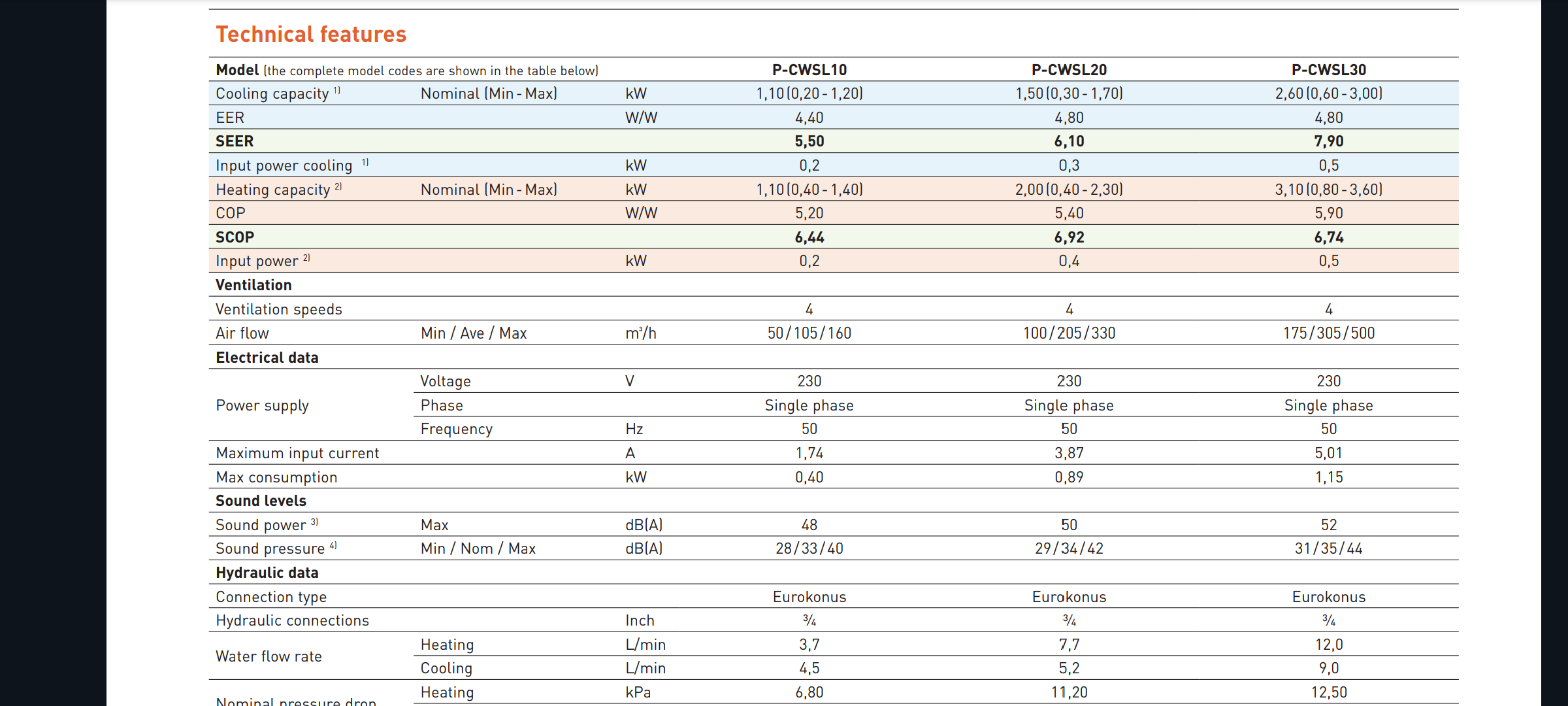
Yes exactly what I was thinking too, what with it not having a ducted version (yet) either. I found this ("Tentative") data sheet for it https://cdn.aircon.panasonic.eu/uploads/DE/Catalogues/2024/Tentative Flyer Aquarea Loop.pdf 28 dB(A) minimum noise, doesn't sound much.. but one number never captures the whole story

-
https://www.aircon.panasonic.eu/GB_en/news/new/panasonics-aquarea-loop-transforms-retrofit-heating-and-cooling-with-decentralised-water-to-air-heat-pump-technology/ Not strictly about ASHP as it's a (decentralised ) water sourced heat pump. Essentially a wall mounted fan coil with a mini heat pump built in. So long as the building has a circuit of water maintained at 20-30°C this can either draw heat out of it, or dump heat into it, in order to service the needs of the room it is installed in. And genius addition is an accessory to allow any condensation to be injected into the circulation pipe to be removed. So in a quirky property you may have heating in some places and cooling in others at the same time, and the temperatures would balance out n More typically some external heat source/sink would be need to balance it, so far I've not found recommendations on that but 20-30° is a wide enough operating window it could be done pretty efficiently and opens innovative possibilities. Likewise imagine hooking the DHW reheat into the circuit should be simple step too. Probably good in apartment blocks too. Will follow how this works out with interest.
-
If you search this forum (easiest via Google) there's loads of threads about dreaded L9 error. Mine was caused by a buckled flexible pipe outside. My friend's was a blocked strainer. My own previous issues (and recur every time I drain it) is air trapped in the system and really hard to bleed out (the pipes go up and over). I blew the air out by connecting external pipe to outdoor mains pressure tap! The list goes on and on. Like your installer (with exception I'm not claiming to be knowledgeable on ecodan) I replaced many components (3 port valve, flow sensor, pump) before finding the part that actually needed replacing. It does seem to be the way UK plumbing works, since before my time if I'm honest. Good luck
-
What is, and is not, acceptable when installing a heat pump.
joth replied to Egnaro's topic in Air Source Heat Pumps (ASHP)
It needs to be serviceable. On a practical note, how do you make it airtight and yet serviceable? I had a flexipipe fail, I'd have been even more pissed off if I'd ruined my house airtightness in the process of replacing the pipe. -
Not my house! Just one I installed Loxone into Yeah the sparky was not chuffed when they had to get the tower up there to fix the window motor wiring 😂
-
This is largely mitigated by having an automatic opening on the highest windows, ideally over a vaulted hallway/landing, somewhere not easily accessible but injects cool air right to centre core of building. Skylights work well, but "celestial windows" seem ideal that I've set this up with in one property: vertical orientation means safe to open even when raining, and chain-motor limit means very narrow space to climb through and then a 30' drop on the inside -- by the time some dude is motivated to climb in through that, they're going to find their way into your (remote, unoccupied) property whatever you do. More practically, the stages for unoccupied overheating should be to first put the MVHR on bypass, then on boost, and only then open said windows.
-
200-W is discussed a lot on here; interesting they dropped Opentherm support in it. But looks like it maybe possible to get fine grained control of it by installing the appropriate LON comms module (MW2 Vitotronic 300K here?) and talk to that via a Vitogate 300 gateway https://library.loxone.com/detail/viessmann-1437/overview It's a lot of vito-soup; I'm starting to feel like a heat pump would be simpler...
-
For load compensation: if the legacy radiators are open, or the house is very cold run higher flow temperatures; if just using ufh and house nearish to target, use lower flow temperature An approximation can be made using two setpoints and that's probably almost as good, but as Loxone already calculates a dynamic numeric target temperature and opentherm is the ""standard"" it seemed at face value that would be the simpler/cleaner approach. (Also we're already putting in an external weather station for Loxone, installing another proprietary sensor for the boiler seems unnecessary but this is less of a deciding factor. )
-
Thanks for this. Viessmann was my first thought, but so far been a dead end with their UK installers claiming Opentherm is not supported/possible
-
Have modelled heating and cooling load for the property? I've not got experience of radiant cooling ceilings, is it common in Hungary? Like JohnMo, fan-assisted cooling has been very effective in my experience. In my house I drive ASHP to the UFH directly, and have a separate zone for fan coils that has a volumizer tank inline with the FCU to reduce short cycling. The UFH is entire ground floor, but the FCU generally just services one room at a time (office or bedroom) hence much more prone to short cycle without the extra buffer, which is plumbed for cooling. (It does work OK for heating anyway... it has the intended effect of increasing run times even if it's not the optimal way up).
-
Nothing specific to add here other than thank you for a very useful thread. I'm in the planning stage for some friend's victorian town house refit which will be system boiler + PDHW + UFH+Rads. (Plus a2a multisplit aircon) I've only done ASHP installs thus far, so this is all useful info Looking at an ATAG boiler controlled from Loxone via MB-OTG modbus to Opentherm adapter. But if ATAG boiler doesn't happen, then good to know Worcester maybe an option via the Nefit EMS-OT, although I'm not sure I have the appetite for going to inception level 3 and speaking EMS via Opentherm via Modbus, given on/off control Just Works.
-
What heat emitters will you use with ASHP? If it's ufh in a decent thickness slab then it gives the option to "batch heat" the house during cheap overnight electricity. This is typically 4-8 hour window, so only 1/6 to 1/3 of the day, thus you need to 3-6x the ASHP to get your full day's worth of heat delivered in that short window. Of course on the very coldest days you'd allow it to run for a longer period, the goal would be say 90% of time do it all in cheap rate. So about 3x would be plenty. Anyway our PHPP said 3kW max heat load, we installed an 8.5kW and that's been perfect. Plenty of headroom for batch heating and of course allowing some DHW time. It spend 12-16 hours idle even on the coldest days. I'd agree with Dave's 10kW estimate
-
Blocking MVHR for an Air Tightness Test
joth replied to cswd's topic in Mechanical Ventilation with Heat Recovery (MVHR)
For our test we wrapped the intake & outlet filters in plastic bags, which seemed to do the trick. (0.5ACH on a retrofit) I've seen others seal the main ducts from the outside of the building ... looked like hardwork but they'd built several dozen passive houses so guess they know what works! -
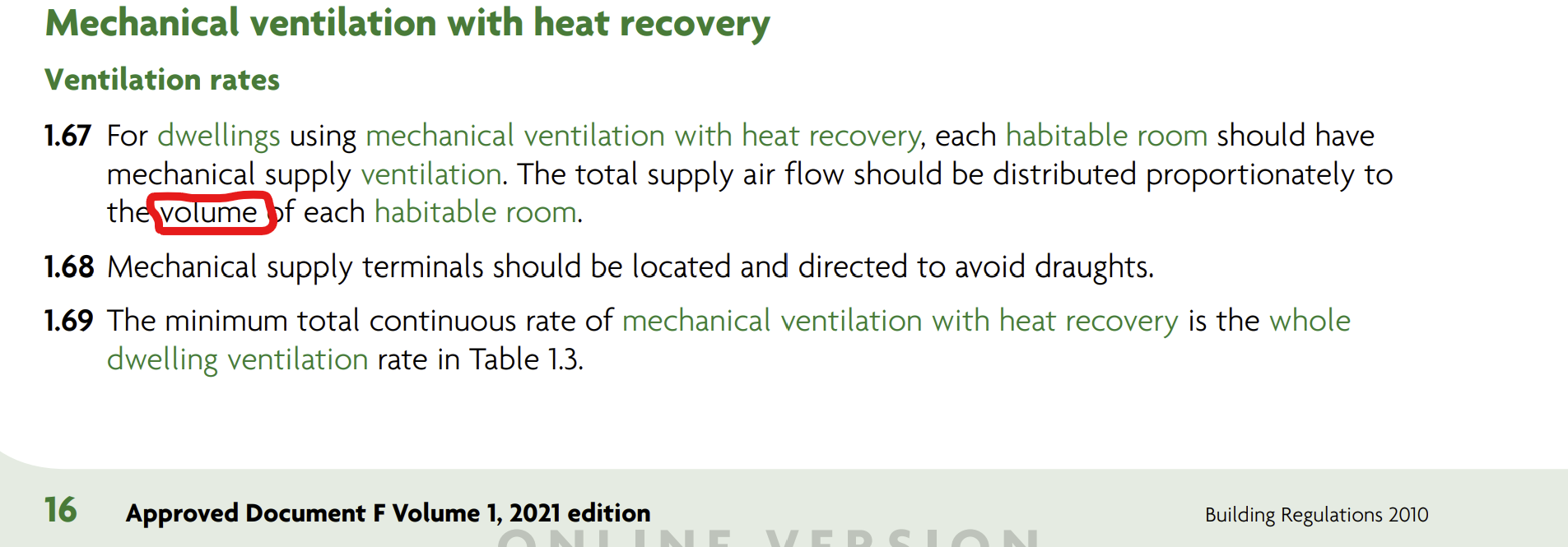
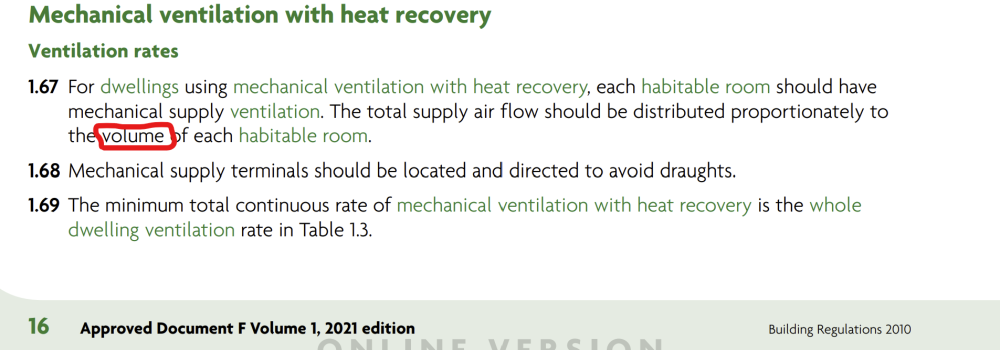
Have you attached the correct document, nothing mentioned volume. Same document, with the word Volume highlighted Thank you - that makes sense. Turn the "common sense" argument into a balance of flows on a spreadsheet. Makes a lot of sense for open plan areas especially. Well this is a very different conversation, for the purposes of this thread so it sounded like MVHR is as a given One view I've seen is where people are doing a lot of internal remodeling they have "one chance" to put MVHR in now, even if airtightness is not good enough to justify it they will do anyway on an optimistic/aspirational view that over time window/door/exterior works etc will gradually improve the performance. They "grow into it" if you will. (Much like using an oversized R290 ASHP with undersized rads today, on basis they need a boiler replacement now, and will get better efficiency of it in future as we gradually improve rads, insulation etc) But regarding needing really good airtightness, that's not necessarily true. The long held rule of thumb was 3 ACH is the break even for MVHR, but even that seems pretty achievable for many houses. But there's plenty folks argue that's too stringent and it will financially payback even at higher levels of air permeability https://www.passivhaustrust.org.uk/UserFiles/File/research papers/MVHR/2020.04.27-The Case for MVHR-v7.pdf And in any case, if folks care most about air quality and want to spend their money on MVHR without consideration for the capital cost payback, it's a valid choice in many more homes.
-
Is it possible to have both a Garage and Garden room?
joth replied to prt's topic in Garages & Workshops
I like this, would make a lovely bike workshop The building control sign off maybe a pain if they decide it is indeed a garage - needs fire and spill protection for any attached building. Of course if this is a stand alone building it will be a bit simpler. Similar question in my mind about permitted development vs needing planning permission, but I'm not so familiar with navigating that one myself. (e.g. garden rooms usually are permitted dev, but if it's deemed a garage does that complicate it?) -
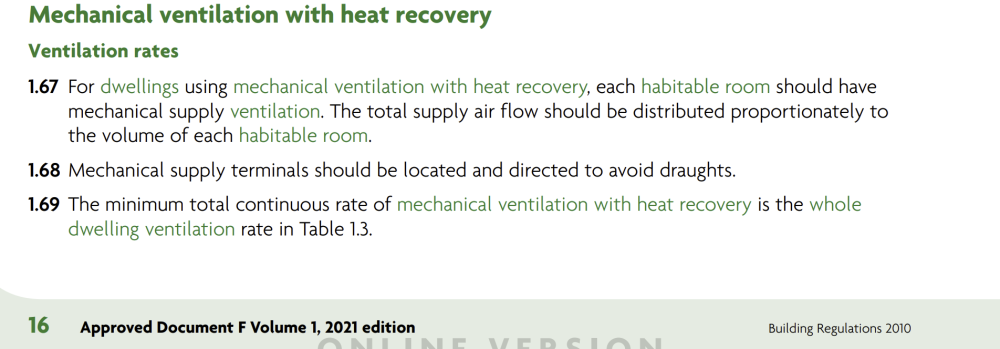
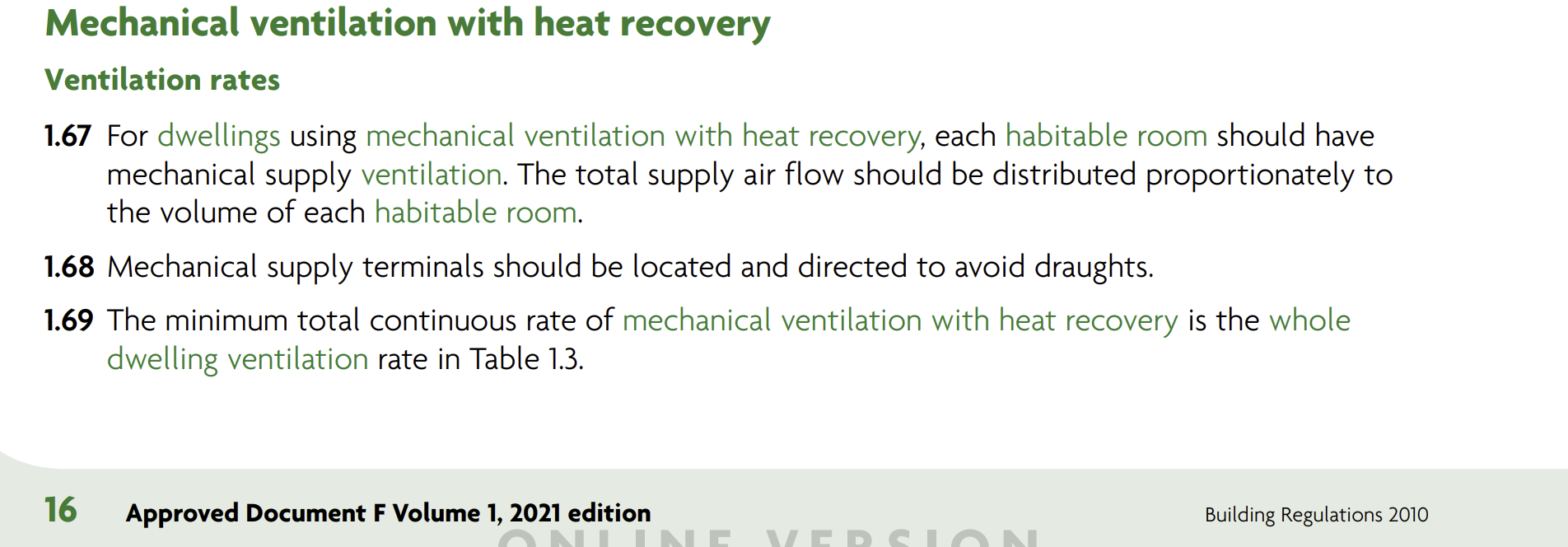
Out of interest, how would this pass building regs, if replacing all windows and for new without trickle vents, and generally improving airtightness? My reading of part F is, in this scenario (a "cat B" retrofit with MVHR) every habitable room needs to demonstrate it has sufficient supply ventilation distributed proportionally to the volume of said room. To me, without putting a supply vent in the living room and balancing it, that's a very tricky requirement to demonstrate compliance with. (of course, it's unlikely any BI will care, but that's a very different conversation) Again my reading of part F is it cares about volumes not floor area for MVHR: