joth
-
Posts
2918 -
Joined
-
Last visited
-
Days Won
5
Everything posted by joth
-
Just to emphasize this: it's worth looking into (15% saving on all the project costs) but there are severe restrictions: the property must be unoccupied for 2 years straight right up to the day the work starts, and all work must be done via a single VAT-registered contractor (as they apply the discount in their bill, there's no claim back) We missed out on this because (a) we thought our house was only unoccupied for 1 year prior to completion (it was actually 2), (b) we had no documented evidence of how long it had been unoccupied (council tax discount etc is the best for this), and (c) we moved into it on completion day, resetting the clock. If you want instant demand-heated hotwater, and not interested in (substantially) improving insulation of the property, an oil combo seems the only sensible choice.
-
> I was advised by the installer to run the heating 24/7/365… does this mean there should be pumps working all the time or that the system should turn on if a thermostat calls for heat? No the pumps shouldn't be running constantly, just that it should be able to call for heat at any time. Really shouldn't have to be 24 hours a day, but I expect their point is not to let the house get cold when out etc, and expect to heat up in half an hour when back. The FTC does have a timer built in which is fine if you don't want it running specific times, e.g. while sleeping Legionella cycle is disabled in the menu. Long press menu button -> DHW 9 room stats for a 60m2 does sound very complex! Not what I'd install from scratch, but now you have it it'd be worth seeing if you can make it work as needed. Sounds like the main thing is it calling for heat with too few actuators open. I'm controlling my ecodan via loxone and it's trivial to set it to only call for heat to the ASHP when some minimum % of rooms have a requirement for it, but with a wiring centre that doesn't generally seem supported so the easiest first step maybe to just remove the actuator from the largest living area loop, that way that is always there as a heat sink for the ASHP at least.
-

Virgin Media install on plot that has never had VM
joth replied to osmononame's topic in Networks, AV, Security & Automation
It maybe that they lack capacity in the cabinet that services that property too. So this is "dead man's shoes" that if another neighbour cancels their subscription you can jump in and get it. If sharing a link the main issue with VM even on their very top tier product is uplink bandwidth (and latency and jitter) and sharing a link could make that worse, depending how you do it. More of a problem for gamers and video conferencing. -
14 months (original estimate was 8 months; COVID added about 4 months, the rest was the usual overoptimism)
-
I got a bit more granularity on the valuation (from the Estate Agent that sold it to us 3 years ago), Of the estimated 80% increase in value, aprx 20% is from market increases and 60% from the renovation+extension. The renovation cost us about 50% of the purchase price, thus we've made 10% "Profit" on the project, independent of market increases. The estate agent's included this thought: "As discussed energy efficiency is becoming more and more in the consciousness so the product will only be more in demand in the future in my opinion." I see this too - interest in sustainability within "normal" renovation groups in our area has grown massively in the 3 years since we started the project, and I can only see this continuing.
-
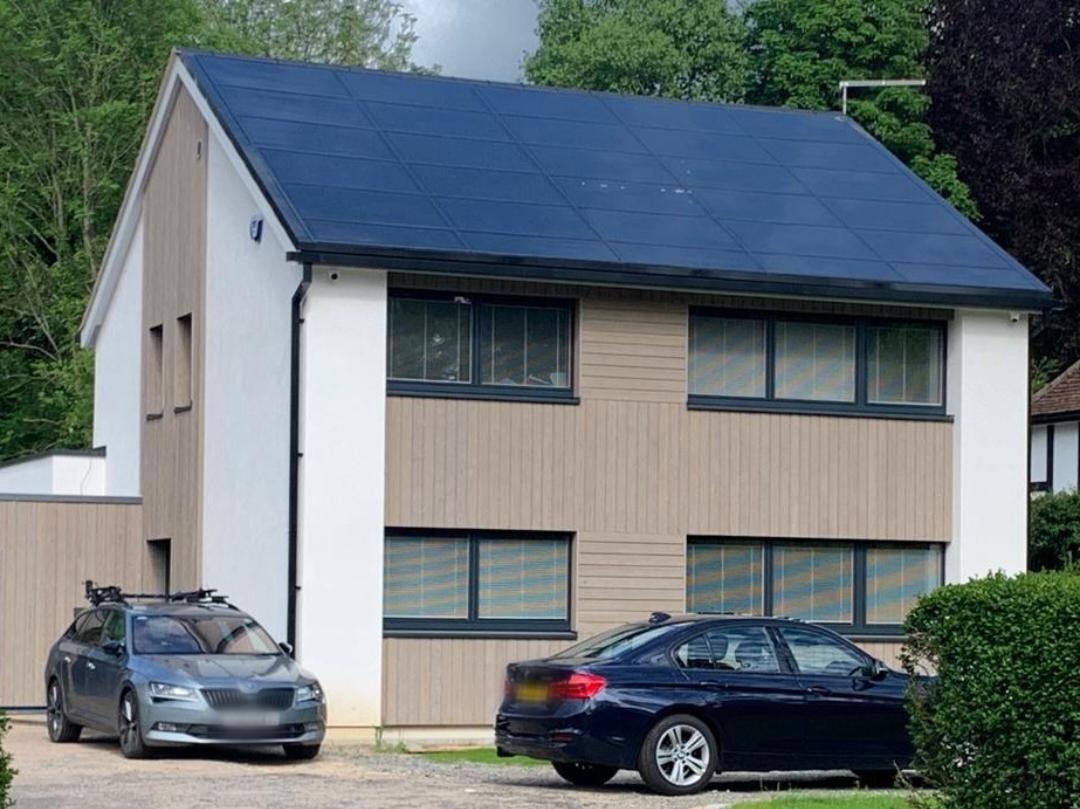
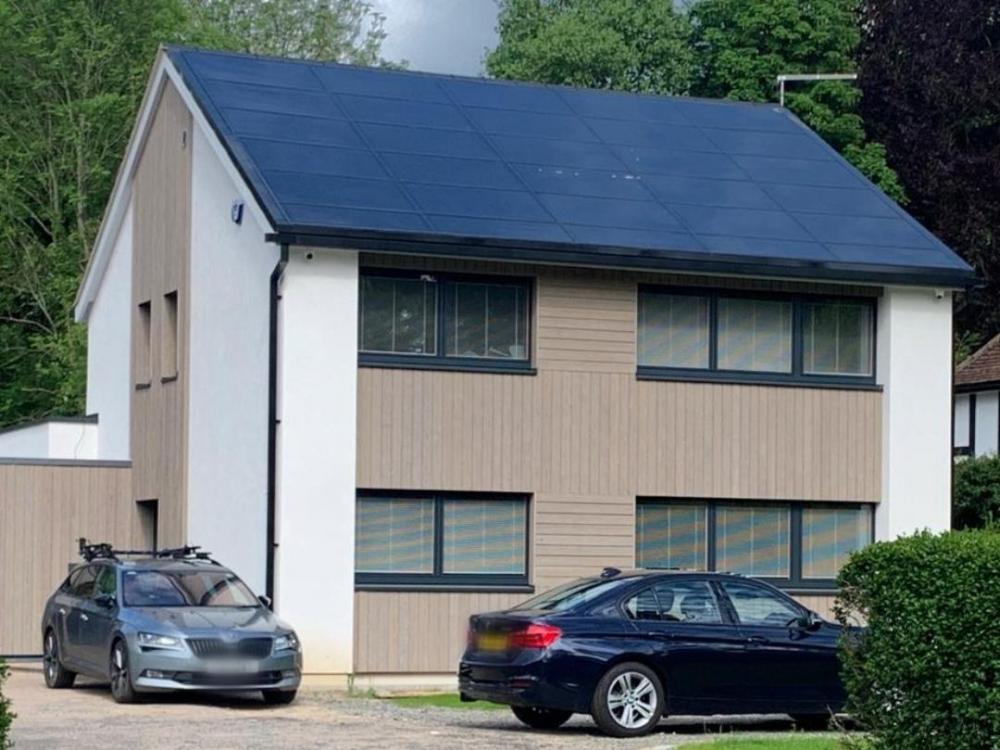
So when is relandscaping a garden or installing a swimming pool financially viable? Things are financially viable when the purchaser has the finances available to purchase it. End of. I think you mean economically justifiable, which is not always the reason to decide to make a modification to a home. Especially those with zero payback like putting in a hot tub or enlarging the patio. To give another view - we put a whole roof of solar on our house (GB sol RIS, picture attached) cost about 16k£ but the whole enerphit+ renovation has added double the value onto our house that it cost to do, undeniably in part due to the current crazy market, but in part because interest in sustainable designed houses are suddenly on the up* in our area and nothing signals this more clearly than a whole roof of solar (in a conservation area where this was not permitted a couple years ago). This is not going to be the common case I know, but done well I do see even the economic value being more than just the reduced electric bill. * I was very surprised - the estate agents we spoke to this week knew very well what a passive House is; turns out in large part because customers are taking about ours as a reference point for the area.
-
More important is standing losses. The battery should be negligible over a diurnal storage pattern, but the hot water cylinder is not, especially as the loses get worse the more full (i.e. hotter) it is. Topping up the battery before DHW is intuitively a no brainer for several reasons: Assuming optimizing to minimise energy costs rather than simply ensuring every Joule is usefully employed somewhere, the battery storage is far more valuable as it can be used for all import-reducing uses including creating hot water if necessary (even, via a much more efficient heat pump?) but the reverse is not true of hot water storage, that's a one trick pony Factor in the much higher capital cost of a battery and a goal of getting ROI, it needs to be in use every hour it be can to ever pay for itself. Add to that an aspiration of grid independence, and you need the battery as full as possible all the time as insurance against grid outages. Part of the justification for a battery is the freedom from having to analyse usage patterns: just use electricity as you wish and the battery will do the hard work to avoid import. And finally as mentioned, typical household DHW usage patterns (mornings and later evenings) favour topping DHW last thing in the afternoon as it reduces the time the energy is stored for, and hence the standing losses from it.
-
Moving gas and electric meters - where to put them
joth replied to Porthole's topic in Electrics - Other
That sounds surprisingly affordable! Ours was £1000 for the electrical supply move, and over £2000 to permanently disconnect the gas. Note if that's the quote from the DNO that will be just to move the supply head. You'll also need quote(s) from your supplier(s) to move the meters themselves, and from your own plumber & electrician to move the gas pipework and, probably, the electrical consumer unit. Depending how this lines up, that maybe 6 separate quotes. If ground works (e.g. trenches) are needed and you don't want to pay the extravagant DNO pricing for that, you'll need additional quote(s) for that (normally, via the main builder contractor). -
Aside from still relatively uncommon DC coupled battery, neither the diverter or battery needs to be next to the inverter. I'd site the inverter based on: - simplifying the routing of DC cabled from the panels to inverter, - minimizing the length of feed from meter head to inverter, - cool temperature. For us, these all happened to be the garage anyway ?
-
Selling or Significantly Renovating Will Mean No Gas Boiler?
joth replied to Ralph's topic in Housing Politics
Following on from my comments about the convenience of gas, there's a pretty good (if long) article on the challenges on Engadget today: https://www.engadget.com/air-source-heat-pumps-uk-120044198.html I think this section hits it on the head, I see the same mistake being made here: that economic savings are the only / prime basis on which sustainability measures should sell themselves and compete against the incumbent technologies. Most mod-cons sell themselves on the convenience and lifestyle aspirational aspects. (It's literally what the term modcon is derived from). While we all like thriftiness, en-masse it's not how the population works. (otherwise, explain all the Sky TV in low income estates) -
I shut off the power to the FTC6, waited half a minute and powered it back up and only then the cooling option appeared in the controller menu. My installer has a little ritual about powering down both the internal and external units, waiting exactly 5 mins then powering them up in some specific order to ensure they reconnect to each other, but I think (hope) that's cargo-cult. if there's a power cut in winter while I'm away I don't expect to have to send someone to dance around rebooting it in a special sequence just to get the heating working again.
-
Size and layout of your networking cupboard?
joth replied to puntloos's topic in Consumer Units, RCDs, MCBOs
Kitchen is less of an issue, unless you intend to leave 3kW burning running 24/7. It's venting into a larger space for a shorter period, so the roam can absorb the blast of heat and distribute it widely around the place. A cupboard has maybe 10th the power but it's on for 20-30 times longer per day and all caught in a smaller space. Also the kitchen normally has a double extract. I guess that's another option to try in the AV room. -
It definitely would. I'm piping it through a fancoil unit, that has a condensation drip tray and waste water pipe attached. All the supply pipework is continuously armaflex insulated, but I do get a fair bit of condensation on all the pumps and valves etc in the plant room that I'll need to work on improving the insulation around. (My original plan was to tank the plant room and install a drain grate in the floor, but this was removed for cost. Wish I had, as as well as allowing condensation to run free on the various plant equipment, it would also have made installing the overflow pipe for the water softener far far simpler).
-
Size and layout of your networking cupboard?
joth replied to puntloos's topic in Consumer Units, RCDs, MCBOs
Interesting - the keystone jacks I have use punch down not RJ45 style crimp connection. That said, I have successfully crimped oversized (CAT6A 24AWG) solid cores onto RJ45, just have to use the correct sort of jack designed for the larger cores, that have staggered entry holes. Excellent point about the stranded patch cables. I had assumed by opting for CAT6A patch cables I'd get thicker core cross section, but looks like they're only 26AWG equivalent (happily I've used the shortest ones I can, most are only 20 cm long so probably fine as you say) I'd be very wary about relying on MVHR for active cooling of a machine room like that. When all the gear is on I expect you'll have many hundred watts of heat being dumped, and MVHR will only shift 10s of watts at most. It's effectively useless for equipment cooling. I put an MVHR extract in the AV cupboard (with much less gear in it) and supply right outside it, and it's overheating (an, I believe, overheating the bedroom next to it - thread) so I've actually pulled the MVHR vent out of the AV cupboard ceiling and replaced with a larger extract fan to dump the heat directly into the loft. Up there I have a fan coil which provides active cooling (fed from the ASHP). I've also started relocating some of the worst offenders for heat generation out into the loft (the windows box running Blue Iris is particularly bad, and the Virgin modem and Unifi Router are also pretty poor). Regarding the slide a turn racks - I got one of these, but then had cold feet about putting the patch panel on it as I wanted the solid-core installation cables terminated in a fixed location where they'll not get flexed. Whereas the rack does get moved in and out a fair bit as I do like to tinker with the installed gear (and, I don't have the luxury of a dual access cupboard) -
New heating for terraced house in London
joth replied to Ferdinand's topic in Central Heating (Radiators)
Ours is 1m from a boundary (in a conservation area, no less) and certainly haven't had environmental health out yet. The road and 24hr train line is much louder than the heat pump, even stood right by it. The neighbours boiler flue is about the same noise. -
Selling or Significantly Renovating Will Mean No Gas Boiler?
joth replied to Ralph's topic in Housing Politics
So true. Unless the home really is insulated well, with an ASHP you really need to design in some sort of time shifting for heat energy (e.g. storing heat in a thick UFH slab), and using direct resistive heating just increases that need (by 3x), which means much more disruption for any retrofit than the insulation & airtightness alone. Storage heaters largely fell out of favour due to the need to plan usage patterns and not just "turn on the central heating" when needed for instant warmth. (Remember all the Bob Hoskins "Don't you just love being in control" adverts?) So IMO any electrical low carbon source either needs to solve time-shifting in the home, or depends on grid-scale storage, to actually deliver on its goal -
Size and layout of your networking cupboard?
joth replied to puntloos's topic in Consumer Units, RCDs, MCBOs
Most patch panels and wall sockets (keystone jacks) use an IDC punch-down connector, and it'll be a miserable job terminating flexible cable into those. Aside from that, I'm curious what that reason is that installation cable is normally solid core? (Same for mains cable) -
The dip switches are on the PCB inside the FTC6 controller case. You remove two screws to pop the lid off the case, and they're right infront of your nose (along with various live terminals) Note the system needs to be powered down and back up to notice the dip switch change. Yes, it will heat DHW even when the controller is set to operate in cooling mode. Obviously only one or other at a time Make sure it has been plumbed correctly with a 2 position valve to send water to the heating or cylinder circuit but not both together.
-
Boiling Water taps. What and where to buy.
joth replied to ProDave's topic in Kitchen & Household Appliances
I assume you're looking at multifunction mixer taps with boiling water. If you get a tap with boiling water only, not a multifunction one, it'll work fine as they just need a mains cold water supply. There's many to choose from. If you would prefer multifunction look at the Quuoker Combi, as this does it all from a cold mains feed. -
Haven't tested the limit yet, but 5°C is the minimum setting the UI allows Yes, mentioned briefly upthread, but with ecodan FTC6, the call for heat dry contact inputs become call for cool when in cooling mode. The challenge is switching mode: can be done in the Mitsubishi controller UI or their phone app, but not via a simple electrical input. However it does have a cooling mode active output, so I'm thinking about feeding that back to loxone so it at least knows what result it of going to get when it calls for heat or cold, and locks out the other logic as appropriate. If I can fix the missing feature in the home assistant plugin I maybe able to programmatically change mode too.
-
On a ASHP this is quite achievable: on the Mitsubishi FTC6 you flip dipswitch SW2-4, power cycle it, use the controller to set it to Cooling rather than Heating mode, adjust the flow temperature as desired. Cooling, with no hands waved. There's basically places the condensation can form: on the emitters, and on all the intermediary pipework. If putting cooling through the UFH, there's a small risk of condensation forming in the screed or between screed and finishes. This can crack or rot wood etc. Bad bad, must be avoided by running it no colder than about 14 degrees IIRC Pipework condensation can be designed out: make sure it's all installed with high quality contiguous thick insulation, e.g. armaflex, no air allowed to touch the pipes, and there shouldn't be any way for the condensation to form. The fancoil linked is not so much about either these issues per-se, as it's just more effective and comfortable to use. In our house the downstairs remains fairly cool, and the ground floor floor-finishes themselves doubly so. The overheating occurs high up on the first floor. Much more effective to drop cold air from above on the house than try and cool it from below. Also, yeah the fan coil has a condensation drip tray and can run at 5 degrees C fine. So I plan to only use UFH for heat and the fancoil to cool. Unfortunately, there's no way to set this in the FTC6 -- both zones must be in heating or cooling, can't mix, and there's no electronic input to select hot vs cold, so I'm left doing an annual manual switcheroo from heat mode to cooling mode and back again. (The MELcloud API obviously supports doing this as the Android app does let you do this remotely, but unfortunately the home assistant plugin doesn't support it. Maybe before heating season starts again they'll fix this, or I'll see if I can!!)
-
Green Home Grant application - have you had a response?
joth replied to joth's topic in Environmental Building Politics
GHG just confirmed my installer has been paid! He was ready to do the install this time last year ago, but our build wasn't quite ready, then they announced GHG. I applied on the day the scheme opened. So basically 8 months from application to payment. Amazing. Can't complain though: with the grant the whole system 8.5kw ecodan, 300L OSO Geocoil tank, install inc. fancoil+UFH hookup, and more certificates than I can count, cost me just over £3000. I should be able to claim more than back in RHI (If I can be bothered with 7 mores years of admin) -
If it's either/or then this is exactly the right decision. The insulation will last many decades, not be obsoleted by new technology, and would have been significantly more expensive to retrofit than do as you build. While I'm really happy with our ASHP, I couldn't promise any of these points about it. In 10 years I expect they'll be more efficient and cheaper
-
Texecom connects to internet via the "SmartCom" Connect gateway https://www.texe.com/uk/uploads/Connect_SmartCom_Leaflet_WEB_4.pdf This is exactly the piece that failed in my installation a month ago and I just replaced yesterday. Despite having only had it a few months, I really wouldn't wish this system on anyone. I really do hope Ajax gains more traction with installers. In theory self-install is not allowed if you want remote "ARC" monitoring with police call out. A requirement of the URN process is the alarm is professionally installed and maintained under contract with a SSAIB/NSI approved installed. If you don't have remote monitoring, anything goes, but the manufacturer may want to limit who installs their stuff for market control reasons. (Seems increasingly popular in all forms of tech - our Solar inverter and MVHR both have locked out menus that me - as owner of the install - isn't even supposed to be allowed into according to the manufacturer. It's a crazy world).
-
It took them a further fortnight to turn it around but I did receive the replacement yesterday and all working again now. So 3/10 for manufacturing reliability, 7.5/10 for service. I have to take some blame for purchasing it via an unreliable online outlet I guess, the reviews are fairly clear on that: https://uk.trustpilot.com/review/cctvbuilder.com Yeah it was via the forum that I first confirmed this SmartCom had failed. The PSU was quick to diagnose by the original installer, but as I hadn't purchased the panel through them they were (understandably) not willing to take on the warranty claim for it, and I just couldn't be bothered to follow it up myself over the £40 they charged for the replacement.