joth
-
Posts
2918 -
Joined
-
Last visited
-
Days Won
5
Everything posted by joth
-
Just to clarify, I also think it is condensation. This normally forms at the coldest spot on the wall/ceiling, and a thermal bridge is most likely cause of such a cold spot - hence my question. (I wasn't meaning to suggest there's a penetration that moisture seeps in through, just any break or simply a thinner patch of insulation would be prime cause of a slightly colder spot )
-
Are there any penetrations through the kingspan that maybe creating a thermal bridge? How is the membrane and plasterboard supported? You could get THERM modeling done to identify thermal bridge condensation risks, but that's normally pre build activity. A thermal camera maybe quicker and cheaper at this stage, especially with some nice cold days coming up
-
No refrigeration pipework makes self install much easier
-
For ground floor install that makes sense but I think a lot of attraction on the DIY install is that can be done on any story of a building with no external works needed. (I'm struggling to remember how the external grill is installed and made good from inside, but pretty sure I saw video of it being done) Then just plugs into a wall socket.
-
 Normal method is to search for a socket with three cables, but yes old house it maybe a hidden junction anywhere. An existing FCU should be obvious, as you'd need it accessible to replace said fuse should it pop. I think safe to assume there isn't one. Even if you can't find where the spur is Tee'd off the ring you seem confident to know which socket is first in the spur chain? So you can put a FCU co located with it.
 -
How far is it from the consumer unit? If you're decorating soon then getting a new cable chased in from CU to head of the spur, to convert to a new radial curt, before you decorate would be best. But obviously only works if it's near enough CU to be practical. Else a short term fix would be insert a fused spur box (or even 16A MCB) at the head of the chain to protect all the cabling downstream from that point. Still far from best practice but an improvement on what you have.
-
Ubiquiti Cloud key confusion !
joth replied to Pocster's topic in Networks, AV, Security & Automation
Have you got two-way audio setup with the reollink? I didn't know this was a thing. Apparently Reolink is the main (only?) device supporting it over open protocol (WebRTC, integration via go2rtc) https://docs.frigate.video/configuration/camera_specific#reolink-doorbell If your issue is reliability of their wireless chime maybe you can work around it using the visitor event in home assistant to chime a convention hardwired ding dong chime? https://www.home-assistant.io/integrations/reolink/ For 76 squid their PoE doorbell looks great value. Just lacks the NFC/fingerprint tech vs unifi Protect -
.... which is much less effective than dumping cold air on top of the body. EDIT to add: in addition, blowing air gives will windchill effect of its own. So even if the air it ~same temperature as the room it can still create a cooling effect.
-
Ubiquiti Cloud key confusion !
joth replied to Pocster's topic in Networks, AV, Security & Automation
Just had a look, I'm still running 0.13 looks like 0.14 had a full overhaul so yes worth me going through the upgrade process. (0.15 is in beta now too I see..) https://github.com/blakeblackshear/frigate/discussions/11136 tldr Frigate evolving from a simple stateless video object recognition -> MQTT bridge, into a fully grown NVR to take on the incumbents. Nice. -
In addition to the colder flow temps, fan coils are more effective as they can dump cool air on your head (if installed in the ceiling) which then cascades down over the whole body rather than UFH which gently cools the ground your toes touch but not necessarily much more than that. Hot air rises; cool air falls Gentle cooling under floor is still useful to temper the effects of an overheating build, but it's much less immediate or effective for cooling down an overheating person than a FCU even when running at similar temps.
-
Ubiquiti Cloud key confusion !
joth replied to Pocster's topic in Networks, AV, Security & Automation
Wow a year has passed and I'm so out of date, I know the UDM but Express, Ultra and Max are all new to me. Perversely, despite promising never to get more Unifi lock in, and thinking the electrical design of the unifi protect doorbell is awful, I found myself thinking of swapping my old Amcrest doorbelll for a unifi one, partly so I can get more experience integrating their gear. However, my nearly 5 year old cloudkey gen2 runs the unifi protect app, but the UCG-Ultra doesn't?? I really don't get their product range. (I get the partner discount on Loxone pricing now, so that's also become a more realistic option for my own use at least!) -
I've occasionally wondered if the price on these was low enough, could you use a bunch of distributed heat pumps to build a general purpose thermodynamic energy transportation circuit around a home. Like a central heating loop of everything. In essence, anything with excess heat output (projector, computers, AV rack, over heating rooms, fridge/freezer, perhaps other kitchen appliances) could pump excess heat into the common water circuit, and anything requiring heat (DHW users, space heating) extract heat out of it. Then an external ASHP just dumps heat into or out of that as required to balance the equation (direction fairly well defined by season). I imagine herding entropy in this way is an uphill battle against efficiency losses, and the total system complexity and maintenance makes it a non starter, but it's a interesting thought experiment.
-
Doesn't this mean all penetrations for sockets switches etc need to be airtight back boxes and sealed to the face of the board? And make the airtightness vulnerable to any future changes even of a fairly cosmetic level to the wall finishes. Personally I'm happy we went with a clear service void behind the boards, and airtightness envelope behind that. (OSB lining)
-
Ubiquiti Cloud key confusion !
joth replied to Pocster's topic in Networks, AV, Security & Automation
Mines still going strong! (Complete with CO2 monitor atop, DIY upgraded with esp32 connectivity 🤓) Christmas present 2006 ish I believe, before the Logitech buy out. Originally ran it from a Infrant ReadyNAS of similar vintage. Admittedly doesn't get so much use now, only because the LMS Spotify integration is rather spotty. (In name and in nature). Loxone audio server is more reliable. (Ironically the old Loxone music server was built on LMS)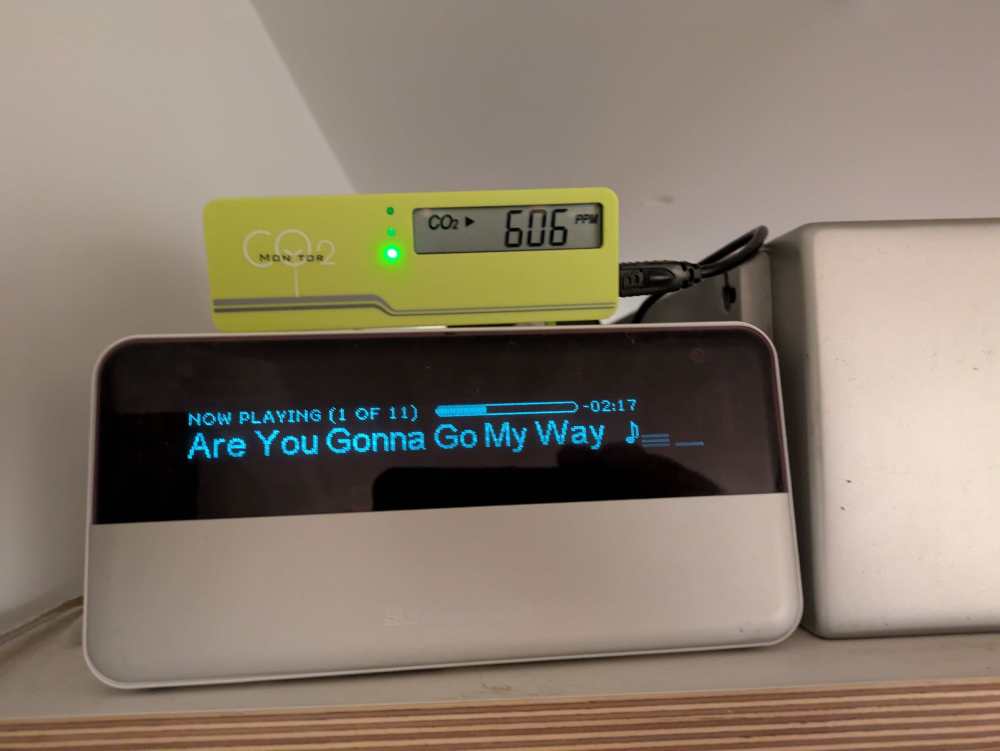
-
Ubiquiti Cloud key confusion !
joth replied to Pocster's topic in Networks, AV, Security & Automation
Yes, I'm in this camp. However it's a bit more subtle. 5 years ago I bought top of the line cloud key and USG Pro (UDM precursor - pre Unifi OS/Protect even). I do get updates to the newest Unifi OS and Unifi Protect etc because this of course lets me buy the newest cameras. However what I don't get is basic feature upgrades. Like I've been bitching about the lack of DNS name aliases and port-forwarding support on WAN failover since I got it. I recently found this (as well as Teleport) are all supported on the newer UDMs but never "back ported" to my old USG, even though I'm nominally running the exact same OS and Net controller versions as the new hardware, and no reason why old HW couldn't support it. It's another form of enshitification, not really a vendor lock-in issue as good old planned obsolesce. My next gateway/router is unlikely to be unifi even if I keep it for the Wifi. -
Any particular reason for that extra complexity? For less cash you can get a super insulated UVC like OSO SX Electric, with lower heat losses it will perform as well as the mixergy but not need a cloud internet connection or risk going obsolete if the manufacturer turns off their servers. a2a will work fine if you size it correctly - main thing is being comfortable with blown warm air heating rather than something that warms up the fabric of the building. This is a doubly important question if using a2a, as a draughty building will be more susceptible to losing the warm-air heating before it does useful work (vs fabric radiated heat from UFH). And MVHR is best thought of as a solution to solve poor air quality in a highly airtight building.
-
Also FWIW, I bought one of these new ones and using on my Fan Coil manifold. Totally overkill for the application as I really don't need the auto-balancing function, but it is working fine and has the intended improvement of O(10secs) to turn off. This is important to stop a slug of hot water going into the FCU when the UFH comes on during cheap night rate (00.30 am). Up until that point, I want the FCU circuit open and blowing as it uses the ASHP freeze-protect as free cooling for the bedrooms (or the bedroom provides free freeze protection for the ASHP depending on your view), but once heating cycle starts I need to keep the warm water out the FCU. even shutting off the secondary pump doesnt help as the primary pump is strong enough to shunt water through it. And I want to keep the FCU fan going all the time as it still brings in cooler air from the loft to the bedroom which is beneficial even without water cooling.
-
https://www.facebook.com/reel/446546161508714?mibextid=rS40aB7S9Ucbxw6v Pretty accurate 😂. Sorry for the external link but this one is worth watching to the end.
-
Ubiquiti Cloud key confusion !
joth replied to Pocster's topic in Networks, AV, Security & Automation
Interesting. I only use unifi for internet, and have frigate for nvr (with an edge tpu) but a customer has a full unifi Protect setup and it seems pretty decent (if you just accept the lock in). Scroll back and scrubbing through recordings in particular is really smooth compared to frigate. Last week I integrated it to Loxone for him, so object detection or even doorbell fingerprint scanner/NFC send webhook calls to the mini server to trigger automations, and was pleasantly surprised how smooth that works. All local API, zero cloud dependency for this (aside for the setup, but that's just a convenience for federated cloud authentication, I believe the UDM local console could do it all if I had a direct login) -
Do fan coil radiators need a condensate waste?
joth replied to SBMS's topic in Other Heating Systems
I don't think it's worth trying to fix this. Without having a 4 pipe ASHP then it's inherently a bit wasteful to switch the primary circuit from cold to hot and back again. Either you nick energy from the uvc to ramp up the switch over, or wait longer having the ASHP do it all, the electricity usage will net out about the same. To avoid switching, As we use ASHP almost exclusively during octopus overnight cheap rate, on really hot days I have it just stay in cooling mode all the time and do DHW from the immersion as this can happen in parallel, and on cheap rate is still good value. Also, the cooling is only really needed in the night (for bedrooms) so in can blast dhw reheat off PV+ASHP midday. I use Loxone to decide and it's fairly complex (but all just optimisation layer, things tick along acceptably even on default settings) -
Do fan coil radiators need a condensate waste?
joth replied to SBMS's topic in Other Heating Systems
This will be heat pump and install dependant, but for me with ecodan 8.5kw with 2 zones (ufh gf, FCU FF) it works well enough 3 port Diverter valve switches before any hot water hits the pipework, but means the UVC gets an initial slug of cold water before staring to heat. At the end of the cycle it's a bit more issue as a slug of hot water gets into the FCU and can cause unpleasant warm air to blow into the bedrooms mid sleep. Simple controls don't work well for this as system is calling for cold, I use sensors on the pipe to detect the warm water and shut off the FCU fan and close zone actuators to the FCU (this means if the loft supply air is cooler than bedroom I can keep blowing that in even while the warm slug passes around). A neat thing is because I have glycol free system in winter the freeze protect keeps slightly cool water circulating, the same sensors see that cool water and route it to the FCU for "free" bedroom cooling even when the system is otherwise in heating mode. (Otherwise our bedrooms still get too warm even when subzero outside...) -
Do fan coil radiators need a condensate waste?
joth replied to SBMS's topic in Other Heating Systems
Yes think I was one of the first on here to do this, mostly documented in this thread Although the second one I got for the office (eBay job ripped out of a restaurant) seems to have died so I'm now eyeing up getting a third. -
Ubiquiti Cloud key confusion !
joth replied to Pocster's topic in Networks, AV, Security & Automation
Unifi have a lot of doorbell variants so maybe clarify which you mean. IME hardwiring the doorbell relay output to a chime (and digital input on Loxone) is the most reliable integration as it has no dependency on IP network at all. HOWEVER, the unifi doorbell electrical design is shit and has no over current protection on the (solid state) relay output so it is easy to fry it. Do Not Ask how I know. At least they use real PoE now. Prior iteration of the G4 pro used ethernet over USB which is an abomination of adapters to get power and date from PoE, and is completely in appropriate physical interface for a device installed on the outside of a building. Once it's working, surely the nicest feature is the built in object detection. And slick NVR in unifi protect. Which needs a grunty cloudkey of some sort; I can recommend the UDM pro. And this makes your frigate install completely redundant. And locks you in like that gimp in your dungeon Enjoy! -
Do fan coil radiators need a condensate waste?
joth replied to SBMS's topic in Other Heating Systems
Yes. Not just pipework but all pumps, valves, filter, etc. And pipes lagged before clipping. All standard practice in commercial but good luck finding a residential installer competent at doing this -
Do fan coil radiators need a condensate waste?
joth replied to SBMS's topic in Other Heating Systems
Yup agree with all that. A few additional motivators for including condensate drains would be - if you want to use cheap overnight rate or free solar PV to "boost" the cooling then you need to be able to run at cold temps, ideally sub 10° to get most from the HP - if you have one big FCU ducted into multiple rooms it will likely have to work harder than lots of smaller FCUs, each installed inside the single room it services. - if you have lots of solar gains, poor insulation or even poor airtightness then o/c the FCUs will need to work harder (aka colder) than a super insulated low solar gain building Tldr YMMV but having the drains gives flexibility