
Radian
-
Posts
2586 -
Joined
-
Last visited
-
Days Won
15
Everything posted by Radian
-
Yes. They are essential really, not so much for personal safety as when used in static power tools like table saws, but to protect the mixer gearbox should the drum contain a full load when the power was lost. And for the fix, now I have some spare time to document it for anyone sufficiently interested... To fix it I first looked at the way it was made and figured out why it might fail. The on button has no mechanical latch so would spring back were it not for a solenoid energised along with the motor. This effectively keeps the on button held in just as if you were stood there holding it yourself. The off switch has no latch either and just momentarily interrupts the power to the solenoid which releases the on switch - as if you finally took your finger off it. So much for how they're meant to work. The clue as to why they fail is in the buzz you sometimes hear when you use them. This buzz is from the 50Hz 240/120VAC mains supply (60Hz in some countries). The solenoid is energised by this alternating current therefore so is the magnetic attraction developed by the coil. But the magnetisation of the materials used in the solenoid can't keep up with the rate of change of the magnetic field so smooth it out into a constant force that keeps the switch held in. My guess is that over time the constant vibration and temperature swings endured on building sites knock the magnetisation out of the materials so reducing the force available to keep the switch held in the on position. My solution is to convert the AC supplying the solenoid coil into DC having the equivalent power. This loses the reliance on the material properties that degrade over time and finally put this issue to bed for anyone that wants to implement it.
-
Am I the only one who finds the no-volt cut-out switches on cement mixers pack up as a matter of routine? Both mixers I've bought went the same way eventually. Granted they were cheapo models, but our builder had the same thing happen to him here and his was a Belle. Rather than use a G-clamp or buy a new switch (which I've done a couple of times) I think I've finally cracked the problem for good...
-
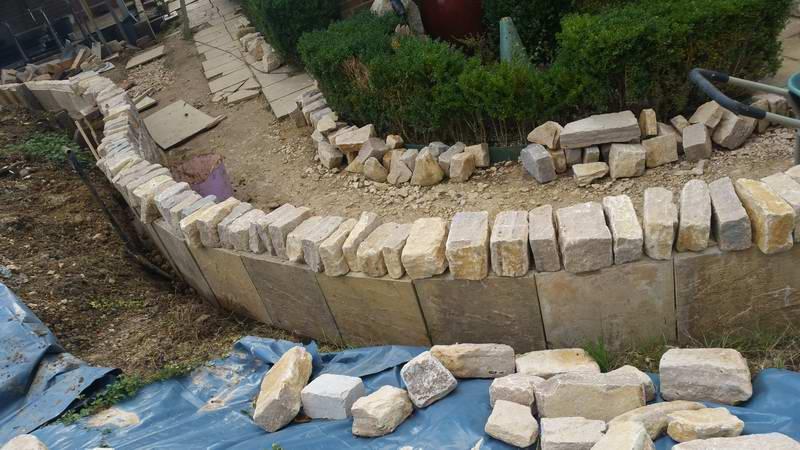
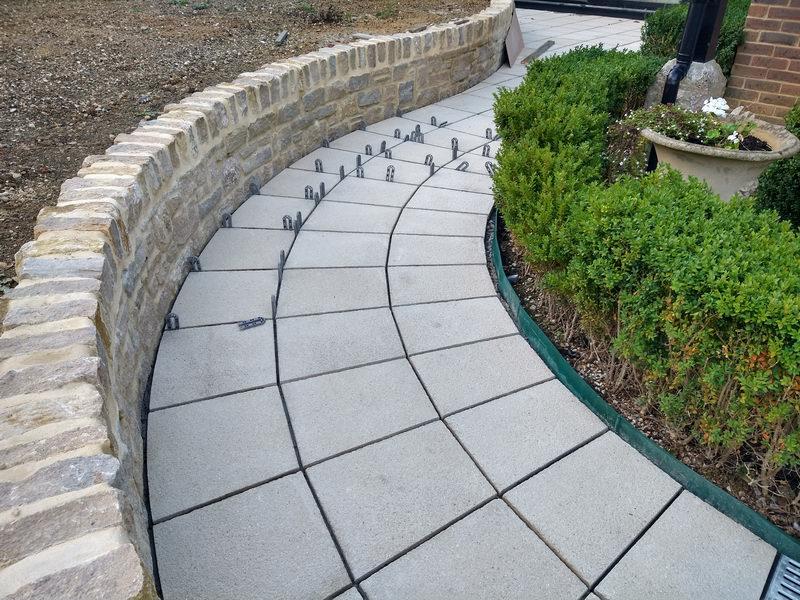
Another one from me. After the digger and dumper finished assaulting my concrete paving slabs I had to replace the path and patio entirely. This left me with a plentiful supply of hardcore plus nearly one hundred usable riven slabs to hide somewhere. The handiest option was to use them to back the stone retaining wall I was building:
-

Insulating a Cathedral Roof - Mould and Condensation
Radian replied to LeRouret's topic in Heat Insulation
I couldn't find a decent one earlier but here's a picture of what I'm describing: I found this image from A flat roof company but it applies equally to a pitched roof. In your case, if you want to DIY it I think this is realistically your best bet as everything goes down in big pieces. While it may seem simple to cut rigid insulation and fit it between rafters, in practice it's horrible stuff to cut and you can forget sliding it along unless you leave big gaps. Nothing will be square and you would have to get an air tight seal from the plasterboard upwards otherwise vapour getting past the insulation will condense on the cold side and run back inside rotting everything in its path. If the base of the typical triangular batten is broad enough it may be possible to screw through the insulation into the supporting deck below. This fixes everything into place so long as some screws go into the rafters to ensure security. -
Insulating a Cathedral Roof - Mould and Condensation
Radian replied to LeRouret's topic in Heat Insulation
To create a 'warm roof' the aim is to put the insulation as near to the outside as possible. In your case you seem to have 100mm rafters supporting triangular battens above and plasterboard below - is that correct? The 100mm space thus created might seem like a natural place to put insulation but the rafters themselves act as cold bridges thermally connecting outside to inside in a direct path at each rafter. This would be called a 'cold roof' and cerates lots of challenges with trying to keep moisture from condensing. To make a warm roof you would put a continuous layer of rigid insulation on top of the rafters and then batten on top of that. Now the rafters, void and plasterboard are all at room temperature. Of course you need to support the insulation - so usually an OSB or plywood deck is put down on top of the rafters and to keep moisture from finding its way up to the cold side of the insulation and condensing, a vapour barrier is simply laid across the deck before laying the insulation. Construction is really, really simple. Your triangular battens might be OK screwed down on to the insulation. Otherwise another thin deck goes on first. Another assumption I am making is that structurally, your exposed beams support the 100mm rafters - else the weight of the tiles would be too great. -
What's "Star Wars" ? ? ?
-
Insulating a Cathedral Roof - Mould and Condensation
Radian replied to LeRouret's topic in Heat Insulation
ProDave, I think that would make things more complicated than necessary for @LeRouret because the vapour control layer needs to be the first thing the air from inside meets. This would mean getting the VCL under the rafters which would mean removing the plasterboard ceiling. If all of the insulation goes on top of OSB or ply sheeting on top of the rafters then the VCL can simply be put down first and everything below the rafters stays put. -
You gonna build a silencer for that? ?
-
Insulating a Cathedral Roof - Mould and Condensation
Radian replied to LeRouret's topic in Heat Insulation
Nice big room. I bet it takes some heating though in the winter. Nobody can say what anyone's future heating demand might be so if you plan to live there a while it might be sensible to prepare for the worst and construct a proper Warm Roof. -
Where is the kWh price heading in 2022?
Radian replied to epsilonGreedy's topic in General Self Build & DIY Discussion
Massively high despite plenty of new sources coming online and no significant cost increases in extraction from existing sources. Time for a windfall tax on OGUK members who are profiting from the issues leading to high prices in continental Europe? -
That's very cool. Was it using a parametric CAD like OpenSCAD?
-
The cables don't run in the cavity, they cross it - much like the tails from the meter. Imagine if you built an extension on the side of a house and brought all the services in through it. That's how our house was built. If I go up into the main attic and look down the cavity I can see all the cables crossing between the two halves. Our previous house built in the 1980's has bonded EPS cavity fill (and sand cement plaster and was so much more comfortable!). We still own it and rent it out and when we recently upgraded the FCU from the original cartridge fuse model the damage to the tails and ring final cables was very evident from contact with EPS. That house was built to a similar plan to our current house with a side extension and cavity crossing cables. That's why I'm being so cautious here. OK, so let's say I take the short-term view (I don't have another 40 years to consider here after all) and forget all about point 3. What about points 2 and 1?
-
Maybe I'm overthinking things as usual. But what about my 3 point concerns about EPS cavity fill? Am I overthinking that as well? I honestly wouldn't trust the advice given to me by any installation company so I'm kind of paralysed on making a decision about this. Back in 1997, when the house was built, building regs. mandated insulation in cavities but somehow our builder got away with leaving it out of half the house. To clarify, the main part of the house has an inner and outer leaf of lightweight block (thermalite?) with an empty cavity and the outer leaf was clad with Purbeck sandstone. The abutting wing is is brick/PIR in cavity/lightweight block. TBH I can't feel any difference between rooms in either half. Both have fresh air vents built into every electrical faceplate. The sandstone facade seems pretty watertight - where I have had occasion to break in to it, I've not seen any evidence of water penetration. However, I remember the brickie's laughing at how ridiculously absorbent the lightweight blocks were.
-
I also found a use for the roofing battens: So many nails! ?
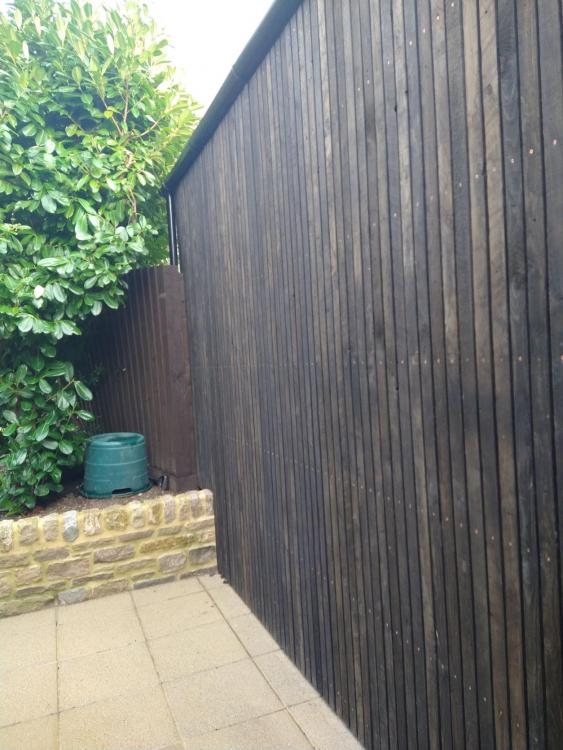
-
Never really considered it. Opto coupler LED is nearly always the only load on the control side so I would think 60mW max (3V@20mA)?
-
But what about the breather membrane under the battens/on top of the trusses? That's only 25mm beneath the slates so could push on them if, in turn, it was pushed by the mineral wool.
-
? I can definitely persuade mrs. and junior to sign-up as well. Just to shut me up if nothing else. I wonder what the installers would do about the fist-sized gap all along the top of the wall? Or would they just stop pumping when it started to snow... I have often seriously considered bonded EPS bead fill for the main house and adding this small job inside the garage might well be cost-effective (I'm sure it wouldn't if they had to turn up to do just 24m2). But I think I have a few problems here that rule it out... We live in zone 4 (very severe exposure to wind and rain) High water table on heavy clay (have seen standing water about 200mm below DPC in cavity) 'T' Shaped House with multiple electric cables crossing a cavity to get from consumer unit in side wing to main house. If, however, filling the cavity meant not living in the plasterboard tent I might look in to it further...
-
35mm x 70mm so just laid them flat. Feels so much better than chipboard flooring. WOW I really like that. I made something very similar about 25 years ago but it didn't look half as good as yours. Or work very well. I've been totally blown away by everything I've seen so far. So much creativity ❤️ Keep it coming!
-
I thought it might be interesting to see what other people have managed to do with stuff like this so I started a new thread to share recycling successes to keep this one on topic.
-
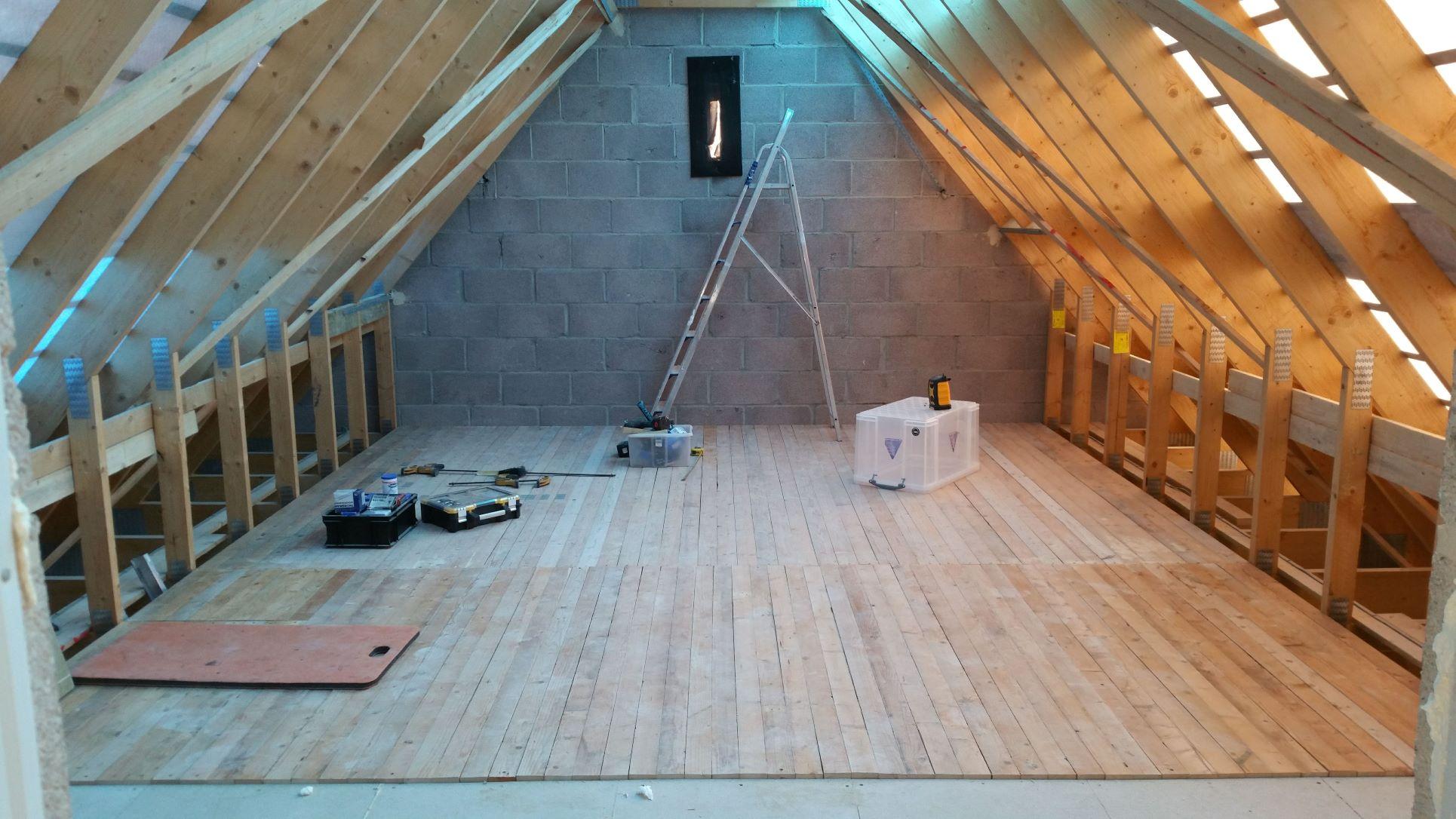
In these times of rising costs and shortages of supplies, I though it would be great to find out what people have achieved by recycling materials. I can kick-off with our storeroom floor made from the original roof trusses demolished to make way for the new attic trusses above our garage. It used up nearly all of it which struck me as being very jammy indeed ?
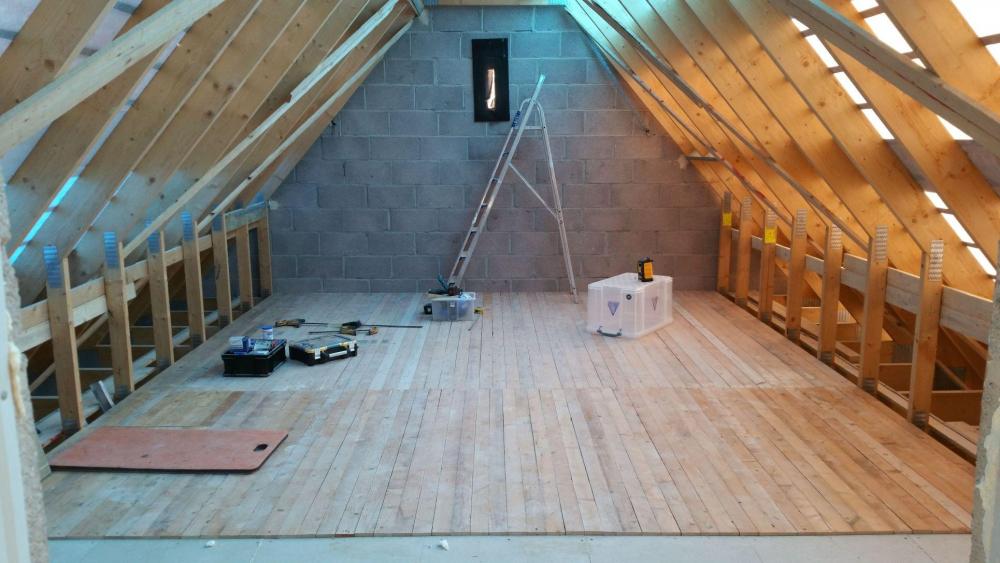
-
Given the considerable costs of buying new building materials, waste collection and disposal - plus transport to and from site, I always look at stuff being demolished as an opportunity for up-cycling into exciting new projects. Especially bricks which are often a doddle to re-use. Can you not think of a future use for them should they prove to be relatively easy to dismantle and clean up?
-
Acronyms, Abbreviations & Glossary Of Common Terms
Radian replied to ProDave's topic in General Self Build & DIY Discussion
Came here looking for FCU when I realised this wasn't Fused Connection Unit from the context of an ongoing discussion. Things made much more sense when I found it to be Fan Coil Unit instead. -
I have a poor opinion of the sort of bypass valves stocked by both SFix and TStat Seem to operate pretty much at random in my experience.
-
Would be quite easy to do - but would that make an airtight seal? P.S. I've been reading through Draughtbusters. Very useful info there. It also left me feeling angry that dot & dab isn't outlawed by now. All our previous properties were sand cement plastered but the builder of our current property pushed us hard to have drylining despite me asking for traditional plaster when I looked into this newfangled practice (23 years ago). I wish I had persisted but excuses about the length of time it would add to the build conned me into it. Conned, because they overran by 6 months anyway, and I have greatly regreted it ever since. Because of this experience, I specified that our recent garage extension be hard plastered where possible. But I wasn't able to control the installation of the specified insulation or detailing of air-tightness. More regrets.
-
Are you sure? If the valve is set correctly the boiler should just cycle off. If the valve isn't opening however, it could cause the boiler to overheat due to lack of flow.