Bitpipe
-
Posts
4118 -
Joined
-
Last visited
-
Days Won
53
Everything posted by Bitpipe
-

Seeking FD30 Doors in traditional designs
Bitpipe replied to Paene Finitur's topic in Doors & Door Frames
I got my doors from FSN (https://www.fsndoors.co.uk) not the cheapest but we were particular about the aesthetic so was one place we were not as budget sensitive. Every door that opens onto the hall in basement, GF, FF and room in roof needed to be FD30. One of these has a large glazed panel (1.6m x .65m) and it was not cheap but entirely do-able. -
You could have instantaneous DHW at the point of delivery by using inline impulse heaters (believe Jeremy did this) or wait however many seconds (30, 60, 90?) for it to pull through from the cylinder. Or go for something in-between like I did. A hot return loop falls into the 'easy and relatively cheap to do during 1st fix, very hard and expensive to do when build is finished' category. I suppose you could run the loop back to the tank but not connect it or a pump (would just be a dead leg) until you're sure it's required.
-
Ran hot tap in WC, probably has longest dead leg off the DHW loop and is just 15mm bore. Activated MVHR booster (which triggers DHW return pump) and turned on tap. Hot water in 8 seconds.
-
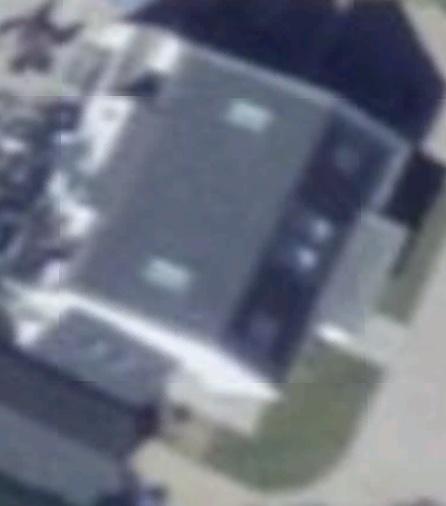
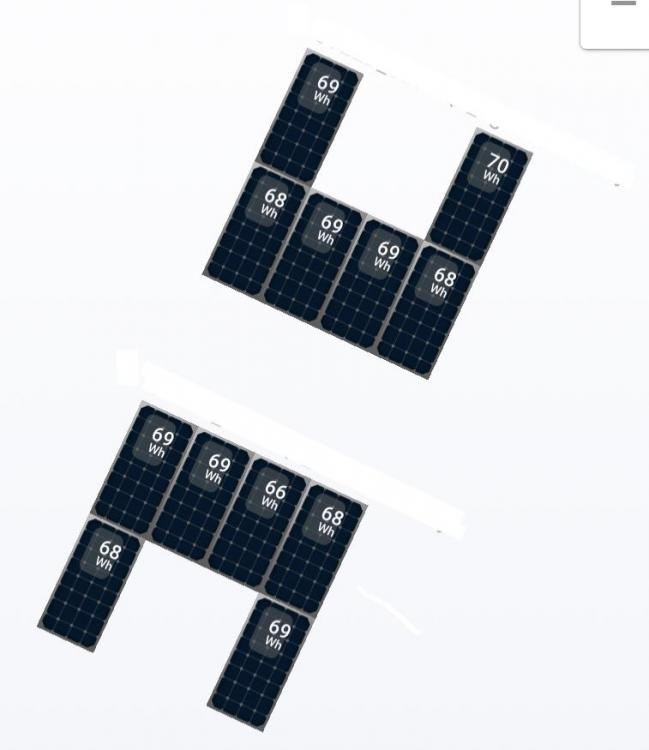
The trays are the same size as the panels so will follow however you propose to lay them out. You'd have the same constraint whether using on roof or in roof. Mine look like this.... bit blurry.
-
Can we have it using Extended Backus Naur rules?
-
The optimised M68000 version. 1 2 3 4 5 6 7 8 9 10 11 12 13 ;PUT ANY ASSIGNMENTS HERE ORG $1000 START: LEA MESSAGE, A1 MOVE.B #14, D0 TRAP #15 SIMHALT *PUT VARIABLES AND CONSTANTS HERE MESSAGE DC.B 'YES DEAR',0 END START
-
You mean physically fail as opposed to electrically?
-
Decision tree: 1) Do you have budget at present for reverting to original? N - don't change it Y - go to Q2 2) Can YOU live with the change back to original spec (you don't have to be happy about it)? N - don't change it Y - go to Q3 3) Can SHE live with the change to the new spec (she doesn't have to be happy about it)? Y - don't change it N - go to Q4 4) Could you both spend the money on something more important OR defer the decision to end of build when dust has settled (assumes it's cost neutral to change now/later - but before VAT claim)? Y - don't change it (yet) N - change it now As said before by me and many others, this is the current self build crisis but only until the next self build crisis arrives to take its place.
-
Best cable for connecting Openreach fibre to LAN switch
Bitpipe replied to cbk's topic in Networks, AV, Security & Automation
My spark took care of all the data cable wiring - just need to be meticulous with the labelling as you go. I picked up a 32 port switch from eBuyer, they have decent kit. Remember that for BT and majority of other DSL providers the router / home hub is the main wifi source. It does not need to be adjacent to the master socket providing the cabling between both is of good quality (mine is probably 15-20m away cable wise). If you stick with the BT system, their WiFi repeaters need 13a power and will either connect to the hub with WiFi or ethernet. You can of course get generic PoE wifi repeaters. -
We went for the cutout & traditional trap with flex hose to bath waste option, could not see any alternative that would not have caused other issues. Unfortunately only realised that this was needed after floor had been tiled so was a bit of a mess to resolve but got there and never had a problem with it in the 5 years since.
-
Need a security camera recommendation..
Bitpipe replied to Bitpipe's topic in Networks, AV, Security & Automation
Which Ring camera? Not keen on needing to pay a monthly subscription on top of the initial cost either. What systems did others use, even if installed at first fix? -
Price of a pump, timer (or PIR) and a few m of piping & insulation. In my place, MVHR boost and DHW return pump are activated at same time (PIR in bathrooms). In my 400m2 house there is one DHW circuit with the various taps / showers teeing off it. Pump is at the end of the loop just before it re-enters cylinder. For me, its a few seconds but not sure how long the longest run is to tap from the main loop. More noticeable when the pump is not active (i.e. if I'm in kitchen) and it can take 2-3 mins to run hot. Well yes but it's going to be minimal. Still not sure I get this - my DHW (and cold) is live to every tap with an isolator valve just before the fitting to allow for replacement / servicing. Why would you have entire legs isolated? Very little of my pipework is even visible, just the major valves in the plant room, at the UFH manifold and that's about it. There is no balancing in a single loop system, why would you have multiple loops?
-
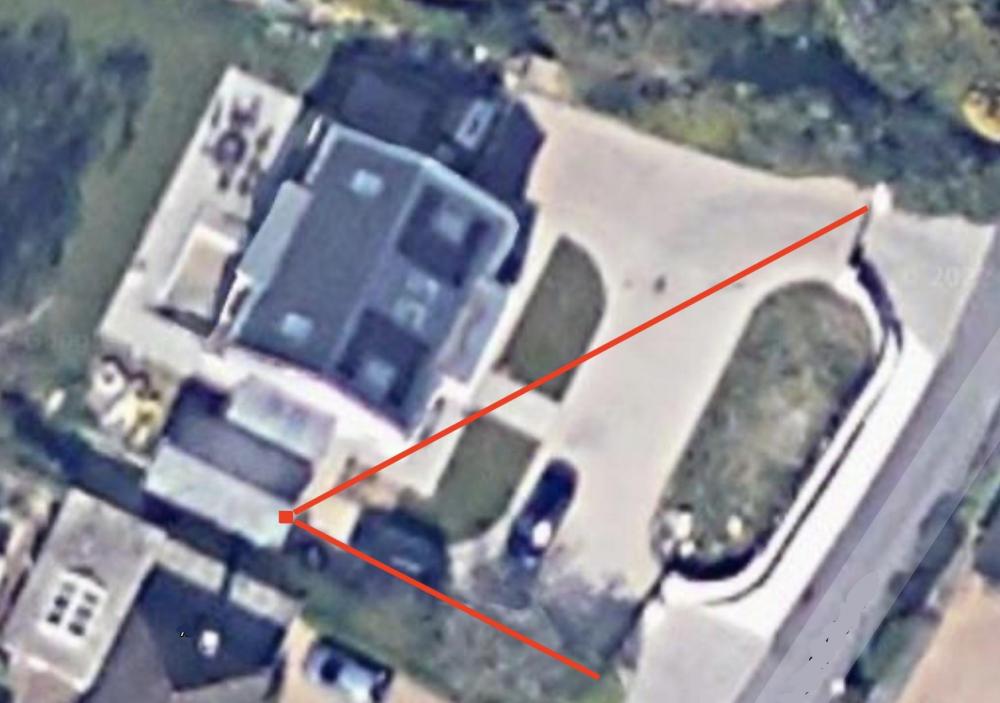
So I made no provision for security cameras on the house (duh) but would like to retro fit something now as the lad had his bike nicked a few months ago (left it propped up against house in full view) We have an in and out driveway with automated gates each side so probably looking at two cameras to give decent coverage of the frontage but could live with one if it had a suitably wide field of view. Don't really want to make any new penetrations in the house fabric (airtightness, very deep and dense insulation to navigate) but if I did it would be at loft height which may be too high up for cameras to be effective - i.e. about 6m from ground level. If I did entertain that approach I'd be able to wire any camera directly to power and the IP switch. The only alternative to this would be a wireless / battery operated system located at a more sensible height. However I don't mind poking holes in the garage and as it sits directly in front of the entrance gate and level with the house, could give the necessary field of view. That would allow powered camera and potentially access to IP (WiFi for sure and potentially a plug in ethernet solution to get onto the home IP network). I've just upgraded the home NAS to a dual array 4TB system so if that can be used all the better but not necessary. Not crazy about cloud only storage, would like to have a local copy. Open minded on whether I need surveillance on phone. Looked at the usual suspects on Amazon (Ring, Arlo, Eufy etc) and they seem to have very polarised reviews - lots of 1 star comments. So suggestions please! EDIT - here's a birds eye view. Single garage camera could give coverage of frontage if needed.
-
Best cable for connecting Openreach fibre to LAN switch
Bitpipe replied to cbk's topic in Networks, AV, Security & Automation
Maybe but the standard BT WiFi discs expect a 13a socket next to them. It's only a few but an oversight on my side. Another oversight was any allowance for security cameras (power and connectivity) - I know there are lots of wireless ones on the market but still kicking myself on that one. Plan to add these to the garage now as there have been a few burglaries locally - not so concerned about drilling holes into that structure. -
Best cable for connecting Openreach fibre to LAN switch
Bitpipe replied to cbk's topic in Networks, AV, Security & Automation
Other tip - co-locate power next to your RJ45 in case you want to add a wifi access point later. We have a few orphaned RJ45 that have no power next to them so can't be used for that purpose. -
QS/project manager for timber frame house in SE London
Bitpipe replied to cc247's topic in Surveyors & Architects
If you already have made a frame decision, and have a quote from a supplier, then the QS can include that into their estimate. It is absolutely an essential tool to have as it helps you budget and see where savings can be made. As we went along, we plugged 'real' quotes into the spreadsheet often beating the estimates so the overall budget came down. Our QS just took measurements off the PP drawings (we did not have a detailed drawing at that stage) and calculated all the quantities, areas etc which was great for getting quotes. Much easier to ask a contractor for a quote for xM2 of plastering or render vs let them figure it out for themselves. I've not seen standard breakdowns myself, groundwork is highly dependent on your site conditions but once you're out of the ground everything else should be predictable - however recent materials and labour shortages & price rises have thrown estimates out of whack to some degree. -
Which parts did you DIY?
Bitpipe replied to BadgerBadger's topic in General Self Build & DIY Discussion
As a soft handed non builder and crap DIYr, I fitted the EPS insulation to the exterior of the basement walls before backfill, installed the GRP basement light wells (both of these were then backfilled by the Groundworker). Inside I did the MVHR install over a few weeks, again all hidden by the plastering. Aside from that I kept the site tidy which is not to be underestimated. -
Ground floor ceiling joist insulation/soundproofing
Bitpipe replied to Marvin's topic in Building Regulations
Soundproofing I believe. If cut correctly to size it should stay put when inserted. -
QS/project manager for timber frame house in SE London
Bitpipe replied to cc247's topic in Surveyors & Architects
A PM will want 10-15% of the build budget for their fee, as would a main contractor. A PM is going to be more neutral vs a MC. A PM can work with a QoS to get a costing plan (on which they will base their fee). They will probably justify their fee by saying they'll 'beat the budget' but in my experience you can do this on your own. QoS should be a fixed fee but will expect some degree of detailed drawing from which to cost. Note that there is a LOT of variation in timber frame systems depending on your performance requirement (bog standard regs, high SAP, passive etc) and in what the frame co provides - supply only, supply & erection, flooring, all internal walls, temp stairs, foundation system, felt & batten roof, crane hire, crew safety systems etc.. This makes it hard to to apples to apples comparisons so the best input for any QS is firm quotes from your preferred TF company. Many firms will generate these off your planning drawings and you choose your preferred system. The rest of the house is pretty standard irrespective of the superstructure which is usually 15-20% of the build cost. -
SIPS or ICF
Bitpipe replied to jimmy_stocks's topic in Energy Efficient & Sustainable Design Concepts
As complete novices, the turnkey to get weathertight was very important - the window/door, roofing and render contractors were easy to schedule on the back of the frame schedule and then the contractor (MBC) returned to complete insulation and airtightness. We were then ready for first fix. We did not use their insulated slab option as we had another contractor build a basement in lieu of foundations but it was pretty straightforward. Like many here I did the MVHR install rite of passage - took ages but there was time to kill on the build and it's good to get it in ahead of other first fix trades as it takes up a lot of space which may get 'stolen' by others. There was still plenty to do. -
Best cable for connecting Openreach fibre to LAN switch
Bitpipe replied to cbk's topic in Networks, AV, Security & Automation
Agree - we have 2 or 4 terminated cat 6 in each room, more in study - so about 40 in total. However we only have a 32 port switch and only about half of those are in use. The wall panels are handy though as our BT router is in GF study and has a few things plugged directly into the back. There is a patch cable from the router into the wall and that is is patched into the switch in the loft where all the cat6 is terminated. We also have the 'Unbreakable Wi-Fi' EE router up there (better signal) and it's patched directly into the BT router bypassing the switch. The BT WiFi discs are also patched into the switch as they are too remote from the router for the WIFi pairing to work. Just relocated NAS drive there also as it was too noisy in study. The only things that really use the home wired connections are static items like TVs, consoles and work machines, plus the Enphase box for the PV. Also use the Ikea smart home hub to control some blinds and that needs a wired IP connection. My only regret was not dispersing the wall plates more intelligently in the study - we have one wall where there are none, bounded by doors (so no fly cable option) and inevitable that's where the printer has gone so it needs to use WiF! -
SIPS or ICF
Bitpipe replied to jimmy_stocks's topic in Energy Efficient & Sustainable Design Concepts
The original poster was specifically looking for something turnkey. If I was doing it all again and had the time I'd be tempted to DIY with ICF, just looks like fun -
Best cable for connecting Openreach fibre to LAN switch
Bitpipe replied to cbk's topic in Networks, AV, Security & Automation
You can also daisy chain switches, should work fine. -
SIPS or ICF
Bitpipe replied to jimmy_stocks's topic in Energy Efficient & Sustainable Design Concepts
Welcome, lots to unpack there. Firstly passive standard (not certified) will meet many of your design objectives around low energy and improved air quality as they are inherently highly insulated and airtight so you need to use a MVHR system to deliver filtered fresh air to your home and remove stale air from the interior. You can spec different degrees of filtration for your MVHR system also. Important to say that you don't need to go all out on achieving passive standards but they are not that hard to achieve in practice. A key part of the passive standard will be delivered by the building frame/structure and the rest by doors & windows. You spec a heating system that is matched to your requirements (usually a low temp UFH solution) and then figure out to run that and deliver your domestic hot water - either ASHP or gas boiler. Depends on your existing service connections, budget, preferences but ASHP with in slab UFH gives the option of cooling in summer also. What's important is to understand how the house will behave year round - while we are all obsessed with heating, attention is needed to minimise overheating also - which can occur from spring to autumn. The modelling (PHPP) can be done at the design stage and can influence window placement & sizing, external shading etc. Note this is different from SAP calculation which are required by law but is a bit of a blunter tool. As to one build method over another, again that's a tradeoff in budget. ICF will give you a solid, strong insulated and airtight shell but the roof will need separate consideration as will your internal floor construction (joists etc). SIPs can be used for roofing an all SIP build (or an ICF) and various contractors will erect the shell and provide different degrees of internal fit out (floors, structural walls etc). There is a third way, timber frame, where the bare panels are made off site but once installed, airtightness and insulation are done on site. Some firms (MBC) also offer an insulated passive slab as part of the package. A ICF contractor may be able to do a slab also but SIPs will expect the foundations to be in situ. Once you have your fabric/ shell, the rest is a standard house - follow on trades need to respect the airtightness measures (no random drilling of holes in external walls etc.) but that's about it. So if you decide to use a single main contractor (usually the most expensive option) or arrange follow on trades yourself is up to you. You may find that many general builders are clueless about passive standards or that you pay a significant premium to get one who is experienced but really, once the shell is up and the windows etc are in, the rest is a standard build. For that reason, many of us here contracted to get the passive frame erected directly and then managed the trades (not as hard as it sounds) to complete as that was the best way to control cost and maintain the focus on passive detail. Some may use a project manager to get the same outcome but you will pay them a % of the build cost (10-15). Your frame contractor will offer a standard warranty but that will not cover anything that comes after. Usually these are incorporated into the general building warranty whether that comes from a 3rd party insurance company or your builder or architect. And yes, timber has spiked in price but is coming back down, however SIPs and Timber Frames are always more expensive as you're paying for off site manufacture and a fast erection process that can save you money in the longer run. Hope this all helps! Keep asking the questions. -
Moving in to an unfinished self build
Bitpipe replied to hbooth's topic in General Self Build & DIY Discussion
We did similar, were on a standard home insurance policy for a year before the cert came through. I suspect any insurance company will happily sell you a policy but you'll only discover issues if you have to claim. I'd guess for contents claims, you'd be fine. If you had to make a claim on the buildings side then lack of a cert may give them a reason to get out of payment.