sharpener
-
Posts
1492 -
Joined
-
Last visited
-
Days Won
1
Everything posted by sharpener
-
I have had some trouble setting up the flows and temps on my UFH manifold - the cold return from the UFH prevents the HP attaining the desired 50C flow to the rads when it is very cold outside. So I thought I would visit this topic again. Setup is a Vaillant 12kW Arotherm plus which has a design delta T of 5C at its full flow rate of 2040 l/hr. I want to split the output equally, 6kW into the UFH (ground floor) and 6kW into the rads (ground and first floors). Design condition for the rads is 50C flow 45C ret at an OAT of -0.2C (Plymouth). UFH dates from barn conversion done by others in 1995 so I do not have any design data. There is the usual mechanical thermostatic mixing valve to vary the proportion of return flow recirculated, and a secondary pump. Q1: How much flow do we need to allow into the UFH system? By calculation (from 1 kWh = 860 litre-degrees), with an available flow temp of 50 and assuming a return from the UFH of 30C, to dissipate 6kW requires a flow of 6 x 860 / 20 = 258 litres/hour or just 4.3 l/min. Note this is independent of whether or how much water is recirculated in the UFH loops by the pump/mixing valve, the heat given up depends only on the delta T and flow rate. I am not confident that the mixing valve will control this and think partially closing the isolating valve for the UFH circuit will be necessary - at least until I can drain it down and fit a flow setter. Q2: What is the actual return temp from the rad circuit? Actual flow rate will be (34 - 4.3) = 29.7 l/min so temp drop for 6kW is 6 x 860 /(29.7 x 60) = 2.895 deg so return is at 47.1C Q3: What happens when the two return flows mix on the way back to the HP? We get a mixed down temp of ((29.7 x 47.1) + (4.3 x 30)) / 34 = 44.94C so the HP will reheat it to almost exactly the 50C flow we started with. Note that increasing the flow to the UFH beyond 4.3 l/min will result in a lower return temp to the HP so it will not be able to reheat it to 50C any more. Q4: How do I set the mixing valve and secondary circulation through the UFH loops? If there is no recirculation at all then the temp at the start of the loop will be 50C and it will decay exponentialy along the length so giving a very uneven heat distribution also the initial temp may be too high for the floor covering (carpet) so to achieve say 35C at the start of the loop and hence 1/4 of the delta T we need to circulate 4x as much flow in total i.e. 17.2 l/min, so need to add 12.9 l/min from the return side via the mixing valve setting the mixing valve to 35C should achieve this. Fortunately it is not a critical parameter. individual loops can then be balanced as usual at the manifold on the basis of floor area Conclusions (which I will need to test by experiment in the next cold snap): UFH circuit needs much less of the flow than I suspect has been the case I will need to control this separately as it can't be done with the mixing valve setting If there is too much flow to the UFH then the HP will not be able to achieve the required flow temp to the rads Thanks to @Dan F for his contributions offline.
-
Glad you fixed it. Out of interest what was the part no and where did you get it from? The secret is a good de-soldering gun (solder sucker), I only have a manual one which IIRC came from a firm I worked for at one point, the professionals now use ones with a little vacuum pump that runs continuously. The £35 made me wince a bit having just repaired some tricky broken wires inside my son's digital alarm clock. Now I know the going rate I can bargain with him for fun and profit. Previously his teacher g/f's hair curlers needed a new ballast resistor, the school science technician had had a go and made it a lot worse by stripping the track off the pcb.
-
BUS Grant requirements (conflicting info)
sharpener replied to Rudski's topic in Air Source Heat Pumps (ASHP)
Defrost cycle is a different beast from frost protection. You still need glycol or antifreeze valves for that unless you have a totally reliable electricity supply inc. some kind of backup against power cuts, even then you might be unlucky and have a compressor breakdown when you least want it. IME it can get very cold in E Anglia when the wind is in the East, no shelter from hills anywhere nearer than the Urals. -
I put the Evohome system into Holiday mode which turns all the room temperature eTRV settings to 10C. So far the max/min thermometers show that has not got that low. If I know the return date I can enter that too. Only real benefit is that it saves wear on the valves and prolongs battery life. Then the HP gets set to Absence mode so turns everything off except for frost protection. I can use the app to turn it back on before I return. If that is earlier than expected (as above) I can still have HW on arrival. If I remember I do various tricks so as not to leave a HW cyl and thermal store full at 55C which will go to waste. But these addtional complications run the risk that some vital step gets omitted! If all else fails the anti-frost valves will I hope save me from a very expensive freeze-up.
-
BUS Grant requirements (conflicting info)
sharpener replied to Rudski's topic in Air Source Heat Pumps (ASHP)
Several things occur to me here.. Depends on upstairs floor construction. Ours has no insulation, bedrooms get to about 16C without the rads on but even so I wouldn't want to be without them entirely. I have some sympathy with the argument that if public money is involved then the installation should be generally suitable for the property rather than idiosyncratic. E.g. HW cyl should be adequate wrt # of bedrooms. Subsequent owners will after all not be able to get a second BUS grant. If you are going to fit rads upstairs its hardly worth penny pinching on the size at the expense of flow temp as that will hit CoP. I never fully bottomed out what MCS/BRs actually allow but installers won't IME go above 50C flow so the R290 argument is largely irrelevant. I see Cool Energy are now doing an umbrella scheme, their products have not been mentioned on here for a bit but I thought they were well engineered and were quite responsive when I contacted them a while back, might be worth exploring. -
New Highland Home, ASHP size + calcs advice :)
sharpener replied to HighlandHopeful's topic in Air Source Heat Pumps (ASHP)
Aluminium is used for skirting rads bc it can be extruded to the exact shape along with all the internal detail so there is no waste or post-finishing needed. AFAIK it is the only metal you can do this with economically. Unless you want "designer" radiators then ordinary Stelrad or equivalent steel radiators are significantly cheaper and just as good. With proper inhibitor in the system they will last 25 yrs +. Ignore claims that aluminium rads heat up quicker or are more efficient, this is marketing BS. Heatpunk is a convenient and free design tool. https://heatpunk.co.uk/ -
Which way does the fan on your ASHP face?
sharpener replied to low_and_there's topic in Air Source Heat Pumps (ASHP)
12kW Vaillant is almost imperceptible from the side and not very noticeable from the front unless putting out 10kW or more which is rare. Sucks from back (only 200mm rear clearance, 250 if for cooling) and blows v cold air out from the front. Visitors (who have to walk past it) have remarked on the cold rather than the noise. -
I think you have probably found the solution. IIRC Farnell stocked the right one for me but I didn't want to buy one as a spare for precisely that reason. Steca would not confirm it but the loss of time and date following power interruptions led me to the same conclusion. I think the first replacement inverter may have been old stock as the model had been superseded.
-
Installer and Cylinder decision - BG or Heat Geek?
sharpener replied to km94's topic in Air Source Heat Pumps (ASHP)
IME they all pad the quotes with an unquantifiable amount for "MCS compliance costs" or some such which means some scope to haggle. Tell them you would like to give them the work, what can they do for you? "Nothing for the dumb" as my mother used to say. Various horror stories about BG on Vaillant forum, I would steer clear of them. -
Like my 2011 Steca solar inverter it might have a supercapacitor for backup, 3V Panasonic IIRC. Not very reliable, have had whole inverter replaced twice under warranty bc it failed, will try and fix it myself it it goes again as is now out of warranty.
-
Installer and Cylinder decision - BG or Heat Geek?
sharpener replied to km94's topic in Air Source Heat Pumps (ASHP)
S Devon. I think your quotes are pretty high for 7kW, unless London/SE. Try asking the HG if they can match the BG one or come near it. -
Entirely, the problem might be in forcing the HP to run at that low output. Noise Reduction mode could be the solution.
-
Yes. Even years ago heating a conservatory outside the thermal envelope from yr central heating was not allowed under the BRs. You were supposed to fit electric UFH (which is of course more expensive to run and worse for CO2 emissions, makes no sense if you want the heat anyway). So got the plumbers to drill through the wall and fit isolating valves. After the BI had been to inspect the new utility and loo off the conservatory I fitted the rads myself and connected up. Separate zone for the Honeywell Evohome, TRVs set to 16C just in the morning to take the chill off.
-
Are we targeting ASHP's at the wrong market?
sharpener replied to ProDave's topic in Air Source Heat Pumps (ASHP)
Spot on. Our loft conversion firm "preferred" to use a private sector one. He said he would if necessary get them to open up their work to rectify missing ridge ventilation but in fact didn't. It was clear that he didn't want to jeopardise a lucrative, captive stream of work. However it dried up anyway as firm deservedly went bust, fortunately I had kept back £500 for reinforcing floor joists they had weakened with non-compliant holes for pipes. Nightmare. -
Installer and Cylinder decision - BG or Heat Geek?
sharpener replied to km94's topic in Air Source Heat Pumps (ASHP)
BG will probably subcontract the job so it's anyones guess who will do it at what standard. Press them to tell you. Gledhill are reportedly not testing their cyls 100% and leaks and rattling internals have been mentioned somewhere. What size? FWIW I got a Vaillant 12kW HP, 270 l thermal store and 8 new rads for well under your BG quote. -
Vaillant ashp (my battle with).
sharpener replied to zoothorn's topic in Air Source Heat Pumps (ASHP)
It's annoying that Vaillant's Noise Reduction Mode only supports a limit in the restricted range from 40% to 60% modulation. I don't see why they could not make it programmable to choice. My experience with the 12kW is exactly the same, it is only noticeably noisy at the top 10% of the output range, so a limit of 90% would be ideal for a noise-sensitive location and only compromise performance at really extreme OATs. Have you tried the Current Limit feature as an alternative? Even if it is not that effective, telling yr neighbour that it is switched on might placate him. -
If you search amongst @JamesPa's posts about a year ago there was a lot of discussion about various possible measures including commercially available enclosures (v expensive) and mats behind the HP. Also as you have found, the most objectionable noise only occurs in the top 10 - 15% or so of the power range. Is there any way of limiting the output power somewhat whilst still leaving enough to keep you warm, perhaps with slightly longer heating times? Might be labelled Current Limit or Noise Reduction Mode.
-
What is more relevant is that gas costs the same at any time of day! So there is no incentive to turn it off during peak periods which is when a concrete slab can usefully act as a storage heater.
-
You don't say what make it is. Vaillant installers seem to charge about £200 for the annual service, which is a condition of the warranty. As an alternative Vaillant themselves offer the service using their own field engineers for about the same price, reputedly they often discover setup issues which are costing you money left over from poor installs.
-
You will not get the thermal mass without the concrete. This means the system will be more responsive, but you will not be as able to bridge across peak electricity periods or charge the slab up only at night as IIRC @JohnMo does.
-
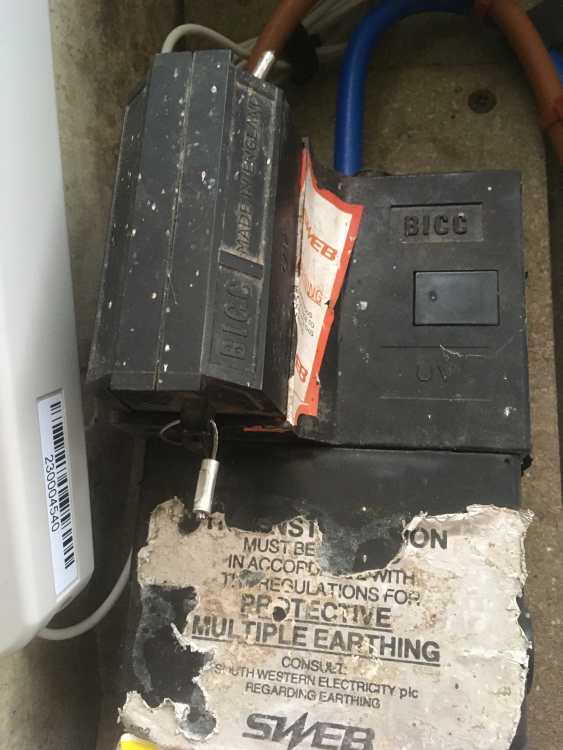
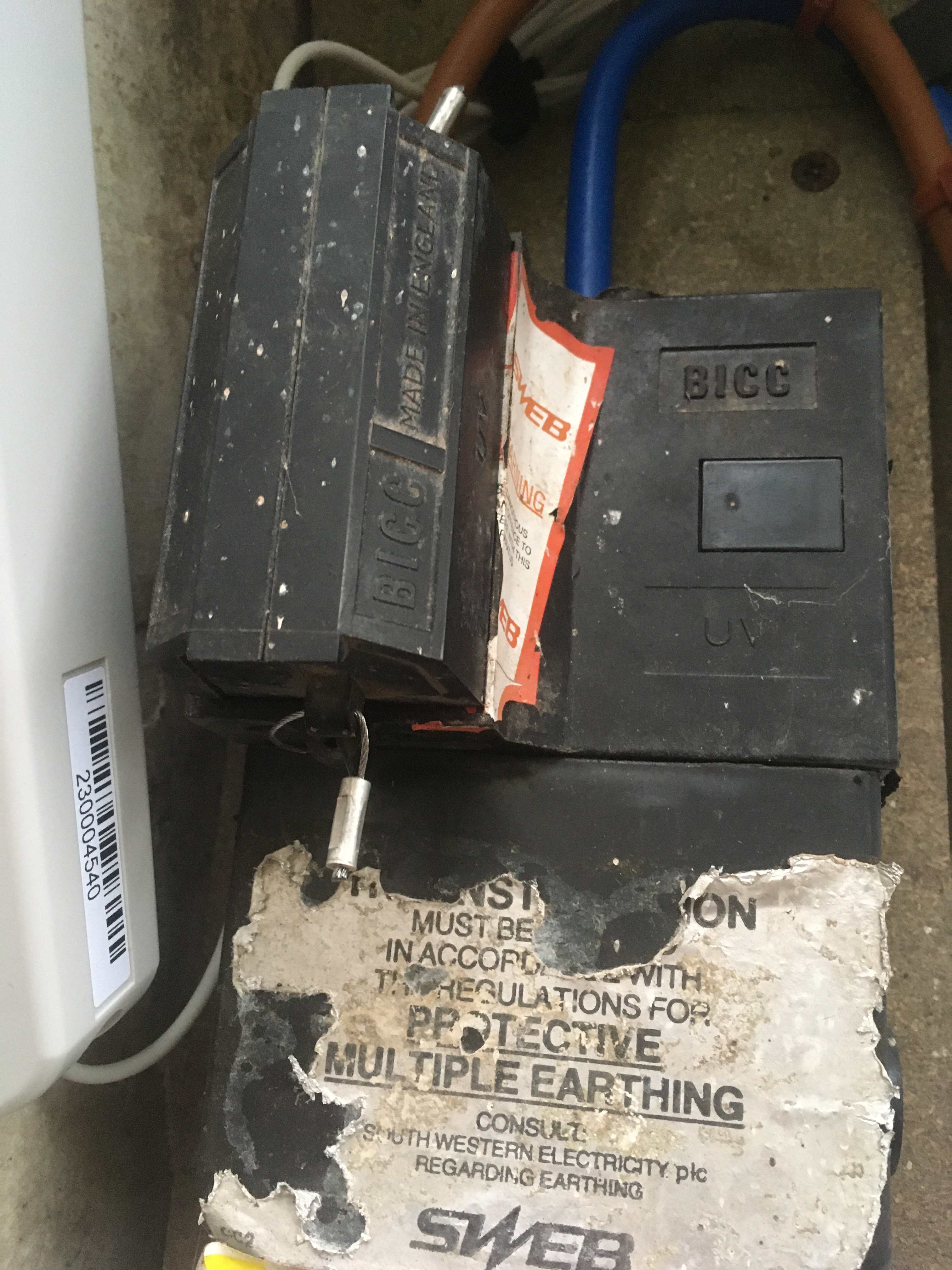
Please help identify this DNO fuse
sharpener replied to sharpener's topic in Consumer Units, RCDs, MCBOs
Thanks, that's what I thought but wanted to check here, spark who installed HP put n/k on his EIC. The BI wants another one for my DIY battery system and EV charger, have done them before elsewhere (am Chartered EE) so fingers crossed. -
Crabtree Starbreaker. Can still get accessories that fit a board installed by previous owners in 1995. Are approved by Electrium to accept their Loadstar range accessories too. Can hot swap MCBs as the plug-in busbar arrangement is finger-proof. OTOH Fusebox are the only ppl to make a cheap(-ish) Type F RCD suitable for Vaillant HPs (still 3 figures though).
-
Exporting to a second distribution board
sharpener replied to jpadie's topic in Consumer Units, RCDs, MCBOs
Presumably you have got a small DB in the garden room with mcbs for the final circuits. In which case Option 2 looks favourite assuming to protect the SWA you can get a 63A fuse that fits. The cheaper of the two switchfuses is nice and compact and there must be millions like that in service. No CU manufacturer makes every kind of accessory e.g. contactor, timer, DIN rail meter so what are we supposed to do? I have had similar probs finding a compatible Type F RCD for installing a HP. Personally I think this kind of response is not helpful for ppl trying to do a sound engineering job and the BI is being over picky. Using rigid jumper cables inside a CU should not be an issue, they are not subject to flexure or vibration FGS and it is not a requirement for the incoming tails. -
Please help identify this DNO fuse
sharpener replied to sharpener's topic in Consumer Units, RCDs, MCBOs
Ha Ha. WPD (as was) checked in 2023 that it had an 80A fuse and confirmed in writing it was suitable for an EV charger and HP, so presumably they were happy with it to remain. I can't increase the rating bc the tails are only 16 sq mm (actually imperial equiv). Still need to know what BS category it is. -
I need to know what BS no. this fuse is to put on Building Control paperwork: