sharpener
-
Posts
1492 -
Joined
-
Last visited
-
Days Won
1
Everything posted by sharpener
-
Plant Room Distance from ASHP - 25m too far?
sharpener replied to SBMS's topic in Air Source Heat Pumps (ASHP)
Avoid secondary pumps if you can. The Vaillant internal pumps are exceptionally powerful so with the correct pipe sizing I don't think you would have any problem. This is for the 12kW size, nominal flow rate is about 2100 l/hr so you have 55kPa (8 psi or 5.6 m head) to play with: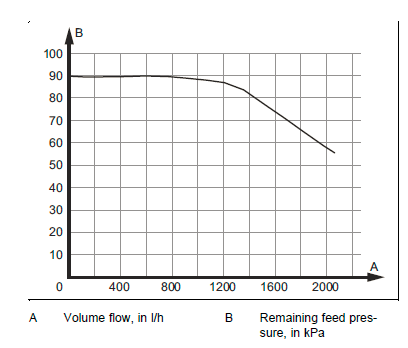
-
I stand corrected. Every day a school day! Stocked by Midsummer.
-
Stiebel Eltron are top end and correspondingly expensive, not sure you need that. Assuming good insulation, MVHR etc it is too big and will cycle a lot, you would do better with something like 5kW Vaillant which are also v good and the spec is generous too. You won't find PV made in Europe any more. 13kW is a massive array esp in comparison with HP size, are they trying to run the HP entirely from the solar power!? So get half that and 10 - 12 kWh of battery for a better balanced system, that will probably be enough to cook evening meal and run the HP from battery through the evening peak, more than that probably not economic.
-
Radiators needed for ASHP and UFH?
sharpener replied to YorkieSelfBuild's topic in Air Source Heat Pumps (ASHP)
With good reason. And you never explained what its significance was. What did IMS have to say about it? -
If you can get away with something that will take ordinary screws then the toggle fasteners that have a plastic rawlplug bit with two wings in front that splay out might be something to consider.
-
4 consumer units on a single supply
sharpener replied to JonChas's topic in Consumer Units, RCDs, MCBOs
Yes, easy. In the house we have the original CU, 4-way board for uninterruptible supply to freezer and PV inverter, separate CU with changeover switches for battery inverter, 6-way CU for heat pump with its dedicated meter. Further sub-boards in outbuilding and garage. -
4 consumer units on a single supply
sharpener replied to JonChas's topic in Consumer Units, RCDs, MCBOs
Many REC isolators, switchfuses and CUs have terminals that will accommodate 2 x 25 mm^2 cables so you could split into two at the isolator and then daisy-chain from CU #1 to #3 and CU #2 to #4, or ditto with switchfuses to overcome the 3m limit. Looks a lot nicer than a proliferation of Henley blocks. HP installers seem reluctant to do this IME, even though a separate CU is desirable if they need a Type B RCD. -
Have found exactly this in B & Q, quite good for making small bits, putting a rounded corner on tiling, sticking a mirror to tiles, sorry can't remember the name. Ronseal white polyester resin woodfiller might be good, or epoxy putty.
-
Radiators needed for ASHP and UFH?
sharpener replied to YorkieSelfBuild's topic in Air Source Heat Pumps (ASHP)
Then the rads will not emit their designed output so it is a nonsense. If it is a fudge and you are not actually going to use them as upthread it does not matter how big they are. OTOH if IMS are insisting on every room having adequate emitter(s) of its own it will not suffice. Yes. even to get the HP flow temp as low as 45C I needed to have mine uprated to 1.9x the area they were with a oil boiler at 65. To get down to UFH temps bigger again. It should all be in the emitter schedule that came with the MCS quotation, mine had different columns for different flow temps so it was easy to see the effect. -
ASHP + Solar PV + Battery - Choices
sharpener replied to Diarmid's topic in Air Source Heat Pumps (ASHP)
So a 3.4 kW HP using this method. This is not a good idea IMO. The phase change temperature of 58C means they need a flow temp of ~ 65 which knackers the efficiency, also there have been many reliability problems mentioned on this forum over the years. Better to have a horizontal tank under the eaves if you are really tight on space for a HW tank, though the stratification will not be as good. If you have smart meter and can get Octopus Cosy your battery can do 3 round trips a day but even so a 5kWh battery is not going to last long enough to ride out the evening peak 1600 - 1900h. -
Radiators needed for ASHP and UFH?
sharpener replied to YorkieSelfBuild's topic in Air Source Heat Pumps (ASHP)
As I have a 12kW Vaillant their heat curves are all familiar stuff but doesn't really explain what the 9.5 figure is, what its dimensions are and whether there is another figure missing between "9.5" and "kW", can anyone else shed any light? If IMS are your installers then it is odd their web site lists Vaillant and Nibe HPs which are both high end of the market but then they propose a Riello which is not.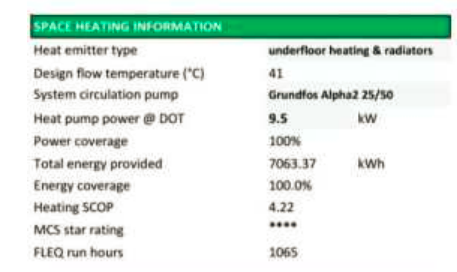
-
Radiators needed for ASHP and UFH?
sharpener replied to YorkieSelfBuild's topic in Air Source Heat Pumps (ASHP)
That makes more sense now. Can't see from this spec what output is at yr -3.4 OAT but probably enough. What is the 9.5 kW figure though? Why in 2025 aren't they recommending a unit with R290 refrigerant? Heat Geeks pride themselves on being top drawer (and correspondingly expensive) so why can't they access s/w that will account for internal heat transfers if that is what you want. You could even model it yourself in HeatPunk. Convenient that the running costs of an alternative gas boiler ar £1 p.a. more than the HP. -
Radiators needed for ASHP and UFH?
sharpener replied to YorkieSelfBuild's topic in Air Source Heat Pumps (ASHP)
Your architect/designer is going to get just as much trouble with this one! Send him the link to this thread. 25W per sq m is very generous for a house like this. You will save more than the lost £500 design fee by finding someone who will put in a smaller HP than a 9.5 kW Riello. -
Bc OFGEM have told them not to? Maybe their response to the previous OFGEM investigation has not been adequate, or a new problem has been discovered. Having had successive accounts with Orbit and then Yorkshire, both of which ceased trading or were shut down, and then assigned to Scottish Power, it doesn't sound good to me.
-
ASHP advice on buffer tank / heat store and more
sharpener replied to Joyosa's topic in Air Source Heat Pumps (ASHP)
It would be helpful to tell us the overall floor area and the general nature of the construction. Then you can get a very approximate estimate using the heat geek crib sheet. But IMO much better to start again using a modern R290 unit than throw money at upgrading such an old setup. -
ASHP advice on buffer tank / heat store and more
sharpener replied to Joyosa's topic in Air Source Heat Pumps (ASHP)
This may work if the HP is an old one with the compressor driven by a plain old 3-phase motor. But all modern HPs have inverter drives which will present a power factor close to 1.0 so no scope for improvement. I am still puzzled by the size of yr HP, this must be a record for anyone posting to this forum. What make/age is it? -
ASHP sizing compared to heat loss calculation.
sharpener replied to DREG's topic in Air Source Heat Pumps (ASHP)
Vaillant 12kW would do nicely IMO. Specd down to - 20 so at -3C the data sheet figures give quite a bit in reserve for DHW and defrosting. Quite good turn down ratio so cycling not too much of a problem. Very quiet. The 10kW is the same hardware de-rated so no point in choosing that, min o/p is the same. Mitsi also a sound choice if that is what you have been quoted. -
2A2 Daikin Mini Split - Noise from the gas lines
sharpener replied to Norbert's topic in Air Source Heat Pumps (ASHP)
Sounds terrible. Would suspect incorrect refrigerant charge or a faulty expansion valve but am not a refrigeration engineer. Is it under warranty? What do installers say? -
Any thoughts on Adia thermal?
sharpener replied to Beelbeebub's topic in Air Source Heat Pumps (ASHP)
If you are running a HP you would probably want to fully cycle the battery in each of the 3 charging periods, on Cosy they are 0400 - 0700, 1300 - 1600, 2200-2359. Though IME the last one is the least useful for charging the battery or TS, but it does at least keep the real time cost down when the battery has run out of an evening. In order to make full use of the idea, as well as the 20kWh/10kW battery pack you are going to need a 10kW inverter, they are neither small nor cheap. -
Any thoughts on Adia thermal?
sharpener replied to Beelbeebub's topic in Air Source Heat Pumps (ASHP)
Yes I think you are right, I was confusing this scenario with my thermal store where recirculating the water through the rads ceases to be useful when the temp has dropped by about a half. Usage of C/n to denote charge rate as a fraction of rated capactity of batteries is unfortunately long established so I fear that ship has sailed. 20kWh of batteries would in rough terms occupy about the same space as an UVC. Also to be able to charge in the shortest (2hr) Cosy window you would have to charge at 10kW as well, this has quite big implications for mains intake capacity (no, not in Farads @SteamyTea!). I was lucky in that my DNO was OK with a 7kW EVCP, 12kW (thermal) HP, 7kW PV and an unrestricted 5kVA inverter all on an 80A fuse (which I can't increase bc of the 16mm^2 meter tails that go through a thick stone wall). WPD used to have a policy of offering free uprating to 100A but I read recently that under NGED they are no longer doing this, IIRC you will have to pay for a 3-phase upgrade now. -
Any thoughts on Adia thermal?
sharpener replied to Beelbeebub's topic in Air Source Heat Pumps (ASHP)
This is the bit where it goes slightly wrong. Yes the energy stored in the cyl is ~10kWh from stone cold. But the water is not useful below 30 or 35 deg so in practice the useful stored energy is a bit over half that. Whereas the energy in the battery is available at any temp you want which is in its favour. The problem is with the power, most battery systems are power rated for ~ 2 hour charge/discharge so you would get ~ 5kW out (i.e. 100A at 50V), this is not enough for an instantaneous shower. Yes, I installed a 5kVA inverter/10kWh battery 2 years ago. But now I have put in a 12kW HP as well, the battery is too small to bridge the 3 hr evening peak period even with tricks like having the HP in noise reduction mode then. (Would be worse still if we didn't cook on an AGA. In summer we use an electric cooker, I had to increase the battery from its original 7.1 kWh to 10.65 as it would not survive cooking supper.) However the economics seem quite good as the battery makes 3 round trips every 24 hours. Difficult though to justify doubling the battery capacity just to meet peak demand in the depths of winter. Outside the heating season and with 7kW of PV, 10kWh is more than enough to power the house from sundown to sunup. Even yesterday as it was nice and sunny we managed to export 25kWh. BTW I would not like to be wholly dependent on the electricity supply. It is nice to know the AGA will keep alight come what may, we also have some oil lamps and the bedroom is over the kitchen so never gets truly cold. -
Tks for yr reply @Nickfromwales. Pipe o/d is 20 mm. Wholesale replacement not a project I would want to embark on in Feb, just trying to turn down the flow to/from the HP a bit so the return does not pull the temp down for the rads. Do you have any pet methods of cleaning the sight glasses, or any thoughts on whether the mixer is thermostatic or not? By chance I found a circular offcut of MDF so at least I have a replacement knob now!
-
Certainly you can self-certify electrical work, by co-incidence this morning I received the final cert for installing my own battery system, new CU in garage and EVCP. But they require a Building Notice and then inspect, and also want you to complete the usual elec installation paperwork. Re DIY plumbing IME they just visit and inspect unless it is something highly specific like G3 work. In the case of flexis I personally would not want any part of them to be inaccessible. The whole point of them being able to flex is rather negated if they are encastered in the building fabric.
-
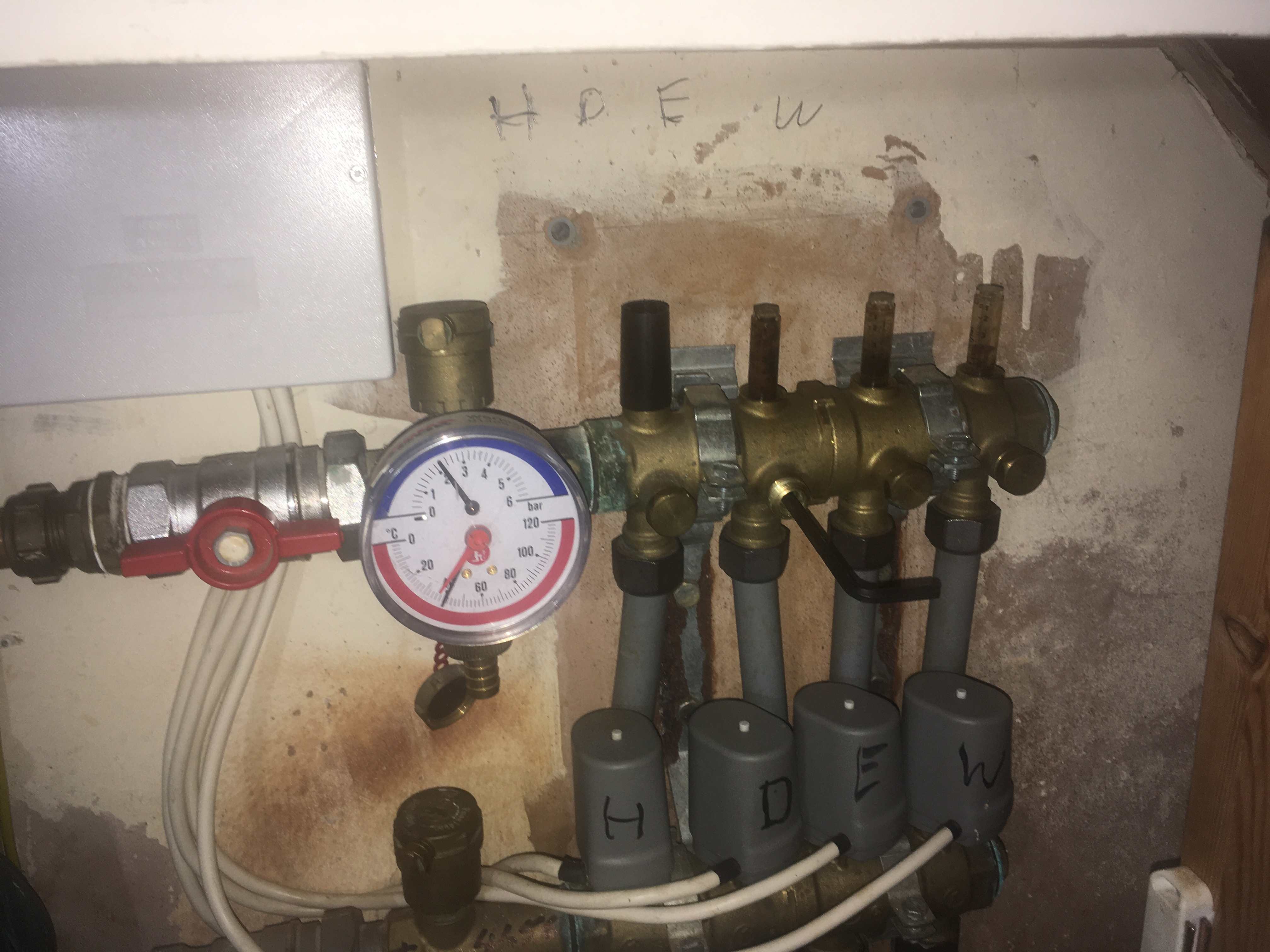
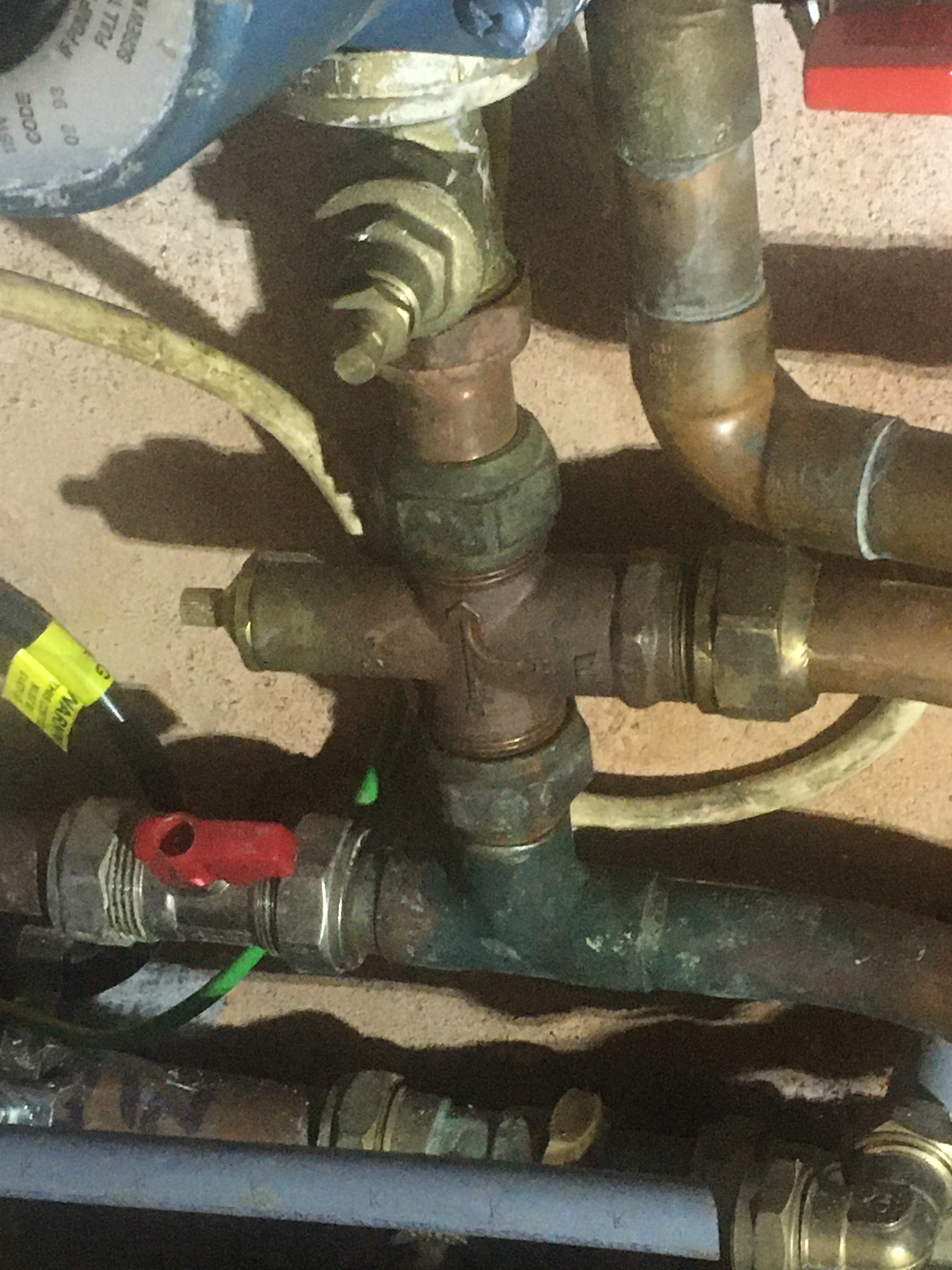
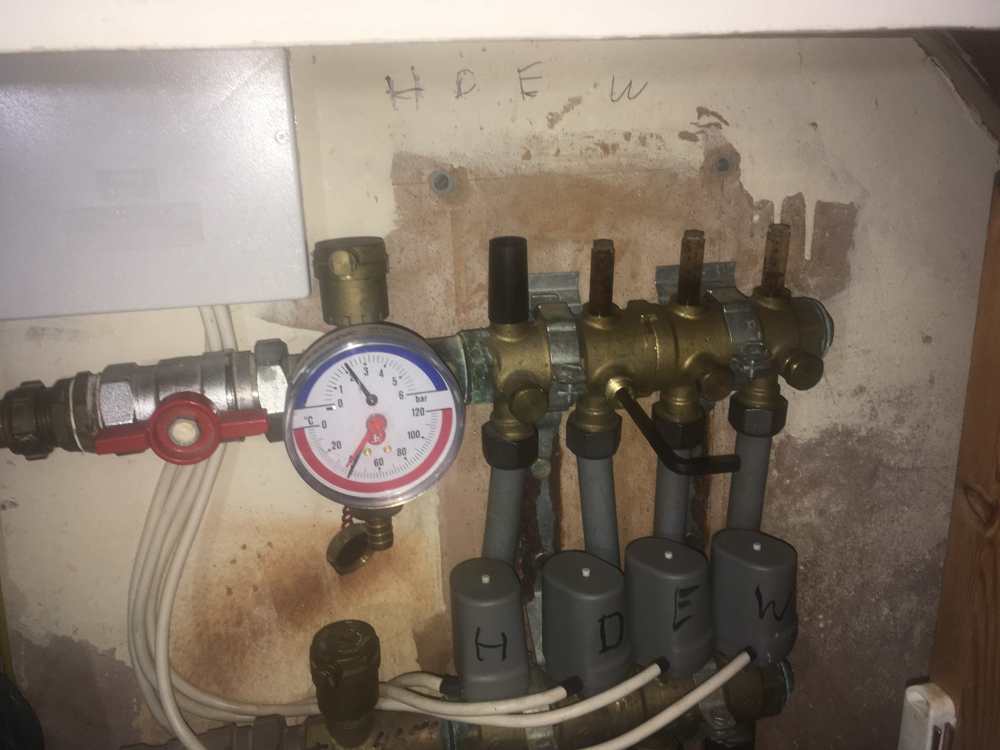
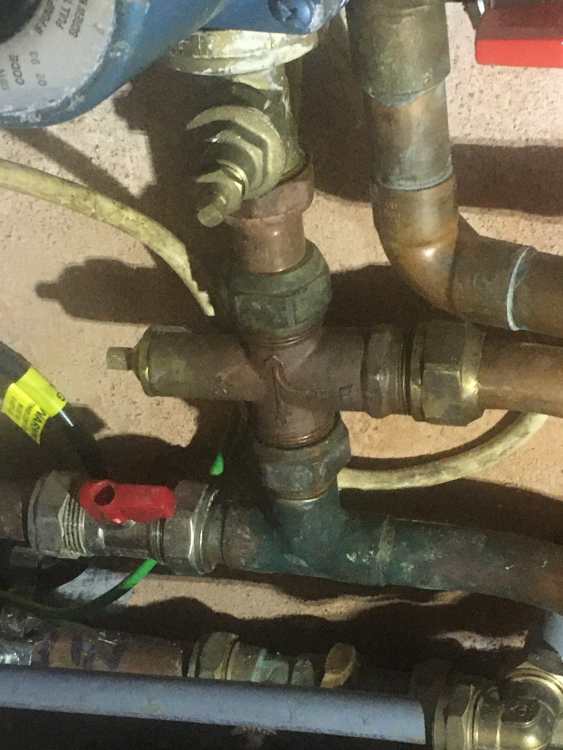
Anyone able to tell me what brand this manifold is and more importantly if/where I can get replacement flow gauges? I think it may date from 1995 when the barn conversion was done, certainly before 2007 when we moved in. The gauges have a 10mm a/f hexagon at the top. For reference the flow adjustment takes a 5mm Allen key. I have tried all manner of cleaning agents, detergent, vinegar, citric acid descaler, nylon scouring pads, you name it. Nothing will shift the black deposits inside. Also one of them seems badly out of calibration wrt the others, perhpas the spring is damaged. Also this mixing valve. Unusually the hot inlet is opposite the adjustment knob, the cold comes in at the bottom (as installed) and the mixed output goes out the top as you can see from the arrows on the body. Which makes replacing it difficult. It had a lot of limescale encrustation so I have cleaned it up with descaler and the internals are now free to move with the knob settting. Howevere there does not seem to be anything inside that depends on temperature, so is it just a fixed ratio mixer? perhaps someone (? @Nickfromwales) will be able to draw on their decades in the trade and tell me. TIA! elp
-
Sodium bicarbonate is probably your least bad option.