sharpener
-
Posts
1492 -
Joined
-
Last visited
-
Days Won
1
Everything posted by sharpener
-
No but may provide a handy route to previous boiler or tank location if that is where the new cyl is going to be, saved me some awkward cable runs. Sounds like you are good to go then apart from wiring the e-bus and SensoComfort itself. Best of luck!
-
Missed this link earlier. Looks a serious product and close to what the OP proposed. There is also this which provides heating/cooling down to OAT of 5F from solar input, seems to include its own MPPT circuitry as well, which is even closer.
-
Both my potential installers had their own electrician and I gathered this to be the usual practice. (The ppl who in the end did the job are actually a firm of electricians who specialised in heating systems and then took on their own plumbers.) He turned up for a recce the previous week which was useful as we could sort out the final details without the other trades on site or any time pressure. Not sure what you mean by "wirng box". The CU they fitted has a B6 mcb for the electronics indoors - the 13A socket for the VR940F internet interface has been labelled as you can only draw 6A from it - and a C32 mcb for the 4sq mm feed to the mandatory AC isolator on the outside of the house, did your man install that already? ... but reckoned to be good practice to have them both on the Type B RCD that is specified in the MIs. It does not matter if either is energised when the other is not, so an indepent supply is I suppose OK if yr spur box is on a dedicated boiler cct, I would not want it on a general ring main though. Maybe I am not fully understanding your setup.
-
Has anyone heard of a plate flush?
sharpener replied to kron77's topic in Air Source Heat Pumps (ASHP)
Sound like you are being taken for a ride. For a dT of 5K you need approx 3 l/min per kW so ideally 30 or more. If the flow is 2l (presumably /min) round the circuit but 20 on an isolated HP (how did he bypass it to test that?) then the problem does not lie within the HP so a plate flush will not help. Unless you have an external plate HX as well. DIY with Fernox F8 would be my course of action, supposing I believed the diagnosis. What kind of filter have you got and is it in the return line immediately upstream of the HP? How often has it been cleaned out and what did you find? What does the water look like? Did he test it with e.g. Adey diagnostics? Does it smell? If you leave a few nails in it for three days do they go rusty? If it has anti-freeze valves you do not need to add antifreeze anyway, and you are probably better off without it. Just use an HP inhibitor, and maybe a biocide as well if bio-fouling has been identified as a problem. -
What about all the 230V stuff, diverter valve, zone valves, connections to existing controls etc. Did he put in a meter for the HP circuit, that can be quite instructive. Or a 13A socket for the internet interface box? Stupidly Vaillaint have neither incorporated this into the SensoComfort nor made it powered off the e-bus (though the Appliance Interface is so they can clearly do it). BTW I recall you too were trying to avoid replacing the HW cylinder. Should be easier for you with a smaller HP. How has that worked out?
-
Not directly. TS charging is set up as Circuit 3 and configured (at present) with OAT threshold 25C (or the mid-day boost stops in mild weather), slope 1.5 (largely random choice), min 45C to ensure HW sufficiently H enough, max 50C (achieved at about 5C OAT) to avoid scalding/inefficiency. DHW temp is set indirectly by all this. As an example during this last cheap period the bottom of TS got up to 47C (don't know why, it's meant to be the control variable), top 48, HW 43 with the sensor now on outlet pipe. Now we need some cold weather so I can fine tune this kind of thing. Considered having TS charging as a Fixed Temperature circuit but discovered that these are not displayed in or controllable from the app, only Heating and DHW circuits. Why do Vaillant have a Circuit 3 but separately some of its properties are listed under Zone 3, there is a 1:1 correspondence and I can change the name of the zone to "Charge TS" but Circuit 3 stays the same, silly or what? Annoyingly although there was an update to the app recentlly to add WC details, even in its expert mode not only can you not set the max temp but even if you have set it on the SensoComfort it does not show up on the app. So on there it looks like the flow temp will be 58 at 0 OAT and 84(!) at -20. Nearly came to blows with installer about all this. See this thread for a full explanation. He was technically correct in all respects but I felt wanting to ring Electrium to ask permission to put their Loadstar breaker in their Crabtree CU was a bit excessive. Electrium are not bringing compatible Type B breakers out until next spring, what do they expect customers to do? On a purist view you could never put third-party devices in any CU, what about contactors, timers, meters, light-level sensors even PLCs, no-one makes everything. Fortunately they did not notice that the supply first goes through the battery inverter which is fed via the original 1995 Type AC 100mA RCD anyway. So in theory that might be blinded by a DC fault in the HP, however the Victron is stuffed full of protection of its own. Solution was a separate 6-way Fusebox CU for the HP, I was surprised that Fusebox have a Type B as I have always regarded it as a cheapo brand, wouldn't have been my first choice. It is very clunky looking and the corner projects slightly into a (little-used) doorway. Eventually I might replace it with the small plastic Crabtree 4-way DIN-rail box I originally bought to match the other two I have on the panel. But it is quite a lot of work and I still haven't finished the paperwork the BI is demanding.
-
So to wrap up what I have learnt on this project What worked out OK: Hard to be sure yet but so far the house is as warm as when we had the oil boiler The installers did a good, tidy job and the Vaillant stuff is well engineered and quiet We didn't need to replace the awkward-to-get-at HW cylinder The thermal store (which cost about the same) works as designed to time-shift energy from when it is cheapest to when I want to use it Integration with the battery inverter system and the legacy controls (UFH stats/manifold and Honeywell wireless TRVs) went well and the existing 3-core and earth wiring was sufficient to carry all the control signals (including the temperature sensors) satisfactorily What has not worked out so well and how we got round it: HW operation is not as Vaillant portray it, and in particular you cannot control the maximum flow temperature in HW mode The perforated baffle near the bottom of the Thermal Store separating the 45 litre volumiser section from the main body of the tank (225 litres) has too many holes in it so the entire tank rapidly heats up to the highest DHW flow temp Hence I have had to modify things to force the cylinder coil to operate in parallel with the thermal store charging circuit. So there are no separate HW statistics, and the temp for the thermal store has to be at least 45C irrespective of OAT. As a result the standing losses mean it will probably be cheaper to revert to using the immersion heater in summer HPs with inverter drives must not be fed via Type A or AC RCDs so it needed a Type B RCD in a separate CU The numerous Vaillant manuals are very difficult to read and although all the information is there somewhere it is pretty cryptic even once you find it. This BuildHub forum and the Vaillant Arotherm plus FB group have been invaluable sources of help. A big thankyou to everyone who contributed to the success of the project, you know who you are!
-
It's not an unreasonable question. But the problem is that DC commonly exists at many different voltages and unlike AC it is not possible to convert between them with the low cost, simplicity, robustness and high efficiency of an AC transformer. 12V - cars, caravans, leisure boats. Actually 14V when engine is running. 24V - trucks, buses commercial boats, fishing vessels 48V - de facto standard for domestic battery systems. Highly variable 46 - 54V or more depending on # of cells/state of charge. Some systems now going to higher voltages to reduce the currents involved. Also historically used for telephone exchanges and telecoms equipment. 30 - 40V per solar panel depending on # of cells in it. <120 - 450V or more per solar PV string depending on # of panels in string, load and temperature. Solar and hybrid inverters have to cope with this wide voltage range. 325V +6 -10% if you rectify 230V nom AC mains (as in an inverter-drive HP) 400 - 800V standards for batteries in EVs 400kV or more for long-distance underwater power transmission e.g. UK-France or Norway 48V would be a good choice for this as it is the highest nominal voltage reckoned to be safe for human contact. (DC is more dangerous than AC at the same voltage bc there isn't the natural muscle recoil.) A 12kW (thermal) HP would however draw about 100A which would require really heavy section cabling everywhere. Also the variable-speed inverter in the HP would be more expensive as it would need larger, higher current semiconductors. There is no saving to be gained there from the lower voltage. Once you start trying to interface to anything solar you encounter wide voltage ranges as above which also make the inverter design more expensive.
-
Octopus, did i imagine this?
sharpener replied to Post and beam's topic in Air Source Heat Pumps (ASHP)
The process seems to be well under way. Found this interesting quote from HVP magazine 10/7/24. Not sure I like the way they are getting into bed with DNOs to conspire against the publick ((c) Adam Smith). Octopus Energy’s Kraken software already provides optimisation for its Cosy 6 heat pumps, which it manufactures itself, and for Daikin models through that company’s API. Octopus says it is also working to integrate with Mitsubishi, Vaillant, NIBE, and Samsung and hopes to make a series of announcements by this winter. Alex Schoch, Octopus Energy’s Head of Flexibility, explains that while optimisers have so far done a “fantastic job” of cutting costs for individual customers, they will soon have to become even more sophisticated. That’s because the rapid take-up of heat pumps could stretch the capacity of local electricity grids, meaning that optimisers will need to take account not only of the needs of an individual home but also the balance of electricity supply and demand in the neighbourhood. Octopus already does this through contracts with Distribution Network Operators (DNOs) who need to reduce demand during peak hours in areas where local grid capacity is tight. These commitments influence how Kraken optimises individual Octopus heat pumps, EV chargers and batteries, but the company insists that customer comfort is always the top priority. Indeed, the company argues that by helping to relieve local grid congestion, heat pump owners will earn further financial benefits." -
There does seem to be some hidden agenda. If you look at the national demand profile here the big overnight dip clearly justifies trying to fill it with the traditional E7 tariff, but the fine detail in e.g. the Cosy tariff doesn't seem to be a very good match for the rest of it. Tomato offers a cheap rate from 0930 - 1130 which actually corresponds with a small hump in demand.
-
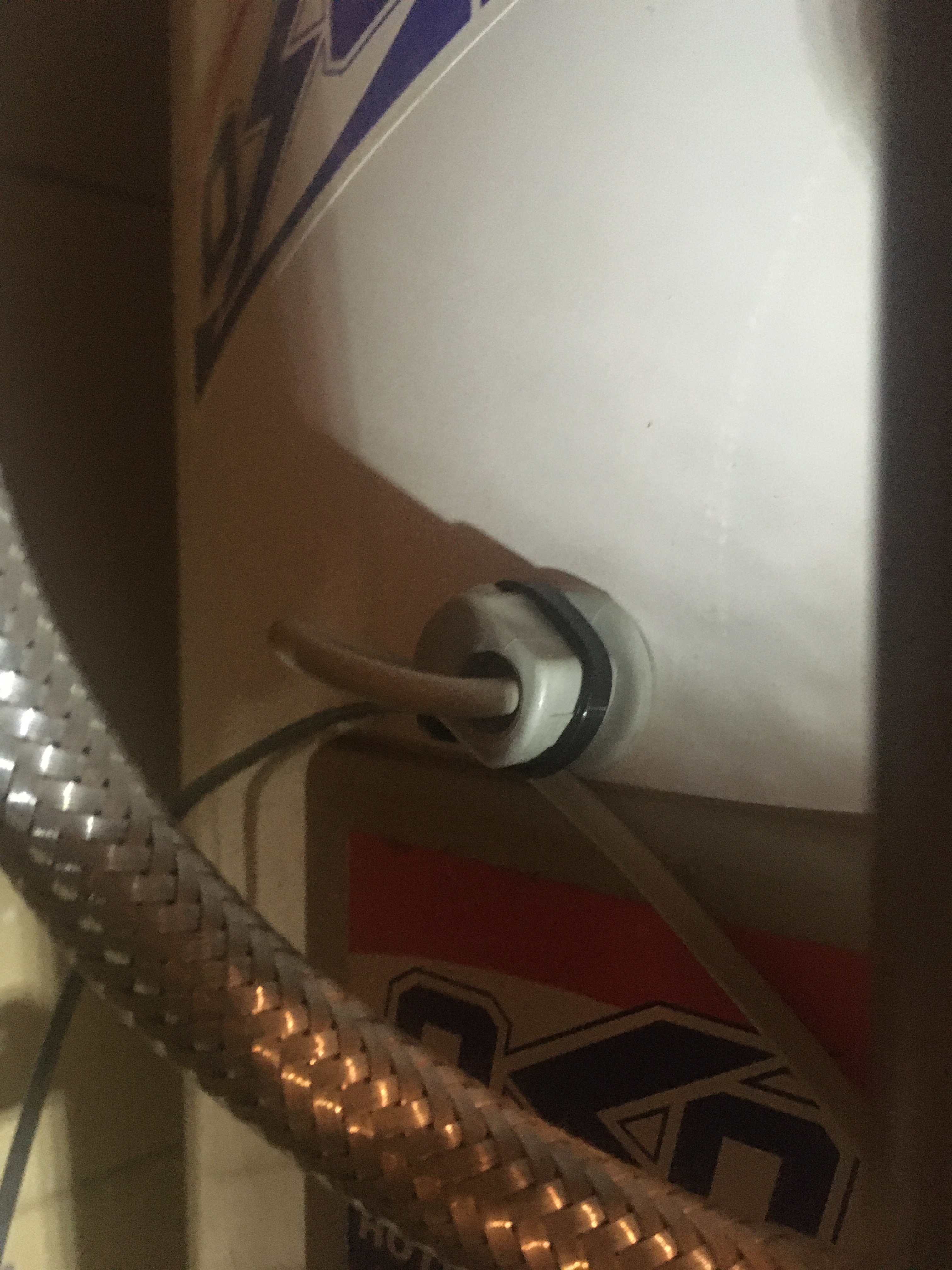
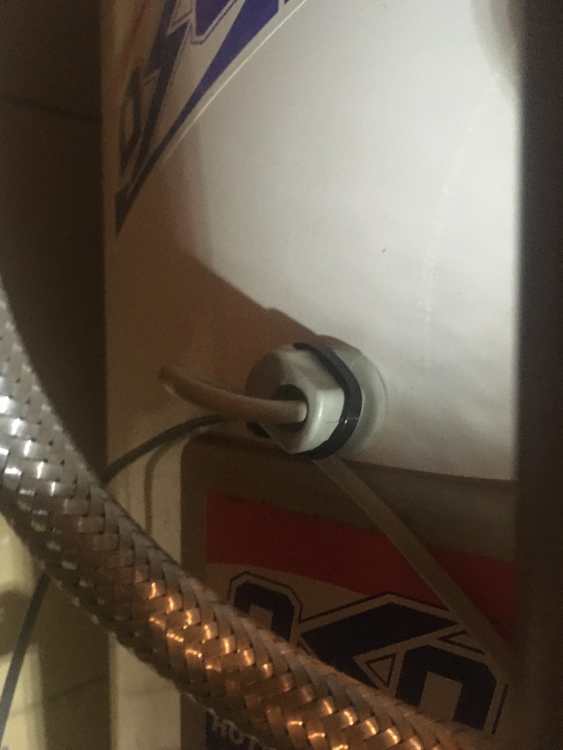
Finally made a discovery which might explain some of the anomalies on the HW side of things. Water was too hot to touch but temperature measurement was only 30-ish degrees. The temperature sensor had been stuffed into some random hole about 2/3 of the way up the tank, I think it is a cable strain relief for the (unused) upper terminal cover. Not a thermostat pocket at any rate, see pic: There was no thermal contact with the tank at all bc the springiness of the cable pulled it back out a bit. Removing it from there and pushing it a short way under the insulation on the outlet pipe at the top of the tank caused the reading to jump from 32.5 to 40.5 and running off some hot water raised it to 42. Explains a lot. Will now have to re-do all the tests I did to find the optimal way of running the HW. The original plan as upthread was to configure the TS as a second HW tank but that didn't work bc (contrary to what Vaillant Tech said) if there are two cylinders they are fed one after the other not simultaneously. Because of this I have now added a switch so that charging the thermal store automatically feeds the coil in the cylinder in parallel. And then the HP isn't working on its HW cycle, so doesn't run up to 70C trying to force 12kW into the cyl (or even 6 in Eco mode). Every day a school day.
-
Mini Store - Heat Geek / Newark Cylinders for ASHP
sharpener replied to Nick Laslett's topic in Air Source Heat Pumps (ASHP)
AFAICS it is an urban myth that you need to pay someone to do this. The annual servicing intstructions are in the UVC manual and the little that needs doing you can do yourself: clean the strainer, check the pressurisation and test all the controls and the two relief valves. -
Octopus, did i imagine this?
sharpener replied to Post and beam's topic in Air Source Heat Pumps (ASHP)
Sorry you are right it is me that cannot add up. -
Octopus, did i imagine this?
sharpener replied to Post and beam's topic in Air Source Heat Pumps (ASHP)
Yes but the times are 13hrs, 8 and 3 Correct. But your e-niro is not accredited so it would need an accredited charger not the 13A socket. OTOH with an accredited charger I think (nearly) all EVs are suitable. Forlorn hope I would guess. Since Octopus bought out RED 2 yrs ago and are already producing their own (hideous) 6kW unit (having binned most of RED's innovative ideas) I would guess they are a long way down this integration path. But it does happen, a Cambridge startup I knew was bought out and became BG's home automation offering. When I have a spare moment I will contact them out of interest to see what I can glean. -
Octopus, did i imagine this?
sharpener replied to Post and beam's topic in Air Source Heat Pumps (ASHP)
Thanks for the narrative explanation and the pdf @JamesPa. I see it still has Cosy cheap rate for 8 hrs in places and 7 hrs in at least one. You are obviously aware of "Cosy 2" intr. earlier this year but you don't seem to have modelled it (I am paying this in the SW). As you say, the assumption that the high energy items' consumption is spread evenly is quite pessimistic, but doesn't affect the inter-tariff comparison much, as the opportunities to timeshift say a dishwasher are adequate on all of them. BTW I have done some more analysis of my battery losses and will link to a writeup on the Victron site in due course. It re-inforces my notion that their Dynamic ESS is not doing a very good job bc it now seems to be costing me 18p gross/unit to charge the battery at night to achieve 15/unit extra PV export during the day. IIRC not if you have an accredited car (see checker on Octopus website), maybe you don't? Havenwise looks interesting, particularly as Homely didn't have integration with Vaillant when I last looked. But as debated on RHH if it just emulates a good ToU and WC setup it may not help us much.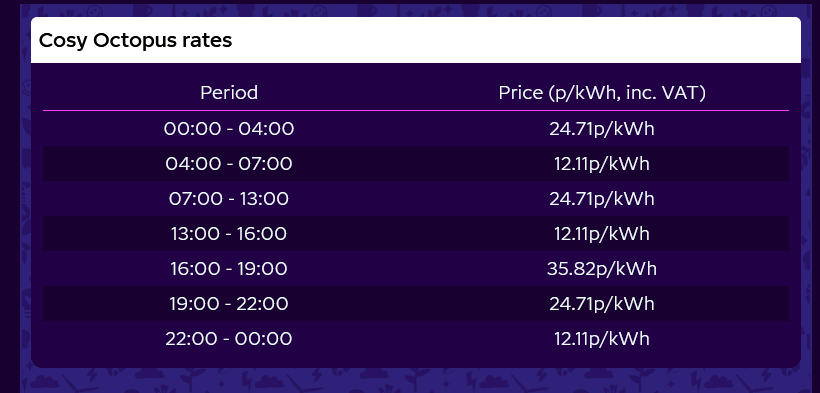
-
Octopus, did i imagine this?
sharpener replied to Post and beam's topic in Air Source Heat Pumps (ASHP)
Thanks @JamesPa, interesting conclusion. Haven't got access to Excel right now, could you perhaps (i) print the results to pdf or (ii) summarise why it is there is little difference between Intelligent Go and Cosy - there are many ppl on Vaillant FB who are adamant that IG is much better. In the SW I pay 24.71, presumably regional differences in rates don't affect the conclusion, I imagine it balances out as both reflect the costs of distribution. At least that was the rationale in the OFGEM review a while back which said they are "fair", though personally I think they are a massive confusion for marginal benefit and ought to be levelled out. BTW depressing anti-smart-meter program on Ch 5 as I write, presenter talking about "kettle takes 3 kW per hour" etc etc and then has brass neck to say ppl find kWhs "confusing" - well they certainly are to her! -
Octopus, did i imagine this?
sharpener replied to Post and beam's topic in Air Source Heat Pumps (ASHP)
It is here. Result for the whole of calendar 2023 was 69.5% so my recollection was wrong. Doing the exercise for the past 12 months gives 66.3% which begins to look like a downward trend, but statistical variations can't be ruled out. Yes, in this analysis losses of all kinds are lumped together. But the inverter does get quite warm and the batteries show temps of up to 28C as well. -
Octopus, did i imagine this?
sharpener replied to Post and beam's topic in Air Source Heat Pumps (ASHP)
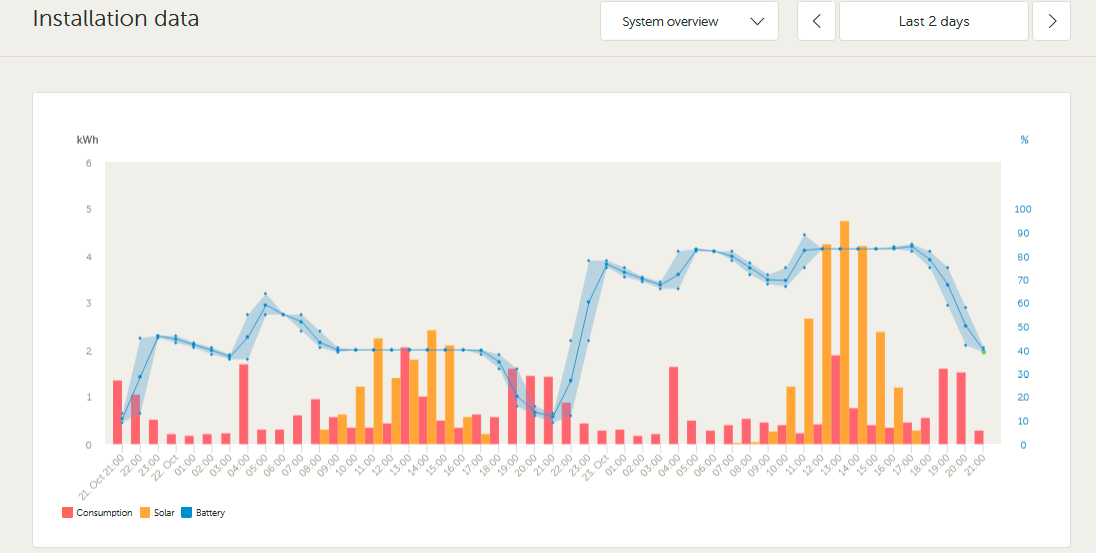
If I analyse the last 3 months of data which looks like this and take account of various other reported data I get the result that 777 kWh went into the battery, 497 came out and 280 kWh is unaccounted for which is a gross efficiency of 64%. If we assume the max usable capacity is 0.9 * 10.65 this is a actual output of 0.58 cycles per day. I would expect that to increase sharply now I am using all three charging periods though. The figures assume the same state of charge at beginning and end of the period (max discrepancy 10kWh), and I can't tell from the data if this includes losses elsewhere in the system. I did the same exercise a year ago over a 12 month period and IIRC the result was over 70% though I do not have the exact figure to hand. The old Victron forum has now been archived but I might be able to find it. The battery reports a State of Health today of 95%; the last time I remember looking it was 98%. Two of the Pylontech 3.55kWh modules were installed May 2022 and the third that November. Maybe this is circumstantial evidence that the efficiency is deteriorating along with the capacity but I would need more than the above to be convinced. From lectures I have been to I am not sure that energy is wasted trying to change the state of sites in the matrix which are no longer receptive but I am not a battery chemist.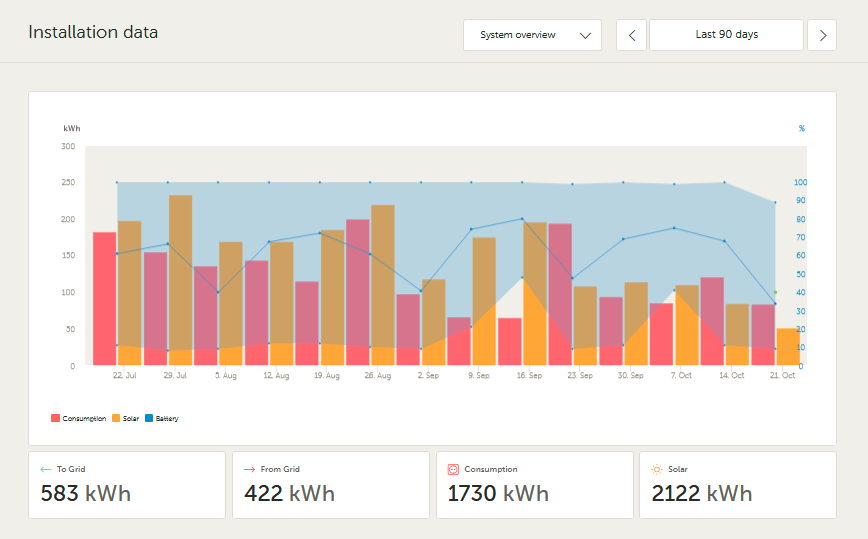
-
Sounds entirely reasonable, I don't think a MCS installer would quarrel with that. But if you are having the place built to your spec then for a small straightforward system not much point in getting one involved if you are either going to do the plumbing yourself or have tradesmen on site. There is a middle way which involves using an umbrella MCS scheme, there is just this one who can supply Vaillant, highly recommended on the Vaillant FB group. IIRC there is/was also a scheme whereby you pay Vaillant to commission your system and then they give you the extended warranty.
-
Octopus, did i imagine this?
sharpener replied to Post and beam's topic in Air Source Heat Pumps (ASHP)
Good find @SteamyTea, excellent paper. Because the accreditation process for your car and/or charging point ensures they have the ability to interrogate your usage profile from one or the other. And can throw you off if they don't like what they see. There has been a lot of discussion on the Camelot forum about all this. I don't think this tariff can last all that long. You didn't reply about having to game the system - perhaps deliberately. It would seem e.g. from this thread that it needs to be something of a hobby in itself and it is easy to make expensive mistakes. I wanted a fit-and-forget solution which continues to work well without attention e.g. when OH is in the house and I am away. Jury still out whether the Victron Dynamic ESS is optimal, I am beginning to think it fails to account for the battery depreciation correctly as otherwise it would not be charging at night in order to maximise export during the day, see pix in this post. Also I don't know how long its self-learning period is or whether it has to start again if I turn it off while we are away. -
Octopus, did i imagine this?
sharpener replied to Post and beam's topic in Air Source Heat Pumps (ASHP)
There is a checker on the Octopus web site. You only need an accredited charger (Ohme, zappi...) if you do not have an accredited car. I recall a further condition that you have to charge the EV at least every 30 days. Don't you still have to spend time gaming the system e.g. claiming you need the car fully charged for a night shift at 1 a.m. or something? That is what put me off. Also the cheap periods on Cosy are much better spaced throughout the day, see this thread. Worth over-panelling with 6kW of panels as that will give more year-round exports at little extra cost. If you get a 5kW hybrid inverter it will manage all that - even remotely - from the one UI so no DIY controls and no risk of exceeding yr limit. -
Octopus, did i imagine this?
sharpener replied to Post and beam's topic in Air Source Heat Pumps (ASHP)
Maxing out PV on the roof is the first investment anyone should make as it has the best RoI of the lot. But not much help from November to February when you need the heat. Things I regret not doing elsewhere include running a 32A supply not 16 to a detached garage, which would have allowed a decent EV charging point. And a cable duct not 2-core SWA in the trench for the rainwater pipe between house and garage. -
Octopus, did i imagine this?
sharpener replied to Post and beam's topic in Air Source Heat Pumps (ASHP)
Ovo have had a very bad press for their customer service e.g. here. As well as not trusting their tariff to last long I would be hesitant to put the control of my HP in the hands of their API. Tomato is mentioned there as a possibility too, don't know if that relies on an integration with the HP. Some calcs I did way back showed that the first cost of a big tank of water is about the same per kWh as a battery after allowing for the CoP. The depreciation is however much less, as the projected life is 2 to 3 times as long. And not dependent on usage. But you need a really big tank and lots of room, my 270 litre tank takes up all the space vacated by the oil boiler but it only works bc I am just trying to heat a fraction of the house at any one time (see other thread). The 12kW unit is substantially over-sized for this duty but should be fine when we have guests in the depths of winter. -
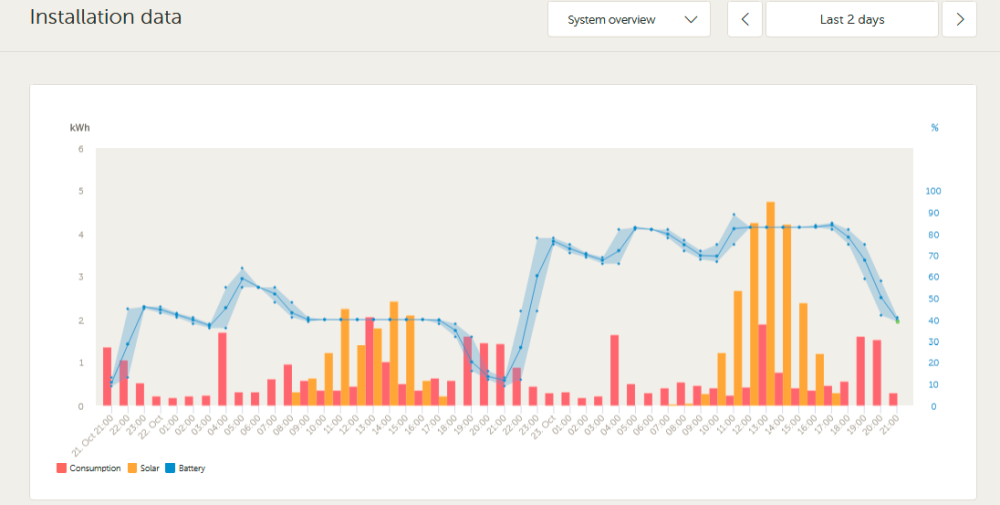
Edit: Forgot to include this pic. It shows that today the Victron algorithm has decided the optimal state of charge is 83%, and achieved this during the first two cheap windows so it can export most of the solar which was predicted for the afternoon. Whereas yesterday the plateau was at only 40%, was it expecting there to be more sun so left more headroom but it failed to appear? There's not a lot in it anyway as the round-trip efficiency is around 80% so the cost of charging at 12p is almost exactly the same as the extra PV gained at 15p. And that is before the depreciation which has been put in at a token 5p/kWh/cycle.
-
So a lot has happened since my previous post! 3/10/24 Octopus' subcontractor fitted a smart meter in place of the obsolescent Radio Teleswitch E7 meter. 4/10/24 smart meter operational, and import tariff changed to Octopus Cosy 8/10/24 the DNO agreed to unlimited exports (installed PV 6.9kW nom) and an increase in the inverter rating to 4.4kW 17/10/24 smart meter exports now operational on Octopus Outgoing Fixed tariff (though Good Energy have yet to discontinue their deemed exports) All this has enabled me to change the way I use the HP/battery system. The house is long and thin and unless we have guests we only use specific rooms at specific times. In addition to the HP there is also an AGA in the kitchen/dining room where we spend much of the day if we are not out or in the garden. Bedroom is over the kitchen so requires only a little additional heat. So the time schedule is now as follows (cheap windows in bold😞 0000 - 0400 Cosy tariff 24.71p/kWh - house runs from battery, HP off 0400 - 0700 12.11p - forced charging of battery from grid, HP charges 270 litre thermal store 0700 - 0900 24.71p - thermal store supplies bedroom and bathroom radiators 0700 - 1300 24.71p - PV surplus (if any) charges battery. HP available for UFH (only needed for hall and dining area in cold weather). 1300 - 1600 12.11p - forced charging of battery from PV or grid, HP charges the thermal store 1600 - 1900 35.82p - thermal store supplies sitting room radiators, HP off, house runs from battery. 1900 - 2200 24.71p - HP runs from battery to heat livng room (and bedroom and bathroom from 2130) 2200 - 2359 12.11p - forced charging of battery, HP runs from grid as necessary to heat bedroom until 2230. The battery charging is under the control of the Victron inverter's Dynamic ESS algorithm (in its more agressive Trade Mode) which is still learning. But I am not yet convinced it is doing any better than the standard Scheduled Charging regime would achieve. Apart from this I think the routine is now fairly settled, but optimising the DHW is still a voyage of discovery.