


MikeSharp01
-
Posts
5693 -
Joined
-
Last visited
-
Days Won
16
Everything posted by MikeSharp01
-
 The download speed is often throttled by the server supplying the data so it can serve many clients at once and not your network speed.
 -
Cricky there is more - a group in Japan build a .125mm glass fibre with 8 cores enclosed in its diameter they managed to crack the Peta bits per second barrier.
-
PPPS Nope that looks like a PR error with the date - they published the news on 1st April - not a good look but the research was presented in March so 450 million times stands!
-
PPS that was published on the first of April which may or may not be significant 🤔
-
PS Just found a piece of research that shows a group at UCL pushing a domestic fibre to 450million times the domestic speed.
-
I think the max theoretical speed of a domestic fibre is probably limitless but exploiting all the light bands tera byte speeds would be easy. The limits are imposed by what is on the end of the fibre. So splitting is not a problem but it would result in active hardware being out in the field and that's a problem of power although PV and batteries might solve that one for remote locations.
-
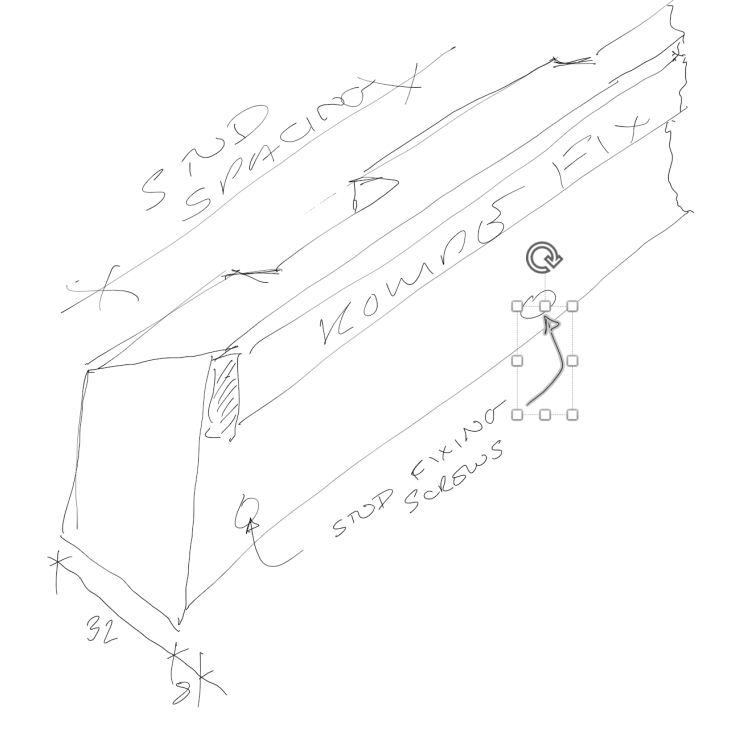
We have purchased this with our cladding and they estimated 16 rolls, our cladding is vertical, I did the calcs and got a couple of rolls less but stuck with the estimate. We are not using their battening system as we don't have the depth. Instead I will make up some custom notched battens that create the air gap at the back, have the top slope and allow the use of the Kompefix on the front face.
-
That's why they pay teachers so much, not, because making the obvious obvious is not at all simple - learning styles, language skills, neuro diversity, prior skills, current capabilities and much more are all factors to be taken into account - and that's just the learner.
-
Habitation Certificate (England) - house insurance
MikeSharp01 replied to Lincolnshire Ian's topic in Self Build Insurance
Are there no downsides to not signing off - can you claim the VAT back from there. -
Can you maneuver a wheel in & out the end of that run?
-
UK ‘built for climate that no longer exists’
MikeSharp01 replied to SteamyTea's topic in Environmental Building Politics
We are just having a fan coil unit (FCU) in each bedroom run from the Air Source Heat Pump (ASHP), those and the cooling in the under floor heating (UFH) pipes should, I calculate, be enough although I can add a heat / cool battery in the mechanical ventilation and heat recovery system (MVHR) if I need to. -
Sounds like news that has escaped us, well me anyway, congratulations!
-
I guess all this means that the height of the seat can be anything or are there limits? I have an issue in that although the pipe is low enough I cannot get the pan back far enough with the pipe running onwards to the ensuite shower so I am looking to lift it up.
-
I would agree with this and the need to evolve ever more effective prompts. Naturally AI supported prompt engineering is a thing as well although, so far, the Human in the loop remains - once they start prompting themselves who knows. However, I am not sure of the exponential growth in the model's capabilities themselves. Three other things seem to be emerging in the region of AI that also merit our attention: Firstly, it seems to me that the eco system is perhaps where the real explosion is. The number of other technologies, techniques and spinout applications is growing very fast EG in the areas like increasing use and application of vector DBs and all its variants (Hybrid Indexing etc), Retrieval-Augmented Generation (RAG) and all its variants (Embedding free RAG, Chain of thought RAG), agent frameworks ( Swarm etc), structured knowledge stores, synthetic data engines and model side retrieval. Of those variants today not all will survive contact with reality and many more will emerge. Interestingly some of the early front runners in this sphere are reaching the end of their useful lifer already - Langchain is, for instance, being shunned because it is seen unstable and poorly documented as developers move over the likes of PydanticAI, Pocketflow & LlamaIndex. This tells you a second order story around the rush to get eco systems tools out quickly but skipping essential QA steps which leads to a broadly experimental feel rather than a sound production basis. Some argue that this because the LLMs, in the hands of developers, can create tools at an alarming rate but few are built well enough to live long! Secondly, although we still live in a gas guzzling age where the size and power of the global scale models makes huge demands on memory & energy the size of really powerful, sometimes task specialised, models is falling fast as mathematicians and engineers work out ways of squeezing them into ever smaller memory spaces. This will, admittedly somewhat hyperbolically, eventually bring the full power of the models onto our watches. Thirdly, as the HAL - "I can't do that Dave", example above illustrates some would argue that the control of this technology is getting further and further behind the bleeding edge. Perhaps we might conclude that while there are burgeoning combinatorial opportunities in the first two, eco system and small models, the third is somewhat being neglected, pushed into the too difficult box by politicians or being briefed against by the tech companies. It always was and always will be ..... until AGI!
-
What battery drill should I buy? The choice is bewildering.
MikeSharp01 replied to jimseng's topic in Tools & Equipment
That, plus the two 5A batteries. Is what I started with built a whole house with them and no issues. -
Don't worry, all is well, I don't have a canal boat. 🙄🤔
-
Looks great, not quite the wonderful blue sky of your LLM work up of the landscaping in the other thread, must drift past yours at around beer o'clock some time....
-
chatGPT and the like for landscape inspiration
MikeSharp01 replied to Post and beam's topic in Boffin's Corner
Not half bad - it does rather look like it has made a lot of work for you to do! -
I suspect because they can make laws like this in China - we cannot do that here. We have always adapted to new technologies and we will again, it will be tough for many but an opportunity for many also. This is the knub of the issue and here you and I can share much more common ground - this is down to short-sighted entrepreneurs not realising that if you want longevity you need a pipe line. This is the problem we had with apprenticeships in the 1980s, 90s and noughties here we can demand intervention to stop people saving money and pocketing profit in the short term while destroying productivity in the long term - this we can legislate for. Those who neglect history are destined to repeat it.
-
You are absolutely correct there and I can see it in front of me with my students - getting jobs in coding is now very difficult but getting jobs in integrating LLM coding with business objectives is booming. That is also true - just 7 people, all of whom have a finite amount of life left, are making all the headway and a lot of the profit BUT underlying that profit is enough people able to pay for their products when that dries up it all goes phut! Nope, but then maybe the next technology will follow the trend and be even faster, each technology of the recent past has had faster adoption curves than the last one its just the way it is and, so far, we have not seen a breaking of the pattern in my view.
-
No but if you look at it broadly this is the same for the switch from Canals to Railways, from Railways to Roads, Much of these are relatively new work and again if you look at it many jobs today were not around 5 years ago. I am in the optimist camp - I am optimistic that this technology will be good for us. I sometimes move towards the Agnostic but I have never felt like being pessimistic about it. For me this is just another technology - learn to use it and make your fortune, ignore it at your peril and it won't go away. Essentially it is capable of making the cake bigger for all of us.
-
Welcome Gema to THE forum for people like us. We went down the Architect route to get a good design - we are not aesthetically capable but we had a strict set of criteria and I did the passive house training I felt I needed to be able to keep the architects we finally chose on the straight and narrow - we learned together. We only took them on for the design only and once that was complete we have managed the rest. I think, in hindsight, that I went a bit technical, what my other half calls 'full geek mode' on the build as we chose wooden frame with blown cellulose fibre insulation augmented in places with PU sheets. Its worked out well but could have been more simply done. So its definitely possible to do this with an architect beyond the design phase but to get a standout design, pretty much every house in our road is different to the next one, I felt and still feel the architect route was a good one for us.
-
Yes but not, as yet, unlike most technological innovations in the history of technology in that it enables people to do more. flint, the railways, the jet engine, the mobile phone, the LLM, the next thing. What will change that is AGI and although that could happen tomorrow I am not sure the underlying technology we have (digital) will get us there.
-
Like we already said the answer is moving all the time so 42 won't cut it in today's race. FWIW I think this thread is interesting because this technology has so many implications for us all and although we are just experimenting the opportunity to do amazing things is tantalising and, frankly, we / they have not found the killer application yet and that may come almost as probably from amateurs playing as professionals trying to crack it. The local platform arms race to top or bottom is really an aside. As you say you can already spend 10K on a card always assuming your rings (mains) can supply the power. Pretty soon fan coils and UFH won't be the only things your average ASHP will be cooling!
-
What do the pros do
MikeSharp01 replied to Alwayslearning22's topic in Bathrooms, Ensuites & Wetrooms
Remove as much as possible and try to get back to the order of assembly to make the best job.



