MikeSharp01
-
Posts
5693 -
Joined
-
Last visited
-
Days Won
16
Everything posted by MikeSharp01
-
Hi, and welcome to THE forum for people like us.
-
Sounds about right to me, scales nicely with the install portion of our supply and fit cost.
-
Get a 4 mppt inverter
-
Yes - hob on the island makes sense with a downdraft recirculating extractor so you don't clutter the ceiling. I would also break up the pattern of lights in the ceiling - it looks like you are coming in to land at Heathrow as it stands perhaps use a 4 - 3 - 4 - 3 scheme with slightly wider angle bulbs in the 3 lamp groups.
-
Looks like a tidy job.
-
For each window location the combination of glass functionality might differ, your supplier should know what the rules are, assuming they are certified (FENSA etc) I am not sure how the middle pane needs to behave in all situations and don't forget to decide how the glass responds to sunlight if you want to control solar gain etc.
-
I would look to see if you can use the Illbruck Compriband tapes to seal the outside then inject the foam from the inside behind the compriband this is the way ours are fitted.
-
I don't have a horizontal cylinder but the only disadvantages I saw / found when looked at one for here were: 1. Structural they are not really single point loads so you need to be sure you get them put above a suitable supporting structure. 2. Stratification of the water temperature is harder / impossible to achieve - this can be an advantage as well. 3. They loose heat marginally faster than vertical cylinders do.
-

There are worse grouters out there …
MikeSharp01 replied to Pocster's topic in General Self Build & DIY Discussion
Yes- this was the guy our daughter employed to tile her kitchen - complete rubbish. Had to strip them all off and do it ourselves.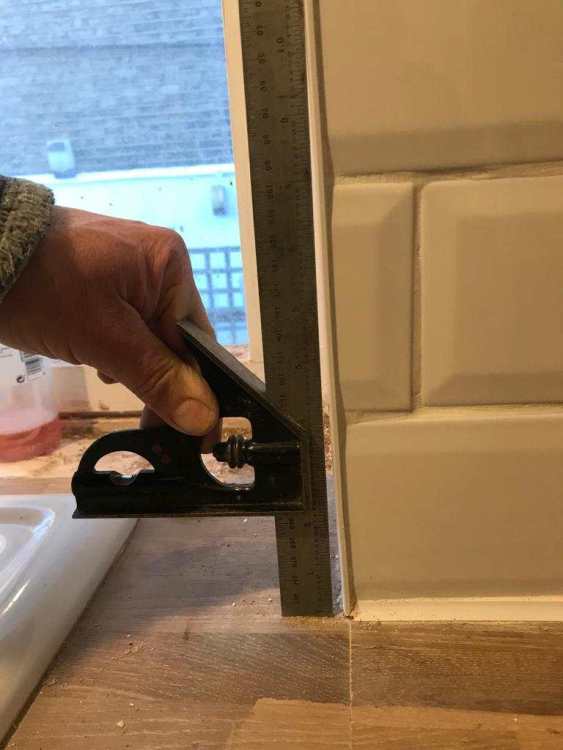
-
Quote for self-build insurance
MikeSharp01 replied to Lincolnshire Ian's topic in Self Build Insurance
Feels about right - in the ball park anyway and scales almost exactly from our rebuild cost. -
Quote for self-build insurance
MikeSharp01 replied to Lincolnshire Ian's topic in Self Build Insurance
Yes its a mine field - we just renewed ours for 12 months and it was in the ball park of a grand! (We are at 2nd fix now so they tell me there is more to insure at this stage, which I suppose is true!) -
untilSandown Park https://surrey.homebuildingshow.co.uk/
-
untilNEC https://national.homebuildingshow.co.uk/
-
untilFarnbourough https://farnborough.homebuildingshow.co.uk/
-
untilBath and West Showground https://somerset.homebuildingshow.co.uk/
-
untilhttps://harrogate.homebuildingshow.co.uk/ Harrogate Convention Centre
-
On ours I designed it and have set the flow rates. I am using the attenuators to give me flexibility, of the pipes, as much as sound attenuation. The main distribution box will have its own silencer and the two other distribution boxes will also be baffled and internally covered in acoustic foam so I am hopeful it won't be too noisy - I also have a until that has the twice the capacity needed even for boost so am expecting it to run at about 20-25% of its capacity most of the time which should keep the noise down. I can then also use a high boost for cooling via a heat battery in the bedroom distribution feed - which will be noisy but then so are fan coil units of my acquaintance.
-
Hi and Welcome to THE forum for people like us. We are doing most of the work ourselves except the roof slating and fitting the 3G windows. Ours is 150m2 , so not huge, and expecting to be a passive house and so quite technical. I think we will come in around £1 - 1.2k /m2 but only just for the build itself. Although if we go high end for the Kitchen and the main flooring will maybe push that over a bit. If you think about it on 150m2 build every £1000 spent puts slightly over £6.50 on the per square meter price so you need to watch the pennies.
-
Going to be tough until you get the cladding on and can seal the frames to that. I would just run bead of silicone round them all until then.
-
Looks like a good opportunity, nothing is risk free in this space, provided you can get the plot for a good price how is the land zoned now - agricultural or ? The new planning regime looks like it will help you as infill like this should become grey belt or even brown field - if it was formerly the curtailage of one of the other properties, and there is also the new housing targets for councils so they need to build more houses. The challenge will be to get the locals onside so your plans have no objections and people / planners see your suggestion as the best use of the land and raises all boats in terms of value, character and that it matches the street scene, does not damage the overall feel of the area - essentially it looks, when finished like it has always been there. What did the planners say about the previous planning requests?
-
Just got sent this link by my other half - https://www.theguardian.com/business/2024/sep/12/low-carbon-homes-can-save-1341-in-bills-and-should-be-compulsory-study-shows?CMP=Share_iOSApp_Other its an MCS report that will make a load of work for MCS but I guess the Guardian didn't spot the positive feedback loop there. I suppose my view is that the basic ideas should be compulsory but having MCS do it should probably not.
-
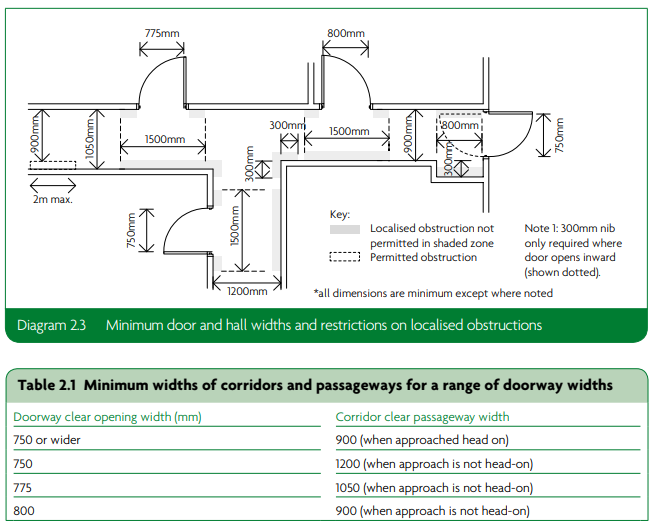
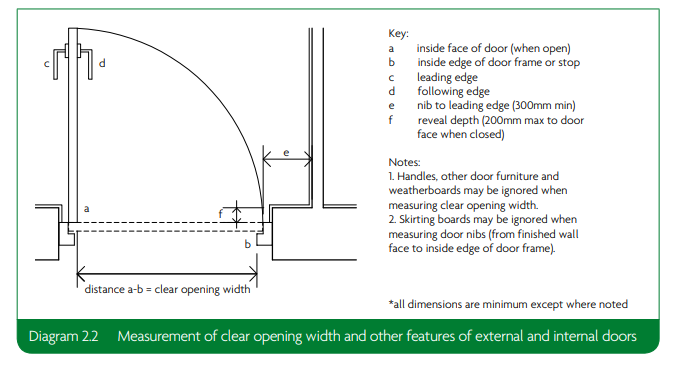
I was just fitting the first of the internal doors, based on a trenched Howdens door frame, and I thought I had better check building regs as it is at the end of a corridor - head on though, found that the clear width is only about 720mm when 750mm is the BR requirement - seems daft that you can by a door kit from the H and it is not compliant anywhere I figure I must be misreading the BR doc?
-
When the UFH flow Temp is <35C, dhw?
MikeSharp01 replied to Post and beam's topic in Air Source Heat Pumps (ASHP)
I looked at the Viessman units as they have a 4kW mono block which has a lot going for it with only one real downer for us - the way the monoblock system works using an indoor unit, connected to the outdoor unit by water - not refrigerant, which is very large. I like the way they give you the depth of modulation and share all the stats around air temp / flow temp / COP. -
Yes but how will you programme your findings into your controller if you cannot talk to it and tell it the rules or use some external computing power to tell it what to do?
-
It's all about optimisation in the end.