


Digmixfill
-
Posts
207 -
Joined
-
Last visited
Everything posted by Digmixfill
-
I have had mine sat loose in their hangers for a little while. This evening I've been measuring and cutting noggings for under the restraint straps and to my surprise the joists are anything but straight. I'd expect this kind of mayhem from timber joists, but engineered? One of the joists is trying for a corkscrew. Another is bowing upwards in the centre by a few mm. I don't think any of them have parallel sides (mostly this is because of lazy construction by the supplier) Those of you who have fitted posi-joists, how have you found them when in situ? Wonderfully straight and true, or all over the shop?
-
Telescoping mitre saw at Aldi - 30th May
Digmixfill replied to Digmixfill's topic in Tools & Equipment
After a little UPS snafu the saw and stand have arrived. The saw is a rebadged Scheppach HM80MP. Comes with a 40 TPI multi material blade installed. Out of the box the bevel adjust lock stops required adjustment and the laser alignment required adjusting. The dual slides for the saw feel nice and smooth, no free play in them. I've done a few test cuts and it seems good enough for what I need it to do. -
Telescoping mitre saw at Aldi - 30th May
Digmixfill replied to Digmixfill's topic in Tools & Equipment
I've taken a punt on the Aldi one. I'll post observations when/if it arrives. -
If anyone is looking for a cheap telescoping chop saw Aldi have one in their special buys section. Features Integrated laser beam for precision Ideal for cutting wood-derived products Quick lock system 2 Speeds max. 3200rpm/5000rpm Highest position blade diameter: 21.6cm Mitre capacity: 45° left - 45° right Cross cut at 90°: 340 x 65mm Mitre cut at 45°: 240 x 65mm Compound cut at 45°: 240 x 38mm Max. speed in rpm (2 speeds): 3200rpm / 5000 rpm min-1 Bevel Type: 45° left / 0 here
-
This is obviously what sets the amateur and the professional walk on glazing installer apart.
-
But I'm not ready to measure up for that yet!
-
I'm already above DPM all around and lower slab is in. Have to make the best of what I have. With my very limited experience of them I concur. During the warmer months I find that I have to dampen the block surface I'm laying on before mortar gets near them.
-
The longest wall is 4.4m. I wouldn't have expected to need a movement joint in that. I thought they were only required at >= 6m ? I am the bricklayer There are some pictures of my finest amateur work in the thread here You can see in the pictures there that some of the blocks are very wet, much darker than the dry blocks. If it is the blocks shrinking as they dry would the lime cause the cracking to be in the perps and not the blocks?
-
I've already bought all the blocks I think I'll need - celcon standards. Committed. I'm hoping to have wet plaster when it's all done, if not I'll parge. Hopefully the current cracks will not be an issue for me.
-
Mortar was the same 5:1 for all walls. Only the wet blocks have cracked so far. I'm going to keep an eye on the rest to see if that stays the case. I'm trying to move blocks indoors in rotating stacks to dry them before using them. It's only a matter of time before I forget to replenish a stack and have to use moist blocks.
-
I've got a few cracks in the celcons here. The walls that where put up when the blocks were wet have cracks, the walls built with blocks that were fully dry are OK. It appears as though they shrink as they dry out.
-
Unless I'm looking to modify something my automotive engineering is simplified to broken=order parts and fix. I have enough time vampires to juggle already
-
Don't let on where it is or it will be gone!
-
Or my lax cleaning after getting it dirty? I'm happy with the 20 years of ownership so far, and happy to keep it for as long as I can.
-
I'm in the midlands, but have dunked my car in many counties and two continents. I think it's the abrasive properties of the mud and stuff that gets trapped in or near the hubs that eventually breaks the seal on a bearing. The next dunking puts the abrasive paste into the bearing itself and then it's just a matter of time before they grumble to let you know they need replacing.
-
I'm assuming your 170K is all on tarmac? My discovery isn't a Chelsea tractor that's polished and clean. Try driving your current car through deep muddy water for a while, or axle deep mud and see how your wheel bearings and brakes hold up
-
You get good and bad builds with all makes. We owned a Ford Focus once that would make the pope swear We've had our Discovery from new in 2001. The chassis is made of cheese and since about 2016 it has needed patching for MOT. Everything else has been wonderfully reliable. It has only needed service items along the way - belts, fluids, wheel bearings, bulbs, tyres. Our Defender is a TD5 engine (as with the Discovery). It's got panel damage and is looking a little tired, but it keeps on plodding. As @Cpd mentions above, even neglected they will still keep going. Re: your battery comment - galvanic corrosion is the bane of the Defender. Both are great for loading up with heavy/bulky stuff at the merchants. It's just costing more to fill them now with prices on their upward trend.
-
Every second board would have a strip discarded. Just erks me.
-
The Egger fitting guide has this "All short end joints should always fall on the centre of a secured joist, including perimeter edges. Where this is not the case, please refer to the relevant building guidelines." Another guide has "All short end joints should always fall on the centre of a secured joist including perimeter edges. Where this is not the case refer to NHBC guidelines" And NHBC has
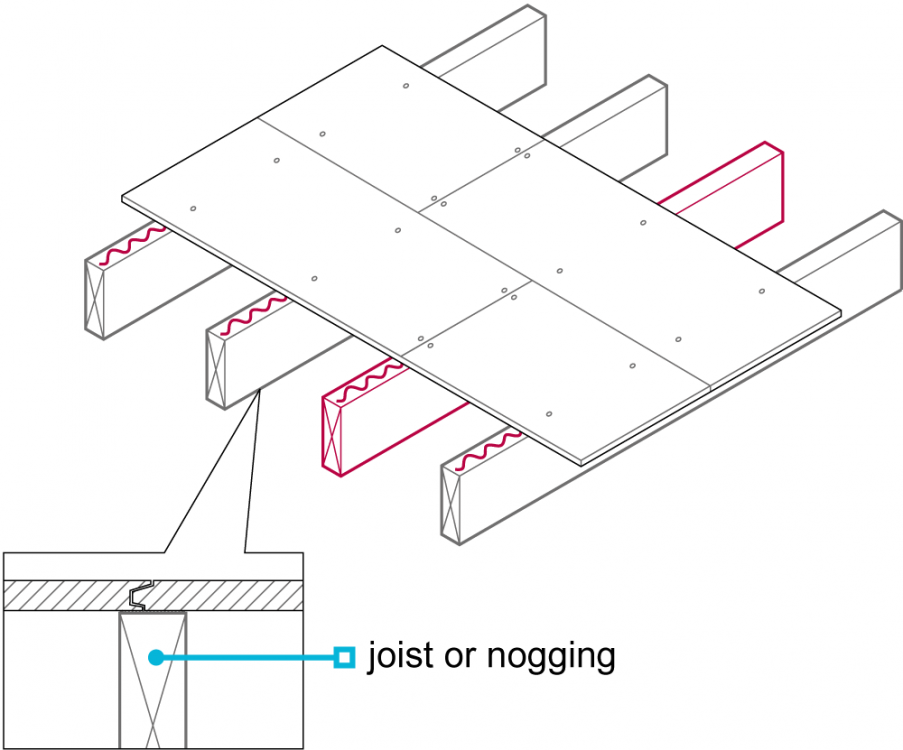
-
Happy days. This makes things much simpler. One cut per row and on to the next.
-
You've got a strong dislike for them eh? They're a bit marmite. You either like them or not. Did you own one that was particularly troublesome for you, or is it hate from afar? We've got newer cars, but the landrovers are my favourite. No one has complained about the old design when they ask me to pull them out of trouble in winter, no matter what they're driving. ?
-
1 for, 1 against. It's like the voices in my head It will be 22mm board and the posis are at 400mm spacing, everything will be fully glued and screwed. @LA3222 It's more about keeping waste down rather than the cost saving. Though any extra sawing time saved is a boon. @nod Building control were happy with the joints in between the joists?
-
I can see why an unsupported short end flying joint at a floor perimeter is bad, but one elsewhere, glued in between other T&G boards shouldn't be detrimental? I'm trying to think of ways to lessen waste from off cuts. Not cutting to have a joint on a joist would save a little. Do or don't do?
-
Bit concerned about my posi joist installation
Digmixfill replied to Adsibob's topic in Floor Structures
I've recently put 20 posis in on hangers and aimed for the 1mm gap. I left a gap for the reason Temp mentioned. I'm expecting everything to lock up nicely when I put the boards in place. -
So true. I am ever so good at over thinking most things on this conversion. Yes. The 75mm spacing is because of the wings on the joist hangers. I could ditch the current and switch to something like a teco fhm for the masonry side and a hidden flange for the ledger plate side.


