oranjeboom
-
Posts
699 -
Joined
-
Last visited
-
Days Won
1
Everything posted by oranjeboom
-
 Okay, I couldn't make them out from the pic, but you know what to look for. Thanks! So apart from the side of the unit that has the heat heat thermo reset button, are there any other panels that may need to be accessed for normal 'checking' / 'servicing'
 -
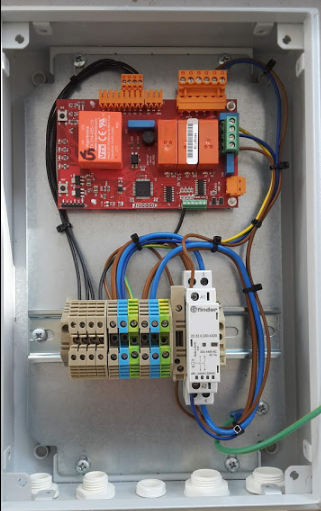
** Think we're getting cross-threaded here - could admins move posts relating to Simon's issue to his topic here?** Are you referring to the status charge indicators Nick? My units are size 12 units, in which case I should be okay then if they are in the external controllers. However the last controllers I had were the sbc_01 which did not appear to have any LEDs:
-
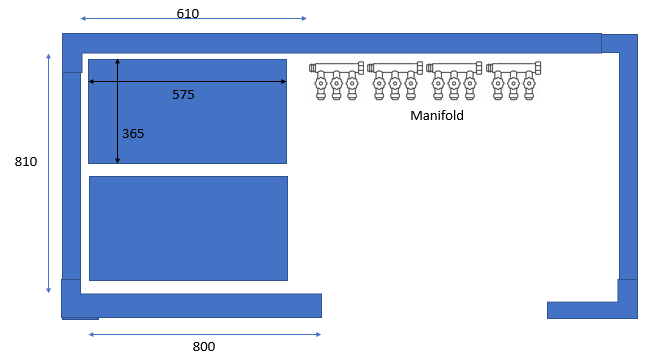
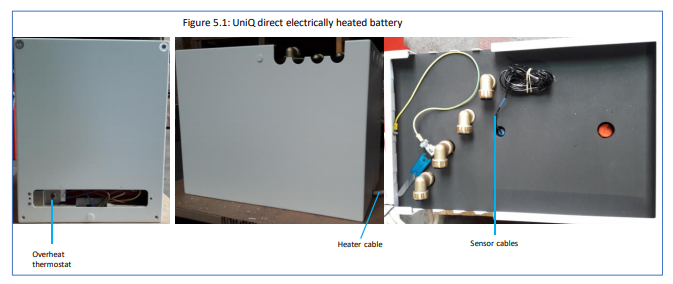
So the Sunamp gremlins continue I see. Although a good thing that Sunamp are willing to send out replacements units, its obviously a massive PIA to unplumb and then re-do the buggers. I had to send back two 14kWh units the other year (luckily not fitted at the time) and others like @Jeremy Harris have had to pop a few hernias dragging them up the stairs. It's disturbing that there are continued issues and whilst they may be fixable, the units do need to be placed in easy to access positions and worst case easy to remove. At least mine aren't going in the loft!! My new units will now arrive in the next few weeks so from the people on here who have had to take off panels and reset/remove things from the units, which sides of the unit have the potential for requiring access? Presume it depends whether the unit contains an immersion or not. From the manual, the first pic on left, below is the over-temperature reset button location and at the end of the unit - I presume this is is the 'front' (if the heater cable (on the opposite end) is pushed against a wall)? Do either of the side panels have potential to be removed? In my case, I have limited space for the units (manifold is fixed into position already) and no way can I stack them! So hopefully this arrangement will give me necessary access (to the reset button). If the uppermost one needs to be moved then that will mean shifting the other one first unfortunately. I have one heavy duty wheeled 'skateboard' to move each unit but was even thinking of knocking up another one so that they are easier to move in/out if required to in future (lockable wheels). Plan view: @Jeremy Harris - which panel do you leave off to check status charge?
-
Temporary heat source for UFH: Willis heaters
oranjeboom commented on oranjeboom's blog entry in Kentish RenoExtension
That's interesting since that's who I used to get my two heaters from as well. Perhaps they have more than one supplier (the elements themselves are from Tesla). One heater allowed me to 'drop' the pipe all the way down into the cylinder and with the other it hit the element (which i had assumed was the stop depth until I realised what was going on). Anyway, something to watch out for when fitting these - if your copper starts to glow nice and red..... -
Temporary heat source for UFH: Willis heaters
oranjeboom commented on oranjeboom's blog entry in Kentish RenoExtension
+'s and -'s for the positioning. I always seem to have plenty of air in my plumbing so wanted to avoid that air pocket at the top. I did also notice that when having the willis 'the right way up' is that copper pipe will slide very nice into the heater at the top....and way down into the chamber itself touching the actual heating element inside. Probably not what you want! Also possible to drop and lose your copper pipe in the chamber - bit of a pig if you've just plumbed in the return pipes at the bottom. Perhaps other willis-type heaters have some sort of retainer to prevent you from over-insertion of the pipes! Reminds me of searching for 'willis heaters' on ebay...don't think it quite understood what kind of heater I was in need of... -
Temporary heat source for UFH: Willis heaters
oranjeboom commented on oranjeboom's blog entry in Kentish RenoExtension
Looks neat as always @Nickfromwales !! Yes, that's what the instructions (posted above in blog) seem to state also. But perhaps Nick's setup won't have any air in his plumbing at all! ? My setup so far means I am relying on the manifold pump to circulate the water through the heaters too. They're only a short distance from the manifold on the adjacent wall: Still need to figure out how to connect the pipework to manifold. Was even thinking of using 19mm bore flexi connectors as this is just a short term solution after all. Not shown, but will have a 15mm pipe going up (see spare 22x22x15 on return flow) to the expansion vessel. Still loose fitted by the way so hence the dropped pipework in places!- 159 comments
-
- 1
-

-
- willis heater
- ufh
- (and 1 more)
-
Cool Energy ASHPs'...............any good?
oranjeboom replied to selvbygg's topic in Air Source Heat Pumps (ASHP)
Pls let us know how that goes as these units have come up a few times in discussions on here. Only 1yr parts warranty on these I see! At least all inverter driven now. https://coolenergyshop.com/products/cool-energy-inverter-6-18-7kw-stainless-heat-pump-ce-ih6-18 -
Temporary heat source for UFH: Willis heaters
oranjeboom commented on oranjeboom's blog entry in Kentish RenoExtension
My heat loss figures are greater than most on here, so figured out I would need 2 heaters. They're likely only going to be short-term (but have now plumbed them in with a long-term backup solution) with the view that I will be using an ASHP for my UFH if I can source a cheap (possibly non-MCS installed) one. But it'll be interesting to see how the house performs when I start heating it. Suspect too costly and ASHP will be favoured. So as with most things @Triassic, it would depend on your heat loss figures and setup. You could run them during E7 hrs so that you have heat in the slab in the morning and depending what heat loss you have, that could last a while b4 heat is called for again. -
Cool Energy ASHPs'...............any good?
oranjeboom replied to selvbygg's topic in Air Source Heat Pumps (ASHP)
Be interested in knowing which model you're looking at. Presume you're self installing? Looking to potentially do the same as fed up with the RHI-premium installers slap on which simply don't stack up. Were these ASHP's amongst the units they are testing? -
Temporary heat source for UFH: Willis heaters
oranjeboom commented on oranjeboom's blog entry in Kentish RenoExtension
Cracking on and just loose fitted most bits now, but with the manifold being slightly lower than the top of the willis heaters I could get air trapped in the top pipework (above the heaters). So was thinking to add an automatic air vent like so. Would the experts on here concur? TIA ! -
Temporary heat source for UFH: Willis heaters
oranjeboom commented on oranjeboom's blog entry in Kentish RenoExtension
Yes, was seeing whether it could be done on their side as was hoping to use space in the already limited cupboard for other items. But will have them assembled vertically then. Just had the postman deliver them this morning and the instructions imply the same. Will post them up in the blog for others. Yes, if this was a permanent heating source, then I would have it in copper too. But most likely now will probably adopt a cheap ASHP in the summer so I only really seeing this being in use until April. It will need to have a few bends in there also, so plastic would help. Would save a bit of time too. Any major issues with part 15mm copper part 22mm plastic then? Just a couple of bends. -
Temporary heat source for UFH: Willis heaters
oranjeboom commented on oranjeboom's blog entry in Kentish RenoExtension
Thanks for the offer Jeremy, but I only ordered one 30mins before you'd posted this!! Another item for the MarketPlace? More questions: Next question - I've placed the expansion vessel about 3.2m from the return leg where it splits off by the willis heaters (out of the way, yet serviceable). I couldn't find any recommended distances, so presume this distance is okay? 22mm plastic (Hep2o) - found some spare, so was going to use this between the manifold and the willis heaters (which are 15mm): MANIFOLD (1") --> 22MM PLASTIC --> 15MM WILLIS ----> 22MM PLASTIC --> MANIFOLD (1") Any issues with flow rates? I'll have some copper on the inlet/outlet sides also. -
Temporary heat source for UFH: Willis heaters
oranjeboom commented on oranjeboom's blog entry in Kentish RenoExtension
Thanks! Not sure why I didn't find any earlier as there are a few on ebay (dubious quality perhaps, but bought an Italian-made one). Guess there's not enough demand to buy them from TS/SF. Next question - is there a max distance I can have the expansion vessel from the return leg? I'd like to have it out of the way (yet serviceable). Probably 4m from the return leg (where it splits off by the willis pumps). -
Temporary heat source for UFH: Willis heaters
oranjeboom commented on oranjeboom's blog entry in Kentish RenoExtension
Ok, so pressure relief vessel kit came with 3bar pressure relief valve. What pressure valve should I be looking at and where to source one from. The ones at Screwfix etc all seem to be fixed at 3bar. Currently have this one: https://www.altecnic.co.uk/images/products/info/313_314 Safety Relief_DS_07_11.pdf They do have a 2.5 bar also, but is that going to make much of a difference? https://www.altecnic.co.uk/domestic/plumbing-heating/sealed-systems/616/ -
Temporary heat source for UFH: Willis heaters
oranjeboom commented on oranjeboom's blog entry in Kentish RenoExtension
? Yup, I thought that was the case and had two on my shopping list above already. Will add it to the diagram for future refernce/readers! Thanks J! -
Temporary heat source for UFH: Willis heaters
oranjeboom commented on oranjeboom's blog entry in Kentish RenoExtension
Updated setup. Others have the Willis with element at top, but I may 'lay' mine down to prevent air being blocked in top. Will see what the instructions say, if anything. Internet a bit scant on instructions so will post on here when I get the goods. Also added bottle vent to manifold and NRV on mains fill line. Apologies for the small print.- 159 comments
-
- 1
-
-
- willis heater
- ufh
- (and 1 more)
-
Temporary heat source for UFH: Willis heaters
oranjeboom commented on oranjeboom's blog entry in Kentish RenoExtension
So, just putting my final shopping list together: Expansion vessel Can't find 15L, so oversizing it won't matter I assume? i.e. 18L expansion vessel (with loop and fixing kit). Pressure relief valve Only need the one correct, and that comes with the above expansion vessel kit? Bottle vent (fix to manifold) Yes, kept on having to release air during initial loop fill up (pressurising for concrete pour), but was thinking to add a bottle vent to the manifold so that any air is released automatically. Manifold is not pressurised at the moment so will have to do that. 20A DP switch outlet (for each willis) from a 16A MCB (like this one) . Probably one for each willis Immersion timer (like this one) to be added possibly when I change over to E7 low tarriff rates 15mm copper pipe - Willis heater connections are both 15mm, so seems best to just connect it all with 15mm pipe, unless there's a reason not to? Willis Heater - purchased -
Fabric and ventilation heat loss calculator
oranjeboom replied to Jeremy Harris's topic in Heat Insulation
vielen dank! -
Fabric and ventilation heat loss calculator
oranjeboom replied to Jeremy Harris's topic in Heat Insulation
Thanks Peter! Seems a lot more accurate using a weighted average than just taking an average. This way you're looking at how much each wall's fabric build up (u-value) contributes to the whole house. Yes, I think I took that approach first, looked at my the bigger walls, worked out the u-values and then averaged. But looking at each wall in greater detail (especially those walls where I have been able to squeeze in extra insulation) has altered my weighted figure in my favour. Again, if you want to be as accurate as you can, then I would use a weighted approach than just averaging that whole wall section. Did you insert various thicknesses of insulation against that wall? If you know their sizes still, then you can calculate using above method. If however you just used one sheet and rasped it down to get a level surface and average u-value would probable suffice. Just talking one wall here after all.- 204 replies
-
- 1
-
-
- heat loss
- ventilation
- (and 4 more)
-
Fabric and ventilation heat loss calculator
oranjeboom replied to Jeremy Harris's topic in Heat Insulation
Just noted that my entry included duplicated screenshots - now deleted. Simply what I am doing is trying to calculate accurately the differing walls that I have in proportion to their areas. Once I have a single wall u-value, I will obviously plug that into Jeremy's sheet. An example: If you take this example of 3 different walls, it seems incorrect to just average out the u values since their areas differ. In this case, it's like bodgit builder wanting a low wall u-value so simply constructs a couple of walls that achieve that low figure (walls b and c) and then the remaining wall (wall a) achieves a really high u-value. If you simply average those out u get a not-so-bad figure: If however you taken into account their respective wall areas in relation to total wall area and then sum those areas you get a more representative (weighted) u-value of 0.290. So surely where you have walls of differing u-values it's best to take that into account??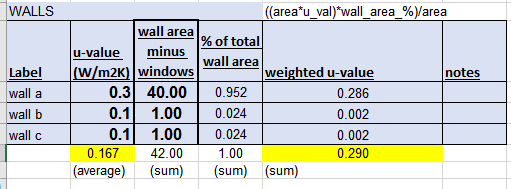
-
Fabric and ventilation heat loss calculator
oranjeboom replied to Jeremy Harris's topic in Heat Insulation
Ok, having another go at these calcs in @Jeremy Harris's heat loss tool prior adopting the willis approach (see blog entry). Just seeing if this approach is correct. Wall u-value in B7 - I've excluded any window /door apertures to get a total area for each external (heatloss) walls and worked out the u-values for each. In most newbuild houses this is a fairly simple thing to do as your wall is pretty much the same all round the house! In my case I have a multitude of differing materials (original cavity-insulated brick and SIP walls) so have worked out the u-value for each wall. I have averaged out each wall's u-value according to their respective total wall area (as a%): Column K: ((area*u_val)*wall_area_%)/area Ignore the sums / averages at bottom - just sanity checks! Is that the best approach to take? Certainly gives a better u-value, but it needs to be realistic of course! TIA!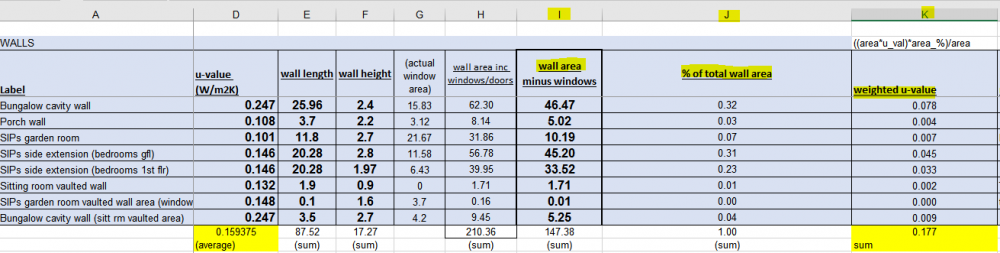
-
Temporary heat source for UFH: Willis heaters
oranjeboom commented on oranjeboom's blog entry in Kentish RenoExtension
@TerryE Thanks - UFH is all fitted. See my other blog entry on that fiasco! As for the calcs, I will have to re-examine those. The walls are a mixture of old school cavity insulated brick with EWI and then the extensions are SIPs, but will look at the figures and hopefully realise I've gone wrong somewhere. @PeterW Thanks for the tectite tips. Yes, a bit lazy to use those, but used a few connectors like that for my plumbing manifold setup. Will also look for a bigger expansion vessel then. -
Temporary heat source for UFH: Willis heaters
oranjeboom posted a blog entry in Kentish RenoExtension
After various delays, the time has come to get some heat into the house, and as there have been a few on BH that have gone down the route of Willis, thought I would give it a go as well. Hopefully others will find the blog entry also. Background: Renovated (3G passiv-rated windows, 120mm EPS EWI, 400mm loft insul, MVHR - not tested air leakiness yet) / extended (175mm SIPs) south facing detached house, East Kent 156sqm of wet UFH in 100mm concrete (with circa 300-375mm EPS insulation) 130L in UFH Wunda 12 port manifold (The heating valve on the manifold operates in the range of 30-70oC) Wunda wired room thermostats for each room (but probably won't use for this temporary setup now) 12Kw eDual for DHW (not to be included as part of Willis setup) 12Kw Sunamp for DHW/UFH (not to be included as part of Willis setup) 3.8Kw PV (potentially have further DIY grid implemented later on) Not looking to cater for worst case low temps as at these times will just plug in some extra heaters: I originally ordered 2x 12Kw heat batteries for DHW and UFH. Total reliance on the PV in summer and then off-peak grid in the winter. An all electric approach initially without ASHP. Not keen to spend £8-10k on an MCS installed heat pump to get back an estimated / possible £8-10k. Installers seem very vague on the RHI returns and if I have read correctly, I will have to be metered in order to qualify in any case (as have not lived in the property previously). Since the house will be far above buildreg stds (but below PH level), I simply won't be using the amount of expected input that the installers calculate - hence I won't be getting back the cost of the ASHP supply and fit install. So most likely won't go down the MCS route, and if I were to install an ASHP, it would be a cheapy from fleabay. Having excluded using an ASHP, I learnt that Sunamp were testing various units late 2019. But typically with Sunamp, after continued confusion on their part as to what ASHPs they may have tested/not tested/will be testing soon, I've made the decision that I can't want any longer on their input. So for now I will leave the ASHP option until later on and perhaps consider a propane unit (e.g. Vaillant ) when they come online on a non-RHI basis if I can get a decent install cost. Willis Heater approach So therefore looking to heat the UFH with 2x 3Kw willis heaters in order to progress with the internal house work. Thought I'd add some info on here as a lot of people like myself aren't familiar what they are. They originated out of Ireland and still much in use over there. They're essentially external immersion coils and instead of sitting inside a tank are simple external electric units - AKA "Willis jacket", "standard sleeved immersion heater"," inline electric heater". Googling should get you something like this: Item Weight 1.15 Kg Product Dimensions 30 x 9 x 9 cm I have tried to get plumbers interested in rigging this up, but they're either not interested or have told me it's not possible/don;t know what a willis heater is. I've managed to plumb in all the Hep2o in the house, so hopefully this won't be too much of a bodge. @TerryE has kindly discussed his set up which is pretty impressive with his DS18B20s set into the walls etc. I'm no programmer and my javscript is mainly simple web stuff and wanting to get heat into the place ASAP, I just want a KISS approach for now. Perhaps later I will think about having some of it programmed using Terry's Node Red option which makes for interesting possibilities. Get a feel for Terry's approach here: But as I've said, I'm after a bog standard dummies approach to this - seriously KISS: So rather than wiring up room thermostats to the wiring centre, I will for now simply use the Willis inbuilt thermostat and set that to gradual increasing temps from 10oC up to a max of 25oC. A gradual heat increase seems safer in my mind. My only concern is if the Willis thermostat fails and carries on beyond 25oC - up to max temp. Obviously I will have the manifold mixing/blending valve that should restrict temp flow into the UFH also, but is there a further failsafe to consider? Dummies layout. Eventual Sunamp units (for DHW) will be located on left of manifold so having to locate Willis heaters to right and expansion vessel top right: FYI: The immersions need to be turned the other way (so colder water enters the side) Parts list: 15mm copper pipe. The Willis heaters are 15mm so I presume plumbing them into the manifold with 15mm would be okay? 15mm plastic pipe for cold return should suffice I presume? Bottle vents - automatically release any trapped air (like this one). Do I need any and if so where do I place them? Willis heater (ebay has the cheapest) Expansion vessel - 8litres sufficient for total UFH volume of 130L? (like this one) 20A DP switch outlet (for each willis) from a 16A MCB (like this one) . Probably one for each willis Immersion timer (like this one) to be added possibly when I change over to E7 low tarriff rates Will get an electrician to wire it all in for me! Be grateful for comments, suggestions and any answers to above questions! FYI: I'm no way the first person to install a Willis, so here's a list of other users on BH that have gone the Willis way and will know more than I do: @dpmiller: photo / details here @TerryE @vivienz @CC45 @chrisb here @Gav_P - here (Any pics?) Willis instructions: schematic- 159 comments
-
- 5
-
-
- willis heater
- ufh
- (and 1 more)
-
Vaillant high(er) temperature ASHP?
oranjeboom replied to Nick1c's topic in Air Source Heat Pumps (ASHP)
Any update on these CO2 units Nick? Suspect they will be too uber niche for the UK and will come with an uber niche price? And was it CO2 or propane (Vaillant or Nibe) ? -
Vaillant high(er) temperature ASHP?
oranjeboom replied to Nick1c's topic in Air Source Heat Pumps (ASHP)
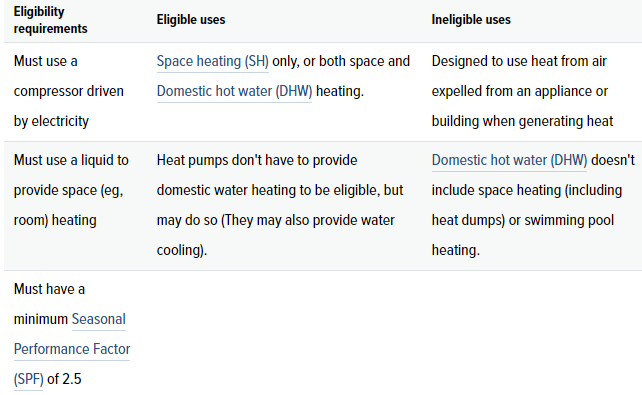
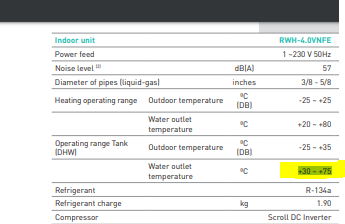
Your HP does not need to do both space and DHW for RHI eligibility. Not sure if that's what you were implying here. https://www.ofgem.gov.uk/environmental-programmes/domestic-rhi/applicants/eligible-heating-systems: Not seen that in any docs either. Best bet is to refer to the eligibility list and see whether the HT pump is included. I did note that Hitachi appear to have a HT pump on there with temp up to 75c (if i read that correct): Link to PEL: https://www.ofgem.gov.uk/publications-and-updates/domestic-renewable-heat-incentive-product-eligibility-list-pel