Iceverge
-
Posts
4387 -
Joined
-
Last visited
-
Days Won
31
Everything posted by Iceverge
-
 Ok. You really need to think about removing the conditions which moisture accumulates and promoting it's dispersion. Sealing anything is risky, espically when you do it at both sides of an old wall so in principle would avoid this Here is where I would start. 1. Bulk water. This means french drains to lower water tables. Functioning guttering, appropriate pointing externally. Silicone brick creams. Eliminate leaking pipes etc. 2. Ventilation. Mechanical ventilation internally. A couple of dDCV fans as a minimum. These are cheap ~£70 and swap straight out for a bathroom fan. These will pull damp air out of your house and allow the structure to dry to the inside. Additionally you'll get fresher air inside. Other methods of ventilation like heat driven stack effect and manual opening of windows are typically very expensive or just don't get done. 3. Airtighess. Believe it or not almost all the moisture problems that originate in a building are from the inside out. Vapour from breathing, showering, cooking etc. When you have cracks in your structure. Gaps and cracks around fixings, joists, windows, outlets all allow this to get "blown" into the wall where it risks condensing and causing issues like structural decay and mould. 4. Insulation. In your case internal insulation which is a double edged sword. On the one hand it'll keep the internal temperature higher promoting drying towards the inside but on the other hand it'll make the actual structure colder promoting condensation on the stone wall. If you avoid rigid boards of very low permeability like PIR and make an excellent job of the airtighess you'll mitigate most of these issues. Ok my suggestions. 1. Deal with Bulk water as above. 2. Buy some greenwood cv2GIP dDCV fans. 3. Use a parge coat of sand NHL cement 3:2:1 to form an airtight layer on the stone. It can be trowelled or brushed on. Tape all windows to the parge coat with appropriate tapes. Similarly joist ends, pipe and wire penetrations. And seal to the floor and ceilings too. This is critically important to any internal insulation job. 4. Install some 63mm stud walls internally to the stone walls with 70mm insulation in between the studs. (You can vary depth depending on your circumstances. 5. Plasterboard and skim.
 -
Any Ply is a mould magnet. Can you get up on a ladder and prod at it with the pointy end of a screwdriver or a penknife. If it's not showing any signs of rot I wouldn't be overly concerned. You could get them to clean off the mould I suppose.
-
Very similar detail to ours but we filled the cavity completely EPS beads which was super easy to do.
-
Something simpler would do me. Is it any good for detail drawings?
-
More blasphemy from you @saveasteading!!! I would very much go the other direction. It's not a "I spent less cash that you" competition. Nobody buys a Rolls Royce because it's cheap to run. But because it comfortably, quiet, and (maybe not these days) well built and reliable. Passivhaus is super cheap to run but it's the comfort, the ability to retain heat, the lack of drafts, the fresh air, the quietness that make it worth the extra effort. Also if done properly you can ditch complex central heating and it's actually quite economical. Back to the build, strip foundations perform excellently if done right. I would go to the local builders merchants and attempt to only build my house from stock items. The only exception being blown cellulose I think.
-
Internal Walls - Marmox Thermoblocks & Concrete Blocks
Iceverge replied to Mulberry View's topic in Brick & Block
Can you not get precast concrete lintels easily in the UK?
-
Ok. Just to be sure. Tile. Tile batten, Membrane Counter battens running along the line for the rafters. 150mm PIR. 200mm Rafters with 200mm mineral wool in between? Any further layers of OSB or membranes in there?
-
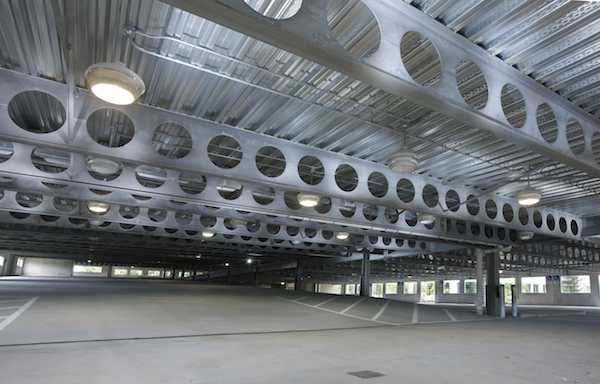
I was always of the impression that in a horizontal "I* beam that the top and bottom sections did all the work. It's how in my head I explained this. The bid in the top was being squashed together, the bit at the bottom was being pulled apart and the bit in the middle was just making sure they stayed put. Without knowing the different yield strength of metals in compression and tension I do wonder why beams aren't built asymmetrically to gain maximum strength for minimal material.
-
Congratulations on your purchase. Perhaps consider baking a few cupcakes and knocking on the door of your farmers neighbours and saying hello. Us country folk can be very suspicious of newcomers but if we're assured you're reasonable and kind we will bend over backwards to help you and happily turn a blind eye to any minor planning infringements etc!
-
Carpenters are second only to joiners in particular-ness. It's probably the reason that almost all ultra low energy houses are made from timber. If money were no object I'd get joiners to build me a house. If I actually wanted to get it finished this century though I'd settle for carpenters.
-
Only if you raise the flow temp. You wouldn't need to do this if you just tripled or quadrupled the amount of radiators. Roughly 50m² of rads at a flow temp of 70 degrees would deliver the same amount of energy per second (power) as about 170m² of radiators at a flow temp of 35deg. This is what I mean by increasing the power of the emitters. And higher power emitters will always allow for a lower flow temperature.
-
Unless you had appropriately powerful heat emitters that could ensure a low enough return temperature. Like very closely spaced UFH in a highly conductive screed or multiple fan coils or giant radiators.
-
Adding MVHR late in the day
Iceverge replied to bmj1's topic in Mechanical Ventilation with Heat Recovery (MVHR)
To beat the same drum again. How about ditching the idea of MVHR and using a couple of dDCV fans instead. They're cheap enough that you could buy them and give it a go to see if it helps. -
Insulating a (presumably hollow) metal door from within
Iceverge replied to Garald's topic in Heat Insulation
This sentence feels likes it's only a slight spelling mistake from @Pocster levels of innuendo. Back to the door. The simplest thing I can think of is to buy some more adhesive backed cork tiles and fit them as neatly as you can. Or a far greater concern would be and draughts so make sure it seals excellently. -
I would argue this only a consequence of the power output you can buy them in. If someone made a 40kW ASHP as accessable as a 40kW gas boiler people would probably use them in the same way. (Lots of technical and cost roadblocks with that approach I know). Most houses don't need heating 24/7 as people go to school, work, the pub etc and even a very low energy demand house will use less energy if it'a one heated intermittently. To allow for this you need high power heat generators and emitters to get up to temperature quickly and this is where a 5kW ASHP with widely spaced UFH pipes just doesn't cut the mustard. However get the biggest A2A unit you can fit with a appropriate fan coils and I don't see why it wouldn't work.
-
I normally use Sketchup on my laptop for drawing but would like something for my iPad when travelling. It doesn't need to be 3d. Just something that I can accurately draw dimensioned plans and details in 2d as well as handwrite notes on the page etc. Basically the technological equivalent of T square, ruler, paper and a pencil. Also I'm debating an Apple pencil to compliment it. Any pros/cons.
-
Define this please, especially where the insulation is. What is the buildup exactly from top to bottom.
-
That would work fine with oil. Have you considered air to air heat pumps?
-
A monoblock ASHP outside and a 300 l cylinder inside?
-
Building a straw bale house on the western side of Islay
Iceverge replied to Selina's topic in New House & Self Build Design
The only way I would consider straw bales as suitable for building a maintainable and mortgageable house would be as an infill to a timber frame. Here's my idea. Dig a standard strip foundation and build rising walls with 150mm blocks. Add a chunk of EPS perimeter insulation inboard and on the ground and pour a concrete slab as per normal. Build a 140*38mm stud frame on the 150mm rising blockwork at 450mm centres with 11mm OSB sheathing. Include ply gussets say 340mm long to connect later to an inner stud. Roof the house conventionally to ensure construction could continue inside in the dry. Add a sole and top plate for the inner stud too. Insert the bales "on end" in between the studs and push them tight against the outer sheathing. Use ratchet straps to compress them slightly and to compress any smaller segments that are needed at the top of the wall to take up any slack. Add the inner stud in a bay by bay fashion toe nailing it to the plates and screwing to the gussets. Take out the ratchet straps to allow the bales expand into the gaps. Finally add a good membrane inboard for airtighess and 38*50 horizontal battens to create a service cavity. Plasterboard and skim. Should have a U value of about 0.16W/m²K. With the double stud and large perimeter upstand it would have a very good thermal bridging characteristics and apart from the bales everything should be off the shelf from a merchant which is vitally important building in a more remote area. -
Building a straw bale house on the western side of Islay
Iceverge replied to Selina's topic in New House & Self Build Design
Don't tell anyone who made their house from ICF...... -
Building a straw bale house on the western side of Islay
Iceverge replied to Selina's topic in New House & Self Build Design
Similar to passivhaus. It uses external surface area which tends to overestimate heat loss. It's one of the reasons that smaller houses struggle to meet the standard. Back to straw. I can see almost zero people advocating for structural straw bale houses but rather as an infill for a timber frame as insulation. The issues isn't the straw. Straw is fine. I've already linked lots of examples. It's the bales. They were designed to be able to package, transport and store a useful farm material and are full of compromise for any other purpose. Building a house out of them makes little more sense than making a house out of these just because they're made from polystyrene..jpeg.de6d3d799ca6c9c8b5c1b81192a285f3.jpeg)
-
Get rid of the blown in mineral wool in the cavity and replace with EPS blown beads. Create an airtight layer by parging or applying a membrane to the external walls. Seal every penetration, windows doors, joist ends, wires and pipes to this layer with tape or airtight paint. Seal the walls to the floor also and ceiling. You'll need to return your airtight layer to the internal abutting walls too to prevent air leaks passing through them. Batten out the walls for a service cavity. Once all your wires are in place install 50mm mineral wool and then plasterboard and skim. Ensure you have some mechanical ventilation somewhere. MVHR is the best but often impractical in retrofits. Something like dDCV might be preferable.
-
SIP wall thickness: diminishing returns?
Iceverge replied to joshwk's topic in Structural Insulated Panels (SIPs)
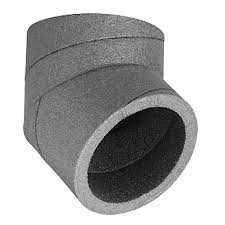
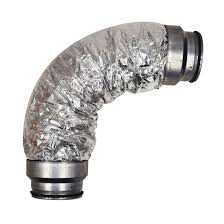
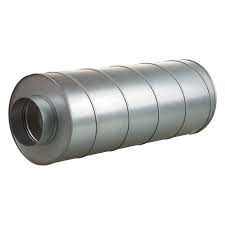
We used Stuff like this from outside to the unit. These from the unit to the manifolds and To the rooms. If doing it again the only thing I would change would be to include some of these.