Iceverge
-
Posts
4485 -
Joined
-
Last visited
-
Days Won
32
Everything posted by Iceverge
-
They tend to be specced for cooling in a warm climate. Put them in a cool/damp climate and ask them to do some heating and they run into trouble. I think the outdoor units are just far to small to cope without icing up. A2A for heating is quite popular in Scandinavia. When picking mine I went to the Norwegian websites of the manufacturers and checked their offerings. I ended up getting the unit from a Italian company through eBay based on the spec from that.
-
Most British people don't want more houses really. Other than for themselves of course.
-
Put a value on your time and see where it lands. On the above example, as the span is small no other structural roof work would be needed. No joists, rafters purlins etc I've seen metal sheeting in pretty good condition after 60 years and zero treatment had been applied. No problems as a habitable room. It's the same as this from 13:32.
-
Plug that in and set to heat on a damp day in the British Isles and you'll quickly have block of ice on the outdoor unit.
-
Insulated metal sheeting is by far the simplest and cheapest solution for a small span like that. I would raise the pitch to at least 4deg (about 1:14) by raising the rear wall plate or taking a row of bricks off the front wall. Could completely dispense with all the internal timbers then too as the span looks like it's only about 2.5m.

-
Any pictures? Inside and outside please. If you plan to use it as a habitable space later I would be tempted to put some insulation in there at the same time. Depending on the quality of the rest of the structure then it might be cheaper to rebuild the whole thing if you want it habitable.
-
Did you manage to get any useful readings from it?
-
True, I didn't think of multi story apartments. I like the idea of a "monoblock" a2a as anybody can install one. I've seen claims of a COP of 3 but I'm not sure if it's accurate.
-

Internal Walls - Marmox Thermoblocks & Concrete Blocks
Iceverge replied to Mulberry View's topic in Brick & Block
We did both, Studded and block built the small bits. Studding is probably easier. Remember it significantly strengthens the outer wall of you tie it in correctly to it. -
Yeah we did a sheet of OSB with a fan in a window. It sealed nicely against the gaskets. Dead easy, just measure the tilt and turn sash and cut the OSB the same. It stayed in there for weeks.
-
Make a DIY blowerdoor fan yourself before Aerobarrier come. You will get 90% of the way there by yourself.
-
These units are the wrong way around in my view. They should be outside the house with the heated air going through the ducts into the house. They'd be much quieter then as they wouldn't be trying to push too much air through too small a hole.
-
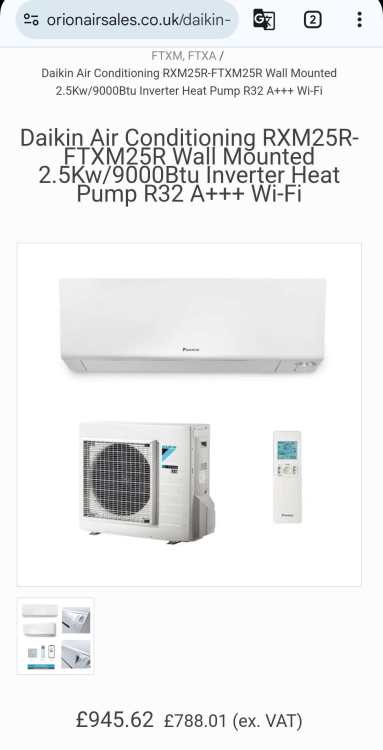
Pretty happy with this so far. The WiFi app makes schedules etc pretty straight.
-
Can you pull them out until you have enough ventilation space? Maybe when the BC is gone shove something in there like this to stop the bugs.
-
Mifires or Ecosy for 5kw Woodburning stove
Iceverge replied to Sam odell's topic in Stoves, Fires & Fireplaces
Go and poke at it in person. Check the condition of the seals bricks etc. Roughly in what corner of the country are you and I might have a scan of eBay in a while for something suitable. -
Mifires or Ecosy for 5kw Woodburning stove
Iceverge replied to Sam odell's topic in Stoves, Fires & Fireplaces
You won't get any drafts but the stove and chimney will still be drafting pulling cold air through the firebox and up the chimney. The stove will be cool to touch this cooling the room. Ideally you would close an inlet valve on the stove and shut a flue damper to stop this. -
You've lost me. The profiled sheets having ventilation above the guttering will be adequate for the roof. What has cavity barriers in the gable ends got to do with it.
-
It's the roof they'll be worried about. Do some sums to show an adequate free area in the "up"ridges of the sheeting. And how they match the open space under the ridge cap. It'll be more than sufficient to ventilate the roof.
-
Wow, if you could find district heating from somewhere I think you'd have every single type of heating device. Any pics?
-
Lovely house. I don't know how to passify the BC but if you have done a good job with Airtightness you won't have any issues with moisture. The only reason for requiring a hurricane of wind blowing through people's roof is because they make a completely inadequate attempt to air seal and correctly ventilate the interior. The profiles cladding can ventilate above the chutes at both sides anyway and that ridge won't be airtight. I can't see any issues.
-
https://www.aivc.org/sites/default/files/14_2.pdf Pretty good.
-
Ok lets play the game with out own situation. Lets DIY/ Electician install some PV. The bits for a 5.8kWp system would come to about €3800. Lets say the install costs €6800 assuming I did the climbing myself and got someone else to do the wiring. PVGIS predicts 5.3MWh of production. Lets say 4.8MWh to be conservative. At a feed in rate of 24c/kWh it's never worth using it to heat water and almost matches the equivilant day tariff. Export would be about €1200 per year. A payback of about 5.5 years. Relatively convincing. Now assume the feed in tarriff doesn't exist. We self consume 4000kWh per year which would otherwise be bought in at a rate of 19c. I reckon payback slips to 9 years. Less convincing but OK. The bottom line is that unless you can't avail of cheap overnight tarriffs or have very very hight water usage I wouldn't get too worried about using a TOU immerson for DHW.
-
As far as i know this might be one of the few remaining justifable use cases for solar thermal. You can get a stand alone heat pump just for DHW too. I've been pondering this. to see if it will reduce our €400/year DHW bill for about 3500kWh at a TOU tariff of 12c. For a capital cost of €1,230 plus bits and pieces and fittings, say €1500 DIY cost. At a COP of 2.5 it would reduce the kWh usage to 1400kWh. However due to the lower storage temperatues I reckon half the heat imput would need to be done at the more expensive daytime rate of 26c/kWh. So 700kWh@12c + 700 kWh@26c = €266 per year. A saving of €134 per year. A payback of about 11 years assuming it doesn't break. I think I'll keep my money in my pocket.

-
It's a great technology. Keep us posted on how it looks. I wouldn't rule it out doing it to our house in 20 years time if I think we've lost some airtightness.
-
Mifires or Ecosy for 5kw Woodburning stove
Iceverge replied to Sam odell's topic in Stoves, Fires & Fireplaces
I really don't think extra ventilation is needed for a stove beyond house leakage. The primary cause of carbon monoxide poisoning is from a blocked flue. Does anyone have any documented case of solid fuel fire carbon monoxide poisoning, that was caused by inadequate air supply to the stove, rather than just arguing "it's what the rule and regs say mate."