Iceverge
-
Posts
4485 -
Joined
-
Last visited
-
Days Won
32
Everything posted by Iceverge
-

Mifires or Ecosy for 5kw Woodburning stove
Iceverge replied to Sam odell's topic in Stoves, Fires & Fireplaces
On the subject of external air sources I'm not convinced. I don't think the physics check out. The fire will expend the same extra energy either heating the cold external air up to combustion temperature or else heating the room air in compensation for the increased drafts. My inner scientist says it's ultimately the same thing but with the external air you've made an great convective cooling device for the days it's not lit. Our house air tested at an equivalent leakage area of 49cm². Orders of magnitude tighter than any old house but still more than enough area required for a stove on half damper. Even for a passivhaus I don't think all this extra ventilation is required. Just open a window while you light the stove, then when up to speed the 5kW stove will find it's air from somewhere. -
Mifires or Ecosy for 5kw Woodburning stove
Iceverge replied to Sam odell's topic in Stoves, Fires & Fireplaces
Ah I've actually taken the time to read properly now. Ensure that the chimney is free from any built in timbers and is sound before the liner is inserted. A house near me burnt down when a stove liner ignited an old timber built through the chimney. It was never an issue with an open fire for centuries but the very high temperatures of the stove exhaust via the liner caused it to ignite. -
Mifires or Ecosy for 5kw Woodburning stove
Iceverge replied to Sam odell's topic in Stoves, Fires & Fireplaces
Still Neither! Any of these will be better. Remember that your chimney is equally important to the performance as the stove itself. What's the plan there?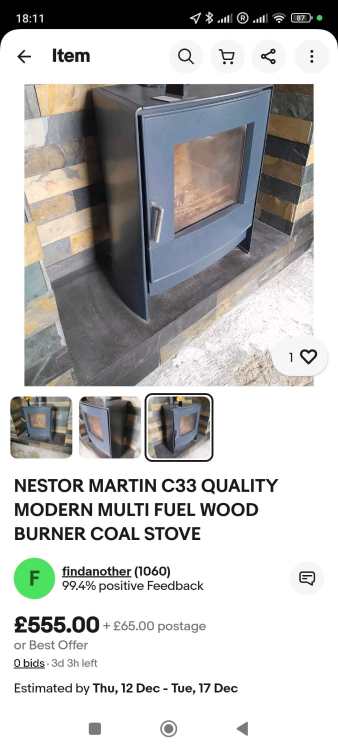




-
Mifires or Ecosy for 5kw Woodburning stove
Iceverge replied to Sam odell's topic in Stoves, Fires & Fireplaces
I'm going to take a dive here and say neither. They're both too cheap and "makey uppy" brands. You need to think about long term servicability/parts as well about quality. Small quality stoves typically run about twice the price. You'll have to go play with a stove to see what it's like. Check how tightly the door seals, if it's got a cool touch handle that you can open the door without leaving your skin stuck to it. If it's got an ash pan that can be removed without filling the room with dust. How easy it is to clean. I would always prefer a tall fire box over a wide one as the fire will self feed then to some extent. Make sure the firebox is big enough for your chosen fuel too. My preference is for an enamelled surface as it's easier to keep looking smart. Running a smaller kW stove is always better than sooting up a large one. I wouldn't worry about this. Charnwood make good stoves. This is lightly to turn into another annoying thread about the virtures of woodburning. Can we all pleasea void this for the 900th time by taking it @Sam odell understand and accepts that stoves: Elevate the risk of all the occupants of the house developing heart, lung diseases and cancer Contribute to localised airpollution on a scale that would make a diesel lorry look like a daisy Is a very expensive way of buying kWh of energy into your house. Makes the living room very dusty.
-
It really isn't the end of the world that price. I assume it'd cover your blowerdoor test too. Beware that it might still not function if you don't do a reasonably good job with airtightness in the first place. It's designed only for blocking small holes. It isn't magic. I doubt you'd get a satisfactory result for example with your architect's roof details. There'd be far too many gaps the size of a 50p left to ever expect a method like that to work. Whatever you do if you want a house thats not leaky as a sieve you need to have a good design from the outset.
-
I think it was @SteamyTea who was of the view that keeping heating and DHW separate was a good idea. We just use an immersion on a TOU tariff of 12c/kWh and a 300l dumb UVC. It's controlled by one of these. A 4kWp PV setup would cost about €7.5k at the moment to pay for it to be installed. Over 25 years that's about 10c/kWh so the case for complicating the system further is very slim. If I DIY install the PV it might be different.

-
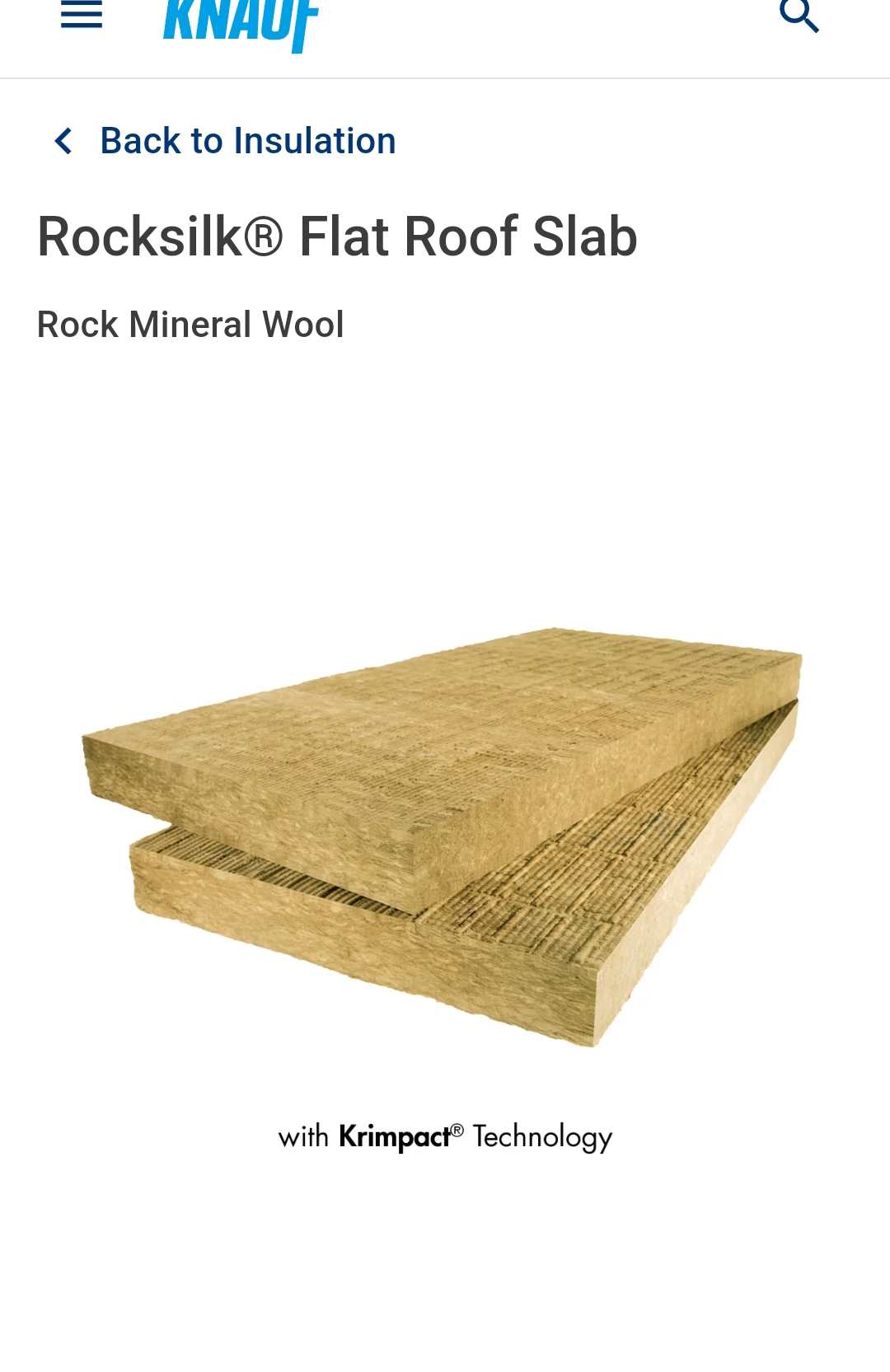
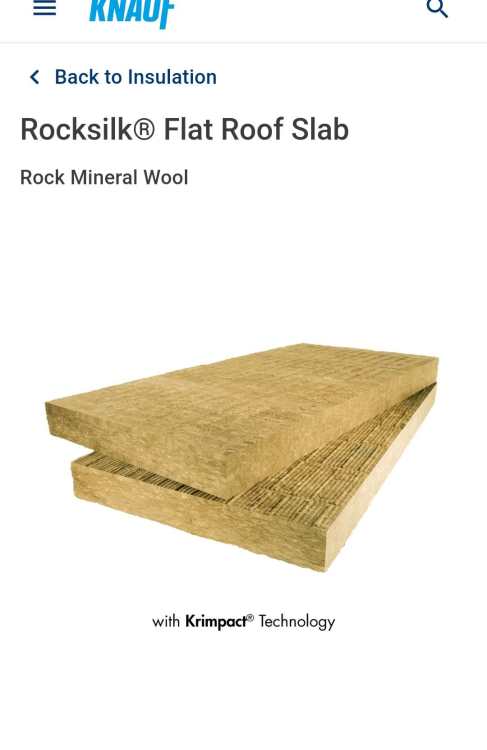
I'd much prefer to substitute the PIR for mineral wool in the roof above scenarios for @Indy but I think given the cost differential and the on paper reduction of U value I think I'd be shouting into the wind. This would be better is almost every way. Espically long term performance and fire prevention.
-
Gas migration, shrinkage, cost, off gassing,thermal bridging through the foil, recyclability, durability, permeability, hydrogen Cyanide gas when burnt. Grenfell.
-
Personally I think lots of these things are a legacy of not having modern machinery. Strip foundations require minimal concrete which used to be mixed by hand or in a small drum mixer. Like wise block and beam or a timber suspended floor can be handballed into place off the back of a builders trailer with no machines needed.
-
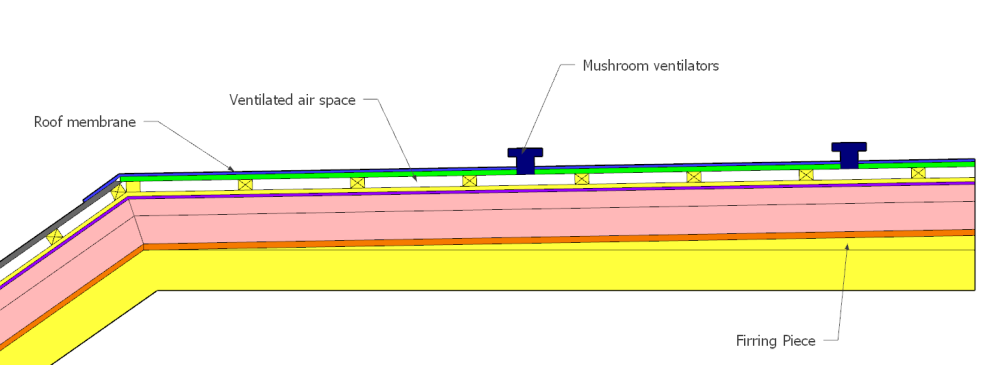
Flat roof is much the same as the pitched roof so I haven´t labled it. You could use 22mm OSB instead of the plywood in 2400x600 sheets. It would be easier to manhandle onto the roof and offer much the same pullout resistance as the ply if you missed the rafters with the screw.
-
I've never seen block and beam close up. It's ground bearing slabs all the way near where I'm from. Our first floors are precast hollow core planks. An elephant wouldn't disturb them but I think it's an overkill for a house. I understood that on some clay soils b&b was required due to ground heave etc.
-
No for heating. We were tipping along only with a plug in radiator but at 3.2MWh annual heat demand and €0.25 average electricity price the heating bill has risen to €800. Hopefully the A2A will reduce the bill to about €200. 2-3 year payback.
-
-
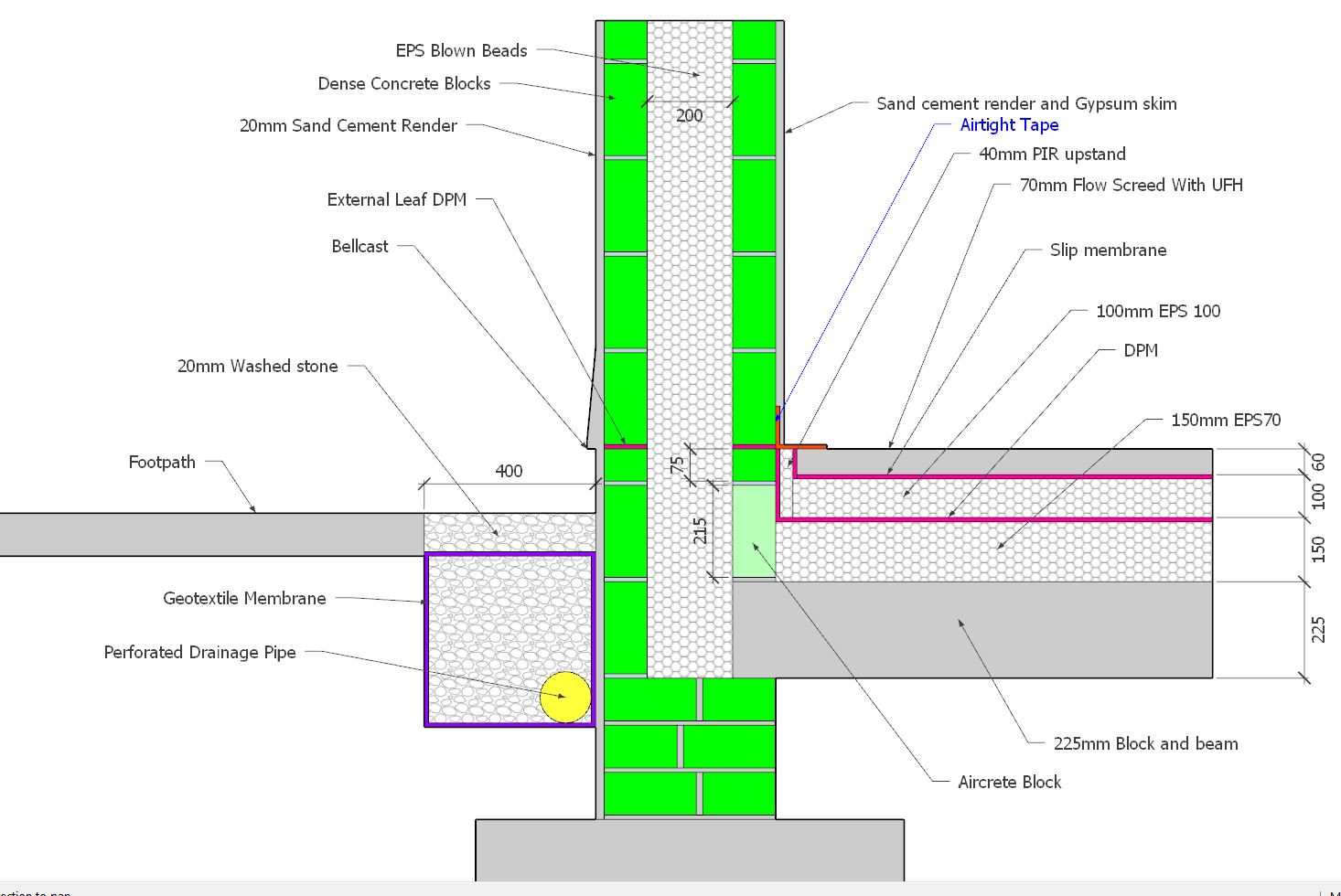
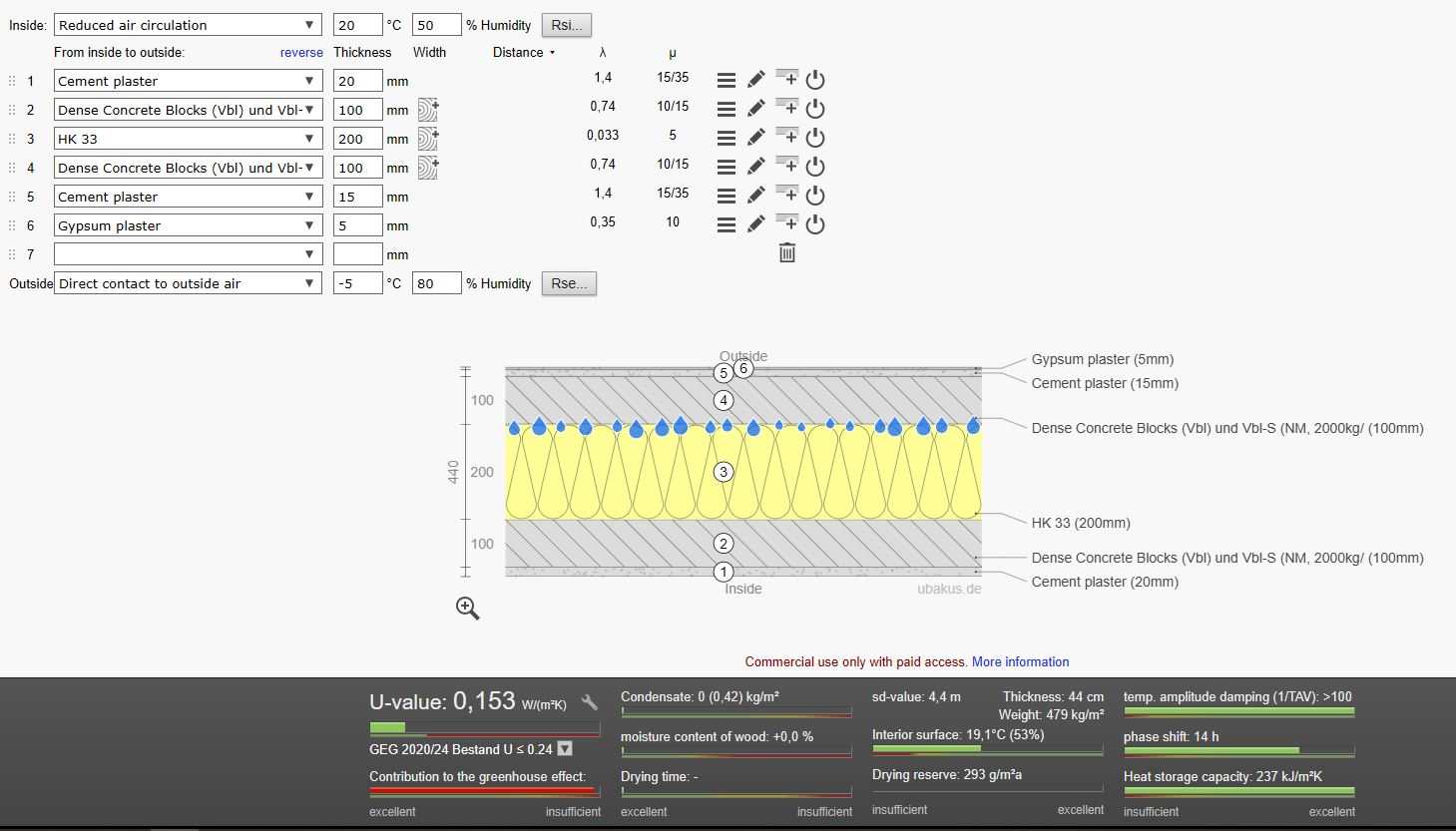
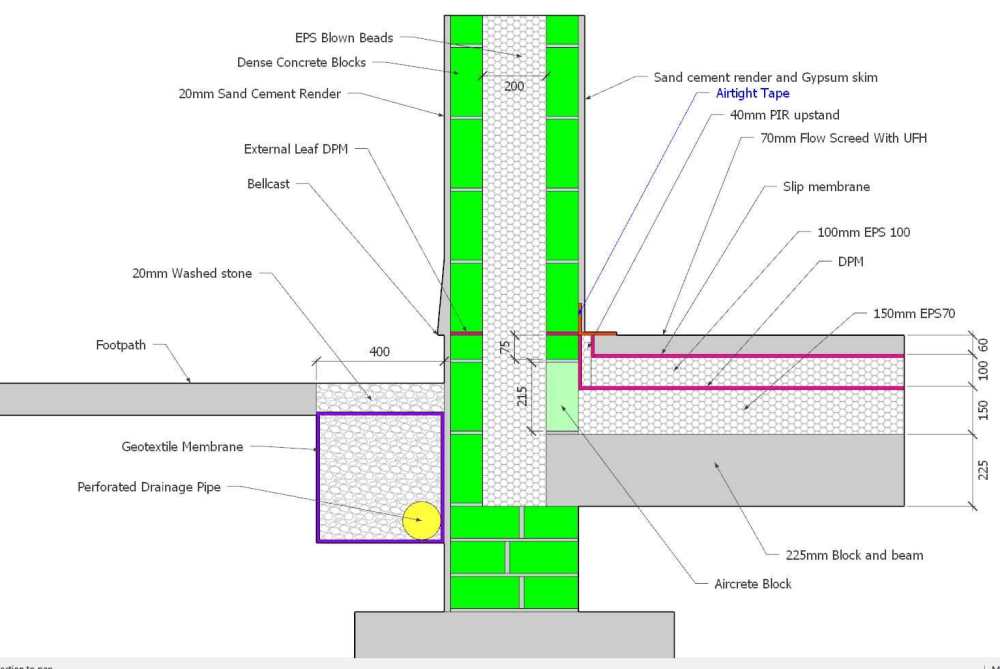
Thats a start! Notes: The seperate DPC works fine for both cavities, its what we did. THe DPM is between 2 layers of EPS, protecting it. EPS 100 will take UFH staples better than EPS 70. The cavity extending well below the floor insulation is required to prevent mortar dropping making a thermal bridge here. I haven't included any periscope vents for the void in the drawings. The French drain will really protect the floor from dampness and allow everything to stay dry and perform much better. U value is about 0.14 worst case.
-
We have a single Daikin FTXM25R in the hallway a couple of these in the bathrooms for showers. Heat demand of the house is low though.
-
Avoiding steel wind frame with portal I-joist frame
Iceverge replied to thaldine's topic in Timber Frame
Correct me if I'm wrong here. You have a vaulted living space that will be 6.7m wide so each rafter will span 3.35m and will be supported at the top by a ridge beam and 2.9m walls at the end. The ridge beam could be Gluelam, it depends how long it will be. The gable end wall will need to be strong Probably requiring a post to take the load to the foundation. I can't see why this couldn't be timber too. Depending on the amount of glass you plan to have. -
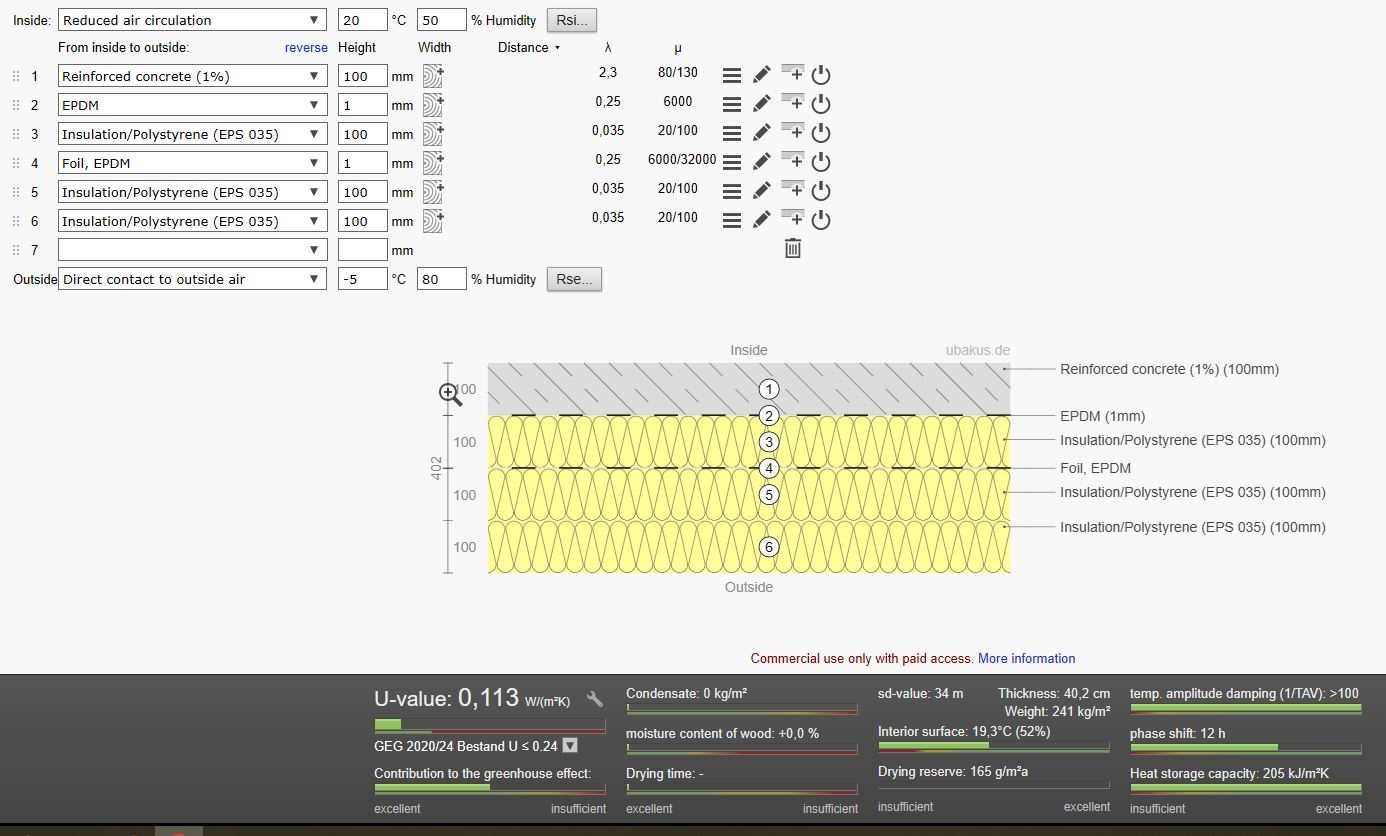
Flow screed isn't a bad idea actually. I forgot that it was above block and beam so 100mm of concrete wouldn't be really required. I can't see how the Architect could possibly get to a U value of 0.15 from 100mm PIR. Closer to 0.22.
-
Don't do this. Use EPS beads or mineral wool instead.. Our a2a is in and working well with 3 weeks. COP of about 3-4 at a guess.
-
Exactly the same logic I reckoned with. Did a masonry build but it's not an enjoyable experience to do it properly. The dense pack cellulose really helps with MBC and other TF builds. I would probably stick build and use cellulose next time.
-
@Indy I've put a good bit of consideration into the above. Materials etc weren´t selected at random so if you have any specific questions fire away. I think it'd actually be much cheaper than what your architect proposed too by the way.
-
In my view the primary objective of airitightness is building health by stopping drafts carrying damp internal air into the structure. Badly fitted insulation is solved relativly easily. Just use a blown product like cellulose of EPS beads OR fit board insulation over a flat surface like with warm roof or a floor.
-
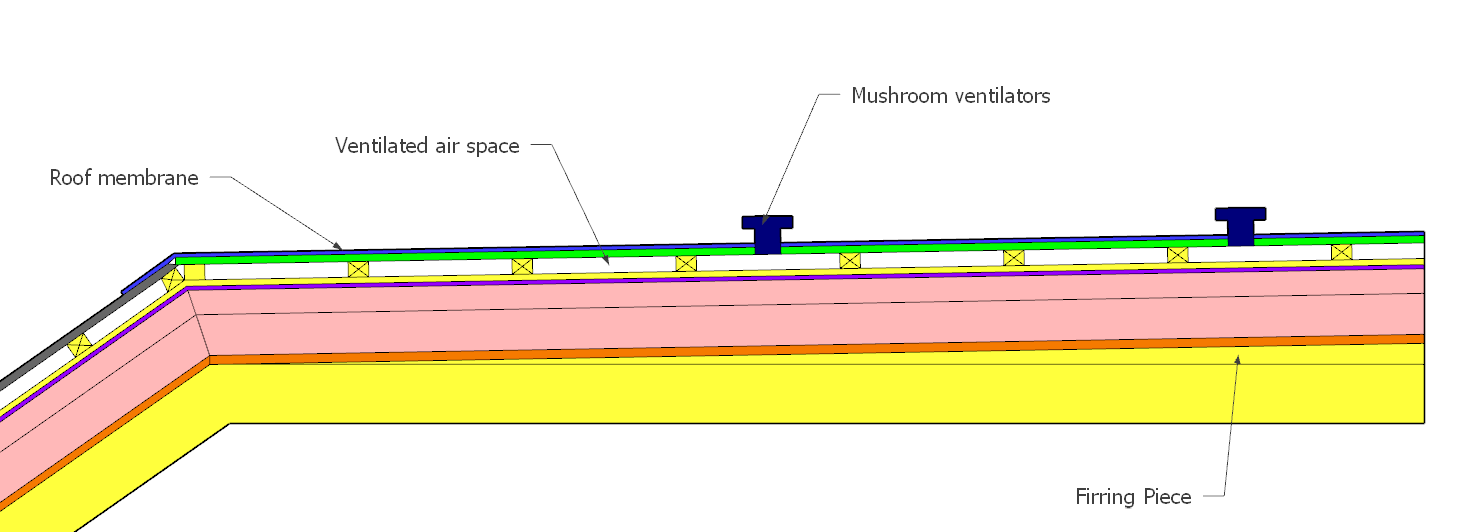
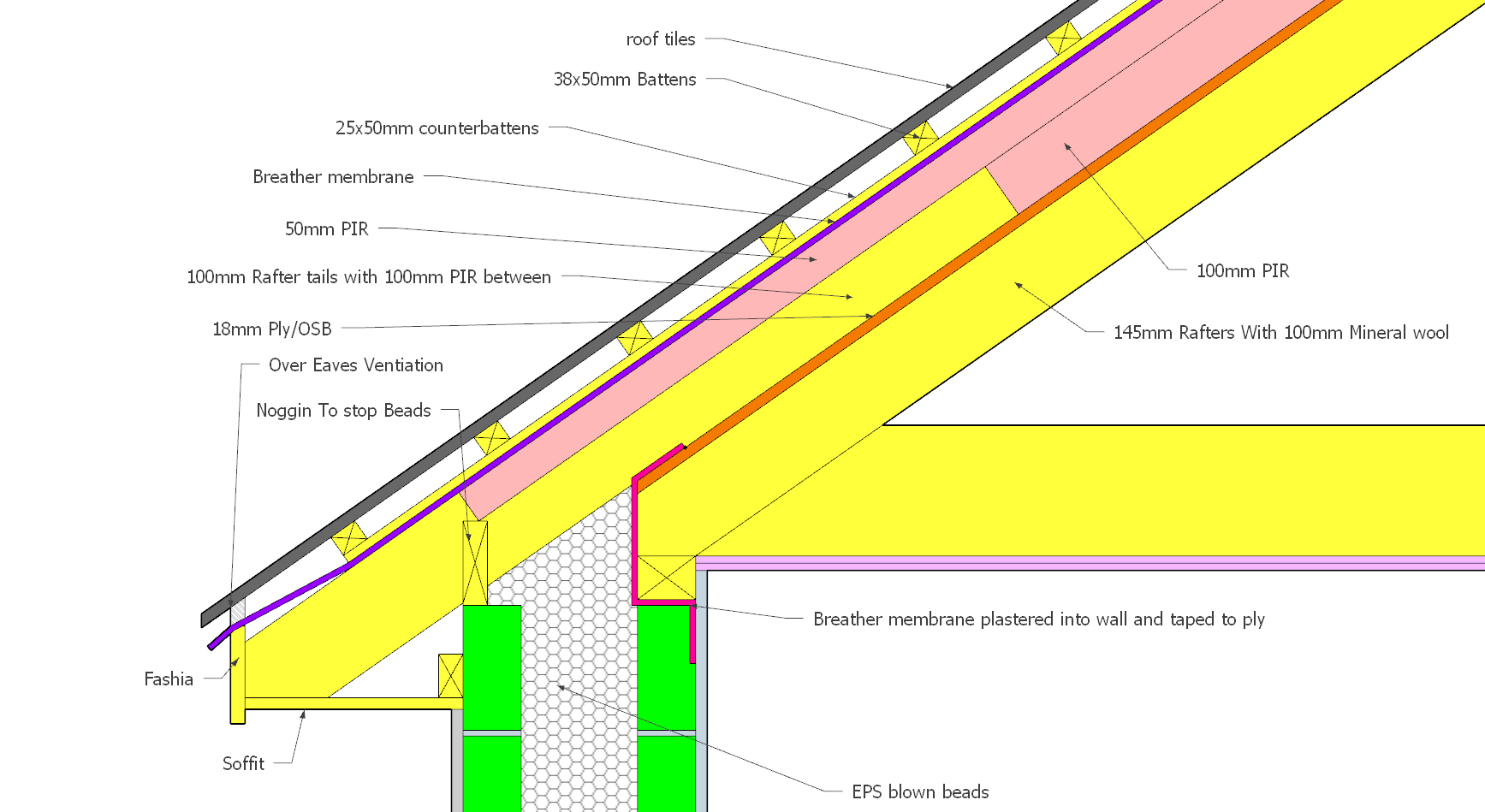
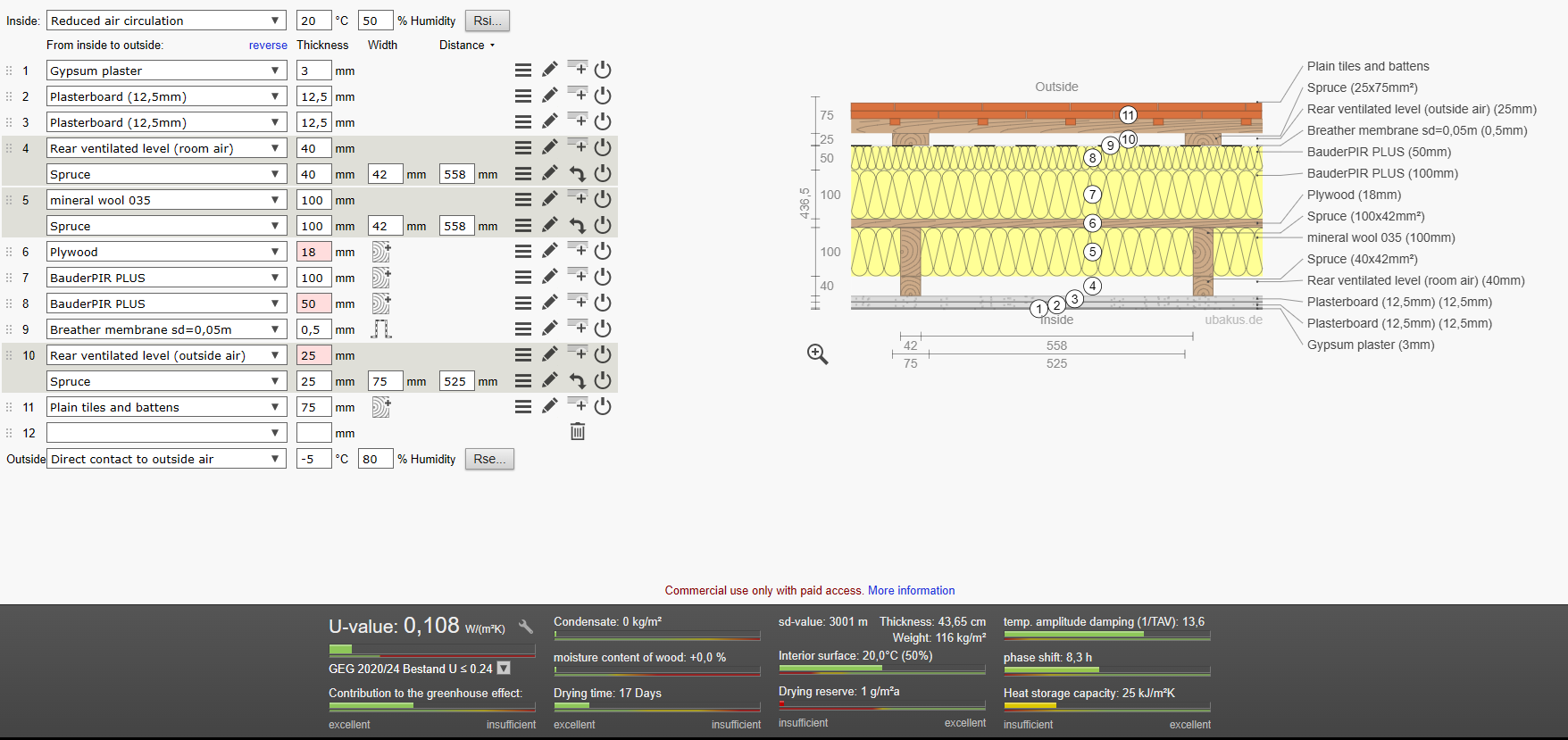
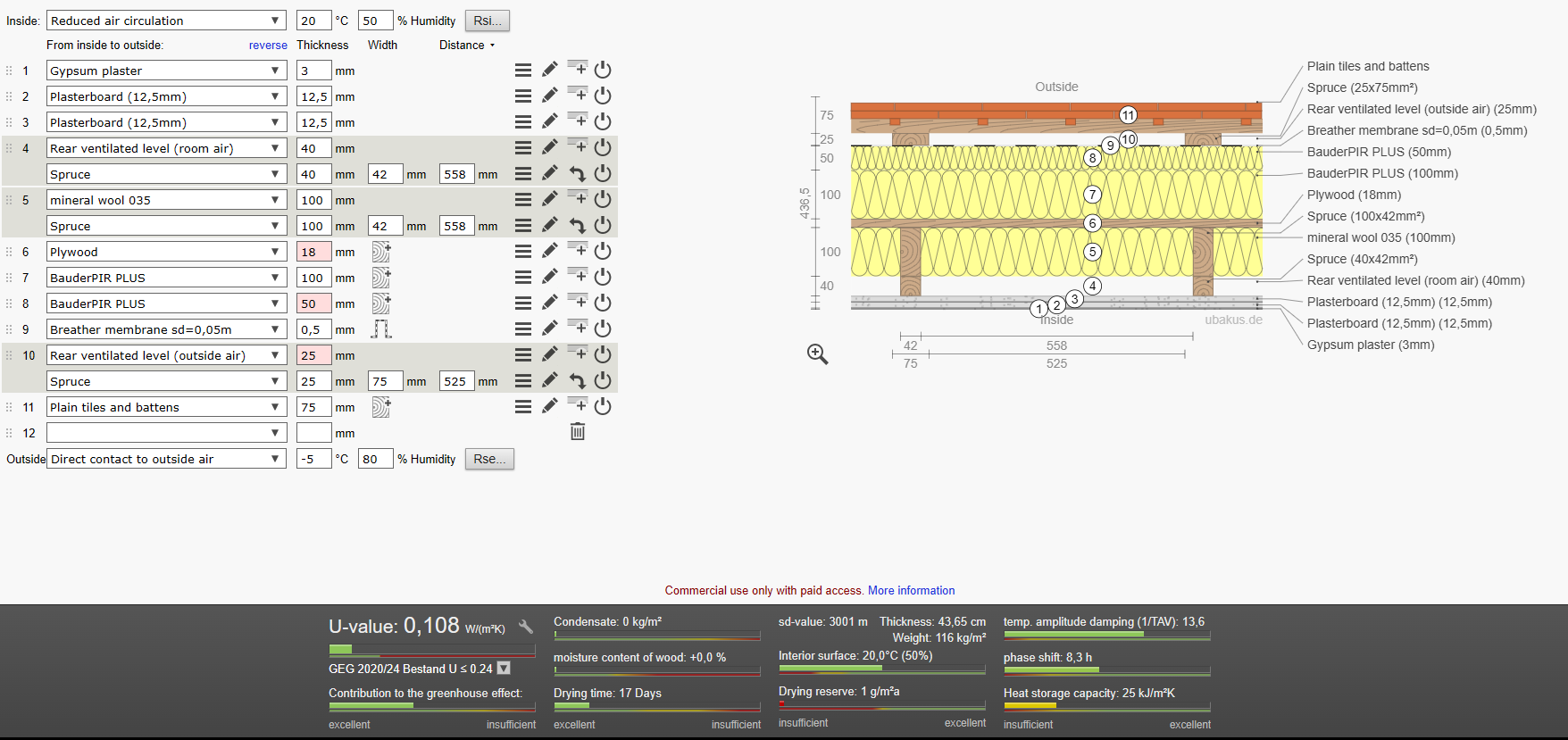
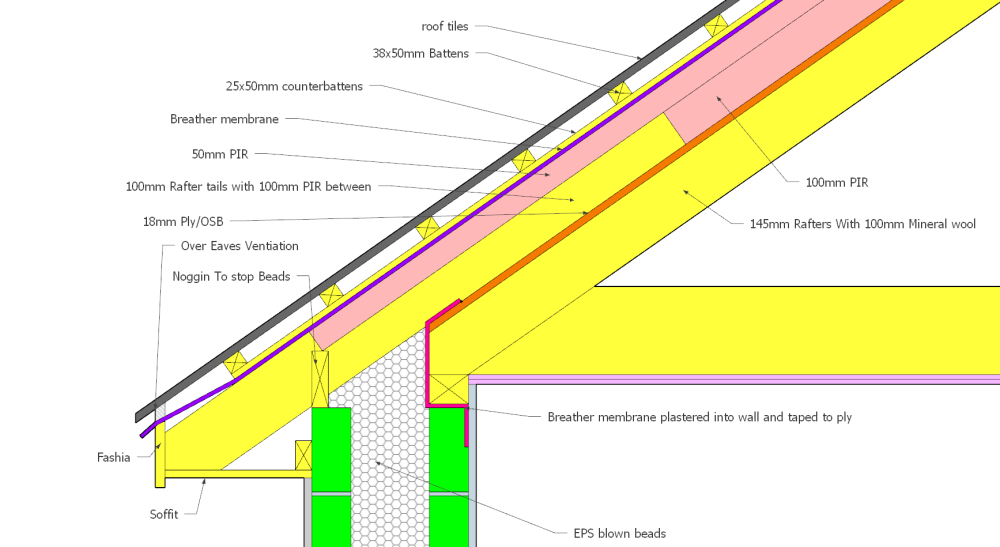
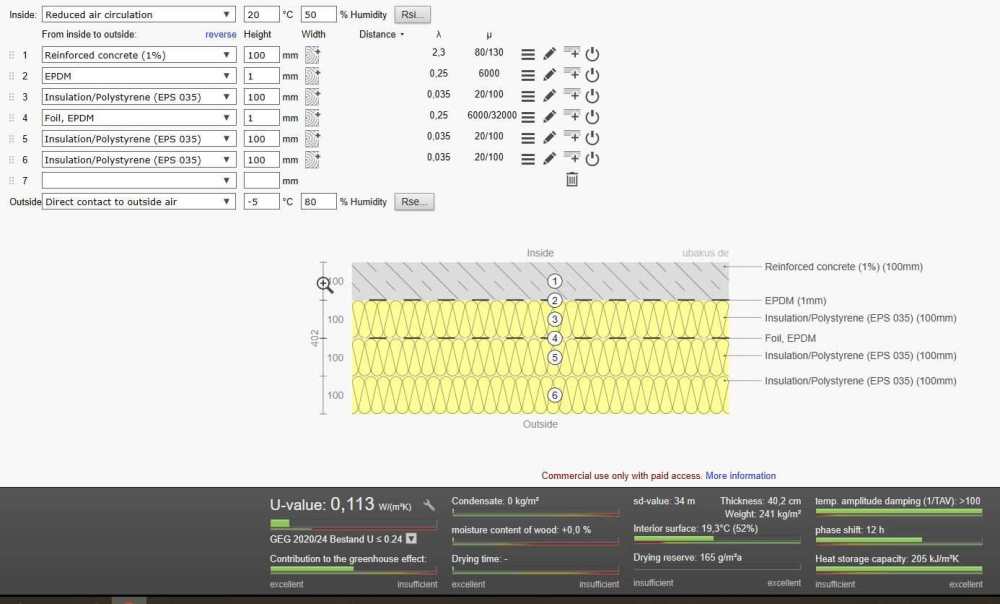
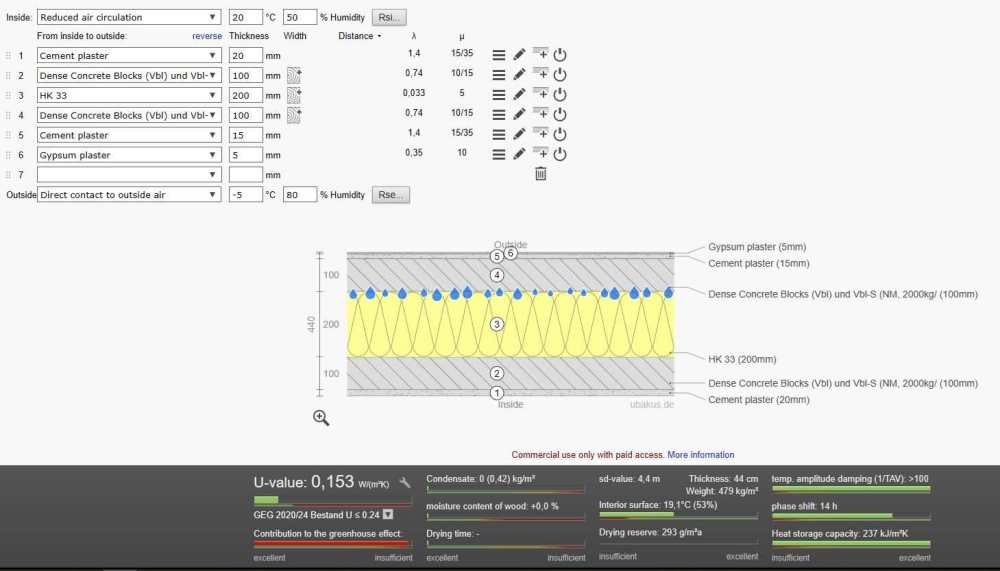
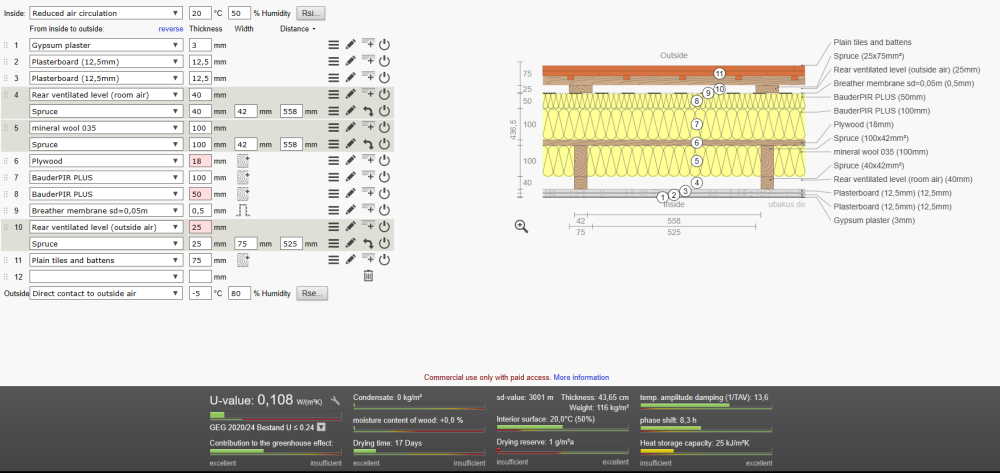
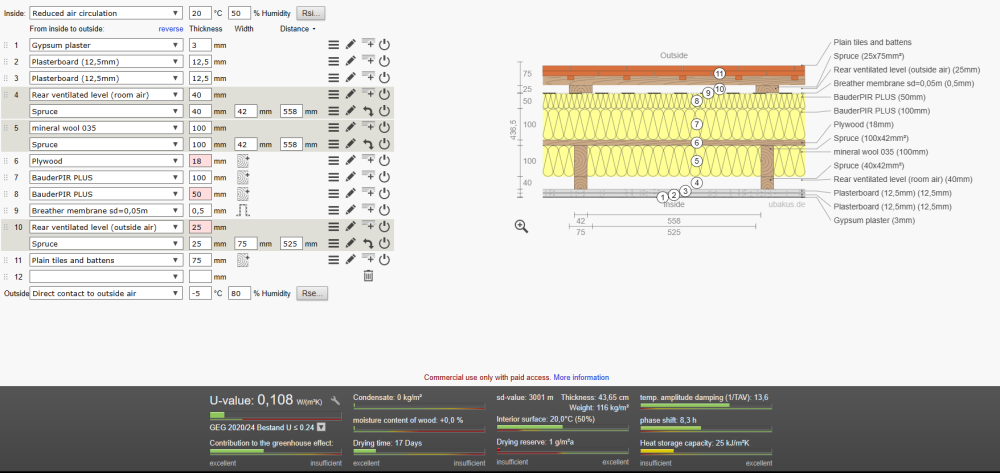
Ok with that in mind I will revise your blockwork build spec accordingly. The U values your architect has specced are pure fiction. Floor construction: U Value = 0.13 W/m².K 100mm powerfloated concrete with embedded fibers and UFH. 500g. Polythene separation layer 100mm PIR from Seconds&co or 100mm EPS70. ( I prefer the EPS) Polythene DPM 100mm Pir From seconds & co or 200mm EPS. (I prefer the EPS) Concrete beam & block floor to manufacturer's design DON'T USE BOARDS IN THE WALLS. TERRIBLE IDEA!! My suggestion. Render 100mm 14N dense blocks. 200mm full fill cavity with EPS blown beads (or mineral wool batts) and stainless steel wall ties. 100mm. Dense blockwork. 15mm Sand cement render. 5mm skim. The roof requires some thinking about. I have come to the conclusion that it is far too varied and complex to make a good job of it unless you take the airtightness layer to the outside of the rafters. It'll be easier to build too. Get rif of the cold loft. Roof tiles 38x50mm. treated tiling battens 25x70mm. treated counterbattens. Screwed into the plywood deck with 200mm screws. Roofing membrane 50mm PIR joints taped layered over the rafter tails. 100mm PIR with joints staggered from above layer. 100mm rafter tails screwed into the true rafters with 175mm screws. 18mm ply with all joints taped and returned to the wall airtightess layer at the wall plate and eaves. 140mm rafters with 100mm of mineral wool insulation. 40mm service space 2 x 12.5mm plaster board layers Gypsum skim. This approach would require stub rafters to be screwed to the top of the existing rafters for rafter tails and overhangs. AKA this video. I would change some of his details though. This is a really risky approach unless you are hyper on top of your airtightness. Also it's tricky to joint to the pitched roof. I would more or less copy the above detail. However I would include ventilation below the deck as I don't like the deck straight on top of the insulation. It is very failure intolerant. EDPM 38x50mm. treated across the rafters. 25x70mm. treated counterbattens. along the rafters. Screwed into the plywood deck with 200mm screws. 53mm ventialted space with mushroom vents throught the deck and continious with the pitched roof ventilation. Roofing membrane 50mm PIR joints taped layered over the rafter tails. 100mm PIR with joints staggered from above layer. 100mm rafter tails screwed into the true rafters with 175mm screws. 18mm ply with all joints taped and returned to the wall airtightess layer at the wall plate and eaves. Tapered firing pieces to create 1:40 fall. 140mm rafters with 100mm of mineral wool insulation. 40mm service space 2 x 12.5mm plaster board layers Gypsum skim.
-
Passivehaus really isn´t about minimum costs (althought it can make finantial sence) , but rather a comfort, building longevity and efficency. Ok I´m going to throw a spanner in the works here. I don't think if you build a blockwork house you'll get better than 3ACH on a blowerdoor test. I read many times that before we built our house that most airtight house builders had abandoned masonary as it was just too hard to get a result. None the less I pressed ahead. We ended up with a blowerdoor test of 0.31 which I was pleased about. HOWEVER, i spent 4 years researching the topic to an obsessive level of detail. I was off work during covid so I was personally able to do all the detailing myself. I spent days on end with a DIY blowerdoor fan and a tube of airtight sealant assessing every crevace and corner. The amount of time and effort that went into it was huge. It would be completely unreasonable to expect any normal houseowner or builder to go down this route. If you want a truely airtight house I would consider other methods. Timberframe liek MBC's twinwall or ICF would be much easier. There is one possibility through. A product called Aerobarrier will use an airbourne caulk to improve your airtightness. I've seen videos and a few patrons of the forum have used it. It may be worth a look.
-
Similar route here. We have a block built passive class house. It's been running abour 17 kWh/m2 per year since we moved in. I was hoping for better but some of the bridging details around the windows etc aren't mega. During the build there was some things that you just give up on. We've just installed an A2A unit which has reduced our heating usage to about 1/3. Prior to that we were just using a single plug in resistance heater. In short if you make a very good job of the fabric you can forego a conventional central heating system. Its an approach I woudl only take if I was all over the airtightness and thermal bridging details however.
-
Timber Frame with no blockwork - any downsides?
Iceverge replied to North Coast Self Builder's topic in Timber Frame
Most of North American houses are built this way. It's nice and clean and most can be done by carpenters which cuts down your spread of contractors. Blocks however are quite cheap and can take sand+cement render which lasts an era. Some on an unpainted Westerly facing farm building here is in excellent condition after 70 years with zero maintenance. I don't know the projected lifespans of synthetic renders.