Jeremy Harris
-
Posts
26430 -
Joined
-
Last visited
-
Days Won
360
Everything posted by Jeremy Harris
-
Out of interest, what sort of frame rate and lag do you get with these? I have a few 720P ONVIF P2P or Wifi client IP cameras, and I find that although the picture quality is good, the frame rate struggles to get over 20 fps with all three running, and the lag is dreadful, several seconds between something happening and it appearing on screen. The main system I have installed, that I was looking at replacing, uses analogue cameras, ones with a notional 960 line resolution, and they operate well over a 5.8GHz wireless link, with no lag and a fast and consistent frame rate. They give an image quality that's slightly better than the 720P ONVIF cameras, too, but remotely viewing them needs a video to USB box on the small home server, so I can log into it and view the rtsp stream, which isn't as user-friendly as the IP cameras.
-
 Good point. I found there's a big difference when cutting through OSB between the hole saws that are designed for cutting holes in metal boxes to take conduit or grommets and those designed for cutting wood. The ones intended to cut wood seemed to have a bigger kerf and this tended to clear sawdust away more easily. The first big hole saw I tried when fitting the ducting was one from a set intended for fitting downlighters, and that made really hard work of cutting OSB, despite being a bi-metal saw, with hardened teeth. It needed a lot more lifting and clearing for each cut, plus the teeth clogged very easily.
 -
On a tall building, where fire could enter the insulation layer from either the base, or via an opening, then I'd say it was every bit as dangerous as all the other facade fires that have been reported. On a lower building, where there would be far less chimney effect, then I think the risk would be a great deal lower. It really all comes down to the whole fire risk assessment of the individual building, as there are ways to mitigate the risk that even flammable cladding may pose on tall buildings (external, roof top, cascade sprinklers, for example). Using thin aluminium composite cladding only really poses a risk when there is a flammable material close to it, as it takes sustained high temperature, plus a lot of oxygen, to get aluminium to burn. However, once it is burning it burns very fiercely, as anyone who's made aluminium accelerated thermite will testify (and no, I'm not going to give the recipe for making it here.........).
-
The BRE have done a fair bit of work in trying to evaluate the risk from EWI, and also the effectiveness of fire stops, but mainly those above openings. There are a lot of BRE fire test videos on YouTube, I believe, and I'm sure that I remember seeing some that demonstrated how effective fire stops could be. As far as I can see, this hasn't made it into the regs, they still seem focussed on surface spread of fire. I believe that we have a problem with the length of time between new methods of construction coming to market and them being catered for in building regs, but I'm not sure this is wholly a building regs issue. There should have been a fire risk assessment of the completed building that covered far more than just compliance with building regs, I believe. From what I can recall of the last commercial build I was involved with, there was an overall risk assessment that included things like the interior furnishings, the high volume of IT equipment and cabling in the building, as well as the basic building regs fire safety stuff.
-
Great story, and a very useful point about fire and smoke alarms, particularly as there seem to be quite a few stories circulating that the alarms in Grenfell Tower may not have been linked and that they failed to go off on some floors. I've been caught out be an alarm with a flat battery once, the battery must have gone flat whilst we were on holiday and had stopped giving the flat battery beep by the time we returned. It was months later when I decided to check it, as it hadn't gone off after we'd burned some toast. It was only then that I realised we'd had no functioning smoke alarm for several months, a pretty scary experience. Mains powered, with lithium battery back up, linked alarms have to be the way to go.
-
Thanks @ADLIan, that confirms part of what seems to be on the plans, but conflicts with part of it, too. The plans say the outer cladding is zinc, yet there are several reports that it is composite aluminium. Given that there is a significant cost difference between zinc and aluminium, with aluminium generally being cheaper and lighter (which may have had an impact of the cost of fixings) I wonder if the plans were amended at some point to change the cladding material from the less flammable zinc that was specified, to the more flammable aluminium composite? Looking at the fire, it has all the hallmarks of a burning aluminium fire, so I'm inclined to think that there was a switch from the originally specified zinc to aluminium. If this is the case, I wonder if the change to the fire rating was taken into account? I think the simple answer is that, even it it was, then there were some very serious errors of judgement by whoever made this decision. The original design with the zinc cladding and air gap over the EWI was bloody awful, but changing that outer skin to aluminium composite seems downright criminal. This is not a view with the benefit of hindsight; the high fire risk of having an air gap over flammable EWI has been well understood for many years.
-
If the land has outline PP, then the principle of development has been approved, so there isn't a risk of not being able to build on it, the only risk is that the detail of what will be built has to be agreed in the application for approval of reserved matters. If you want to build something that is outwith any constraints there may be in the outline PP, then you might need to submit a new planning application, but in general this would only be the case if there are tight conditions on the outline approval, and in general there shouldn't be, and any conditions there are are likely to also be applied to the final approval of reserved matters, anyway. One key things is that any building needs to be designed to fit the site, and it's quite rare to be able to take an off-the-peg design and just plonk it on a site. The site plays such a massive part in everything, from the location of doors and windows, to the position of service and drain runs, that it will influence almost every aspect of the final design in practice.
-
Both our local and general election processes drive short term views. In central government this is a constant running battle, with the Civil Service trying hard to make sure that taxpayers get the best value for money and their elected bosses in government trying to thwart them by changing things to give a short term cost saving, even if that means increased spending in the long term, because their eye is always on re-election. I had weekly meetings with my minister for around a year or so, and they were always acrimonious, to the point where I lost my temper and swore at him once, much to the horror of his PPS (plus it was a career limiting act on my part, but I don't regret it at all).
-
I can confirm this, as our MVHR inlet is on the wall directly above the ASHP. There is no change at all in the inlet temperature of the MVHR when the ASHP is running less than 2m below. It was one of the things I was concerned about, but there was no easy way to position either the MVHR intake or the ASHP somewhere else, so I decided to just fit it and then check to see what happened, with the fall back plan being to fit external MVHR intake ducting under the eaves if need be (this is on the hidden rear elevation, where the retaining wall is located). As it happens I didn't need to do anything at all.
-
Yes, they could. One major benefit would be to somehow transfer the safety culture that is deeply ingrained within aerospace to the building industry.
-
Not questions anyone not involved in the project can easily answer, I think. I do know that demolition costs in London are astronomical, often a great deal more than construction costs, because of the very limited free space around tower blocks like this. The MoD owned a few smaller blocks in London that were past their sell-by date, and the plan was to sell them to help pay for a new build in Bristol. When the time came to sell them, after the new Bristol complex had been opened and the staff transferred, it was discovered that there would be very little gain from disposing of the old London buildings, largely because of the problems in either refurbishing them, or demolishing them and rebuilding. Given that this is social housing, I suspect that money was very tight, and a refurbishment, without major structural internal work, may have been the only viable option.
-
Worth looking at the video in the link above, as it shows the way the cladding burned fiercely, and that burning sections of it were raining down on the firefighters. The bravery of the firefighters is just beyond belief.
-
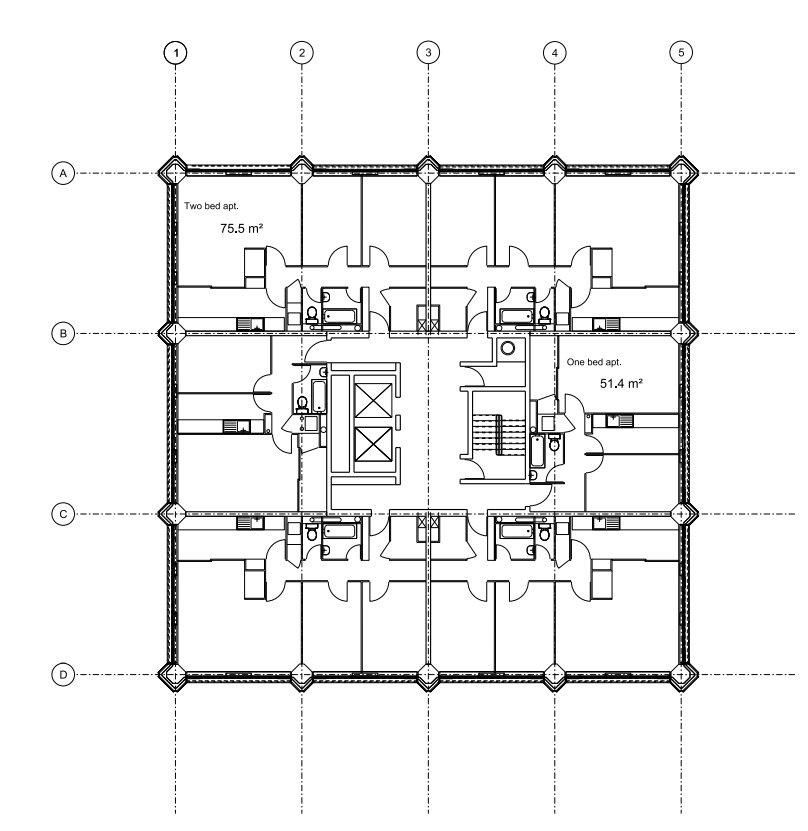
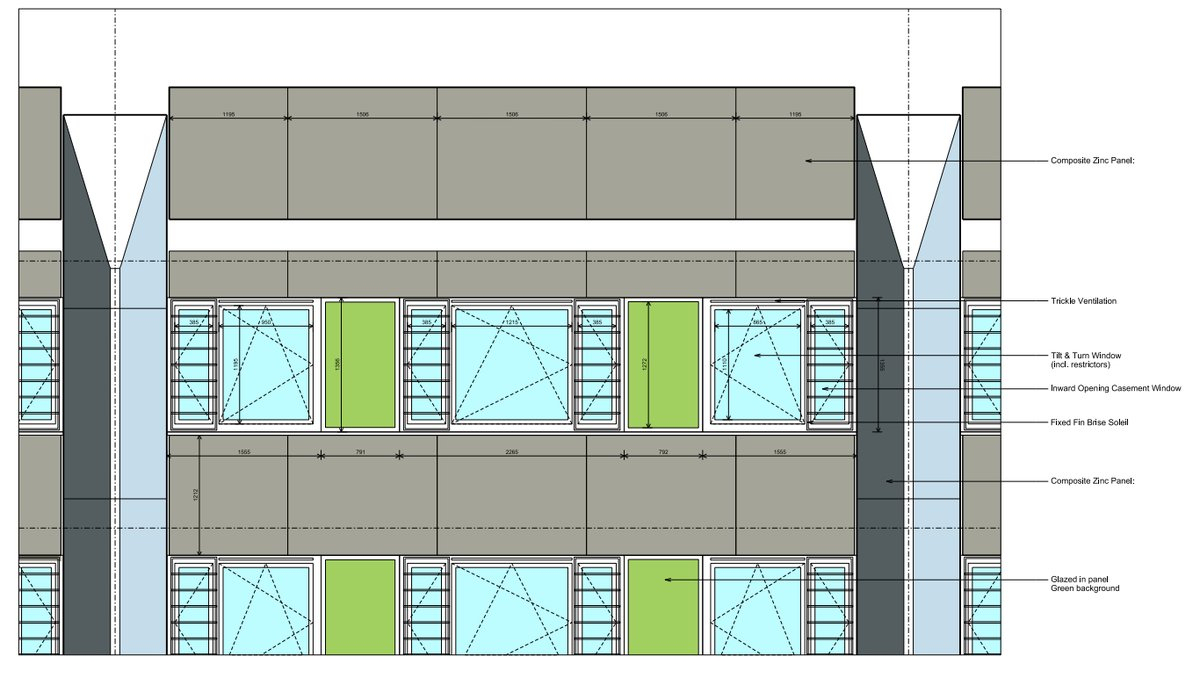
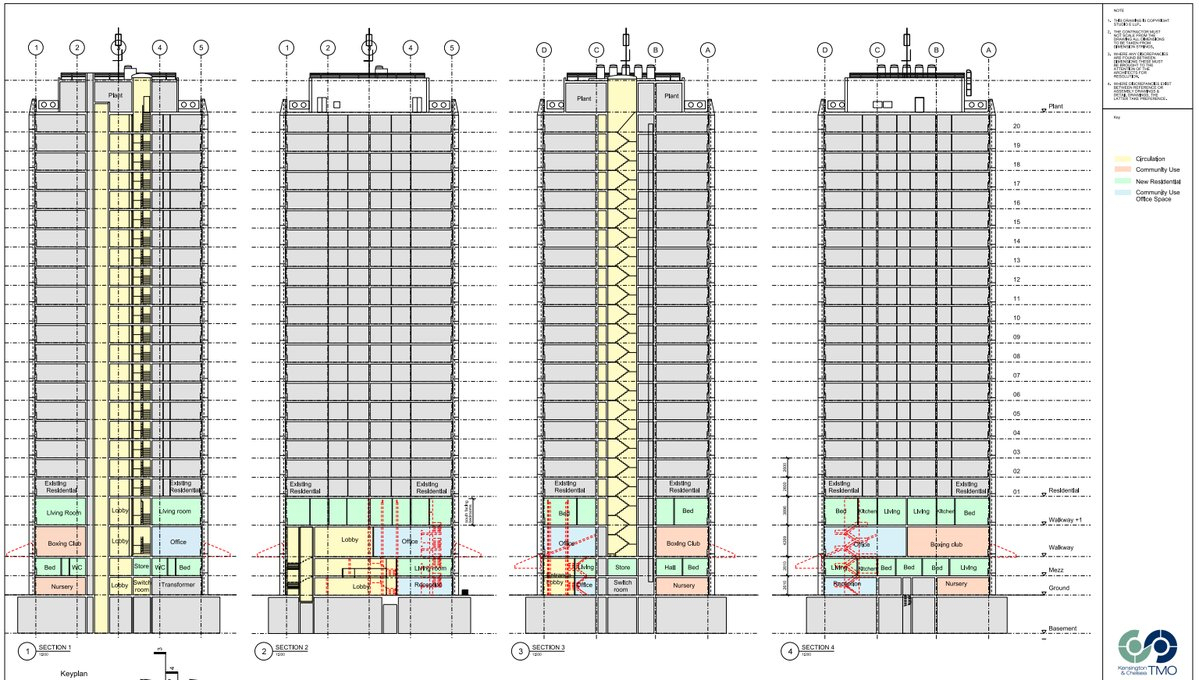
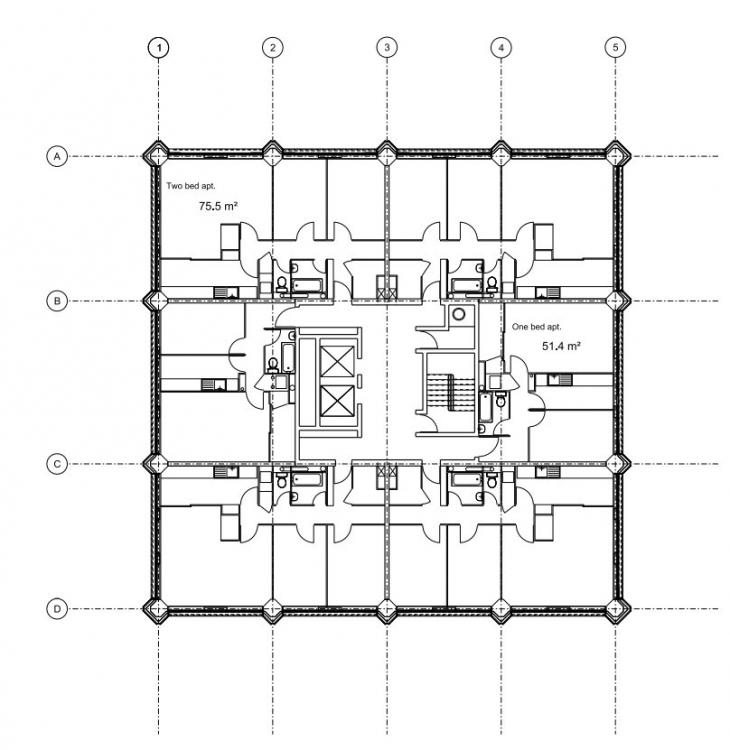
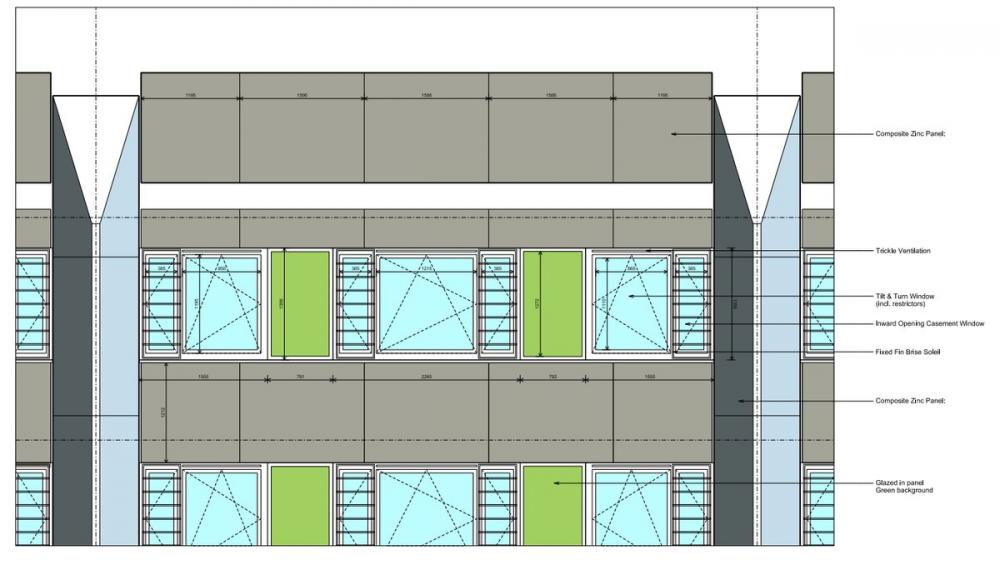
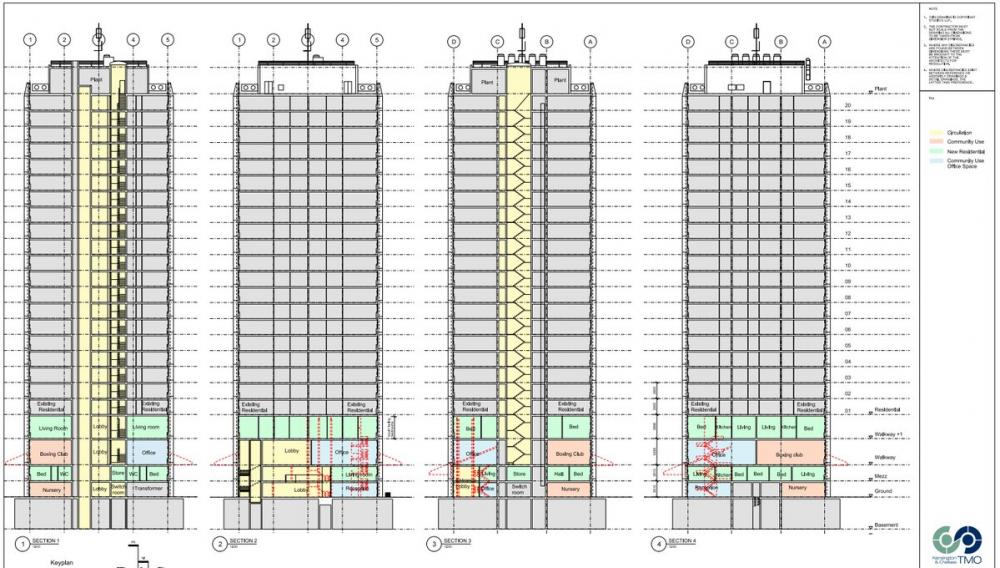
I've just found the plans for the renovation of Grenfell Tower, that give more detail on the materials used and the design of the building. First off, it seems that the cladding was zinc composite panels, rather than aluminium, as widely reported, and so the fire risk from the cladding itself was lower. However, zinc fires should not be tackled with water, as that can accelerate the fire. The problem with the single, narrow staircase is apparent from this plan section of the building. With the lifts automatically out of action in a fire, the escape route for several hundred residents, and the entry route for firefighters, must have been a nightmare: Finally, here are the elevation drawings of the renovated tower block: Finally, a video of the fire, around an hour after it started, that shows just how absolutely horrific it was. Do not watch this if you're faint hearted, as it's pretty distressing: https://www.pscp.tv/w/1RDGlZqozBDxL
-
As in that other thread, to make the wiring easy, and a safe DIY job, I'd use SELV outdoors, using a tough, waterproof cable like H07RN-F or H05RN-F/3182P, run inside 25mm conduit. The big advantage, apart from safety, is that it's a lot easier to wire up this cable than it would be to wire up SWA, and you would need SWA if you wanted to run the lights on 230V AC. You don't need a lot of power to adequately light a drive using LEDs, a couple of watts per light is enough, so the current can be quite low, which means a modest size of cable to ensure the voltage drop isn't too great. If you use a dusk light sensor to turn the power on to the SELV system (to minimise day time vampire loss) then you could fit SELV PIR switches to control the lights. If you wanted sensors both ends, then you could run 3 core cable instead of two core, with one core being the SELV feed to the far end PIR, one being the switched SELV power and the third being the return. You may have to hunt around for SELV PIR switches, I've made quite a few for our outside lights, using modules, but I haven't looked to see what's available as ready made units. There are lots of LED outside lights available, in various styles, and it's worth looking at pond and patio lights, as they tend to be SELV.
-
I'd second putting cameras up. We started off with just a time lapse camera up on a pole in the corner of the plot, but as soon as the house went up we found we were getting visitors on site. I initially fitted hidden CCTV, using motion detection and a local digital video recorder, and that revealed a number of visitors to the site (including the council tax snooper). Once the drive was laid we found that some local kids started using it as a skate park, and I fitted a prominent CCTV camera looking at the drive. That's been surprisingly effective as a deterrent, probably because anyone coming up the drive can't fail to spot it, especially at night, when the four IR illuminator LEDs give off a slight red glow. One thing I found is that the built in IR illuminator is only good out to about 5 to 6 metres. I fixed this by fitting another IR floodlight half way down the drive, that comes on when it gets dark. It only uses a few watts, but is very effective at extending the night vision range of the drive cameras, lighting up the area that's right at the edge of their built-in illuminators.
-
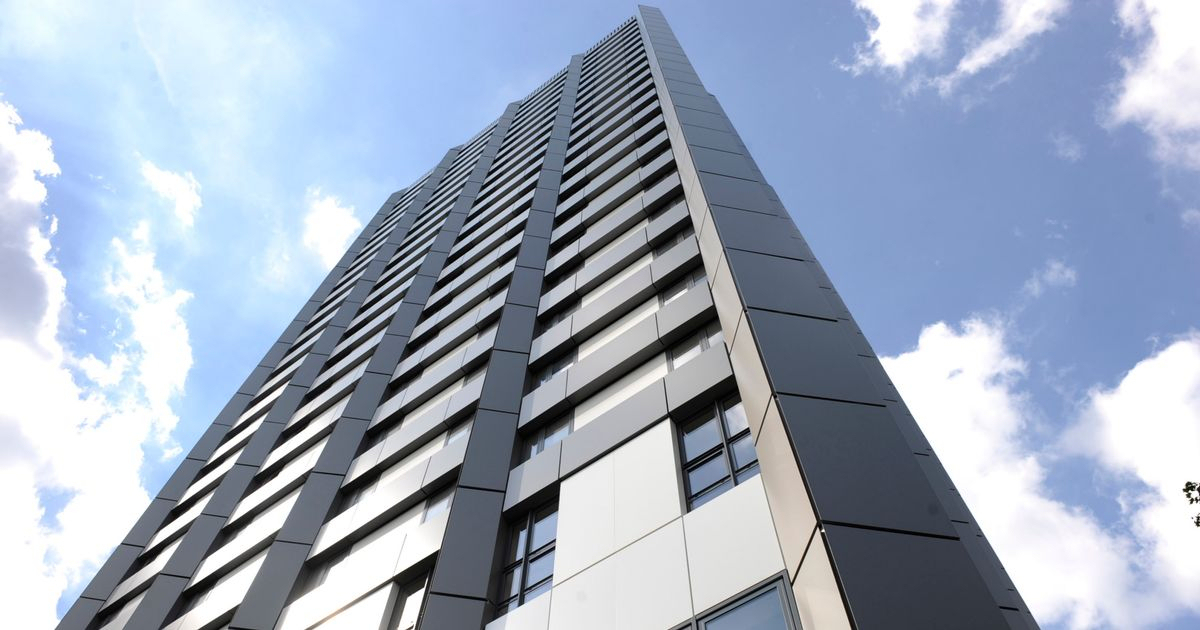
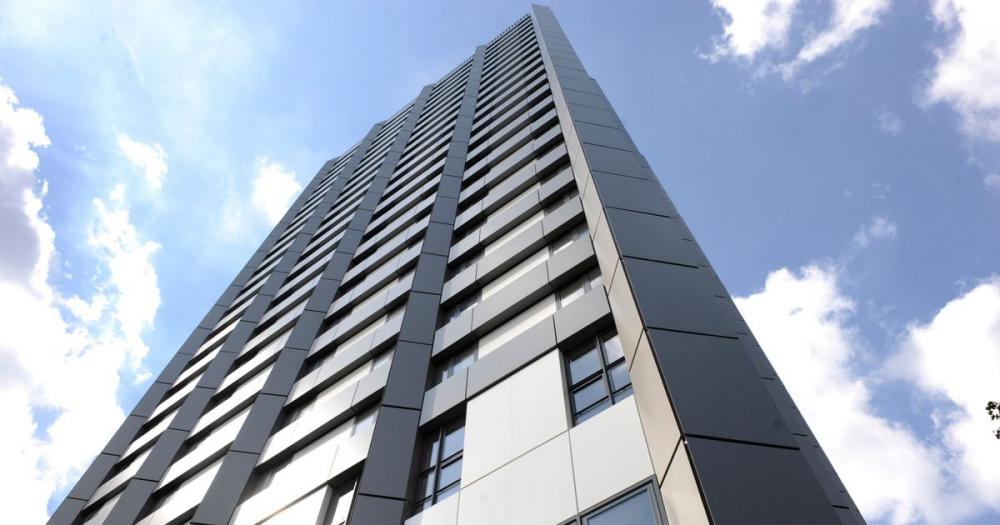
@Ian, Thanks, I think that, if true, then that would have been a lethal combination. In particular, there has been wide publicity of the risks of having an air gap with flammable EWI, because it massively increases the oxygen supply, from chimney effect, and accelerates the vertical spread of fire. However, there should have been fire barriers to reduce the risk of vertical spread, as this was identified as a problem several years ago. Looking at the remains of the building, and the photos of the fire in it's relatively early stages, when it was confined to one corner, there is no indication at all of any fire barriers being effective. If there had been, then I would have expected there to be some indication that the vertical spread was being restrained, with the fire spreading out horizontally below the fire barriers, but it looks like the initial fire just went straight up to the top of the building, relatively unrestrained. Edited to add: I've just found a good photo of the exterior of the building, before the fire, that shows the cladding, with the air gap between it and the EWI behind fairly visible, and no indication of any fire stops running across the clad areas at the corner:
-
I have a suspicion that there may be a difference between the black Makita drills and the blue and black ones. One of the guys working on our build had a couple of the blue and black ones burn out, but his much older all-black ones were fine. My 2011 vintage all black 18V one drilled all the 75mm holes for our ducting, and is still working fine. It also pushed my 16ft cordless drill challenge boat around a lake at around 10 kts, although it did get a bit warm! Anyone else got any evidence to support this theory about the two types of Makita drill?
-
Window order checking / comparing suppliers
Jeremy Harris replied to craig's topic in Windows & Glazing
Folks, I have very strong feelings about this forum being allowed to be used by commercial entities, and this thread exemplifies why I think that forum policy regarding commercial use needs to be tightened. It's inevitable when we get competing commercial interests, in the same sector, as in this case, that they will end up being critical of each other in order to try and gain some sort of commercial advantage. The fact that it may well tend to make many of the potential customers of this non-commercial, member owned and run, forum, think again about using any commercial entities that misuse this forum is a point that seems to be lost. As one of the founder members that invested time and money in setting up this non-commercial forum, I think it's time that we gave a reminder to all who use it that it is NOT a place for commercial entities to promote their wares or raise their own profile. This forum was founded by a group of fourteen volunteers, who invested their own money and time to set it up and who, with the generosity of other members, pay the costs of hosting it. Will our members that are in business related to self build and renovation please take note of this, and that people like me are paying to give them a vehicle to promote themselves on here, something I find abhorrent.- 53 replies
-
- 4
-

-
- window order
- window comparison
- (and 1 more)
-
There have already been suggestions made as to the product, and all we really know is what's on some of the taken down web sites of companies involved in the project. None of those give a great deal of detail as to what the actual insulation core material was, but looking closer at the debris that fell off the building, it seems clear that the aluminium itself was burning, and that may well have contributed to the intense heat on the outside of the building, seen on some of the photos of the fire itself. The combination of aluminium and flammable insulation is a well known fire risk, and one that was looked at closely after the Manchester air accident in 1985, as well as a few other aircraft ground fires. When aluminium and a flammable material are in close proximity in a fire, two things happen. The insulation allows the aluminium to reach its ignition point more quickly, by insulating one side of it, and the insulation itself provides the initial fuel source to allow the fire to develop. I doubt that there is much, if any, "cross pollination" from the world of aircraft ground fire safety to the building industry. If there was, then I think it's unlikely that the Australian high rise cladding fire from a couple of years ago, that involved the use of aluminium sandwich insulated panels, would have happened.
-
True on a building that has no external fire hazard, where the "safe citadel" fire protection scheme works well, not at all true in a building where there is a high external fire risk that will penetrate every "safe citadel" at every level within a few tens of minutes of the fire starting.
-
The title of this thread reads exactly like an advert for this company, any chance it could be edited? I'm not a fan of unsolicited adverts, plus it's against forum policy, unless we've decided to change it recently. If it's not an advert, then can we just lose the web site title and the hyperlink to the manufacturer, please, as all that's doing is gaining them the oxygen of publicity every time search bots pick it up.
-
There was no easy way to overcome the fundamental problem with the building, after flammable cladding had been fitted. It only had a single stairwell, and in order to be safe after the cladding had been fitted it would need safe escape routes from every floor, that were capable of handling the volume of people that would be evacuating under an exterior fire event, and allow firefighters access from inside to both rescue people and tackle the fire from inside. Looking at the design of the building, with its single internal stairwell and there was no way to add additional access. Clearly external access via bridges to external stairs would not have worked, as the external fire would have compromised these. Frankly the decision to use flammable cladding was the key factor that massively increased the fire risk, and which could not have been overcome without major structural redesign, and I suspect that would have been impossible, as it's almost certainly a building with a structural centre core, built around the stairwell and lift shafts.
-
I think they just aren't joined up, Dave. The government and local authority have no responsibility for building control, or inspections. BBA accreditation of materials is a complete farce - look at the way multifoil managed to get an accreditation, using demonstrably false data. They only got caught out when their competitors sussed that it was fishy and paid to have they own tests done, whereupon the accreditation was later withdrawn. How many other scams have we seen regarding compliance with building regs? I know I've droned on and on about the failure to comply that is self-evident in so many new developments, but frankly this tragedy is the worst possible example of that. We already have the companies involved, like this one: http://wittukgroup.co.uk/grenfell-tower-london-w11-1tq-regeneration-project/ pulling their web pages down, but they are still archived: https://web.archive.org/web/20170614035707/http://wittukgroup.co.uk/grenfell-tower-london-w11-1tq-regeneration-project/ I have the greatest sympathy with all those who have been killed, their families and friends, and the people who have been made homeless, or who are injured. However, this simply should not have been able to happen. This building would not have caused all those deaths and injuries if it had not been refurbished in a bloody dangerous and incompetent manner, and I'm afraid that makes me damned angry. It was such an avoidable tragedy, in so many ways.
-
Very true, and, given the stress that has already been placed on all the London emergency services over the past three months, I cannot begin to imagine what some of them must be going through. I have a couple of friends who were/are police officers, including the really great officer who attended the accident I had a few years ago, where a pedestrian runner crossed the dual carriageway in front of my car and was very nearly killed. The effect on me at the time was traumatic, as when the casualty was airlifted away this police officer had the job of letting me know that he wasn't expected to live. By pure good fortune the casualty did survive, albeit with major life-changing injuries, and that police officer has kept in touch with me, not because he has a duty to, but out of the kindness of his heart. We've become good friends over the years since, and he's told me some pretty grim tales of the things he's had to deal with as a traffic officer. Frankly I have no idea how he copes, apart from his (pretty black) sense of humour.
-
I think that one of the main problems seems to be an almost total disconnect in the way that fire safety has been addressed. The building, as originally designed, used the compartmented safe zone system, where the main structure of the building was designed to be fire resistant, with each flat, and each floor, being a safe zone in the event of a fire INSIDE the building. When it was designed this was a good approach, because the OUTSIDE of the building was non-flammable, so a fire could only, realistically be inside the building. Fitting fire doors and giving advice to residents to stay inside their flats in the even of a fire that was outside their front door was sensible. The floors and walls of the building were pretty fire resistant, and by keeping residents in their flats they wouldn't need to provide lots of fire escapes. This meant that a single staircase would be OK for several hundred residents, as they wouldn't all be trying to get down it at once, with firefighters trying to get up at the same time. That all changed the day they decided to fit flammable cladding on the outside of the building. That dramatically changed the overall fire risk, as has been shown in many similar facade fires around the world, going back perhaps as long as a decade ago. However, no one seemed to look at the changes the cladding made to the overall fire safety plan for the building, something that, in the light of the common knowledge of facade fires and the speed with which they are known to spread, seem to me to be criminally negligent. For the residents to still have been given advice to stay inside their flats, even whilst the fire was raging outside (which is what they were reportedly told to do when they phoned 999) was equally negligent, and whoever gave that advice to the emergency services needs to be held to account for it. On completion of this refurbishment there must have been a fire safety inspection. I was responsible for a building refurbishment years ago and well remember the mass of data that was needed with regard to demonstrating that all fire safety requirements were in place and working before the building could be deemed fit to occupy, so I am absolutely certain the same would have been done here. Once more this brings into question the effectiveness with which building regulation compliance inspections are carried out, fire safety being a building regs issue. Notwithstanding the possibility that a domestic appliance may have been the source of this fire, the question is "Would the entire block have caught fire if that appliance had caught fire before the external cladding was fitted?" I very strongly suspect that it would not have, and there may well be information from previous incidents during the 40 years that the building had been in use before the cladding was fitted that could support this. I see a fair few potential prosecutions in the offing, not that these will be of any consolation to the families and friends of those killed, or the residents that have been burned out of their homes.