


sam
-
Posts
51 -
Joined
-
Last visited
Everything posted by sam
-
@PeterW This is MCS - I should just be able to get in before the FIT ends! On an unshaded roof, do you have any idea how much extra output I might get from microinverters rather than the single inverter? Can you explain the pairing up idea; I've heard this before but don't understand why it doesn't have the same negative impact as putting many panels though a single inverter (although obviously less so as only 2 panels)?
-
I've just been doing calculations on this. I have been quoted an extra £700 for Solar Edge vs Solis. In order to get the same financial return (IRR) I would need more than 15% additional output on average, and to be able to use this extra myself (in addition to higher FIT/export). On this basis I am planning to stick with the cheaper Solis. I'm planning to install 11x 320W REC N-peak mono panels, all on an unshaded WSW roof.
-
I'm not convinced I saved that much cost using slinkies but so far I am averaging a COP of 5 with a Kensa Evo setup. Don't forget to budget for sand and moving that sand, if you need it. All the manufactures I spoke to said you would get the MCS quoted COP if you followed their installation guidelines.
-
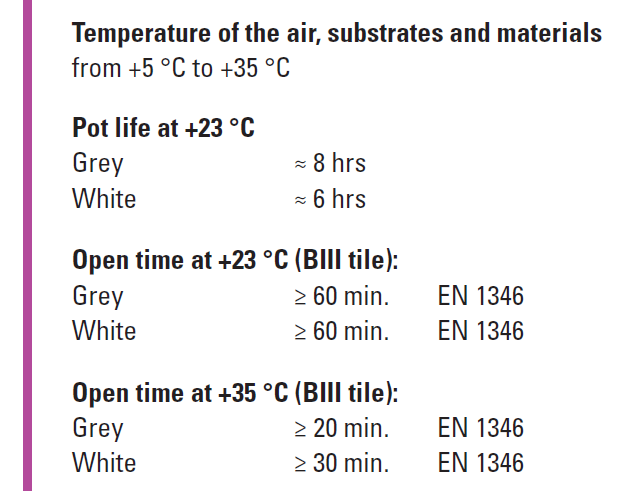
General advice is not to turn UFH on for 2-4 weeks after laying tiles. I have used Kerakoll BioGel NO LIMITS Eco Friendly Flexible S1 Adhesive (White). The data sheet for this includes details for using it at 35°C and our UFH flow temperature is set at 37°C (in 50mm of screed). I'm getting pressure to get the heating back on.... given these temperatures do you think this is risky?
-
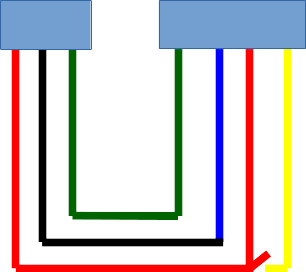
My wiring was done in the 90s in black and red. I was considering re-wiring a switch so I could have two switches controlling the light and I found the following wiring which confused me. There are two sheathed cables coming into the switch. Cable A is twin+earth; cable B is three core+earth as per the attached diagram. Earths (green in diagram) are connected; black and blue are connected; reds are connected and the switch connects red to yellow. The ceiling rose has just a single red, black & earth cable. Is this a normal set up or does anyone have any suggestions as to what's going on? I must have some hidden junction boxes. It's chased into a wall where there's no obvious reason to have the ring going down to the switch and both cables appear to go upwards from the switch. A nearby switch doesn't have any yellow and there isn't space for a junction box in the wall.
-
I've just installed some Reina Diva towel radiators. I choose them as they had some of the highest heat outputs for their size. Based on first impressions they seem fine.
-
Many anhydrite screed manufacturers provide information. We have used a Gypsol screed and their post instalation guide can be found at: http://gypsol.co.uk/media/1497/6-gypsol-post-installation.pdf As soon as the screed was hard enough to walk on I found that much of the laitance could be removed with a stiff brush but I still plan to remove the remainder by sanding before laying tiles. According to the manufacturer's documentation it is fine to force dry with UFH after 7 days. Our installer insists that it is better to do this.
-
I'm trying to get my brain around this - it's really interesting and very relevant to my project. I'm confused whether I should be worrying about the relative movement across a single tile or across a floor span. My thought was that it would be the floor span - I considered the substrate as one unit which expands at one rate and the tiles and grout together as another unit. This way the 'last tile' will have the accumulative impact of the expansion of all the other tiles and substrate (actually I thought half this as it would expand in both directions). What would be the justification for considering just the expansion over the length of a single tile? Does the grout between tiles take up this movement? I am aware that you can get grouts with differing flexibility in the title but I cannot (yet) find relevant technical information in the data sheets. My initial thought was that I should compare the expansion of my limestone tiles (0.008mm/m/°K) to my Gypsol screed (0.012mm/m/°K) at their maximum temperature difference from when laid (maybe 10° for the tiles and 12° for the screed) over the largest span (7m). This equates to a relative movement of 0.45mm, or 0.22mm assuming it moves equally in both directions.
-
Do you mind just clarifying - did you mean with the GRP coating (rather than foil) is it still possible with your hands and/or with the gun?
-
I'm in the process of doing something very similar. Have you suggestions for how you will insert the plastic UFH staples?
-
Interesting - I'd not heard that before. All our carbon monoxide alarms got moved as the house was so dusty and we removed all the heating devices, but I shall put one back in the bedroom now just in case! We plan to use an anhydrite screed and based on the previous comments will not have any foil.
-
Resurrecting an old thread... I did a search as I'm trying to research vapour barriers and foil under a screed floor. My physics is a bit rusty - are you saying that having foil under a solid floor (i.e. no air gap) won't reduce radiation and hence won't significantly improve thermal performance? If installing non-foil backed insulation boards (specifically EPS) under a screed floor, is a foil vapour barrier advantageous over a plastic vapour barrier?
-
Thank you for the useful reply. The system was last serviced with Juraperle which is 99.4% calcium carbonate. A friend suggested a more economical option was to purchase bird grid of the appropriate size. I spoke to the company that serviced the system (it was in fact installed earlier than I had thought by a different company) who explained that they would recommend installing a pH neutriliastion on the grounds of pH 6, so there may or may not be a dissolved metals problem. I have a water analysis report but it is after treatment and shows everything within acceptable ranges. They were in favour of the back wash system saying it 'agitated' the contents. Do you mind sharing the detail of the company you buy your UV bulbs from?
-
That's interesting, thank you. Someone told me that the backwash was required to 'mix' the limestone so you didn't get channels forming and to prevent it to solidify into a block. I've not had it tested for iron or anything other than pH. I guess you need to send this off to a lab to do - does anyone have a recommendation? The spring water is pH 6 and the system only corrects this to 6.5 at the moment. The spring has been used at least since the 1950s but the pump, partial filter, UV filter and neutralisation system were only installed last year, before we purchased the house. It's almost a year old now and hasn't been serviced, other than me physically cleaning the partial filter.
-
It is - https://www.ofgem.gov.uk/key-term-explained/change-ownership
-
Thanks for the quick reply. It's a blue pressure vessel filled with limestone with bypass values and an automatic backwash on a timer.
-
We have slightly acidic spring water (pH 6) which currently passes through a neutralising cylinder. We are replacing our plumbing pretty much in it's entirety and will have a stainless hot water cylinder and can have plastic pipes. We will therefore have very little copper. I already have the neutralising cylinder but it does take up space and need servicing. I'm aware that acidic water can make your hair green, but otherwise I'm wondering if there are good reasons to keep the neutralising cylinder in the system? I like to make things simpler if I can.
-
Many thanks for the suggestions and sorry for the delayed reply. How thick do you think this would have to be? Would you think structural concrete above the insulation is required in this case, or would a liquid screed be sufficient?
-
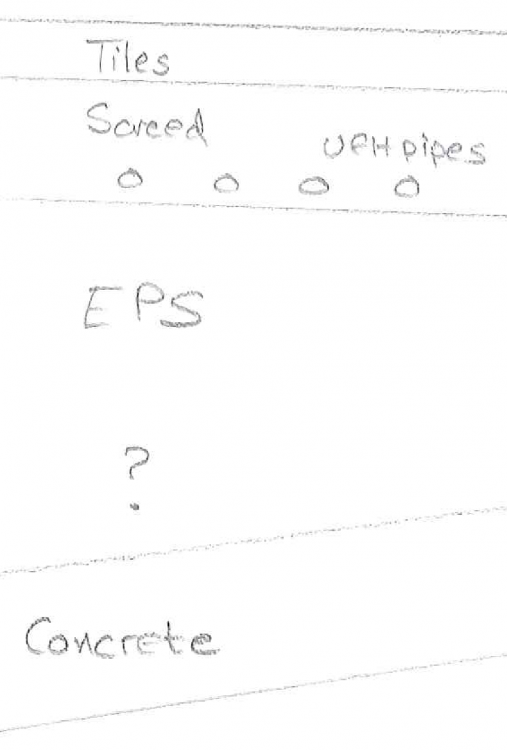
I am in the process of removing our solid floors and our suspended floors to fit insulation and underfloor heating. Below our suspended floors the void is bigger than I had expected and below the void there is a concrete slab. I had originally expected to lay new concrete and PIR insulation. I am now considering using the existing concrete base and using EPS; aware that EPS is less insulative than PIR but putting more down to compensate. The issue I have is the original concrete floor is sloping. At one end I have about 400mm to the floor level; 4 meters away its 300mm. I'm looking for suggestions to fill this. Would you just level with more concrete or is there something cleverer I could do?
-
That's very good advice and really comes to the point why I asked the original question. The installers who I'm getting quotes from are providing heating demand calculations but I'm not sure how much I trust them. I've done my own calculations but again, I'm not really happy with these. I can easily work out the energy loss where there is simple insulation but I struggle calculating the cold bridges/areas I cannot insulate. Are there rules of thumb for heat loss through internal walls which have no insulation under them or the bottom of external walls? Should heating output be sufficient to (1) warm the house up from cold in a few hours, or (2) match heat loss if its on 24 hours a day or (3) something in between?
-
Thanks for the responses. @Nickfromwales The RHI does seem a bit backwards but without it we would not consider GSHP and would put an oil boiler in, so in it's funny way I suspect it's doing what they want it to. Now we have the EPC we will improve the insulation but still the economics are only just sensible over oil. We are planning to stay here so will put in sensible long term investment. @Ian Good point but actually the concrete area forms a T meaning the suspended floor forms two isolated areas as it is. The house in on a slope which may explain why the uphill side is concrete but I don't know why the hall to the front/downhill side original was concrete. Where I have measured, the underfloor area the gap is 250mm to the earth/rubble below. I'm thinking that hanging rock-wool and aluminium spread plates to keep a suspended floor would make sense. Do you think the extra expense of replacing the suspended floor area with a solid floor (obviously insulation and underfloor heating either way) would be worthwhile? A solid floor could give much more thermal "mass". @A_L We have enough space outside as we can go straight into our paddock. I'm not sure I understand your suggestion. I'm still considering external wall insulation (in addition to the cavity wall insulation we have just had installed) but the quotes we have had so far have been around £30k, which really doesn't make much sense! Are you saying that just doing the bottom of the external walls would make a big difference?
-
I introduced myself back in the ebuild days but I've mostly been lurking here since... thanks for all the interesting posts which I have enjoyed reading. For many years it was our intention to self build but failure to obtain planning permission (long shot) and failure to find another suitable plot meant we have settled for a renovation project instead. We dreamed of getting close to passive house standard on a new build. We have been living in our 1950s house in East Devon for a few months now and are trying to make decisions on what to do. Having read so many interesting response to people's queries I'm looking forward to asking a few questions. The highest priority for us is getting some heating, the old Aga that keeps only the kitchen warm has to go and we need something a bit more modern. We have filled the 50-80mm cavity with polystyrene (ThermaBead cavity Carbon Saver), which may have got the block/cavity/brick wall U value down to somewhere near 0.4. The loft has c. 200mm mineral wool. The Crittall windows will be changed at some point. I'm considering a GSHP. Given our EPC's heating requirement is quite large I think the RHI could be significant, especially as we have space for trenches so don't need the expense of a bore hole (we have spring water, I've got some questions to ask on that in another post). My question relates to floor insulation, or the absence of it. The ground floor is 67 sqm which is made up of 40 sqm of suspended floors (living room and dining room) and 27 sqm of concrete floors (kitchen, hall and cloak room). Taking up the suspended floor to insulate is relatively easy. Taking up the concrete floor would be a far less pleasant task. Having attempted to calculate the heating demand under a scenario where the whole floor is insulated verses one where only the suspended floor is insulated suggests it's not that big a difference. We're going to have plenty of cold bridges under the walls anyway. Would it be foolish not to take up the concrete floors and do the full job? Any tips on taking up a 1950s concrete floor?
-
How much of your plans do you have to actually build?
sam replied to Adamantium's topic in Planning Permission
I've seen planning decision notices which stipulate that you cannot start a defined part of the build or you cannot occupy the dwelling until something particular (like demolition) has been completed. If the planners have not put such a constraint on your build then maybe it suggests they are not overly concerned. -
When doing these economic calculations should we include the renewable heat incentives, which I understand are significantly higher for GSHP than ASHP?
-
Thanks - I'll try it.


