SteamyTea
-
Posts
23387 -
Joined
-
Days Won
190
Everything posted by SteamyTea
-

Hybrid inverter for small in roof 2kw array - help please!
SteamyTea replied to Timmyk's topic in Photovoltaics (PV)
Short of a totally isolated system, the inverter/auto isolator needs to be if a minimum standard. I think it is reasonable that even if an approved isolating devise is fitted, the DNO still know which, in event of failure, houses to check out. -
@MikeSharp01 As a test, I have set up an LED to flash for 0.01s then wait for 0.03s. Left it logging, expecting a large file when I get back. I think that will work out at 25 Wh per second. 90kW draw. Few houses will go above 20 kW. Dropping the odd Wh is not really a problem, and I think my CurrentCost does this anyway. I did initially try to append to a list, then when the list got to length 10, timestamp it. Was not very successful. Be interesting if it works in the WEMOS D Mini. I have some ESP 8266s, but not that good at micropython, not that good at python. I did wonder about the file write time, if I deleted the tfile.close line, what are the consequences?
-
The French copy no one.
-
ASHP with 1-2000L thermal store
SteamyTea replied to Tommytipee's topic in Air Source Heat Pumps (ASHP)
@Tommytipee Had a quick look on their site and can't find a performance curve either. Pretty poor that is. -
I think you will find that it has been done, and failed big time. There was an Irishman, that some will remember well from the Other Place, that got a customer to pay for it. He also got another customer to buy into a domestic AD unit. When I met the Australian 'Inventor' my 'con man' flag went up immediately. “extraordinary claims require extraordinary evidence” (ECREE) Carl Sagan 1979
-
Should not be a problem as the RPi has loads of GPIO pins, Just add button1 = Button(23) and button1.when_pressed button1.when_released = sort_time1 Also add def sort_time1(): dt = datetime.datetime.utcnow() runday = dt.day dt.day == runday ts = time.time() UTC = datetime.datetime.utcfromtimestamp(ts) logfile = '/home/pi/monitoring/data/PV-%s-%s-%s.csv' % (dt.day, dt.month, dt.year) tfile = open(logfile, "a") tfile.write("%s"%UTC + '\n') tfile.close Though there is probably a more elegant way to do the above.
-
I had clumping Black Rod and Golden Rod bamboo. Both grew gently for many years, then spread very quickly, into neighbours garden. Was a right (expletive deleted)er to dig up. No idea if it really can damage buildings.
-
Hybrid inverter for small in roof 2kw array - help please!
SteamyTea replied to Timmyk's topic in Photovoltaics (PV)
No it don't, the UK spans nearly a 1 hour timezone, and we frequently have large difference in cloud cover as well. From an academic viewpoint, if we wanted to limit energy usage with the least disruption, we would place maximum generation at times of maximum usage i.e 7 AM for an hour and 4 PM for 4 hours. Hard on emissions, but better on stability as it is easier to coordinate 300 large generators than 70 million people. -
Could they be made to run reliably for a couple of years on a couple of D batteries like the CurrentCost does. My old clamp ones lasted 5 years transmitting away. The Optisence uses just one D cell and lasts at least 2 years, as long as I don't put my metal frame collapsible chair in the way. It is better that a tinfoil helmet at blocking a signal, and you can sit in it.
-
Hybrid inverter for small in roof 2kw array - help please!
SteamyTea replied to Timmyk's topic in Photovoltaics (PV)
I think the problem is not technical, but financial. I did a write up several years ago about adding small amounts of storage (sub 1 kWh) to each house to help grid fluctuations. One problem would be who owns that unit and who owns the energy in it. The decentralising fans would point to a blockchain solution, but that is just energy intensive, even using 'proof of work', fine for a few bearded hippies, not so good for 30m homes doing 540 transactions a day. Easier for a DNO to just plonk a shipping container with 100 kWh of storage next to a local substation. Then there is only one thing to worry about, not 100. -
Hybrid inverter for small in roof 2kw array - help please!
SteamyTea replied to Timmyk's topic in Photovoltaics (PV)
You live in a rural area, so only a few tens of homes, and a milking parlour are affected. Not the same in even a small town where 1000 houses can be without power for several hours. There is a good chance that we will have energy rationing come this winter. The easy way to do it is via scheduled disconnection. -
Me neither. In law, silence is not acceptance. So I silence my critics.
-
I suspect, anyone that fancies making one, will be a bit of a DIYer. So you had any thoughts about adding a cheap display, but not one of those tacky LED matrix ones. Something like this. https://www.ebay.co.uk/itm/165511794894 And the code to display useful stuff, i.e power, energy, time, price, temperatures. It is that side of it that I have never done before and find frustrating.
-
Hybrid inverter for small in roof 2kw array - help please!
SteamyTea replied to Timmyk's topic in Photovoltaics (PV)
As it is Sunday, thy will will be done. -
Have you read the terms and conditions about posting on here?
-
Energie thermodynamic system anyone have experience
SteamyTea replied to Calw's topic in Solar Thermal (ST)
On the face of it, it does seem low. But. DHW below about 30°C is of little use, and above 40°C it too hot. As I use just the top part of the cylinder, there is only around 60 lt heated. As that is about 50°C, that is only 15 to 20 °C uplift. 60 [kg] x 17.5 [°C] x 4.2 [SHC] = 4.41 MJ = 1.225 kWh. So pretty close. -
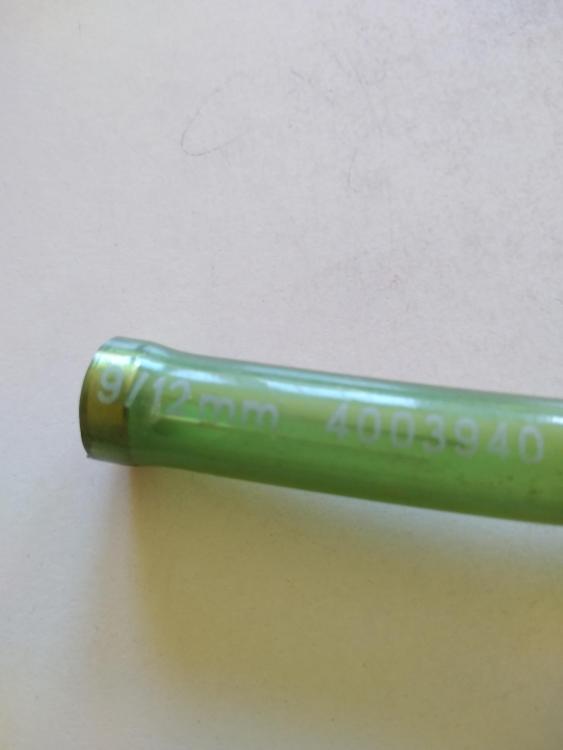
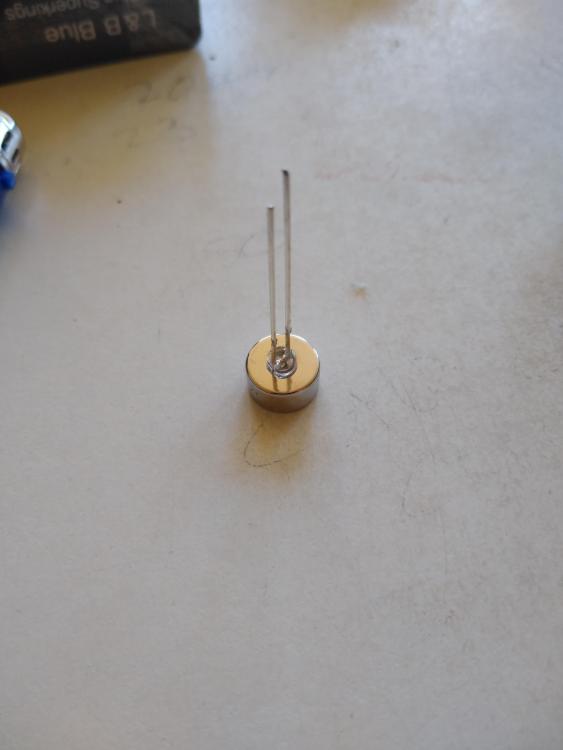
I may give that a go as I have never managed to get it to SSH in with the 'create an empty file' method. Can you get small crimps to join very small wires. Though that is more things to buy. I am going to look around the shops and see if I can find anything that can be easily modified to make the LED holder. I used a bit of rubber pipe and some epoxy. after super gluing the LED into place. Picture to follow in a few minutes.
-
ASHP with 1-2000L thermal store
SteamyTea replied to Tommytipee's topic in Air Source Heat Pumps (ASHP)
May be called something else in UK. Work on improving it. Makes any heating problem smaller. -
Thanks. Shall see what I can knock up.
-
We should have installed air conditioning… now what?
SteamyTea replied to Adsibob's topic in Other Heating Systems
Like that today, and we have an extreme weather warning issued. I am off to the beach, it may get to 23°C today. -
Hybrid inverter for small in roof 2kw array - help please!
SteamyTea replied to Timmyk's topic in Photovoltaics (PV)
Yes, could probably work out the dB of it know the energy and power it is delivered at. -
ASHP with 1-2000L thermal store
SteamyTea replied to Tommytipee's topic in Air Source Heat Pumps (ASHP)
Welcome There seems to be a number of things going on here. An ASHP, generally, does work better when the temperatures are higher, but they can take a dip in performance when the OAT (outside air temperature) is between 0°C and 4°C, this is due to the humidity. The next thing is to do a proper calculation of the house's thermal losses, this is independent of the heating system. It will give you a kW/°COAT value. Without this, it is all guesswork. Just knowing the worse case is of little usage as that case may only happen for a few days a year, and at 11p/kWh for electricity, you just plug in some fan heater. OAT is usually normally distributed, so once you know the kW/°C, you can calculate the total energy, the kWh, for a day, a week, a month, a year. Next is the choice and size of ASHP. Heat Pumps all work the same. They expand a gas, which cools, that cooled gas then gets warmed up and, during compression, warmed up even more. Depending on the gases used, the operating temperatures i.e. the min and max, vary a bit, but not much in practical terms. Never worth trying to work at the extremes, pick the middle 70%. So if a manufacturer claims that the ASHP works down to -10°C and can deliver to 65°C, then work with a temperature range of 52.5°C, with the bias towards the lower end, so between -2°C OAT and 50.5°C delivery temperature. 50.5°C should heat any store to around 48°C comfortably. Now the tricky bit starts, and highlights why you need to know what power your house uses. All a thermal store, or buffer, does is allow the ASHP to run to a fixed target i.e. 48°C without having to overshoot that temperature. While the ASHP is delivering energy, energy is taken out of the store to heat the house. As the house warms, the return temperature from the radiators reduces. The maximum efficiency is when half the energy is taken out. So if you can deliver, after pipe losses, 46°C to the radiators, and knowing that your ASHP is delivering at 52.5°, half the difference is 6.5°, so the return temperature should be around 39.5°C. The flow temperature may vary a bit depending on what temperature you like your house at. Say you want your house at 22°C, the radiators have a mean temperature of 43°C, that is a temperature difference of 21°C. Radiator manufacturers usually have a chart to show what size, for a given power output, their radiators will deliver, at different temperatures. That will size your radiators (rule of thumb is that just over double the area for halving the supply temperature is pretty close). That is the radiator sizing sorted. Now the thermal store, or buffer tank. All this does is allow the ASHP to run for a decent amount of time. Think of it as the driving to a main road. As you wiggle though the lanes (or sheep tracks in NZ) your fuel economy is dreadful, but once on the main road, you can drive faster, but much more consistently, and get a decent amount of distance out of a litre of fuel, even when you have to overtake a tractor, you have momentum on your side. Like anything, there is always a compromise, store too much, at too higher temperature, you loose, store too little, at two low a temperature, you loose, and the ideal spot is constantly varying. To make matter even harder, the standard units for domestic energy and power are similar, energy is the kWh, power is the kW. Now you have worked out the power needed to warm your house for any given OAT, and hopefully accepted that an ASHP will not deliver at the lowest extremes. So how do you size a store. Well we have already worked out the flow and return temperature difference, 6.5°C, we know the temperature window we are working with. Heating up a litre, or in real money, a kilogram, of water takes 4180 joules of energy, or 4.18 kJ. That converts to 0.001161 kWh. A small amount. But of you have 1000 litres, or 1 tonne, then at 6.5°C temperature difference, that is 1000 [kg] x 6.5 [Δ°C] x 4.18 [kJ.kg-1.K-1]. That is 27,170 kJ, which works out as 7.5 kWh. Not much for 1 tone of storage. A 10 kW ASHP delivering at 70% of its performance, will take just over an hour to replenish that. But of your house only needs 7 kW of thermal energy delivered, there is no need for a 1 m3 of water to act as a buffer, it can deliver that quite happily. But as you say, there are times when it needs to deliver twice that. In those scenarios, the ASHP will be working constantly, and the store will be depleted in half an hour, then the ASHP efficiency (the CoP) will start to decline. Doubling the size of the store, will only buy you an extra half hour in those conditions. So you would not be gaining much. From that, I can see why you think a huge store is useful, and why using supplementary heating to raise it up to a higher temperature may be useful. But in my opinion, you may as well use that supplementary heating (your cheap 11p/kWh electricity) to heat the air in the house directly. As I have said, these are the extremes and do not happen often. If you had 'Canadian' winters, then you would just fit a larger ASHP that can deliver at those lower temperatures, for longer. So, task list. Work out the house heat losses and get the kW/°C number Find out the historic temperature profile for your area (this might help https://www.worldweatheronline.com/auckland-weather-history/nz.aspx) Find out the power delivery of your existing radiators -
Hybrid inverter for small in roof 2kw array - help please!
SteamyTea replied to Timmyk's topic in Photovoltaics (PV)
Mine is the diesel, so 2 tonnes, 0.73 MJ at 27 m/s. About 7p of electricity. -
Sewage treatment plant - air blower electricity costs
SteamyTea replied to David Essex's topic in Waste & Sewerage
We always put the nerdy, wimps head down the lavatory at school. Is it ginger hair that causes the problem. -
Got some that have lasted 10 years of logging. And can easily change the file location to copy to a memory stick at the same time.