SteamyTea
-
Posts
23383 -
Joined
-
Days Won
190
Everything posted by SteamyTea
-

Is this a normal heat loss graph from an UVC?
SteamyTea replied to Thorfun's topic in Boilers & Hot Water Tanks
Yes it did then. The tops are very occasional times when I was doing two jobs and was bathing 3 times a day, and E7 can be switched on briefly for gird balancing, but not so much these days, if at all. The chart shows hourly mean. My energy plot is for the whole house though. It is a worth while exercise. I stopped monitoring because I was not learning any more about my water energy usage, using less in he winter saves me more. Last year and so far this year, I have cut my usage by 40 lt a day (we are in serious draught down here). As 2/3rd of that is hot water, there is an energy saving of around 0.6 kWh/day. -
Looks like a rubber sheath.
-
Is this a normal heat loss graph from an UVC?
SteamyTea replied to Thorfun's topic in Boilers & Hot Water Tanks
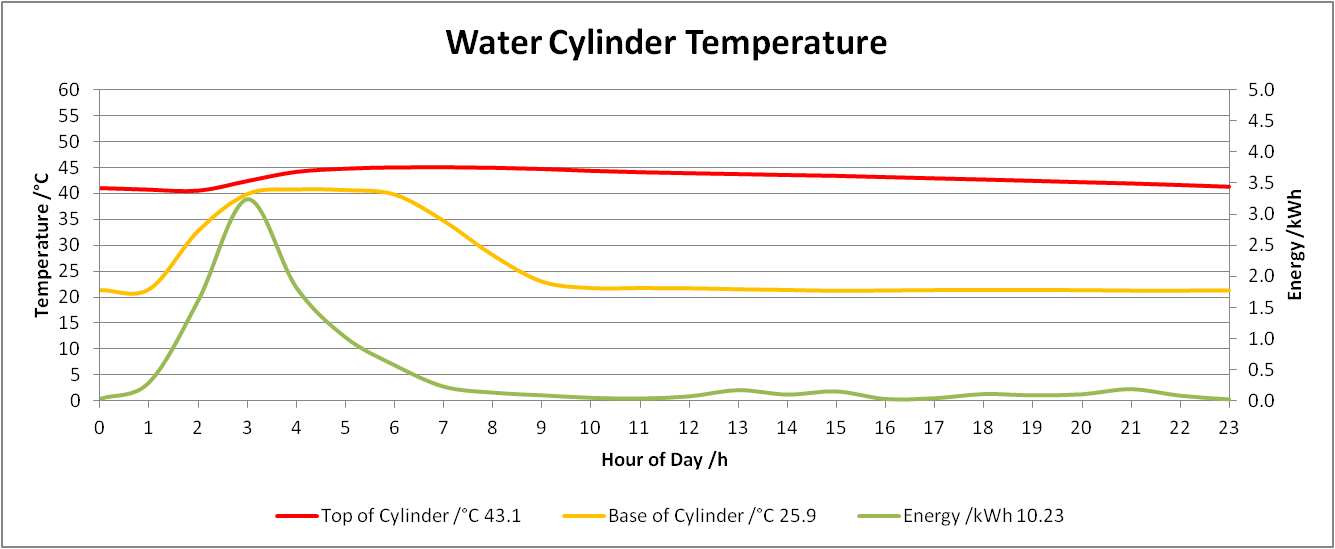
Here is what happened inside my cylinder between 17/02/2021 and 01/01/2022. My upper cylinder probe was just taped to the top of the cylinder, so under reads a bit. Mean temperature over a typical day was 43.1°C, max was 45.1°C and min 40.5°C, so a range of 4.6°C with normal usage. Just had a quick look at the main data (30 second sample rate), the base of the cylinder had a mean of 25.1°C, a min of 11°C and a max of 53.7°C. The top of the cylinder had the same min and max as the base, so I must have been away for a few days and let it cool completely. The loft tank than supplies it had a mean of 15.1°C, min of 8.3°C and a max of 27.3°C.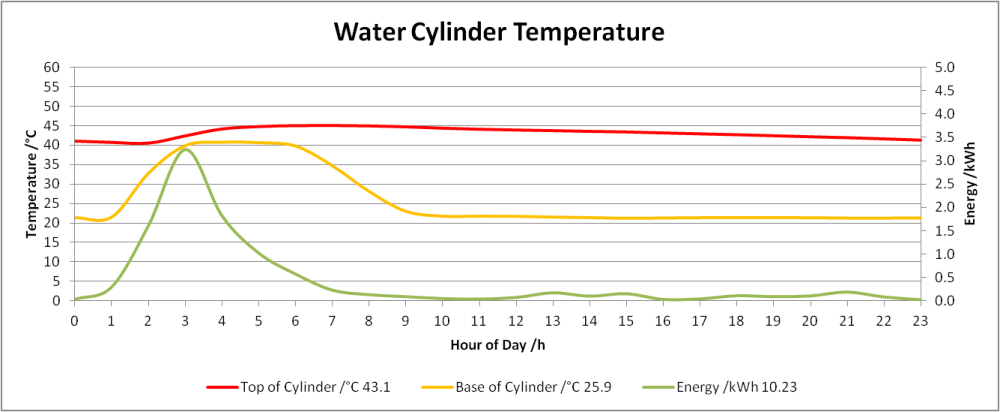
-
How much will it shrink by when it is -10°C.
-
Is this a normal heat loss graph from an UVC?
SteamyTea replied to Thorfun's topic in Boilers & Hot Water Tanks
Depends how much you used and when. 10⁰C drop seems quite a lot to me when the starting temperature is only 48⁰C. I have posted up my cylinder temperatures on other threads. No idea where though. -
How can ‘green’ be achieved ?
SteamyTea replied to Pocster's topic in General Alternative Energy Issues
Yes, but as you say, in very different proportions. Why there is very different infrastructure for the two. -
Quick question if I can - are optimisers worth it?
SteamyTea replied to MrTWales's topic in Photovoltaics (PV)
Flog them. -
How can ‘green’ be achieved ?
SteamyTea replied to Pocster's topic in General Alternative Energy Issues
Generally, natural gas and oil don't come out the same hole. -
And humility. Smug (expletive deleted).
-
Quick question if I can - are optimisers worth it?
SteamyTea replied to MrTWales's topic in Photovoltaics (PV)
Was it really worth fitting modules on the shed. -
How can ‘green’ be achieved ?
SteamyTea replied to Pocster's topic in General Alternative Energy Issues
Natural gas at 2 cent a kWh. But go back a few years and the oil state of Texas invested in renewables. In the 1988 movie Rain Man, Tom Cruise drives past a wind farm. -
That must be why Nobel prizes are only given to the dead and never to women.
-
You still are. But we are currently installing new capacity, on long term contracts, at £40/MWh. So once the general public realize that, we could be into a couple of decades of fixed price power again. Will take another decade to get there. Even when we had the 'cheap' energy over the last 20 years, people still think they were robbed. (expletive deleted) them I say, let them get cut off or pay their share of the price. Batteries at home are not going to reduce anyone's outgoings. @canalsiderenovation Have you thought, as an experiment, making your boat all electric and truly off grid? Then plug your house into it.
-
How can ‘green’ be achieved ?
SteamyTea replied to Pocster's topic in General Alternative Energy Issues
Oh good, I am going to start driving in a very inconsiderate manner and hold up loads of people, maybe injure a few. It is okay for me to do this as other people do as well. I shall ask for schools to be closed down because there have been the occasional unschooled millionaires. Hospitals, pah, most people don't have anything wrong with them, why bother. The law enforcement and legal system, pointless, it is a modern invention, hunter gatherers never needed it. Worst of all Ishall start to listen to Europop as my neighbour listens to it. -
Let's say you use an average of 3 kW for 3 hours, 9 kWh or at 50p/kWh £4.5/day. £1650/year. Now you will need a 10 kWh system, plus the price of charging it up. Say you can get a system that will last a decade, so £1000/year plus the charging cost of £525. So you save £75/year, or £1.45/day. Thing is, you probably only use a couple if kWh a day cooking, and not every day as well. At the moment we have volatile energy prices, and declining energy storage prices. How would you feel if you could buy in power at below 20p/kWh any time of day or night, and storage cost £120/kWh. There are easier ways to save a quid and a half.
-
Quick question if I can - are optimisers worth it?
SteamyTea replied to MrTWales's topic in Photovoltaics (PV)
Not much power in a low sun, especially if your modules are at around 30⁰. You may find optimisers increase overall output by 2% of very little. -
How can ‘green’ be achieved ?
SteamyTea replied to Pocster's topic in General Alternative Energy Issues
Exactly, and that is where we are heading. It is much easier to build new generation capacity that retrofit a million houses. -
How can ‘green’ be achieved ?
SteamyTea replied to Pocster's topic in General Alternative Energy Issues
I initially thought you were, but then read the rest. I think you are on the right track. I don't think it needs to be compulsory, just the choice of a dual investment and taking away the stigma of investing in old technology if you want to. A basic example would be buying into a new coal fired power station. Let us say that it produces 850 kg/MWh. To offset that via an investment, you could invest, at the same time, in a solar farm. To produce 1 MWh via solar would cost around £700. So basically matching generation capacity in that instance. If investing in a goods manufacturer, you look at the embodied carbon your investment will add to the company i.e. your investment will increase the CO2 output by 2% of the 1000 tonnes a year (or whatever the carbon audit shows), so 20 tonnes. Taking the UK grid as an example, ~200 kg/MWh, you would have to invest in generation capacity to offset that. So 10 MWh of low carbon. The idea is not to stop exiting generation or manufacturing, but to add on extra clean generation, which will in time totally replace old generation technology. There would need to be an agreed set of figures on embodied CO2, but the exist already. -
Joule Aero not working with diverter
SteamyTea replied to Judith's topic in Air Source Heat Pumps (ASHP)
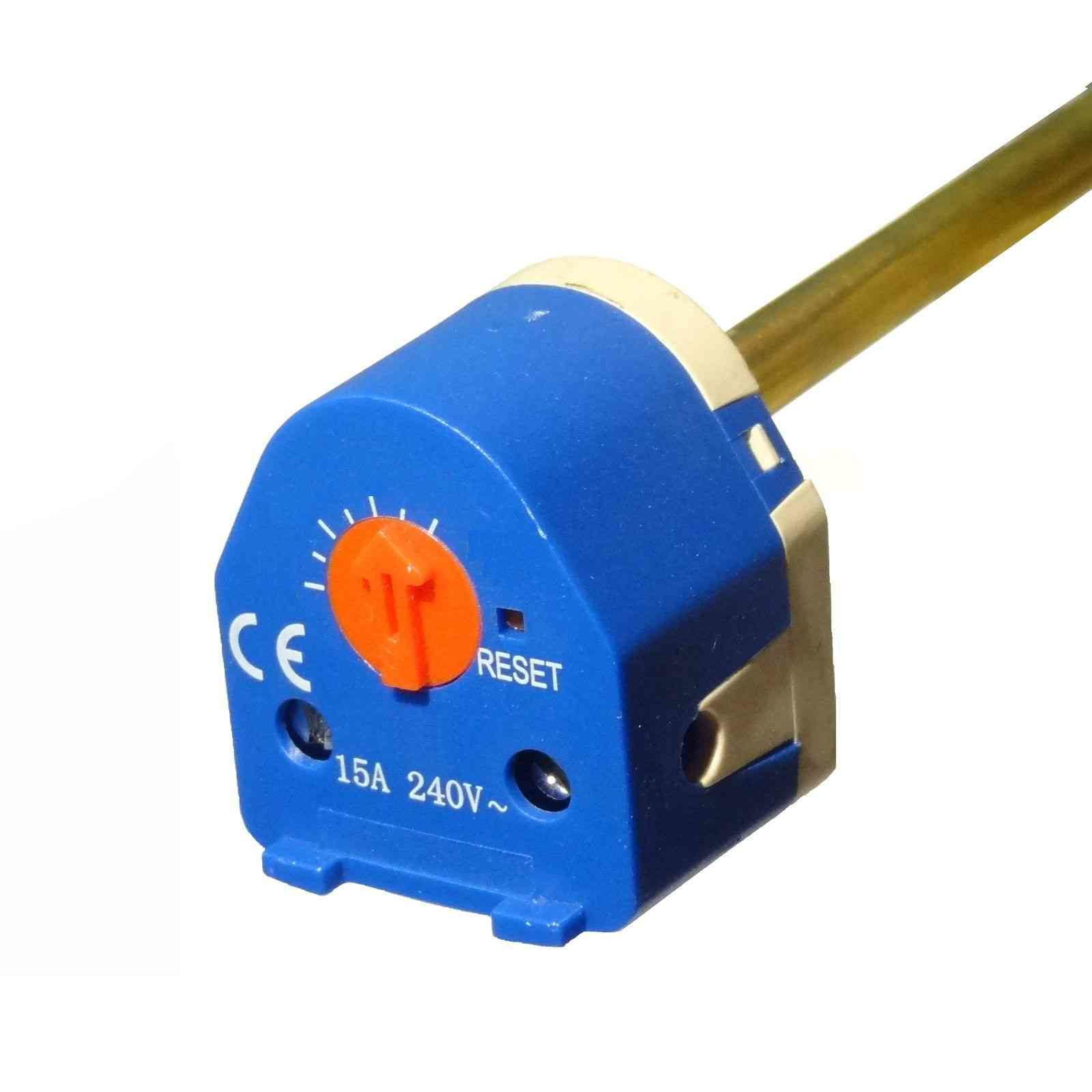
Sounds more like a thermostat than a heating element. Most thermostats have a safety cut out, could be that has tripped. Some are resettable. It may look a bit like this.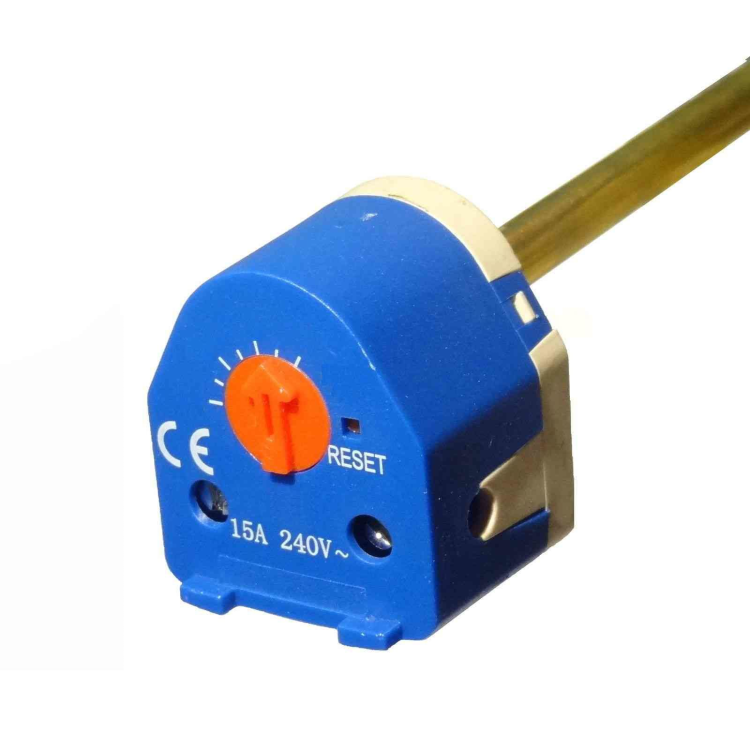
-
How can ‘green’ be achieved ?
SteamyTea replied to Pocster's topic in General Alternative Energy Issues
There has been a bit on the radio about companies and the environment. Analysis Only got bits of it but sounded interesting. It got me thinking about corporate investing. It should not be too hard to set up a business investment scheme that allowed you to offset your investment with an equivalent investment in green technology companies. So say you want to invest in an armament company. It should be easy enough to calculate their carbon footprint as they have to declare this already. Reducing it down to make life simple, let's say one tank has a carbon footprint if 300 tonnes. As part of your investment you have to buy some shares in a green technology company, say a windturbine manufacturer. Now a windturbine can easily off set 300 tonnes of CO2. So only a small investment would be needed, maybe as small as 3% (would have to look into that) of your total investment. One advantage of this is because CO2 is a global problem, it does not matter where this new development is geographically placed. There are several African companies that would welcome electricity, even if it is not at the quality of service that the industrialised countries are used to i.e. a bit if wheat threshing can wait till it is windy (or sunny), it does not have to be done instantly, and it has to be better than beating it with sticks in the sun. Maybe this is something that @Adsibob may know a bit about. The big problem I could see happening with this is stopping green washing (ecobollocks). As the financial industry is already highly regulated, and audited, tacking on genuine low carbon generation technology should not be too hard. This would not be the same as carbon offsetting, it would be for genuine new generation where no generation is currently planned. -
Durisol - in administration
SteamyTea replied to PeterW's topic in Insulated Concrete Formwork (ICF)
A wick, or capillary action to use the right term, will work regardless of orientation and does not care if it is inside a tube or on the outside of a filament. It is electrostatic forces at work. -
Before getting over excited about fitting batteries, have a good look at your energy usage time series, then work out where you can change the loads, or shift them to the cheap rate. Also look at what it would cost on different tariffs, people get hung up on just one part of a tariff and loose sight of the whole.
-
Durisol - in administration
SteamyTea replied to PeterW's topic in Insulated Concrete Formwork (ICF)
Milk flows through shredded wheat. It soaks into Wheat-a-bix. Both those trap air. But we should really be trying to minimise the use of concrete, all these ICF are really just poured concrete houses. -
How can ‘green’ be achieved ?
SteamyTea replied to Pocster's topic in General Alternative Energy Issues
What happens if an AI refused to answer questions, or just refused to give a convincing answer, will we stop it's benefits? Many innocent people have been terminated, so I can't see the problem with turning off an AI. -
How can ‘green’ be achieved ?
SteamyTea replied to Pocster's topic in General Alternative Energy Issues
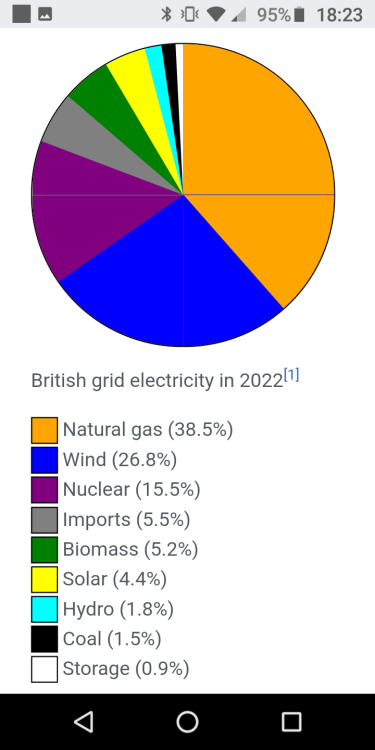
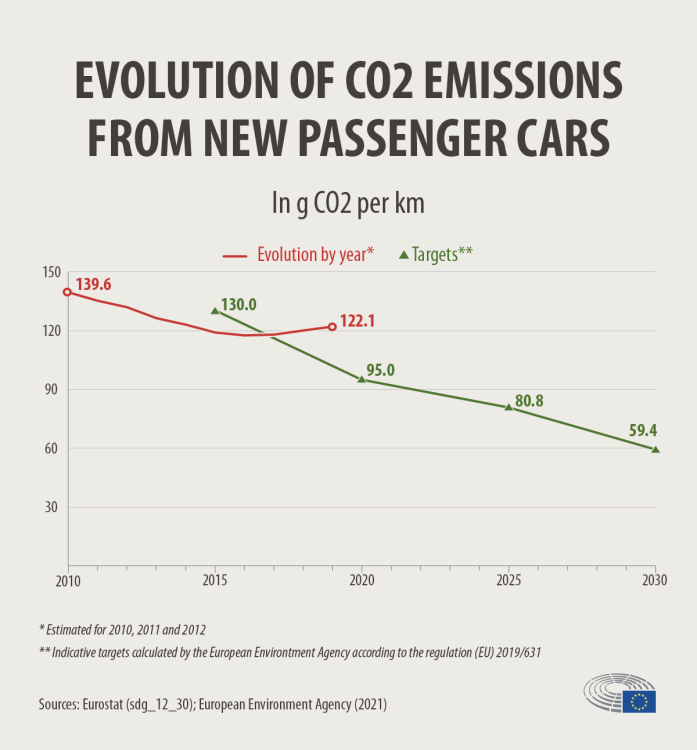
We have to electrify everything, and (expletive deleted)ing quickly. The IET said about this 30 years ago. Though I think they were the IEE then. I think the biggest difference in strategy to heat old homes will be what happens in the same street. If the neighbours get PV and a heat pump, other soon will. The real test of government policy will be with EVs, if they backtrack on that too much, then we know they will on gas boilers. There really is a lot of nonsense said about the EV and HP policies. Same tactics that the Brexiteers used, rubbish others research, but never show your own. Don't know where you get your news from, lots of talk and research being done. Just last week was a program on Radio 4 talking about it. So about a decade to capture some if the excess atmospheric CO2, and minutes to put it back in. Domestic combustion should be stopped now. If all the biomass in Earth was used as an energy crop, it would last about 400 days at current usage levels. Actually it would last a lot less as converting thermal energy to mechanical or electrical energy is not brilliant efficient. On my trip up country yesterday, I passed a sign saying Europe's Largest Solar Farm. Then the message about stopping it. FFS, where do these (expletive deleted) think electricity comes from, Unicorn Farts (I did pass Glastonbury in the way up, but it was further up the M5). If in a decade we have installed enough wind capacity to supply 27% of the UKs electrical demand last year, with gas supplying 39‰, we can do a lot more in the next decade. Saying it cannot be done is just wrong, talking oneself out of believing it can be done is a national pastime. We have the knowledge, and the engineering, and the cash to do it, just got to stops the false stories circulating about when the wind does not blow and the sun does not shine. The chart below is from the Wikipedia page on UK Wind Power. 37%of the non wind and gas is basically low CO2 generation. We are a long way up the path to zero carbon electrical generation. As I said earlier, there has been a huge change in the power generation industry, and most people have not noticed it at all. The storms a couple of years back took out the local distribution networks mostly, not the large bulk distribution, and to the best of my knowledge, it did not cause any major problems for the wind turbines. But rather than focus purely old housing, with a quarter of our emission coming from transport (ish), and by the nature of cars getting replaced on a regular basis, and legislation coming in that makes them harder to drive in some towns and cities, we should see a rapid decline in vehicle emissions. 40 years ago, we often say very smoking cars, now it is very rare. The EU did a report about vehicle emissions. Here is a useful chart. Improvement were happening, so they can happen again.