SteamyTea
-
Posts
23847 -
Joined
-
Days Won
200
Everything posted by SteamyTea
-

Beginning of the end for MCS?
SteamyTea replied to sharpener's topic in Air Source Heat Pumps (ASHP)
That needs a lot of unpicking. -
Beginning of the end for MCS?
SteamyTea replied to sharpener's topic in Air Source Heat Pumps (ASHP)
And Would both increase thermally losses from the house. But maybe if radiators were just fitted on garden walks, that would do. I like the idea of shooting air out a chimney, all those millions of houses that have chimneys could have a heat pump in the hearth, rather than a wood burner. -
Beginning of the end for MCS?
SteamyTea replied to sharpener's topic in Air Source Heat Pumps (ASHP)
Or GSHP. I would think on a new development, and this does depend on local geology, sinking boreholes is a pretty small cost. They could also get water as well. If I had put a borehole in my place in 2005, I would be quids in now -
Beginning of the end for MCS?
SteamyTea replied to sharpener's topic in Air Source Heat Pumps (ASHP)
Nor are rural areas. An Eco Park near Porthtown has a festival every year. This year they were told it was too noisy for some birds. We all know how noisy birds are at 4 AM. Then there is is tractors, motorcycles, and general traffic noise. Oh, and the RAF, Air Ambulance, Coast Guard. The Heliport for the Scillys. Largest fishing port and the associated wet markets. Tulip Bacon are near Redruth, Constant, 24/7 CBT artics on the move. And the wind noise, that is pretty constant. Cities are havens, if you can afford the good bits. -
Beginning of the end for MCS?
SteamyTea replied to sharpener's topic in Air Source Heat Pumps (ASHP)
Can't find the ONS numbers, but this is what Sky News had to say on it. https://news.sky.com/story/uk-installs-record-number-of-heat-pumps-and-solar-panels-12939690 3000 HPs a month, but most will probably be on new builds. -
Beginning of the end for MCS?
SteamyTea replied to sharpener's topic in Air Source Heat Pumps (ASHP)
I don't think there is a lack of skill to install them, lack of incentive, on the part of the installers maybe i.e. uncertainty. Here are the ONS numbers, since 2010, for below 4 kWp systems. March this year was around 38.5 MW installed. If we say that the average installed capacity was 3 kW, that is 12,800 systems installed.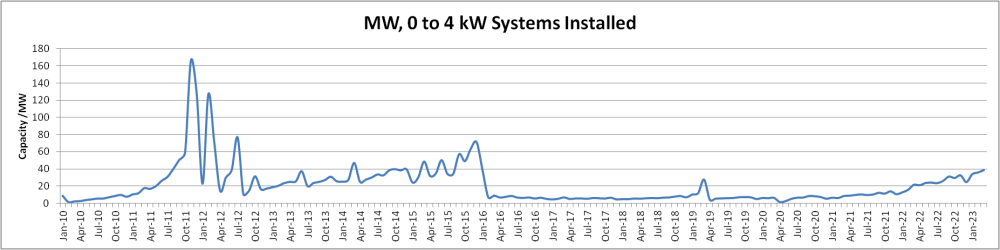
-
5.5% chance is neither.
-
Well that was good. There are ways around the damp issue, but for that knowledge my palm has to be crossed with many pieces of silver.
-
Interest rates in Russia have just gone up to 12%. Argentina's are 118%
-
Yes, and you get the added bonus of a better temperature in the loft.
-
Just knocked this up, it may help. Periphery Losses.xlsx
-
I did a bit about calculating periphery heat losses on here a while back. It is not a a BSI standard, but was close enough. Basically you add the aperture/wall thickness to the total wall area, then calculate as normal.
-
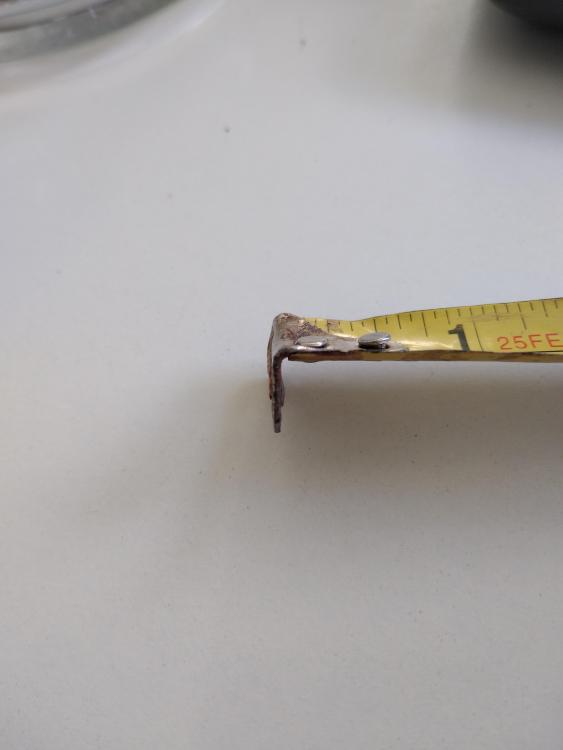
No, but I could if I wanted to. I don't even know where I got the tape from, seems to be one that just appeared one day. I have a posh Stanley one, and a calibrated engineers rule. It was calibrated in 1979, should still be good.
-
Are you thinking about cold bridges and how to calculate the losses?
-
See this bit at the end of the tape measure, bend it. Should get a 5mm variation then.
-
That will be 1096 days then.
-
I hated trigonometry, and is one of those things that is set up oddly in a spreadsheet as they use radians by default.
-
Well done. That is the secret, people forget that when modelling physical things, real models really help.
-
Calculating solar gain - what data to use and how much detail
SteamyTea replied to Joey's topic in Windows & Glazing
Also look at the peaks because which possibly (I don't know the software) takes night time into account. It is also worth adding in the reflectivity of the glazing, the steeper the angle, the more gets bounced off. I am not sure of the G-Value covers that. Solar film is another option to get you though the regs, cheap and removable. -
My feeling as well. Just what is leaking, an edge or a flat, badly laminated, surface.
-
Tomorrow is fine, probably going up country anyway.
-
Nuspan precast insulated floor system
SteamyTea replied to RookieInBristol's topic in General Construction Issues
They are 375mm deep and claim a U Vale of 0.14, down to 0.11. -
Recommendations for electric radiator
SteamyTea replied to SilverShadow's topic in Central Heating (Radiators)
Thought you wanted something contemporary, not a pastiche of a 1920 cast iron radiator. For similar money you can get an A2AHP. Even more 'Ultra Efficient' than a 'ceramic core'. My 1980s storage heaters have ceramic cores, called bricks. -
Well the Geo in house display lasted a total of a day. Spent two hours in phone to EDF (glossed the back door and moved storage heater will on hold). The remotely 'reset' my smart meter, made no difference. They also thought I was on pay as you go tariff. Then got cut off. Recalled, made sure I was not on PAYG. Took a while for them to check as there 'system' was slow today. Changed back to quarterly billing and variable tariff. (expletive deleted)ing imbeciles. I suspect my new in house display won't work.
-
Did you take pictures while it was being done? It was raining 3 weeks ago, it's been wet for 5 weeks now.