SteamyTea
-
Posts
23377 -
Joined
-
Days Won
190
Everything posted by SteamyTea
-

California’s Exploding Rooftop Solar Cost Shift
SteamyTea replied to Alan Ambrose's topic in Environmental Building Politics
It is, they have a population of 40 million people but use a similar amount of electrical energy to us. Being Western they also live similar lifestyles. -
California’s Exploding Rooftop Solar Cost Shift
SteamyTea replied to Alan Ambrose's topic in Environmental Building Politics
It maybe at the moment, and we have about 6 million homes already utilising it (E7). Many people with more modern houses fitted with heat pumps may also start to utilise it as well. Lithium batteries have about the best volumetric storage capacity, so better suited to local storage. They are also almost silent in operation. -
California’s Exploding Rooftop Solar Cost Shift
SteamyTea replied to Alan Ambrose's topic in Environmental Building Politics
The UK grid is very robust, but was set up for centralised generation. The big costs are now at the local level to cope with decentralised and variable small scale generation. The main argument is really how it is paid for, either through people's bills, central government or extra charges in micro generation (which I think is what Spain has done). Personally I think that central government are going to have to step up and foot the majority of the bill as we all benefit from a reliable supply. Trouble is, most likely of my life, the UK governments have been very poor at infrastructure projects. -
Any properly qualified and insured electrician can do it. The electrical and testing side of it is very straightforward.
-
California’s Exploding Rooftop Solar Cost Shift
SteamyTea replied to Alan Ambrose's topic in Environmental Building Politics
Just came across this. Puts a different slant on the 'California Problem'. https://www.fastcompany.com/91110863/california-renewable-energy-grid California just went 9.25 hours using only renewable energy Nearly every day for the last six weeks, California’s electric grid has run on solar, wind, and other clean energy sources for hours at a time. Last Saturday, as 39 million Californians went about their daily lives—taking showers, doing laundry, or charging their electric cars—the whole state ran on 100% clean electricity for more than nine hours. The same thing happened on Sunday, as the state was powered without fossil fuels for more than eight hours. It was the ninth straight day that solar, wind, hydropower, geothermal, and battery storage fully powered the electric grid for at least some portion of the time. Over the last six and a half weeks, that’s happened nearly every day. In some cases, it’s just for 15 minutes. But often it’s for hours at a time. California first hit the milestone of running on 100% clean power in 2022, but it was only temporary. “In past years, it was only for one or two days, and not consecutively,” says Mark Jacobson, a Stanford professor who has been posting updates about the state’s grid each day on X. “And all of a sudden we’re having now 37 of the last 45 days, and the last nine days straight.” There’s a caveat: California also has natural gas plants that keep running at low levels in case backup power is needed. Even when the state is producing more than enough renewable energy to cover all of its needs, it’s still exporting some gas power to other states. But it also exports solar power, helping make other grids cleaner. And it keeps getting closer to its overall goals for renewable energy. By 2030, the state plans to run on 60% renewable energy. It’s likely to hit that goal early. By 2045, the state plans to run on 100% zero-carbon energy, and Jacobson argues it’s technically possible to also accomplish that goal faster. The state now has nearly 47 gigawatts of solar installed, both on rooftops and in sprawling, utility-scale solar farms. Rooftop solar helps reduce demand from the grid, since homeowners can use that power directly. And on sunny April days, when it usually isn’t hot enough to need air conditioning, renewables on the grid can produce more electricity than Californians need. Too much solar power can be a problem. California often produces so much during the middle of the day that it can’t be used, so producers lose money and some of the potential environmental benefit is lost. “Some of it is absolutely being wasted,” says Paul Denham, senior research fellow at the National Renewable Energy Laboratory. But some of it can be sent to other regions, he says, and some of it can also be stored. The state has added a significant amount of battery storage in the last few years. California is now home to the world’s largest lithium-ion battery storage system for the grid, with more storage projects opening soon. Last Sunday, the state stored a record amount of power. Grid operators also want to add new transmission lines to make it easier to send more renewable energy to other states. Some companies are also beginning to use excess renewable energy for other purposes, like making green hydrogen or heating up giant bricks that can be used to power factories. Utilities can also help by incentivizing customers to use power at different times. Right now, Jacobson says, PG&E, one of the state’s large utilities, charges more for power in the late afternoon, which doesn’t make sense—electricity should be cheapest when there’s the most solar power available. The state might continue having streaks of 100% clean energy throughout the spring. But as the weather heats up and air conditioning spikes, renewables won’t yet be able to keep up with demand. Shifting to all clean energy all the time is a challenge, says Denham. “It’s pretty easy to do 80% or so—we don’t know the exact number because we haven’t gotten there yet,” he says. “But it just gets a lot more difficult to get to truly 100% every hour of the year.” California is planning to build offshore wind power, which Jacobson says can help cover nighttime power demand. He also says that even more solar power and battery storage are needed. While Denham argues that some natural gas might still be needed to make sure that affordable power is available all the time, geothermal energy may eventually be able to help fill that gap. -
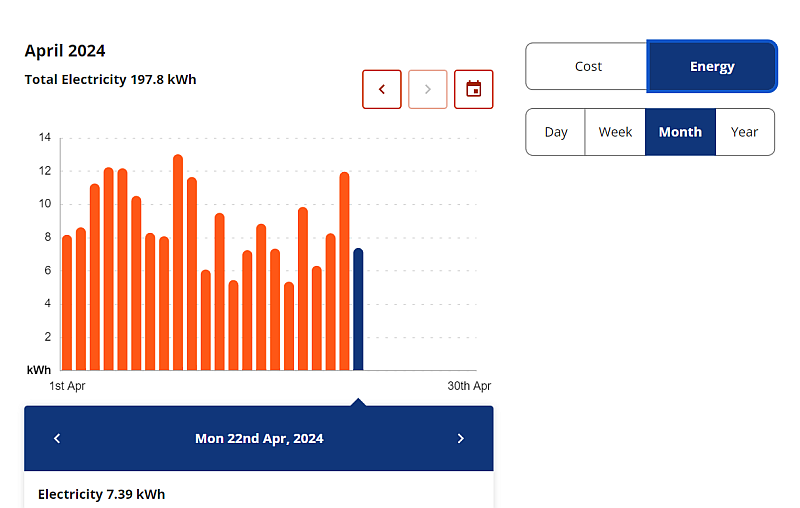
Mine was not until they insisted on changing it, and that is when it all went wrong. Why I put a complaint in to the ombudsman (a painless processes run by grown ups). I don't understand why EDF cannot just read the data in real time, like I can from their website. It is pretty easy to understand, no need to estimate.
-
I had that same problem a while back. I had to send in pictures of the meter readings. I do wonder how many people who pay by direct debit have over paid. I seem to remember that is was something like £4bn that the energy companies have from overcharging, though I am not sure how much of that was for people on fixed monthly payments and how much was energy companies over estimating.
-
Yes. I should not have to do that. I refuse to use them as they could not get my meter readings correct, 25 years ago, nice ot know they have not improved. Yes, EDF said last month my meter was not reporting, then they said I refused a smart meter. Why should you have to manually submit smart meter readings?
-
California’s Exploding Rooftop Solar Cost Shift
SteamyTea replied to Alan Ambrose's topic in Environmental Building Politics
More like over a decade ago. No idea what the structure of the energy market is in Germany, but if it is like ours, then it is being supported by central government (we have a price cap based on wholesale prices, and they are not in the customers favour but keep the energy companies viable for the time being). So with a bit of PR, it is not hard to concoct a narrative that blames something, regardless of the truth. -
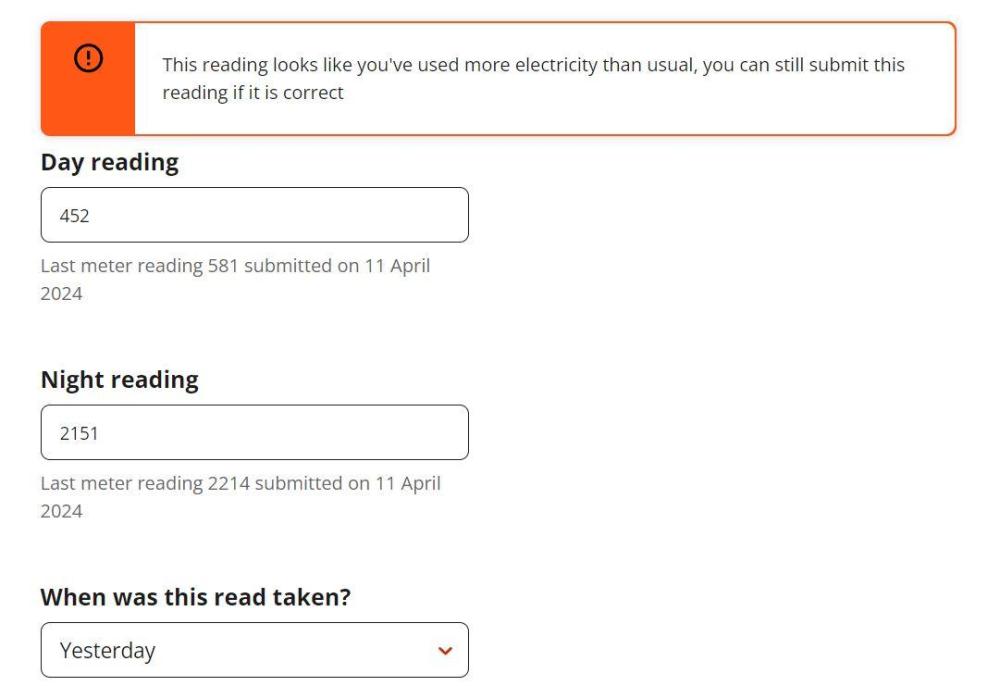
Got sent a bill, part of it was from smart meter submissions, part from estimating (why, I have a smart meter now). No big issue, I take my own readings and submit them, and get this. How can submitting less units than the bill stated be calculated as using more units. They really have become complete (expletive deleted).
-
California’s Exploding Rooftop Solar Cost Shift
SteamyTea replied to Alan Ambrose's topic in Environmental Building Politics
No, there are lots of fixed costs i.e. network upgrade/repair, ongoing investments, wages, pensions, offices, vehicles etc. -
California’s Exploding Rooftop Solar Cost Shift
SteamyTea replied to Alan Ambrose's topic in Environmental Building Politics
Only the marginal costs, the fixed costs will remain the same. There is also quite a bit of interstate power trading in the US and that has very complicated rules and laws because of the different state tax rates. And what ENRON got up to. The USA market in power is not the same as the UK's energy market, and cannot easily be compared. As an aside, I cam across this month old article. https://www.theguardian.com/uk-news/2024/feb/16/edf-hinkley-point-c-delays-cost-overruns Another £11bn and not finished till 2031, instead of 2017. -
California’s Exploding Rooftop Solar Cost Shift
SteamyTea replied to Alan Ambrose's topic in Environmental Building Politics
Seems to be higher import prices because of higher network charges. It does not mean that the domestic consumer is paying more overall. I am sure I could come up with a fixed domestic monthly fee that offers unlimited energy (up to the network power limit), would be in the region of £2,500/month. Would not suit many people. -
Put a tray of light soil, 7 metres up from the ground and watch what happens.
-
Air tightness results are in…
SteamyTea replied to Omnibuswoman's topic in Energy Efficient & Sustainable Design Concepts
There isn't a Moore's Law to back up Moore's Law. One has to be very careful of short term trends. -
Trying to think up something good to say about the place. Maybe the form is good for thermal performance. It may be nice inside, often houses are.
-
Maybe is should be closer, say 10 metres. At 100 m distance the flu gasses have cooled and can be heading downwards. If planning law was changed that gave permission to build within 5 metres of a house with a WBS, I bet many who think 'it is alright in a rural area' would soon get shot of them when they know they would be getting new neighbours. "No man is an island"
-
What a (expletive deleted)ing horrible wood burner, I would knock a million of the price, and another million off because there is a swimming pool. And then maybe another million off as it is not a pretty house. Then the negotiation could start on the price.
-
Air tightness results are in…
SteamyTea replied to Omnibuswoman's topic in Energy Efficient & Sustainable Design Concepts
That is basically the secret. Don't leave things on standby that don't have to be, and if they must be on 24/7, make sure they use as little as possible. For me it is easy as I am all electric resistance heating with mechanical, or very low energy, time switches. I have a couple of web servers, but they use under half a watt each when running, and when I leave the house the laptop lid gets closed. -
I am not sure it has every really been a waste by product, as I mentioned earlier, it is ploughed in to improve soil, and most has gone for bedding. Recent straw prices are here.
-
Air tightness results are in…
SteamyTea replied to Omnibuswoman's topic in Energy Efficient & Sustainable Design Concepts
Brilliant. When @joe90 had his done, I watched the meter recording it as Old Joe ran around with a tube of silicone. I found one leak (air intake to the WBS), but forgot to mention it, but that is because I am a bastard. -
Let's do some arithmetic. 240,000 [tonnes] / 4 [tonnes/hectare] = 60,000 hectares. That could support a 50 GW solar farm, which would yield 50 TWh/year of electricity. 38 [MW] x 8760 [hours/year] = 333,000 MWh or 0.33 TWh/year of electricity. You could produce the same amount of electricity, using solar, with 400 hectares of land. In 2021, the UK produced 8.6 million tonnes of straw.
-
More foundation fun - straw bale garden room on clay
SteamyTea replied to Nick Thomas's topic in Foundations
If you use netting, the insulation can get air movement though it, called advection in Physics. I think the non-wicking depends on which product is used, @joe90 used non-wicking, full fill, version on his build. The above is not that important on a garden shed, but may be on a house. -
It improves the buckling/warping resistance and racking strength.
-
I think that is what building regs require as a minimum for walls now. It is often ploughed back into the ground as it improves water retention and carbon sequestration. Yes, it is where its main value is.