Moonshine
-
Posts
2094 -
Joined
-
Last visited
-
Days Won
6
Everything posted by Moonshine
-
This could be a factor (ish) but more potential noise break out from the barn, as the fan will have an intake / extract into the drying barn, which will raise the noise levels in the barn significantly. This noise will break out quite easily via the building facade as it looks a lightweight single panel construction, which are poor at low frequency. If this was the case then the noise would be an issue all along the east facade of the conversion, rather than just the northern end of the conversion, which i have asked @readiescards to confirm. This issue (if it turns out to be this) could be resolved with a decent silencer on the intake / extract to the drying barn.
-
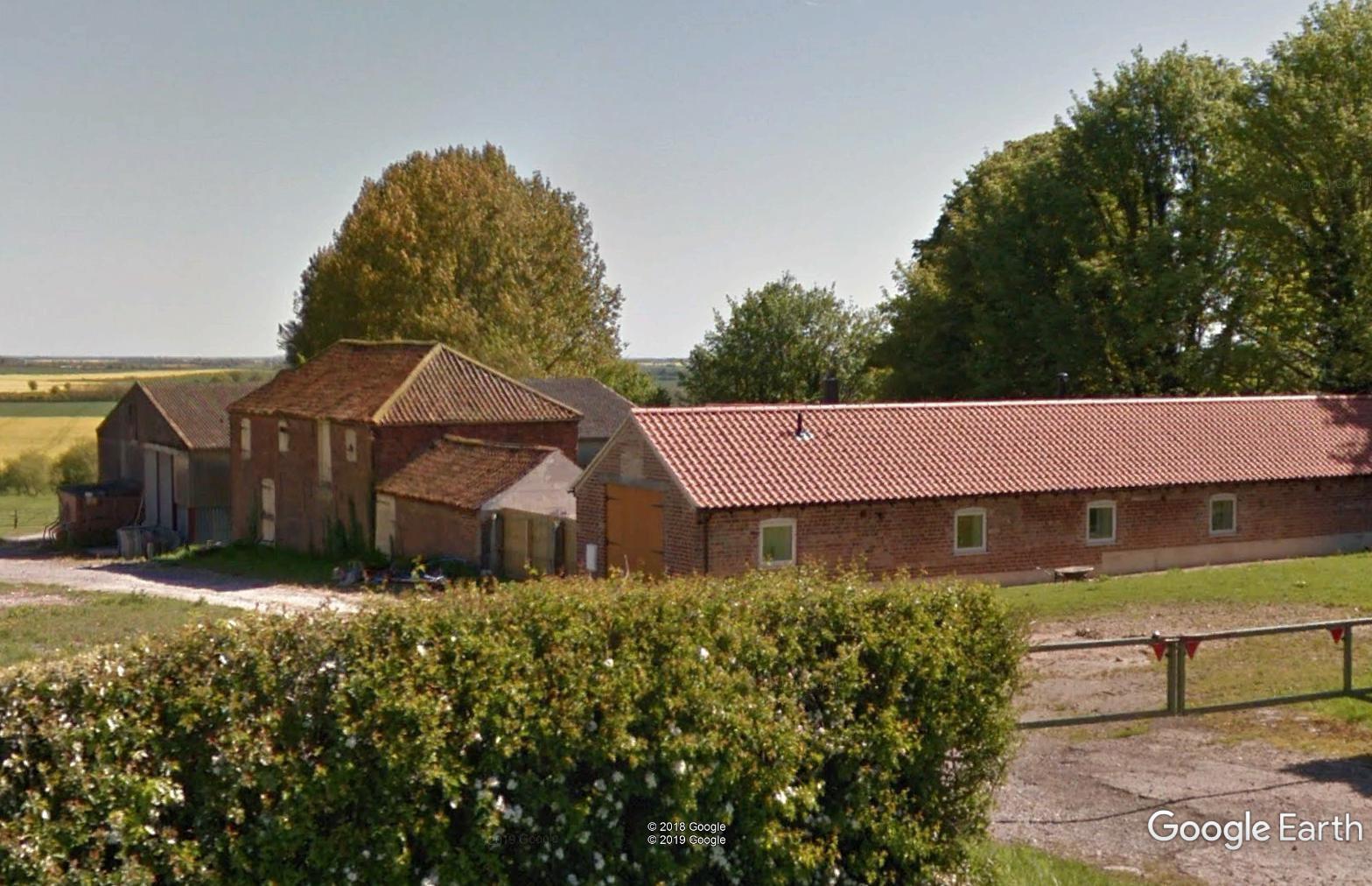
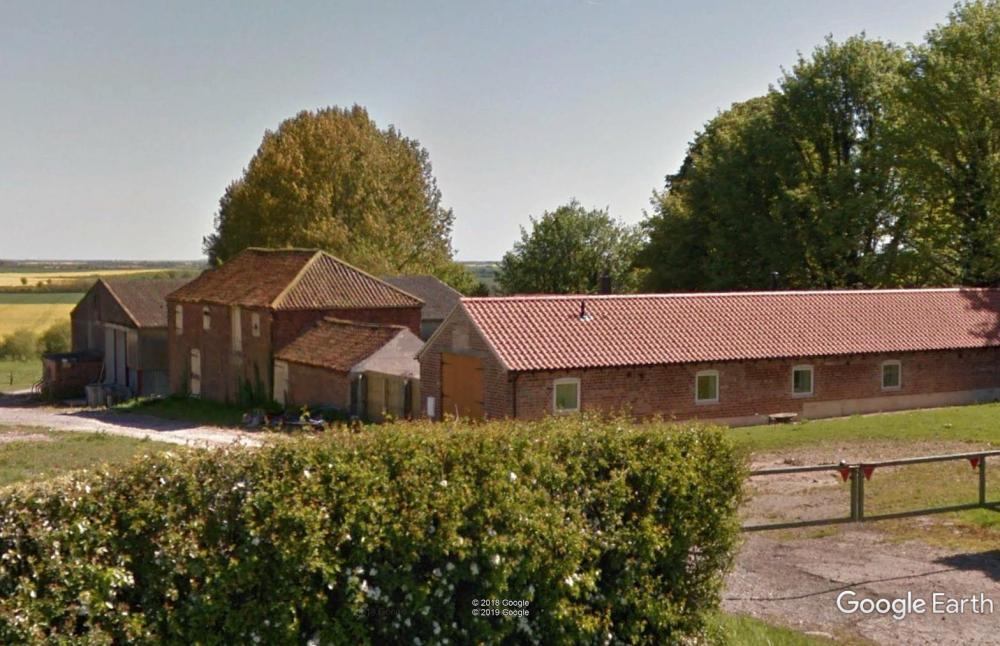
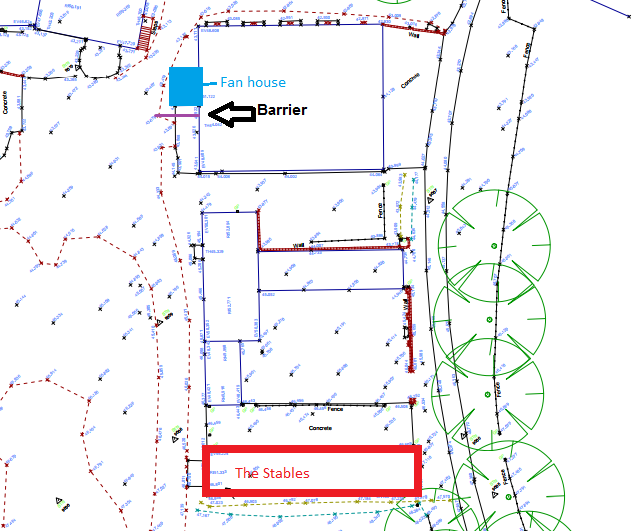
o.k @readiescards on the assumption that you have to have the fan room doors open to get ventilation to the fan room, here are my suggestions. These are also given on the basis that rooms affected by the noise of the stables are the ones furthest to the side with the fan. I would carry out these suggestions in stages to see the affect, as some are more involves with cost implications, in order. 1) Put an acoustic barrier as close to the fan room as possible, such as below, and can be built off the barn entrance upright steel. The height and extent of the barrier should be as much as possible, but given the noise source it should be as high as possible, but a minimum of 3m. In terms of the construction, because of the amount of low frequency sound it is kicking out the barrier needs to be pretty dense. So i would recommend a mass barrier such as an interlocking timber screen, e.g.https://www.jacksons-security.co.uk/acoustic-security-barriers/reflective-acoustic-barrier. With that barrier in place there should be a 1-1.2m gap to the fan room which would likely be enough to give antiquate ventilation 2) if you want to control noise from within the fan room breaking out, the barrier will help a bit, but if the barrier isn't working as well as you want it to and its the noise from the fan room itself rather than the fan extract. i would make up some acoustic absorbers to reduce the ambient noise levels in the fan room before it breaks out. As its an agricultural setting you can get away with an agricultural solution. Make up wooden frames which are min 80-100mm deep, and say 1m by 600m frames, and within the frames, put 100mm (or deeper) mineral wool / porous insulation (24 kg/m3), and hold in place with chicken wire each side of the frame. The number of absorbers will depend on the space available, but the more the better. If the frames are located with a cavity / space behind them onto the wall (e.g. 50 - 100mm) this will improve the low frequency performance of them. This will quieten up the noise within the fan room and break out from this space, but won't do much for the noise direct from the fan extract. 3) if that is not good enough, you may need to look to put a silencer on that extract (?) fan, where the ducting from the fan is taken up, over the roof and discharged away from the stables. You are probably looking at a rectangular silencer of 1.2 - 2.4m in length, and ideally place directly on the extract (?) of the fan. The silencer can be put on top of the roof, but you may need to account for this when you put in the acoustic barrier so that anything on the roof is shielded by the barrier.
-
The equation to be applied depends a lot on the scenario to be predicted, however a good book to look at is Bies and Hansen Engineering Noise Control, particularly Chapter 8 (third edition) https://www.amazon.co.uk/Engineering-Noise-Control-Theory-Practice/dp/0415487072
-
FE modelling is over kill in this scenario, and can be assessed with fairly standard room acoustic equations, propagation to ISO 9613, and noise break in as per BS8233:2019
-
Its a big ass fan and will be pretty broadband due to the air flow, with an emphasis at low frequency (e.g. like pink noise) with some peaks corresponding to the rpm of the fan and number of fan blades.
-
O.k, probably something I can help with.... - Have you got any pictures of inside the fan room? - any pictures of the space between the fan room and housem - do the residents complain about the noise in all rooms of the house, or just a couple? - how is the fan room ventilated? - do you know the make model of the dryer? - what is the construction of the fan room and door? Edit: just watched the video, that is loud! Is it the same now as then?
-
 TS have free delivery on any order over £10, so if you can wait 1-2 days you can get it your door and save the petrol!
 -
Also, the "someone else is paying" aspect that builders may have, so material costs are secondary to ease of getting it on site.
-
Soundproofing ceiling/internal floors from the top instead.
Moonshine replied to Patrick's topic in Sound Insulation
Maybe have a look at a chipboard alternative, such JCW acoustic deck or similar The acoustic performance (impact) isn't as good as screedboard but still gives a step change in performance. I tested a conversion with party floors on Thursday (which I provided advice for) using that type of product with insulation, res bars and 2 X 15mm SoundBloc, that got airborne (DnTw + Ctr) 50 dB and impact (Lntw) 51 dB. Needless to say client was very happy with that. -
Soundproofing ceiling/internal floors from the top instead.
Moonshine replied to Patrick's topic in Sound Insulation
So would I, building regs minimum arent good at all. For internal walls volume builders for minimum, but are going for something more substantial for party walls and floors. -
Refurbished PCB installed and boiler now working as expected. Good to have a warm house again!!!
-
Cheers for those, I will probably source the refurb PCB (visually and codes it looks the same) and get a gas Safe engineer I know to fit it.
-
Oh FFS! I have put it all back together, cover on and turned on at the isolator. And low and behold the thing fires up no questions asked. Looking like a temporary fix but seems the PCB is on the way out.
-
Thanks for that manual, and it has a useful fault finding page. Opening up the casing with all turned off, then turning off indicates that neon 1 and 2 are lit. Testing as per the fault finding finds no 240v between n/c on air pressure switch and N. Which means it needs a new PCB according to the fault guide. Oh well...
-
When is a delivery not a delivery ?
Moonshine replied to ToughButterCup's topic in General Self Build & DIY Discussion
as above but delete this post -
GET YOUR CIL EXCEPTION SUBMITTED AND CONFIRMED BEFORE YOU START!!
-
so with a bit of testing this weekend it looks as though it is an issue with the interaction with the hot water and CH. When the CH is on in isolation (and the hot water hasn't been on), then the CH works as it should, switching on and off, keeping the radiators nice and hot. however when the hot water is on, and has got hot enough, its like the boiler doesn't recognise a need to keep the central heating water hot, it just mindlessly pumps water round the CH system getting colder and colder. So when all is off and starting from cold and both the CH and HW are turned on, the boiler gets the radiators warm, and when that is up to temp, it switches to heating the water in the tank. When the tanks up to temperature it should switch back to the CH, and keep that temp topped up. However it seems that it switches back to the CH, but the boiler doesn't fire. Its like that as long as there is hot water in the tank it doesn't need to fire back up. This seems more like an issue with the diverter valve and switching, what would be the diagnostic fault test on this element?
-
Ah the Grand Designs curse.
-
i wasn't aware of this. i can't help with your situation, but thanks for highlighting it.
-
Thanks I will take a look and see if there are similarities
-
Cheers, it's an older glow worm Ultimate 40FF. No display at all and no fault codes. Any way of diagnosis which one it may be? Interesting I have the CH on now (without the hot water on), and has been on a while. The radiators are hot and the boiler is lighting and turning off in approximately 2 min intervals, then restarting again fine, until it turns off after a couple of minutes. The over headlt cut off button doesn't pop out.
-
Party wall agreement with the same owner
Moonshine replied to Moonshine's topic in Party Wall & Property Legal Issues
Cheers all, I didn't realise it was just a notification of works, I though it was a legal agreement that went along with the title of the house. Yep a SE is certainly going to be involved in the design, and on my list of things to do is to determine the existing foundations construction and depth. -
This may not fit the remit of the forum as it's a question about an existing boiler which is exhibiting a fault or sorts, which I am questioningy sanity about. The boiler fires normally on request, it heats hot water and central heating up to a point and then shuts off as a normally should once it's reached temperature. However it seems not to want to turn on again automatically, once the water temperature in the radiators has dropped. The central heating pump is still pumping water around the system but it's just colder water the boiler doesn't seem to recognise needs to be heated. When the boiler is turned off and on again, it then recognises the water needs to be heated and starts heating the central heating again. Can anyone give any indication of what could be wrong with it or am I doing something silly. Cheers
-
what an outlook, looking very nice!
-
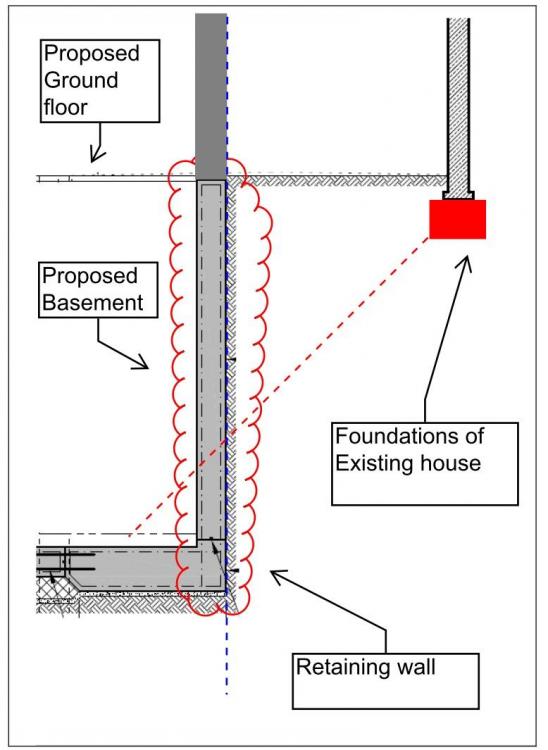
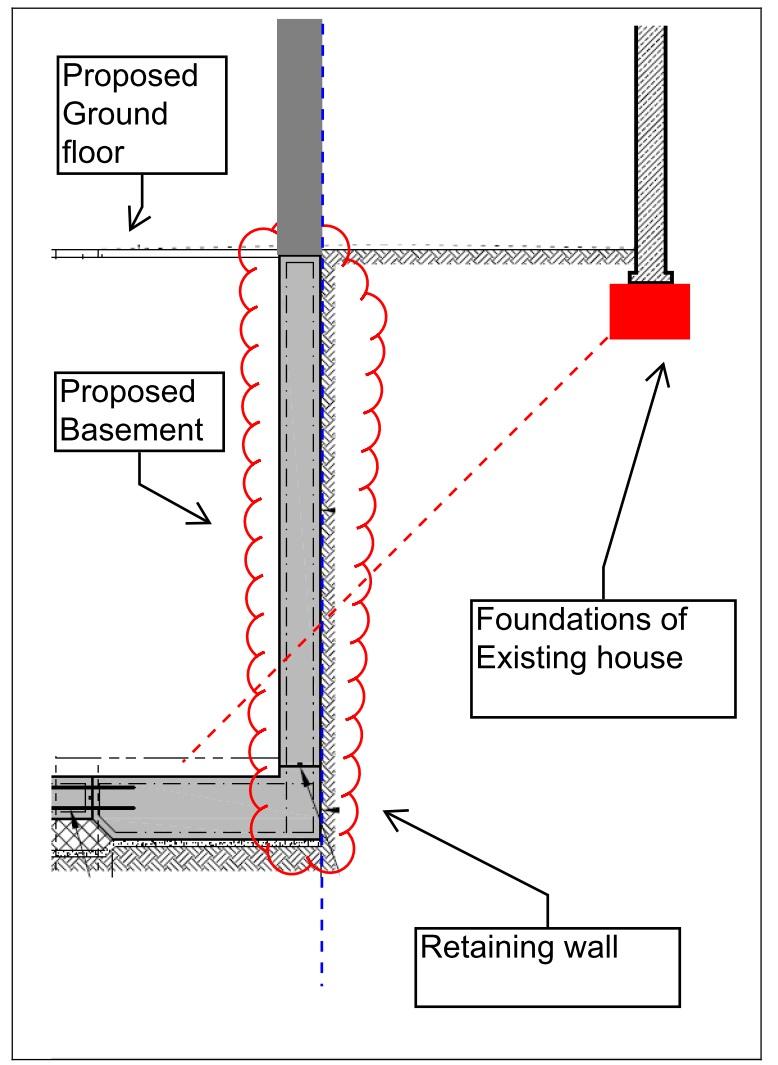
How is the party wall act applied if the party constructing a building, owns the party wall that is affected, as below; Does the title for the new house have to be created first, and then the party wall agreement assigned to it? I presume it can be applied with the same owner without a conflict of interest. What the process of getting a party wall agreement in place?